❌

Reading view

"This is the headphone we set out to create from the very beginning" – a closer look at the development of the new driver technology inside the premium Technics EAH-A1000 wireless headphones

When Technics set about making plans for its new flagship wireless headphones, the EAH-A1000, it knew it couldn't just enlarge the 10mm Magnetic Fluid Driver used in the five-star, Award-winning EAH-AZ100 wireless earbuds and call it a day.

The magnetic fluid technology – an oil-like substance with magnetic properties that reduces the rocking vertical movement of the diaphragm without adding mass – worked successfully in delivering a clear, detailed and low-distortion sound in the AZ100 buds. But the larger 40mm drivers required in an over-ear model proved a greater challenge.

As part of the pre-launch briefing of Technics' new EAH-A1000 over-ear wireless headphones, I got a chance to hear from Technics' headphones and acoustic departments in Tokyo about the trial-and-error process for developing the new flagship headphones' drivers, along with an extensive look at all the elements inside them – so here's a closer look at the new drivers of the A1000 headphones.

Magnetic fluid driver: the next chapter
Technics EAH-A1000 headphones technology

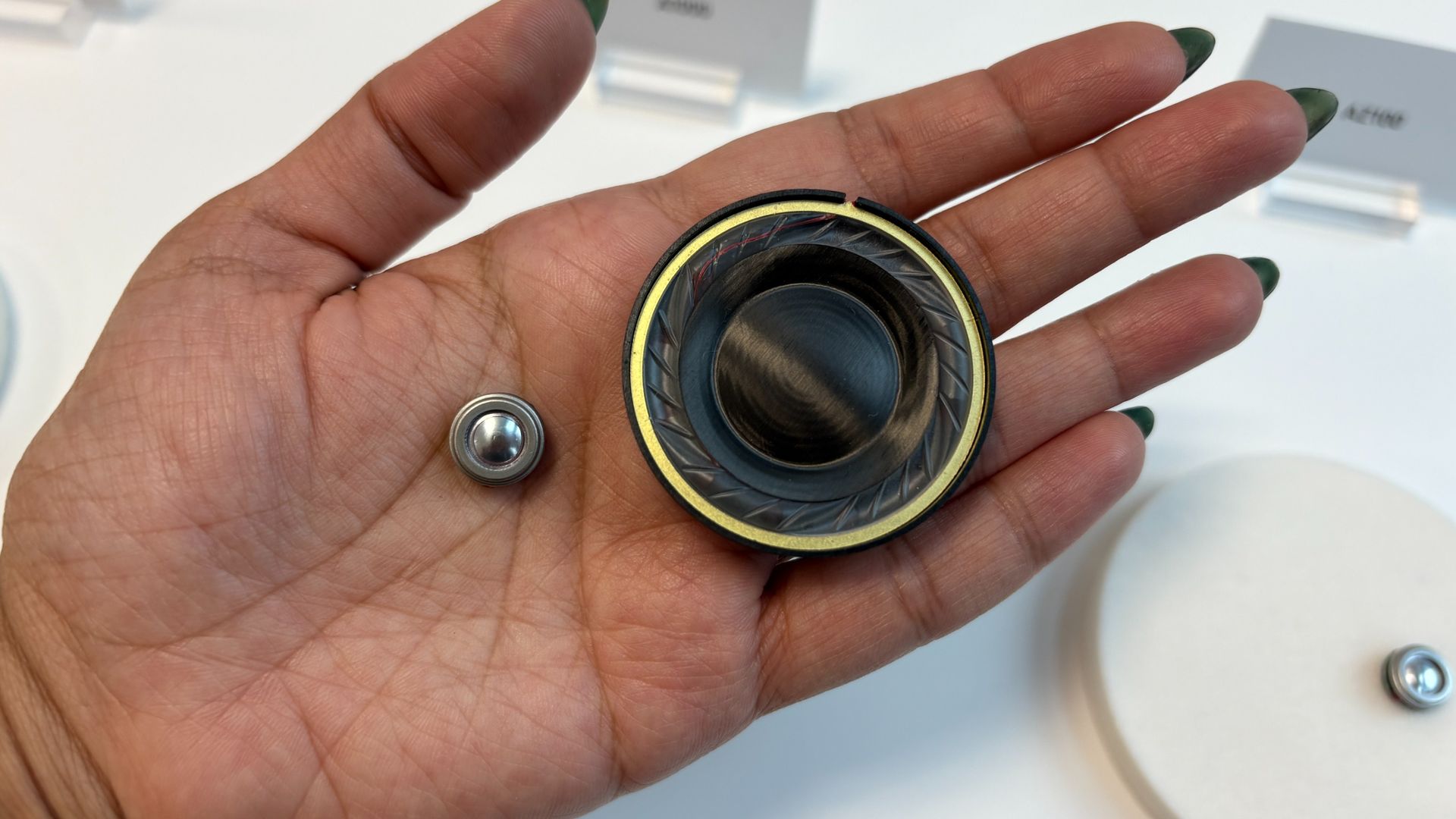
The 10mm magnetic fluid driver of the EAH-AZ100 wireless earbuds (left), and the new 40mm driver of the EAH-A100 over-ear headphones (right) (Image credit: What Hi-Fi?)

Planning for the EAH-A1000 over-ears started pretty much after the AZ100 buds, with the question: "Can magnetic fluid work in a 40mm driver?"

A larger driver results in greater excursion, more possibility for flexing, and more scope for distortion. Simply using the same tech in a bigger driver "didn't deliver the sound we were aiming for," says Technics. The magnetic fluid sits between the voice coil and driver magnet, and is able to precisely support the driver's movement so it is more consistent, but too much damping could limit the natural expression of music.

While excited by the potential of the magnetic fluid technology, Technics' goal wasn't to simply build a larger driver, says Riku Takeda, acoustic engineer at Technics. It was to "create a new over-ear headphone driver that could go beyond hi-fi speaker performance."

The main aim for this new driver was to reduce distortion as much as possible for a clearer, cleaner sound, but without sacrificing the power, detail or natural resonances of music. And so the newly developed 40mm drivers in the A1000 feature a combination of technologies, all with the aim of delivering an immersive listening experience.

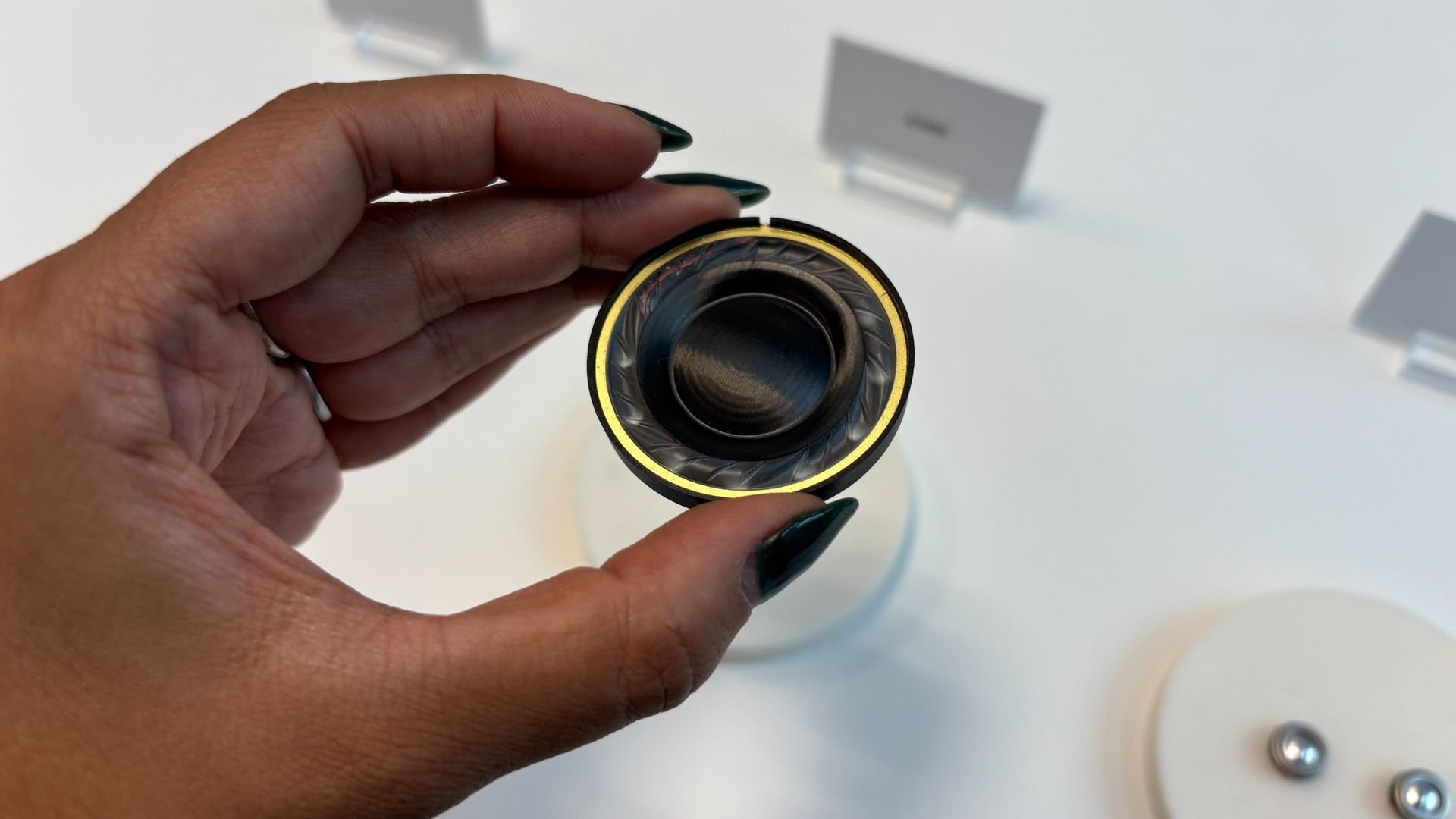
The first of these new technologies takes inspiration from the brand's own hi-fi speakers, with the modified magnetic fluid drivers enhanced with an SST (Symmetrical Surround Technology) Edge. This is a similar technology used in Technics' flagship SB-R1 speakers.

This surround's distinctive shape ensures that a symmetrical volume of air is displaced by the backward and forward movement of the driver. The cuts in the surround increase the flexibility of the edge, while also reducing distortion.

"No compromise on shape; no compromise on material"
Technics EAH-A1000 headphones technology

The A1000's driver features SST Edge surround around the edge of the cone/dome-shaped pure carbon fibre diaphragm (Image credit: What Hi-Fi?)

Additionally, the diaphragm of the driver is made of a "pure carbon fibre" material, chosen for its lightweight and rigid properties that ensure fast, responsive performance. Technics further clarifies that this 'pure' carbon fibre material isn't composed exclusively of carbon fibre, but it refers to a "non-composite, non-laminated" diaphragm construction. A very thin but stiff layer, essentially.

As larger drivers naturally flex more as they move, Technics settled upon a complex shape consisting of a cone and a raised dome to further stabilise the movement of the driver.

This posed another challenge, as the mould for this complex geometry (in the relatively small dimensions of a headphone driver) was difficult to produce in mass quantities consistently without deformations.

The team experimented with alternative shapes and materials to get a more stable, consistent moulding, with a long trial-and-error process – but every 'solution' resulted in a less-than-ideal sound. A flatter cone geometry would make things simpler, but it resulted in a less powerful, muddier and less clear sound. A laminated structure would improve moulding stability, but it delivered a narrower soundstage compared with the pure carbon fibre material.

Ultimately, Technics decided that the compromises to the sound quality were simply "not acceptable to us", and ploughed ahead with these two necessary elements of the complex shape of the diaphragm, with some solutions, to achieve the desired sound that Technics wanted. This included strengthening the carbon fibre material itself by changing the direction of the fibres woven in, and adding a 'rib' to the dome to add stability.

Technics says it's a combination of all these different technologies, not just one element, of the new driver that is key to delivering accurate bass, clear highs, and a natural spatial expression from the A1000 headphones.

Technics EAH-A1000 headphones technology
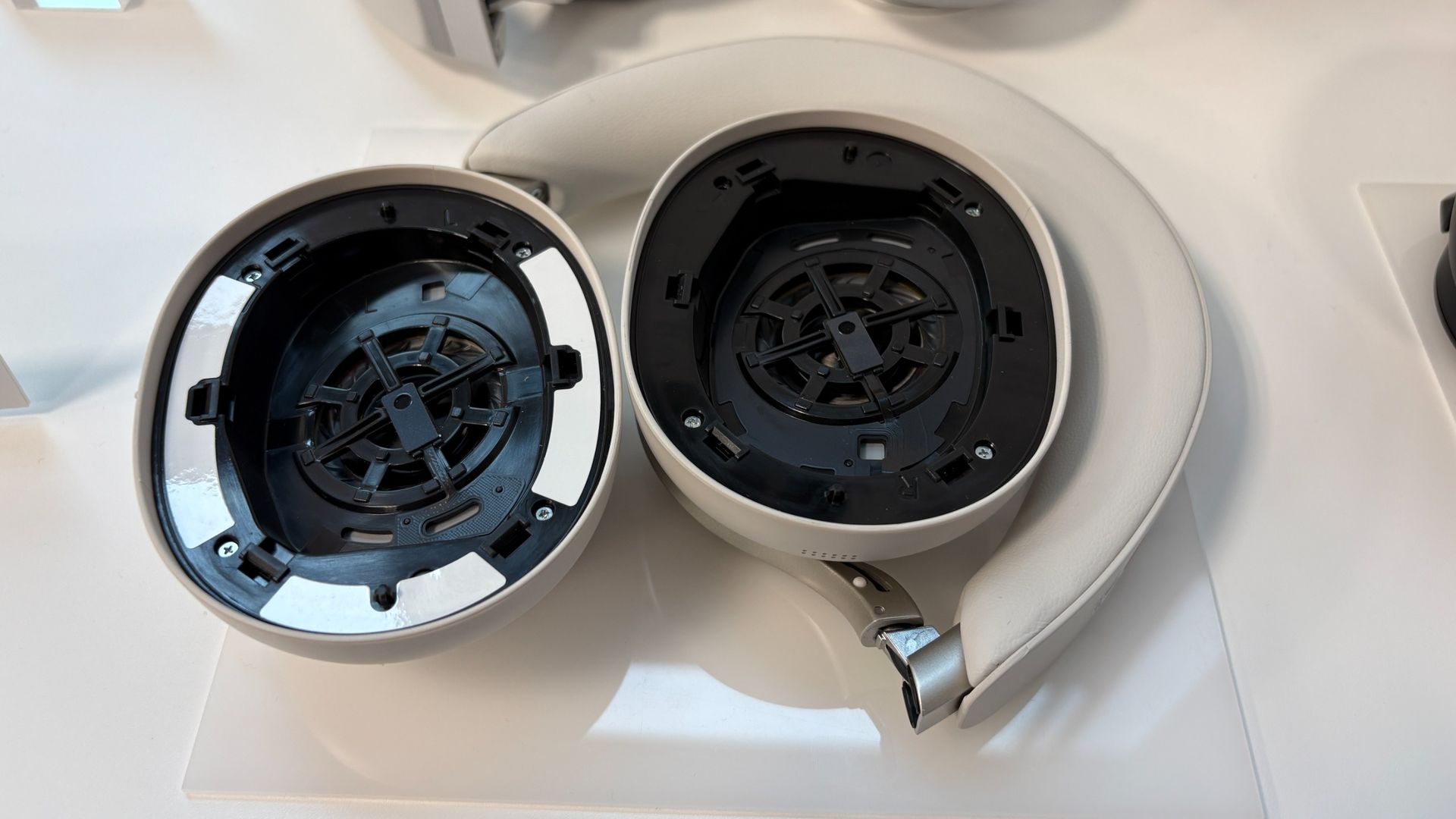
The inside structure of the A1000 over-ear headphonesWhat Hi-Fi?
Technics EAH-A1000 headphones technology
The inside structure of the A1000 over-ear headphones compared with previous A800 model.What Hi-Fi?

The development doesn't stop at the drivers themselves. The new 'baffle flat structure' minimises the uneven surfaces around the driver to reduce the effect of unwanted reflections, while an 'acoustic control chamber' behind the driver helps to manage airflow.

These combine to deliver a "natural sound field with clear imaging" and to ensure the sound is balanced without emphasising any specific frequency range.

Sound quality is just one aspect of the Technics EAH-A1000. Every product in Technics is guided by three philosophies: sound, technology and design.

The design of the headphones and all the necessary features (connectivity, ANC, call quality) need to be up to scratch, too, with Technics acknowledging that "personal audio" products such as headphones have huge demands from customer expectations these days. Over-ear headphones are more visible than earbuds, too, so achieving the design and style of the premium A1000 to a high level became even more important.

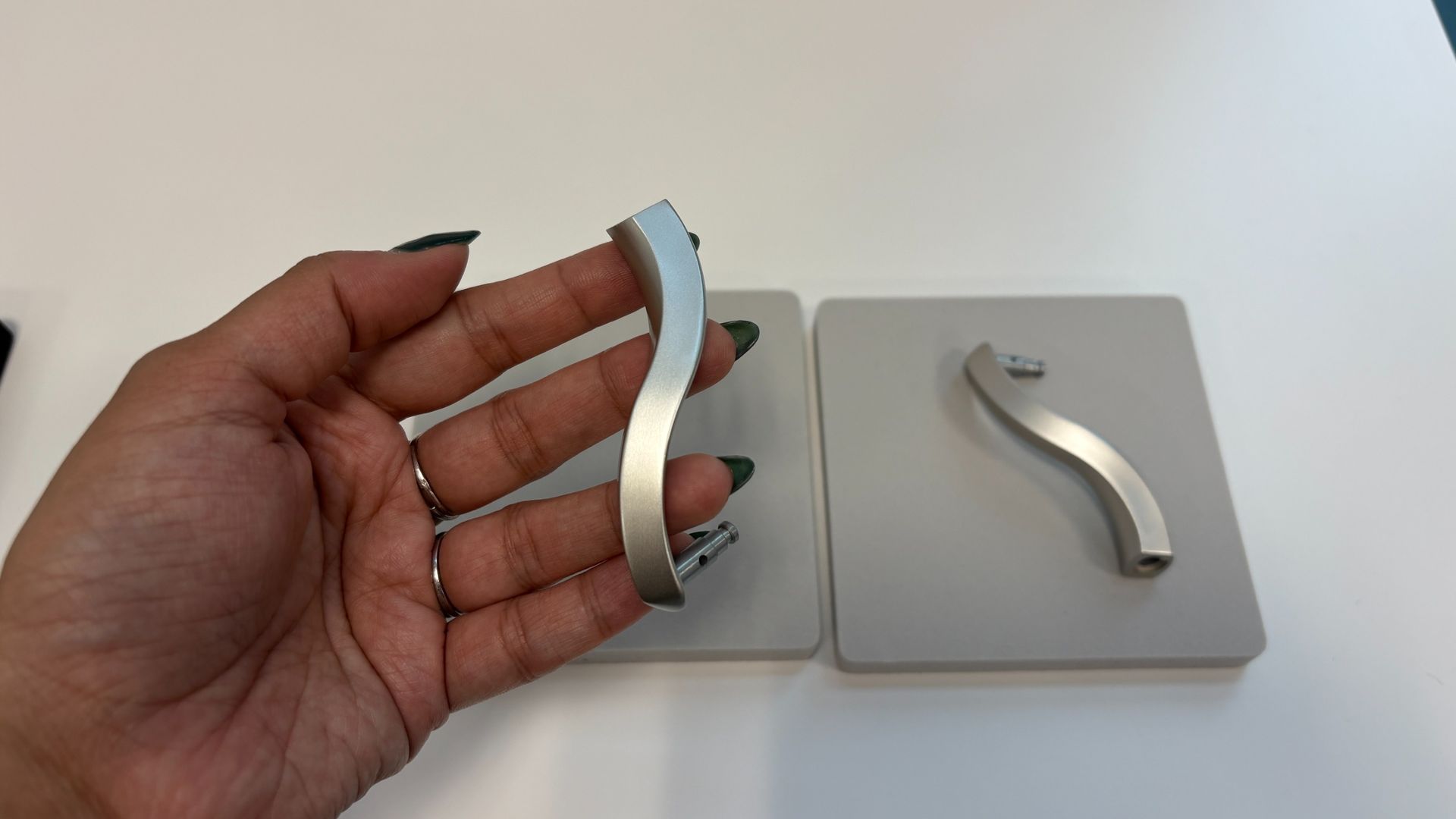
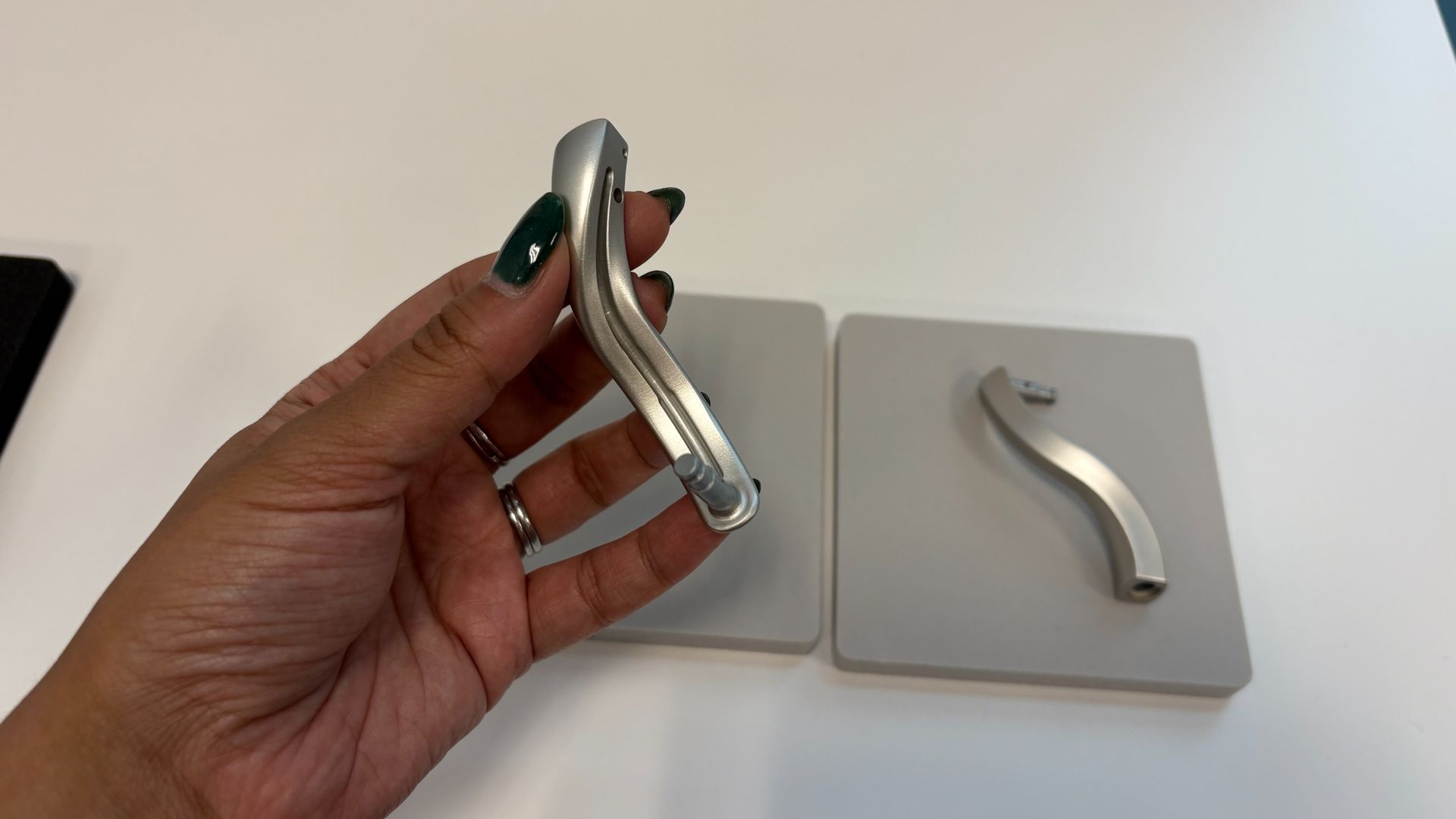
The design of the new over-ears – from the slender 'flow arm' structure, the headband's clamping pressure, and evenly distributed plush memory foam cushions – has been given as much care and attention by the Technics team.
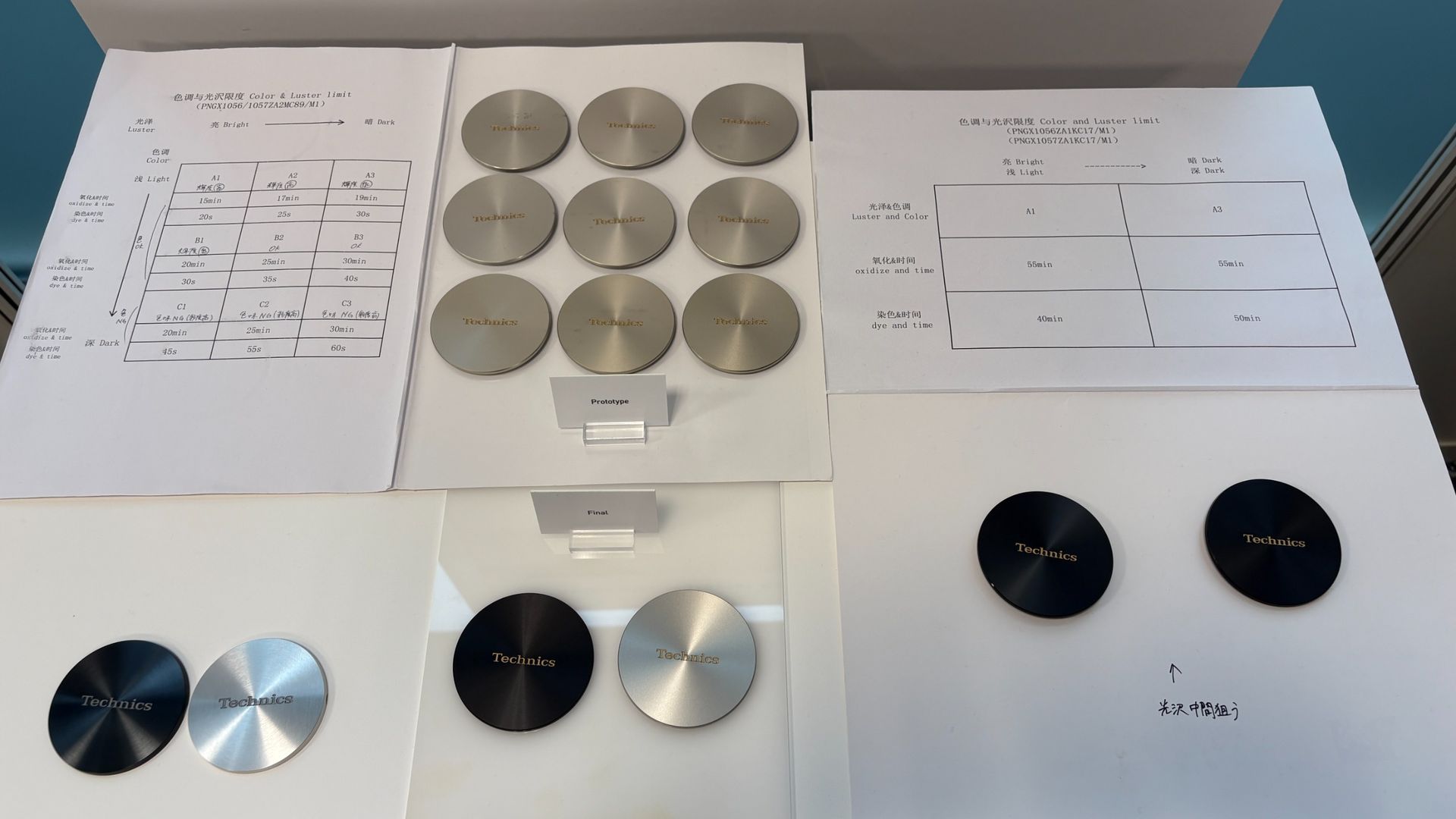
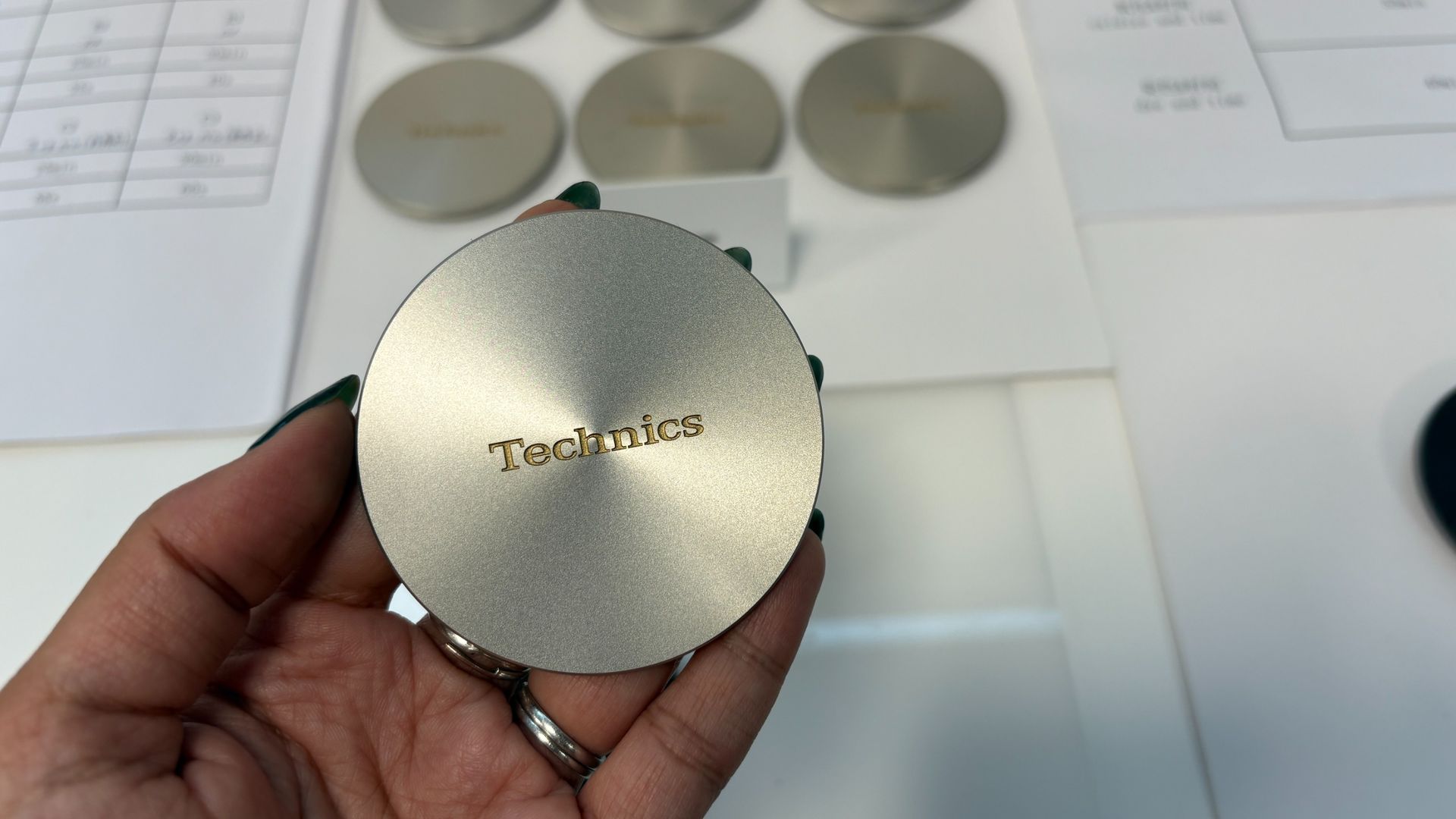
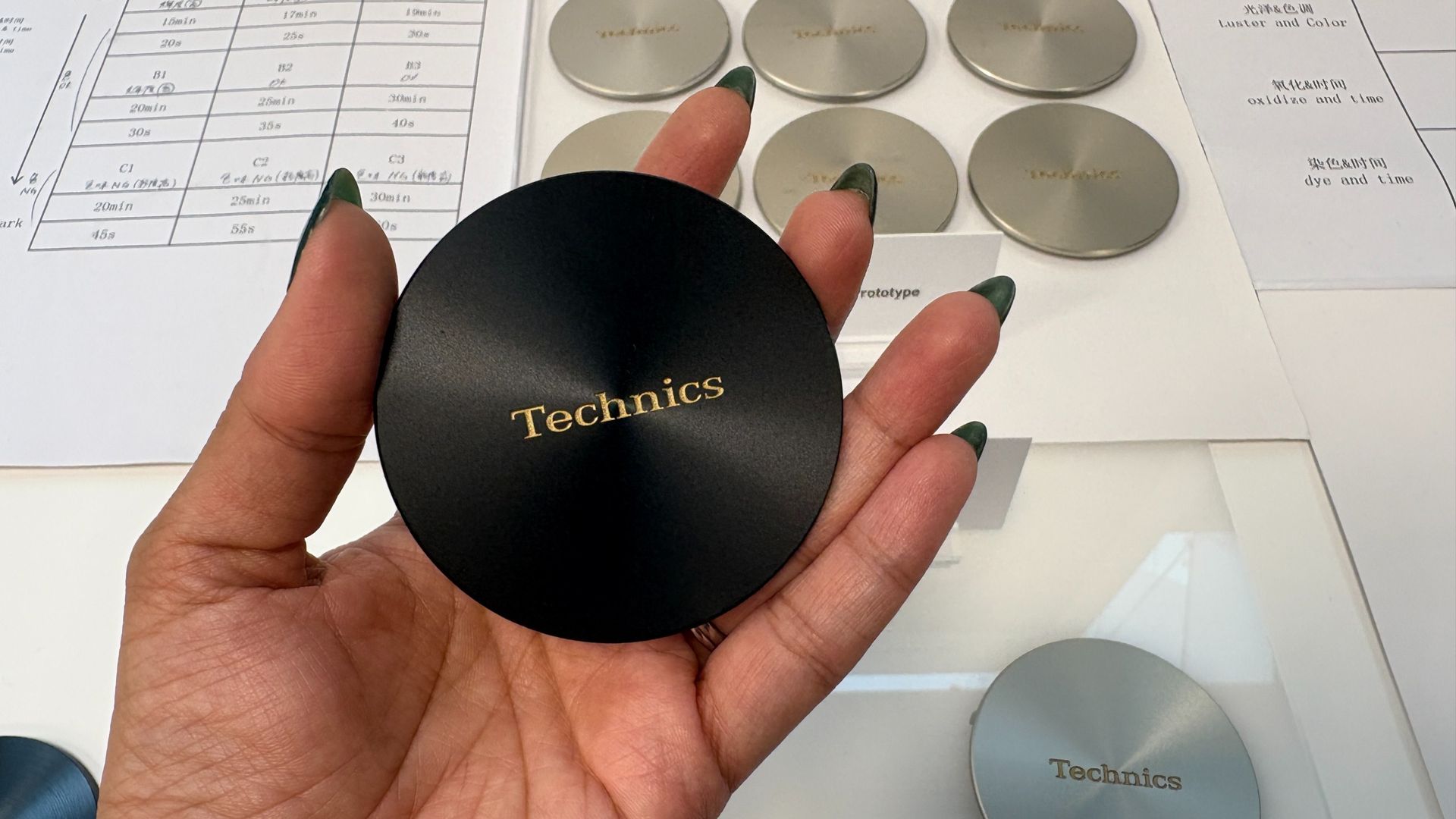
Technics EAH-A1000 headphones technology
What Hi-Fi?
Technics EAH-A1000 headphones technology
What Hi-Fi?
Technics EAH-A1000 headphones technology
What Hi-Fi?
Technics EAH-A1000 headphones technology
What Hi-Fi?
Technics EAH-A1000 headphones technology
What Hi-Fi?

We're shown various prototypes of different ear cushion shapes, arm structures and variations in the spun metal plate with the Technics logo adorned (check out the gallery above) – examples of more trial-and-error processes undergone by the design team to achieve the 'right' look and feel for the EAH-A1000 headphones.

The philosophy remains the same
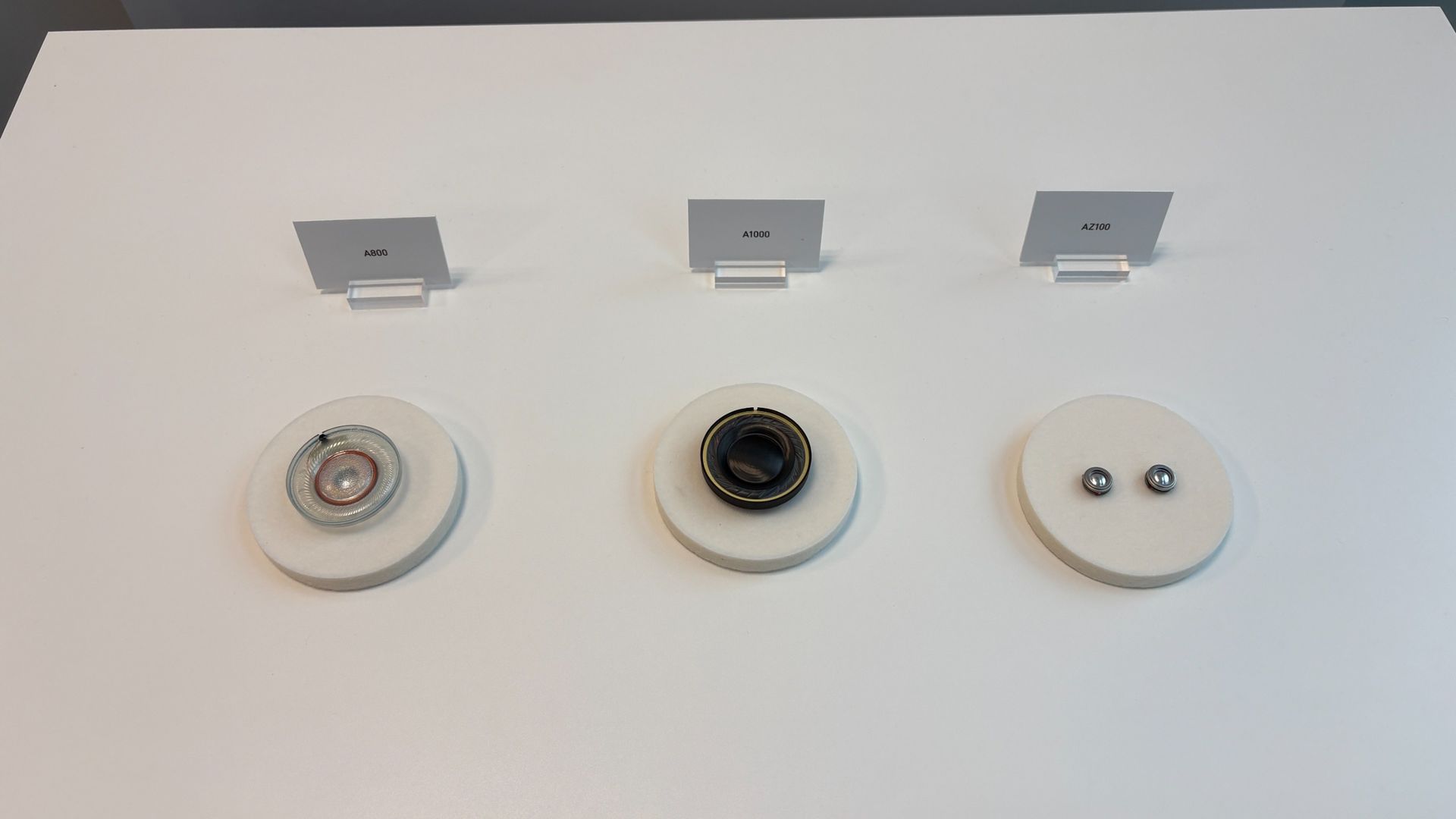
Technics EAH-A1000 headphones technology

Drivers for the older A800, new A1000 over-ears, and AZ100 earbuds. (Image credit: What Hi-Fi?)

Ultimately, though, anything that affects sound quality will need final approval by the acoustics team, as for Technics, the sound philosophy is most important.

"If sound quality isn't achieved to our high standard level, we don't bring it to the market," says Technics. Every audio product, including the EAH-A1000, is subject to the approval process by Technics' internal Sound Committee, which includes Yu Tanaka, who was responsible for the magnetic fluid driver in the A1000 and set the targets for the headphones' sound quality, and Technics' brand director Michiko Ogawa, who has the final say. If those sonic targets aren't met, they would simply postpone the launch until they were happy with the sound performance, I'm told.

Technics' head of headphone business, Kazunori Otsu, says that in the 60+ years of Technics' lifetime, "high quality music experiences" have progressed from in the home, with dedicated hi-fi separates, to almost anywhere in everyday life thanks to portable headphones.

He states that while the "way we listen to music has changed" over the years, "Technics' passion has not."

Technics EAH-A1000 wireless over-ear headphones

(Image credit: What Hi-Fi?)

MORE:

Read our Technics EAH-A1000 review

Technics is celebrating 55 years of its legendary SL-1200 turntable with a limited-edition design

  •  

Technics EAH-A1000

Technics might be a legendary name when it comes to turntables, but it has less household status when it comes to wireless headphones. The brand has been aiming to change that, and last year it came one step closer with the five-star EAH-AZ100 wireless earbuds, which beat out established rivals from Sony, Bose, B&W, Apple and Sennheiser to nab a coveted What Hi-Fi? Best Buy Award in 2025.

To see if they can repeat that success in the tough premium over-ears category, Technics has imbued its new flagship wireless headphones – the EAH-A1000 – with a refined design and plenty of new driver technology inspired by its hi-fi speakers and five-star earbuds. Has it done the job?

Price

Technics EAH-A1000 wireless over-ear headphones in case on wooden surface

(Image credit: What Hi-Fi?)

The Technics EAH-A1000 launches at £399 / $449 / AU$699, which puts it right in the midst of some fiercely competitive territory. The class leaders in this bracket include the five-star Sennheiser HDB 630 at £400 / $500 / AU$1000, while the Award-winning Sony WH-1000XM6 can be found for £349 / $450 / AU$699.

Bowers & Wilkins’ Px7 S3 and Bose’s QuietComfort Ultra Headphones (2nd Gen) are also available at the same kind of money, so consumers aren’t short of high-quality choices at this premium end, where mainstream players mingle.

Design & comfort

Technics EAH-A1000 wireless over-ear headphones held in hand with ear cups together

(Image credit: What Hi-Fi?)

These are a rather lovely pair of headphones. Where the predecessor EAH-A800 looked quite blocky, the EAH-A1000 has a much sleeker, more elegant look. The metal accents and refined contours on the headphones make them look and feel quite luxurious, as does the generous padding on both the headband and ear cups.

Technics EAH-A1000 tech specs

Technics EAH-A1000 wireless over-ear headphones

(Image credit: Technics)

Bluetooth SBC, AAC, LDAC

Bluetooth Multipoint? Yes (three-way)

Battery life 45 hours (with ANC on); 90 hours (with ANC off)

Charging USB-C

Wired listening? Yes, USB-C

Built-in mic and controls? Yes

Transparency mode? Yes

Finishes x 2 (Black, Platinum Greige)

Weight 306g

The headband is easy to adjust, and the inside of the ear cups is quite roomy, with plush memory foam ear cushions that hug your head quite snugly, but without any undue pressure. Technics has paid quite a lot of attention to the design and comfort of the A1000, with care taken over the metal ‘flow arm’ slider and hinges, and the angle of the ear cups so that there is an even pressure across the head when wearing them.

The headphones feel robust but also quite lightweight, and we find them to be a comfortable fit across the review team’s head sizes, even for those who wear glasses. Compared with the relatively slim profile of the Sony XM6 or Sonos Ace Ultra, the larger ear cups of the A1000 do stick out a fair bit, but overall they’re so nice and comfortable to wear that we don’t mind once they’re on our head.

The headphones fold up into a ball, too, which makes them easy to carry in a bag. They’re available in black or the nice silver/white colour of our review sample; Technics calls this colour ‘Platinum Greige’, but we’re going to ignore that.

Instead of any touch controls, Technics offers physical controls that are easy to use on the right ear cup. There are buttons for power and Bluetooth pairing, another one for changing the noise mode, and a multi-function slider control for changing volume, playing and pausing music, and summoning voice assistants.

They all work instantly with our commands, although we feel the slider control’s action could be more definite and feel more precise. It feels a little like a loose tooth on our sample, which mars the otherwise classy experience of using the A100.

Features

Technics EAH-A1000 wireless over-ear headphones app on three smartphone screens

(Image credit: What Hi-Fi?)

We must commend how swiftly the A1000 pairs with our source devices, with the connection remaining stable throughout our testing and reconnecting to our iPhone 16 without a hitch. Like their EAH-AZ100 earbuds counterparts, the A1000 over-ears feature three-way multi-point Bluetooth, which means you can be connected to three sources simultaneously and switch between them seamlessly – rivals are still limited to two devices only.

The A1000 supports the LDAC codec, allowing for higher-quality streams from compatible smartphones or portable music players such as the Sony NW-A306 and Astell & Kern SR35. Be warned that using the higher bandwidth LDAC disables certain features (such as the aforementioned three-way connection) and has a knock-on effect on battery life.

When listening using the standard AAC/SBC codecs, as we do for the majority of our testing with an iPhone 16, the battery life is an impressive 45 hours with ANC turned on. Turned off, this extends to a massive 90 hours. Those numbers are strong – they easily surpass the 30 hours offered by the Sony WH-1000XM6 and rivals from Bose and Bowers & Wilkins, although the Sennheiser HDB 630 still takes the lead at 60 hours with ANC turned on. We barely had to recharge the A1000 during our time with them, but a 15-minute charge does handily give you four hours of juice.

You can listen to the Technics EAH-A1000 using a wired USB-C connection, too – just note that the headphones need to be powered on to listen in this mode. You get two cables included in the hard carry case: a USB-C to 3.5mm audio cable, and a USB-C to USB-C lead for audio and charging.

Technics EAH-A1000 wireless over-ear headphones

(Image credit: What Hi-Fi?)

We must commend how swiftly the A1000 pairs with our source devices, with the connection remaining stable throughout our testing and reconnecting to our iPhone 16 without a hitch. Like their EAH-AZ100 earbuds counterparts, the A1000 over-ears feature three-way multi-point Bluetooth, which means you can be connected to three sources simultaneously and switch between them seamlessly – rivals are still limited to two devices only.

The A1000 supports the LDAC codec, allowing for higher-quality streams from compatible smartphones or portable music players such as the Sony NW-A306 and Astell & Kern SR35. Be warned that using the higher bandwidth LDAC disables certain features (such as the aforementioned three-way connection) and has a knock-on effect on battery life.

When listening using the standard AAC/SBC codecs, as we do for the majority of our testing with an iPhone 16, the battery life is an impressive 45 hours with ANC turned on. Turned off, this extends to a massive 90 hours. Those numbers are strong – they easily surpass the 30 hours offered by the Sony WH-1000XM6 and rivals from Bose and Bowers & Wilkins, although the Sennheiser HDB 630 still takes the lead at 60 hours with ANC turned on. We barely had to recharge the A1000 during our time with them, but a 15-minute charge does handily give you four hours of juice.

You can listen to the Technics EAH-A1000 using a wired USB-C connection, too – just note that the headphones need to be powered on to listen in this mode. You get two cables included in the hard carry case: a USB-C to 3.5mm audio cable, and a USB-C to USB-C lead for audio and charging.

ANC & call quality

Technics EAH-A1000 wireless over-ear headphones

(Image credit: What Hi-Fi?)

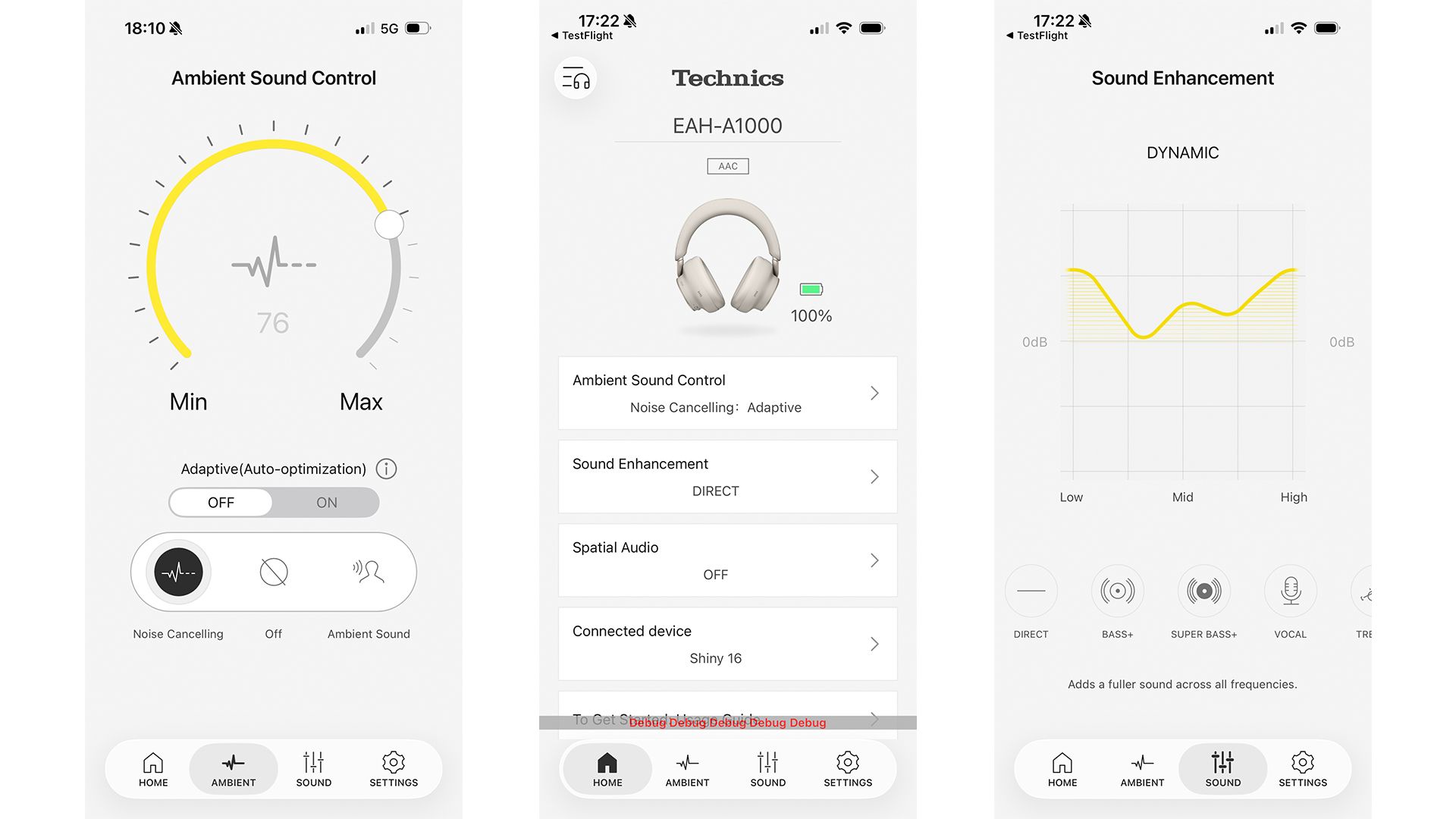
The EAH-A1000’s adaptive ANC performance uses four mics per side to adjust the noise levels according to your surrounding environment. In the app, you can choose the level of ANC on a scale of 0 to 100, or leave it in adaptive mode – curiously, we find that the adaptive mode does a better job of reducing rumbling traffic noise than full ANC.

The A1000’s noise-cancelling does a fine job of damping down surrounding noises – from train engines to traffic noises – enough that we can concentrate on our music. We spent a long-haul flight from Tokyo to London with the Technics headphones acting as a good buffer between our music and the plane’s engines (the plush cushioning helps here too), although frequent flyers might want even deeper, low-frequency rumbles to be silenced.

However, we are more aware of the sudden whoosh of passing cars and of background chatter here than on rivals, with the Sony XM6 dealing with such midrange and high-frequency noises more effectively. You can also feel the pressure of Technics’ ANC technology working hard when in adaptive ANC mode, which some may not like compared with Sony’s more natural, less-processed effect.

The customisable Ambient/transparency mode keeps you aware of your surroundings in a way that doesn’t feel too artificially amplified, while a further ‘attention’ mode enhances voices, so you never miss train announcements. The latter’s effect is more obviously processed, and we think the standard Ambient mode does the job well enough.

Call quality is a high point on the A1000, with our voices coming through clearly and with next-to-no background noise seeping through. We stand on a busy road during rush hour, and the caller on the other end can’t hear any traffic noise distracting from our voice. The Sony XM6 rival makes our voice sound fuller and more natural, but they also allow more background noise to cut through.

Sound

Technics EAH-A1000 wireless over-ear headphones held in hand in front of busy bookcase

(Image credit: What Hi-Fi?)

The biggest update Technics has made in its new flagship over-ear headphones is to do with the newly developed driver technologies. The Magnetic Fluid Driver technology worked so well for the AZ100 earbuds, it’s being used here again, albeit modified for the larger 40mm drivers in the A1000 over-ears. This aims to keep the movement of the driver consistent and reduce unwanted vibrations, without adding unnecessary mass.

The diaphragm is made of a lightweight yet rigid pure carbon fibre material, which, coupled with the driver’s cone shape and the SST (Symmetrical Surround Technology) Edge taken from Technics’ hi-fi speakers, aims to deliver a fast, accurate response with reduced distortion.

A redesigned acoustic control chamber further helps to manage airflow, with Technics promising a more natural soundfield for its “high precision music reproduction” to flourish.

Put it all together, and we’re met with a sound that is clear, spacious and very detailed.

Play Fallin’ by Alicia Keys, and her vocals soar in an open and roomy soundstage. The rough and raw edges of her singing come through with clarity and refinement, and the top notes have plenty of headroom to shine. Switch to Limit To Your Love by James Blake, and there is a satisfying amount of depth and solidity underpinning both his voice and the deep, plunging bass. The A1000’s presentation is full-bodied, with ample detail to voices and instruments giving them an immediacy that holds your attention.

Technics EAH-A1000 wireless over-ear headphones

(Image credit: Technics)

Every instrument in The Dave Brubeck Quartet’s Take Five is fairly easy to place, with the robust, tuneful saxophone appropriately taking the spotlight, while the sharper hi-hats and snares in the background hit with crispness but don’t intrude unduly upon the composition. The overall sound is clean and clear – Technics has done a fine job at keeping distortion levels low, which means we don’t mind listening at louder volumes, either.

There is a sweetness and smoothness to the sound. This characteristic doesn’t attempt to gloss over any cracks or try to smother any harder edges; it simply makes for a refined balance that is appealing to listen to from the get-go.

While not obviously lacking in energy, we do wish the A1000 had a bit more verve and attack when required. The rival Sony XM6 and Sennheiser HDB 630 headphones counter with a more propulsive, driven sense of rhythm that sounds more musically coherent, with low-level dynamics handled with a bit more agility. The start and stop of notes could be more precisely defined on the Technics, with bass notes, while deep and fulsome, sounding just a touch soft around the edges.

They are simply more comfortable staying on the polite, gentler side of the fence rather than getting their hands dirty.

Despite this, the A1000’s sense of organisation and level of detail retrieval is admirable, and they don’t ever lose composure when confronted with more complex or busy recordings. They make the difference between a hi-res and low-res recording clear, but handle those lower-quality recordings with the same refined brush – it’s a quality that means we’re happy to listen to the headphones for hours on end.

Verdict

Technics EAH-A1000 wireless over-ear headphones

(Image credit: What Hi-Fi?)

Technics’ EAH-A1000 are a fine pair of headphones. Their comfortable, elegant design and that refined, smooth presentation have plenty of appeal. There are many who will fall for the A1000’s charms, and we wouldn’t find much cause to deter them. At this level, however, the Sony WH-1000XM6 and Sennheiser HDB 630 rivals deliver just that bit more rhythmic precision and dynamic subtlety, leading to a more involving listening experience.

There’s plenty that Technics has done right with its new flagship over-ears. If they could combine just a bit more grit and punch alongside that sweet, open presentation, they could be on to a winner next time.

Review published: 29th September 2026

SCORES

  • Sound 4
  • Build 5
  • Features 4

MORE:

Read our review of the Sony WH-1000XM6

Also consider the Sennheiser HDB 630

"This is the headphone we set out to create from the very beginning" – a closer look at the development of the new driver technology inside the premium Technics EAH-A1000 wireless headphones

Best wireless headphones: reviewed and rated by our in-house experts

  •  

AudioQuest DragonFly Copper

AudioQuest’s DragonFly Copper retains all the charm and simplicity of the very first DragonFly we tested back in 2012: a hi-res DAC and headphone amplifier tucked into the titchy dimensions of a USB memory stick.

We marvelled back then at how such a small device could transform your computer into a full hi-fi system, and we haven’t stopped being impressed with subsequent DragonFly models (Black, Red, Cobalt) – all of which received enthusiastic five stars and have woven their way into many of the review team’s desktop hi-fi arsenal.

The new AudioQuest DragonFly Copper claims to be the brand’s most powerful and efficient DragonFly yet. Has it struck gold again?

Price

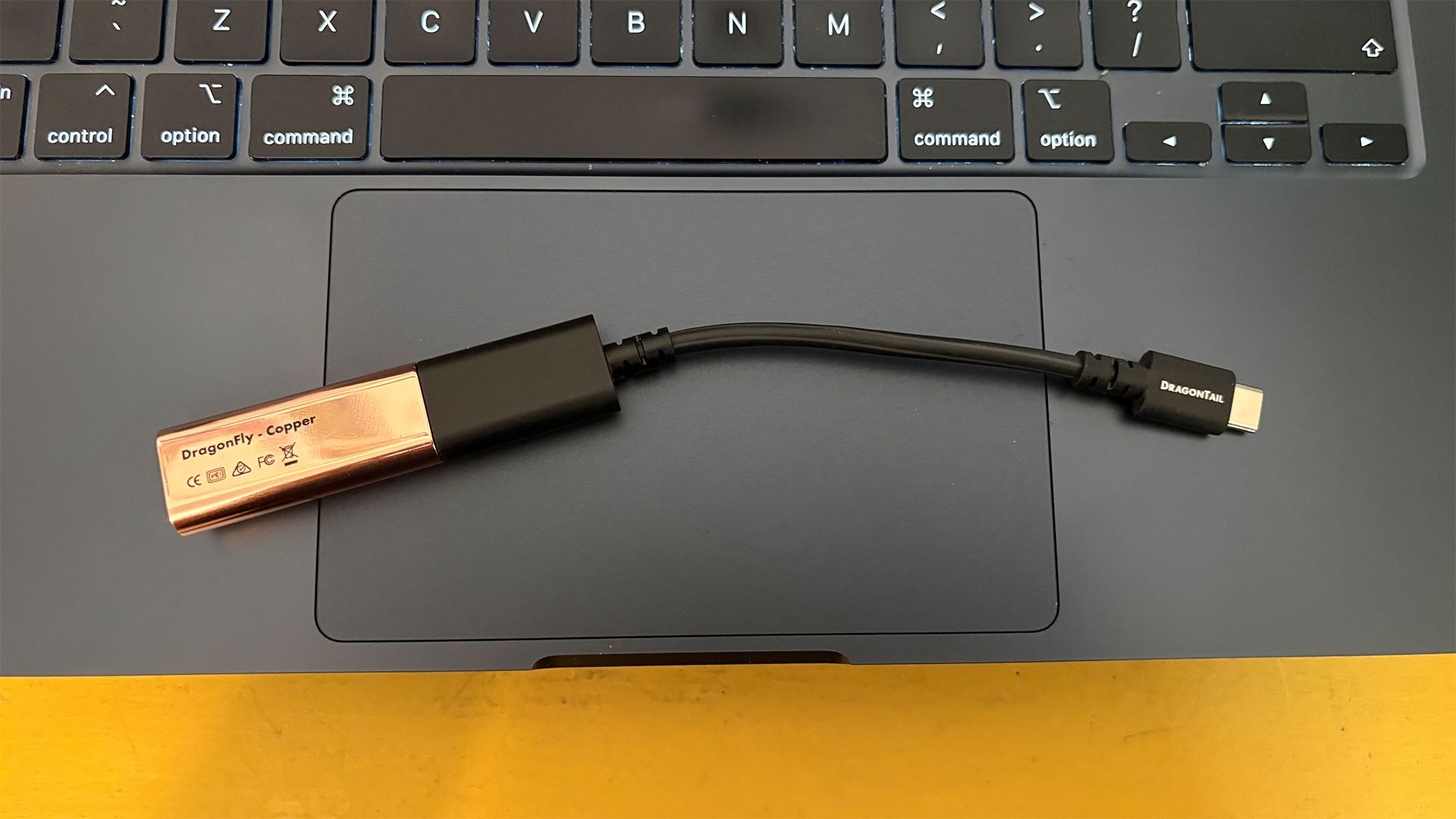
AudioQuest DragonFly Copper DAC sitting on laptop trackpad

(Image credit: What Hi-Fi?)

Costing £229 / $250, the DragonFly Copper launches at a lower price than the previous Cobalt did at £269 / $300 back in 2019. The DragonFly Cobalt was a multiple What Hi-Fi? Award winner for many years until it was discontinued, and in its latter years its price dropped down to around £179 / $200.

There are some strong contenders at either side of the Copper’s price. At the cheaper end you’ll find iFi’s Go Link Max (£79 / $79) and hip-dac 3 (£199 / $199), while the Award-winning Chord Mojo 2 (at £395 / $650) remains the steadfast option for those who can pay more.

Build & design

AudioQuest DragonFly Copper DAC connected between headphones and laptop and held in hand

(Image credit: What Hi-Fi?)

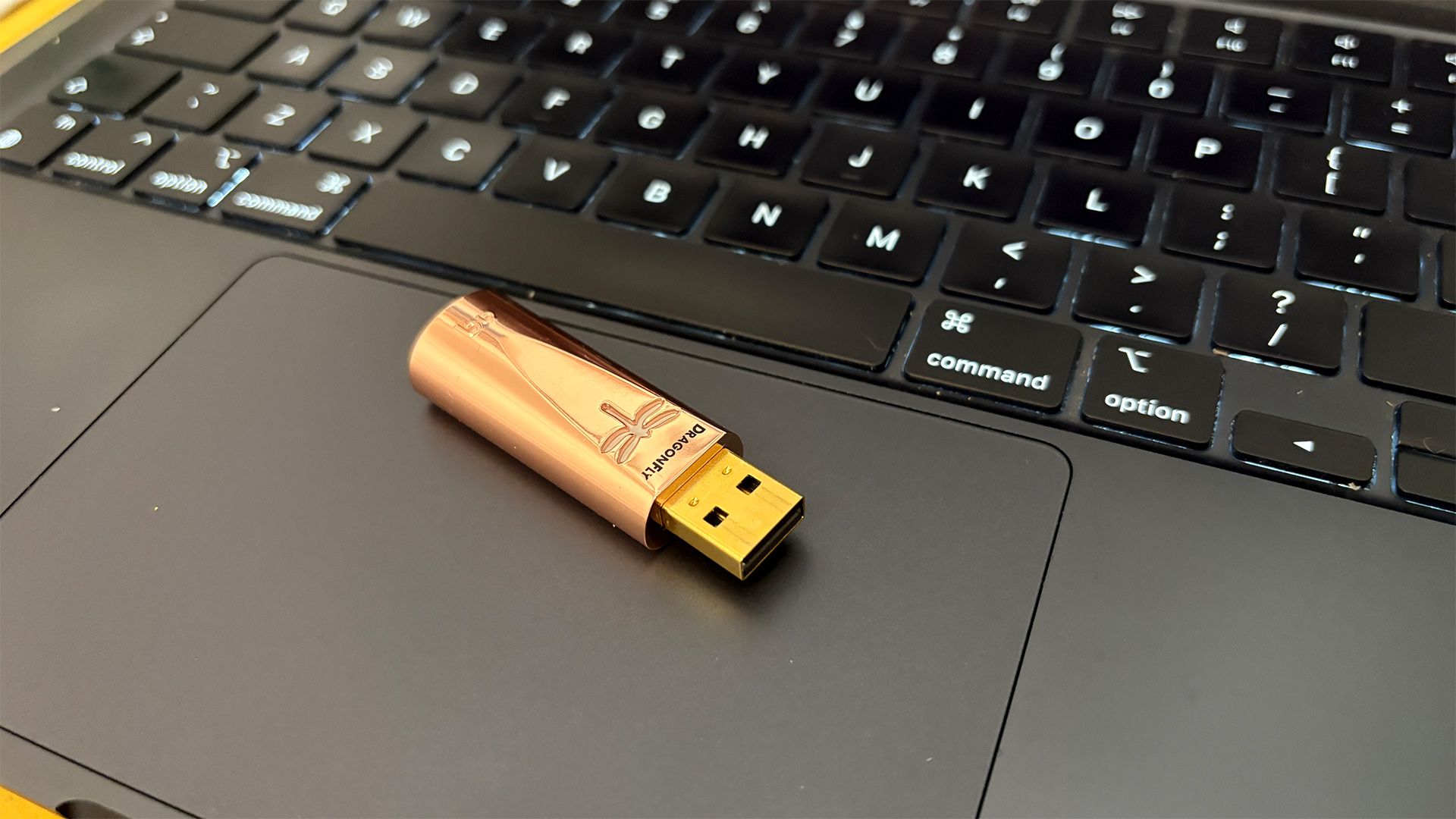
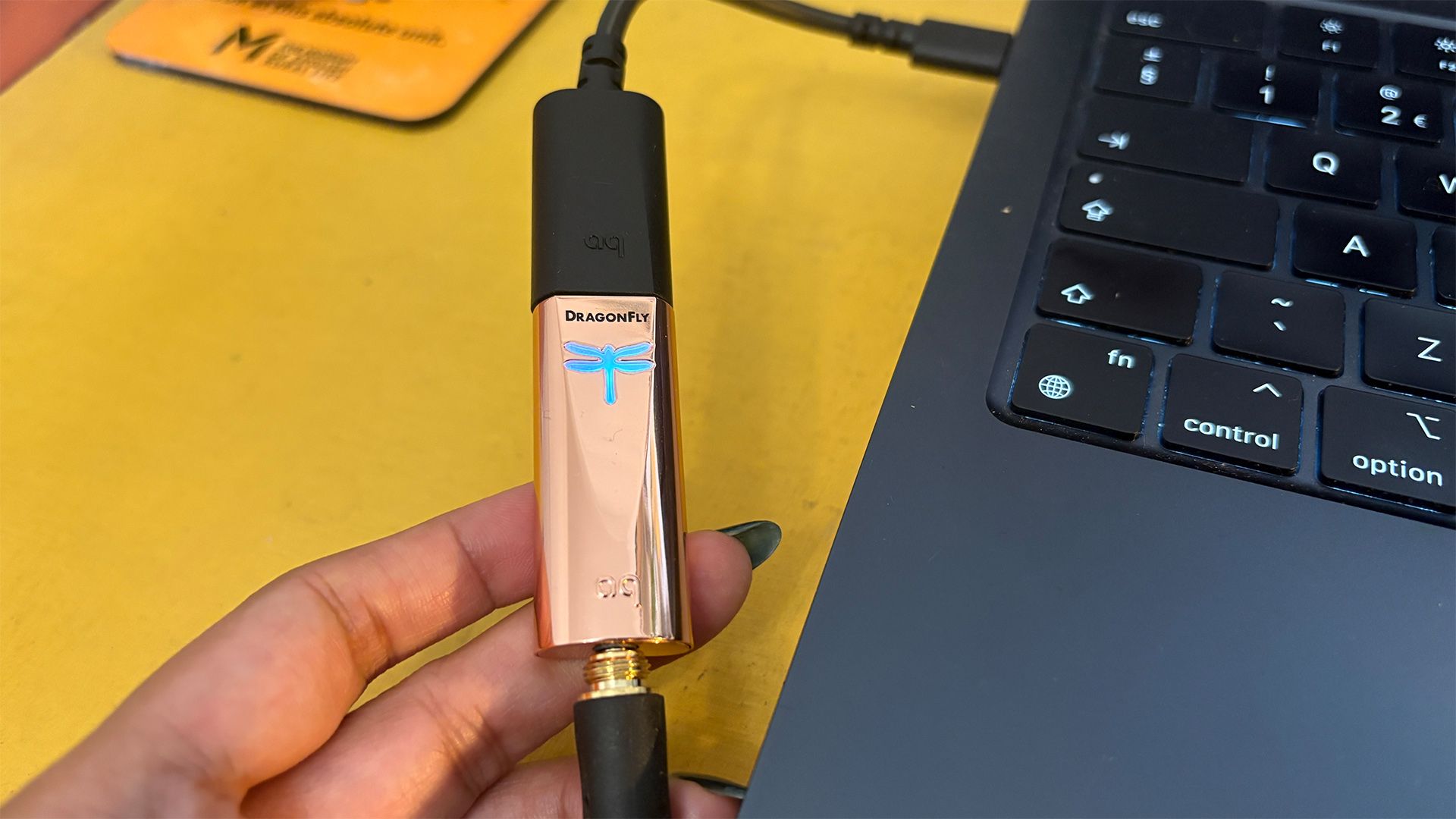
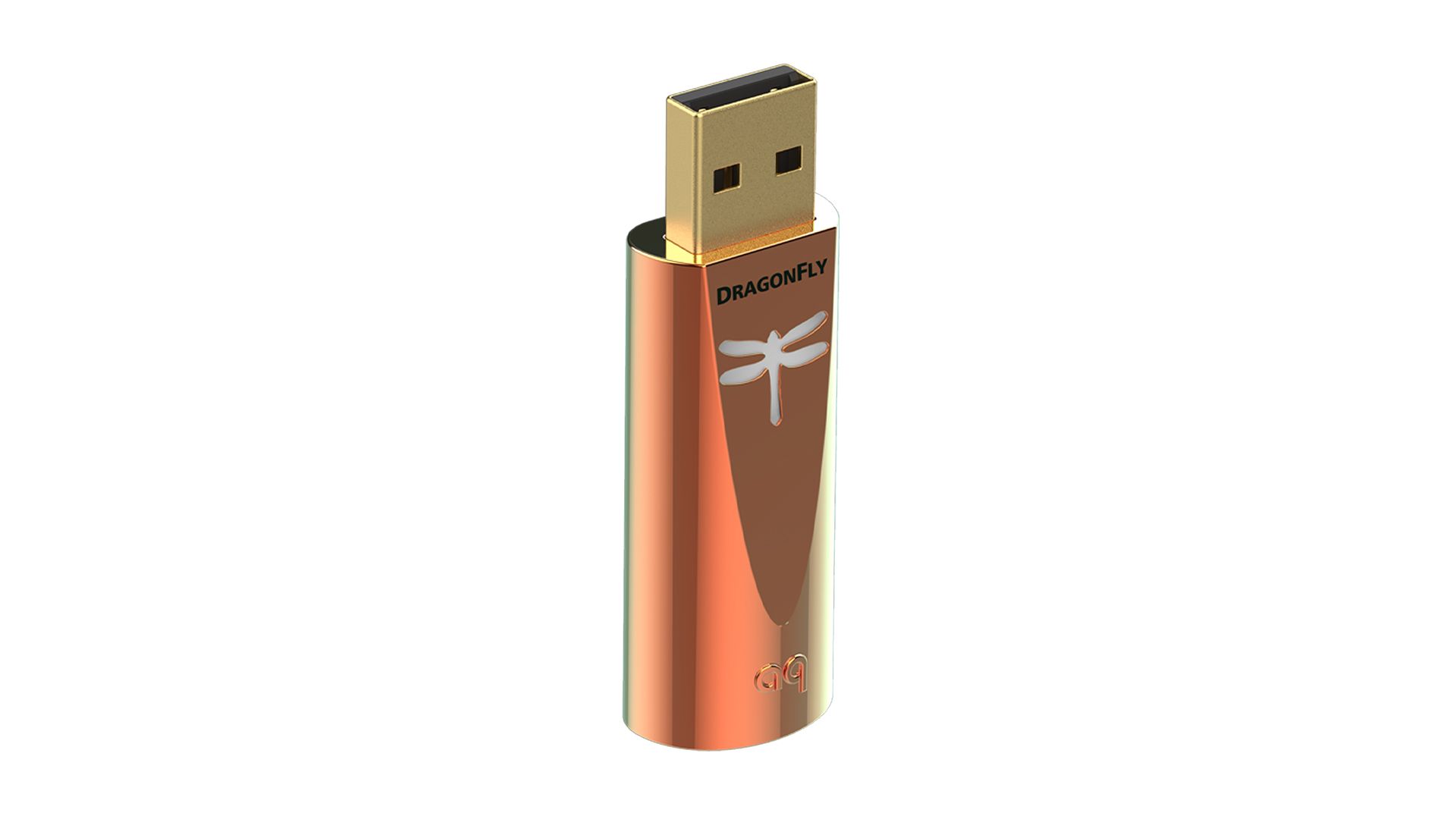
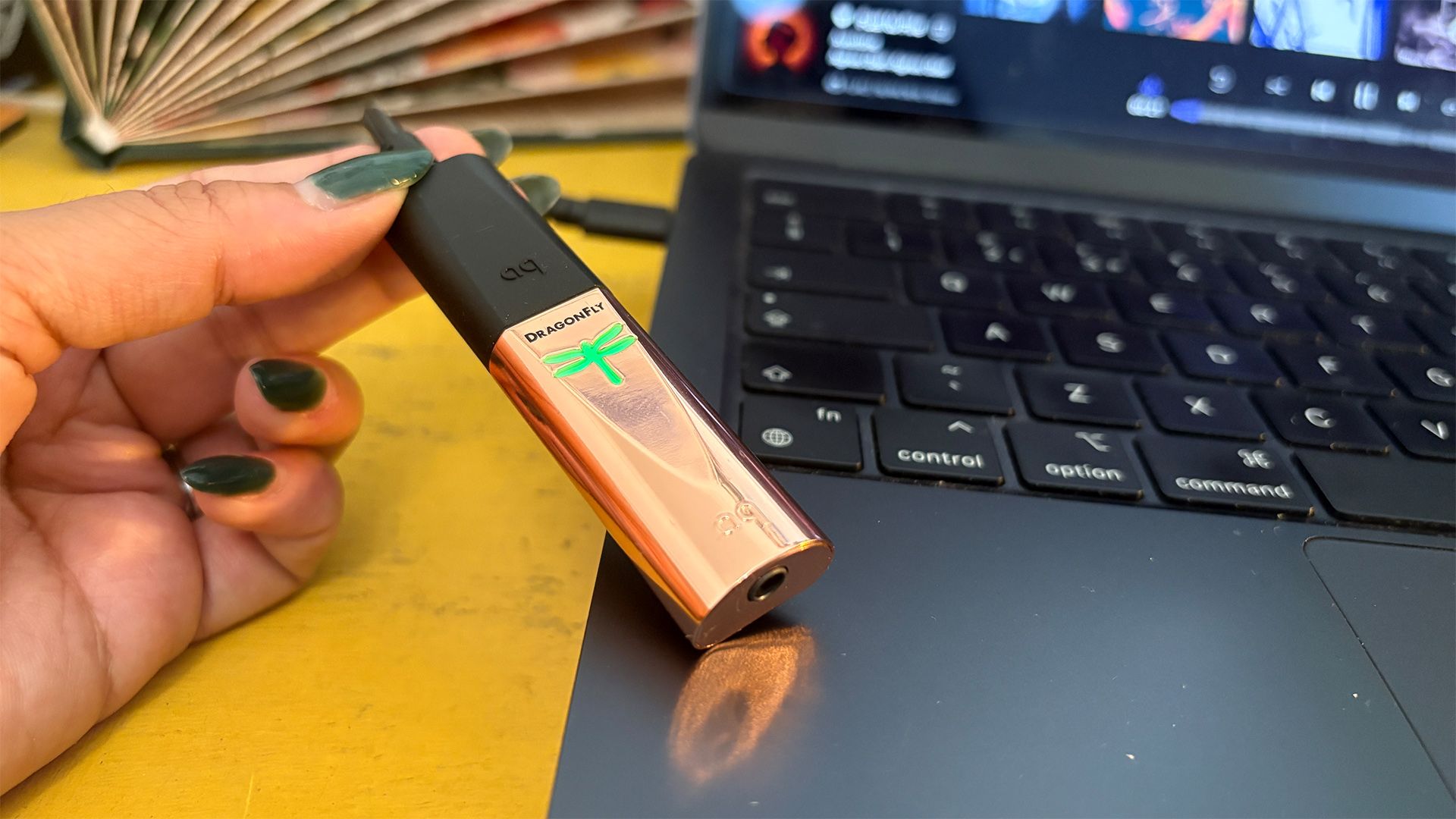
We’re delighted that the DragonFly Copper has stuck to its winning plug-and-play design. It’s tiny and easily portable. It is identical in size and shape to the older Cobalt, with only the shiny ‘copper’ finish differentiating the two on the outside.

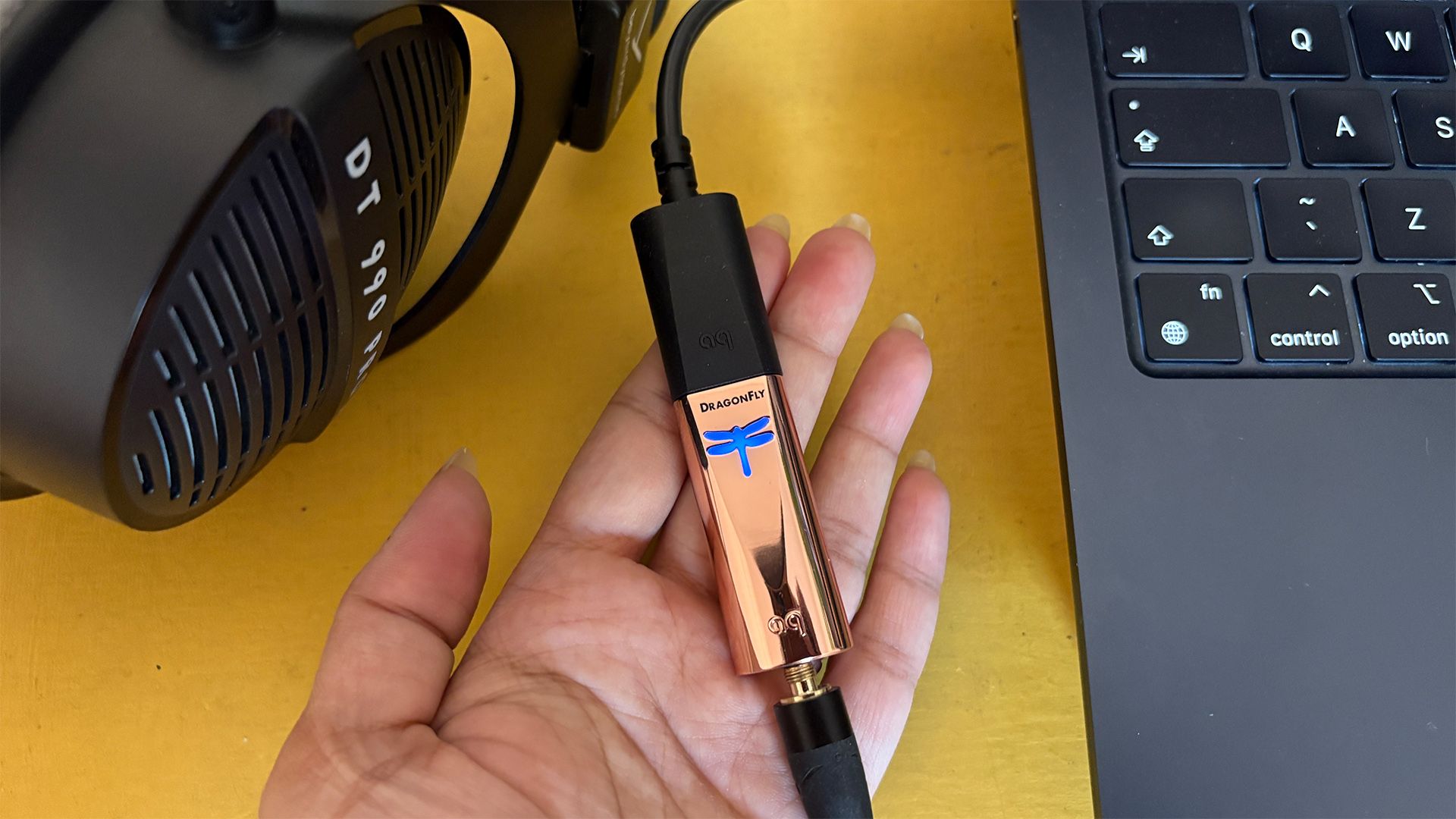
At one end is a 3.5mm output for plugging in your wired headphones, while on the other is a USB-A connector for connecting to your computer. Using it couldn’t be easier. As before, a USB-A to USB-C adaptor (called DragonTail) is included in the box, so you can use the DragonFly Copper with smartphones and a broader range of laptops.

AudioQuest DragonFly Copper tech specs

AudioQuest DragonFly Copper DAC

(Image credit: AudioQuest)

Headphone outputs 3.5mm

Inputs USB-A, USB-C adapter included

Charging port N/A

Battery life N/A

Weight 25g

Dimensions (hwd) 12 x 19 x 57mm

There’s no volume control, buttons or menu here. The only adornment on this tiny DAC is the dragonfly logo that lights up and changes colour according to the sampling rate of the music file being played: green for 44.1kHz, blue for 48kHz, yellow for 88.2kHz and light blue for 96kHz. It glows red when in standby mode.

Despite the variety of ultra-portable DACs that are available on the market, we think the DragonFly Copper remains a wonderfully unfussy and practical design for instantly boosting the sound from your laptop (or smartphone), and elegant in its simplicity.

Its size means you can keep it anywhere – alongside your keys in your bag, in the mug that holds all your pens, or leave it attached to your laptop without it taking up any meaningful space. Its simplicity means absolutely anyone, even a novice or technophobe, can use it without any barrier.

Our only minor complaint about the otherwise classy and solid build is that this new finish shows up fingerprints quite easily.

So what’s changed? Inside is a new 32-bit ESS Sabre DAC/headphone amp, while better parts and materials are used to help improve performance. The Copper promises twice the output power of any previous DragonFly, while power consumption is reduced by about 25 per cent, all while improving supply-chain efficiency.

We are promised lower noise and distortion than before, and that copper-plated casing isn’t just about looks – it is also designed for improved RF (radio frequency) noise dissipation.

Features

AudioQuest DragonFly Copper DAC held in hand and resting on laptop

(Image credit: What Hi-Fi?)

The DragonFly aims to handle all kinds of popular file types, from MP3s to WAVs to FLACs. You’ll have noticed by the LED colours that the maximum native file resolution is supported up to 24-bit/96kHz PCM. The Copper will accept 24-bit/192kHz files, but they will be processed at its resolution limit.

This is versatile enough for most people’s desktop music libraries, but there are now rival portable DACs even at this level that can support native 192kHz playback – so why this limit?

For AudioQuest, it was simply more important that the DragonFly Copper worked with every device you plugged it into. So to avoid any potential issues with device compatibility, the Copper uses the base USB Audio Class 1/USB 1.1 standard, which, while having a 24-bit/96kHz cap, ensures that it will have no issues when used with any audio-capable USB port. That means regardless of whether you’re using iOS, Android, Mac, Linux or Windows, new or old, the DragonFly Copper will/should work with all.

Additionally, in such a small package as the DragonFly, AudioQuest found that running at higher sampling frequencies increases noise levels, which tends to have an adverse effect on sound quality. While in a larger DAC this could be solved by separating the digital and analogue sections and shielding parts from the increased noise generated by the higher sampling rate, AudioQuest tells us this wasn’t possible in such a tiny form factor.

For AudioQuest, chasing the higher spec introduced trade-offs that it wasn’t happy with. If your digital library is full of these rarer higher file rates (and DSD files), you will want to consider alternatives, but we think the DragonFly Copper, for this price and its intended use, will be more than adequate for most people.

Sound

AudioQuest DragonFly Copper DAC held in hand between headphones and laptop

(Image credit: What Hi-Fi?)

We plug the DragonFly Copper into both a Lenovo Windows laptop and a MacBook Pro running Audirvana software, and play a variety of local tracks – hi-res FLACs, CD-ripped WAVs and even some lowly MP3s – as well as our favourite Tidal playlists. We also use a wide variety of headphones throughout our testing, which include the Beyerdynamic 990 Pro X, Grado SR325x, Shure SRH1540 and Sennheiser HD 600.

Does the DragonFly Copper improve your laptop’s music compared with simply plugging wired headphones straight into your laptop’s 3.5mm port? 100 per cent. The change in performance is immediate: every song sounds more powerful and dynamic, and musical elements are more precisely and confidently placed in a larger, more spacious soundstage. Layers of detail and texture are unearthed, with voices and instruments sounding full-bodied and substantial, while timing is spot-on.

Playing Fleetwood Mac’s The Chain (in 24-bit/96kHz), we find the leading edges to be crisply drawn, basslines and drum kicks are pulled taut and land with snappy impact, and there’s a good amount of tactility and shine to the guitar strums. Rhythmically, it all dovetails together to sound cohesive in the roomy soundstage. There’s drive and momentum in the repeated chorus – you can hear the fierceness in Stevie Nicks’ and Lindsey Buckingham’s warring vocals – and the drop in near-silence before that iconic bassline hits is appropriately dramatic.

With the DragonFly Copper deployed, that bassline is weighty and satisfying, while still tuneful and fast enough to keep the melody propelling forward.

Play The Curse by Agnes Obel, and the Copper makes it all sound fluid, atmospheric and involving. The breathy layers of her ethereal voice fill up the spacious soundscape convincingly while also sounding intimate; the difference in pressure of the fingers plucking the strings and the movement of the bow across the strings is more apparent.

Compared to previous DragonFly DACs, the Copper sounds cleaner and less noisy, and that darker background allows for more subtlety and depth to the sound, while big dynamic shifts are handled with punch and a greater degree of gradation.

No matter what genre or file type we play – a 24-bit/192kHz FLAC of Tom Waits’ Closing Time album or MP3s of indie-folk demos or a CD-quality Khruangbin album – the Copper handles every kind of recording to the best of its very admirable ability, allowing the songs to flourish in the spotlight.

The grimy, sludgy, distorted guitars in Deftones’ Change (In The House Of Flies) come through with a satisfying amount of muscle and heavy angst, while Michael Giacchino’s orchestral Star Trek (2009) compositions sound rousing and inspiring. The differences in tonal quality between the big thunderous drums and the reedy woodwinds are relayed with a good amount of skill, and the variations between the quietest moment and a sudden loud moment are handled with authority and nuance in equal measure.

The Copper doesn’t shy away from laying bare low-fi or messy recordings, either. The noisy, shriller recording of Neutral Milk Hotel’s In The Aeroplane Over The Sea isn’t scrubbed clean, with those glaring, higher notes coming through with all their shininess intact, but without sounding horribly bright or hard.

Through it all, the DragonFly Copper ensures that everything still sounds organised and has solid footing. Rhythmically, it is quite excellent for its price and type, and so no matter the genre, it holds its own and leaves us hooked to the music, toes tapping and attention rapt.

It’s a similar story when we plug the Copper into an iPhone 16 and Samsung Galaxy S24, although as it draws power from the connected source, it sounds less powerful and less subtle through a smartphone compared with a laptop.

We would also recommend choosing your wired headphones carefully as the DragonFly Copper is more than capable of driving even premium options, and is flexible enough to showcase each headphones’ specific sonic character, too.

The differences between the Copper and Cobalt are pretty much how we found the differences between the Cobalt and the Red. The newer model is crisper, cleaner and more punctual, with a tighter bass and greater finesse, leaving the older model sounding a touch fuller and fuzzier. Both DACs are excellent performers that make music sound exciting and involving; the Copper is simply a more attention-grabbing performer, while the Cobalt now feels like a comfortable old friend.

Give it some good running-in time, and the new Copper will settle in just as nicely.

Verdict

AudioQuest DragonFly Copper DAC

(Image credit: What Hi-Fi?)

We were briefly worried that AudioQuest wouldn’t be making any more DragonFlys once the Cobalt DAC’s stock started winding down. We are very glad that it has, as the new DragonFly Copper is a terrific, tiny, simple device that is incredibly effective at making your desktop-bound music sound a hundred times better.

For its size and price, it’s quite astonishing just how good it is. Highly recommend.

Review published: 28th September 2026

  • Sound 5
  • Build 5
  • Features 3

MORE:

Read our review of the iFi Go Link Max

Also consider the Chord Mojo 2

Best DACs: USB, desktop and portable digital-to-analogue converters

  •  
❌