Ships, aircraft, and a submarine from the US and UK were involved in Exercise Atlantic Thunder 2026, a multi-domain sinking exercise (SINKEX) led by US 6th Fleet, in the North Atlantic, Sep. 25, 2026.
According to a US Navy news release, during the SINKEX, participating forces assigned to U.S. Commander, Task Force 65, US Commander, Task Force 67, US Commander, Task Force 68, US Commander, Task Force 69 and US Commander, Task Force 1060 alongside the UK Royal Navy and the US Air Force sank the decommissioned guided-missile frigate ex-USS Klakring. The event developed combined proficiency in tactics, targeting, and live-firing against a surface target at sea.
“Atlantic Thunder demonstrates the unmatched lethality and interoperability of the United States and United Kingdom,” said US Capt. Kelechi Ndukwe, Commander, U.S. Task Force 65. “This sinking exercise not only validated the power behind U.S.-UK offensive weapons but delivers a clear message to adversaries that the U.S. Navy and Royal Navy remain a ready allied force.”
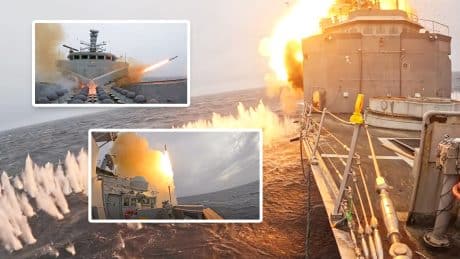
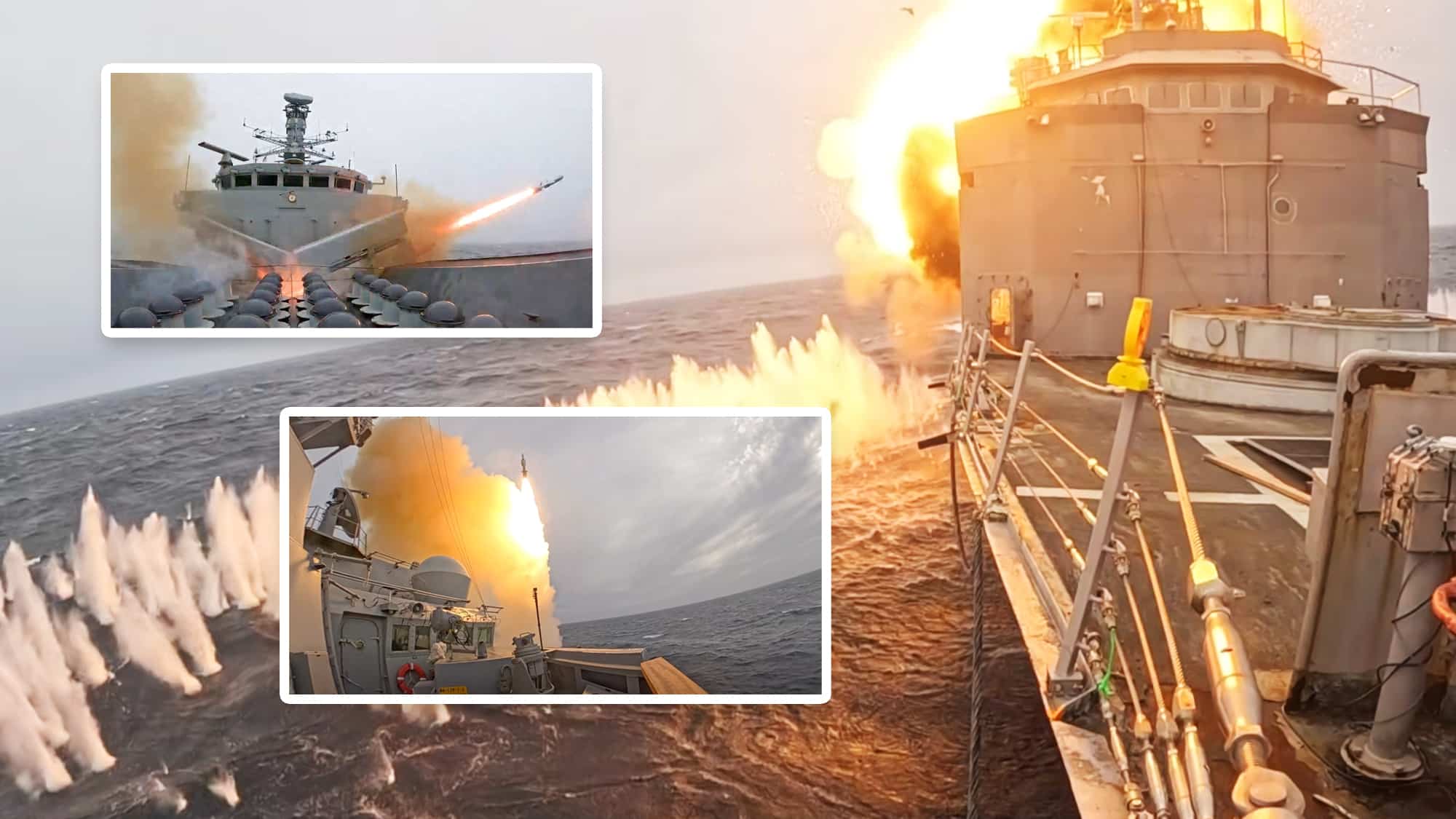
HMS Portland fires a Naval Strike Missile on Sep. 20, 2026, during a sinking exercise.
The exercise strengthens the US-UK alliance, warfighting credibility, and interoperability during long-range maritime sinking operations. During the SINKEX, the guided-missile destroyer USS Paul Ignatius (DDG 117) successfully demonstrated maximum damage and range capability of an anti-surface variant of the Standard Missile 6 (SM-6). USS Massachusetts (SSN 798) successfully engaged the target with the Mk 48 Advanced Capability Torpedo, resulting in the final hit and ultimately sinking ex-USS Klakring, as the video in this post shows.
US and UK units involved in the exercise
During the exercise, the Royal Navy confirmed its newest ship-busting missiles, the Naval Strike Missile (NSM) and Sea Venom.
“The successful firing of NSM marks a significant milestone for the Royal Navy, demonstrating our ability to deliver credible, modern maritime strike capability,” said Royal Navy Lt. Cmdr. Louise Kirkaldy, HMS Portland’s Principal Warfare.
This model is available from AirModels – CLICK HERE TO GET YOURS.
Prior to the start of the exercise Naval Surface Warfare Center Carderock and Naval Information Warfare Center (NIWC) Pacific used sensors placed on the target ship to perform battle damage assessments. The data gathered will be used in post-exercise damage assessments to provide critical information to rapidly identify system failures, determine repair needs, and strengthen the Navy’s future real-world response.
US and UK units involved in the exercise included Paul Ignatius, USS Massachusetts, Royal Navy frigate HMS Portland (F 79), US Navy and Royal Air Force P-8 maritime patrol aircraft, a Royal Navy Wildcat helicopter, US Air Force F-15E Strike Eagles, and personnel assigned to US Explosive Ordnance Disposal Mobile Unit (EODMU) 8.
USS Klakring
USS Klakring (FFG-42) was a Oliver Hazard Perry class frigate of the United States Navy named for Rear Admiral Thomas B. Klakring (1904–1975), who was awarded three Navy Crosses as commander of the submarine USS Guardfish during World War II.
The decommissioned guided-missile frigate ex-USS Klakring (FFG 42) is struck during a sinking exercise (SINKEX) as part of Exercise Atlantic Thunder 2026 on Sep. 20, 2026.
Klakring was laid down on 19 February 1982 by the Bath Iron Works Corp. Bath, Maine; launched on Sep. 18, 1982, sponsored by Beverly Bohen, niece of Rear Admiral Klakring, and commissioned on Aug. 20, 1983 at Bath.
The USS Klakring was decommissioned on Mar. 22, 2013.
Hulks
Former US Navy vessels used in SINKEXs, referred to as hulks, are prepared in strict compliance with regulations prescribed and enforced by the Environmental Protection Agency under a general permit the Navy holds pursuant to the Marine Protection, Research and Sanctuaries Act.
Prior to being transported, each hulk undergoes a rigorous cleaning process for environmental safety. Aligned with UK Ministry of Defense environmental policy, robust monitoring was conducted above and below the sea’s surface with trained personnel using specialized equipment to reduce the overall risk of inadvertent impact to the marine environment and marine mammals during the Atlantic Thunder 2026 SINKEX.
Photo credit: U.S. Navy and Royal Navy
Video: VIDEO: Former U.S. Frigate Sunk in Exercise with U.S., Royal Navies Dzirhan Mahadzir September 30, 2026 1:27 PM
SM-6, Sea Venom, and Naval Strike Missile munitions were paired alongside a Mark 48 ADCAP torpedo to send the decommissioned Oliver Hazard Perry class frigate to the bottom of the Atlantic Ocean.
Concluding Exercise Atlantic Thunder 2026, the sink exercise (SINKEX) was conducted in the Northern Atlantic off the Outer Hebrides in Northern Scotland. The former USS Klakring, an Oliver Hazard Perry class frigate commissioned in 1983 and decommissioned in 2013, was specially prepared for the exercise with extensive cleaning and hazard removal.
The SINKEX was used to validate the capabilities of a number of new munitions which have entered service in recent years. Arleigh Burke class guided missile destroyer USS Paul Ignatius (DDG 117) fired an SM-6 missile in its secondary role as an anti-ship weapon, testing the performance of the missile towards the upper end of its range.
Decommissioned Oliver Hazard Perry-class frigate USS Klakring (FFG-42) being towed out of Philadelphia Naval Inactive Ship Maintenance Facility (NISMF) for SINKEX reportedly around Scotland – August 12, 2026 SRC: FB- Delaware River Shipping / John Curdy pic.twitter.com/y5JIvPBLVu
“Atlantic Thunder demonstrates the unmatched lethality and interoperability of the United States and United Kingdom,” said Captain Kelechi Ndukwe, Commander, U.S. Task Force 65. “This sinking exercise not only validated the power behind U.S.-UK offensive weapons but delivers a clear message to adversaries that the U.S. Navy and Royal Navy remain a ready allied force.”
New onboard SINKEX views — including some wild slo-mo
US-UK forces send the decommissioned guided-missile frigate USS Klakring to the bottom of the Atlantic
Blows delivered by USS Paul Ignatius, the newly commissioned USS Massachusetts, others
Royal Navy Type 23 frigate HMS Portland (F79) used the opportunity to conduct the service’s first ever ‘warshot’ launch of the Norwegian-built Naval Strike Missile (NSM) that has replaced the Harpoon in UK service. Petty Officer James Kenyon, an Above Water Warfare specialist on HMS Portland, said: “Being the first person to fire war-shot NSM and achieve a hit is a very proud moment, and one that will stay with me for the rest of my career. This was the culmination of over a year’s effort in planning and bringing the drills into service, and I am glad that I was able to contribute.”
Lieutenant Commander Louise Kirkaldy, Portland’s Principal Warfare Officer (PWO), said: “The successful firing of NSM marks a significant milestone for the Royal Navy, demonstrating our ability to deliver credible, modern maritime strike capability.”
HMS Portland launches a Naval Strike Missile during Exercise Atlantic Thunder off Scotland, striking the decommissioned USS Klakring in the Royal Navy’s first operational firing of NSM.
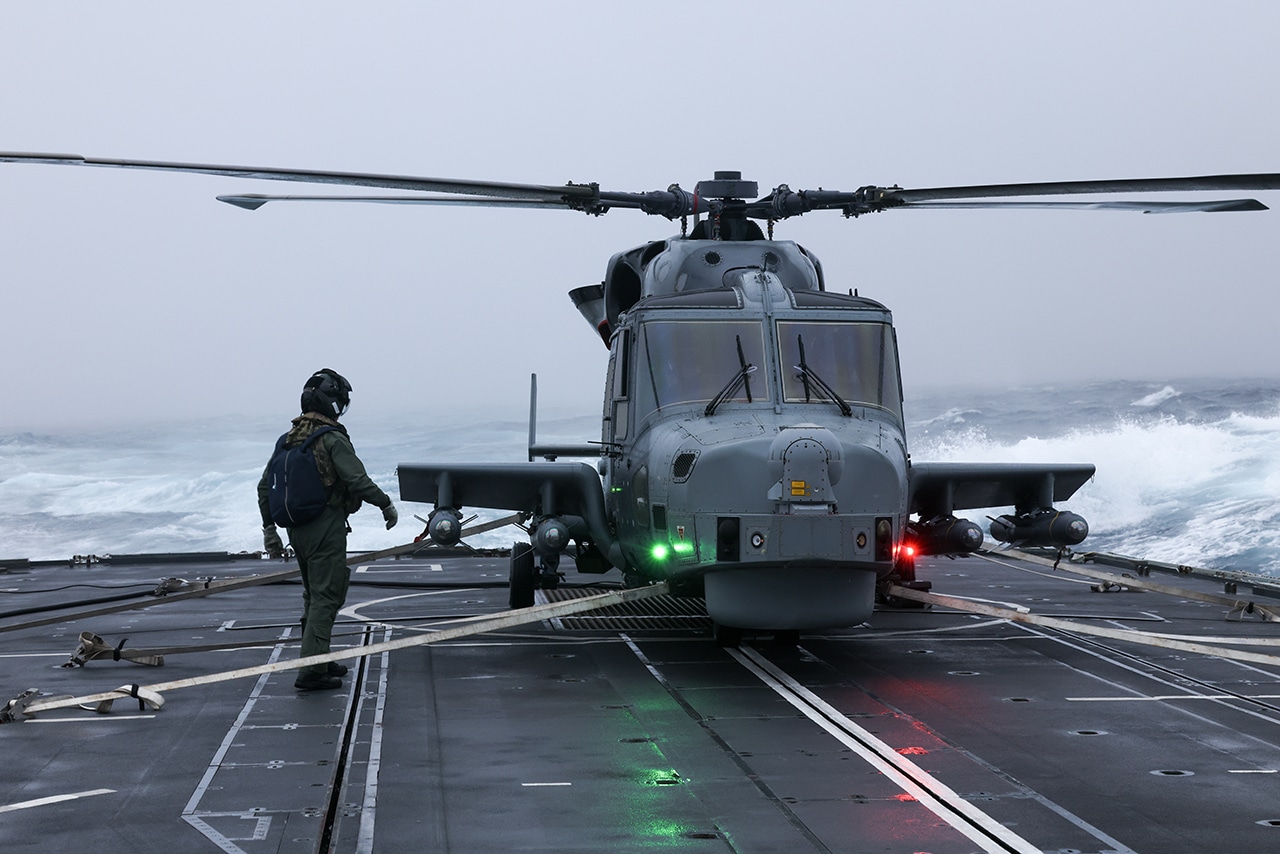
Portland’s contribution was added to by the ship’s embarked Wildcat helicopter, hailing from 815 Naval Air Squadron. In another first, the Wildcat fired a Sea Venom anti-ship missile at the Klakring in the first operational live firing of the weapon type against a realistic target.
A Wildcat helicopter can carry as many as four Sea Venom missiles per sortie, with each weapon packing a 120 kilogram warhead. Though much smaller than ship-killing weapons like NSM and Harpoon, the Sea Venom is designed to deliver enough destructive capability to destroy smaller naval vessels, or using multiple finely targeted missiles complete a successful mission kill against larger frigate or destroyer sized targets.
HMS Portland’s Wildcat Wildcat, prior to takeoff. | Source: LPhot Henry Parks/Crown Copyright 2026
Lieutenant Commander Rhydian Edwards, Test & Evaluation Commander, Maritime Aviation Strike Operational Advantage Group, said: “This was a landmark moment for the Wildcat Force. For the first time we demonstrated the live firing of an operational Sea Venom missile against a representative maritime target. More importantly, we proved our ability to execute the full maritime strike kill chain under realistic operational conditions.”
“This was about giving commanders confidence that Wildcat can find, fix and strike maritime targets using Sea Venom as part of a wider task group. The lessons learned from this activity will directly inform future tactics, training and operational capability development, ensuring Maritime Aviation Strike remains ready to fight and win when called upon.”
More air-launched munitions came in the form of guided bombs dropped by F-15E Strike Eagles based with the 48th Fighter Wing (FW) at RAF Lakenheath. P-8 Poseidon maritime patrol aircraft from the U.S. and UK also took part in the SINKEX, though no weapon launches have been attributed to them and their contribution may have simply been as surveillance platforms.
Finishing off the Klakring, the USS Massachusetts (SSN 798), commissioned into the U.S. Navy in March 2026, targeted the frigate with a Mark 48 Advanced Capability (ADCAP) torpedo.
USS Massachusetts (SSN 798) Virginia-class Block IV attack submarine leaving Faslane, Scotland – September 11, 2026 SRC: FB- Argyll Sea Glass pic.twitter.com/Ba4k7jzjyJ
Massachusetts, the 25th Virginia class submarine, was pushed into service without the traditional post-commissioning shakedown period in order to mitigate current shortfalls in U.S. attack submarine availability. The decision has been described as a ‘calculated risk’. The submarine was noted at the Royal Navy’s Faslane base earlier in September.
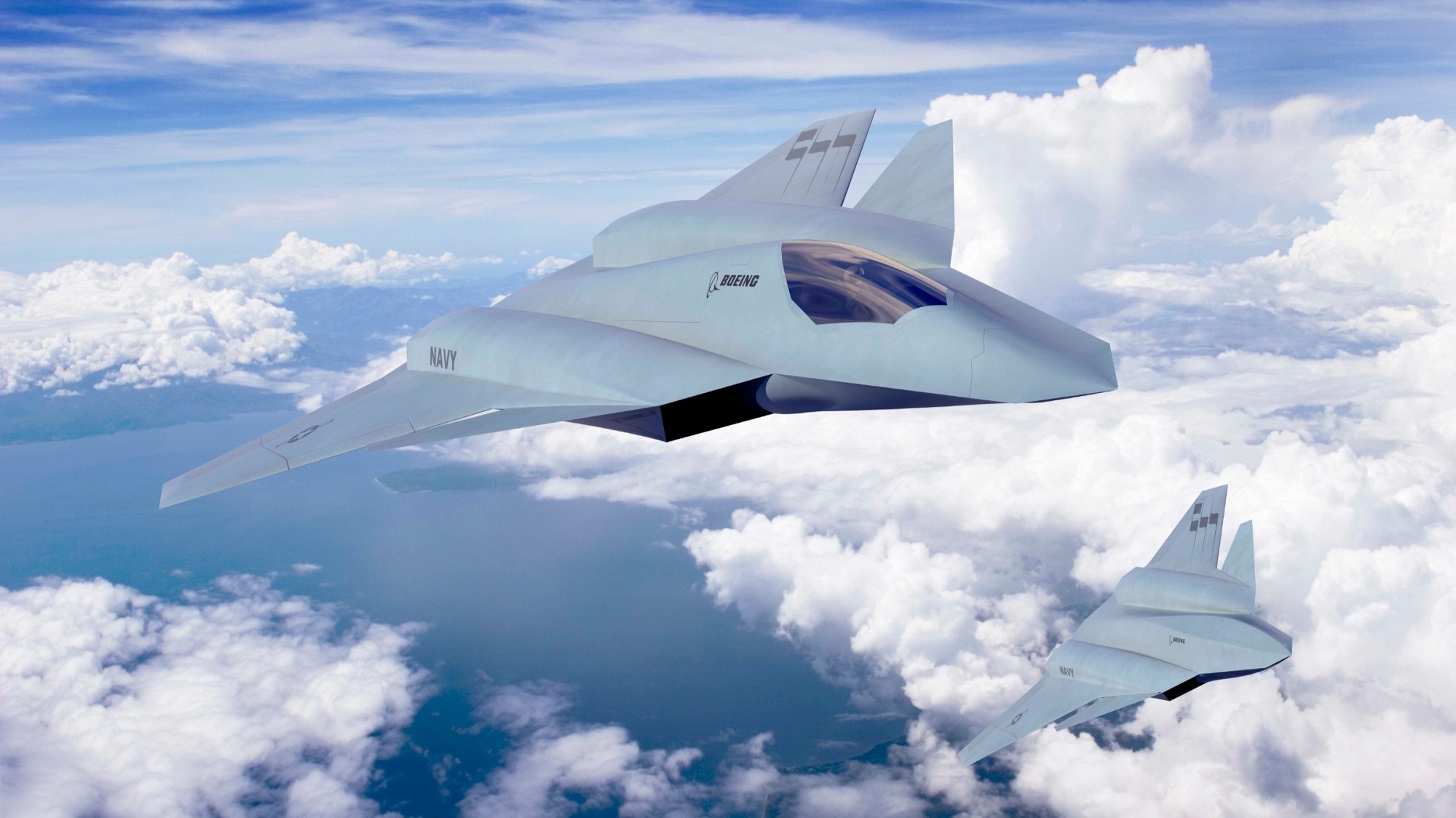
The US Navy announced Boeing has been awarded a multi-billion-dollar contract to produce its F/A-XX aircraft. The fighter will revolutionize advancements in open mission systems architecture, advanced mission systems and operational reach and capacity. F/A-XX is intended to replace the service’s fleet of F/A-18 Super Hornets.
“It’s an honor to be selected to produce the Navy’s first sixth-generation platform. Backed by decades of work, bolstered by game-changing innovations and solidified by the investments we’ve made in new facilities uniquely suited to build multiple products with next generation capabilities, our dedicated and talented team is ready to execute this critical program,” said Steve Parker, president and chief executive officer, Boeing Defense, Space & Security, in a company news release.
“Delivering two advanced fighters in parallel was always our plan, and we invested accordingly. We are ready and able to build multiple concurrent future combat aircraft franchise programs,” said Parker.
Construction continues on Boeing’s secure manufacturing facility, the largest in the U.S. Located in St. Louis, the facility will be part of the world’s most advanced, all-digital aerospace design and manufacturing system.
“Investment in facilities is just one part of the story; we’re also investing in technology and people so that we can deliver for our customers,” Parker added.
The technical and programmatic details of F/A-XX remain classified under US national security and export laws.
Northrop Grumman Vs Boeing
Noteworthy, only Northrop Grumman and Boeing were left to race one against the other in the US Navy Next Generation Air Dominance (NGAD) sixth-generation fighter jet program aimed at replacing F/A-18E/F and EA-18G aircraft by means of a new air superiority fighter.
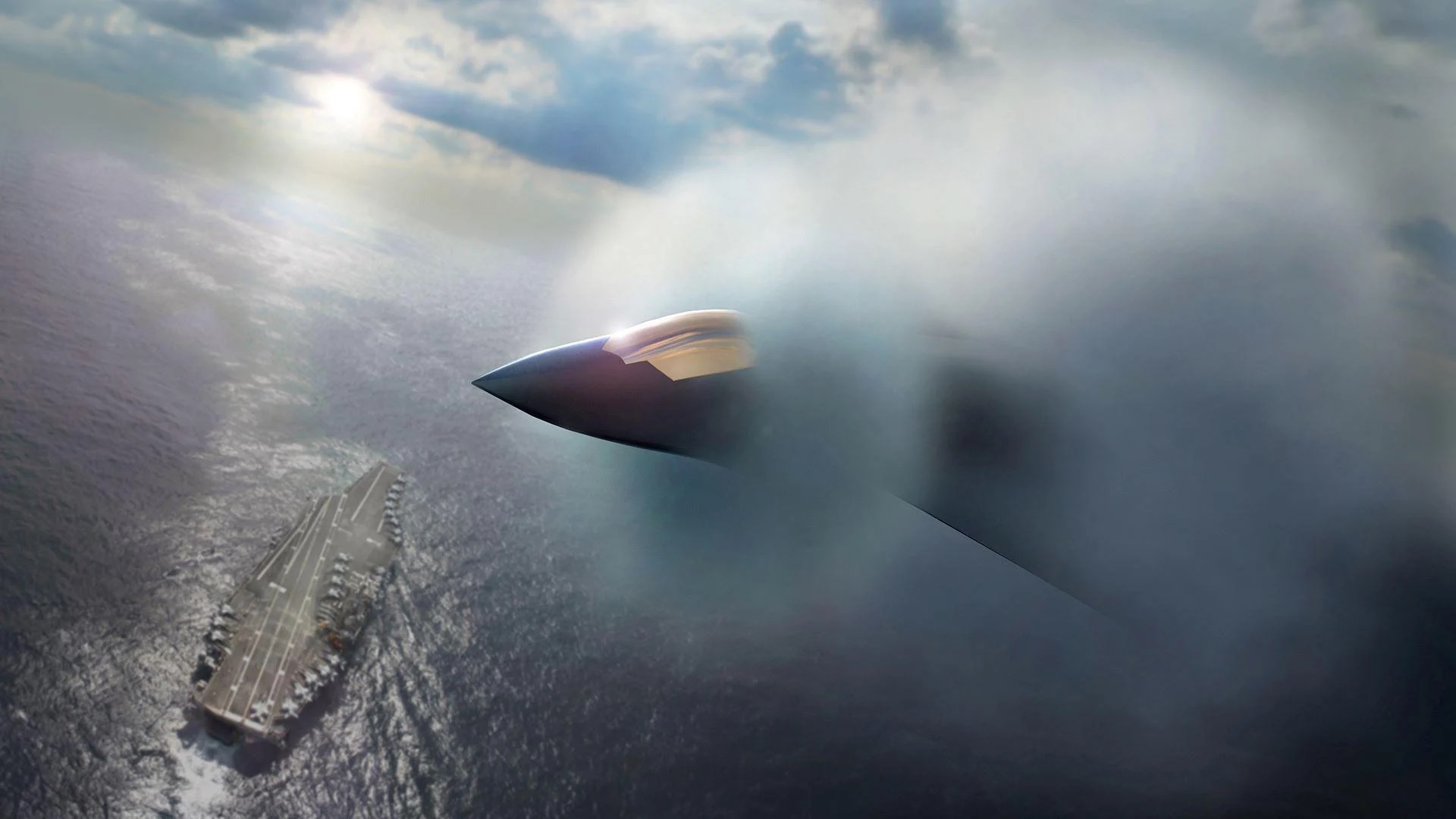
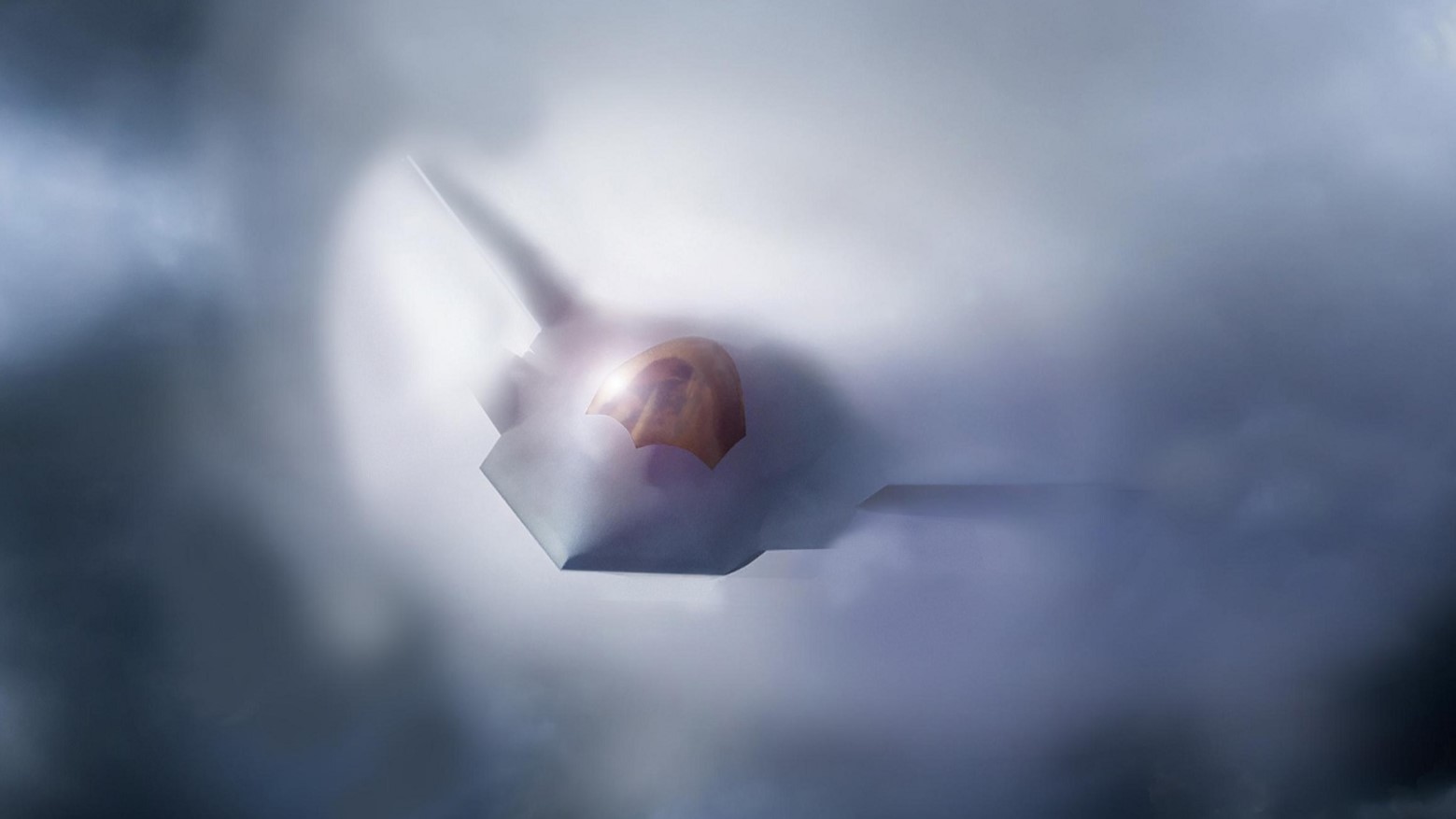
The Navy released this artist’s rendering of the Boeing F/A-XX, highlighting the Navy’s 6th-generation fighter intended to replace the service’s fleet of F/A-18 Super Hornets. Artist rendering: NAVAIR Public Release SPR-2026-0601.
As already reported in March 2025, the proposal submitted by Lockheed Martin to the service did not satisfy the US Navy’s criteria, a source with knowledge on the matter explained to Breaking Defense. What we know is that up to November 2024 proposals were evaluated by the service but as of today is not clear when Lockheed Martin was knocked out of the project. However, the company was no longer proceeding with any bid.
If Northrop Grumman had won the F/A-XX contract it would be the first fighter built by the company since the iconic F-14 Tomcat; instead since Boeing won the F/A-XX contract its facility in St. Louis will see a brighter future given that the company builds fighters in that facility.
Core attribute
According to a statement released in April 2025 by Rear Adm. Michael Donnelly, director of the Air Warfare division for the CNO, a “core attribute” of the F/A-XX is expected to be its range, up to “probably” 125 percent “of the range that we’re currently seeing today to give us better flexibility [and] operational reach.”
In a written testimony to Congress in May 2022, Navy officials said that the service NGAD program is meant to expand the range for carrier-based operations.
“The NGAD [family of systems] will replace the F/A-18E/F Block II aircraft as they begin to reach end of service life in the 2030s and leverage Manned-Unmanned Teaming (MUM-T) in order to provide increased lethality and survivability,” reads joint testimony from Department of Navy acquisition officials. “F/A-XX is the strike fighter component of the NGAD FoS that will be the ‘Quarterback’ of the MUM-T concept, directing multiple tactical platforms at the leading edge of the battlespace.”
Since the F-14 Tomcat interceptor left the inventory in 2006 the effective combat radius of the carrier air wing has contracted. Since the Pentagon’s strategy focused on the Indo-Pacific and the need to counter China in a potential conflict, the Navy has had to explore ways to extend the range of carrier operations due to the vastness of the region. The MQ-25A Stingray unmanned carrier tanker will nominally increase the combat radius.
This model is available from AirModels – CLICK HERE TO GET YOURS
Boeing has won the U.S. Navy’s F/A-XX competition for the sixth-generation carrier-based fighter, with a contract valued at more than $20B for the full-scale development phase.
After months of wait, the U.S. Navy has finally announced Boeing as the winner of the competition for the F/A-XX sixth-generation carrier-based fighter as part of the service’s Next Generation Air Dominance (NGAD) program. With the award, Boeing will now develop and build the NGAD crewed fighter jets of both the Navy and Air Force.
The highly anticipated award comes after an imminent announcement was reported multiple times since March 2025, with the program apparently stuck in a limbo. The last such report mentioned the Navy would announce its selection by the end of August 2026.
Earlier this year, Chief of Naval Operations (CNO) Adm. Daryl Caudle warned that the Navy must accelerate development of F/A-XX to ensure it can penetrate future air defense environments over the next decade. “Our ability to fly with impunity with our existing airframes is fleeting,” Caudle said. “If I don’t start building that immediately, you’re not going to get it for some time.”
The announcement
In the statement released on Sept. 29, 2026, the Department of War said Boeing was awarded a contract valued at more than $20B for the full-scale development phase of F/A-XX. The contract covers multiple test aircraft for ground, airworthiness, systems, and weapons integration testing.
“The F/A-XX is a critical pillar in our commitment to maintaining peace through strength. F/A-XX will dominate contested airspace, extend operational reach, and deliver a decisive combat advantage for the warfighter,” said Michael P. Duffey, Under Secretary of War for Acquisition and Sustainment. “The F/A-XX platform represents a crucial, non-negotiable investment in America’s national security and long-term air combat capabilities. We are joining forces with Boeing to field these capabilities rapidly, ensuring our warfighters possess the lethal and highly networked systems required to deter aggression, project undisputed power, and secure absolute air superiority.”
A rendering of Boeing’s proposed F/A-XX design. | Source: Boeing
The F/A-XX is expected to provide advanced carrier-based power projection, further extending the range of U.S. Navy aircraft carriers. The new fighter jet will augment and eventually replace legacy F/A-18E/F Super Hornets and EA-18G Growlers beginning in the 2030s, and operate alongside the F-35C and Collaborative Combat Aircraft (CCA).
“This achievement marks a new era for the U.S. Navy,” said acting Secretary of the Navy Hung Cao. “The Sixth-Generation fighter is a generational leap in air superiority and will provide the world’s best aviators with unparalleled capabilities to fight, win, and come home safe. We are excited to partner with Boeing, and for our warfighters to continue to dominate the skies and defeat our nation’s enemies.”
6th-gen edge.
Thank you, @USNavy, for continuing our partnership to design, build and deliver your F/A-XX aircraft. We’re honored to produce the 6th-generation fighter that will revolutionize advancements in naval aviation to maintain U.S. carrier air superiority.
The statement released by Boeing puts emphasis on the company’s work on the NGAD programs of both the Navy and Air Force.
“Delivering two advanced fighters in parallel was always our plan, and we invested accordingly. We are ready and able to build multiple concurrent future combat aircraft franchise programs,” said Steve Parker, president and chief executive officer, Boeing Defense, Space & Security.
History of the F/A-XX program
The F/A-XX is the strike fighter component within the U.S. Navy’s Next Generation Air Dominance (NGAD) Family of Systems (FoS). The requirement for this aircraft has been around since 2008, with a formal Request for Information in 2012, to replace the F/A-18E/F Super Hornet in the 2030s.
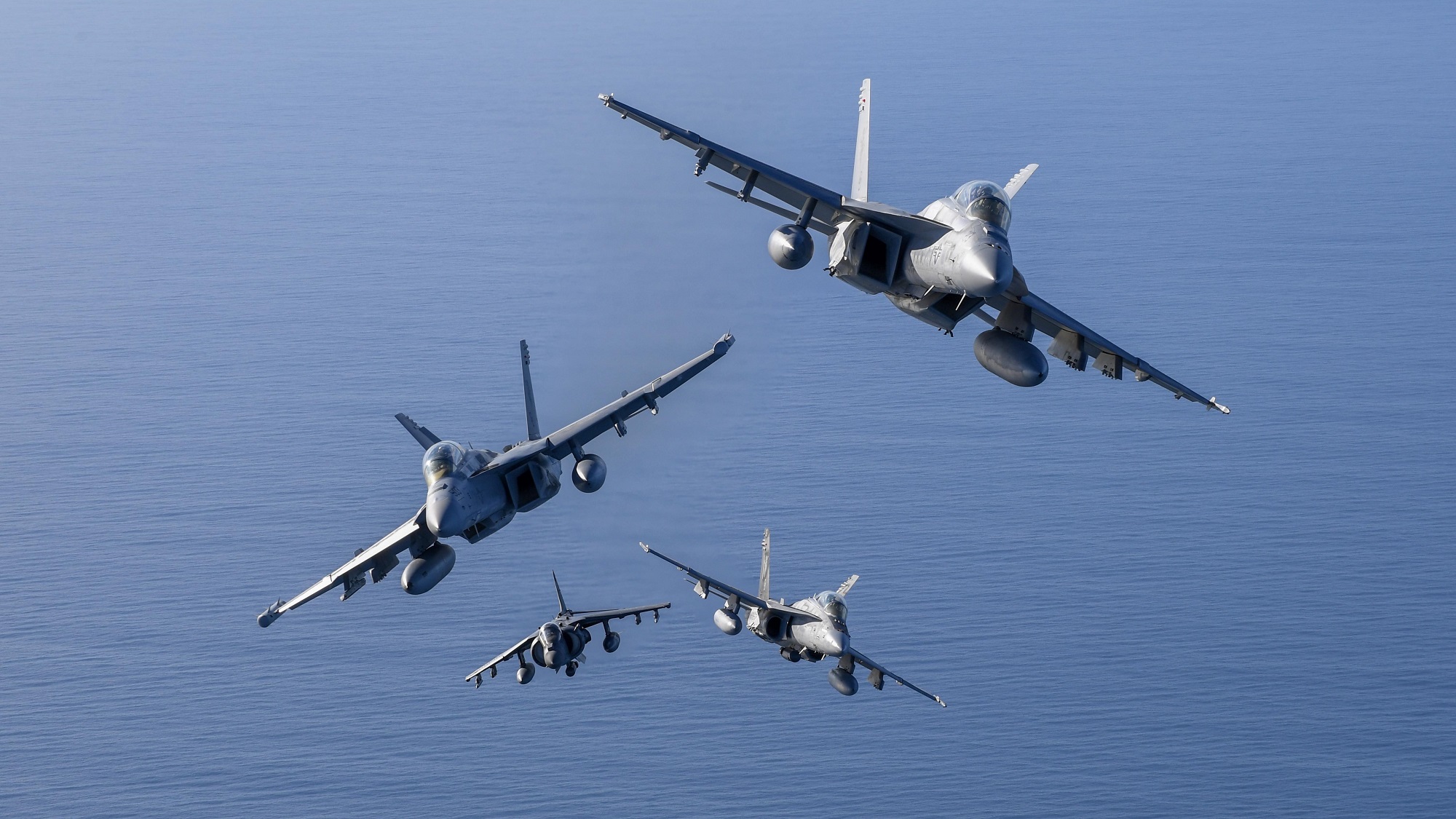
A formation of Air Test and Evaluation Squadron (VX) 31 “Dust Devils” aircraft, including an EA-18G Growler, AV-8B Harrier II+, an F/A-18F Super Hornet, and an F/A-18D Hornet, flies over Point Mugu’s Sea Range in Californati during a photo exercise. | Source: U.S. Navy
Later, the F/A-XX was included in the service’s NGAD program, which is a separate program from the identically named Air Force program. The Navy says that its “specific capabilities and technologies are under development, however analysis shows it must have longer range and greater speed, incorporate passive and active sensor technology, and possess the capability to employ the longer-range weapons programmed for the future”.
The NGAD FoS will include unmanned platforms with F/A-XX as the quarterback, exploiting the Manned/UnManned Teaming (MUM-T) concept to reduce risk to the manned aircraft, while simultaneously increasing capability, capacity, and survivability. The new MQ-25 Stingray will be the first unmanned asset to employ this capability, extending the strike range and enhancing maneuverability of the Carrier Air Wing.
Continued development of MUM-T will enable information sharing across a distributed force, increasing survivability, reducing risk to manned aircraft, and ensuring weapons capacity. The Navy is evaluating the appropriate mix of F/A-XX, manned and unmanned platforms to ensure the most lethal and affordable CVW possible, depending also on the maturity of autonomy and Machine Learning technologies.
The Navy envisions future unmanned air vehicles with survivable planforms, sensors, and robust autonomy able to find, fix, identify, track, engage, and assess land, sea, and air targets. These UAVs will be employed alongside manned aircraft and unmanned attritable assets to enable integrated kinetic and non-kinetic fires at tactically relevant ranges in multidomain operations.
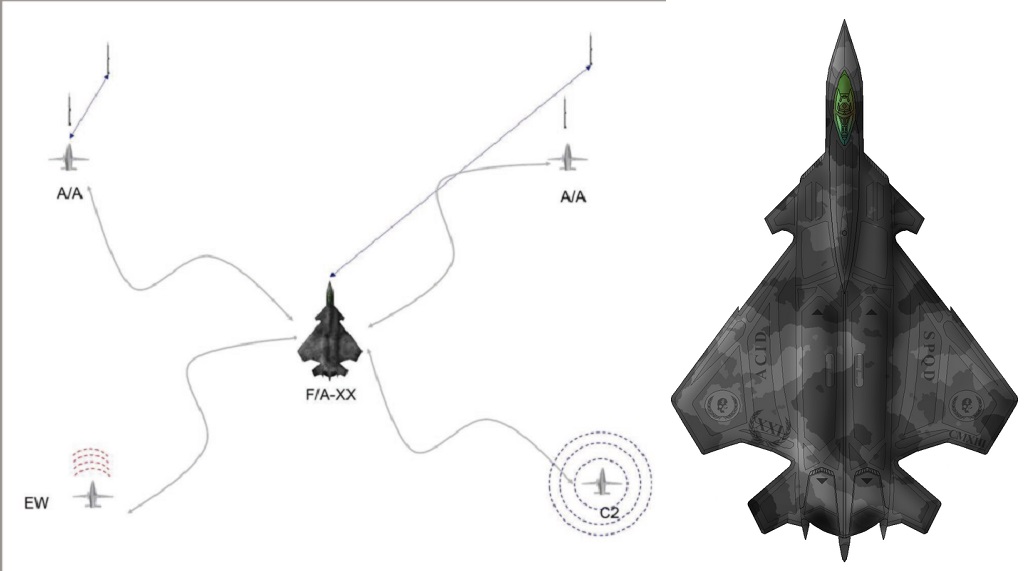
In a 2021 document, the Navy showed a fictional F/A-XX operating in a MUM-T environment with four drones, whose shape represents the MQ-25. Interestingly, the drones were shown employing Air-to-Air (AA), Electronic Warfare (EW) and Command and Control (C2) payloads, much like the Loyal Wingman drones currently being developed. This falls in line with the service envisioning Unmanned Air Systems (UAS) to fill refueling, communications relay, logistics, airborne electronic attack, strike, and ISR&T missions in the future air wing.
The F/A-XX placeholder design as shown by the U.S. Navy in its vision for 2030-2035, together with a better image of the original fictional design. (Images via U.S. Navy and Tapatalk) | Source: U.S. Navy
In 2024, in an interview released to Aviation Week, Rear Adm. Michael Donnelly, director of the air warfare division in the Office of the Chief of Naval Operations, said the Navy will develop its aircraft independently, a reverse of previous reports who said the Navy and Air Force would share the developments of their next generation aircraft programs.
The Navy’s decision to move forward independently might have shielded the F/A-XX from the results of the NGAD’s review and the subsequent decisions. The service is confident in the suitability and affordability of the F/A-XX and is committed to move forward with the program.
“We have to have an affordable platform to make it relevant to our force structure and force design, so we’ve got that in mind,” said Donnelly. “We think we’ve got an affordable solution that supports our force structure of the future.”
According to Donnelly, the F/A-XX program was on track for the Milestone B decision to move the Engineering and Manufacturing Development (EMD) phase by the end of fiscal year 2025.
“We feel really good through the concept development that we’ve got the right bracket for those requirements and the attributes we need to deliver the capability,” Donnelly says. “We’ll continue to look at that as we go through the next phases of the acquisition process and make smart decisions.”
An early artist’s render showing a hypothetical F/A-XX fighter-attack aircraft. | Source: Boeing
What F/A-XX Is Expected to Deliver
The Navy envisions F/A-XX as more than a simple replacement for the F/A-18E/F Super Hornet and the EA-18G Growler. The new aircraft is expected to combine stealth, extended range, electronic warfare, and command-and-control functions into a single next-generation platform.
Navy officials previously said F/A-XX is expected to have approximately 25% more range than the F-35C, as well as more advanced jamming capabilities than the Growler. Moreover, it is also designed from the outset to control multiple Collaborative Combat Aircraft (CCA), as noted by the CNO.
“The next-generation airframe, F/A-XX is so vital,” Caudle said. “It’s vital because of, one, the CCAs it will command and control. Its penetration – the Growlers won’t last forever, so it’ll be our electronic attack airplane as well. Its range will be coupled with the MQ-25 for clandestine refueling and organic refueling from the carrier.”
The aircraft is therefore central to the Navy’s future carrier air wing concept to maintain the service’s ability to project power in high-threat environments. In this mix of crewed and uncrewed platforms, the F/A-XX will be the quarterback, often said the Navy.
Navy’s and Air Force’s NGAD relation
According to Rear Adm. Donnelly, the new carrier-based fighter will be affordable, versatile and independent of Air Force-funded technologies such as an adaptive-cycle turbofan engine. While the service already said it would require a different airframe than the Air Force’s NGAD, other systems to be included were not mentioned.
The second rendering of the U.S. Air Force’s sixth generation fighter, the F-47. | Source: U.S. Air Force
Initially, the Navy appeared interested in the adaptive-cycle technology being developed for the Next-Generation Adaptive Propulsion (NGAP) program. In the past decade, however, propulsion plans for the two services have diverged, according to Donnelly.
“We’re looking at more of a derivative-type engine solution,” said Donnelly. “That’s just one example where we probably are different in many ways from the Air Force. In totality, they are two unique programs from an acquisition point of view and also going forward, so we’re relatively independent of each other at this point.”
Both programs appear to be under budgetary pressure, as both services are currently working on multiple large programs. In the Navy’s case, the 2025 budget for the new aircraft suffered a cut of 67%, with the $10.3 billion requested between 2025 and 2028 reduced to just $3.3 billion. The senate voted to restore $450 million to the budget but, even if approved, there would still a cut of 59% compared with last year’s budget.
Earlier this year, lawmakers agreed on the Fiscal Year 2026 Defense Appropriations Act to allocate $897 million specifically to F/A-XX, mandating the Pentagon to award a development contract aimed at accelerating initial operational capability. The wording used called out the Department of Defense for the slow pace of the program.
Another difference between the Navy’s and Air Force’s 6th gen fighter could be their roles. While the latter envisions its new aircraft mainly as an air superiority fighter, the Navy wants it to be multirole, optimized for air-to-surface strike but still capable of fleet defense.
“The central focus of its design is to be able to conduct long-range fires, sea control and those types of missions. Inherent in its design is its ability to participate in fleet defense,” Donnelly says. “We can’t afford to have a break-glass capability or a really unique single-mission or single-phase-of-operation focus.”
A final difference is the manned or unmanned debate. The Air Force left the door open for an optionally manned configuration, which was also the initial configuration proposed for the F/A-XX. However, the Navy has now opted for a fully manned platform.
“F/A-XX is intended to be a manned platform,” Donnelly says, noting that the “F/A-XX will really be our pivot point from a manned air wing to a hybrid future, with a manned-unmanned air wing.”
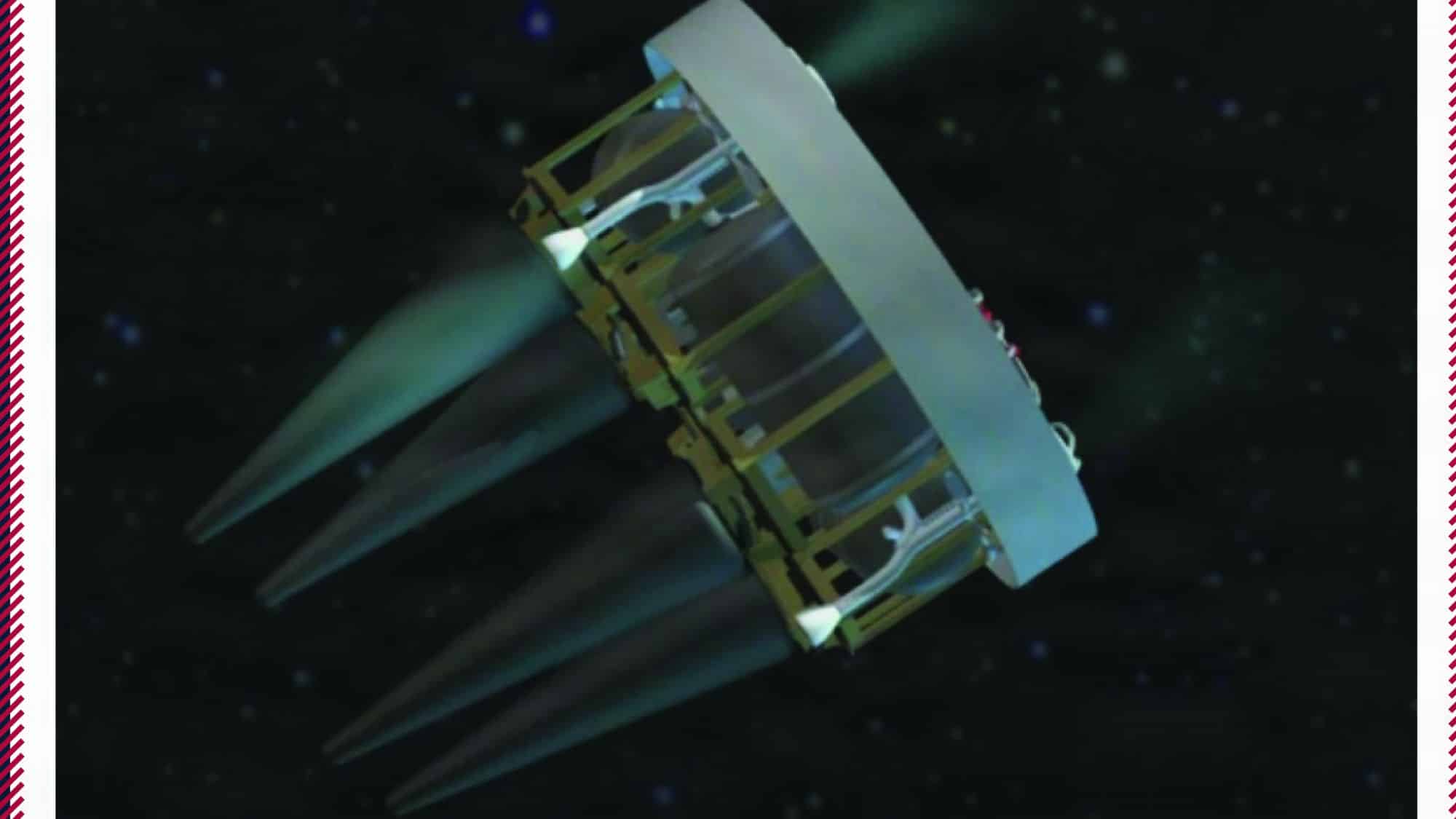
The W93 warhead and Mk7 reentry body assembly are part of the Trident II D5 Life Extension (D5LE2) which will modernize the sea-based leg of the nuclear triad.
The U.S. Navy’s W93 warhead and Mk7 reentry body assembly, which will equip the Trident II Submarine Launched Ballistic Missile (SLBM) as part of the D5 Life Extension 2 (D5LE2) program, have entered the Engineering and Manufacturing Development (EMD) stage, the Portfolio Acquisition Executive (PAE) Strategic Systems Programs (SSP) announced on Sept. 24, 2026.
The program reached Milestone B earlier this year, and the EMD phase will now “focus on completing production design and proving that the design is producible to meet the needs of the Navy,” the PAE SSP said. The W93 warhead and the Mk7 reentry body assembly are the first U.S. nuclear warhead and reentry system in nearly four decades, says the service, providing a modern warhead to the Navy’s submarine-launched ballistic missiles and strengthening the sea-based leg of the nuclear triad.
The announcement also comes after Sandia National Laboratories (SNL) – the design agency for the W93’s nonnuclear components and the lead warhead systems integrator for nuclear weapons programs – announced on Aug. 31 the launch of the Atrax sounding rocket to collect critical physical performance data and match its simulated models for the W93’s development.
SNL subsequently revealed that the W93’s first flight test is scheduled approximately two years after the Atrax test. The W93/Mk7 program is an interagency Nuclear Weapons Life Cycle effort between the PAE SSP and the Department of Energy’s National Nuclear Security Administration (NNSA).
The US announce the progression of the new W93/Mk7 nuclear warhead for TRIDENT D5LE2 into its Engineering and Manufacturing Development (EMD) phase. This directly touches the UK as well: the W93 is effectively the US counterpart and “sister” to the UK’s ASTRAEA A21/MK7, with some… pic.twitter.com/EqbzfmpwOV
The D5LE2 is being developed for the U.S. Navy’s upcoming Columbia-class nuclear-powered ballistic missile submarines (SSBN), meant to replace the 14 older USS Ohio-class boats. The first eight Columbia-class SSBNs will enter service with the D5LE system, while D5LE2 will be introduced on the ninth SSBN and retrofitted to the earlier ones.
During its service aboard Ohio-class submarines, the Trident II D5 also underwent its first life extension program, the D5LE, that upgraded critical electronics and guidance components, which will allow it to remain operational through the 2040s.
Lockheed Martin Awarded $850 Million Contract for Trident II D5LE2 Program
Lockheed Martin has received an $850 million contract modification from the U.S. Navy to continue the design and development of the Trident II D5 Life Extension 2 (D5LE2) program, a key component of the… pic.twitter.com/cq3Dt6Wr25
— Global Defense Insight (@Defense_Talks) July 14, 2026
Navy officials later deemed additional upgrades would be insufficient for long-term aging of critical components and the modern demands of the Columbia fleet, prompting the D5LE2 effort. D5LE2 effort ensures the Trident remains credible through 2084.
The Trident II D5 also arms the four boats of the Royal Navy’s Vanguard-class ballistic missile nuclear submarines (SSBN). A January 2025 Lockheed Martin release about a $383 million contract modification for the D5LE2 confirmed that the UK will participate in the effort under the Polaris Sales Agreement.
Effective interagency coordination
PAE SSP director Vice Adm. Douglas Williams emphasized the “flexibility and adaptability” that the W93/Mk7 provides to “ensure an uninterrupted at sea deterrent for the sea-based leg of the nuclear triad.”
“We were able to accelerate our entry into this next phase because of the dedicated partnership between PAE SSP, National Nuclear Security Administration, and our industry base,” Williams said in the Navy release. “This is what working at hyper-speed looks like.”
The collaboration between PAE SSP, NNSA and SNL under the interagency Nuclear Weapons Life Cycle supported the design and development of the W93 warhead and Mk7 reentry system. NNSA administrator Brandon Williams said in the release: “Credible deterrence demands that we move with urgency, and the progress we’re making on W93/Mk7 demonstrates exactly that.”
Happy 8-26
The largest submarine ever built by the US, Columbia-class ballistic missile submarine USS District of Columbia (SSBN 826), will be launched next year. pic.twitter.com/b3FnamR0jy
“We are revitalizing and modernizing the Nuclear Security Enterprise to design, develop, and produce this critical new weapon with the precision our Warfighters demand,” added Williams. “We will continue working together to deliver this capability to the fleet and ensure our sea-based strategic deterrent remains ready for the future.”
As mentioned earlier, while the PAE SSP will sustain the existing Trident II D5 on the Ohio-class boats, and integrate the Trident II D5 Life Extension 2 (D5LE2) on the new Columbia-class SSBNs, it is also “pioneering regional strike capabilities of the future.”
This includes the development of the Nuclear-Armed Sea-Launched Cruise Missile (SLCM-N) and the non-nuclear hypersonic Conventional Prompt Strike (CPS) system. The CPS shares the same Common-Hypersonic Glide Body (C-HGB) with the U.S. Army’s Long-Range Hypersonic Weapon (LRHW) “Dark Eagle.”
Sounding rocket tests provide W93 development data
Ross Wagnild, an aerospace engineer at Sandia National Laboratories (SNL), said the Atrax sounding rocket test helped them improve the credibility of their modeling and simulation tools in preparation for the W93 warhead’s development. SNL is also developing the Mk7 reentry vehicle, meant to “safeguard and carry” the W93 warhead and the Multiple Independent Reentry Vehicles (MIRV) – as shown in the official concept illustration by PAE SSP – to the target.
Sounding rockets are suborbital experimental vehicles carrying instruments “to collect [general] environmental data in flight without the scope of a full program test,” otherwise difficult to be replicated on the ground.
The Atrax test is not intended to assess “the precision or accuracy of the reentry vehicle.” The Atrax specifically measured the interplay of “aerodynamic forces and structural response” during reentry conditions.
A sounding rocket flight test is giving Sandia engineers real-world reentry vibration data to improve modeling and inform nonnuclear component designs for nuclear weapons.
The trial provided data that can be compared with the models developed through NNSA’s Advanced Simulation and Computing program and make them more accurate. The measurements of the actual vibration, aerodynamic load and impact on internal physical components helped “better evaluate the survivability of nonnuclear components of our weapon systems,” Wagnild added.
The data generated by the Atrax test also supports future weapons programs as it aids correct engineering and component design decisions, reducing costs and cutting development timelines, according to Kelsey Forsberg, who works in nuclear deterrence at Sandia. Forsberg said NNSA investments in programs like High Operational Tempo Shot and the Enzo demonstrator helped pave the way for the Atrax test and “reduced risk to the W93 program.”
The “cutting edge sensors” on the reentry vehicle collected data to test the accuracy of their simulation codes on “thermal, fluid and structural models to better understand where improvements might be needed.” The test vehicle itself had a new reentry vehicle, a three-stage sounding rocket and a new separation system.
In addition to the W93, Wagnild said the Atrax test will provide the broader hypersonic community with data that could improve hypersonics modeling and build confidence in modern sensor suites for other hypersonic vehicles.
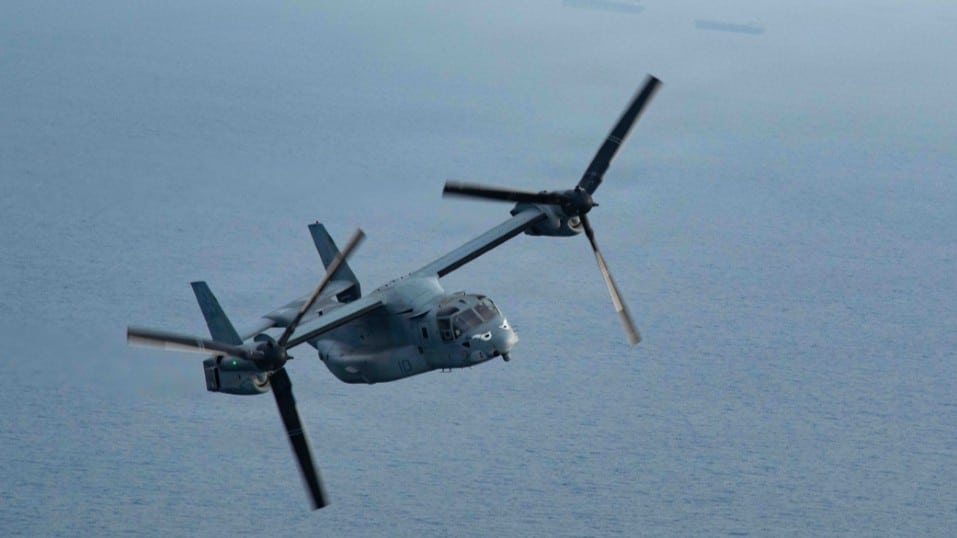
The test validated the MV-22B’s as an alternative platform to the P-3C Orion for the Navy’s Sonobuoy Quality Assurance Program, while laying the groundwork for expanded tactical employment of the Osprey.
Building upon an ongoing effort to repurpose the MV-22B Osprey for Anti-Submarine Warfare (ASW) by rapidly distributing sonobuoys over water, the U.S. Navy has conducted its first production lot acceptance test of new sonobuoys using the tilt-rotor aircraft. The Sonobuoy Quality Assurance Program (SQAP) test took place on Aug. 19, 2026, off the coast of San Clemente Island, California, and was announced by the Anti-Submarine Warfare Systems Program Office (PMA-264) on Sep. 22, 2026.
The demonstration marked a departure from the use of the Air Test and Evaluation Squadron 30’s (VX-30) P-3C Orions, with the Osprey being used both as a substitute SQAP platform and helping to reduce the testing backlog. The test validated “the tiltrotor aircraft as an alternative platform for the Navy’s SQAP, boosting operational readiness and laying the groundwork for expanded tactical employment across the fleet,” the PMA-264 said in the release.
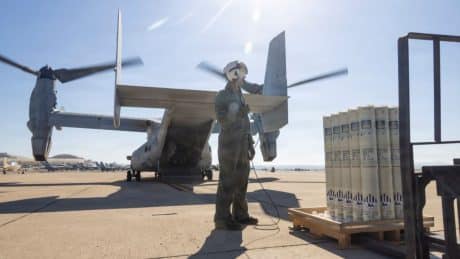
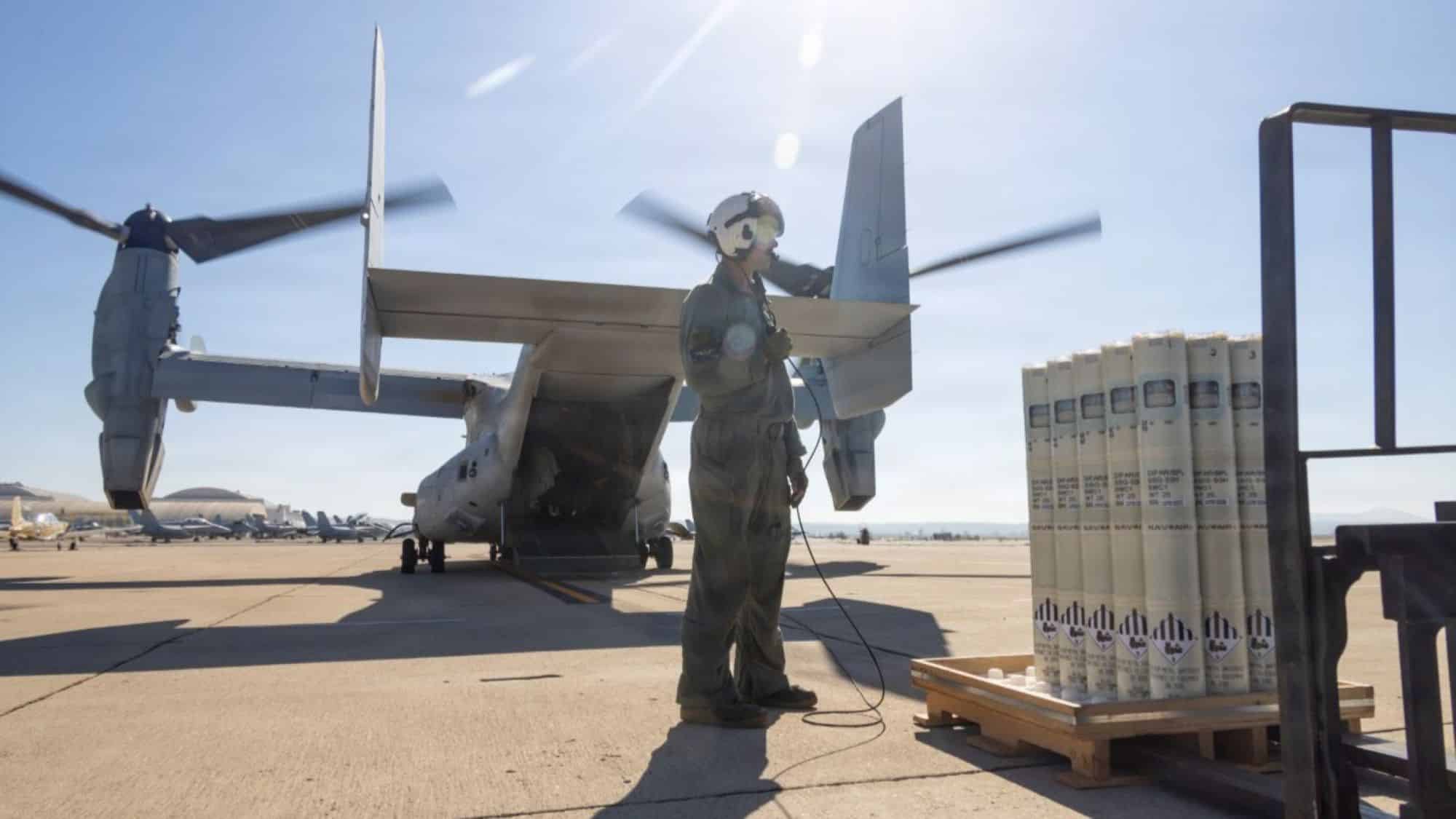
Images from the Aug. 19 test, posted on the DVIDS network on Sept. 2, showed sonobuoys being loaded onto a MV-22B from the Marine Operational Test and Evaluation Squadron 1 (VMX-1) at the Marine Corps Air Station (MCAS) Miramar, California.
U.S. Marine Corps Cpl. Tristan Courtney, a crew chief with Marine Medium Tiltrotor Squadron (VMM) 265 (Rein.), 31st Marine Expeditionary Unit, deploys buoys during anti-submarine warfare training, in the Philippine Sea, Aug. 8, 2025. | Source: U.S. Marine Corps photo by Cpl. Alora Finigan
Consistent with the Osprey’s emerging ASW role
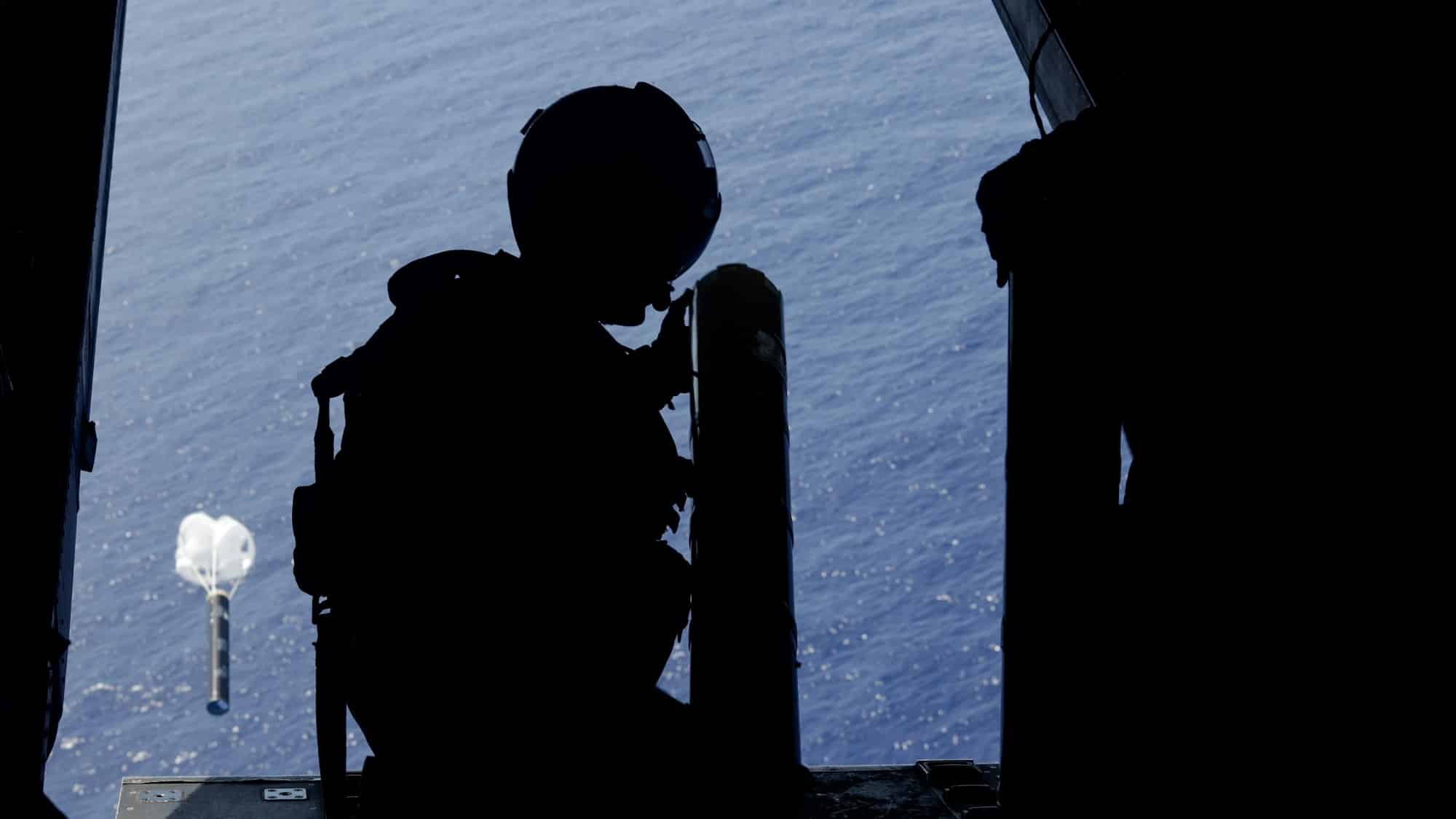
Both the caption and the release mentioned that the demonstration tested hand-launching sonobuoys by opening the Osprey’s rear ramp. The release also provided details about the mechanics of that manual method and how the crew adopted suitable piloting procedures and flight profiles.
It must be noted that sonobuoys have already been hand-launched from the MV-22B Osprey during tests that took place last year, as The Aviationist had reported. Ospreys from the Marine Medium Tiltrotor Squadron 162 (VMM-162) and VMM-265 had seen crews release A-size sonobuoys during the Atlantic Alliance 2025 exercise in July and a dedicated ASW test with crewed P-8A Poseidon and MH-60R Seahawks in August.
The significance of the August 2026 event, therefore, was not the first deployment of sonobuoys from an Osprey, but the first time the aircraft was used for the Navy’s SQAP lot acceptance testing. In its press release, PMA-264 said the first SQAP using the Osprey also supports the broader effort to utilize the tiltrotor’s speed for the ASW mission by generating performance data and laying down varied operational procedures.
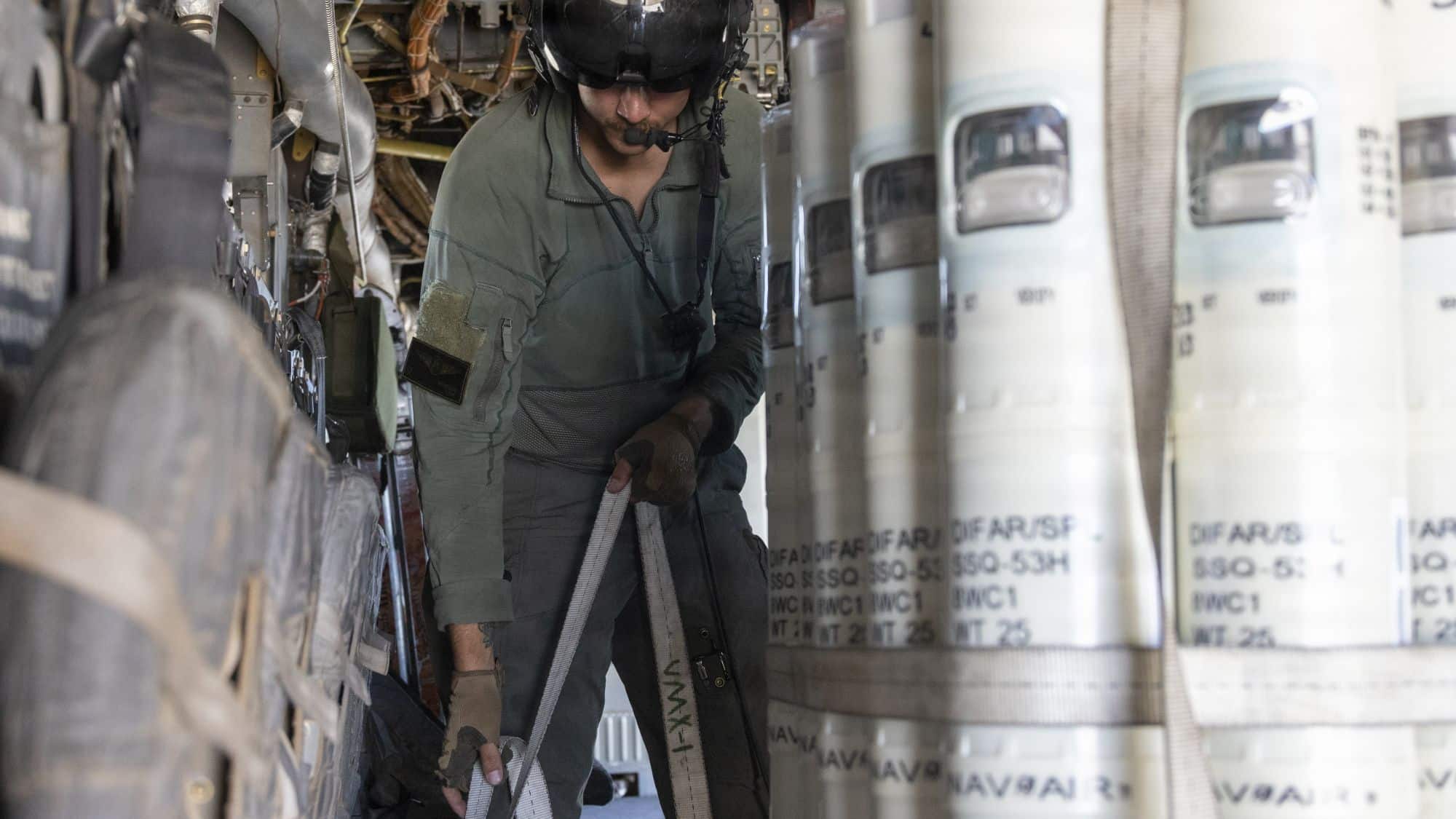
Cpl. Donovan Nickelson, a crew chief with VMX-1, straps sonobuoys onto the MV-22B Osprey at MCAS Miramar, California, Aug. 19, 2026. | Source: U.S. Marine Corps photo by Cpl. Alexander Vaughn
“In addition to meeting test criteria, the mission also provided operational experience that will help VMX-1 refine tactics, techniques, and procedures for future tiltrotor anti-submarine warfare support,” said the press release. “PMA-264 and PMA-275 will analyze acoustic and deployment data from the flights to refine procedures for future quality assurance missions and joint fleet operations.”
First Sonobuoy Lot Acceptance test using the Osprey
PMA-264 said that the SQAP involves subjecting “random production samples to over-water testing to evaluate reliability and acoustic performance before delivering vendor inventory to operational squadrons.” PMA-264 Program Manager Capt. Greg Hinkle explained the goal is to ensure that “the sonobuoys delivered to the fleet perform exactly as expected.”
The U.S. Navy operates a range of sonobuoys, some of which are: the AN/SSQ-125 Multi-Static Active Coherent (MAC) sonobuoys; the AN/SSQ-36 Bathythermal sonobuoys; the passive AN/SSQ-53G Directional Frequency Analysis and Recording (DIFAR) sonobuoys; and the active AN/SSQ-62F Directional Command Activated Sonobuoy System (DICASS). Images show SSQ-53H written on the sonobuoys being loaded onto the Marine Osprey.
Historically, the SQAP has relied on VX-30’s P-3C Orions, which “performs quality assurance drops using automated launchers.” The August test “proved the MV-22B Osprey can serve as a dependable substitute if primary test platforms are unavailable, helping prevent testing backlogs and keeping delivery schedules on track.”
A U.S. Marine Corps MV-22B Osprey, assigned to Marine Medium Tiltrotor Squadron (VMM) 163 (Reinforced), 11th Marine Expeditionary Unit (MEU), performs routine flight operations in the South China Sea, June 12, 2026. | Source: U.S. Navy photo by Mass Communication Specialist 2nd Class Tyler Miles
Hinkle said utilizing the MV-22 for a role like conducting sonobuoy acceptance trials helps “reinforce our supply chain and ensures frontline aircrews have the mission-ready stores they need to detect and track undersea threats.”
The official information does not specify how many trials took place and how many Ospreys were employed, but the framing suggests a single event and Osprey may have been used. One image appears to show a batch of 15 sonobuoys prepared to be loaded on the MV-22B through the rear ramp.
Hand-launching sonobuoys
Unlike the P-3, which uses automated launch containers triggered from the cockpit, the MV-22B required aircrew to manually launch the buoys from the open rear cargo ramp. Crew chiefs removed container caps and inverted launch tubes to release the sonobuoys into the slipstream.
Because manual sonobuoy deployments are slower – creating longer gaps between drops compared to automated launchers – VMX-1 aircrew “adjusted by reducing flight speed, matching the precise target pattern and spacing needed for acoustic testing,” the release said.
The hand-launch process also requires tight coordination between the pilots and crew chiefs. “The pilot holds steady flight parameters while the co-pilot manages navigation, timing, and communications, queuing crew chiefs in the cargo bay to program and release the buoys on schedule,” the release explained.
For the first time @USMC#MV22B‘s deploy a screen of SSQ-53G sonobuoys. MAG-39 has been working with @USNavy HSM Weapons School Pacific to develop tactics emphasizing the speed, range, and expeditionary nature of MV-22’s to support the Navy in their anti-submarine warfare mission pic.twitter.com/Yfk9YMiD5n
V-22 pilot and VMX-1 advanced projects lead Lt. Col. Brandon Pope said the event served as “an invaluable opportunity for our pilots and crew chiefs to build proficiency” for the intricate synergy between the load crew and the pilots during cargo release from the rear ramp.
Pope added: “Hand-launching from an open ramp requires split-second coordination; the crew must be deliberate with timing, airspeed control, and internal communication. This test demonstrated how the V-22’s range, speed, and versatility can support broader maritime domain awareness and distributed fleet operations.”

 Login








 𝗢𝗹𝗱 𝗦𝘂𝗯𝗺𝗮𝗿𝗶𝗻𝗲𝗿
 (@USN_Submariner)