❌

Reading view

Binance and Polymarket Propose Polygon Hard Fork To Recover About $6,500,000 in Hacked Crypto

Crypto exchange giant Binance and prediction markets platform Polymarket want the Polygon (POL) network to move about 70 million tokens out of the hands of the hackers who stole them late last month.

The two firms have filed a Polygon Improvement Proposal for a one-time hard fork that would set the POL balances in five attacker-controlled addresses to zero and credit the same amounts to recovery wallets the companies control, the proposal says.

The five addresses hold about 70.49 million POL, worth roughly $6.5 million at the October 29th price used in the proposal.

About 23.86 million POL sits in four addresses tied to the Polymarket hack on October 29th, while about 46.63 million POL sits in one address tied to the Binance hack that hit late the same day.

Polygon’s block producers have already added the addresses to a block list, so the funds cannot move.

But the companies say that is only a stopgap.

“The funds cannot move, but nothing in the current setup lets them be returned either.”

The proposal says the attacker has kept trying to get the funds out, including by offering validators cash to help unblock a transaction.

The fork would leave Polygon’s total supply unchanged.

It would only go live after approval through Polygon’s governance process, a test run on the Amoy testnet and proof that Binance and Polymarket control the recovery wallets.

The firms call it an extreme action that should not be reproduced commonly.

The plan is set to be presented at the Polygon Protocol Governance Call on November 5th at 14:30 UTC, with rollout expected to take about two weeks after approval.

Binance says it has already replaced most of the roughly $6.3 billion stolen from its hot wallets in the October 29th attack.

Follow us on X, Facebook and Telegram
Don't Miss a Beat – Subscribe to get email alerts delivered directly to your inbox

&nbsp
Disclaimer: Opinions expressed at The Daily Hodl are not investment advice. Investors should do their due diligence before making any high-risk investments in Bitcoin, cryptocurrency or digital assets. Please be advised that your transfers and trades are at your own risk, and any losses you may incur are your responsibility. The Daily Hodl does not recommend the buying or selling of any assets including cryptocurrencies, nor is The Daily Hodl an investment advisor. Please note that The Daily Hodl participates in affiliate marketing.
Generated Image: Midjourney

The post Binance and Polymarket Propose Polygon Hard Fork To Recover About $6,500,000 in Hacked Crypto appeared first on The Daily Hodl.
  •  

Citi Raises 12-Month Bitcoin Target to $113K, Ethereum to $3,028

Citigroup forecasts Bitcoin will reach $113,000 by the end of 2026, up from its previous $82,000 target. The bank also raised its Ethereum year-end target to $3,028 from $2,240, citing recovering ETF demand, increased crypto activity, and improving financial conditions. Ad Ad Citi Sees Steadier Crypto Inflows Ahead Citi estimates that approximately USD 5 billion

The post Citi Raises 12-Month Bitcoin Target to $113K, Ethereum to $3,028 appeared first on CoinGape.

  •  

Hyperliquid Policy Center Urges EU to Regulate Perpetual Futures as Derivatives

Hyperliquid Policy Center has urged European regulators to keep perpetual futures under existing derivatives rules. The group wants product features, rather than blockchain technology, to determine their regulatory treatment. Ad Ad HPC Backs MiFID II Rules for Perpetual Futures Hyperliquid Policy Center submitted its position during the European Commission’s review of the Markets in Crypto-Assets

The post Hyperliquid Policy Center Urges EU to Regulate Perpetual Futures as Derivatives appeared first on CoinGape.

  •  

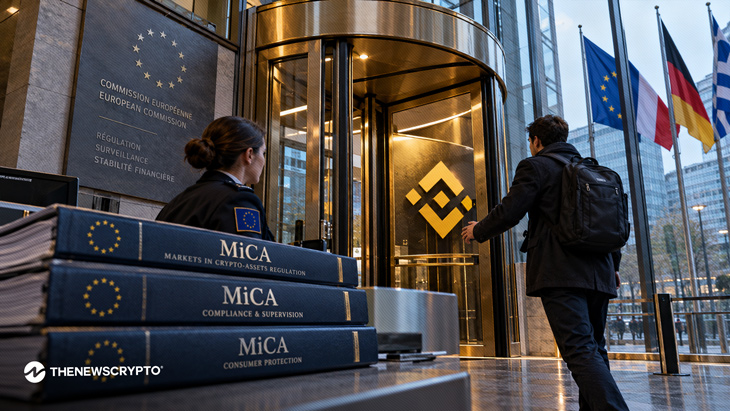
Binance Faces Fresh EU Scrutiny Over MiCA Reverse Solicitation

Binance Faces Fresh EU Scrutiny Over MiCA Reverse Solicitation

  • EU regulators are examining Binance’s use of MiCA’s reverse solicitation exemption to determine whether its current approach complies with the framework.
  • The review follows Binance’s failure to secure a MiCA license, raising questions over its continued EU operations after the July 1 transition deadline.

Binance is facing regulatory scrutiny across Europe over its use of MiCA’s reverse solicitation exemption, a legal provision that allows non-EU companies to serve European clients, but only when those clients independently seek out the relationship without any solicitation or marketing from the firm.

The European Securities and Markets Authority, alongside national regulators in France, Germany, and Greece, is now examining whether Binance’s current service model genuinely meets those conditions. 

Significantly, the review follows Binance’s failure to secure a MiCA license this summer. A setback that should have required the exchange to wind down its EU operations from July 1. It limits the activity to help existing customers transfer or sell their holdings.

What Reverse Solicitation Actually Means, and Why It Matters

Reverse solicitation became prominent in Europe after Brexit, when UK-based firms tried to use it to continue serving EU clients without separate licensing. The provision is narrow by design. ESMA said the exemption should be regarded as the exception and not be used to circumvent MiCA requirements. Moreover, crypto firms cannot simply claim it; clear requirements and guidelines must be met.

Binance’s position is that it operates under reverse solicitation in EU countries where it holds no local licence, with customers onboarding of their own volition. Its Abu Dhabi-regulated entity, active since December 2025, serves traders outside countries where local licences previously existed. 

Local licences in France, Spain, and Poland have since lapsed under the MiCA regime. In addition, Binance said it complies with applicable regulatory requirements and is actively working toward MiCA authorisation. That process is still ongoing.

What Enforcement Could Look Like?

If regulators conclude that Binance’s use of the exemption doesn’t hold up, enforcement action, including fines, could result. Binance is not the only firm under review; smaller platforms are also being examined.

This is not Binance’s first significant regulatory confrontation. The exchange paid a record $4.3 billion fine in the US in 2023. Also pleaded guilty to criminal charges related to money laundering and breaching international financial sanctions.

For the broader crypto market, this probe adds another layer of regulatory uncertainty in one of the world’s largest trading regions. If enforcement action follows and Binance faces restrictions on EU operations, liquidity and trading volume across European markets could take a meaningful hit. Particularly for retail traders who rely on Binance as their primary platform. 

Crypto Market Highlights

MetaMask Staking Begins Lido Validator Exit After Security Incident

  •  

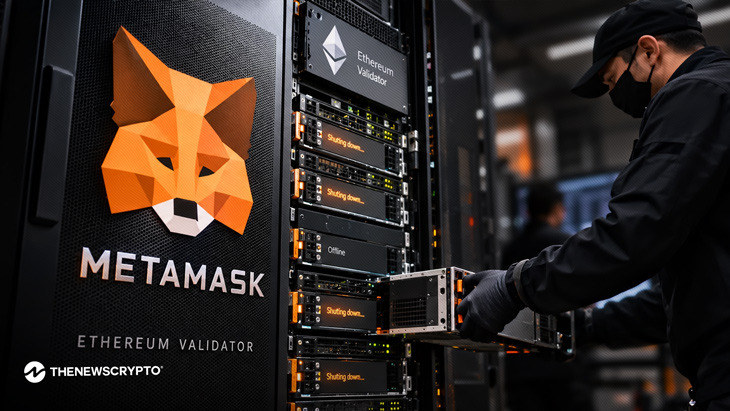
MetaMask Staking Begins Lido Validator Exit After Security Incident

MetaMask Staking Begins Lido Validator Exit After Security Incident

  • MetaMask Staking has started exiting its Ethereum validators from Lido following a security incident affecting part of MetaMask’s infrastructure.
  • The final validators are expected to complete their exit by October 7, 2026, according to Lido.

MetaMask is responding to a security incident affecting part of its infrastructure, and while the wallet provider has been clear that no immediate threat to user wallets has been identified, the precautionary steps it’s taking are significant enough to pay attention to.

As a direct response to the incident, MetaMask Staking, formerly known as Consensys Staking, has begun exiting its Ethereum validators from the Lido protocol. The exit process is being carried out in coordination with clients, partners, and external security advisors. Lido confirmed the exits began this week, with the final validators expected to complete their exit by October 7, 2026.

The nature of the incident, its cause, and the full scope of affected infrastructure have not been disclosed. In addition, MetaMask has confirmed it is actively remediating the issue internally while working alongside external partners.

What Happens to the ETH?

The Ethereum withdrawn from MetaMask Staking’s validators will not disappear. It will likely return to the Lido protocol gradually as each validator completes the exit, withdrawal, and re-entry cycle. According to Lido Finance developer Will Shannon, that process could take up to 45 days due to an extended entry queue currently affecting the network.

Furthermore, Lido has been clear that no action is required from stETH holders. The protocol’s diverse Node Operator set, combined with its ad hoc reserve fund holding over 6,750 stETH, is designed to absorb and contain exactly this type of disruption without impacting normal protocol operations.

One important clarification MetaMask has made, its staking operations are non-custodial. Moreover, the company does not manage withdrawal keys for staked ETH on behalf of clients. The exit process is a protective measure rather than a fund recovery operation.

The Implication

A security incident at MetaMask’s infrastructure level, even one where no direct wallet threat has been confirmed, carries weight. MetaMask is one of the most widely used Ethereum wallets in the world. Any compromise of its backend infrastructure raises questions about how attackers gained access and what data or systems were exposed.

The validator exit from Lido also means foregone staking rewards and possible downtime penalties if validators are taken offline quickly to reduce network penalty risk, a financial cost the company is absorbing to protect client assets. Also, the investigation is ongoing, and the next update will matter significantly for how the market and the broader Ethereum staking community respond.

Crypto Market Highlights

HSBC RedCoin Takes Shape With Phased Stablecoin Rollout in Hong Kong

  •  

This Kit Can Convert Your Dual-Clutch Gearbox to a Rev-Matching Stickshift

Do you own a fun car with a dual-clutch automatic transmission and sometimes wish you would have gotten a stick? These days, it may not even be your fault. Plenty of fun cars are sold exclusively with paddle-shifted automatics, and they’re probably faster (and safer) in the hands of mortal drivers as a result. But driving enjoyment doesn’t always come from being quick, and the art of operating a manual is something many enthusiasts still embrace.

Enter the Quickshift, from Limitless Engineering—a new effort from Ferris Rezvani (yep, that Rezvani). This fancy little piece of machinery puts a gated manual shifter in the palm of your hand. It’s designed to interface with your car’s existing transmission control system, allowing you to crack off manual, rev-matched shifts as if your car had a full three-pedal setup. And the best part? Limitless says it installs in hours and requires no permanent modifications to your car.

And when I say “your” car, in this case, I mean it fairly literally. Limitless showed off a demonstrator of the kit in a Ferrari 458, but Rezvani himself says the system can be adapted to work in any car.

“Modern cars have amazing technology, but along the way they’ve lost the emotion,” Rezvani said.

“Quickshift is not meant to be an old fashioned manual but the modern version of a manual; giving drivers the tactile gated feel to row your own gears without a clutch pedal to slow you down,” Rezvani said.

“The way you interact with the car matters,”Rezvani continued. “Reaching for a gated shifter, feeling it move into position, hearing the engine respond; that creates an emotional connection. Quickshift is about giving drivers more of those moments.”

Made with Google AI
Made with Google AI
Made with Google AI

So, what’s the catch? Well, for starters, Rezvani isn’t exactly known for budget-friendly projects. In fact, the company’s web site boasts about its bespoke commission program. Sure, Limitless can probably build you one of these for the ratty, 20-year-old GTI you occasionally see on Facebook Marketplace, but it would probably cost you more than the purchase of the car itself—perhaps several times over. In that same vein, the cost to integrate this kit cleanly into your car’s interior is likely to vary wildly depending on what you’re driving. This is very likely an “if you have to ask…” type situation.

And after all that, you still don’t get a clutch pedal out of the deal.

Got a story tip? Let us know at tips@thedrive.com!

The post This Kit Can Convert Your Dual-Clutch Gearbox to a Rev-Matching Stickshift appeared first on The Drive.

  •  

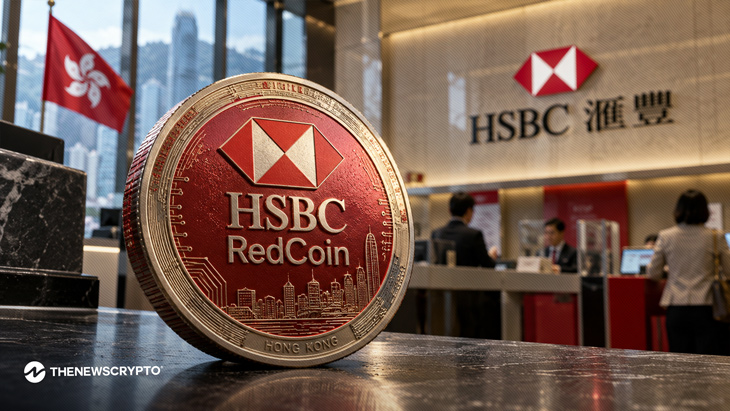
HSBC RedCoin Takes Shape With Phased Stablecoin Rollout in Hong Kong

HSBC RedCoin Takes Shape With Phased Stablecoin Rollout in Hong Kong

  • HSBC RedCoin marks a major stablecoin move by a traditional bank in Asia, with the name reflecting HSBC’s Hong Kong roots.
  • The rollout will be phased, beginning with P2P and P2M payments before moving to corporate and institutional applications.

HSBC has officially named its forthcoming Hong Kong stablecoin HSBC RedCoin. It is one of the most significant moves by a traditional bank into the digital asset space in Asia. The name reflects the bank’s Hong Kong heritage. The launch strategy is deliberately phased. It starts with person-to-person and person-to-merchant payments before expanding into corporate and institutional use cases aligned with Hong Kong’s evolving digital asset landscape.

In addition, the announcement came alongside a survey of over 1,000 local customers. The findings tell a more nuanced story than a simple headline about stablecoin adoption.

What the Survey Actually Shows?

74% of respondents could identify at least one stablecoin use case, a higher number than most banks would have expected. Digital asset trading and tokenised investments led the list at 57%, followed by P2P transfers at 53%, with cross-border remittances and merchant payments both sitting at 52%.

On the understanding side, 60% correctly defined a stablecoin as a fiat-backed digital asset. 26% assumed stablecoins were government-issued, and 10% viewed them as interest-bearing, a feature not included in Hong Kong’s current regulatory framework.

What’s Still Holding People Back

When asked what would build their trust, respondents pointed to fraud protection (53%), seamless cash conversion (51%), and reserve transparency (39%). Also, the two most powerful confidence-boosters, however, were stronger regulatory clarity at 62% and enhanced education at 55%.

That is why HSBC is launching a comprehensive public education series across its banking apps, website, and social media. It is focused on scam prevention and transparent redemption mechanisms. The bank isn’t just launching a product. It’s trying to build the trust infrastructure around it at the same time.

HSBC RedCoin is not arriving in a vacuum. Traditional financial institutions are accelerating their stablecoin strategies globally, from Circle’s partnerships with Visa and Mastercard to JPMorgan’s own tokenisation efforts. For HSBC, one of Hong Kong‘s three note-issuing banks. Notably, naming a stablecoin is a statement of intent rather than just a product launch.

Moreover, the phased rollout, P2P and P2M first, wholesale corporate use cases soon after, reflects a careful read of where customer comfort actually sits right now versus where the institution wants to take it.

On the other hand, a bank of HSBC’s scale entering the stablecoin market with a named product, a survey-backed strategy, and a public education commitment signals that institutional stablecoin adoption in Asia is no longer a future conversation.

Crypto Market Highlights

Kalshi Eyes $40B Valuation in Fresh $1B Funding Push

  •  
❌