❌

Reading view

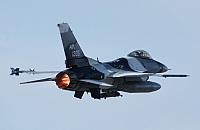
77 FS ‘Gamblers' make their first appearance at Cope Tiger 25

March 31, 2025 (by MSgt. Jerilyn Quintanilla) - The U.S. Air Force 77th Fighter Squadron ‘Gamblers' have flown countless missions supporting numerous conflicts and exercises around the world for 107 years, making them one of the most storied flying units still operating. Today, they're bringing that knowledge and lethality to the Pacific theatre for Cope Tiger 25—a rare first in the unit's long history.

Airmen assigned to the 77th EFS stand in formation for a group photo during Cope Tiger 25, at Korat Royal Air Base, Thailand, on March 7, 2025. The 77th EFS is based out of Shaw AFB, and is participating in the 31st iteration of exercise Cope Tiger, an annual trilateral exercise with the RTAF and RSAF. [USAF photo by SSgt. Sidney Shippy]
Exercise Cope Tiger was established in 1994 and over the years has evolved to match the needs and missions of three nations, the United States, Singapore, and Thailand. It retains the same key, time-tested purpose: providing participants with a platform to train and enhance tactics, techniques and procedures while simultaneously increasing interoperability and fostering relations amongst the partner nations.

"It's the 31st anniversary of doing this exercise but it's the first time for the 77th Fighter Squadron," said USAF Lt. Col. Steven McCord, 77th FS detachment commander. "We're looking to take a lot from our allies and partners, the Royal Thai Air Force and Republic of Singapore Air Force, because every time we train together we get a little bit better at integrating."

According to USAF Maj. Gregory Rinker, 77th FS pilot and USAF exercise project officer, "Suppression of Enemy Air Defenses" is the defining mission capability the ‘Gamblers' bring to the fight.

"For decades, the 77 FS has proudly carried the "Wild Weasel" mantle, consistently preparing to be the ‘first in, last out' force within any combat area of responsibility," Rinker said. "Our F-16s and pilots leverage their expanding capabilities and experience to not only achieve tactical objectives but also maximize interoperability with allied partners."

Out on the training range all three nations are not only testing their own capabilities, they're pushing one another to increase their abilities and limits.

"This is a very important exercise for the Republic of Singapore Air Force. It's the only event where we bring together all the different parts of our Air Force," said RSAF Col. Lee Yew Chern Benjamin, CT25 Exercise Director. "We come here to train with our partners, with the U.S. as well as Thailand in a very challenging and dynamic environment."

The ‘Gamblers' also participated in the recent Cobra Gold 2025 exercise held in Thailand, where they flew similar missions for regional security cooperation, promoted interoperability among participating nations, and practised new tactics with international partners never before seen at the event.

The amount of working practice in sorties flown and hours of mission planning are vital; but for Rinker, it is not the most rewarding part of CT25.

"The most rewarding aspect of these exercises is the opportunity to foster enduring relationships with our allies," Rinker said. "Collaboratively developing plans and then witnessing their tactical evolution through shared experiences builds confidence and trust between our nations for future operations."

Courtesy of Pacific Air Forces

Related articles:


Forum discussion:
Additional images:

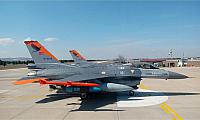
USAF F-16 Fighting Falcons assigned to the 77th EFS taxis on the flightline prior to take off, during Cope Tiger 25, at Korat Royal Air Base, Thailand on March 19, 2025. The Cope Tiger exercise provides the USAF,RTAF, and the RSAF with an optimal training environment to enhance readiness, interoperability and combined capabilities. [USAF photo by MSgt. Jerilyn Quintanilla]
  •  

End of an era: the last USAF F-16 flight from Luke AFB

March 26, 2025 (by Lieven Dewitte) - For nearly 45 years, Luke Air Force Base has been synonymous with the F-16 Fighting Falcon, training thousands of pilots and maintaining a crucial role in the aircraft’s legacy. However, with the U.S. Air Force shifting its focus to fifth-generation platforms like the F-35 Lightning II, the base has now bid farewell to its last operational F-16.

U.S. Air Force Lt. Col. Michael Ress, 309th Fighter Squadron commander, climbs into the cockpit of an F-16 Fighting Falcon to pilot the final U.S. F-16 flight out of Luke Air Force Base, March 24, 2025, delivering it to the 16th Weapons Squadron at Nellis AFB. This flight concludes the divestment of the remaining U.S. F-16s, ending this chapter for the 309th FS as it prepares to transition to the F-35A Lightning II. [USAF photo by Senior Airman Katelynn Jackson]
On March 24, the final F-16 flight (#89-2173ALPLACEHOLDER1PH) from Luke AFB took off, flown by the 56th Fighter Wing, which has long been responsible for training both U.S. and allied fighter pilots. The event marks the official transition of Luke AFB into a dedicated F-35 training and operational base.

Luke AFB has played a vital role in the development of F-16 pilots since the early 1980s. As one of the premier training bases, it has been instrumental in preparing pilots for combat missions worldwide. The 56th Fighter Wing, known as the "Thunderbolts," has trained generations of F-16 aviators, ensuring air superiority for the U.S. and its allies.

The departure of the F-16 from Luke comes as the Air Force continues to modernize its fleet. The transition to the F-35 allows for enhanced multi-role capabilities, aligning with the service’s long-term strategic goals. Luke AFB began transitioning F-16 squadrons into F-35 squadrons in the early 2000s, the 309th FS being the last to transition out of the six fighter squadrons on base.

The F-16 pilot training program began over 42 years ago in 1983 and has graduated over 20 thousand pilots since. The final class of F-16 student pilots graduated from the 309th FS in September 2024, and the last local training sortie was in February of 2025.

Luke AFB will continue to fly and train F-16 Republic of Singapore Air Force fighter pilots and maintainers from the 425th FS until they transition to Ebbing Air National Guard Base, Arkansas, in the coming years. Other than that, their focus now shifts entirely to the F-35 program. The base is already home to a significant F-35 training mission, providing instruction to pilots from the U.S. and partner nations. With the phase-out of the F-16 complete, Luke will further solidify its role as a key center for fifth-generation fighter training.

The final F-16 flight from Luke AFB represents the end of an iconic era for the base and the aircraft’s training mission there. While the Fighting Falcon leaves behind a storied legacy, its departure paves the way for the next generation of airpower. As Luke AFB fully transitions to the F-35, the base remains at the forefront of fighter pilot training, ensuring continued air dominance for years to come.

Related articles:


Forum discussion:
Additional images:

U.S. Air Force 56th Fighter Wing Airmen watch the final U.S. F-16 taxis to the runway, March 24, 2025, on the flightline at Luke Air Force Base, preparing to fly to the 16th Weapons Squadron at Nellis AFB. [USAF photo by Senior Airman Katelynn Jackson]

U.S. Air Force Lt. Col. Michael Ress, 309th Fighter Squadron commander, walks out of the 309th FS to pilot the final U.S. F-16 Fighting Falcon flight out of Luke Air Force Base, March 24, 2025, delivering it to the 16th Weapons Squadron at Nellis AFB. [USAF photo by Senior Airman Katelynn Jackson]

The millionth F-16 flying training hour at Luke AFB was reached on March 13th, 2013. F-16s first touched down at Luke AFB on December 6th, 1982. To date, Luke has graduated 18,164 F-16 fighter pilots. Approximately 2,000 F-16 hours are flown a month by Luke pilots and students. This photo shows F-16D block 42 #89-2157 from the 309th FS. [USAF photo by A1C. Devante Williams]
  •  

F-16 Block 40 fires SOM-J cruise missile in Turkey’s latest weapons test

March 25, 2025 (by Lieven Dewitte) - Turkey has successfully carried out a test launch of the SOM-J, a next-generation air-launched cruise missile (ALCM), from an F-16 block 40. This development is part of Turkey’s broader efforts to enhance its indigenous defense capabilities and reduce reliance on foreign-made weapon systems.

A Turkish F-16 of the 401st Test Squadron launches a SOM-J missile on 21/03/2025 [Picture source: Turkish MoD - serial blurred out]
Developed by TÜBİTAK SAGE, the Defence Research and Development Institute of Turkey and Roketsan, the SOM-J is a variant of the SOM (Turkish: Satha Atılan Orta Menzilli Mühimmat) family, designed primarily for use on fighter aircraft such as the F-16 and the F-35. It offers extended-range precision strike capabilities against high-value, heavily defended land and naval targets.

According to Turkish defense sources, an F-16 of the TUAF 401st Test Squadron fired the SOM-J cruise missile on March 21st and achieved a successful strike on the target in open waters with pinpoint accuracy. The test firing validated the missile’s advanced guidance, target acquisition, and precision strike capabilities in real-world conditions, ensuring its effectiveness in future combat scenarios.

Key highlights of the SOM-J:
  • Stealth and Precision: The missile features low-observable characteristics, making it harder for enemy air defenses to detect and intercept.
  • Extended Range: It boasts a range of approximately 250+ km (155+ miles), enabling stand-off strikes beyond enemy defenses.
  • Advanced Guidance System: Uses GPS/INS navigation combined with an imaging infrared (IIR) seeker for high-accuracy targeting.

Strategic Importance
The successful test comes at a time when Turkey continues to develop its domestic defense industry, aiming for greater self-sufficiency in military technology. The integration of the SOM-J onto Turkey’s F-16 fleet significantly enhances the aircraft’s strike capabilities, especially in contested environments.

Additionally, the missile’s compatibility with the F-35 was initially a major selling point, though Turkey's removal from the F-35 program has shifted its focus to alternative platforms, including its indigenous TF-X fighter project and UCAV such as the Bayraktar Akıncı and Kizilelma. However, the SOM-J remains a viable option for other allied nations operating the F-35, potentially expanding Turkey’s defense export opportunities.

With the successful test of the SOM-J, Turkey has demonstrated its growing ability to produce advanced precision-strike weapons.

Related articles:


Forum discussion:
  • Array

Additional images:

TuAF F-16C block 40 #91-0015 from 401 Filo is parked on the tarmac at Eskişehir AB. [TuAF photo]
  •  

F-16s to get AGM-158C LRASM: a game-changing upgrade

March 19, 2025 (by Lieven Dewitte) - The F-16 Fighting Falcon is now set to gain a powerful new weapon in its arsenal—the AGM-158C LRASM (Long Range Anti-Ship Missile). This capability will significantly enhance the aircraft’s ability to engage naval threats at extended ranges, positioning the F-16 as a more viable platform for maritime strike operations.

USAF F-16C block 50 #91-0396 from the 40th Flight Test Squadron at Eglin carrying an AGM-158 JASSM-ER [Photo bny USAF]
According to recent reports, the U.S. Air Force has confirmed plans to integrate the AGM-158C-1 variant of the missile onto select F-16 units. The LRASM, developed by Lockheed Martin, is a stealthy, precision-guided cruise missile designed to locate and destroy enemy ships even in highly contested environments. It builds upon the successful AGM-158 JASSM (Joint Air-to-Surface Standoff Missile) but incorporates enhanced sensors and guidance systems tailored for maritime engagements.

While traditionally employed in air-to-air and air-to-ground roles, the F-16 has seen increasing emphasis on maritime strike capabilities. The LRASM’s integration into the fleet aligns with broader U.S. defense strategies that prioritize countering potential naval threats, particularly in regions like the Indo-Pacific and the Baltic Sea. The missile carries a 450 kg fragmentation-explosive warhead, designed to inflict severe damage on surface vessels.

The aircraft’s existing anti-ship capability is limited, primarily relying on the AGM-84 Harpoon missile. However, the extent to which Air Force F-16 units currently operate the Harpoon remains unclear.

Equipping the F-16 with the AGM-158C brings several advantages:
  • Extended Range: The missile is capable of striking targets over 300 nautical miles away, keeping the launching aircraft at a safer distance from enemy defenses.

  • Stealth and Survivability: Its low-observable design reduces detection by enemy radar systems.

  • Advanced Targeting: Using an onboard multi-mode sensor and artificial intelligence, LRASM can independently locate and strike priority targets even in GPS-jammed environments.


This upgrade is expected to be particularly beneficial for U.S. allies operating the F-16, as it provides a new level of operational flexibility. Countries like Taiwan, Poland, and other NATO partners could potentially benefit from this capability, strengthening their deterrence against maritime threats. When exactly F-16s might start flying operationally with LRASM is unknown however.

While traditionally not viewed as a dedicated maritime strike aircraft, the F-16’s ability to carry the LRASM opens new operational possibilities. It is likely that only select squadrons will receive this upgrade, with a focus on regions where naval threats are of greater concern.

This development also raises questions about further enhancements to the F-16’s maritime strike role, potentially including networking capabilities with naval assets and additional standoff weapon integration.

Related articles:


External link:
Forum discussion:
  • Array

Additional images:

F-16 # 92-3926 assigned to the 53rd Test and Evaluation Group taxies with a U.S. Navy Harpoon missile system equipped at Nellis Air Force Base, Nevada. (U.S. Air Force photo by Airman 1st Class Timothy Perish)

An F-16 (#88441) from the Eglin Test force carrying the AGM-158 Joint Air-to-Surface Standoff Missile [USAF photo]
  •  

Belgium will not send F-16s to Ukraine in 2025

March 4, 2025 (by Lieven Dewitte) - The Belgian government has confirmed that it will not be delivering F-16 fighter jets to Ukraine this year, despite a previous commitment.

BAF F-16AM #FA-95 from 10 wing is adorned with a special 8,000 hours tail scheme seen on September 6th, 2023. The aircraft will make it's final flight on September 8th reaching those 8,000 hours. [BAF photo]
Former Prime Minister Alexander De Croo pledged in April 2024 to send two F-16s by the end of the year, as part of a broader promise to provide 30 jets by 2028 under a security agreement signed with Ukrainian President Zelensky.

Belgium is a member of the "F-16 coalition," a group of nations—including the Netherlands and Denmark—that are donating surplus F-16s to Ukraine. In total, around 75 aircraft have been pledged.

Ukraine requests a halt in additional F-16 deliveries
Operating an F-16 fleet requires trained personnel and logistical support, which remains a challenge for Ukraine. Pilot training has been slower than expected, leading Ukraine to request a temporary stop on additional F-16 deliveries. The country does not want to store aircraft it cannot effectively deploy due to shortages of pilots, weapons, or spare parts, as they would become prime targets for Russian airstrikes. Instead, it prefers to keep them in safe locations in donor countries.

Belgian Air Force’s own need for spare parts
Belgium is gradually retiring its aging F-16 fleet in favor of F-35s, but delays in this transition have created a high demand for spare parts. The F-16s Belgium intended to donate were likely non-operational aircraft, valuable primarily for their spare components. According to sources, as long as Ukraine does not urgently require these spare parts, Belgium sees more benefit in retaining them to sustain its own fleet.

Related articles:


Forum discussion:
  •  

Lack of Link 16 possibly caused fatal Ukrainian F-16 crash

February 16, 2025 (by Lieven Dewitte) - According to The Wall Street Journal, the August F-16 crash that claimed the life of Oleksiy ‘Moonfish’ Mes might have been prevented if the U.S. had provided a critical tactical system.

The ex-Royal Danish Air Force F-16A block 20 MLU that was shot down
The Wall Street Journal has published a column on the likely cause of the F-16 crash that killed pilot Oleksii Mes on August 26, 2024. According to the report, the aircraft was mistakenly shot down by a Patriot air defense system.

Sources suggest the incident may have occurred because the American-supplied equipment had been modified before deployment, with one key recognition system removed. The Link 16 tactical network, which enhances situational awareness by integrating aircraft, ground units, air defenses, and command centers in real time, was not in place. This system improves coordination among allies and reduces risks for pilots.

Ukraine received its first Patriot air defense systems in April 2023. WSJ cites Dariia Kaleniuk, co-founder of the International Centre for Ukrainian Victory, as saying that the Patriots were disconnected from Link 16 because Ukraine was not initially expected to receive F-16s. When the decision was later made to supply the jets, the issue remained unresolved.

The article suggests that the U.S. may have withheld Link 16 due to concerns over security, reflecting what it describes as the Biden administration’s cautious approach to military aid for Ukraine.

The Pentagon declined to comment on the specific configuration of weapons provided to Ukraine, directing inquiries to Ukrainian officials. Meanwhile, sources indicate that efforts are being made to address the issue, though no further details were disclosed.

Related articles:


Forum discussion:
Additional images:

PS ZSU F-16AM #80-3596 is pulling some G's after take-off armed with AIM-120 and AIM-9 missiles in an A/A configuration. [PS ZSU photo]

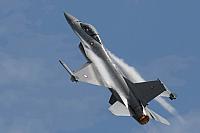
A Ukrainian F-16AM is making a tight right turn with vapor strikes coming off the wings. [Photo by Ukrainian Air Force]
  •  

New 'Viper Shield' electronic warfare system has first flight on a Bahraini F-16

February 5, 2025 (by Lieven Dewitte) - The first flight of the AN/ALQ-254(V)1 Viper Shield electronic warfare suite was performed on an F-16C Block 70 of the Royal Bahraini Air Force at Edwards Air Force Base on Jan. 23, 2025.

The Viper Shield electronic warfare suite conducted its first flight Jan. 23, 2025, from Edwards Air Force Base in California. [Photo by Lockheed Martin]
The flight included a series of risk reduction tests related to the mission computer and other avionic subsystems compatibility, as well as interoperability with the APG-83 active electronically scanned array (AESA) fire control radar.

The Bahraini F-16C (RBAF #1601) was flown by a test pilot of the 416th Flight Test Squadron, Airpower Foundations Combined Test Force, at Edwards Air Force Base, California.

The AN/ALQ-254(V)1 Viper Shield has been developed by L3Harris Technologies and Lockheed Martin. Its design is based on previous generations of electronic countermeasure technologies but incorporates an all-digital architecture.

It is internally mounted, integrates directly with the aircraft’s avionics suite and works alongside the APG-83 AESA radar. The system includes a digital radar warning receiver (DRWR) to detect and classify threats, providing real-time situational awareness to pilots. Unlike externally mounted electronic warfare pods, Viper Shield maintains the aircraft's aerodynamic profile and preserves external hardpoints for mission payloads.

The choice of a Bahraini jet is not casual, as two F-16s (a single seater and a twin seater) are at Edwards AFB and are being operated by the 412th Test Wing at Edwards for testing and evaluation work as part of the Foreign Military Sales process.

"The thing that we're most excited about is the advances in the EW capabilities that Viper Shield will bring to the F-16," said Maj. Anthony Pipe, the pilot assigned to the test flight. "One of the biggest advantages is going to be the ability of the RWR, or Radar Warning Receiver, to more accurately display, in a more accurate way and in a better human factors way, to the pilots the threats they may face."

L3Harris is already on contract to provide Viper Shield to “six international partners” for installation on 168 new F-16s, while additional retrofitting efforts are being explored for older aircraft. Among the F-16 Block 70s that will receive the system, according to FMS notifications, are Bahrain, Bulgaria, Morocco, Slovakia, Jordan and Taiwan. Greece is also acquiring Block 70s, but have not disclosed which EW suite they will use. Poland has received approval for a Mid-Life Upgrade (MLU) package for its fleet of 48 F-16C/D block 52+ aircraft, which may include either Viper Shield or an equivalent system.

The delivery of Viper Shield is expected to start in late 2025, entering service during the next year.

Related articles:


External link:
Forum discussion:
  • Array

Additional images:

The Viper Shield electronic warfare suite conducted its first flight Jan. 23, 2025, from Edwards Air Force Base in California. [Photo by Lockheed Martin]

RBAF F-16C block 70 #1601 is about to touch down on the runway at Donaldson AB in June of 2023 after a testflight. [Photo by NTower]

Pre-flight checks are completed on Bahrain's F-16 block 70 #1601 single-seat fighter jet in preparation for its ferry flight from Greenville IAP to Bahrain on March 6th, 2024. [Lockheed Martin photo]
  •  

Bulgaria to receive first F-16 Block 70 aircraft in handover ceremony

January 30, 2025 (by Lieven Dewitte) - Bulgaria’s Defense Minister, Atanas Zapryanov, is set to visit the United States for three days, where he will attend the formal handover of Bulgaria’s first F-16 Block 70 fighter jet (311). The event will take place on January 31, 2025, at Lockheed Martin’s production facility in Greenville, South Carolina.

Bulgaria's first F-16 Block 70 aircraft at Lockheed Martin’s Greenville site in South Carolina (Defence Ministry Photo)
The ceremony will bring together key officials from Lockheed Martin, members of the U.S. Congress, representatives from the U.S. Department of Defense and the U.S. Air Force, as well as local leaders from South Carolina.

This aircraft marks the first of 16 new F-16 Block 70 jets Bulgaria is acquiring under agreements signed in 2019 and 2022. The first two jets are expected to arrive in Bulgaria by April 2025.

This aircraft took to the skies for a first successful test flight on 22 October 2024.

As part of his visit, Zapryanov will receive a briefing from Lockheed Martin’s leadership on the production capabilities at the Greenville site. He will also meet with Bulgarian Air Force personnel currently undergoing training in the U.S., as well as officials from the U.S. Department of Defense and the U.S. Air Force overseeing the aircraft’s delivery.

Thanks to Viktor Imre Horváth

Related articles:


Forum discussion:
  • Array

Additional images:

BVVS F-16 block 70 #311 successfully completes its first flight, showcasing 21st Century Security capabilities, at Greenville IAP on October 22nd, 2024. [Lockheed Martin photo]

The first Bulgarian F-16 block 70 #311 takes to the skies at Greenville IAP on October 22nd, 2024. [Lockheed Martin photo]

Lockheed Martin test pilot Charles 'Seeker' Hoag prepares to conduct the first flight of Bulgarian F-16 block 70 #311. [Lockheed Martin photo]
  •  

Elbit Systems to enhance Israeli F-16I Sufa with advanced self-protection suite

January 28, 2025 (by Lieven Dewitte) - Elbit Systems, a leading Israeli defense technology company, has been selected to upgrade the Israeli Air Force's fleet of F-16I "Sufa" fighter jets with a next-generation self-protection suite, reinforcing the fleet's survivability and effectiveness in contested environments.

IDFAF F-16A block 5 (original) #107 and #116 from Tayeset 116 are flying together in a beautifull evening sun. [IDFAF photo]
Advanced Self-Protection Technology
The upgrade includes the integration of Elbit's cutting-edge self-protection suite, which features advanced radar warning receivers, missile approach warning systems, and countermeasure dispensers. These systems are designed to detect, track, and neutralize incoming threats, such as surface-to-air missiles, providing enhanced protection for pilots during missions.

A key component of this upgrade is the use of artificial intelligence and real-time data processing, which enables the system to prioritize threats and deploy countermeasures with unmatched speed and accuracy. This advanced technology ensures that pilots can remain focused on their missions while the self-protection suite handles defensive measures autonomously.

Securing the F-16I’s future role
The F-16I "Sufa" has been a cornerstone of the Israeli Air Force's capabilities since its introduction in 2004. Known for its extended range, advanced avionics, and adaptability, the Sufa plays a critical role in Israel's air defense and strike operations. With Elbit’s new upgrades, the F-16I fleet will remain a relevant and formidable asset, capable of handling modern and emerging threats in the region.

Strategic importance
This development highlights Israel's commitment to maintaining its technological edge in the face of evolving security challenges. By equipping its F-16Is with Elbit's state-of-the-art self-protection systems, the Israeli Air Force ensures it can operate effectively in high-threat environments while safeguarding its pilots and aircraft.

These upgrades represent a significant step forward in ensuring the F-16I fleet remains a reliable and versatile platform for years to come, reinforcing Israel’s position as a leader in defense innovation.

Related articles:


Forum discussion:
Additional images:

IDFAF F-16C block 40 #514 from Tayeset 101 flies in formation behind a USAF KC-135 assigned to the 91st Expeditionary Air Refueling Squadron as part of a bilateral exercise on November 30th, 2022. [USAF photo by SSgt. Kirby Turbak]

IDFAF F-16D block 52 #868 from Tayeset 201 is taking off with gear retrating on November 3rd, 2009. [Photo by David Weinrich]

IDFAF F-16A block 10 #733 from Tayeset 140 is ready to taxy out at Hatzor AB ready for another sortie. [Photo via David Weinrich]
  •  

Additional spare parts and enhancements for the Singapore F-16s

January 21, 2025 (by Lieven Dewitte) - Lockheed Martin has been awarded an additional $8.7 million for spares to support the upgrade of Singapore’s F-16 fighter jets and keep the fleet combat-ready for the demands of modern warfare.

RSAF Military Expert 2 Tan Ding Liang, a crew chief assigned to the 425th FS, marshals F-16D block 52 #01-6024 of the 425th FS upon arrival at Nellis AFB on September 12th, 2024. Eight RSAF F-16’s flew over from Luke AFB to Nellis AFB to participate in Green Flag 24-11. [USAF photo by A1C. Elizabeth Tan]
This contract modification is part of of a larger modernization program that has now reached a cool US$1.1 billion.

Announced on 17 January 2025, this contract modification announced by the DSCA includes the delivery of additional spare parts and underscores Singapore’s commitment to maintaining a cutting-edge air force in an increasingly tense Indo-Pacific region.

Work will be carried out in Fort Worth, Texas, and will be expected to complete by 31 September 2027.

The Republic of Singapore Air Force (RSAF) first received its F-16s in the mid-1990s, but as with many modern air forces, the need for upgrades and continuous modernization has been a constant theme.

The RSAF currently operates around 60 F-16s, mostly of the F-16C/D block 52 variant. These versions of the fighter jet are among the most advanced in the world. The upgraded aircraft were forst delivered in June 2021 while the contract for the F-16 upgrade was initially awarded in 2015.

In a statement published by Singapore’s Ministry of Defence (MINDEF) in September 2023, it was announced that its F-16 aircraft have been upgraded. The upgrades, MINDEF said, would “ensure the RSAF's operational readiness and capability to defend Singapore's skies until the mid-2030s”.

New and advanced capabilities on the aircraft include a new Active Electronically Scanned Array Radar (AESA), the ability to deploy air-to-air and air-to-ground munitions, an upgraded electronic warfare suite and improved datalink capabilities.

Related articles:


Forum discussion:
Additional images:

RSAF F-16D block 72V #670 from 145 sqn is coming in for landing at Luke AFB on July 10th, 2024. [Photo by Nate Leong]

USAF Lt. Col. Robert Hilby, commander of the 425th FS at Luke AFB and RSAF Capt. Chan Guan Wei, a weapon system officer assigned to the 425th FS, taxi in F-16D block 52 #01-6024 upon arrival at Nellis AFB on September 12th, 2024. [USAF photo by A1C. Elizabeth Tan]

RSAF F-16C block 52 #645 from 143 sqn is about to touch down on Lim Chu Kang road in an off base exercise on November 12th, 2016. [Airfighters.com photo by Gary Ng]
  •  

Hellenic Air Force receives 30th modernized F-16V "Viper"

January 16, 2025 (by Lieven Dewitte) - The Hellenic Air Force (HAF) has taken delivery of its 30th F-16V “Viper” modernized by Hellenic Aerospace Industries (EAB) under the supervision of Lockheed Martin.

On 15 Jan 2025, The Hellenic Air Force (HAF) has taken delivery of its 30th F-16V “Viper” modernized by Hellenic Aerospace Industries (EAB) under the supervision of Lockheed Martin. [Photo by Hellenic Aerospace Industries]
Greece will be upgrading a total of 83 block 52+ jets to the latest standard, a project which is scheduled be completed by 2027. The first two fully upgraded F-16V Block 72 Viper fighter jets were delivered back in September 2022.

The electronics are the main focus of the Block 70/72 upgrade. Among the new systems installed we can find the APG-83 AESA (Active Electronically Scanned Array) radar, a new Center Pedestal Display (CPD), the AN/APX-126 Advanced IFF (Identification Friend or Foe), Link 16 datalink, full NVIS (Night Vision Imaging System) and JHCMS II (Joint Helmet-Mounted Cueing System II) compatibility, a new Embedded GPS/INS (EGI), a modern commercial off-the-shelf (COTS)-based avionics subsystem, a high-volume, high-speed data bus and the Automatic Ground Collision Avoidance System (Auto GCAS).

To reduce costs, Greece has decided to reuse some systems and armaments already integrated in the current Hellenic F-16 configuration, such as the LANTIRN pods, the GBU-50 guided bomb and the IRIS-T air-to-air missile.

The Hellenic Air Force is are also upgrading 38 block 50 aircraft to Block 52+/ADV from the spare parts of the Block 52+/ADV aircraft getting upgraded to “Vipers.”

These F-16s, along with the 24 French Dassault Rafale (last one delivered on 09 Jan 2025) and the future Lockheed Martin F-35 Lightning IIs, will form the core of Greece's combat capability for decades to come. They currently operate around 227 fighter jets and boast one of NATO's largest air fleets, even surpassing the UK and France individually.

Please follow us on Bluesky for more news and updates.

Related articles:


Forum discussion:
Additional images:

HAF F-16V
  •  

Ukrainian F-16 pilot sets record by neutralizing six cruise missiles in one mission

January 8, 2025 (by Lieven Dewitte) - In a historic operation, a Ukrainian F-16 pilot successfully intercepted and destroyed six Russian cruise missiles during a single sortie, showcasing the remarkable capabilities of the newly operational Ukrainian F-16 fleet. The engagement, which took place amid heightened missile attacks on Ukraine, marks a significant milestone in the nation's air defense efforts.

PS ZSU F-16AM #80-3596 is pulling some G's after take-off armed with AIM-120 and AIM-9 missiles in an A/A configuration. [PS ZSU photo]
The mission occurred during a large-scale air raid launched by Russia. Utilizing the advanced radar systems and weaponry of the F-16, the pilot demonstrated exceptional skill and precision in countering the threat. The aircraft engaged missiles that were targeting critical infrastructure, preventing potential destruction and casualties.

Ukrainian officials praised the pilot’s actions, calling the mission a testament to the bravery and expertise of Ukraine’s Air Force personnel. International observers have also lauded the achievement, noting that such operational success underscores the value of continued military support to Ukraine. Some called it "a historic moment in modern air combat" and a demonstration of the critical role advanced aircraft can play in asymmetric warfare.

The achievement is particularly significant as it marks the first time in aviation history that an F-16 pilot has destroyed six cruise missiles in a single sortie. An intriguing detail here is that the F-16 in question was armed with only four air-to-air missiles: two AIM-120 medium-range and two AIM-9 short-range missiles. The longer-range missiles were used first, and then the pilot had to get within about two miles to use the short-range missiles. After that the pilot used the F-16s 20 mm M61 A1 Vulcan cannon to neutralize two additional targets.

The Ukraine Pravda quoted the pilot: "I realised there were few chances to hit a missile flying at 650 km+. First, I had to find it in the sky, get to the same altitude and hit it from a distance of no more than one and a half kilometres. And flying closer is extremely dangerous – if a 450-kilogram warhead detonates, there is a high risk of the aircraft flying into a cloud of wreckage."

It is likely that the Ukrainian pilot had only four missiles at his disposal due to operational constraints. To enhance patrol range and cover more ground, the configuration likely included additional fuel tanks, limiting the number of missiles carried. The need for low-altitude flights to intercept cruise missiles, which increases fuel consumption due to air resistance, also justifies a reduced weapons load to manage wing stress and overall flight performance.

The anonymous pilot dedicated this historic achievement to all his brothers-in-arms who 'have gone into eternal flight before they could see the F-16 in the Ukrainian sky.’

The inclusion of Soviet-era Su-27s alongside F-16s in the same mission demonstrates Ukraine’s unique ability to integrate diverse air defense capabilities, combining the strengths of both Eastern and Western military technologies in real combat conditions – a feat unprecedented in modern aerial warfare.

Related articles:


Forum discussion:
  • Array
  •  

FRCSW Begins New Chapter with F-16 Workload

December 19, 2024 (by Janina Lamoglia) - Fleet Readiness Center Southwest (FRCSW) is the Navy's premier West Coast aircraft repair, maintenance, and overhaul organization specializing in Navy and Marine Corps aircraft and their related systems.

FRCSW expands its mission by welcoming its first F-16 block 15 #920458, showcasing its adaptability and commitment to sustaining joint-service aviation readiness. [Photo by Christopher D Nette]
The command has officially added the F-16 Falcon to its workload, marking a significant milestone in the facility's ongoing mission to sustain Naval Aviation. Known for its expertise in maintaining Navy and Marine Corps aircraft, FRCSW now provides critical F-16 support to the US Navy squadrons of Naval Aviation Warfare Development Command (NAWDC) and Fighter Squadron Composite 13 (VFC-13).

"The addition of the F-16 workload demonstrates FRCSW's adaptability and commitment to serving all branches of the armed forces," said Jacob Weintraub, FRCSW MRO-E Division Head. "It's an exciting opportunity to expand our support and showcase the high-calibre skills of our artisans and engineers."

Preparing for this new workload required a series of infrastructure upgrades and targeted training to ensure the workforce could meet the specific demands of the F-16 platform. "Because this is the first-ever Navy depot-level induction of an F-16, we're essentially building the process as we go," Weintraub explained. "We've had to draft qualification letters to certify our artisans, engineers, and quality assurance staff to ensure compliance. These early efforts are setting the foundation for the program's success."

The team has also faced unique challenges, including adapting to Air Force processes, integrating specialized tools, and resolving logistical hurdles. "One of the biggest challenges we encountered was learning the Air Force's Enhanced Technical Information Management System (ETIMS) for technical data, which is very different from the Navy's system," said Brian Trout, FRCSW Deputy Program Manager. "We overcame this by leaning on our former Air Force employees to train the team and creating step-by-step guides to bridge the gap."

While the F-16 shares some structural similarities with legacy Navy aircraft, its smaller size and distinct maintenance needs require a tailored approach. For example, the first F-16 aircraft to arrive required an immediate wing replacement due to known structural issues—a repair completed using FRCSW's in-service repair (ISR) capabilities. "This project has been a mix of discovery and innovation," Trout said. "Every day, the team makes progress while finding solutions to unexpected challenges."

The F-16 workload also aligns with the Department of Defense's initiative to enhance joint-service collaboration, enabling FRCSW to contribute to a stronger, more integrated military aviation community.

"We're proud of the groundwork we're laying with this first aircraft," Weintraub added. "Our goal is to create a predictable, efficient process that benefits every F-16 that comes through FRCSW in the future."

As the first F-16 aircraft arrived at the facility, FRCSW remains focused on its commitment to operational excellence, ensuring that every aircraft it services is mission-ready. With the addition of this workload, FRCSW continues to solidify its role as a key player in aviation sustainment across the armed forces.

Courtesy of Fleet Readiness Center Southwest

Related articles:


Forum discussion:
  •  

U.S. approves sales for AIM-120C-8 missiles and GBU-39B guided bombs to Morocco

December 23, 2024 (by Lieven Dewitte) - With the goal of strengthening a key partner in North Africa, the US government has authorized the possible sale of new AIM-120C-8 AMRAAM air-to-air missiles to equip the Moroccan Air Force’s F-16 Block 72 fighters and GBU-39B Small Diameter Bombs.

Test pilots from the 416th FLTS prepare to drop GBU-12s from Moroccan F-16 block 52s #08-8012 & #08-8013 out over the Echo Test Range located within the complex of Edwards AFB Flight Test Center in California in September of 2012. [Photo by Chad Bellay]
The Kingdom of Morocco has requested to buy up to 30 AIM-120C-8 Advanced Medium Range Air-to-Air Missiles (AMRAAM), one AIM-120C-8 AMRAAM guidance section and 500 GBU-39B Small Diameter Bombs I (SDBI); and two (2) GBU-39 (T-1)/B inert practice bombs with fuse.

The first time the C-8 version of the AMRAAM appeared in the US arms sales contract was in December 2019 when US Congress approved the sale of it to the Republic of Korea.

Earlier this year the Turkish Air Force ordered 952 AIM-120C-8 AMRAAM while the Argentine Air Force ordered 36 of them.

The GBU-39/B Small Diameter Bomb (SDB) that was also request by Morocco is a 110 kilo (250 lb) precision-guided glide bomb that is intended to allow aircraft to carry a greater number of smaller, more accurate bombs. Using the BRU-61/A rack they can be carried in sets of four. The SDB I has a circular error probable (CEP) precision of 1 meter (3ft.).

Included in the Air-to-Air Missile package are AMRAAM telemetry kits, control section spares, and containers; Common Munitions Built-in-Test Reprogramming Equipment (CMBRE); ADU-891 Computer Test Set Adapter Groups; munitions support and support equipment; classified software delivery and support; spare parts, consumables, accessories, and repair and return support; transportation support; classified publications and technical documentation; studies and surveys; U.S. Government and contractor engineering, technical, and logistics support services; and other related elements of logistics and program support. The estimated total cost is $88.37 million.

In the Small Diameter bomb package the following will be included: GBU-39 tactical training rounds; containers, weapons system support, and support and test equipment; spare parts, consumables and accessories, and repair and return support; publications and technical data; personnel training and training equipment; warranties; transportation support; site surveys; U.S. Government and contractor engineering, logistics, and technical support services; and other related elements of logistics and program support. The estimated total cost of that package is $86 million.

Faced with ongoing tensions with neighboring Algeria and the challenges of an aging combat aircraft fleet, Morocco initiated negotiations with the United States in the late 1990s and early 2000s to acquire modern fighter jets. After evaluating several options, including the Dassault Rafale, Morocco ultimately selected the F-16 Fighting Falcon..

In 2008, Morocco formalized its status as an F-16 operator through a $2.4 billion deal for 24 F-16C/D Block 52+ aircraft. The first jets were delivered in August 2011, and the entire fleet was in place by August 2012.

By the end of the 2010s, Morocco sought to further enhance its F-16 capabilities. The government approved plans to purchase 25 advanced F-16 Block 72 Viper jets and to upgrade its existing fleet of 23 Block 52+ aircraft to the Block 72 standard (one aircraft had been lost during operations in Yemen in 2015). In March 2019, the U.S. Department of State approved Morocco's requests, greenlighting the $3.787 billion purchase of the new Viper jets and a $985.2 million upgrade program for the existing fleet.

The first F-16 Block 72s are expected to be delivered by 2025, while the modernization of the block 52+ fleet is proceeding simultaneously.

Related articles:


External link:
  • DSCA (Kingdom of Morocco – Advanced Medium Range Air-to-Air Missiles)

Forum discussion:
Additional images:

RMAF F-16C block 52 #08-8006 with its two-tone beige color scheme and a gray underside is unique to the Royal Moroccan Air Force. [Lockheed photo]

A RMAF F-16D block 52 takes off from NAS Fort Worth on its way to Morocco during its ferry flight on December 14th, 2011. [Lockheed Martin photo by Carl Richards]

RMAF F-16C block 52 #08-8006 from Esc. de Chasse is parked in the static at an open day in the summer of 2018. [Photo by Sylvain Gourheu]
  •  

The Argentine Air Force has its first F-16 fighter jet in country

December 13, 2024 (by Lieven Dewitte) - Two Argentine C-130s went to pick up a disassembled F-16B MLU block 10 in Denmark. It is a two-seat variant that will not fly but will used instead by the VI Air Brigade of Tandil to training pilots and ground personnel.

RDAF F-16BM #ET-210 dedicated to the 461st FLTS comes in for landing at Edwards AFB following an F-35A weapon release test mission on July 24th, 2013. [Lockheed Martin photo by Paul Weatherman]
The KC-130H aircraft, registration TC-69, landed in Argentina on December 15, carrying the aircraft’s fuselage, while another Herc, the TC-66, had arrived earlier with other parts and the Pratt & Whitney F100-PW-200 engine.

The airframe that arrived in Argentina is not part of the 24 operational F-16A/B MLU block 15 fighters acquired from Denmark earlier this year. Those jets will only be received starting in December 2025 and will fly from Denmark to South America in four joint flights with six aircraft.

The first batch will have four F-16Bs and two F-16As and will have support from U.S. Air Force tanker aircraft for the flight. They will be piloted by Danish fighter pilots.

In preparation of their arrival, the Argentine Air Force is investing in a training and maintenance center, as well as modernizing the air base where the F-16s will be based.

The jet (#ET-210) has a rich history. In 2008 it was flying in the USA as part of the flight test program for the F-35. It had a mishap in 2011 onto the runway at Edwards AFB as the undercarriage collapsed. It returned in 2016 to Denmark. The tail of the jet is preserved at Skrydstrup AB.

For pictures of the transport and arrival, see the F-16.net forum topic "Danish F-16s for Argentina"

Related articles:


Forum discussion:
  • Array

Additional images:

The F-16B MLU Block 10 jet is a two-seat variant that will not fly. It will be used by the VI Air Brigade of Tandil for training pilots and ground personnel. (Photo by Ministry of Defense of the Argentine Republic)

RDAF F-16BM #ET-210 taxiing on an Aalborg AB taxiway on May 14th, 2004. Looks like the grass needs to be mawn. [Photo by Erik Frikke]

RDAF F-16BM #ET-210 is ready to land at Aalborg AB on March 14th, 2005. [Photo by Erik Frikke]
  •  

US approves $266M F-16 sustainment sale to Ukraine

December 11, 2024 (by Lieven Dewitte) - The U.S. State Department has approved a potential foreign military sale (FMS) to Ukraine, covering sustainment services and related equipment for the country’s F-16 fighter jets, for an estimated cost of $266.4 million.
The proposed sale includes the Joint Mission Planning System, AN/PYQ-10 Simple Key Loaders, engine component improvement programs, spare and repair parts, classified and unclassified software, and personnel training. It also encompasses logistics, surveys, and maintenance support for Ukraine’s fleet of F-16 aircraft.

The approval was granted after the Ukrainian Government request to buy:
  • The Joint Mission Planning System (JMPS)

  • AN/PYQ-10 Simple Key Loaders (SKL)

  • Engine Component Improvement Program (CIP)

  • Spare and repair parts, consumables, and accessories

  • Weapons software, weapons software support equipment, and classified and unclassified software and delivery support

  • U.S. Government and contractor engineering, technical, and logistics support services.


The principal contractors will be Sabena, located in Charleroi, Belgium; Lockheed Martin Aeronautics, located in Fort Worth, TX; and Pratt and Whitney, located in East Hartford, CT.

Various NATO members have pledged nearly 100 F-16s to Kyiv, including 42 jets from the Netherlands, 30 from Belgium, 6 from Norway and 19 from Denmark. The latter recently delivered a second batch to Ukraine while the first batch has already been successfully deployed to intercept Russian missiles.

Related articles:


External link:
Forum discussion:
Additional images:

RDAF F-16AM #E-598 spotted during a demo at the air show in Roskilde Airport on August 18th, 2007. [Photo by Erik Frikke]

A Ukrainian F-16AM is making a tight right turn with vapor strikes coming off the wings. [Photo by Ukrainian Air Force]

PS ZSU F-16AM's #80-3596 and #80-3599 are flying overhead during the inauguration of the first F-16s delivered to Ukraine held on August 4th, 2024. [PS ZSU photo]
  •  

USAF F-16 launches Stand-in Attack Weapon for forst time

December 3, 2024 (by Lieven Dewitte) - A tactical air-to-surface missile, known as the Stand-in Attack Weapon, successfully released from a 40th Flight Test Squadron F-16C for the first time Nov. 7 over a range in the Gulf of Mexico.

A 40th Flight Test Squadron F-16 Fighting Falcon releases a Stand-in Attack Weapon for the first time Nov. 7 at Eglin Air Force Base, Florida. The mission marked the first time the weapon was successfully released from an aircraft. [USAF photo by Staff Sgt. Blake Wiles]
The goal of the test was to prove the new weapon could separate from an aircraft successfully, a major milestone, so further testing can begin.

The new SiAW missile is designed to provide strike capability against rapidly relocatable targets like cruise and antiship missile launchers and jamming platforms. The test missile used, called a jettison test vehicle (JTV), contained no rocket motor or internal electronics. The JTV is a tool used specifically to determine whether the weapon safely separates from the aircraft upon commanded release.

Prime contractor Northrop Grumman announced the delivery of the first SiAW test article last month, but it is not clear. The missile is derived from the AGM-88G Advanced Anti-Radiation Guided Missile-Extended Range (AARGM-ER), which has already been in flight testing for years now.

The F-35A Lightning II is expected to be the first operational platform for the Stand-in Attack Weapon (SiAW), with its design enabling internal carriage of the missile. This configuration enhances the jet's stealth by maintaining a clean radar profile, but additional separation testing is required to ensure safe and effective integration. Beyond the F-35A, the Air Force has indicated that the SiAW could also be deployed on "future stealth aircraft." These may include the B-21 Raider, a next-generation stealth bomber, and potentially uncrewed platforms.

The SiAW is a critical component of modernizing airpower, as it targets advanced threats such as integrated air defense systems and mobile missile launchers. Its integration across multiple stealth platforms underscores the U.S. military's focus on adaptable, multi-role capabilities to maintain dominance in highly contested environments.

Related articles:


Forum discussion:
  • Array

Additional images:

During the Air-to-Ground Weapons System Evaluation Program Combat Hammer, USAF Captain Thomas Seymour, pilot of the 86th FWS, fires an AGM-88 HARM from his F-16C #00-0225 at a target during a test mission conducted at Eglin AB on March 24th, 2003. [USAF photo by TSgt.T Michael Ammons]

USAF F-16C block 50 #91-0382 of the 522nd FS releases an AGM-154 joint standoff weapon over the Utah Test & Training Range during 'Combat Hammer' in May of 2004. [USAF by MSgt. Michael Ammons]

A close look at the teeth of the Wild Weasel: two 35th FW F-16CJ-50s carrying HTS pod, 2x AIM-9M 2x AIM-120, 2x AGM-88, ECM pod, and 2x 370gal fuel tanks. [USAF photo]
  •  

US approves F-16 spare parts sale to Taiwan amid rising tensions

December 1, 2024 (by Lieven Dewitte) - The United States has approved two arms deals worth $385 million for Taiwan, including spare parts for F-16 fighter jets, radar systems, and tactical communications equipment.

RoCAF F-16A block 20 #6707 from the 26th TFG is coming in for landing with brakes opened at Hualien AB on October 14th, 2019. [Photo by Michael Stolle]
These deals, announced by the Defense Security Cooperation Agency (DSCA), underscore Washington's commitment to supporting Taiwan’s defensive capabilities amid escalating military pressure from China.

The largest portion of the package, valued at $320 million, involves spare parts for Taiwan’s fleet of F-16s and radar systems. This equipment will come from existing U.S. military stocks, with deliveries expected to begin in 2025. The DSCA emphasized that the sale will help Taiwan maintain its F-16 fleet's operational readiness, enhancing its ability to respond to current and future threats.

An additional $65 million deal covers support and equipment for a tactical communications system, reinforcing Taiwan’s ability to modernize its defense infrastructure.

Strategic Importance of the Sale
The U.S. has long been Taiwan’s primary arms supplier, despite lacking official diplomatic ties with the island. These latest deals are part of the Biden administration’s ongoing efforts to bolster Taiwan's military preparedness against China’s increasing gray zone tactics, which include frequent military drills, aerial incursions, and naval deployments near Taiwan.

Taiwan's Ministry of Defense expressed gratitude for the arms sales, noting their importance in maintaining combat readiness and strengthening air defense capabilities. The Ministry of Foreign Affairs highlighted this as the 18th arms sale approved under President Biden's tenure, emphasizing Taiwan's commitment to strengthening its defenses against China’s growing military pressure.

Rising Regional Tensions
The announcement comes as Taiwan’s President Lai Ching-te embarks on a diplomatic tour, with stops in the United States and Pacific island nations, further drawing Beijing's ire. China, which claims Taiwan as part of its territory, has strongly opposed U.S. arms sales to the island, viewing them as a threat to regional stability.

Over the weekend, Taiwan reported increased Chinese military activity, including the detection of 18 aircraft, seven naval vessels, and even balloons operating near its airspace. These developments highlight the urgency for Taiwan to maintain and modernize its defense capabilities, particularly its F-16 fleet, which serves as a cornerstone of its air power.

These arms sales reinforce Taiwan’s partnership with the United States while underscoring the growing complexity of security dynamics in the Indo-Pacific.

Related articles:


Forum discussion:
Additional images:

RoCAF F-16A block 72V #6648 is spotted during a test flight right after conversion in May of 2020. [F-16.net collection]

RoCAF F-16A block 20 #6677 from the 26th TFG is strolling past the camera at Hualien AB on October 14th, 2019. [Photo by Michael Stolle]

RoCAF F-16B block 20 #6820 is ready for landing on runway 21 at Hualien AFB on July 6th, 2017. [Photo by S.C. Lee]
  •  

Turkey cancels request to buy 79 F-16 Block 70 upgrade kits from the US

November 28, 2024 (by Lieven Dewitte) - The Turkish Air Force cancelled its request to buy 79 F-16 Block-70 upgrade kits from the US, opting instead for a comparable indigenous solution based on #TUSAS F-16 Özgür-II platform.

TuAF F-16C block 30 #87-0019 was provided to TAI in 2012 as a testbed for locally designed electronics in the “Özgür” project. It was painted with digital camouflage in June of 2019. [TuAF photo]
The request was a key aspect of a complex negotiation with the U.S. aimed at unlocking Sweden and Finland’s accession to NATO. For now, Ankara appears to be betting on its domestic military-industrial complex to handle the modernization process, further straining relations with its American ally, whose approval is required to advance efforts to upgrade the U.S.-origin platform.

The original deal included the acquisition of 79 modernization kits to upgrade F-16s to Block 70, alongside the purchase of 40 new Vipers of this variant. The total package, initially valued at $23 billion, would now be reduced to an estimated $6.5–$7 billion, covering the purchase of the 40 aircraft and an accompanying weapons package.

Explaining the decision, Minister of Defense Güler remarked: “We gave up on [the 79 modernization kits] for this reason: Our Turkish Aerospace Industries (TUSAŞ) facilities is currently in a position to carry out this F-16 modernization on its own. That’s why we will transfer the process there. We will purchase the 40 new aircraft. Special ammunition is also included. The total amount will be approximately $6.5–$7 billion.”

The specific upgrades Turkey’s domestic industry plans to implement on the fighters remain unclear. However, recent developments provide some insight into the process. Notably, this year, ASELSAN successfully integrated its MURAD AESA radar into an F-16 block 30 fighter of the Turkish Air Force—a system also intended for Turkey’s future KAAN fighter under local development. Additionally, as part of the ÖZGÜR program, Turkey has upgraded its Block 30 fighters with a new locally produced avionics system and extended the service life of their airframes.

Lastly, it is worth mentioning that the purchase of 40 new F-16 Block 70 aircraft has reportedly already commenced, with initial payments confirmed by Minister Güler. However, with the collapse of negotiations for the new modernization kits, it remains uncertain whether the U.S. will readily approve Turkey’s plans to proceed with locally managed upgrades to bring the F-16s to higher blocks as announced.

Turkey tabled its bid for the new F-16s in 2020 after it was expelled in 2019 from an international consortium that manufactures next-generation F-35 fighter jets under the Countering America’s Adversaries Through Sanctions Act over its purchase of Russian S-400 air defense systems. The act was overwhelmingly passed by Congress in 2017 to deter significant defense transactions with Russia.

Guler said Turkey was still seeking to return to the F-35 program, under which it had already paid roughly $1.4 billion to acquire the jets before its purchase was blocked.

“We are both insisting on the return of our production share and expressing our desire to acquire a total of 40 F-35 aircraft,” he said.

Turkey is one of the largest operators of F-16s, with its fleet made up of more than 200 older Block 30, 40 and 50 models. While Ankara is also interested in buying Eurofighter Typhoon fighter jets it is also developing its own combat aircraft, the TAI Kaan. The Kaan completed its maiden flight in late February, while its mass production is expected to start in 2028.

Related articles:


Forum discussion:
Additional images:

TuAF F-16 block 40 #92-0023 from 132 Filo is taxiing heads on at Konya AB during exercise Anatolian Eagle on July 1st, 2021. [Photo by Richard Ford]

TuAF F-16C block 50 #93-0663 from 191 Filo is touching down on the runway at Konya AB during an Anatolian Eagle mission. [Photo by Ataberk Ozsoy]

TuAF F-16C block 50 #07-1029 from 161 Filo is seen taxiing during Anatolian Eagle 2022 at Konya AB on June 30th, 2022. [Photo by Alp Tekin]
  •  

Elbit to upgrade USAF F-16 Block 40/42 ‘Head-Up’ displays

November 26, 2024 (by Lieven Dewitte) - The USAF has contracted Elbit to supply F-16 Block 40/42 Wide-Angle Conventional Head-Up Display (WACHUD) replacements.

F-16C "Wide-angle" Head-Up Display [USAF photo]
This contract is a major step in the ongoing modernization of the USAF’s legacy fighter jets, ensuring they remain mission-capable for years to come.

Elbit Systems of America, a subsidiary of Israeli defence company Elbit Systems, has secured an Indefinite Delivery/Indefinite Quantity (ID/IQ) contract from the United States Air Force with a ceiling up to $89 million. The first delivery order under the contract was received in September 2024 and amounted to more than $57.5 million. The work will be performed in Talladega, Ala., with the delivery of systems through September 2027.

The Wide-Angle Conventional Head-Up Display replacements provide modernization, but also commonality across the U.S. Air Force’s F-16 fleet. This benefits the pilots, maintainers and supply chain, as the single configuration is easier to manage and maintain across the entire F-16 fleet.

The WACHUD system will replace the Diffractive Optic Head-Up Displays currently in use with part of the USAF F-16 fleet.

Mounted atop the aircraft’s instrument panel, the head-up display projects critical flight and mission information directly into the pilot’s line of sight. This eliminates the need to glance down at instruments, allowing pilots to process information more quickly and maintain focus on their surroundings—an essential capability in dynamic combat environments.

By introducing a modernized WACHUD system, the USAF also achieves greater standardization across its F-16 fleet. This commonality benefits pilots, maintenance crews, and logistics operations by simplifying training, repairs, and supply chain management. Standardization reduces costs and downtime, ensuring higher operational readiness rates for the aircraft.

The F-16 Fighting Falcon remains a cornerstone of the U.S. Air Force’s combat aircraft fleet. Although initially introduced in the 1970s, the F-16 has undergone numerous upgrades to keep pace with evolving threats and technological advancements. The introduction of the WACHUD system reflects the USAF’s commitment to leveraging advanced technologies to extend the operational life and effectiveness of the platform.

Related articles:


Forum discussion:
Additional images:

FAV F-16B block 15 #1715 detail of the Head-Up Display [Photo by Iván Peña Nesbit]
  •  

Ukrainian F-16 reportedly shoots down second Russian Su-34 "Fullback"

November 25, 2024 (by Lieven Dewitte) - Unconfirmed reports from Russian military bloggers and aviation sources suggest that a Russian Su-34 fighter-bomber was lost under unclear circumstances earlier today.

A Ukrainian F-16AM is making a tight right turn with vapor strikes coming off the wings. [Photo by Ukrainian Air Force]
Renowned figures close to the Russian Air Force, such as aviation expert Ilya Tumanov, have acknowledged the incident with solemn tributes like “Eternal memory, brothers,” implying that the crew did not survive the crash.

This incident marks the second recent loss of a Russian Su-34, following an alleged shootdown by a Ukrainian F-16 on October 12 under similar circumstances. While the exact details of today’s incident remain unclear, some sources are attributing the latest downing to an engagement with a Ukrainian F-16.

If true, this incident underscores Ukraine's growing ability to challenge Russian dominance in contested airspace.

The Su-34 (NATO reporting name "Fullback"), known for its advanced avionics and capabilities, is a cornerstone of Russia's tactical bomber fleet. It combines the roles of strike aircraft and air superiority fighter, making it a significant loss for the Russian military.

Neither Russia nor Ukraine has officially commented on the specifics of the incident. Analysts suggest the silence may indicate concerns about morale, the effectiveness of Ukrainian air defenses, or potential strategic shifts in the aerial conflict.

Today's event adds to an increasing pattern of Russian aircraft losses in recent months. Military analysts point to improving Ukrainian air capabilities, bolstered by Western-provided systems and platforms, as a key factor in altering the dynamics of the air war. For Ukraine, leveraging such systems alongside experienced pilots could reshape the balance of power in the skies.

Related articles:


Forum discussion:
Additional images:

PS ZSU F-16AM's #80-3596 and #80-3599 are flying overhead during the inauguration of the first F-16s delivered to Ukraine held on August 4th, 2024. [PS ZSU photo]

One of the first F-16s delivered to Ukraine. All serials have bene removed, but this clearly is an ex-Danish airframe with the Terma PIDS and searchlight in the nose. [Ukrainian Air Force photo]

One of the first F-16s delivered to Ukraine is taking off for a mission. All serials have been removed from this airframe. [Photo by Ukrainian Air Force]
  •  

Netherlands delivers final two promised F-16's for training Ukrainian pilots in Romania

November 22, 2024 (by Lieven Dewitte) - The Netherlands has delivered the final two of 18 promised F-16 fighter jets to a training facility in Romania, where Ukrainian pilots and ground crew are being trained to fly and maintain the aircraft for combat, the Dutch Defence ministry said on Wednesday.

A RNlAF pilot taxis down the runway in F-16AM #J-866 during exercise Red Flag-Alaska 11-1 on April 20th, 2011 at Eielson AFB. [USAF photo by A1C. Laura Goodgame]
The training center was established last year with Dutch involvement, and the Netherlands committed 18 F-16s for the program. Five jets were initially delivered at the "Lt. Aviator Gheorghe Mociorniță" Air Base in Romania in November 2023, with the remaining aircraft now in place.

With plans to send an additional 24 F-16s directly to Ukraine, the Netherlands has positioned itself as a key player in the international coalition to supply Ukraine with F-16s to strengthen its air defence against the Russian invasion.

The Royal Netherlands Air Force (RNlAF) operated the Lockheed Martin F-16A since the early eighties. A total of 213 F-16’s were acquired but earlier this fall, they decommissioned its last F-16 fighters.

Related articles:


Forum discussion:
Additional images:

RNlAF F-16AM #J-511 from 313 sqn takes off from Leeuwarden AB during Frisian Flag on April 26th, 2012. [Photo by Maurits Even]

RNlAF F-16BM #J-065 from 306 sqn assigned to the Arizona ANG’s 162nd FW at Tucson IAP lands on December 10th, 2010 using a drag chute. Chutes are typically employed by Dutch fighters as a safety feature for short field landings and adverse weather conditions. They can reduce the needed runway length by nearly 50 percent. [USAF photo by Maj. Gabe Johnson]

RNlAF F-16AM #J-019 lands at Tucson IAP on October 29th, 2010. The first two of 14 Dutch F-16s arrived today to support pilot training with the Arizona ANG’s 162nd FW. [USAF photo by MSgt. Dave Neve]
  •  

Aviano airman’s portable F-16 ladder idea rides momentum of Spark Tank triumph

November 20, 2024 (by Brian Erickson) - An F-16 Viper pilot’s flash of inspiration amid frustration turned into a win in the annual Air Force innovation competition known as Spark Tank, where he beat out 137 other submissions.

A photo of the prototype collapsible F-16 ladder. [Photo by U.S. Air Force]
The collapsible F-16 ladder invented by Maj. Nick “Trapper” Atkins of the 31st Fighter Wing at Aviano Air Base was selected as the best of the six finalists in the competition, which helps airmen bring promising ideas to market.

The “numerous times” that Atkins had found himself without a ladder during his career prompted him to create a portable one that fits in the airplane’s map case, he said.

“Sometimes being mad solves things,” Atkins, the chief of agile combat employment for the wing, said Monday about the Oct. 30 Spark Tank finals at the Pentagon.

Agile combat employment is a set of concepts that involves rapid deployment of aircraft from larger overseas installations to groups of smaller, often remote locations with minimal infrastructure.

In contrast with pilots of many other aircraft, those who fly the F-16 rely on a ladder that is pre-positioned. However, the size and availability constraints of those ladders opened the door for Atkins to come up with something better.

The side of an F-16 Viper is shown with the experimental ladder draped over the side, starting from the cockpit, where a person rests in the pilot’s seat.

“If you look at what our competitive advantage is going to be to get after the threat, it’s our allies, it’s our industry and it’s our people,” Gen. Mike Guetlein, vice chief of space operations and one of the five competition judges, said in an Air Force statement. “Our people are the ones innovating and bringing forward smart ideas.”

Spark Tank winners don’t receive financial compensation, though their name is listed on the Air Force-owned patent.

Since winning Spark Tank, Atkins has been working toward approval and certification of the prototype.

He said the version of the ladder that won the competition doesn’t meet all the requirements of the Air Force’s System Program Office, which manages the development and acquisition of military systems and programs.

The new version will work toward that, he added. Areas being looked at for modification include the load-bearing points and ways to minimize wear and tear on the aircraft.

He hopes that winning the competition will help bring the ladder to mass production. For now, the wing is funding the effort to get it from prototype to production and available for commercial purchase.

Atkins and his team at Aviano are in talks with the military contractor Bunker Supply, which specializes in developing and manufacturing optimized equipment on a larger scale, he said.

“With a product like this, we are trying to resource 900-plus for the Air Force inventory, so we need a company whose purpose is to build,” Atkins said.

Once the prototype achieves System Program Office certification, Atkins said, the goal is to have a production model of the ladder available for units to purchase online by the end of 2025.

Additional note by F-16.net:
The ACE (Agile Combat Employment) ladder will help to expand F-16 operations beyond large military bases to smaller, unconventional airfields or even stretches of highways. This approach minimizes the risk of concentrating forces in one location, which could become a target for enemy missile strikes, while enabling operations from dispersed locations to increase pressure on adversary targets.

The ACE ladder is targeted to be used for the eight overseas F-16 squadrons from Italy to Korea.

Published on November 19th, 2024 in Stars and Stripes. Used with permission from Stars and Stripes, a DoD publication. © 2024 Stars and Stripes.

Related articles:


Forum discussion:
Additional images:

A prototype collapsible F-16 ladder stowed in the F-16 cockpit map [Photo by U.S. Air Force]
  •  

F-16 engine support to Greek F-16s approved by US

November 18, 2024 (by Lieven Dewitte) - The US State Department has approved the possible sale of $160 million worth of F-16 engine parts and support to NATO-ally Greece. The package includes spare parts, handling equipment, software, and other services related to the powerplants.
The principal contractor will be General Electric Aerospace who supplies the F-16 with its F110 engine.

The Hellenic Air Force is currently undergoing a major transformation as it retires its old F-4 Phantom IIs, F-16 Block 30s, and French-made Mirage 2000-5s while upgrading its newer F-16s and purchasing French Rafale jets and American F-35 stealth fighters. It is unclear what is planned for the F-16 Block 30s and Mirage 2000-5s after retirement, although there have been suggestions they could be supplied to Ukraine. Lockheed Martin is currently upgrading 85 Greek F-16s to the Block 70/72 Viper configuration.

The State Department says the sale will not alter the "basic military balance in the region" as the sale is mostly to maintain Greece's existing fleet of F-16s.

Earlier this year the United States approved the sale of F-16s to Turkey along with a companion $8.6 billion sale of advanced F-35 fighter jets to Greece.

Related articles:


External link:
Forum discussion:
Additional images:

Front view of the HAF 'Zeus' demo team aircraft (#536). Note the pilots helmet on the right side of the cockpit, and the 'REMOVE BEFORE DEMO' markings. [Photo by Geokav]

HAF F-16C block 52 #513 from 343 Mira is taking off from Kleine Brogel AB on September 13th, 2021 flying back home after the Sanicole airshow. [Photo by John de Winter]

HAF F-16D block 52 #029 from 335 Mira is taking off from Kleine Brogel AB on September 13th, 2021 flying back home after the Sanicole airshow. [Photo by John de Winter]
  •  

USAF ACC F-16s to get 3D audio system for faster and clearer pilot alerts

November 7, 2024 (by Lieven Dewitte) - The Denmark based high-tech Terma Group was awarded a $9 million contract to supply its 3D-Audio system to the U.S. Air Force Combat Command’s F-16s. An upgrade that will be stretched over the next two years.
Terma has been awarded a $9 million contract for its Self-Protection System (SPS) business area to equip U.S. Air Force Combat Command’s F-16 fighter aircraft with its 3D-Audio system. Over the next two years, the Air Combat Command will upgrade its fleet of F-16’s with Terma's innovative and mission-critical equipment.

Terma’s 3D-Audio system, compatible with all aircraft types, provides high-fidelity digital audio signals by spatially separating radio signals, aligning audio with threat directions, and integrating active noise reduction. This advanced technology is designed to eliminate the “crowded-room” effect, allowing pilots to respond quickly and accurately during missions.

The 3D Audio and Radio Separation functions offer pilots the only end-to-end solution for optimizing the overall sound field in aircrew helmets. As pilots are presented with various sound inputs, including ground-control radio calls and warning signals, the 3D separation allows the audio input to be separated into different areas of a pilot’s sound field. This makes the overall audio experience more natural and less stressful.

By implementing the 3D audio and Radio Separation functions, the aircrew can distinguish important calls or warning signals from non-important ones so they can focus on performing mission-critical actions.

Headtracking intelligently positions an audio source relative to the listener’s head, creating a real-time audio simulation of the audio environment. If the sound is placed in different positions in the sound field, it becomes easier for the pilot to discern where the audio is coming from and the relative importance of the call.

Terma Group develops products and systems for defense and non-defense security applications; including command and control systems, radar systems, self-protection systems for aircraft, space technology, and aerostructures for the aircraft industry.


Related articles:


Forum discussion:
  •  

85th TES flies new F-16 electronic warfare suite

October 29, 2024 (by 1st Lt. Rebecca Abordo, 53rd Wing Public Affairs) - An F-16 Fighting Falcon assigned to the 85th Test and Evaluation Squadron flew the first Integrated Viper Electronic Warfare Suite (IVEWS) flight at Eglin AFB in Florida last month.

Lt. Col. Stephen Graham, F-16 Electronic Warfare Test Director, completes post-flight procedures after flying an F-16 Fighting Falcon assigned to the 85th Test and Evaluation Squadron equipped with the Integrated Viper Electronic Warfare Suite (IVEWS) for the first time at Eglin Air Force Base, Florida, last month. IVEWS is a self-protecting electronic warfare system on the F-16 that provides digital radar warnings and active jamming capability to detect, identify, locate and counter potential threats. (U.S. Air Force photo by 1st Lt. Rebecca Abordo)
IVEWS is a self-protecting electronic warfare (EW) system on the F-16 that provides digital radar warnings and active jamming capability to detect, identify, locate, and counter potential threats.

Lt. Col. Stephen Graham, F-16 Electronic Warfare Test Director, piloted the inaugural flight. He emphasized the system’s integration with the F-16 (#98-0004), noting that it elevates the aircraft to a "fourth generation plus" status, enabling it to effectively counter modern threats.

“The success of this flight is a testament to the entire team working on this program,” Graham said. “Integrating a system at this level typically takes a long time, but thanks to the incredible people involved, we achieved this success quickly.”

Graham elaborated on the collaborative nature of the program, which involved a diverse group of engineers, pilots, and technicians from various defense contractors.

“This was a collaborative effort between the government, contractors, and major Air Force commands,” said Graham. “Everyone has put in significant effort to make this program the best it can be.”

Lt. Col. Joseph Gagnon, 85th TES commander, highlighted the broader implications of the IVEWS program, emphasizing its versatility.

“This technology can be implemented on almost any airframe,” he said. “We are creating a force multiplier not just for the F-16, but for any platform.”

The successful flight marks a significant advancement in the F-16's electronic warfare capabilities, enhancing its readiness to confront evolving aerial threats.

Related articles:


Forum discussion:
  • Array

Additional images:

An F-16 Fighting Falcon assigned to the 85th Test and Evaluation Squadron taxies after flying with the Integrated Viper Electronic Warfare Suite (IVEWS) for the first time at Eglin Air Force Base, Florida, last month. IVEWS is a self-protecting electronic warfare system on the F-16 that provides digital radar warnings and active jamming capability to detect, identify, locate and counter potential threats. (U.S. Air Force photo by 1st Lt. Rebecca Abordo)

An F-16 Fighting Falcon assigned to the 85th Test and Evaluation Squadron powers down after flying with the Integrated Viper Electronic Warfare Suite (IVEWS) for the first time at Eglin Air Force Base, Florida, last month. IVEWS is a self-protecting electronic warfare system on the F-16 that provides digital radar warnings and active jamming capability to detect, identify, locate and counter potential threats. (U.S. Air Force photo by 1st Lt. Rebecca Abordo)

An F-16 Fighting Falcon assigned to the 85th Test and Evaluation Squadron taxies after flying with the Integrated Viper Electronic Warfare Suite (IVEWS) for the first time at Eglin Air Force Base, Florida, last month. IVEWS is a self-protecting electronic warfare system on the F-16 that provides digital radar warnings and active jamming capability to detect, identify, locate and counter potential threats. (U.S. Air Force photo by 1st Lt. Rebecca Abordo)
  •  

U.S. greenlights $941 million munition and support package to equip Argentina’s F-16s

October 31, 2024 (by Lieven Dewitte) - The US State Department has approved a potential Foreign Military Sale (FMS) to Argentina, providing essential equipment, services, and logistical support for the nation’s recently acquired F-16 Block 10/15 fighter jets.

Image posted by the Argentinian Ministry of Defense showing single seat F-16s that appear to have been doctored to add the livery and markings of the Argentinian Air Force.
Last year, the U.S. approved Argentina acquisition of the two dozen F-16 Block 10/15 aircraft from Denmark, in a deal valued at $320 million.

The newly announced $941 million contract will see Argentina receiving 36 AIM-120 C-8 Advanced Medium Range Air-to-Air Missiles (AMRAAM), 102 MK-82 500 pound general purpose bombs, 50 GBU-12 Paveway II laser-guided bombs and assorted other ordnance.

Additional elements include mission planning systems, cryptographic devices, ground support for Link-16, communication security (COMSEC) systems, avionics support, and essential spare parts. Argentina will also receive training equipment, documentation, classified and unclassified software, and personnel training to integrate the F-16s seamlessly into the Argentine Air Force.

Lockheed Martin will be the principal contractor for the deal and will oversee the modernization of the fighters.

Argentina’s acquisition of F-16 fighters from Denmark represents the country’s most pivotal aeronautical defense investment in over four decades.

The arrival of F-16s marks a strategic milestone for Argentina, whose aging fighter fleet has encountered numerous challenges over the years. The Argentine Air Force has been searching for replacements for the 16 Dassault Mirage III fighters retired in 2015, considering options like new Mirages, Swedish Saab Gripens, Israel Aircraft Industries Kfirs, and Korea Aerospace Industries FA-50s—all of which were blocked due to diplomatic pressure from London.

This situation created an opening for China, which proposed its single-engine JF-17 fighters—a joint venture between China’s Chengdu Aircraft Corporation and Pakistan’s Aeronautical Complex.

Concerned about the influence of China, Washington in 2022 began facilitating a deal for used F-16s. Meanwhile, a 2018 policy shift in London allowed the sale of weapons to Argentina deemed “not detrimental to the UK’s defence and security interests,” according to the Foreign Office.

Chile operates 46 F-16s while Brazil is in the process of fielding Saab’s latest Gripen E fighter with plans for at least 36 aircraft.

Denmark has been upgrading its fighter fleet with new Lockheed Martin F-35As, freeing up its older F-16s. The remaining Danish F-16A/Bs are now being donated to Ukraine.

Related articles:


External link:
Forum discussion:
  • Array

Additional images:

Image posted by the Argentinian Ministry of Defense showing single seat F-16s that appear to have been doctored to add the livery and markings of the Argentinian Air Force.
  •  

First Bulgarian F-16 Block 70 completes successful test flight, marking a milestone in Bulgarian Defense

October 24, 2024 (by Lieven Dewitte) - On October 22, at 09:30h, the first Bulgarian F-16 Block 70 took to the skies for a successful test flight at Lockheed Martin’s production facility in Greenville, South Carolina.

Bulgarian F-16 Block 70 jet completes successful first flight, showcasing 21st Century Security® capabilities. [Photo by Lockheed Martin]
Test pilot Charles "Seeker" Hoag conducted various system tests to validate the aircraft’s advanced capabilities, including performance assessments and supersonic functionality.

This F-16 Block 70 jet (#311) is the first of 16 that will be delivered to Bulgaria, marking a significant modernization step for the nation’s air force. Bulgaria initially signed a Letter of Acceptance (LoA) for eight F-16 Block 70 aircraft in 2019. The nation further expanded its fleet with a second LOA for an additional eight jets in 2022, demonstrating its commitment to strengthening defense capabilities in alignment with NATO standards.

The F-16 Block 70/72, the latest in the renowned Fighting Falcon family, incorporates cutting-edge radar, avionics, and weapons systems to enhance mission success in modern combat environments. Bulgaria will become the second European nation to operate the Block 70 variant, joining an expanding list of countries opting for this advanced fighter.

Currently, the F-16 is operated by 27 countries, with six nations, including Bulgaria, selecting the Block 70/72 configuration to modernize their fleets.

Related articles:


Forum discussion:
  • Array

Additional images:

The first Bulgarian F-16 Block 70 jet takes to the skies in Greenville, South Carolina. [Photo by Lockheed Martin]

Lockheed Martin test pilot Charles "Seeker" Hoag prepares to conduct the first flight of Bulgarian F-16 Block 70. [Photo by Lockheed Martin]
  •  

Netherlands started F-16 transfers to Ukraine

October 8, 2024 (by Lieven Dewitte) - The Netherlands has delivered the first of a planned 24 F-16s to Ukraine and became the second nation in the Air Force Capability Coalition for Ukraine to do so. The rest will follow in the coming months.

RNlAF F-16BM #J-368 is flying by at Volkel AB on September 6th, 2013. [Photo by John de Winter]
Denmark is believed to have delivered six aircraft in late July, one of which was subsequently lost in combat a few weeks later. Belgium and Norway have pledged to deliver F-16s to Ukraine as well.

Dutch defense officials have confirmed that the U.S. approved the transfer of F-16s on July 1st, although they did not say when the first Dutch F-16 was transferred.

In addition to the aircraft, officials note the country has also supplied air-to-air missiles and contributed €450 million to the purchase of munitions and €80 million for maintenance contracts and spares.

Other Dutch F-16s are currently being operated by the European F-16 training center in Romania, which just inducted its first cadre of Ukrainian pilots, having previously only trained Romanian aircrews.

Some 18 RNlAF F-16s are being used for training in Romania; it is unclear whether these will later be transferred to Ukraine.

Related articles:


Forum discussion:
  •  

Top Aces Integrates Cutting-Edge IRST on F-16 Advanced Aggressor Fighter

September 5, 2024 (by Erin Black) - Top Aces Corp. (Top Aces), the world’s only commercial operator of the F-16 aircraft for advanced adversary air (ADAIR) training, announces the integration of an infrared search and track (IRST) capability on its F-16 Advanced Aggressor Fighter (AAF) platform.

Top Aces F-16A Block 5 #78-0322 with Open Pod IRST. [Photo Top Aces Corp.]
This sophisticated IRST technology, used in military and aerospace applications to detect, track, and identify targets by measuring their infrared (IR) radiation, will significantly enhance the training experience for U.S. Air Force (USAF) 5th generation fighter pilots.

“We’re delighted to add this advanced IRST capability to our ADAIR training portfolio," says Russ Quinn, President of Top Aces Corp., a USAF veteran and former Aggressor pilot."Fitted with Top Aces’ open architecture ‘Advanced Aggressor Mission System’ (AAMS), our F-16 AAF will continue to rapidly integrate a range of high-tech sensors to meet evolving customer requirements."

Top Aces’ F-16 AAF aircraft, already equipped with an active electronically scanned array (AESA) radar, a helmet-mounted cueing system, and Link-16 capabilities, have now been further upgraded with Northrop Grumman’s cutting-edge OpenPod™. Featuring Leonardo’s state-of-the-art SkyWard scanning IRST, a passive long-wave infrared sensor, the system offers a wide scan volume for early target detection and engagement beyond the visual range. This latest addition allows the Top Aces pilot to select and slave one advanced sensor to another, optimizing their ability to challenge 5th-generation tactics across various phases of air-to-air combat training engagements.

Top Aces collaborated with Leonardo, Northrop Grumman, Coherent Technical Services Inc. (CTSi), and Seger Aviation LLC to field the IRST on its F-16 AAF – a first of its kind in the ADAIR industry.

"The Air Force needs a highly capable adversary to train against. We firmly believe our F-16 AAF platform, combined with our highly experienced personnel, offer the most realistic and cost-effective solution to prepare the next generation of combat leaders," continues Quinn

Courtesy of Top Aces Corp.

Related articles:


Forum discussion:
  • Array

Additional images:

Top Aces F-16A Block 5 #78-0322 with Open Pod IRST. [Photo Top Aces Corp.]
  •  

Ukrainian F-16 crashed amid a barrage of Russian missiles on Monday

August 29, 2024 (by Lieven Dewitte) - One of the F-16s sent from NATO allies to Ukraine has been destroyed. The jet went down amid a barrage of Russian missiles on Monday, killing pilot Oleksiy "Moonfish" Mes.

Lieutanant-Colonel Oleksii 'Moonfish' Mes
It marks the first loss of its kind since the planes were delivered earlier this month.

Initial reports indicate the jet wasn’t shot down by enemy fire, although the incident occurred during a massive Russian missile barrage across the country on Monday.

The Ukrainian military said the pilot destroyed three cruise missiles and one drone in Russia's largest aerial attack to date.
In Memoriam

Related articles:


Forum discussion:
  •  

Ukraine's F-16s shot down missiles during Russia's massive strike on Monday

August 27, 2024 (by Lieven Dewitte) - Ukrainian President Zelenskyy said Tuesday that his military deployed F-16 fighter jets to to repel a massive Russian attack on Monday.

One of the first F-16s delivered to Ukraine. [Photo by Ukrainian Air Force]
The strike, which reportedly included over 127 cruise and ballistic missiles and a 109 one-way attack drones, was one of the biggest of the war so far. It was aimed at a variety of critical infrastructure targets across the country, particularly its energy grid. Ukraine managed to shoot down 102 missiles and 99 drones. Seven people were killed and 47 injured. Energy facilities were damaged in several regions.

Zelenskyy announced earlier this month that Ukraine had received the first batch of the fighter jets promised by Western countries. Images of the jets showed them armed only with air-to-air missiles, indicating an initial air-defense role, which is exactly how they were used in the latest attack.

“As part of this huge missile attack, we have already shot down some missiles with the help of F-16s, and we thank our partners for providing us with these F-16s,” Zelenskyy said at a press conference in Kyiv today without elaborating. He said at the press conference that Ukraine still needed more of the jets and more trained pilots.

On the same day of the attack, the U.S. Air Force disclosed its involvement in the upgrade of the electronic warfare (EW) suites of the F-16s delivered to Ukraine. The 68th Electronic Warfare Squadron recently collaborated with their Danish and Norwegian counterparts in support of the delivery of F-16s from Denmark and the Netherlands to Ukraine, said the service in a press release.

“The 68th EWS is an Air Force center of Electronic Warfare excellence, focused on increasing the lethality and survivability of the U.S. and its strategic partners by developing, testing and delivering full-spectrum Electromagnetic Warfare support,” says the Air Force. The unit is based at Eglin Air Force Base and part of the 350th Spectrum Warfare Wing.

Related articles:


Forum discussion:
Additional images:

One of the first F-16s delivered to Ukraine. [Photo by Ukrainian Air Force]
  •  

First F-16s arrive in Ukraine

August 4, 2024 (by Bjorn Claes) - Ukrainian president Zelenski held an inaugural press conference to introduce the F-16 in Ukrainian service.

PS ZSU F-16AM's #80-3596 and #80-3599 are flying overhead during the inauguration of the first F-16s delivered to Ukraine held on August 4th, 2024. [PS ZSU photo]
It was already known back in 2023 that certain European NATO countries (Denmark, The Netherlands, Norway, Belgium) would start delivering F-16 fighters to Ukraine in the course of 2024. In late 2023 a training center was setup in Denmark to start conversion of Ukrainian pilots and ground personnel to the venerable Western fighter. How long this conversion would take before the first aircraft would be able to be sent was shrouded in debate. The F-16 poses a significant change in Ukrainian fighter operations since the country has always relied on Russian aircraft (like the Su-27, Su-25, Su-24, Mig-29). The way Western fighters operate both technologically as tactically differs vastly from those Russian aircraft.

The arrival of the first aircraft was acknowledged by the President's press conference. In the past weeks the first F-16s were already seen flying in Ukrainian airspace, but more details were not available at that time. Today, two flying F-16s were seen (#80-3596 and #80-3599) and on the ground also two ex-ADF aircraft were spotted. The latter most probably being used for ground crew training.

In total Western countries have pledged to deliver up to 100 F-16s between now and 2029. The first ex-Danish, Dutch and Norwegian examples are already on the delivery table. So by the end of 2024 the total amount of F-16s could already reach 40. It has to be seen how fast conversion of Ukrainian pilots and ground personnel can be scaled to provide enough military with knowledge of this system to effectively operate it in a war scenario. This could be the strongest hurdle for Ukraine to incorporate the F-16 in its force structure.

Related articles:


Forum discussion:
  • Array
  •  

First F-16 pilots trained in Romania receive their wings

July 31, 2024 (by Lieven Dewitte) - In November 2023, the Fetești AB in Romania inaugurated a European Training Center for F-16 fighter aircraft. Seven Romanian pilots, who started their training at that time, have now finished their courses and achieved their "mission-ready" status.

FAR F-16AM #1629 destined for Esc 48 is rolling out on the runway with brakes opened at Câmpia Turzii AB on April 19th, 2024. [FAR photo]
These graduates are the first F-16 pilots trained in the nation since the centre was operationalised.

The graduation ceremony took place at the Borcea Air Base, during which F-16 demonstration flights were organised.

"Hollywood" is one of the first seven pilots who trained at the European Training Centre in Fetești. He amassed nearly 500 flight hours in the seven years he had operated Mig-21 aeroplanes and needed training to transition to the F-16.

"The Mig-21, as you know, is an aircraft of Eastern origin and the flight philosophy of an aircraft of Western origin is a little different. However, we on the Mig-21 have always flown to NATO standards. Thus, for us the transition was probably much easier than it is probably going to be for the pilots of other nations", he explained.

Being designated "mission-ready" means the pilots can now operate the aircraft in their assigned squadrons. They took theory classes, trained in the simulator and began flying with instructors in January. Solo flights followed, during which they simulated all kinds of combat operations.

"We're very proud of them. The trainees have completed the most difficult program required of a military airman. And the multi-role aeroplane makes this by far the most difficult training we have so far. All the trainees simulated combat with both F-18 Hornet and Typhoon aircraft," "Wizard", an instructor contracted by Lockheed Martin said.

The Romanian trainees have completed 200+ hours of theoretical training, 500+ hours of simulator training and 400+ hours of flying.

During this course, the trainee pilots learned not only how to operate the F-16, but also how to use team intelligence while executing modern air-to-air and air-to-ground flight tactics.

Romania now has a squadron of F-16 fighter jets with which the military carries out air patrol sorties. They also scrambled for surveillance flights during Russia's latest attacks on Ukrainian ports on the Danube.

The planes have a combat range of more than 500 kilometres and are constantly on alert to combat threats in the airspace.

The first nine of the 32 second-hand aeroplanes purchased from the Norwegian government have been delivered to Romania.
In early July three of those arrived at the 71st General Emanoil Ionescu Air Base at Campia Turzii, central-western Cluj County where they will be part of the 48th Fighter Squadron of the 71st Air Base.

The completion of the reception of the entire batch is estimated for the end of 2025. These jets will ensure their operation for a transition period, of at least 10 years, to the fifth-generation aircraft, the F-35 Lightning II.

The Netherlands Air Force provided the F-16 pilot training centre with 14 aircraft, seven single and seven with dual controls, for practice.

The training centre in Fetești can also train F-16 pilots who have never flown fighter planes before.

Related articles:


Forum discussion:
  •  

Romania receives another three F-16s from Norway

July 3, 2024 (by Lieven Dewitte) - Another three F-16s purchased by Romania from Norway landed on Friday at the 71st General Emanoil Ionescu Air Base at Campia Turzii, central-western Cluj County. Those jets will be part of the 48th Fighter Squadron of the 71st Air Base.

FAR F-16AM #1645 destined for Esc 48 is parked in a hanger with Romanian registration already applied before delivery. [FAR photo]
Romanian Air Force has so far received nine of 32 aircraft purchased by Romania from Norway

Defense Minister Angel Tilvar is quoted as saying that the acquisition of another 32 F-16 aircraft from Norway, which will be used by two more squadrons of the Romanian Air Force, allows the completion of the first stage of the "Multirole Aircraft of the Air Force" program.

"Making operational the next two F-16 aircraft squadrons, at Campia Turzii and Mihail Kogalniceanu, southeastern Constanta County, will significantly contribute to strengthening the security of Romania and NATO's eastern flank, by executing missions to defend the national and NATO airspace with three squadrons, from three air bases, through the Standing Air Policing Combat Service," he said.

With the three F-16 aircraft arrived on Friday, the Romanian Air Force has so far received nine of 32 aircraft purchased by Romania from Norway, together with the related package of goods and services. The completion of the reception of the entire batch is estimated for the end of 2025.

The 32 F-16 aircraft will be delivered in operational condition, their available resource ensuring their operation for a transition period, of at least 10 years, to the fifth-generation aircraft, F-35, which makes the acquisition of Norwegian fighter jets a transfer of capability between two NATO allied countries.

Related articles:


Forum discussion:
Additional images:

FAR F-16AM #1622 destined for Esc 48 is passing overhead on its delivery flight on April 19th, 2024. [FAR photo]
  •  

First Slovakian F-16 Block 70s arrive in country

July 22, 2024 (by Jennifer Edwards) - Lockheed Martin and the Slovak Republic announced the arrival of the first F-16 Block 70s in Slovakia, marking a new era in European air defence. F-16 Block 70 fighter jets will enable the Slovak Republic to protect its airspace and strengthen European security cooperation across allies.

Slovakia’s first two F-16 Block 70s arrived on July 22 to begin operations with the Slovak Air Force. [Photo by Slovak Republic Ministry of Defense]
Lockheed Martin has produced five F-16 Block 70 jets for Slovakia to date, with the remaining nine jets for Slovakia all in production. All 14 of Slovakia’s F-16s will be delivered by the end of 2025.

OJ Sanchez, vice president and general manager of the Integrated Fighter Group at Lockheed Martin, emphasized the milestone's strategic importance: “Slovakia is at the forefront of adopting Europe's most advanced 4th Generation fighter, the F-16 Block 70. These jets not only represent a stronger alliance between Slovakia, the United States, and NATO allies but also equip the Slovak Air Force with advanced capabilities to face 21st Century Security® challenges.”

Sanchez added: “As Slovakia has now joined the ranks of nations operating the F-16, a benchmark NATO fighter, they bolster their defence capabilities and readiness for NATO operations.”

The F-16 Block 70 jets are equipped with the Northrop Grumman APG-83 AESA Radar, advanced avionics, an extended structural service life of 12,000 hours, and critical safety features like the Automatic Ground Collision Avoidance System (Auto GCAS). Since its integration into the U.S. Air Force in late 2014, the Auto GCAS has been instrumental in saving 13 pilots across 12 F-16 incidents, exemplifying the aircraft's unparalleled safety and performance standards.

Lockheed Martin has a backlog of 128 F-16 Block 70/72 jets to be produced in Greenville, South Carolina, with 12 total jets delivered to date for international partners. Earlier this month, the company delivered the 4600th F-16, a testament to the continued relevance of the aircraft over five decades.

Courtesy of Lockheed Martin Corporation

Related articles:


Forum discussion:
Additional images:

OJ Sanchez, vice president & general manager, Lockheed Martin Integrated Fighter Group; Peter Kmec, Deputy Prime Minister for the Recovery Plan and Economy of Slovakia; Juraj Blanár, Minister of Foreign Affairs of Slovakia; Robert Kaliňák, Deputy Prime Minister and Minister of Defence of Slovakia; Peter Pellegrini, President of Slovakia; Gautam Rana, Ambassador of the United States to Slovakia. [Photo by Slovak Republic Ministry of Defense]
  •  

Morris ANGB receives initial delivery of Slovak F-16 Blk 70s

July 2, 2024 (by SrA Guadalupe Beltran) - The Morris ANGB is home to the Air National Guard’s premier F-16 fighter pilot training unit, the 162nd Wing, providing training for coalition war-fighting partners for the United States Air Force and international allies, which is why the Department of the Air Force selected Morris ANGB to receive up to nine Slovak-owned F-16 Block 70s. The first Block 70 aircraft arrived on June 13.

Lt. Col. Joseph Markowski, Chief of Stan/Eval assigned to the 162 AW, arrives with the first Slovak-owned F-16 Block 70 at Morris ANGB on June 13, 2024. The Department of the Air Force selected Morris ANGB to receive up to nine Slovak-owned F-16 Block 70s. [ANG photo by SrA Guadalupe Beltran]
"As the Slovakian air force prepares its air bases to receive their newly acquired F-16 Block 70s, it was determined that the most advantageous location to base their first aircraft was Morris ANGB," said Col. Thomas Obrochta, 162nd Operations Group commander. "This will enable the first Slovakian F-16 pilots to train on their aircraft before delivering them to their home nation."

Beyond this initial delivery of Slovak F-16s to Morris ANGB for training, two additional jets will arrive in Slovakia later this summer to begin in-country operations—the First F-16s with Block 70 capabilities to operate in Europe.

The Slovakia Republic Minister of Defense established an intensive commission on selecting the aircraft to replace the obsolete MiG-29 Fulcrum fighters.

"The process of selecting new fighter aircraft began in 2015," said Col. Adolf Ulicny, Slovakia's Foreign Liaison Officer. "The fifth generation F-16 Block 70 aircraft fulfilled all our ideas and the entire spectrum of our tasks."

The F-16 is a compact, multi-role fighter aircraft, and has proven itself in air-to-air combat and air-to-surface attack. The latest version F-16 Block 70 offers unparalleled capabilities.

"The F-16 Block 70 is the latest edition of one of the most combat-proven fighter jets of all time," said Obrochta. "It includes an advanced APG-83 Active Electronically Scanned Array [AESA] fire control radar, a high-resolution Center Pedestal Display, which provides critical tactical imagery to pilots and allows them to take full advantage of AESA and targeting pod data, advanced weapons integration, and an extended structural life of 12,000 hours-- more than 50 percent beyond that of previous production F-16 aircraft."

The initial cadre of Slovakian F-16 pilots has been training at Morris ANGB for the last two years.

"The cadre of Slovakian F-16 pilots underwent an initial basic course covering air-to-air and air-to-ground tactics," said Lt. Col. Matthew Hodges, squadron commander when Slovakian cadre of pilots started. "After they completed the basic course, they then seasoned and built the hours required for the Flight Lead upgrade and some continuing to season for the instructor pilot upgrade to be able to go back to Slovakia and start their own F-16 operations."

According to Obrochta, the 162nd Wing is committed to providing the highest quality training to international military personnel instilled with sound piloting skills.

"Training with the Block 70 at the 162nd Wing enables Slovakian pilots to gain proficiency in their aircraft while integrating with other U.S. fighter and support aircraft," said Obrochta. "It also provides 162nd instructor pilots critical experience in Block 70 so that they are better prepared to teach future international students."

The Slovakia Air Force modernization acquisition of the F-16 Block 70 aircraft aims to bolster Slovakia's defence capability, capacity and competence, strengthen bilateral defence operations, and increase interoperability with U.S. and NATO forces.

"So far, 11 pilots have been trained for the F-16 Block 70", said Ulicny. "Pilots in the training program at other air bases in the U.S. must all come to the 162nd Wing to retrain for the highest type of aircraft, the F-16 Block 70."

Some Slovak-owned F-16 Block 70s will be temporarily stationed in the United States through fiscal year 2026 at the 162nd Wing, with others beginning operations in Slovakia later this year.

"It has been a pleasure to watch them grow in their tactics, understanding and realization that they are the ones who will be working together to safeguard Slovakia," said Hodges.

Courtesy of 162nd Wing

Related articles:


Forum discussion:
Additional images:

Members of the 162nd AW gather to inspect the Slovak-owned F-16 Block 70 at Morris ANGB on June 13, 2024. The Slovak-owned F-16s with Block 70 capabilities will be the first to operate in Europe. [ANG photo by SrA Guadalupe Beltran]
  •  

Spangdahlem Air Base F-16 reaches 10,000 flying hours

June 27, 2024 (by Lieven Dewitte) - On Jun. 24, 2024 the F-16C Block 50C, designated as tail number #91-0358, reached 10,000 flying hours during a sortie at Spangdahlem Air Base, Germany.

U.S. Air Force Capt. Benjamin White, 480th FS F-16 pilot, parks a F-16 Fighting Falcon fighter designated as tail number 0358 following a sortie in which the fighter reached 10,000 flying hours at Spangdahlem Air Base, Germany, June 24, 2024. [USAF photo by Airman 1st Class Albert Morel]
The 10,000 flight hour milestone for tail number 0358 is a testament to the longevity of the F-16 aircraft model, which was first introduced to the Air Force’s aircraft fleet in 1979.

Spangdahlem Air Base plays a critical role in NATO's defense strategy, providing a strategic location for the rapid deployment of forces throughout Europe and beyond. Home to the 52nd Fighter Wing, Spangdahlem's F-16s are pivotal for both air-to-air and air-to-ground missions, offering versatile and reliable combat capabilities. The F-16s at Spangdahlem are regularly engaged in training exercises, ensuring high readiness levels for various combat scenarios.

The base's strategic importance is underscored by its continuous modernization efforts, maintaining the F-16s' operational superiority and supporting the broader objectives of U.S. and allied forces in maintaining regional stability and security.

Noteworthy, tail number #91-0358 is not the first Spangdahlem F-16 to clock 10,000 flight hours. On Apr. 23, 2020, an F-16 with tail number #91-0343, assigned to Spangdahlem’s 480th Fighter Squadron, became the first block 50 F-16 in US Air Forces Europe-Air Forces Africa and the second in the USAF to cross the 10,000 flight hours milestone.

The first F-16 to break that mark was tail number #90-0808 affectionately known as “BOB” at Misawa Air Base, Japan.

Related articles:


Forum discussion:
Additional images:

USAF F-16C block 50 #90-0808 from the 14th FS is taxiing back in after a Green Flag sortie at Nellis AFB on August 13th, 2008. [Photo by Jason Hyatt]

Col. Jason Hokaj, 52nd FW vice commander, prepares for takeoff in F-16C block 50 #91-0343 at Spangdahlem AB on April 23rd, 2020. Later that day, Hokaj's aircraft passed the 10,000 flight hours milestone. [USAF photo by Alex Miller]
  •  

Wear and tear in pitch rate gyroscopes caused Singapore F-16 crash

June 26, 2024 (by Lieven Dewitte) - Singapore's Ministry of Defence (MINDEF) has attributed the crash of one of their F-16s on 8 May to “degraded” gyroscopes. The F-16 crashed shortly after take-off from Tengah Air Base.

RSAF F-16C block 52 #96-5028 from the 425th FS is parked on the tarmac at Luke AFB. The jet crashed on May 19th, 2004. [Janssens Ronny collection]
The probe into the accident was conducted by the Republic of Singapore Air Force (RSAF), the Transport Safety Investigation Bureau, and manufacturer Lockheed.

It appears that wear and tear degraded the inputs from two of the jet’s four pitch rate gyroscopes.

The gyroscopes measure the aircraft’s pitch, roll, and yaw, and provide input to the jet’s digital flight control computer (DFCC). The other motion sensors that provide data to the computer are accelerometers and an angle of attack transmitter.

During the pre-flight check on 8 May no fault was discovered, with gyroscopes 1, 2, and 3 providing similar inputs, with gyroscope 4 serving as a back-up. While taking off, however, gyroscopes 2 and 3 gave erroneous but similar inputs.


Summary of events leading to F-16 crash at TAB.


Before Take-Off
  • Pilot conducted a pre-flight test; the Built-In Test did not detect any fault with the functioning of the aircraft's gyroscopes before take-off.

  • Pitch rate gyroscopes 1, 2, and 3 provided correct and similar inputs to the Digital Flight Control Computer, while pitch rate gyroscope 4 remained as a back-up


At Take-Off
  • Pitch rate gyroscopes 2 and 3 degraded erroneous but similar inputs.

  • As input from pitch rate gyroscope 1 was different from the other 2, it was rejected by the Digital Flight Control Computer

  • Pitch rate gyroscope 4 was activated but was also rejected

> The Flight Control Malfunction Warning was triggered

After Lift-Off
  • Pitch rate gyroscopes 2 and 3 continued to give erroneous but similar inputs

  • Aircraft took inputs from the erroneous pitch rate gyroscopes 2 and 3

> Aircraft was deemed uncontrollable by the pilot


The correct input from gyroscope 1 was rejected because it varied from that provided by the faulty gyroscopes 2 and 3. Gyroscope 4 activated, but its input was also rejected.

The aircraft thus took off with erroneous data from gyroscopes 2 and 3. This caused a flight control malfunction warning, with the aircraft “deemed uncontrollable by the pilot”, according to the probe.

The DFCC manoeuvred the aircraft using erroneous pitch rate signals from the two degraded gyroscopes, making the F-16 uncontrollable by the pilot.

According to Lockheed Martin this is the first such failure reported to the company since F-16s first flew in 1974.

“To reduce the chance of a reoccurrence, the RSAF has put in place an additional preventive maintenance procedure for the gyroscopes, under which RSAF engineers will periodically remove the F-16 gyroscope assemblies and test them using specialised equipment.”

Following checks on all F-16 gyroscopes, flights of RSAF F-16s resumed on 21 May.

Related articles:


Forum discussion:
  •  

Eielson AFB F-16 undergoes in-flight emergency

May 29, 2024 (by Capt. Faith Hirschmann) - An F-16 Fighting Falcon with the 18th Fighter Interceptor Squadron from Eielson Air Force Base, Alaska, experienced an in-flight emergency during take-off at approximately 13:47h, on May 28, 2024.
During the emergency, the pilot jettisoned two fuel tanks following emergency checklist procedures. The aircraft landed back at Eielson safely with no injuries reported.

Emergency Management teams have located the tanks, which were dropped in an uninhabited area near Eielson AFB, and are working to remediate the site in concert with local officials.

To facilitate clean-up operations in the area, spectators are requested to stay away from the scene of the spill. The base command post, local emergency services, law enforcement, and environmental protection agencies have been notified.

“Team Eielson takes the safety of its pilots and community neighbours very seriously and is working closely with local governmental and community members to respond quickly and responsibly,” said U.S. Air Force Col. Paul Townsend, 354th Fighter Wing commander. “We are grateful for the community’s support of our mission, and we strive to be good stewards of the land we fly over.”

The incident is currently under investigation.

Courtesy of 354th Fighter Wing

Related articles:


Forum discussion:
  •  

79th ‘Tigers’ take on Checkered Flag 24-2, WSEP

May 29, 2024 (by SrA Steven Cardo) - The U.S. Air Force 79th Fighter and Fighter Generation Squadron ‘Tigers’ took part in Checkered Flag 24-2 and the Weapons System Evaluation Program (WSEP) at Tyndall Air Force Base from May 9-22, 2024. These exercises aimed to enhance air combat readiness alongside 5th-generation aircraft and validate weapons systems and tactics in realistic, large-scale training scenarios.

USAF F-16C block 50 #00-0224 assigned to the 79th FS taxis on the flight line during Checkered Flag 24-2 and the Weapons System Evaluation Program at Tyndall AFB, May 15, 2024. [USAF photo by SrA Steven Cardo]
Checkered Flag is a large force exercise involving over 60 aircraft from across the joint branches, designed to prepare units for immediate response force missions by improving air combat tactics, aerial refuelling operations and overall mission effectiveness. Concurrently, WSEP provides aircrew with live-fire training and evaluates weapons systems and tactics in simulated combat scenarios. The Tigers’ participation aimed to enhance Airman confidence in live-fire air-to-air operations while integrating 4th and 5th-generation fighter aircraft in a large-scale training environment.

"The 79th participates by bringing the 4th generation [fighter aircraft] aspect into the exercise… alongside joint partner groups and other Air Force units," said U.S. Air Force Capt. Joshua Epley, 79th Fighter Squadron pilot. "Usually at Shaw, we practice amongst ourselves, F-16 versus F-16. This prepares us for a combat environment where multiple [airframes] can be brought together… We’ve had great experiences from how we operate at a different installation and how we integrate with other aircraft."

WSEP provides ground crews and pilots with air-to-air missile and 20 mm gun live-fire training, focusing on evaluating and validating weapons systems and tactics in simulated combat scenarios. The exercise supplies crucial data to system engineers, allowing them to improve aircraft and munition guidance systems for the Department of Defense.

"We fire live missiles for two reasons: to gather data on how the weapons systems will work and to allow our pilots and loaders to work with live munitions, some for the first time in their careers," said Tech. Sgt. Justin Talbert, 79th FGS weapons expeditor. "Day to day, we train with [combat arms training and maintenance] missiles which have all the same technology but don’t have the warhead. This exercise gives our people the opportunity to handle the real thing and provides much more realistic training."

Planning for the exercises began in early February and required coordination from multiple units within the 20th Fighter Wing to ensure successful deployment.

"Ensuring our cargo, personnel and aircraft arrived on time involved crucial assistance from the 20th Logistic Readiness Squadron and various [unit deployment managers]," said Master Sgt. Zachary Snook, 79th FGS production superintendent. "Pulling off a successful Checkered Flag/WSEP [temporary duty] couldn’t have been done without… the 79th operations and maintenance project officers. Their leadership and coordination were instrumental in ensuring the smooth execution of all logistics and operations."

Lt. Col. Alexander Prevendar, 79th FS commander, praised the efforts and morale of the squadron. "When the [79th Fighter and Fighter Generation Squadrons] deploy, we go as a mission generation force element. Having the opportunity to integrate here and get to know everyone on a personal level has been phenomenal," said Prevendar. "Morale is super high… everyone wants to get the job done and be the best that they can be. I couldn’t be more proud of everyone for furthering ‘Tiger Nation.’ Tiger Tiger!"

The 79th Fighter and Fighter Generation Squadron ‘Tigers’ generated 111 sorties and flew over 230 hours to integrate 4th and 5th generation fighter aircraft and test their ability to provide and sustain enemy anti-air suppression in a large-scale, realistic training environment. The units remain steadfast in seeking high-end, advanced training opportunities to enhance mobility, deployment, & employment capabilities to ensure the delivery of decisive combat airpower anytime, anywhere.

Courtesy of 20th Fighter Wing Public Affairs

Related articles:


Forum discussion:
Additional images:

USAF F-16C block 50 #91-0369 assigned to the 79th FS takes off from the runway at Tyndall AFB, during Checkered Flag 24-2 and WSEP, May 10, 2024. Tyndall AFB hosted several units from the U.S. Air Force and joint branches for CF 24-2 and WSEP. [USAF photo by SrA Steven Cardo]
  •  

RSAF F-16 crashes at Tengah Air Base

May 8, 2024 (by Lieven Dewitte) - On 8 May 2024, at 12.35h, a Republic of Singapore Air Force (RSAF) F-16 experienced an issue during take-off. The pilot safely ejected and the plane crashed thereafter within the confines of Tengah Air Base.

RSAF F-16A block 15 #880 from 140 sqn is coming in for landing with brakes opened at Tengah AB on February 26th, 1998. The aircraft was later transferred to Thailand as #10323. [Airliners.net photo by Fred Willemsen]
Investigations are ongoing. The Ministry of Defence and the RSAF will provide updates on the incident as soon as they become available.

The Tengah Air Base, the most important airfield for the RSAF, is located in the western part of Singapore. It is home to all of RSAF’s Airborne early warning and control (AEWC) assets, two F-16C/D Squadrons (140th and 143rd) and the RSAF Black Knights – the official RSAF Aerobatic team with F-16Cs from various squadrons.

Tengah Air Base has a rich history. Before Singapore’s independence, it was a Royal Air Force (RAF) station known as RAF Tengah.

Related articles:


Forum discussion:
Additional images:

RSAF F-16D block 52 #678 from 145 sqn is touching down on Lim Chu Kang road in an off base exercise on November 12th, 2016. [Airfighters.com photo by Gary Ng]

RSAF F-16D block 52 #668 from 145 sqn is flying alongside an Insian Su-30 during an exercise in December of 2016. [RSAF photo]

Republic of Singapore Air Force - Tengah Air Base patch The airfield’s motto is “Always Vigilant.” Its main motif features a black knight chess piece, symbolizing the aircraft’s operational readiness at Tengah. The sword represents the heraldic sword of destruction in times of war, while the castle represents the state.
  •  

F-16 crashed outside of Holloman Air Force Base, USA

May 1, 2024 (by Lieven Dewitte) - An F-16 crashed outside of Holloman Air Force Base, New Mexico, on Tuesday around noon. The pilot safely ejected.

A USAF F-16C flies over the White Sands Missile Range in New Mexico during a QF-4 drone shoot-out exercise on June 19th, 2009. [USAF photo by TSgt. Jason Wilkerson]
The sole pilot, who was not identified, ejected from the jet and was taken by ambulance for medical treatment. The airman was later “released from a medical facility with minor injuries,” Holloman’s 49th Wing stated on Tuesday evening.

The aircraft, assigned to the 49th Wing, crashed around 11:50h local time near White Sands National Park, about 7 miles outside of Holloman. The park is located in the state of New Mexico and completely surrounded by the White Sands Missile Range. Certain areas of the park were closed to the public to allow for emergency response.

The mishap comes about three months after an F-16 crashed in South Korea on Jan. 31, the third such crash on the Korean peninsula in nine months. All of the pilots of the downed aircraft ejected safely. The last time an F-16 crashed in the continental U.S. was on March 23, 2022, when an Oklahoma Air National Guard F-16 came down in western Louisiana. The pilot ejected safely from that crash, too.

Holloman AFB is home to the 54th Fighter Group that is assigned to the 49th Wing of the Air Education and Training Command. The 54th Fighter Group operates an F-16 school that teaches tactics and operations to pilots from other locations. Rated Air Force pilots learn how to fly the F-16 in a 37-week Basic Course, also known as the B-Course. Graduates of the B-Course go on to operational assignments across the service.

The desert south of Alamagordo is known for the bright white sand dunes composed of gypsum crystals, that are the centerpiece of the National Park. The area farther southwest is home to the U.S. Army White Sands Missile Range, a massive test and training range that opened in 1941 and went on to include the Trinity Test Range, where the first U.S. nuclear weapons tests were conducted at the height of the Manhattan Project in 1945.

An investigation is underway to determine the cause of the incident and additional details will be released as they become available.

Related articles:


Forum discussion:
  • Array

Additional images:

USAF F-16B block 15 #82-1037 fires an AIM-9P4 missile at an MGM-107 target drone over White Sands Missile Test Range on April 7th, 1988 [Photo by MSgt Lochner]

An air-to-air view of USAF F-16A block 5 #78-0025 from the 34th TFS during exercise Border Star '81 held at Holloman AFB on March 1st, 1981. [USAF photo]

A Luftwaffe Tornado and USAF F-16D block 42 #90-0788 assigned to the 314th FS fly in formation together during the last joint flying mission at Holloman AFB on August 17th, 2017. The German AF has entered its final stage of departure, however they will not complete their departure from Holloman AFB until mid 2019. [USAF photo by Maj. Bradford 'Emcon' Brizek]
  •  

Iraqi F-16s to be equipped with the AN/ALQ-211 electronic warfare system

April 25, 2024 (by Lieven Dewitte) - The Iraqi Air Force is to equip all 34 of its F-16C/D Block 52Ms with the AN/ALQ-211 Advanced Integrated Defensive Electronic Warfare suite (AIDEWS).

IqAF F-16C block 52 #1605 is parked under a sun shade at Tucson IAP. [Photo by Xuxinyi1000]
The Iraqi Air Force’s (IQAF) fleet of fighters as a whole consists of 24 single-seat F-16Cs and 10 two-seat F-16Ds, deliveries of which began in 2014. They are located at Ali Flaih Air Base, which is formerly known as Balad Air Base.

The AIDEWS comes in both an AN/ALQ-211(V)4 integrated and an AN/ALQ-211(V)9 podded configuration. The block 52 and above aircraft of operators such as the IqAF have the internal space needed for integration while older blocks do not and therefore, require the podded system.

The U.S. manufacturer L3Harris states that the AIDEWS is a comprehensive electronic defense device that allows it to protect an aircraft by autonomously disrupting, denying, and degrading a wide spectrum of enemy threats; it also provides the pilot with greater situational awareness when being targeted by air defense systems using laser guidance.

A detailed analysis of the L3Harris system provides further information about its operation. By using radar warning receivers, it quickly detects when the aircraft is being targeted by enemy radar searches, information with which electronic countermeasure systems are activated to interrupt the signal. In the case of laser-guided or heat-seeking anti-aircraft missiles, the AIDEWS system employs infrared countermeasures to keep the fighter safe.

The efficiency of the AN/ALQ-211 system has already been tested by various air forces around the world, including those of the United States, Chile, Poland, and Turkey, among others. As for aircraft equipped with AIDEWS, examples include the CV-22 Osprey special operations aircraft, F-15 and F-16 fighters in various variants, the F-35 Lightning II, A-10 attack aircraft, and NH-90 helicopters. It is also worth noting that the use of the AN/ALQ-211 (V)9 is adaptable for unmanned aerial vehicles.

Related articles:


Forum discussion:
Additional images:

IqAF F-16C block 52 is parked on a sunny tarmac guarded by an Iraqi military. [IqAF photo]

IqAF F-16C block 52 #1615 destined for the 9th FS is taxiing to the runway at Tucson IAP on December 7th, 2016. [Airfighters.com photo by Eric Tammer]

IqAF F-16C block 52 #1635 is Iraq's second to last Viper seen on a test flight at NAS Fort Worth on September 21st, 2017. [Photo by Keith Snyder]
  •  

USAF secretary Kendall plans to ride in AI-operated F-16 for a Sneak Peek on CCA Technology

April 12, 2024 (by Lieven Dewitte) - The US Air Force is rapidly scaling up its plans to automate some of its fleet, and the US Air Force secretary says he's planning to fly in one of the autonomously piloted F-16s this spring.

The Variable In-flight Simulator Aircraft (VISTA) flies in the skies over Edwards AFB, shortly after receiving its new paint scheme in early 2019. The aircraft was resdesignated from NF-16D to the X-62A on June 14th, 2021. [USAF photo by Christian Turner]
Last week the USAF delivered the first three of six F-16s to Eglin Air Force Base, for conversion to full AI control as part of the Viper Experimentation and Next-gen Operations Model (VENOM) autonomous flight testbed program. Once transformed, the F-16s will still have pilots in the cockpit to engage in real-time autonomy, retaining control over specific algorithms during test flights.

Speaking on Tuesday at a defense meeting of the US Senate Appropriations Committee, Air Force Secretary Frank Kendall reported the program was making strong progress and said that he will take a backseat ride in one of the aircraft – with some backup, of course.

"I'm going to take a ride in an autonomously flown F-16 later this year," Kendall stated. "There will be a pilot with me who will just be watching, as I will be, as the autonomous technology works, and hopefully, neither he nor I will be needed to fly the airplane."

The research arm of the military, DARPA, has worked on this for over five years.

To be clear, the upcoming conflict involving the US will not feature autonomous F-16s. The aircraft solely serve as a testbed for software development aimed at future drones. That the software is quite advanced has already been demonstrated four years ago, when an AI model outperformed Air Force pilots in an F-16 flight simulator with a score of 5-0.

"It's important to understand the 'human-on-the-loop' aspect of this type of testing, meaning that a pilot will be involved in the autonomy in real time and maintain the ability to start and stop specific algorithms," explained lieutenant colonel Joe Gagnon, commander of the 85th Test and Evaluation Squadron. "There will never be a time where the VENOM aircraft will solely 'fly by itself' without a human component."

The end goal is what the Air Force calls the Collaborative Combat Aircraft (CCA), a project which is part of a $6 billion program that will add at least 1,000 new drones to the Air Force. The drones will be designed to deploy alongside human-piloted jets and provide cover for them, acting as escorts with full weapons capabilities, or act as scouts or even communications hubs.

Related articles:


Forum discussion:
  • Array
  •  

Venezuelan F-16 downs an aircraft violating Venezuelan airspace

March 31, 2024 (by Lieven Dewitte) - On Thursday the Venezuelan Air Force reported that one of its F-16 fighters shot down an aircraft declared hostile after it violated national airspace.

FAV F-16A block 15 #3648 from Grupo 16 is coming in for landing at El Libertador AB on November 9th, 2000. [Airfighters.com photo by Marc van Zon]
The aircraft was declared "hostile" as it did not have a flight plan nor an authorization from air traffic control to operate in the area.

The news was reported through the force’s official Twitter account, which also provided a video of the fighter jet’s firing run. At the time of this publication, neither the National Bolivarian Armed Forces nor the AMB have issued an official statement providing further details on the incident that occurred.

In the video sequence you can see how the pilot of the F-16 fighter from the 16th Fighter Air Group made a firing run that resulted in the downing of the hostile aircraft. It can be presumed that all protocols were followed for such unauthorized flights, including attempts to communicate with the aircraft orders to land at an airport specified by the authorities, with shooting it down as a last resort.

The Venezuelan F-16s have been carrying out various deployments in recent months to guard sovereign airspace. One of the most relevant was their participation in the joint military exercise “General Domingo Sifontes,” amid tensions with Guyana over the Esequibo territory. More recently, the combat aircraft based at El Libertador Air Base conducted an air-to-air missile launch exercise. This activity involved the participation of three F-16A/B aircraft (two single-seaters and one two-seater) armed with AIM-9L Sidewinder and Rafael Python 4 missiles.

Related articles:


External link:
Forum discussion:
  • Array

Additional images:

FAV F-16B block 15 #9583 from Caza 16 has been equiped with 600 gal underwing tanks during a training sortie. [Cyclone-aviation.com photo]

FAV F-16B, #1715, banking over Lake Valencia. [FAV photo]

FAV F-16B block 15 #9583 at the ramp of Puerto Ordaz Airport with the ground crew cleaning the canopy on May 25th, 2004. [Photo by Iván Peña Nesbit]
  •  

Argentina formalizes acquisition of Danish F-16 fighters

March 27, 2024 (by Lieven Dewitte) - Danish Minister of Defense, Troels Lund Poulsen, arrived in Argentina on March 26 to seal the agreement for the purchase of 24 to 28 F-16MLU fighter jets, decommissioned by the Danish Air Force (RDAF), putting an end to the exaggeratedly long search for a supersonic multi-role fighter for the Argentine Air Force (FAA).

Four RDAF F-16AMs fly in formation behind a 100th ARW KC-135 Stratotanker during a refueling mission over their homeland on December 8th, 2009. In all, the Stratotanker refueled 30 aircraft and pumped more than 40,000 tons of fuel. [USAF photo by TSgt. Kevin Wallace]
On Tuesday Troels Lund Poulsen signed a letter of intent with Defense Minister Luis Petri of Argentina for a deal worth approximately US$ 300 million. US Ambassador Marc Stanley was also present at the ceremony as a token of Washington's acquiescence to the operation.

The purchase of the F-16s would benefit from generous U.S. financing, whereby Argentina would have six years to pay for the nearly $700 million involved in the operation. This budget would be divided almost equally between the purchase of the aircraft, spare parts, simulators and training of FAA personnel, and the acquisition of the guided armament to be carried by the fighters.

The final contract will be signed next month in Copenhagen when Petri travels to the European country. Economy Minister Luis Toto Caputo was also reported to have greenlighted the expenditure.

Denmark is donating 19 F-16s to Ukraine, and the Danish government has decided to sell 24 Danish F-16 fighters to Argentina.

The transaction involving these aircraft for the Argentine Air Force ends all previous talks with India, and particularly with China, whose JF-17 model was also a likely option.

With this choice, Argentina's military forces and systems will be technically in line with those of the United States. Had Argentina opted for the JF-17s, Buenos Aires would have lost security and defense cooperation agreements with Washington.

The contract with Denmark and the United States was discussed by Petri last Monday with British Ambassador Kirsty Hayes, given the UK's military embargo on Argentina following the 1982 South Atlantic war. The F-16s are said not to have any UK-made components.

In 2017 Argentina phased out the French-built Dassault Mirage after four decades of service.

Related articles:


Forum discussion:
  • Array

Additional images:

RDAF F-16AM #E-600 from Esk. 730 is climbing out with full afterburner at RNAS Yeovilton on July 18th, 2017. [Aerialvisuals.ca photo by Robert Nichols]

RDAF F-16A block 15 #E-606 from Esk. 730 is passing the camera at Karup AB on August 25th, 1993 ready for a training sortie. [Airliners.net photo by Joop de Groot]

RDAF F-16AM #E-070 from Esk. 727 is turning towards the camera at Aalborg AFB on July 31st, 2012. [Photo by Erik Frikke]
  •  

Netherlands to provide Ukraine with €150 million of F-16 ammunition

March 26, 2024 (by Lieven Dewitte) - The Dutch government has committed to an aid package valued at over EUR 350 million for Ukraine. The Netherlands will procure ammunition worth more than EUR 150 million specifically for the F-16s that will soon be transferred to Ukraine. This ammunition is being directly purchased from the industry.

RNlAF F-16AM #J-062 from 312 sqn is taking off from Leeuwarden AB on October 7th, 2021 to participate in a Weapons Instructor Course session. [Photo by John de Winter]
The Netherlands is also investing more than EUR200 million in the purchase of new intelligence, surveillance, and reconnaissance (ISR) drones for Ukraine, together with partner countries.

Ten Ukrainian pilots have undergone basic flight training in the United Kingdom and will now move to advanced flying training provided by the French Air Force before learning to fly F-16 fighter jets.

The Netherlands, Denmark and the United States co-lead the Air Capability Coalition — that also comprises Belgium, Luxembourg, Norway, Poland, Portugal, Romania, Sweden and the United Kingdom — as part of the Ukraine Defense Contact Group (UDCG).

Eighteen Dutch fighter jets were provided for training in Romania. The remaining 24 aircraft are intended for delivery to Ukraine in the second half of 2024. An undisclosed number of these operational jets are now being made ready for transfer to Ukraine, the Dutch Ministry of Defence (MoD) said.

The Netherlands is contributing F-16s to Ukraine as part of the wider ‘F-16 coalition' that also comprises Belgium, Denmark, Luxembourg, Norway, Poland, Portugal, Romania, Sweden, the United Kingdom, and the United States.

Related articles:


Forum discussion:
Additional images:

RNlAF F-16AM #J-142 from 322 sqn is seen during the RNlAF Open House at Gilze-Rijen AB on June 20th, 2014. [Photo by Ed Groenendijk]

RNlAF F-16AM #J-060 of 322 sqn is seen taking off from it's homebase at Leeuwarden AB on August 19th, 2020. [Photo Ed Groenendijk]

RNlAF F-16BM #J-208 is parked at the 'Safaripark' at Volkel AB on April 13th, 2016 waiting its transfer to Jordan. [Photo by John de Winter]
  •  

Kunsan AB Airmen, allies complete Cobra Gold 24

March 13, 2024 (by SrA Karla Parra) - Airmen assigned to the 80th Fighter and Fighter Generation Squadron and F-16 Fighting Falcon aircraft concluded participation in Joint Exercise Cobra Gold 2024 at Korat Royal Thai Air Force Base, on March 8. The 43rd iteration of the exercise brought together service members from seven nations from February 26 to March 9 to enhance regional peace and stability.

Airmen with the 80th FS and the 80th FGS strike a ‘Crush ‘Em’ pose for a group photo in front of two F-16 Fighting Falcons during Joint Exercise Cobra Gold 24 at Korat Royal Thai AFB, Thailand, March 7, 2024. [USAF video by SrA Joao Marcus Costa]
Throughout the two-week multinational exercise, 80th Fighter Squadron pilots flew 96 sorties and more than 160 flying hours over the skies of Thailand, executing 13 large force exercises that combined offensive and defensive counter-air measures as well as six combined joint all-domain operations with aircrew from the Royal Thai Air Force. The squadron, consisting of several young pilots, credits Cobra Gold 24 with equipping fliers from both sides of the Thai-American alliance with valuable experience with interoperability.

"This was a great opportunity to test mission planning procedures at the multinational level," said Lt. Col. Brandon July, 80th Fighter Squadron commander. "Cobra Gold 24 allowed us to solidify what integration looks like on both sides of the alliance [Thai-American] and became a rather seamless process that proved we can come together to get after common objectives for the region."

An annual exercise, Cobra Gold is designed to provide the U.S., its allies and mission partners a venue to execute complex and realistic operations. The 80th Fighter Generation Squadron and 8th Maintenance Squadron personnel benefited from the exercise’s realistic scenarios and change in location.

"Our team executed well in a contingency-like environment, with live munitions building and loading, and unconventional aircraft generation… all of which should give us a lot of confidence in our ability to execute the mission from anywhere," said Capt. Sophie Rizzo, 80th Fighter Generation Squadron director of operations. "Whether it was collaborating with the Royal Thai Air Force maintainers to mitigate constrained resources, working with our 934 Air Wing reserve partners for military airlift, or coordinating with U.S. and Thai Army on munitions employment, the Juvats showcased commitment to partnership."

Kunsan Air Base has maintained participation in Cobra Gold annually throughout the exercise’s 43-year history and looks forward to the training it provides personnel.

"This is an exercise we always look forward to," July said. "Taking the team on the road, interacting with our international partners and weaving what we do into the larger picture… the combined force’s plan with the other services, is a highlight in the grand scheme of our tours at Kunsan."

Courtesy of 8th Fighter Wing Public Affairs

Related articles:


Forum discussion:
  •  

Ohio ANG F-16 experiences 'in-flight emergency' during landing at 180th FW

March 20, 2024 (by Lieven Dewitte) - An Ohio National Guard F-16 experienced an "in-flight emergency" during landing at the 180th Fighter Wing in Swanton Wednesday at 11.20h. The pilot exited the aircraft safely.

Credit: Joe Meier
It is currently unknown what led to the incident, but the 180th said the emergency is under further investigation.

The 180th Fighter Wing - the only F-16 fighter wing in the state of Ohio - was scheduled to conduct an air defense exercise over eastern Michigan between 08.00h and 11.00h, according to a press release issued from the base Wednesday.

Related articles:


Forum discussion:
  •  
❌