
❌

Reading view

UltraShort Bitcoin ETF Offering 2x Inverse Returns Sees Record Volume as BTC Holds Above $90K

There’s something about major psychological price levels, like bitcoin's (<a href="https://www.coindesk.com/price/bitcoin/ " target="_blank">BTC</a>) $100,000 mark. As prices near these thresholds, anything tied to the asset gets an extra spark of energy.

The Nasdaq-listed ProShares UltraShort Bitcoin ETF (SBIT) is a case in point, posting record trading volume of over 8 million shares on Nov. 13 as bitcoin topped $90,000 for the first time and strengthening the case for a rally into six figures by year-end, data tracked by TradingView show.

Since then, BTC has held between $90,000 and $100,000, and the ETF's daily trading volume has averaged just over 5 million shares. That's significantly greater than the sub-2 million readings over the preceding months.

The ETF seeks to deliver twice the inverse daily price performance of bitcoin, so that if BTC falls by 1%, the ETF rises by 2%, offering a leveraged bearish bet on the cryptocurrency.
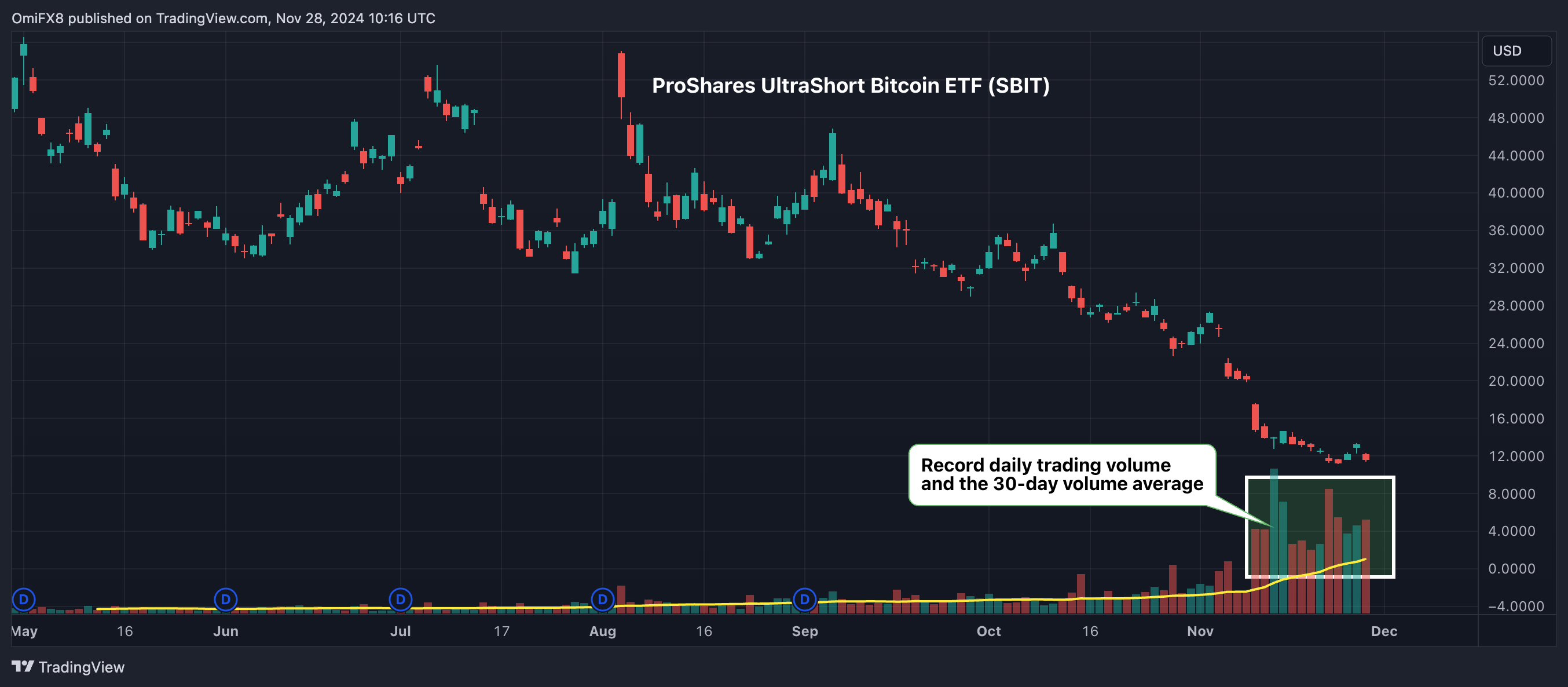
The spike in volume could be associated with the capitulation of investors who bought the ETF early this year anticipating a slide in BTC. Or it could be bulls protecting their long positions in spot/futures markets from possible BTC price pullbacks as the key $100,000 level approaches.

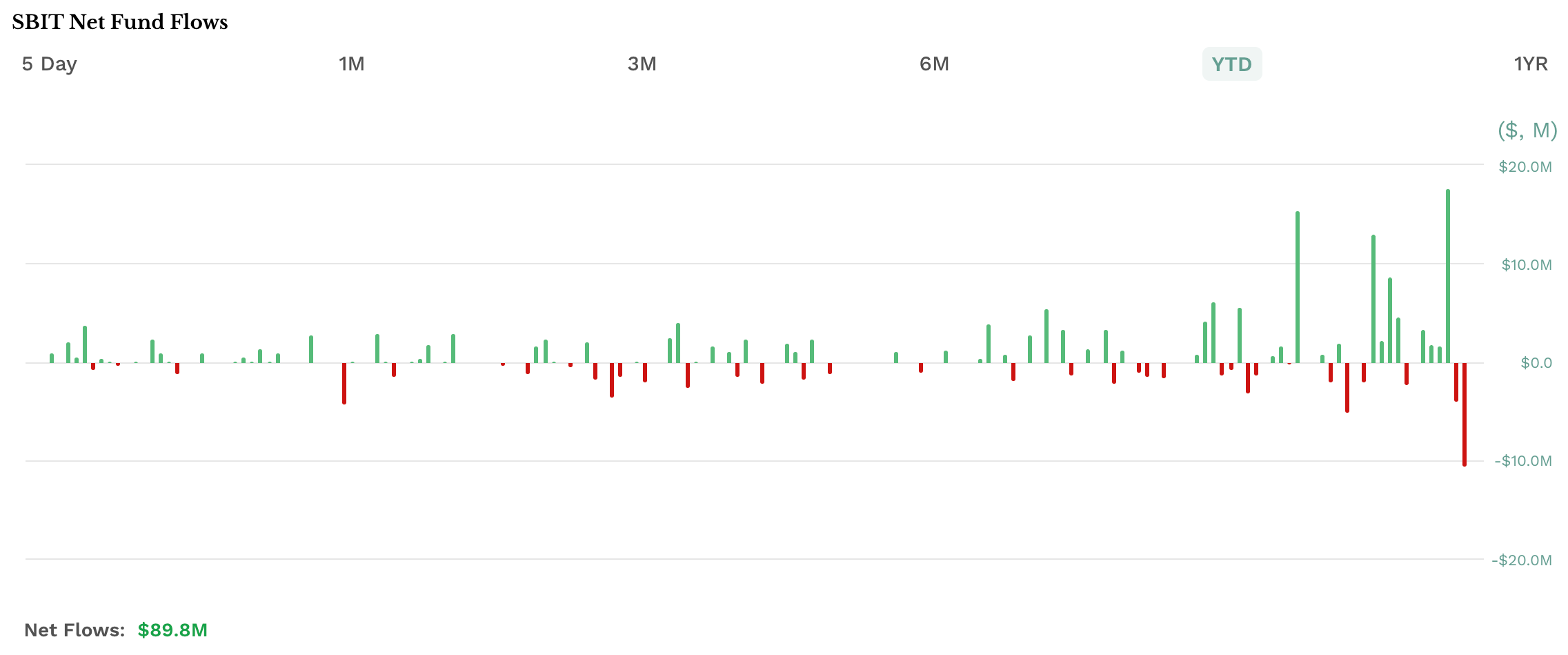
The latter seems to be the case, because inflows into the ETF have picked up. The fund registered a net inflow of $17.7 million on Friday, the most since its debut in April, according to data source ETF.com.
Bitcoin bulls, however, can still stay optimistic as the 11 spot bitcoin ETFs have accumulated over $2.5 billion in net inflows since Nov. 13, according to data tracked by <a href="https://farside.co.uk/btc/" target="_blank">Farside Investors</a>.

Polar bears
  •  

Solana-Based DEX Raydium's RAY Is Still Too Hot to Handle: Godbole

Bitcoin's (BTC) recent bullish pause has cooled jets in the broader market, shaking out over-leveraged positions and normalizing costs associated with betting on price rallies. One token, however, is still blazing hot: Solana-based decentralized exchange Raydium's native cryptocurrency, RAY.

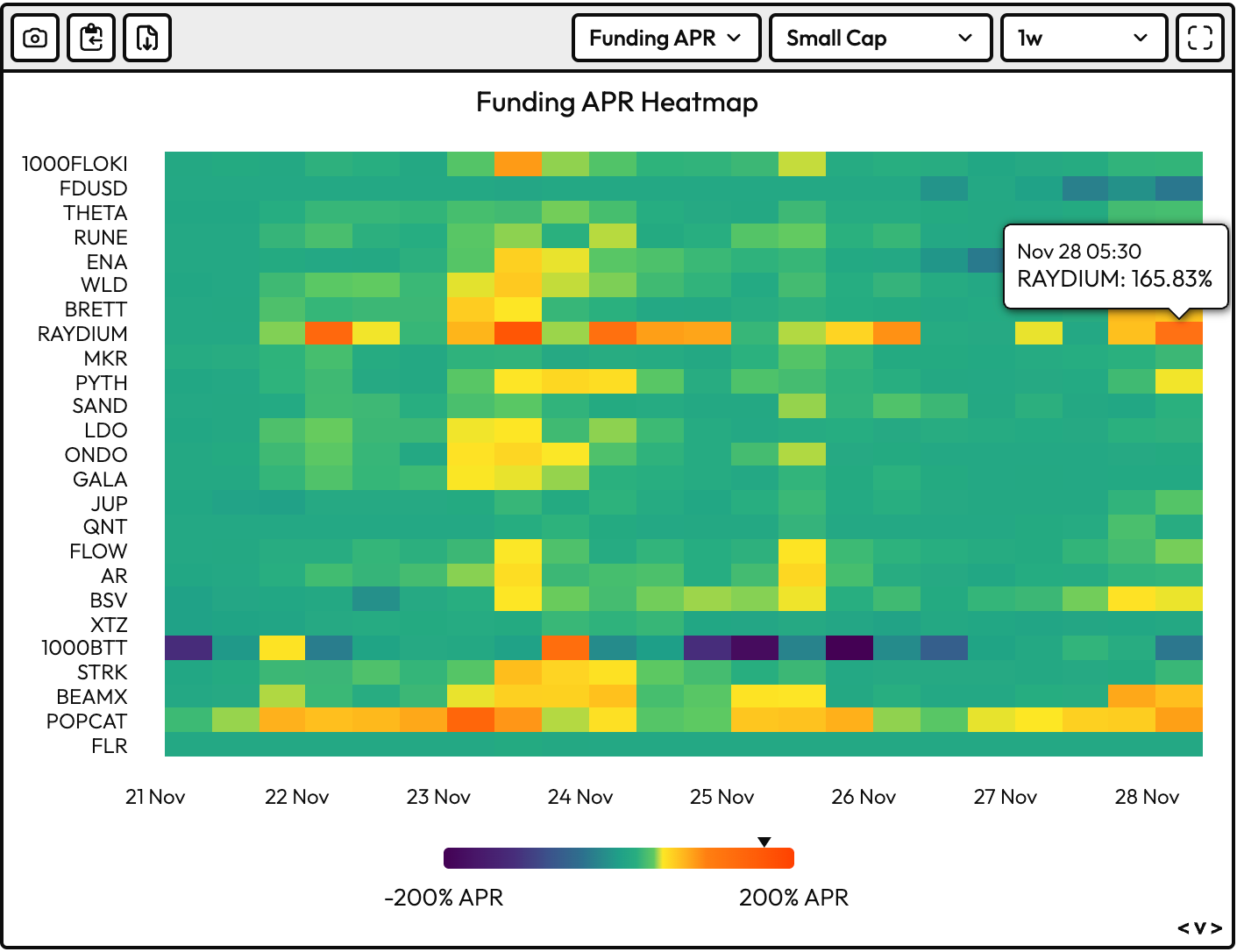
As the only coin with annualized perpetual funding rates still exceeding 160%, RAY stands out among the small, mid and large-cap tokens as the most overheated cryptocurrency, according to data from VeloData. The elevated rate suggests the market for RAY is overcrowded with long positions, with leverage skewed heavily toward the bullish side.

In such conditions, even a slight dip in price can shake the confidence of over-leveraged bulls, especially late entrants, triggering a mass unwinding of long positions, which often exacerbates the price decline, leading to a more pronounced sell-off. Tokens with a <a href="https://www.coingecko.com/en/categories/decentralized-exchange" target="_blank">market capitalization</a> of less than $5 billion, such as RAY, are particularly vulnerable to shenanigans in the derivatives market.

It's easy to see why bulls have thrown caution to the wind. Despite the recent 17% price pullback to $5.39, RAY is still up 67% for the month versus market leader BTC's 35% surge, <a href="https://www.coindesk.com/price/raydium" target="_blank">CoinDesk data show</a>.

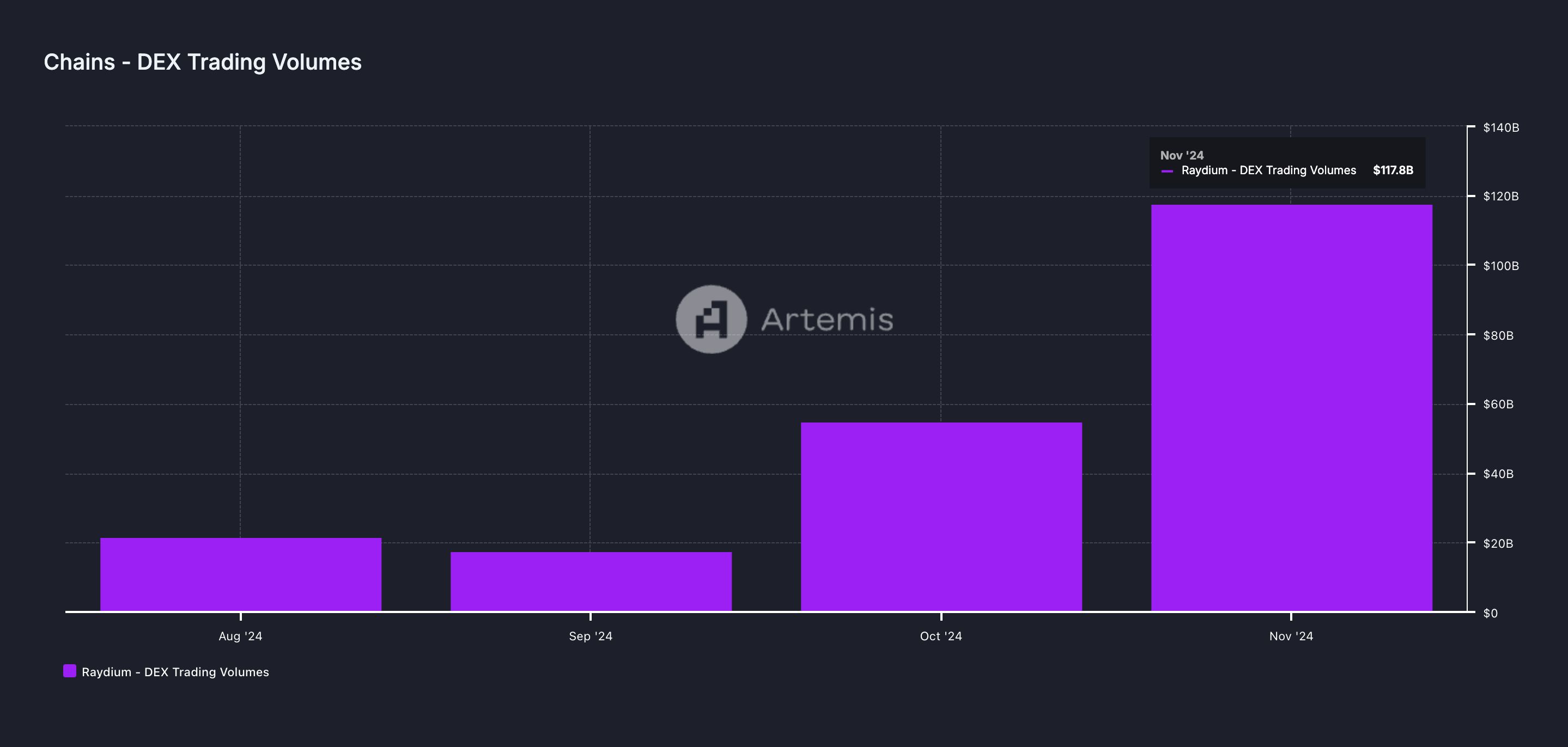
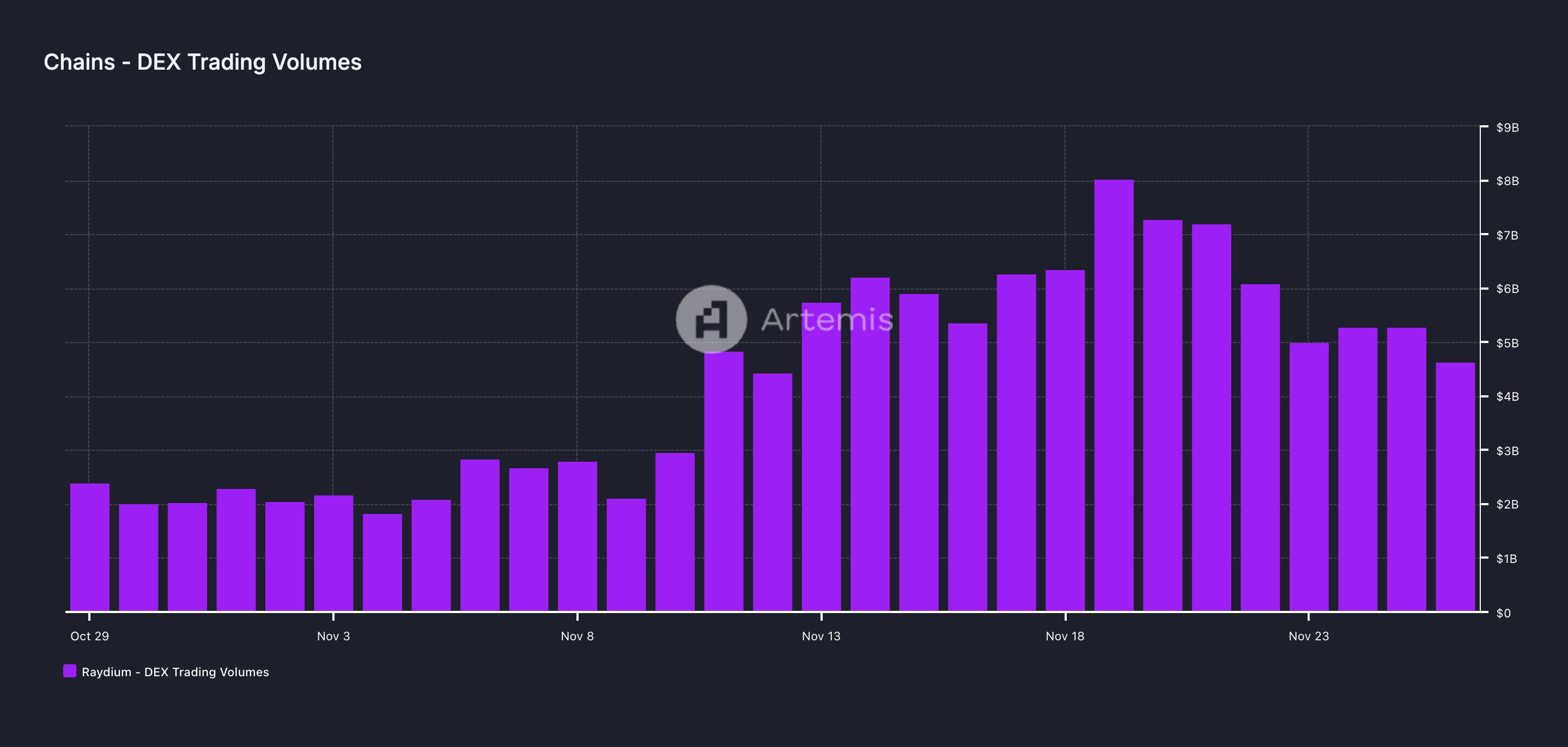
The market-beating rise comes amid record activity on Raydium. According to data source <a href="https://app.artemis.xyz/home" target="_blank">Artemis</a>, Raydium has <a href="https://app.artemis.xyz/project/raydium?from=sectors&tab=fundamentals" target="_blank">registered</a> a trading volume of $117.8 billion this month, nearly twice the entire <a href="https://app.artemis.xyz/project/Ethereum?from=sectors&tab=fundamentals" target="_blank">Ethereum-based DEX volume</a> of $66.8 billion. Raydium has generated $175 million in fees versus Ethereum's $168 million. Ethereum is the world's largest smart contract blockchain.

Note that much of the record activity on Raydium occurred early this month, primarily driven by the memecoin frenzy, which propelled trading volumes to record highs, fueling significant interest in the RAY token. However, the frenzied momentum has begun to cool, weakening the underlying support for a sustained rise in the RAY token.

Dune, landform

  •  

UltraShort Bitcoin ETF Offering 2x Inverse Returns Sees Record Volume as BTC Holds Above $90K

There’s something about major psychological price levels, like bitcoin's (<a href="https://www.coindesk.com/price/bitcoin/ " target="_blank">BTC</a>) $100,000 mark. As prices near these thresholds, anything tied to the asset gets an extra spark of energy.

The Nasdaq-listed ProShares UltraShort Bitcoin ETF (SBIT) is a case in point, posting record trading volume of over 8 million shares on Nov. 13 as bitcoin topped $90,000 for the first time and strengthening the case for a rally into six figures by year-end, data tracked by TradingView show.

Since then, BTC has held between $90,000 and $100,000, and the ETF's daily trading volume has averaged just over 5 million shares. That's significantly greater than the sub-2 million readings over the preceding months.

The ETF seeks to deliver twice the inverse daily price performance of bitcoin, so that if BTC falls by 1%, the ETF rises by 2%, offering a leveraged bearish bet on the cryptocurrency.

The spike in volume could be associated with the capitulation of investors who bought the ETF early this year anticipating a slide in BTC. Or it could be bulls protecting their long positions in spot/futures markets from possible BTC price pullbacks as the key $100,000 level approaches.

The latter seems to be the case, because inflows into the ETF have picked up. The fund registered a net inflow of $17.7 million on Friday, the most since its debut in April, according to data source ETF.com.

Bitcoin bulls, however, can still stay optimistic as the 11 spot bitcoin ETFs have accumulated over $2.5 billion in net inflows since Nov. 13, according to data tracked by <a href="https://farside.co.uk/btc/" target="_blank">Farside Investors</a>.

Polar bears
  •  

Solana-Based DEX Raydium's RAY Is Still Too Hot to Handle: Godbole

Bitcoin's (BTC) recent bullish pause has cooled jets in the broader market, shaking out over-leveraged positions and normalizing costs associated with betting on price rallies. One token, however, is still blazing hot: Solana-based decentralized exchange Raydium's native cryptocurrency, RAY.

As the only coin with annualized perpetual funding rates still exceeding 160%, RAY stands out among the small, mid and large-cap tokens as the most overheated cryptocurrency, according to data from VeloData. The elevated rate suggests the market for RAY is overcrowded with long positions, with leverage skewed heavily toward the bullish side.

In such conditions, even a slight dip in price can shake the confidence of over-leveraged bulls, especially late entrants, triggering a mass unwinding of long positions, which often exacerbates the price decline, leading to a more pronounced sell-off. Tokens with a <a href="https://www.coingecko.com/en/categories/decentralized-exchange" target="_blank">market capitalization</a> of less than $5 billion, such as RAY, are particularly vulnerable to shenanigans in the derivatives market.

It's easy to see why bulls have thrown caution to the wind. Despite the recent 17% price pullback to $5.39, RAY is still up 67% for the month versus market leader BTC's 35% surge, <a href="https://www.coindesk.com/price/raydium" target="_blank">CoinDesk data show</a>.

The market-beating rise comes amid record activity on Raydium. According to data source <a href="https://app.artemis.xyz/home" target="_blank">Artemis</a>, Raydium has <a href="https://app.artemis.xyz/project/raydium?from=sectors&tab=fundamentals" target="_blank">registered</a> a trading volume of $117.8 billion this month, nearly twice the entire <a href="https://app.artemis.xyz/project/Ethereum?from=sectors&tab=fundamentals" target="_blank">Ethereum-based DEX volume</a> of $66.8 billion. Raydium has generated $175 million in fees versus Ethereum's $168 million. Ethereum is the world's largest smart contract blockchain.

Note that much of the record activity on Raydium occurred early this month, primarily driven by the memecoin frenzy, which propelled trading volumes to record highs, fueling significant interest in the RAY token. However, the frenzied momentum has begun to cool, weakening the underlying support for a sustained rise in the RAY token.

Dune, landform

  •  

UltraShort Bitcoin ETF Offering 2x Inverse Returns Sees Record Volume as BTC Holds Above $90K

There’s something about major psychological price levels, like bitcoin's (<a href="https://www.coindesk.com/price/bitcoin/ " target="_blank">BTC</a>) $100,000 mark. As prices near these thresholds, anything tied to the asset gets an extra spark of energy.

The Nasdaq-listed ProShares UltraShort Bitcoin ETF (SBIT) is a case in point, posting record trading volume of over 8 million shares on Nov. 13 as bitcoin topped $90,000 for the first time and strengthening the case for a rally into six figures by year-end, data tracked by TradingView show.

Since then, BTC has held between $90,000 and $100,000, and the ETF's daily trading volume has averaged just over 5 million shares. That's significantly greater than the sub-2 million readings over the preceding months.

The ETF seeks to deliver twice the inverse daily price performance of bitcoin, so that if BTC falls by 1%, the ETF rises by 2%, offering a leveraged bearish bet on the cryptocurrency.

The spike in volume could be associated with the capitulation of investors who bought the ETF early this year anticipating a slide in BTC. Or it could be bulls protecting their long positions in spot/futures markets from possible BTC price pullbacks as the key $100,000 level approaches.

The latter seems to be the case, because inflows into the ETF have picked up. The fund registered a net inflow of $17.7 million on Friday, the most since its debut in April, according to data source ETF.com.

Bitcoin bulls, however, can still stay optimistic as the 11 spot bitcoin ETFs have accumulated over $2.5 billion in net inflows since Nov. 13, according to data tracked by <a href="https://farside.co.uk/btc/" target="_blank">Farside Investors</a>.

Polar bears

  •  

UltraShort Bitcoin ETF Offering 2x Inverse Returns Sees Record Volume as BTC Holds Above $90K

There’s something about major psychological price levels, like bitcoin's (<a href="https://www.coindesk.com/price/bitcoin/ " target="_blank">BTC</a>) $100,000 mark. As prices near these thresholds, anything tied to the asset gets an extra spark of energy.

The Nasdaq-listed ProShares UltraShort Bitcoin ETF (SBIT) is a case in point, posting record trading volume of over 8 million shares on Nov. 13 as bitcoin topped $90,000 for the first time and strengthening the case for a rally into six figures by year-end, data tracked by TradingView show.

Since then, BTC has held between $90,000 and $100,000, and the ETF's daily trading volume has averaged just over 5 million shares. That's significantly greater than the sub-2 million readings over the preceding months.

The ETF seeks to deliver twice the inverse daily price performance of bitcoin, so that if BTC falls by 1%, the ETF rises by 2%, offering a leveraged bearish bet on the cryptocurrency.

The spike in volume could be associated with the capitulation of investors who bought the ETF early this year anticipating a slide in BTC. Or it could be bulls protecting their long positions in spot/futures markets from possible BTC price pullbacks as the key $100,000 level approaches.

The latter seems to be the case, because inflows into the ETF have picked up. The fund registered a net inflow of $17.7 million on Friday, the most since its debut in April, according to data source ETF.com.

Bitcoin bulls, however, can still stay optimistic as the 11 spot bitcoin ETFs have accumulated over $2.5 billion in net inflows since Nov. 13, according to data tracked by <a href="https://farside.co.uk/btc/" target="_blank">Farside Investors</a>.

Polar bears

  •  

Solana-Based DEX Raydium's RAY Is Still Too Hot to Handle: Godbole

Bitcoin's (BTC) recent bullish pause has cooled jets in the broader market, shaking out over-leveraged positions and normalizing costs associated with betting on price rallies. One token, however, is still blazing hot: Solana-based decentralized exchange Raydium's native cryptocurrency, RAY.

As the only coin with annualized perpetual funding rates still exceeding 160%, RAY stands out among the small, mid and large-cap tokens as the most overheated cryptocurrency, according to data from VeloData. The elevated rate suggests the market for RAY is overcrowded with long positions, with leverage skewed heavily toward the bullish side.

In such conditions, even a slight dip in price can shake the confidence of over-leveraged bulls, especially late entrants, triggering a mass unwinding of long positions, which often exacerbates the price decline, leading to a more pronounced sell-off. Tokens with a <a href="https://www.coingecko.com/en/categories/decentralized-exchange" target="_blank">market capitalization</a> of less than $5 billion, such as RAY, are particularly vulnerable to shenanigans in the derivatives market.

It's easy to see why bulls have thrown caution to the wind. Despite the recent 17% price pullback to $5.39, RAY is still up 67% for the month versus market leader BTC's 35% surge, <a href="https://www.coindesk.com/price/raydium" target="_blank">CoinDesk data show</a>.

The market-beating rise comes amid record activity on Raydium. According to data source <a href="https://app.artemis.xyz/home" target="_blank">Artemis</a>, Raydium has <a href="https://app.artemis.xyz/project/raydium?from=sectors&tab=fundamentals" target="_blank">registered</a> a trading volume of $117.8 billion this month, nearly twice the entire <a href="https://app.artemis.xyz/project/Ethereum?from=sectors&tab=fundamentals" target="_blank">Ethereum-based DEX volume</a> of $66.8 billion. Raydium has generated $175 million in fees versus Ethereum's $168 million. Ethereum is the world's largest smart contract blockchain.

Note that much of the record activity on Raydium occurred early this month, primarily driven by the memecoin frenzy, which propelled trading volumes to record highs, fueling significant interest in the RAY token. However, the frenzied momentum has begun to cool, weakening the underlying support for a sustained rise in the RAY token.

Dune, landform

  •  
❌