❌

Reading view

Amazon’s new Fire Stick promises to be faster and slimmer – but its pricing has us scratching our heads

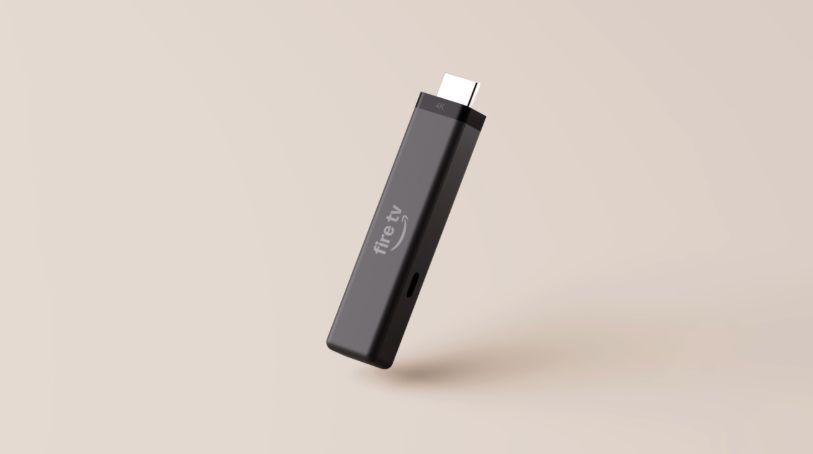
Amazon has been slowly releasing its latest string of hardware over the past year. And the newest to join the tech giant’s roster is the Fire TV Stick 4K, which Amazon says will deliver “crisp 4K resolution and a fast experience”.

The US-based brand claims that after pitting the new stick against similarly priced 4K models from other brands, the streaming device played content nearly 20 per cent faster than the rest. We have not made the comparison ourselves yet (you will have to wait for our full review). But if Amazon’s new device is as fast as the company claims, then it would certainly be a welcome addition to the streaming family.

As well as offering the expected 4K resolution, the stick also supports 1080p and 720p at up to 60 frames per second. It comes with 8 GB internal storage, a quad-core 1.7 GHz processor, and support for Wi-Fi 6 and Bluetooth 5.3.

Like the rest of Amazon’s remaining streaming sticks (the Fire TV Stick 4K Plus and Fire TV Stick 4K Select are being culled from the range), the newest entry is built with Amazon’s Vega operating system and comes with Alexa+ out of the box. There’s no Dolby Vision or Dolby Atmos support, however.

The new Fire TV Stick 4K also sports a slimmer design, which should make it even easier to carry around when on the move.
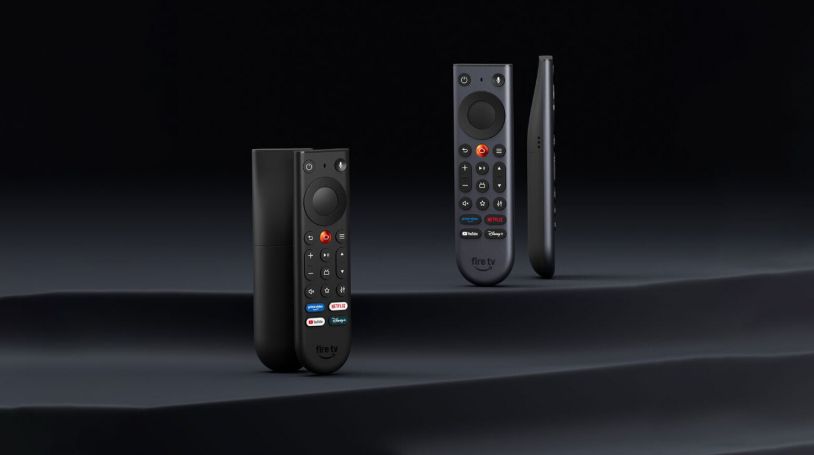
Amazon Fire Tv remote on a black background

(Image credit: Amazon)

Also new is the remote control, which Amazon says is “designed with more tactile controls so it would be easier to hold and navigate key buttons”. Gone is the rounded remote top with the rather clunky blue Alexa button; in is a more premium-looking flat-top and a weighted bottom to help you tell which end to point at the TV more immediately.

The home button now sports a metal orange design to make it easy to find, and there’s a customisable star button that you can set up so that it goes straight to your favourite app, or to toggle settings.

Amazon also says a Fire TV Remote Plus is coming early next year, with an aluminium body, backlit buttons and a built-in “Alexa, find my remote” feature. That will replace the Alexa Voice Remote Pro.

So how much will it set you back? Well, this is where things get interesting. The Fire TV Stick 4K costs £70 / $60. Right now and during Prime Day, you can get it for the discounted price of £33 / $30, which is much more palatable.

When we reviewed its Award-winning step-up sibling, though, the Fire TV Stick 4K Max cost £70 / $60 / AU$120. But the price of this Award-winning streaming stick has now gone up to £100 / $85 without Prime deals or limited discounts.

Considering the 4K Max model offers Dolby Vision and Atmos support where the new Fire TV Stick 4K does not, it seems that Amazon’s entire streaming-stick range is having a price hike. We are yet to test the new streaming device but, unless you manage to snag it at a discounted price, its full-fat cost is a hard pill to swallow.

MORE:

Check out our review of the Amazon Fire TV 4K Max

These are the best streaming devices

And here are the best TVs
  •  

This ultra-premium cabinet is an all-in-one storage solution “engineered to keep your projector at its best”

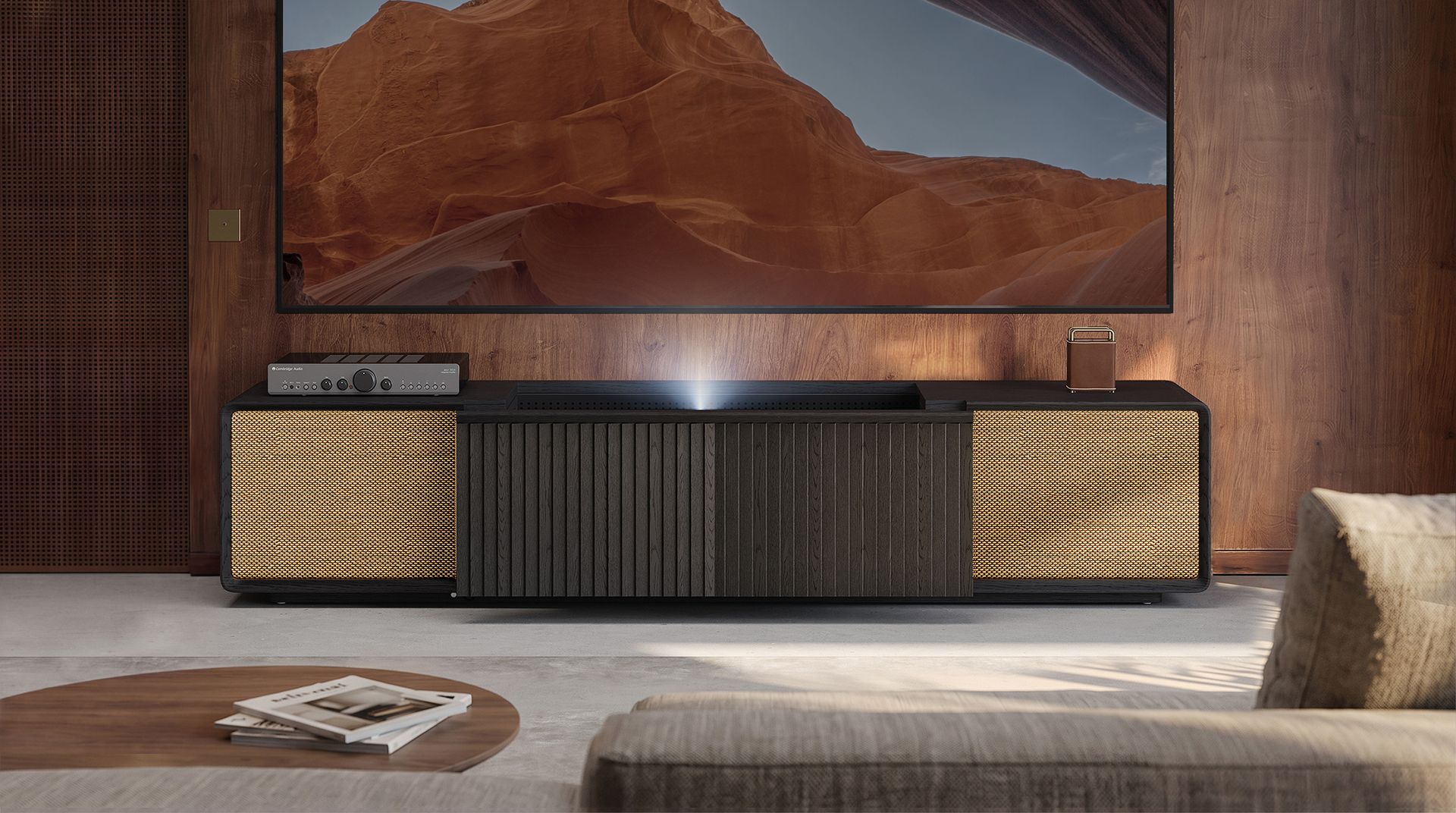
When setting up an ultra-short throw (UST) projector, most of us are content with placing it on a simple cabinet. That can call for a fair bit of adjustment, though, and is often not the most aesthetically pleasing addition to a living room.

But there’s a new US-based brand offering a premium alternative. Cinèst’s Core Collection consists of the A1 and E1 luxury UST projector consoles, which the company claims are “engineered to keep your projector at its best – whichever UST you choose”.

Positioned inches away from your screen, the middle cabinet houses your UST projector. Cinèst says you can use it with basically any UST model. Once activated, the centre of the cabinet opens up like a reverse trapdoor using a motorised mechanism to project the image onto your screen.

You can then adjust the platform’s height or depth using the remote control to fit the screen. Once you have found the right position for your projector, the Core series remembers your preferred settings.

The side cabinets can be used to house the rest of your AV equipment, such as a 4K Blu-ray player or AV amplifier.

There’s also a built-in ventilation system, including perforated fabric panels which Cinèst says can keep the components cool without exposing them.

If you have lots of cables snaking around, then the cabinets include some rather nifty organisation features. There are six AC outlets and two USB-A ports built into the cabinets, as well as holes for the wires so they stay concealed.

It is made from premium-looking wood and both cabinets offer either black or brown finishes. While the E1 just comes with one sizing option (91 inches), the A1 is available in 103 and 118 inches.

The smaller cabinet will set you back £2300, while the larger comes in at an arresting £3450. That puts it on par with the five-star Hisense PX3-Pro UST projector, which we tested at £2499 / $3499 / AU$4499.

It’s far from accessible for the majority of homes, but its sleek look and innovative design should make it a luxury-feeling addition to your living room if you have the funds and the space.

MORE:

Everything you need to know about UST projectors

These are the best projectors

And check out the best 4K Blu-ray players

  •  

JBL’s new soundbar series can fold into a U-shape – and that’s not the only flexible feature

JBL has just released four soundbars under the Cinema SBMK2 series, which offer a brand-new feature for the US-based brand.

You can connect the soundbars wirelessly to JBL portable speakers as rear surrounds, which JBL says will “deliver true surround sound at the touch of a button”.

If you already own a pair of JBL Flip 7 portable speakers, you’re in luck – this is the only compatible model right now. The burrito-shaped Flip 7 got a five-star rating when we reviewed it, offering as it does a skilful handling of dynamics and detail.

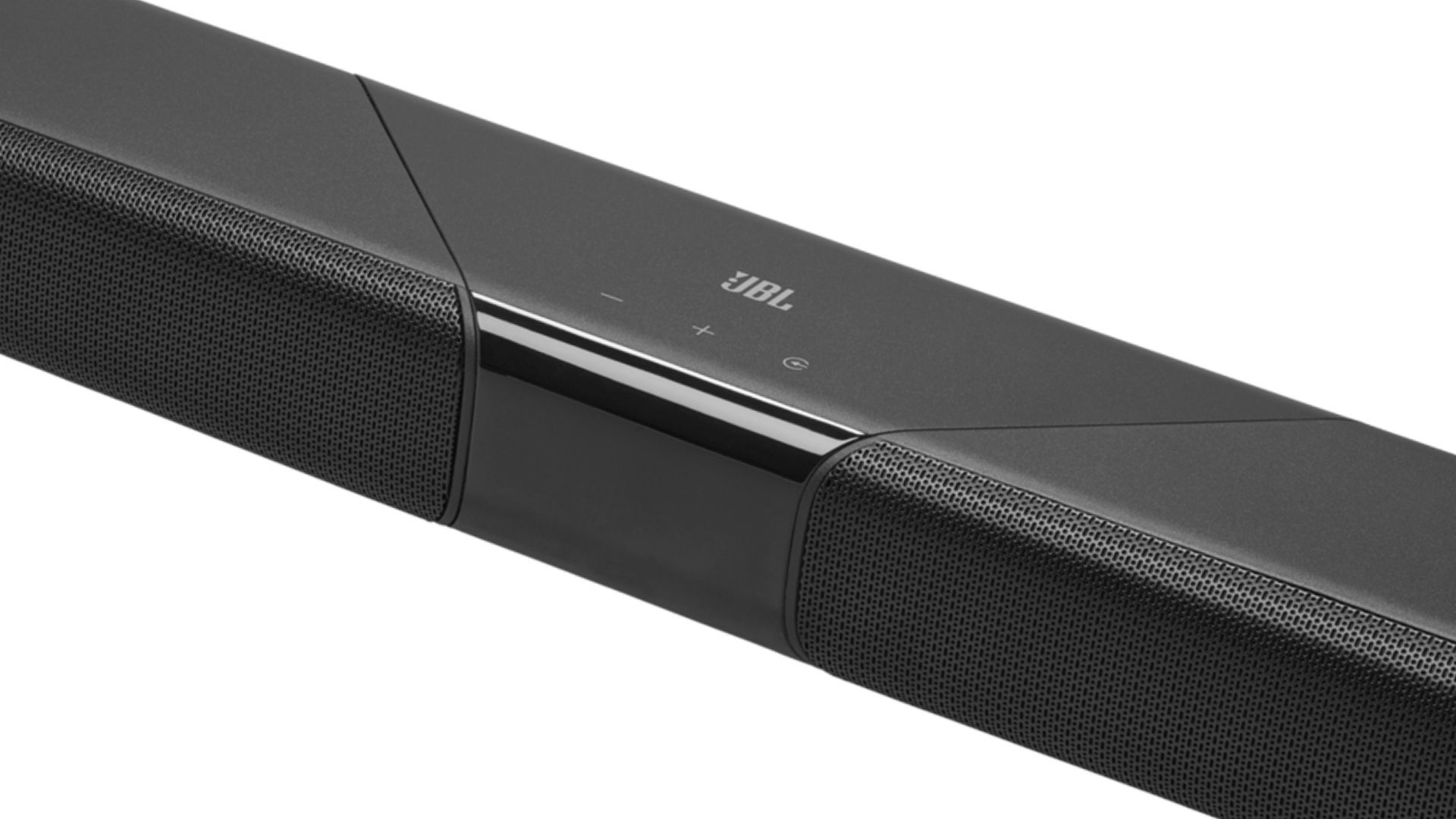
But what about the new soundbars? Well, all but one offer an unusual design quirk: you can fold them into a U-shape. The brand says this is so the bars are easy to carry around and take up less space in the box. JBL also tells us that the bar cannot be used in its folded state.

JBL Cinema SB595MK2 on a white background, close up of the foldable hinge in the middle of the bar.

(Image credit: JBL)

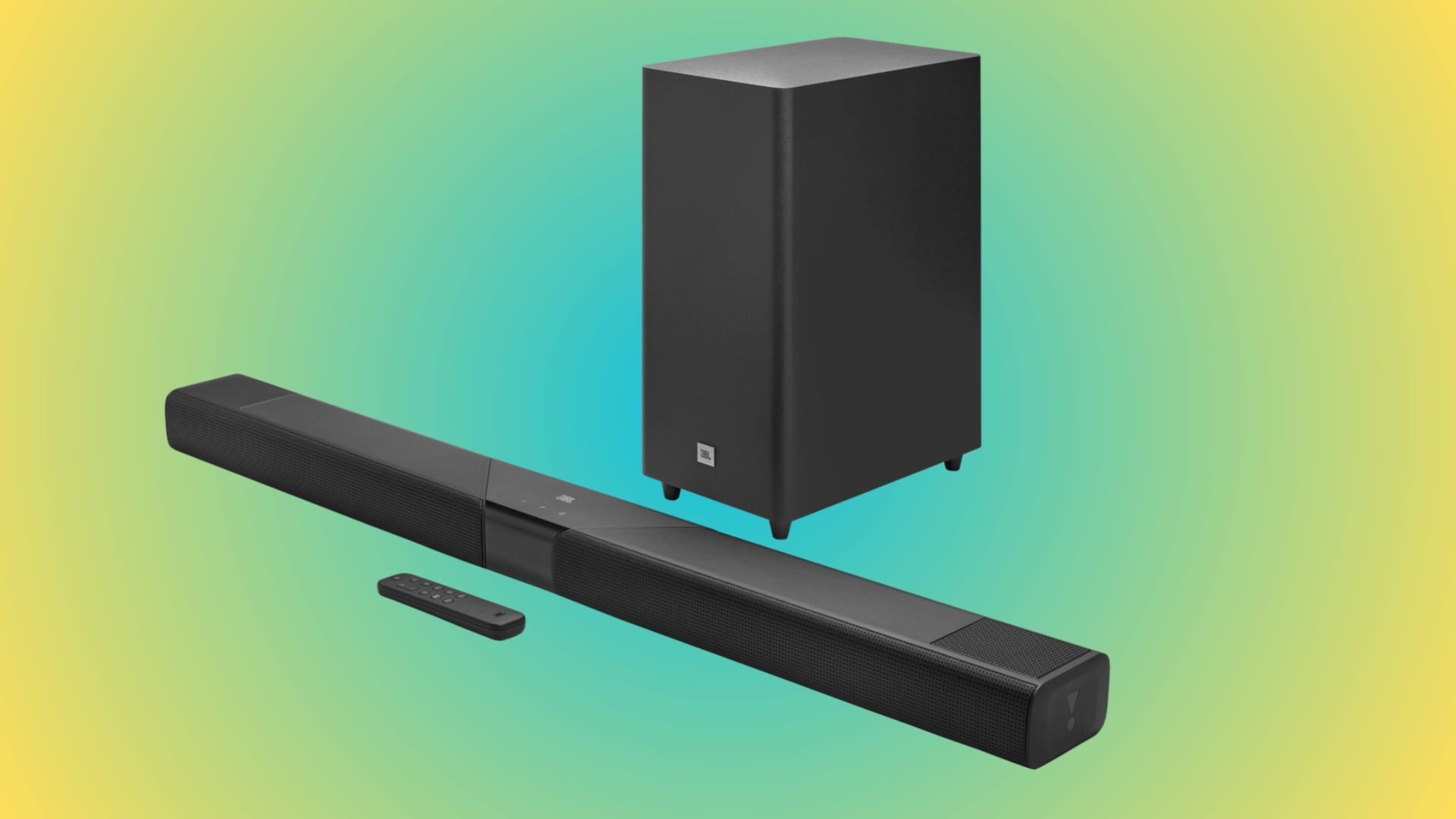
First on the list is the flagship SB595MK2, which offers a 3.1.2-channel configuration and true Dolby Atmos support thanks to its up-firing drivers. That’s paired with a separate 6.5-inch subwoofer, delivering a total power output of 440W.

It will set you back £350 / $350, putting it in competition with the Award-winning Sonos Beam Gen 2 that scored five stars in our test room.

The SB580MK2 (£300 / $300) comes with the same subwoofer as its more pricey sibling. This 3.1-channel soundbar does not have up-firing drivers, but there is still virtualised Dolby Atmos support.

Next is the JBL SB550MK2, which features a 5.25-inch subwoofer and a total power output of 360W. There is no Dolby Atmos on the cards with this the 3.1-channel model, so you are limited to Dolby Audio.

Finally, comes the SB510MK2. It’s the only non-foldable soundbar of the bunch and also the cheapest. The subwoofer is built into the soundbar’s main body, so you need accommodate only one piece of kit.

Bluetooth is supported with all models, so you can stream music to the bars from other devices.

We will have to wait until we get the models in our test room to determine how well they compare with their rivals. Being able to use the JBL Flip 7 as rear surrounds is a promising addition in terms of flexibility and scale, but we hope the brand adds compatibility to even more speakers soon. Stay tuned for our full review.

MORE:

Check out the JBL 300MK2 review

These are the best Dolby Atmos soundbars

And here are the best Bluetooth speakers

  •  

I put two mid-range Dolby Atmos soundbars head to head – and it's clear which one is best for your living room

If you are looking for a Dolby Atmos soundbar, you may have noticed that there’s a certain price point that sits in a very difficult middle ground. Bars that come in at around the £700 / $700 must figure out how to make their mark between two more competitive categories.

Below this category sit cheaper, entry-level soundbars, such as the five-star Sonos Beam Gen 2 and the JBL Bar 300MK2. With their more affordable price tags and impressively immersive performance considering their compact footprints, we can certainly see the appeal for those wanting to upgrade their TV’s uninspiring audio.

Then, for those wanting a more premium addition to their system, more pricey Atmos bars make for a great upgrade. That includes the likes of the Sonos Arc Ultra which won a What Hi-Fi? Award in 2025.

So how do you make your mark as the middle child? There are two five-star models at this level that we have just put head to head – and there’s a clear frontrunner.

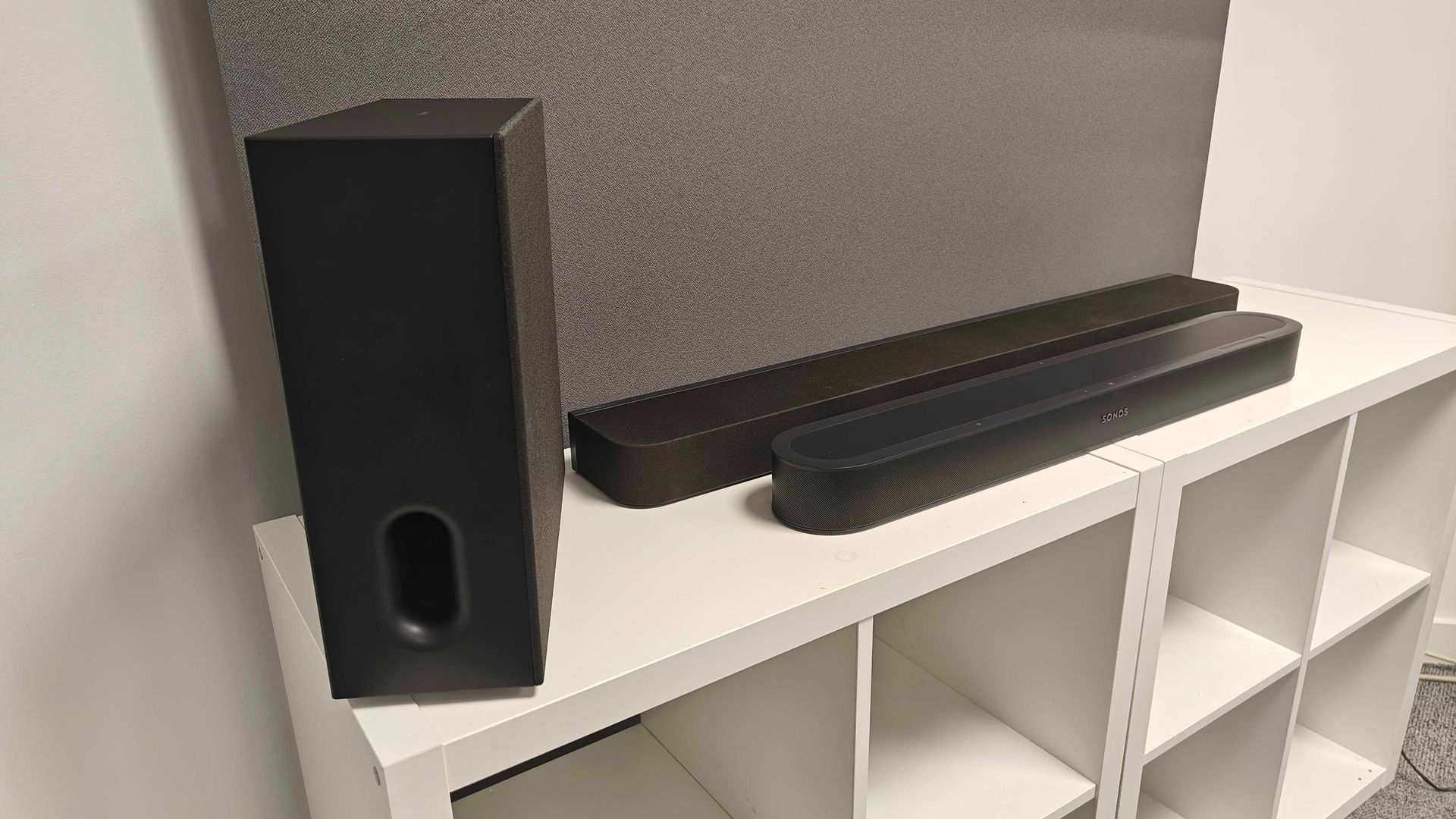
First up is the Sony Bravia Theatre Bar 7 + S, which comprises a soundbar and a separate subwoofer. Together, that gives you a 5.1.2-channel configuration with Dolby Atmos and DTS:X support.

At the back of the soundbar, you will find a cable cove that houses two HDMI sockets. One is the eARC port to connect the soundbar to your TV, while the other is a dedicated input.

Challenging this Sony combo is the newly announced Sonos Beam Ultra, boasting a 7.1.2-channel configuration. It offers an upgrade in hardware from the Beam Gen 2 thanks to its two up-firing drivers, although there is still no DTS:X support.

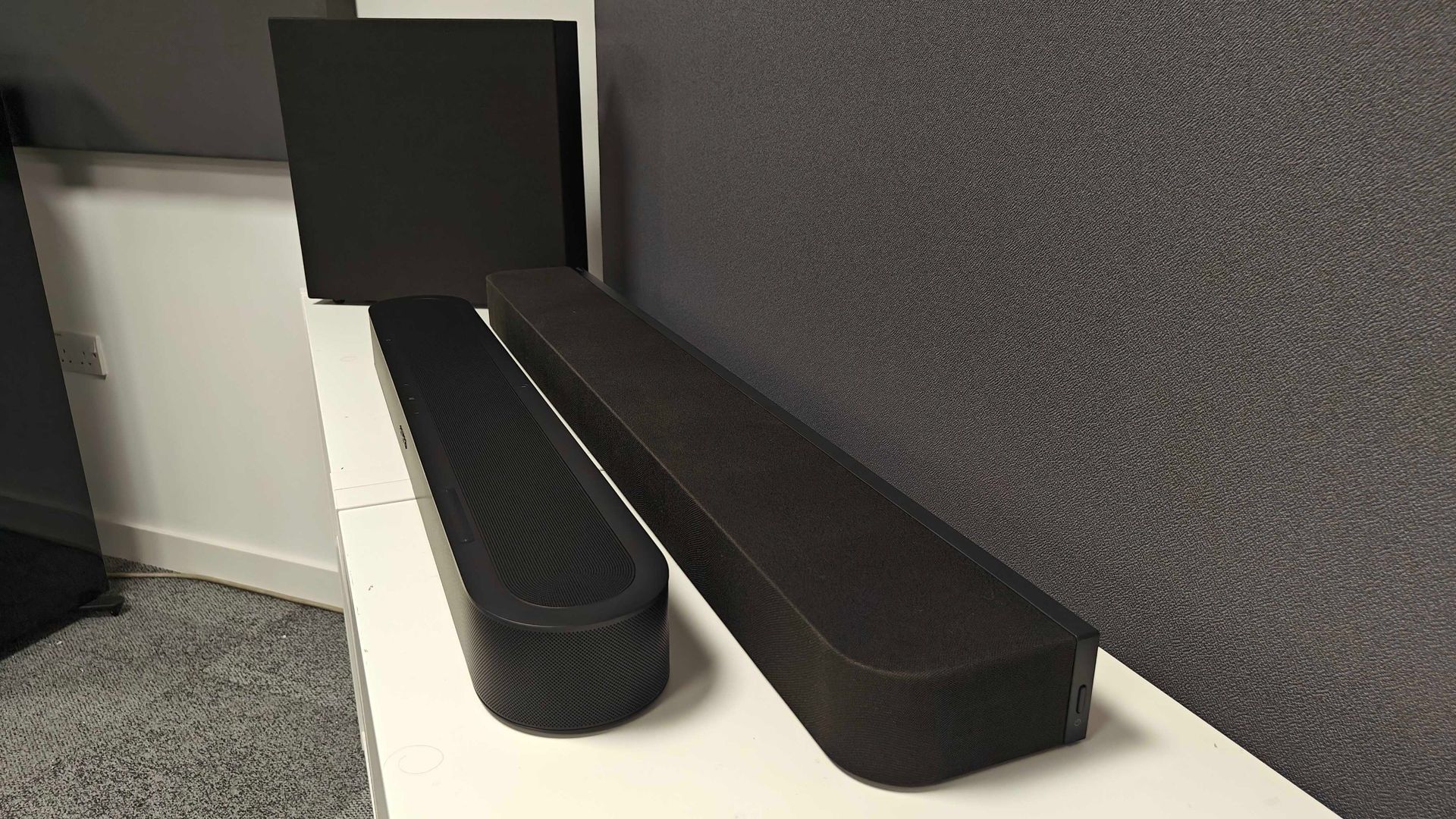
In terms of design, the two soundbars are taking different approaches. The Bravia Theatre Bar 7 sports a cloth grille, while the Beam Ultra has a matte plastic finish with controls for volume and Bluetooth connectivity on the top. You can get both of them in black, while the Beam Ultra also comes in a white option.

Right now, they are both available for £699 in the UK, despite the Sony model originally coming out with a slightly higher price tag.

We gave each of them five stars in our test room, but which one comes out on top?

Sonos Beam Ultra and Sony Bravia Theatre Bar 7 + S on a white table

(Image credit: Future)

The Sony and Sonos models each deliver a huge upgrade over the vast majority of TV speakers with their increased scale, clarity and detail.

When it comes to bass, we test out both models with the start of Chapter 2 in Blade Runner 2049. The Sony package is the meatier of the two and offers more of a floor-shaking experience thanks to its separate subwoofer. But the Sonos model blends the bass together more cohesively with the rest of the sound, and none of the frequencies stick out.

Where the Sony bar struggles with the lowest notes and delivers a little buzzing, the Beam Ultra offers a more refined, musical sound that presents more nuance in the low notes.

Both are precise, and we get a good sense of where each character is sitting during the interrogation scene between Officer K and the interviewer. The Sonos once again just edges ahead in this area, though, and has the best spatial positioning from the single bar.

In terms of scale, both Sony and Sonos deliver an expansive sound that extends beyond the height and width of our TV screen. That being said, the Beam Ultra’s audio hangs together more effectively to deliver the more convincing near-dome of Dolby Atmos sound.

Dialogue is crisp and expressive with both models, and remains at the forefront even during the busiest of moments.

Despite the Bravia Theatre Bar 7 + S delivering a bassy and immersive audio experience, the Sonos Beam Ultra manages to offer the most cohesive and engaging sound that makes it our top soundbar pick at this price.

MORE:

Here’s our review of the Sonos Beam Ultra

Check out what we thought of the Sony Bravia Theatre Bar 7 + S

And these are the best Dolby Atmos soundbars

  •  
❌