❌

Reading view

Ford Wants to Charge You $12,545 for a Paint Job

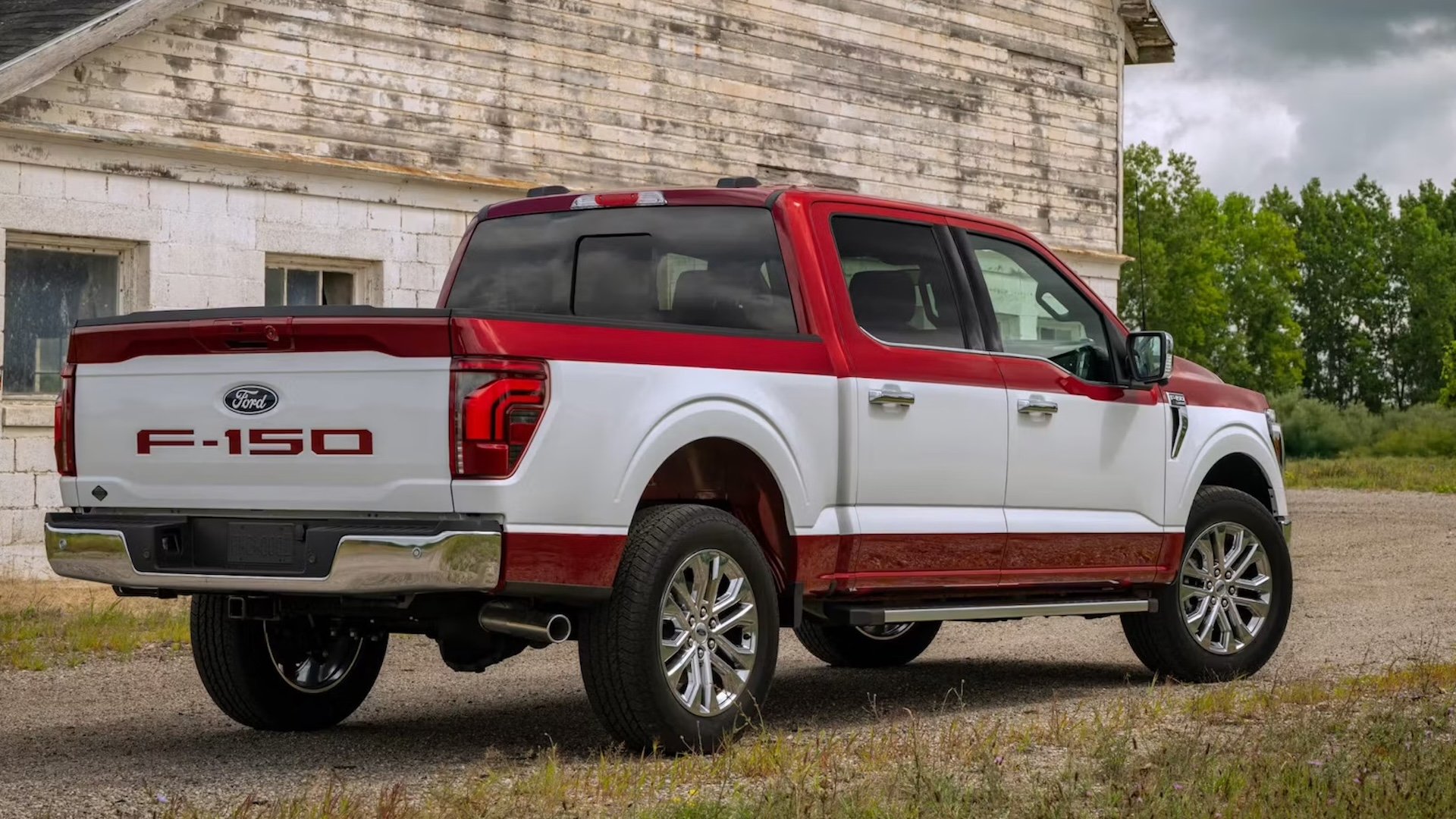
Unique colors, paint jobs, and even wraps are cool. After all, it’s the unique individuals who spring up for these that keep our roads looking less bland than they already are. But how much are you willing to pay for that visual pizazz? What about 20% of the vehicle’s purchase price?

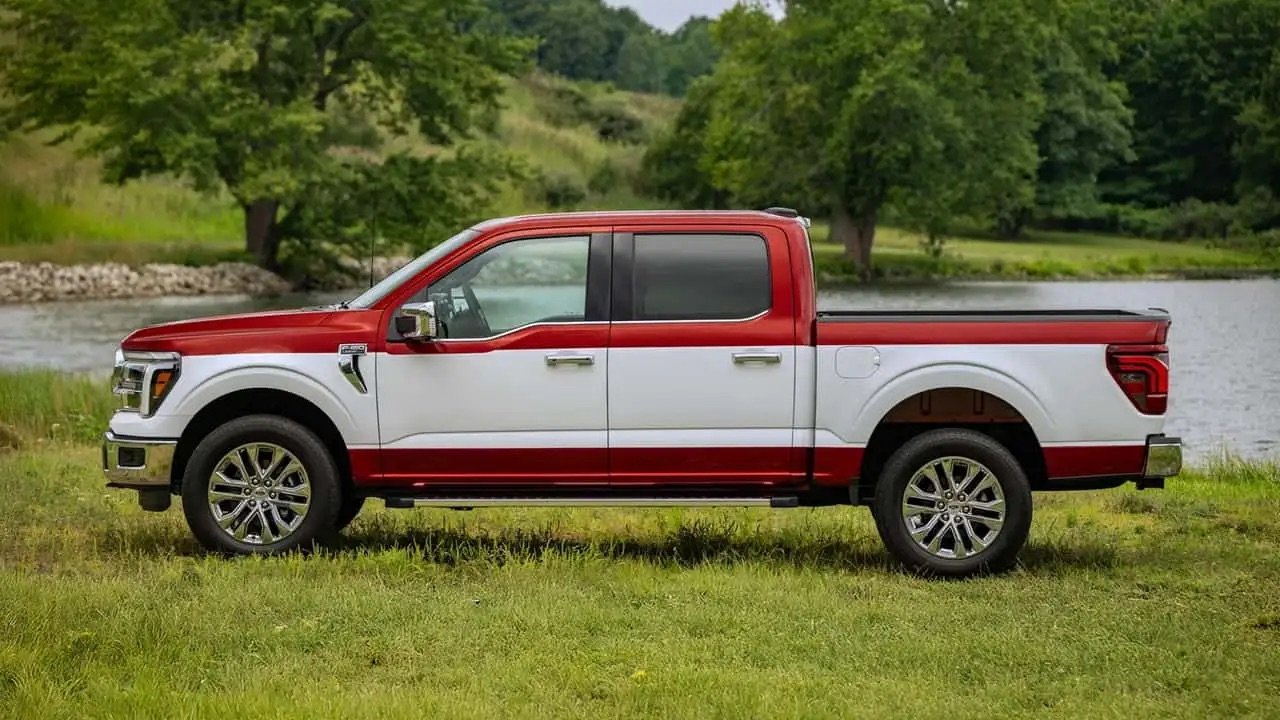
A Ford F-150 Lariat SuperCrew starts around $60,000, so checking the box for the new $12,545 two-tone paint job offered on 2027 models means you’ll spend roughly 20% of your truck’s cost on a single option. Of course, that percentage will vary depending on which trim and options you ultimately buy, but regardless, that just seems silly and, not to mention, a poor financial decision. I can’t imagine anyone will salvage any resale value from it down the road.
Ford

Speaking of poor financial decisions, you can dig yourself into an even bigger hole by opting to roll the price of that paint job into the lease or finance monthly payment. Yes, you can actually do that. Depending on your personal history and financing terms, that could mean anywhere from $200 to $320 per month on top of the car’s monthly payment. Or, y’know, you can just pay it out of pocket.

For the record, I’m a big supporter of people doing whatever they want with their money as long as it makes them happy. If you want to pay almost $13,000 (or more) for a paint job, wheels, or engine mods, by all means, do it. What I’m emphasizing here is the ridiculously high cost of that standalone option and, to a certain extent, the fact that an automaker and its credit division are salivating at the revenue they can make off this thing, fully knowing it’ll put consumers in a tough place down the road.

Would you?

Got a tip? Email us at tips@thedrive.com

The post Ford Wants to Charge You $12,545 for a Paint Job appeared first on The Drive.
  •  

Ford Is Returning to WRC as Full Factory Team in 2028

Perhaps Ford has some spare time, money, and personnel despite its Formula 1 involvement, because it has now decided to launch a full factory racing effort in the World Rally Championship starting in 2028. High five, Ford.

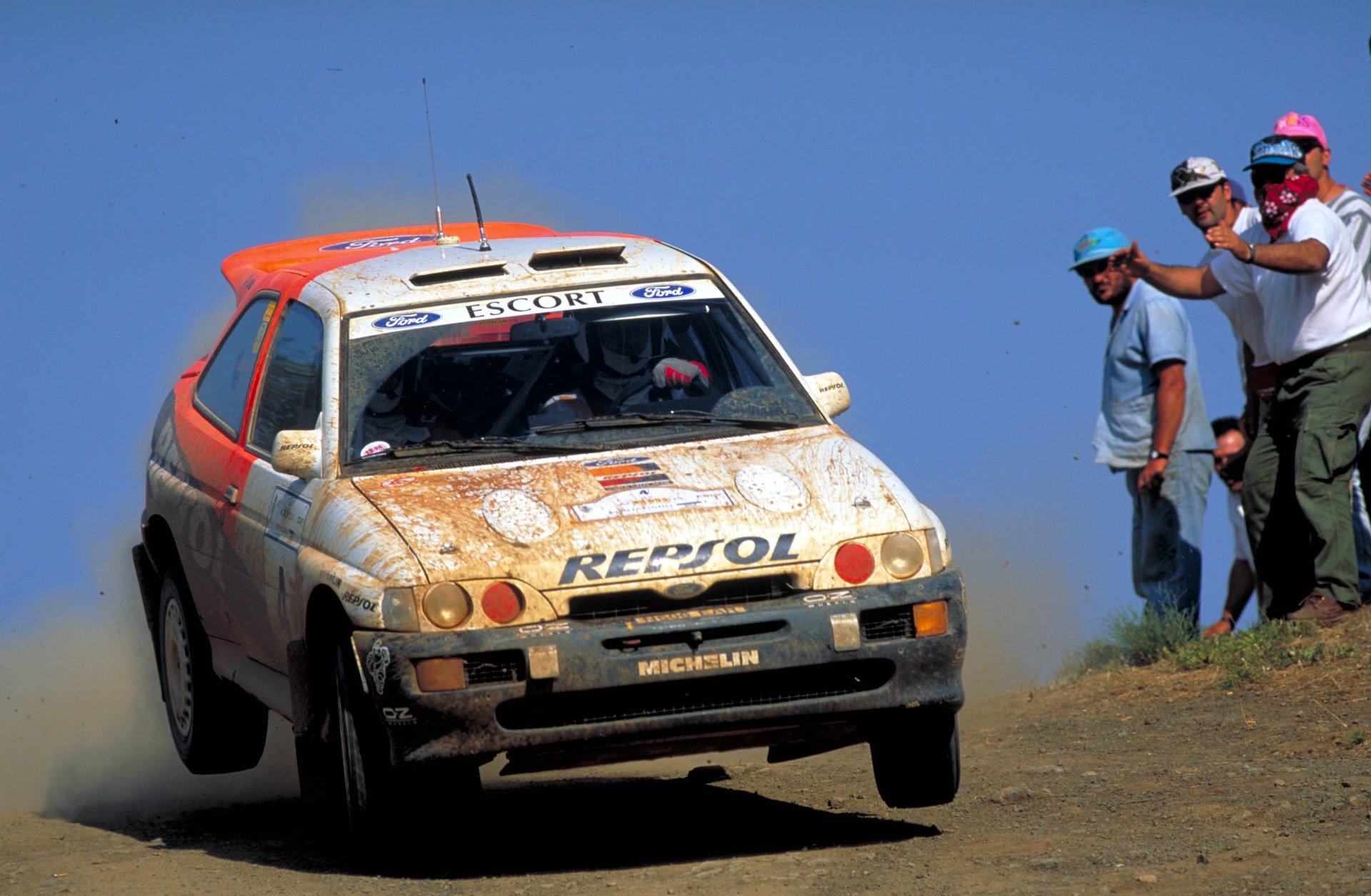
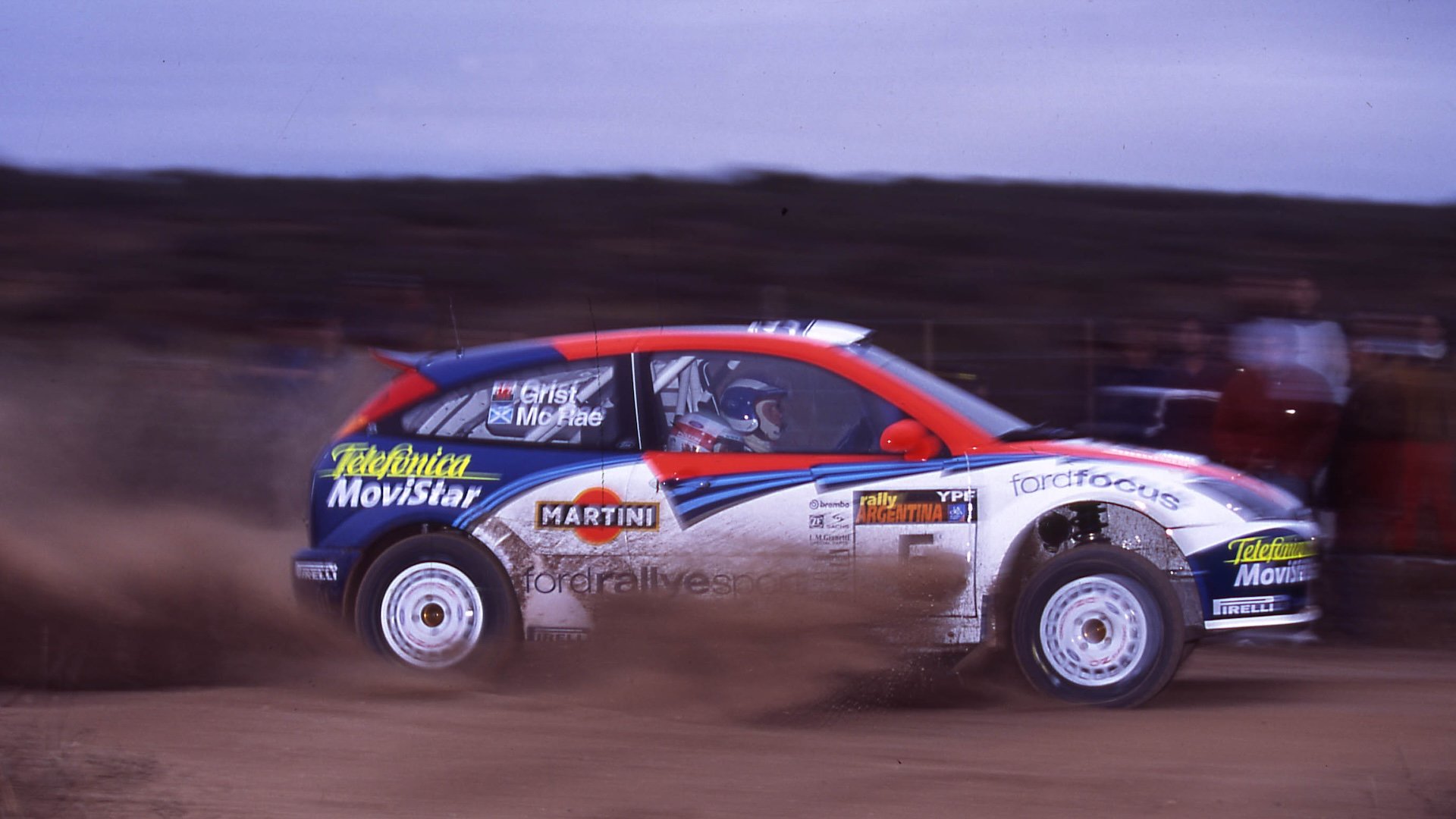
Ford has been involved in WRC in one way, shape, or form for decades, and it has the cars and hardware to show for it. From the famous Michelin-liveried Escort, the Sierra, and of course, the Colin McRae and Carlos Sainz Focuses, only Subaru and Audi evoke more dirt-loving memories.

The Blue Oval is once again looking to its long-time partner, M-Sport, to launch its factory effort, which will technically begin in 2028 but will really peak in 2029 when its all-new Ford race car hits the road.

“As we celebrate 125 years of Ford Racing, our 50-year legacy in the WRC stands out as one of our proudest because of its direct connection to the fun and exciting cars that came from that,” said Mark Rushbrook, Global Director of Ford Racing. “We can’t wait to compete again in rally racing in 2028 and beyond.”

Ford

It’s too soon to know who will be driving for Ford come 2028 or 2029, let alone what its car will look like, but Ford promises that its WRC racer will “help shape Ford’s new European portfolio of rally-bred passenger vehicles to help turn everyday commutes into drives worth looking forward to.”

Ford is currently involved in a myriad of racing disciplines, from F1 as Red Bull’s engine partner to NASCAR, the Dakar Rally, GT3 with the Mustang, and will take on Le Mans in the Hypercar class in 2027.

Oh, and remember when a Ford engineer had an F1 turbocharger confiscated at the Detroit airport? Here’s that scoop.

Got a tip? Email us at tips@thedrive.com

The post Ford Is Returning to WRC as Full Factory Team in 2028 appeared first on The Drive.
  •  

Your Car Is Sharing More Private Data Than Your Smartphone. Who’s Getting It?

Modern vehicles, like every other technology device we own, from smartphones to fridges and even dog collars, are connected to the internet 24/7. They learn from us, know things about us, and most of the time use that information to make our lives easier. Cars, specifically, collect vital driving and behavior data that is borderline impossible to opt out of if you want to use your vehicle’s modern convenience features. And a new study recently found that your sensitive information (some of which isn’t even car-related) is being shared with far more parties than you realize.

The only way you’ll be surprised by what you’re about to read is if you’ve been in a coma for the last decade or two. But even for those of us who are mildly aware of how the technology we rely on every day interacts with us and the data we generate, this recent study by Boston’s Northeastern University in partnership with Consumer Reports will make you raise an eyebrow—several times.

The study covered 21 vehicles of 19 different brands (listed below) and 30 companion mobile apps that process and handle user data.

You can peruse the 18-page paper here, but you can also see the main takeaways below:

  • Companion Apps Share Data That Goes Beyond Car Stuff: 70% of companion apps contacted more than five unique ATA (advertising, tracking, analytics) domains, typically sharing location, timing, and other data packets. For most test vehicles, adding the automaker or third-party (usually pre-installed) app at least doubles the number of ATA companies exposed to the owner’s data. The Envista and Nissan Ariya, which were nearly silent on their own, each reach 20+ ATA companies once the app is counted. myCadillac contacted 51 ATA domains.
  • How Many Third-Party Apps Your Car Contacts Wildly Varies: Over Wi-Fi, vehicles contacted at most four first-party domains but averaged about 9 integrated third parties. The Tesla Model 3 contacted 34 ATA domains and the Cybertruck 23, while the Mercedes EQS and Buick Envista contacted no third parties. Thirteen of the 21 vehicles contacted Google ATA domains, including ones like doubleclick.net that aren’t needed for core services. Vehicles with Android Automotive and Google services contacted many more trackers, and even sibling brands differed; oddly enough, the Envista, Lyriq, and Blazer did not behave in the same manner.
  • Some Apps Share Your VIN With Vendors, Something Not Even Your Smartphone Can Do: Seven apps (19 of 21 cars) transmitted personal information to ATA third parties: all four GM apps, HondaLink, Lincoln, and MyNissan. VINs were the most common, sent to recipients including Google, Microsoft, and Meta. The worry is that a VIN plus an email, phone number, or location lets an ad company link a specific person to their browsing and purchase history. The study also highlights that a VIN can’t be reset the way a phone’s advertising ID can. Also, I just published a blog this week about how I enjoyed Honda’s infotainment with Google Built-in, and cracked a joke about the price I am willing to pay for convenience.
  • OEMs Mostly Pass the Buck to Their Partners and Vendors: Of 17 manufacturers contacted for the study, 14 responded. All said their vendor contracts covered data flows. Five blamed embedded browsers in their apps, and seven said reading third-party terms is the consumer’s responsibility. Of course, if you opt out or simply don’t use the features, then you wouldn’t be utilizing your car to its full potential. Tesla warned about reduced functionality or inoperability, while Rivian warned about disabled navigation and over-the-air updates. The privacy policies disclosed that data may go to third parties but not which ones or why. Only Honda changed course. It had Amplitude delete the location data it received and stopped the app from sending it. Go Honda.
  • Gathering This Data Wasn’t Easy: Even if you only use the official apps pre-installed in your car, some of these may connect to your phone and ultimately open your browser. Once it does, the whole flow of data changes because it follows your phone’s browser settings, not your car’s. This means your car is now receiving cookies and browsing data and sharing them in ways you weren’t aware of or expected.

These are the cars involved in the study:

  • 2024 Buick Envista
  • 2024 Cadillac Lyriq
  • 2024 Chevrolet Blazer
  • 2023 Dodge Hornet
  • 2024 Fiat 500e
  • 2025 RAM 1500 Bighorn
  • 2023 Fisker Ocean
  • 2022 Ford F-150 Lightning
  • 2024 Ford Mustang GT Fastback
  • 2024 Honda Prologue Touring AWD
  • 2023 Land Rover Range Rover Sport
  • 2024 Lexus NX450h+ PHEV
  • 2023 Toyota Corolla Cross
  • 2023 Subaru Solterra
  • 2023 Lucid Air Touring
  • 2023 Mercedes-Benz EQS450 4Matic
  • 2023 Nissan Ariya Platinum
  • 2022 Rivian R1S
  • 2024 Tesla Cybertruck
  • 2024 Tesla Model 3
  • 2024 Volvo C40

Got a tip? Email us at tips@thedrive.com

The post Your Car Is Sharing More Private Data Than Your Smartphone. Who’s Getting It? appeared first on The Drive.
  •  

2026 Honda Prelude Long-Term Test: Let’s Talk Features

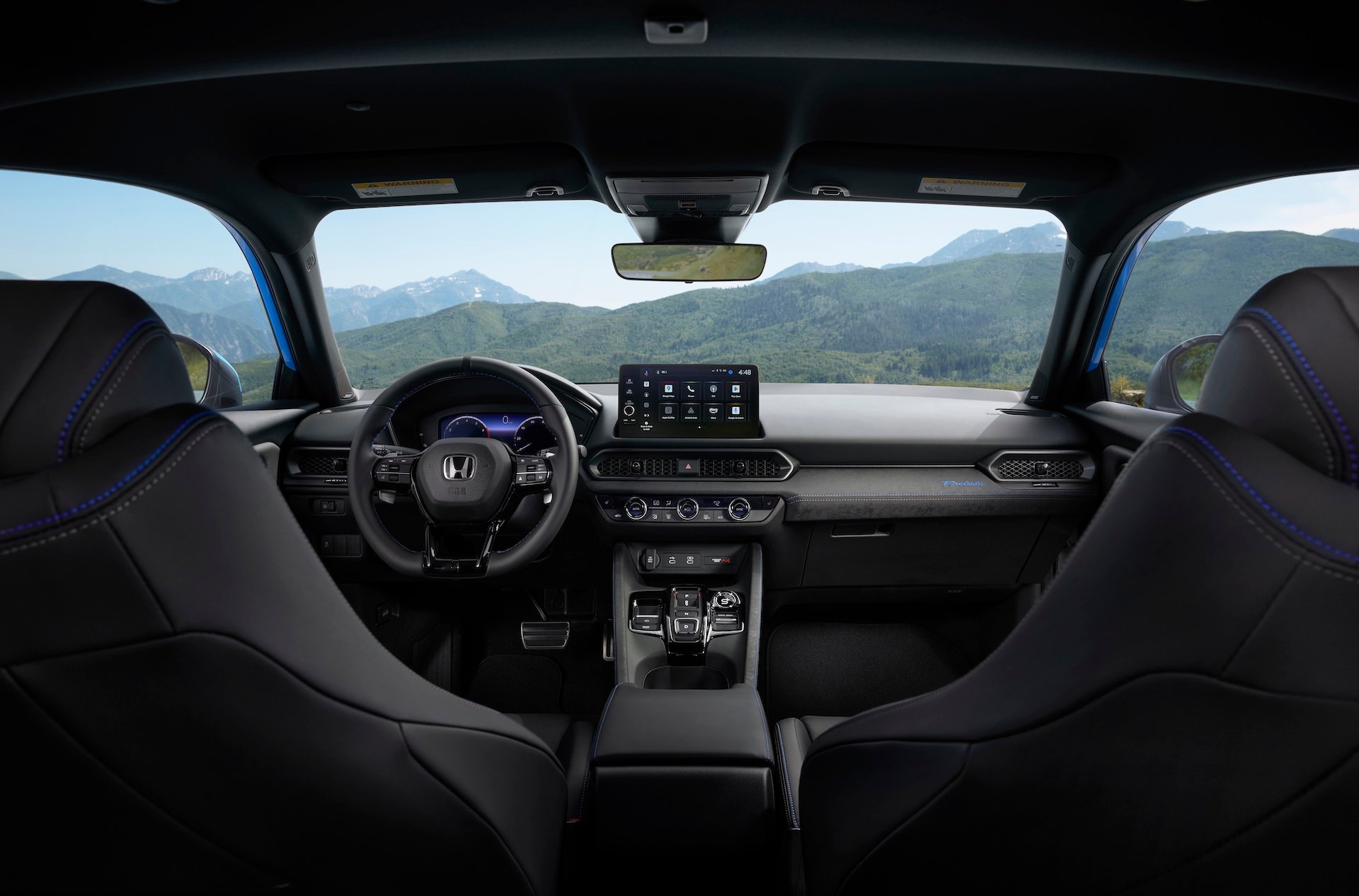
I’ve already logged almost 4,000 miles in The Drive‘s 2026 Honda Prelude long-term test car, and I’ll put in many more before the project wraps up next year. That’s already enough seat time to get to know a car pretty darn well, but most importantly, to explore its tech, safety, comfort, and entertainment features.

Like most cars from any manufacturer today, the Prelude shares a standard suite of equipment found across the Honda lineup. It also runs on the same hardware and software as our previous long-termer, so you‘ll definitely see some stuff that isn’t super unique to the sporty coupe. That said, I’ll also touch on features that impact its driveability; specifically, its driving modes and multi-purpose paddle shifters.

I’m jumping straight to the nitty-gritty and classifying these into three categories: Like, Dislike, and On the Fence. Each item will include a brief explanation of why it’s in that category, plus any relevant details or rambling thoughts.

Previous Installments

Dislike

  • Seats: Not sure how Honda overlooked this, but neither the driver’s seat nor the passenger seat has adjustable lumbar support.
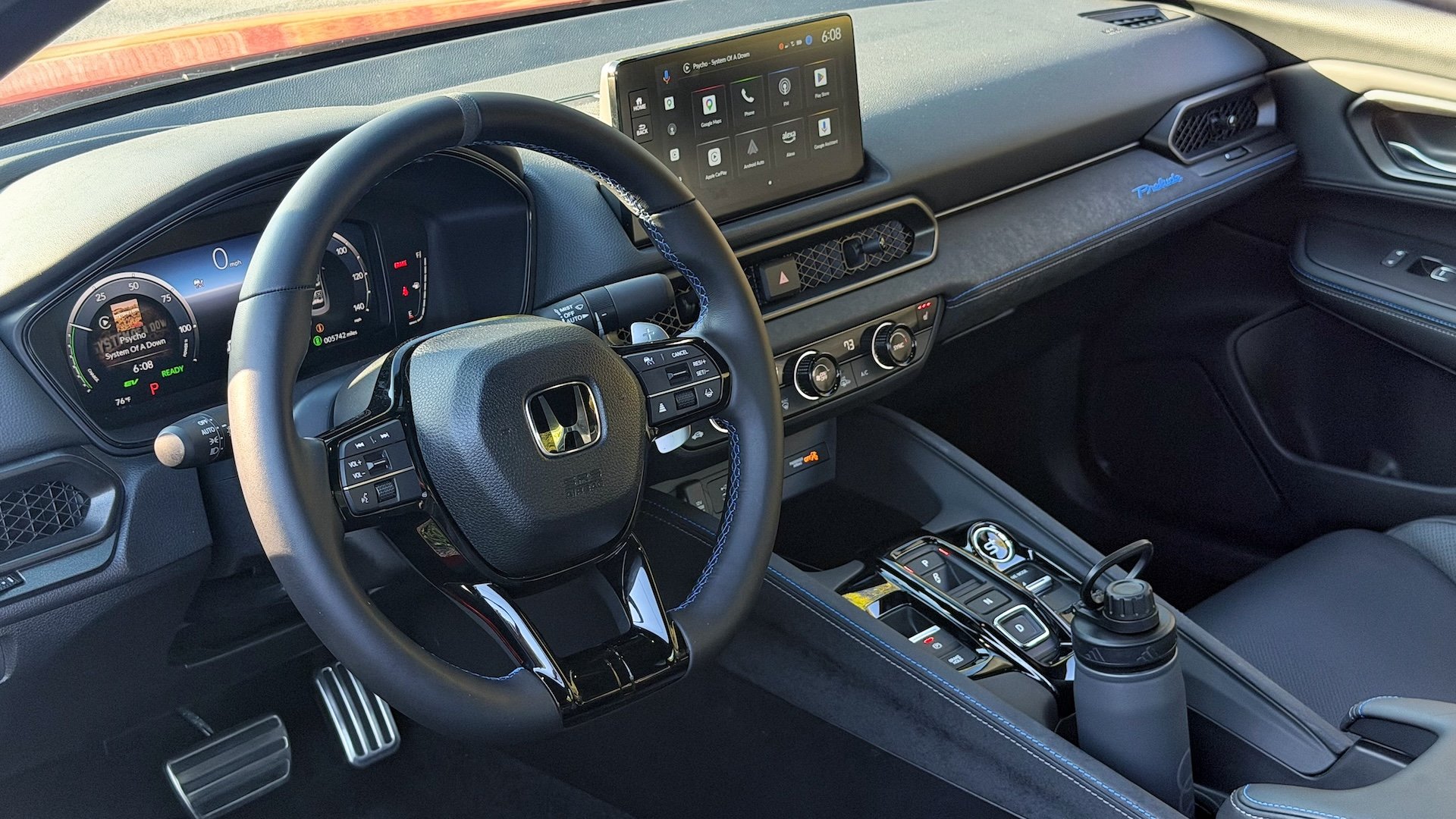
  • Steering Wheel: Love the shape and feel, but hate that in a $45,000 car it isn’t heated.
  • Adaptive Cruise: A major improvement in calibration and lane stability compared to other Honda models, but the Prelude brakes a bit too abruptly at the slightest sign of a car in front, or one alongside that’s driving too close to the lane markers.
  • Shut-Off Sequence: This issue appears across the lineup, and I will keep mentioning it until Honda addresses it. When you shut off the engine, everything shuts off. If you’re listening to music, that shuts down immediately. If you’re on a phone call via the car’s Bluetooth, that will also shut off. If you park on a city street, your blind spot monitors will not alert you to a car or cyclist approaching, so you don’t open your door. Most other cars keep auxiliary power on for 60 seconds after you press the Engine Start button, or let you customize this setting.
  • Electronic Parking Brake: I am not being super harsh on this one because I get that there is a safety aspect to it, but an automatically disengaging parking brake would be ideal. Nothing is more annoying than starting the car, putting it in gear, and hitting the gas, only to be held back by the parking brake. Ideally, the parking brake should disengage if the doors are closed, the driver’s seatbelt is buckled, and moderate throttle is applied.
Honda

Like

  • Suspension: I covered this in my First Impressions blog, but the electronic adaptive dampers are straight out of a European sports car at least twice the price of the Prelude. Yes, these are borrowed from the Civic Type R, but they have their own tuning, and they’re amazing whether you’re taking a chill drive or carving up some country roads.
  • Lighting: Again, the Prelude punches above its weight with projector-style LED headlights. The color of the beam is just right, not too yellow or too white or blue. The intensity is great, and so is the depth. They perform like something you’d check a $6,000 option box for on a Mercedes or BMW.
  • Visibility: Perfect forward, side, and rear visibility despite the Prelude riding fairly low to the ground and having a pretty sloping roof.
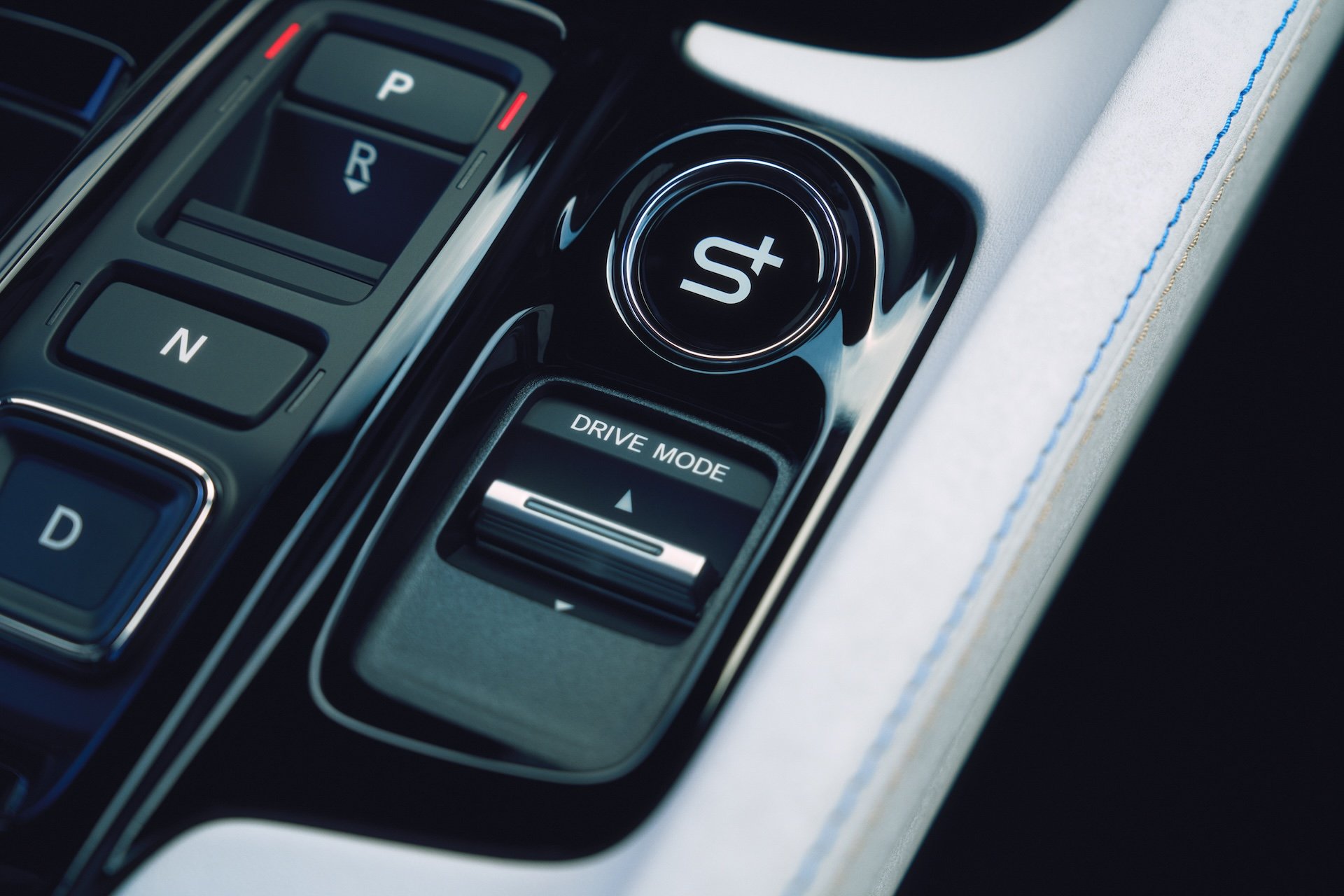
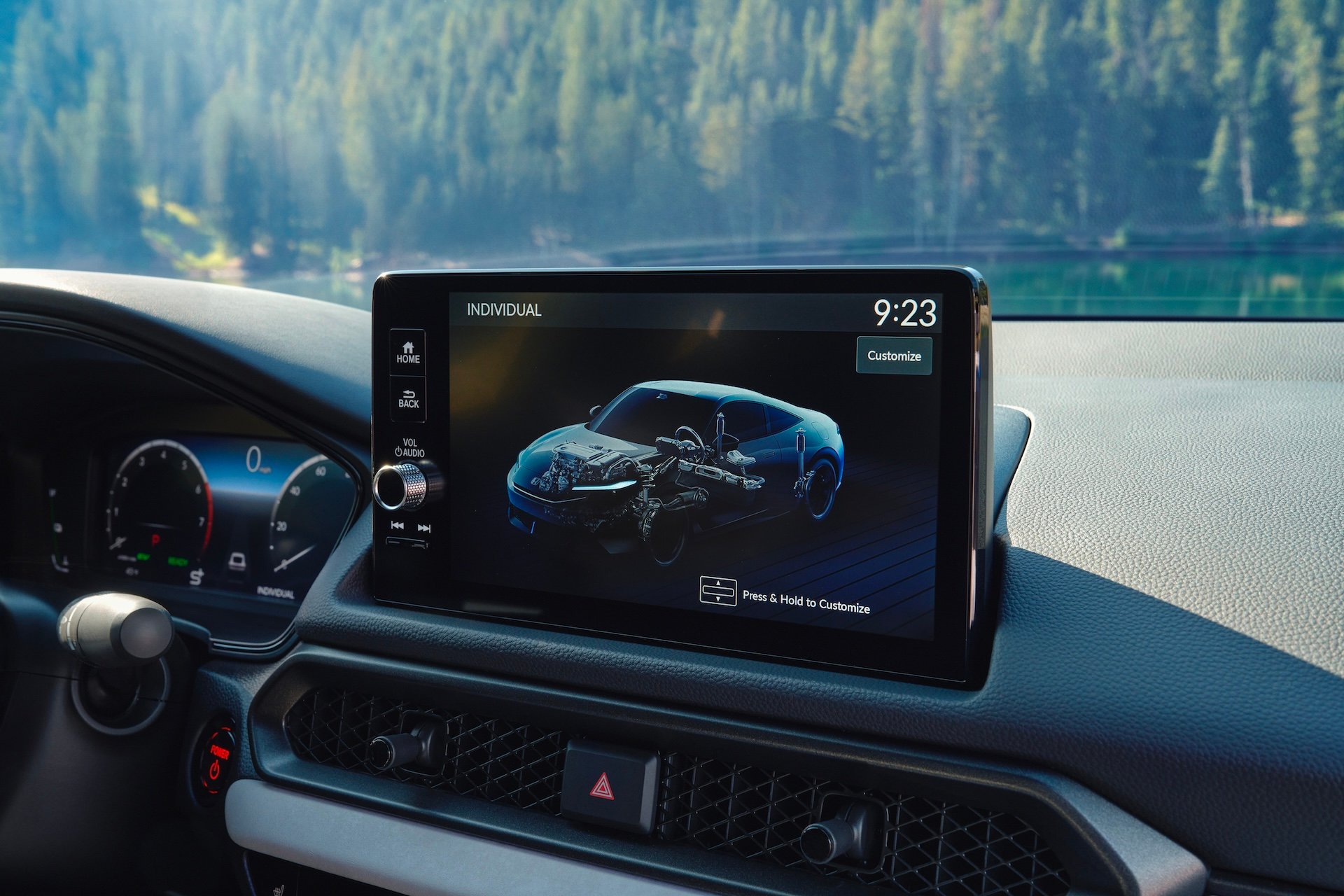
  • Driving Modes: Comfort, GT, and Sport. Comfort is super soft and a bit lethargic, but you can easily maximize fuel savings due to the throttle and hybrid system’s configuration in this setting. My go-to is GT, and that’s what I drive on every day. The suspension is less bouncy, and the drivetrain is reactive enough without the hybrid jolt being too punchy.
  • Google Built-In: Honda’s new Google-based infotainment system is quite lovely. I enjoy that once I log into my Google account, it knows everything about me. (Scary, I know.) All I have to do is press the Google Assistant button on the screen and tell it to take me somewhere, call someone, or find any necessary information on the internet without taking my eyes off the road. Ah, the sweet convenience I trade for my privacy.
  • Sound System: I’m not what you’d call an audiophile, but like most people who enjoy music, I appreciate a decent sound system. The standard Bose system in the Prelude features seven speakers plus a subwoofer, and it delivers good volume and clarity; when cruising on a smooth road with the windows down, I can pick up a song’s more intricate bits like I do with over-the-ear headphones.
  • Honda Sensing: Another thing that the Prelude shares with the rest of the Honda lineup, though a very important one. These features come as standard: Collision Mitigation Braking System, Forward Collision Warning, Lane Departure Warning, Road Departure Mitigation System, Adaptive Cruise Control, Low Speed Follow, Lane Keeping Assist System, Blind Spot Information System, Cross Traffic Monitor, Low-Speed Braking Control, Traffic Sign Recognition, Traffic Jam Assist, Auto High-Beam Headlights, and Driver Attention Monitor.
Honda

On the Fence

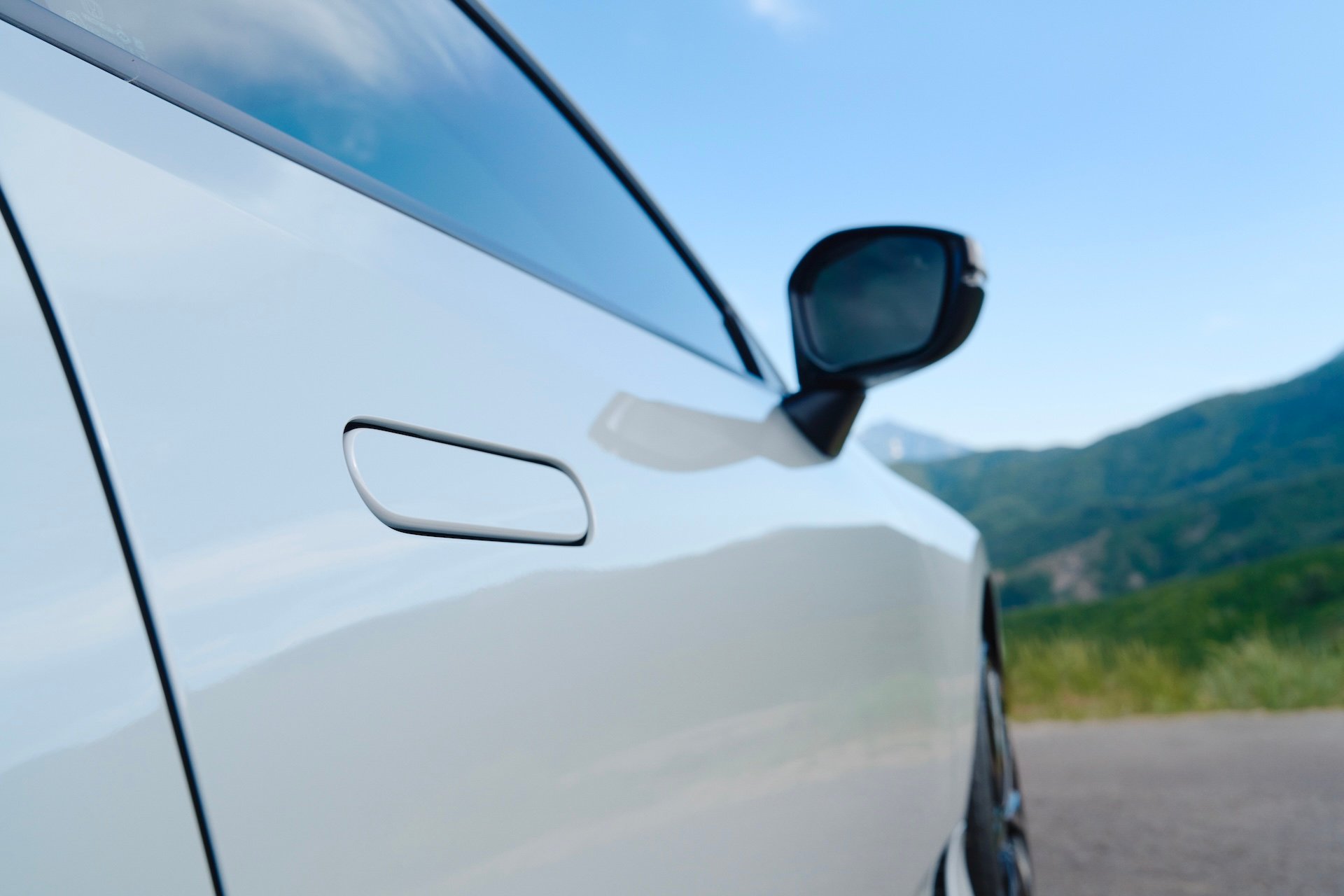
  • Door Handles: Yes, the pop-up handles that sit flush with the door look very cool. When you approach the car with the key fob on you and they pop out automatically, they’re great. When the keys are already in the car, and you’re trying to open the door, you have to push one end of the handle to make the other pop out so you can pull it to open the door. If you have both hands available, this is no biggie—though still annoying. If you only have one hand available, it’s challenging.
  • Paddle Shifters: The metal paddles in the Prelude can do two things depending on what driving mode you’re in. When S+ Shift is deactivated, the left paddle (normally used to downshift) increases brake regeneration—but there’s a catch. This regen, activated by clicking the paddle once or multiple times, isn’t permanent. It resets once the car comes to a standstill. It’s really just a way to slow down more strongly as you’re cruising to a stop (you can also use it when driving spiritedly) while taking advantage of or recharging the battery. The right paddle (normally used to upshift) cuts out drag and lets the car glide down the road without recapturing any energy. It’s a very neat—and, if you’re not used to it, a slightly unnerving feeling I’ve only felt in the bonkers Mercedes-Benz Vision EQXX. When S+ Shift is activated (and it can be active in any driving mode), you can simulate gear shifting like you would in most semi-automatic cars. The reason why I’m “on the fence” about it is that it takes some brain power and understanding to figure out how this all works and when and how. It’s not all very straightforward.

Email the author at jerry@thedrive.com

The post 2026 Honda Prelude Long-Term Test: Let’s Talk Features appeared first on The Drive.

  •  
❌