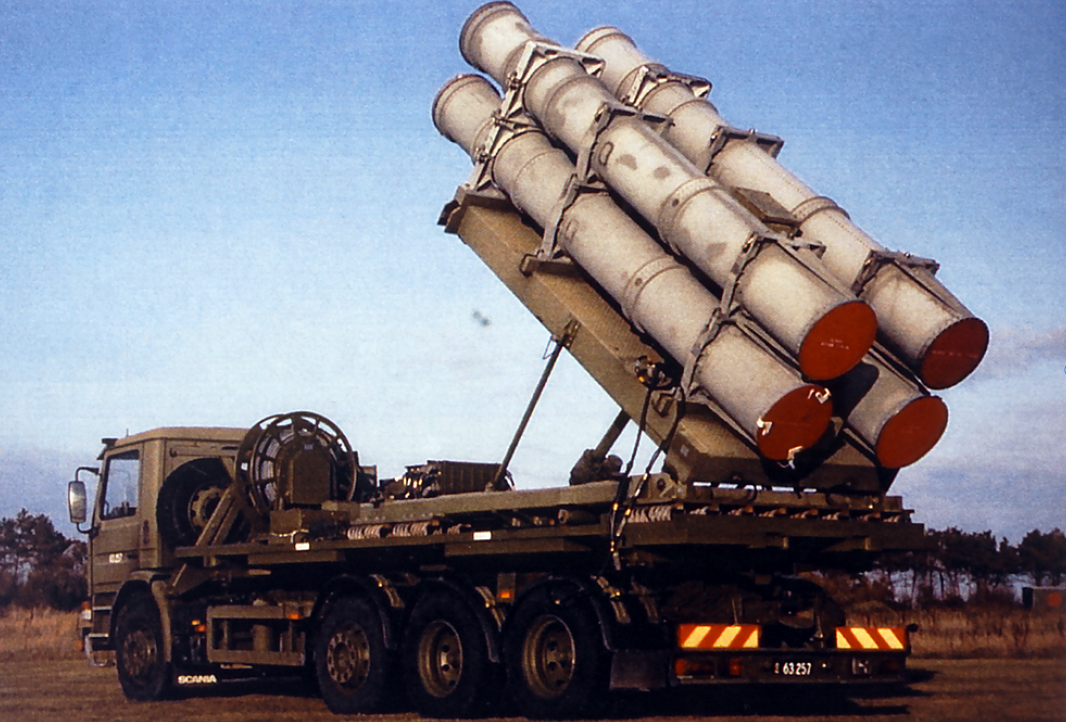
❌

Normal view

Shared Threats, Unequal Efforts: Belgium’s Free-Riding Approach To NATO’s Defence

By: Oryx
20 September 2023 at 17:52


By Stijn Mitzer and Joost Oliemans
 
Belgium is often considered the black sheep of NATO due to its relatively low expenditure on defence. The country's free-riding approach to the security of other NATO member states and of itself is perhaps best illustrated by the fact that in 2014 Prime Minister Di Rupo declared his country's intention to commit 2% of its GDP to defence spending by 2024, only for Prime Minister De Croo to do the same in 2022, but with the date to achieve this pushed back by eleven years to 2035. [1] Even amidst the ongoing Russo-Ukrainian War, Belgium's defence budget for 2023 witnessed an increase of only 0.01% compared to 2022, reaching a total of 1.19% of its GDP. [2] In fact, Belgium's defence expenditure as a percentage of its GDP is the second lowest within NATO, trailing only behind Luxembourg. [3]

Not only does Belgium allocate a relatively low budget to its military, but it has also garnered surprisingly limited returns on its investments in terms of military capabilities. This discrepancy becomes evident when comparing Belgium's defence spending to that of countries like Denmark. Despite Belgium spending nearly 1.5 times as much on defence and boasting twice the population of Denmark, the latter manages to offer a more substantial and better-equipped military. [4] Arguably even worse, Belgium has shown minimal effort in the integration of its ground forces with neighboring countries to improve interoperability. Despite purchasing a large number of French AFVs, there is a notable absence of concrete plans for unit integration with France. In contrast, the Netherlands has fully integrated its Army with the German Army, a feat achieved despite the diverse array of equipment employed by both forces.

A notable concern plaguing the Belgian Armed Forces is its lack of serious recognition, most notably within Belgium itself. Over time, the Belgian Armed Forces have found themselves taking on the role of an educational institution for Belgian youth and serving as a channel to funnel defence expenditures into local industries. The ongoing trend of diverting focus away from the Belgium Armed Forces' core task of defence has been further exacerbated by the current Belgian government, with Defence Minister Ludivine Dedonder at the forefront. Recent examples include decisions such as diverting €100 million intended for defence projects to the European Space Agency (ESA) for sending a Belgian astronaut into space and investing €360 million into potential collaboration in the French-Spanish Future Combat Air System, despite the fact that Belgium is still awaiting the delivery of its first F-35 aircraft. [5]

These investments become even more baffling when one takes into account Belgium's current lack of air defence capabilities. Belgium doesn't have outdated or ineffective air defence systems; rather, it lacks any type of ground-based air defence system. This places Belgium among a trio of NATO countries without air defence systems—joining Luxembourg and Iceland (the latter of which lacks a military altogether). This remarkable situation is the outcome of years of poor strategic decisions and underfunding that had eroded the Belgian Armed Forces to the point it could not even afford to operate a few man-portable air-defence systems (MANPADS), leaving an entire army without any form of ground-based air defences since 2017. Although the Belgian Ministry of Defence recently announced plans to (re-)establish an air defence capability, it will take until at least 2030 for these plans to come to fruition. [6]
 

Relatively inexpensive and therefore found in the military arsenals of nearly every country worldwide, the ongoing operation of MANPADS nonetheless proved too costly for the Belgian Army, leading to their retirement without replacement in 2017. In 2023, a platoon equipped with these weapons systems will be raised to provide an interim air defence capability until 2030. [7]

Revealed in February 2022, Belgium's military vision materialises as the STAR (Security, Technology, Ambition, and Resilience) Plan. This strategic blueprint outlines an investment of €10.2 billion for enhancing military capabilities and raising the defence budget to 1.54% of Belgium's GDP by the year 2030. [8] Despite this pledge, there seems to be a lack of urgency in transforming these commitments into concrete investments. Notably, Belgium, one of four NATO countries without heavy artillery (the others being Albania, Luxembourg, and Iceland), currently relies on 14 French 105mm LG1 towed howitzers to provide fire-support to ground forces. In 2022, an order was placed for nine 155mm Caesar SPGs from France for their replacement. Instead of acquiring a Caesar variant already in production, Belgium opted for a Caesar 6x6 variant that is still in the developmental phase. Consequently, the country will have to wait until 2027 to receive its first systems. [9] In comparison, the time span from Denmark's procurement of 19 8x8 ATMOS 2000 SPGs from Israel in March 2023 to the arrival of the initial systems amounted to just five months. [10]
 
Undoubtedly prompted by the Russian invasion of Ukraine, Belgium later raised its future requirement for the Caesar 6x6 NG SPGs from 9 to 28. [11] However, Belgium is yet to sign a contract for the additional 19 units, as the Belgian government has not yet earmarked any funds for their immediate procurement. [11] Although the (future) acquisition of 27 Caesar 6x6s seems like a significant capability enhancement, particularly by Belgian standards, the actual capabilities that 27 wheeled SPGs bring with them will still leave Belgium with one of the weakest artillery arsenals within NATO. Taking into account the duration required for the entire complement of Caesars to achieve operational status and for crews to undergo training, most likely by the early 2030s, the process of acquiring, training, and operating a modest selection of 27 wheeled SPGs will extend over a complete decade. By way of comparison, Poland successfully placed an order for and received 24 K9 SPGs from South Korea in slightly over six months. [12]
 

While Belgium is to enhance its artillery capabilities, it will still end up with one of the weakest artillery arsenals among NATO member countries. Pictured is the Caesar 6x6 NG, nine of which are currently on order.

In its pursuit of bolstering its military capabilities, the Belgian Army is confronted with a number of challenges. First, it must address the consequences of decades of underfunding all while the governmental body tasked with rectifying these consequences appears to lack a genuine interest in doing so. Secondly, Belgium is still grappling with a number of perplexing procurement decisions made over the past decades. Amongst these, the acquisition of the Land Component's Piranha IIC DF90 fire-support vehicles stands out as a particularly notable example. Purchased during the tenure of former Defence Minister Flahaut (1999-2007), the Piranha IIC DF90 was intended to replace the aging Leopard 1A5BE MBT. The procurement process was marked by peculiarities right from the outset, most notably, Flahaut's decision to opt for a 90mm cannon, a calibre not employed by any other NATO member state. Concerns also emerged regarding the cannon's effectiveness (or lack thereof) against targets like tanks and hardened structures.
 
Moreover, only a single factory had the capability to provide 90mm cannons, and likewise, only one factory could meet the demand for the necessary ammunition. This led the Belgian Ministry of Finance to revoke the purchase approval on two separate occasions in 2005. [12] Nonetheless, Flahaut eventually got his way and succeeded in placing an order for 40 Piranha IIC DF90s in 2006. 18 vehicles had already been contracted when Pieter De Crem, who succeeded Flahaut as Minister of Defence in December 2007, immediately cancelled the order for the remaining 22. [13] Around that same time, the Belgian Army appears to have come to the realisation that it actually had to operate the Piranhas for at least 20 years, and a sense of buyer's remorse set in on their part as well. [13] The Belgian Army then offered the 18 vehicles that had already been received for sale while hoping for a more suitable replacement vehicle. [13] Unfortunately for the Belgian Army, this move failed to attract any interested parties and it eventually found itself forced to accept the 18 vehicles anyway to be able to provide at least some fire-support to its troops.
 
Those assuming that the tale of the Piranha IIC DF90 came to an end at this point are in for a surprise. The concerns raised regarding the 90mm cannon's performance revolved around its insufficient anti-tank capabilities when employing anti-tank munitions. Upon the availability of such ammunition, it was discovered that the Piranha IIC DF90s were incapable of firing them. [13] After a 10-year-long effort to address this issue, the Belgian Army decided in 2019 that it simply wasn't worth trying anymore. [13] As of today, the Piranha IIC DF 90 continues to lack an anti-tank capability. The financial consequences of this saga were substantial, with a cost of €70 million for the acquisition of the vehicles alone, and an additional sum exceeding €5 million dedicated to ammunition—some of which proved incompatible with the very vehicles it was intended for. Attempts to mitigate the deficiency in anti-tank capabilities were partially addressed in recent years by retrofitting 32 Piranha IIC DF30s with two Spike-MR ATGMs. However, this measure remains insufficient in rectifying the shortcomings in the country's fire-support capabilities.
 

The Piranha IIC DF90, just one of the many controversial acquisitions of the Belgian Armed Forces over the past decades.

The Piranha saga is not an isolated incident; rather, it is just one chapter in a long history of peculiar decisions and corruption that has plagued defence procurement in Belgium since the 1980s. Historically, defence procurements in Belgium were regarded as a means for political parties to generate funds through bribes from defence manufacturers. [14] In response to this issue, Belgium implemented a law in the 1990s whereby political parties receive government subsidies based on their electoral performance, with the intention of discouraging parties from accepting bribes from (defence) companies. [14] Many of the politicans embroiled in previous corruption scandals were never brought to justice because the extent of the corruption was so pervasive that any political party in power, when carrying out an investigation, would inevitably also uncover instances of defence corruption within its own ranks. [14]
 
Due to the corruption, major defence contracts were often granted to companies that were willing to provide the largest bribes, resulting in instances where the Belgian Armed Forces had to settle for subpar equipment. While these corruption scandals have mostly become a thing of the past, a situation persists in which the Belgian government appears inclined to acquire equipment not based on its quality but rather to appease neighbouring countries or to secure political favours. While this phenomenon is common in most European countries, its proportion in Belgium's procurement efforts appears to be significantly higher. The culmination of all these factors has given rise to a long-term procurement strategy that has been described by some as being ''shorter than the range of a cannon'', with the resulting failures in procurement decisions described as ''a blunder book the size of an encyclopedia''. [14] 
 
One major blunder involved the SLEP/ELU (Service Life Extension Program/End Life Upgrade) performed on 38 Pandur intelligence, surveillance, target acquisition, and reconnaissance (ISTAR) vehicles in 2019 at the cost of €31 million. After the upgrade was completed, it was discovered that the additional armour and equipment installed inside meant that four out of the five crew members could no longer be taller than 1.70 metres to operate the vehicle. [15] Given that the crews of the 38 vehicles were specifically trained to operate the Pandur and its reconnaissance equipment, replacing them with approximately 150 new recruits shorter than 1.70 metres (in a country where the average male height is 1.81 metres) would of course be an impossible undertaking, especially during a period of significant manpower shortages. Remarkably, this was nevertheless the solution proposed by the Belgian Army. [15] Additionally, further issues emerged with the braking systems after the upgrade. This was particularly tragic, as in 2007, a Belgian Pandur plunged into a ravine in Lebanon due to brake issues, leading to the death of three soldiers. [15] The precise method by which the Army ultimately resolved the issues remains unknown. However, it is probable that the company conducting the SLEP/ELU had to undertake several adjustments to bring the Pandurs back into working condition—a scenario that might have been preventable with better oversight from the Belgian MoD.
 

A photograph showcasing the revamped interior of one of the 38 Pandurs that underwent an SLEP/ELU. The interior modifications rendered it impossible for four out of the five crew members taller than 1.70 metres to effectively operate the vehicle. This is evident in the photograph, where the driver's legs are shown pressing against the steering wheel.

Undoubtedly the most significant strategy and procurement blunder has been Belgium's decision to rid the Army of its heavy weaponry, with the last M109 SPGs leaving the service in 2008 and the Leopard 1 MBTs in 2014. This decision, made during Defence Minister Flahaut's tenure in the mid-2000s, was primarily motivated by financial factors, as wheeled AFVs are cheaper to operate than their tracked counterparts. Even so, the Belgian government didn't even allocate the necessary funding for a proper execution of this programme. On one hand, Belgium rushed to retire tracked AFVs, phasing out 64 M109 SPGs right after upgrading them in what was essentially a giant waste of money. On the other hand, Belgium continues to operate tracked armoured recovery vehicles and bridgelayers due to a reluctance to invest in their replacement with wheeled counterparts. It's expected that the full transition from tracked to wheeled won't occur until the early 2030s, nearly 25 years after the plan to do so was conceived!
 
Until the early 2000s, Belgium operated a fleet of Leopard 1A5BE MBTs, supported by AIFV-B-C25 IFVs, AIFV APCs, and M109A4BE SPGs across two mechanised brigades. Additionally, there was a fleet of CV(R)T tracked reconnaissance vehicles and APCs. In the early 2000s, the CV(R)Ts were the first to be retired, followed by the AIFV IFVs and APCs, which were replaced by Piranha IICs. Subsequently, the M109A4BE SPGs were retired without replacement, despite having just undergone an expensive modernisation programme. Due to the entry into service of only 18 out of the intended 40 Piranha IIC DF90s, and these lacking anti-tank capabilities, the Leopard 1A5BE MBTs continued to see service until 2014. In contrast to countries like Denmark, the Netherlands, and France, which have increased the proportion of wheeled AFVs in their inventories while retaining smaller numbers of tracked AFVs, Belgium's attempt to replace all tracked AFVs with wheeled AFVs was arguably poorly thought out and even more poorly executed.

After completely refurbishing and upgrading 64 of its M109s, Defence Minister Flahaut sold the SPGs for the rock-bottom price of €15,000 each (including spare parts) to the Belgian private defence company FTS.

What remains within the Land Component is a motley collection of wheeled AFVs currently concentrated within a single, large-sized Medium Brigade. Despite its size, the Brigade currently lacks any air defence capabilities and relies solely on 14 105mm towed howitzers with a range of just 14km for fire-support. The actual inventory of wheeled vehicles is hardly any better, with a hodgepodge of vehicle types that aren't particularly well-suited to their intended roles. In their quest for replacements, the Belgium joined the French Scorpion programme in 2017, which resulted in an order for 60 EBRC Jaguar wheeled reconnaissance vehicles and 382 VBMR Griffon wheeled APCs. While highly capable vehicles in their own right, these will do little to enhance the actual firepower of the Brigade (though they will introduce a significant improvement in system networking). Despite a growing demand for heavily armed and armoured tracked AFVs in NATO, which have once more proven their superiority over wheeled AFVs in Ukraine, Belgium is set to become one of just three NATO countries that do not operate tracked vehicles alongside Iceland and Luxembourg. Just to reiterate, Iceland does not possess a military and Luxembourg has just over 300.000 citizens.
 
Perhaps contrary to popular belief, reintroducing tracked AFVs wouldn't necessitate a large fleet to be effective. Denmark, for example, currently operates a fleet of 44 Leopard 2A7 MBTs and 44 CV9035DK IFVs, along with some two dozen tracked support vehicles. While one could question the utility of such a modest fleet, it would enable the transformation of the Medium Brigade into a Heavy Brigade, extending its capabilities to engage a broader range of targets during wartime without the necessity to rely on other NATO member states to provide support. Nonetheless, the possibility of Belgium acquiring tracked AFVs remains exceedingly unlikely, largely owing due to the indecision and lack of vision that appears ingrained in Belgian defence planning and the lack of funding provided by the Belgian government. In fact, the pace of decision-making in strategy and procurement is so sluggish that it gives the impression that Belgium is equipping itself as though the Russian invasion of Ukraine never occurred.
 

The EBRC Jaguar Armoured Reconnaissance Vehicles (Left) and VBMR Griffon Armoured Personnel Carrier (Right) are set to become the backbone of the Belgian Army.

In addition to the Medium Brigade, the Belgian Army also maintains a Special Forces Regiment. However, both the Belgian Army and the STAR Plan envision training and equipping these forces for missions typically associated with conflicts in Africa, rather than focusing on NATO's Eastern Flank. An illustrative example of this is the planned procurement of eight transport aircraft and eight heavy transport helicopters dedicated to special forces operations, augmenting seven transport aircraft already in service. [8] While possessing such capabilities is valuable, one must question whether a force tailored for special operations over countries not possessing air defence systems aligns with NATO's current priority needs. While there is a compelling argument for acquiring up to eight CH-47 heavy transport helicopters, the acquisition of an additional eight transport aircraft will result in Belgium possessing four distinct types of transport aircraft (excluding VIP aircraft), while lacking weapons systems such as tracked AFVs and MRLs. Examples like these appear to indicate that the Belgian MoD is struggling to catch up with the ongoing global developments and is facing a notable misalignment of priorities in relation to NATO's requirements.

In fact, the leadership of the current Minister of Defence Dedonder, is becoming increasingly associated with misplaced priorities. While Belgium has yet to finalise a contract for 19 additional Caesar SPGs, lacks an air defence capability and struggles with ammunition shortages due to funding constraints, Dedonder managed to push through a €360 million investment into the French-Spanish Future Combat Air System (FCAS) within a span of two weeks. [16] After opting not to participate in the F-35 programme in the early 2000s, Belgium missed out on the advantages of industrial participation, yet another short-sighted decision that can be attributed to former Defence Minister Flahaut. Given these circumstances, participation in the FCAS programme early on appears logical. However, the FCAS is intended to replace France's Rafale and Spain's Typhoon fighter aircraft from the 2040s onwards, while Belgium is currently anticipating its F-35s to remain in service well into the 2060s. Considering Belgium's reluctance to invest in even the most basic military assets, the prospect of the country procuring the FCAS and operating two distinct types of fighter aircraft from the 2040s onwards seems highly improbable and completely unnecessary.

That is, assuming Belgium indeed stands to gain from its industrial participation in the FCAS programme. France's industry still harbours resentment over Belgium's 2018 choice of the F-35 over the Rafale. Given that the Rafale cannot accommodate the B61 nuclear bomb, of which some 20 are located at Belgium's Kleine-Brogel air base as part of NATO's nuclear-sharing agreement, the Rafale, despite being the preferred option, effectively had no opportunity to be selected. The CEO of Dassault, who leds the FCAS programme, left no room for ambiguity when addressing Belgium's potential for industrial collaboration in the programme, stating: ''I don’t really see the point in putting more F-35 countries into the programme. Why would I make room in my factory, in my design office, for people who have chosen the F-35? People say we could give jobs to Belgian companies straight away. No. If it’s imposed on me, I’ll fight. I don’t see why I would give jobs to Belgians today''. [17] In short, Belgium is allocating €360 million to participate in a fighter programme it's unlikely to ever procure and might not even gain (significant) industrial participation from. 

Prior to receiving the initial delivery of its planned 34 F-35 aircraft, which are projected to stay in service until the 2060s, Belgium has already committed to participating in a second stealth fighter programme scheduled to enter service from the 2040s onwards.

What makes these investments particularly puzzling is that, should a war break out in the near future, Belgian soldiers would find themselves inadequately equipped, lacking air defence capabilities, sufficient ammunition and the means to engage ground targets beyond an abysmally meager 14-kilometer range. Nonetheless, this hasn't stopped Defence Minister Dedonder, entrusted with the task of properly equipping Belgium's soldiers, from diverting a staggering €460 million away from the military to (possibly) boost the Belgian economy and to send a Belgian astronaut into space. This apparent lack of concern for the well-being of Belgian soldiers can only be described as deeply concerning. Equally concerning is the absence of a resounding public outcry in Belgium concerning these facts, especially the prospect of Belgian soldiers entering a conflict without even the most basic equipment to defend themselves. If a nation is to be evaluated by its treatment of its soldiers, Belgium should indeed hang its head in shame.

Besides the absence of essential military capabilities, the Belgian Armed Forces faces a substantial shortage of personnel. While this issue has affected various Western European countries, where conscription has either been abolished or put on hold, Belgium faces an added challenge with nearly 40% of its active-duty personnel reaching retirement age in the early 2020s. [18] Efforts to attract more personnel have not yet succeeded in addressing these manpower shortages. In September 2023, they even lowered recruitment standards for pilots and special forces. [19] Addressing these manpower challenges is a top priority for Belgium. That's why it's particularly puzzling that Defence Minister Dedonder has assigned the role of an educational institution to the Belgian Army. [20] In 2023, Dedonder directed the military to enroll an initial group of 200 unemployed youths in a six-month programme focused on teamwork and sports. These individuals won't undergo any military training and won't become part of the army; they will solely receive education from the army. According to Dedonder, 'it's the military's societal role to provide young, inexperienced, and less qualified individuals with an opportunity to enter the job market'. An argument could be made that this is precisely not the role of the military. On the contrary, it's hard to avoid the conclusion that Dedonder's attempt to integrate the role of an educational institution into the Belgian Army's mission, given the context of manpower shortages and capability disparities compared to other NATO nations, is fundamentally misguided.
 

In its attempts to evade its defence obligations, Belgium is also severely undermining NATO. While most NATO members strive for a 2% GDP allocation to defence, Belgium appears to be deliberately stretching this timeline until 2035. The country seems to bank on a return to stability in Ukraine by the late 2020s, presumably hoping that these circumstances will somehow make it acceptable for the country not to fulfill its 2% commitment after all. While it is possible to present arguments for Belgium's expulsion from NATO, such an outcome is unlikely and not in the alliance's best interest. Nevertheless, it's worth considering whether Belgium might find benefits in opting for a voluntary withdrawal from NATO. Given Belgium's consistent attempts to undermine NATO by failing to provide capabilities commensurate with its economy and population, and its reluctance to meet the 2% benchmark, it becomes increasingly apparent that Belgium's foreign and defence policies are no longer aligned with those of NATO.

One might question why NATO isn't applying stronger pressure on Belgium, particularly given that NATO's headquarters is located in Belgium. First and foremost, Belgium is a challenging country to reach agreements with, not the least because the nation doesn't have just one government; it has six. Secondly, as long as other countries have not yet met the 2% threshold, they are less likely to criticise or take action against those who haven't. Thirdly, there is also reason to suspect that Belgium is employing a clever approach to downplay the severity of its capabilities deficit by presenting alternative niche capabilities. An example of this is Belgium's aspiration to equip its future two frigates with missiles capable of intercepting ballistic missiles. [21] While this may seem overly ambitious for a country currently lacking even MANPADS, Belgium can achieve this capability by procuring only a limited number of missiles, thereby presenting NATO with a sophisticated capability that most other member nations do not possess.
 

Belgium's desire to possess the capability to intercept ballistic missiles in space is quite astonishing, particularly given that the country left its ground forces without any form of air defence for six years.

Belgium's free-riding approach to NATO's defence has repercussions for other countries as well. The Dutch and Belgian navies have a close working relationship and operate under a unified command, which also extends to joint procurement of naval vessels. In the 2010s, it was determined that Belgium would oversee the minehunter replacement project, while the Dutch side would take charge of the M-class frigate replacement programme. This choice was not originally the Dutch preference but was necessitated by personnel shortages within their defence materiel organisation. [22] Subsequently, the Belgians chose a bidder that resulted in all industrial involvement going either to France or Belgium, including a mine-removal toolbox that performed poorly during Dutch Navy testing. [22]

However, that's not all; the Dutch-led M-class frigate replacement programme, calling for two frigates for each country, had to be scaled down due to Belgium's unwillingness to increase its budget for the vessels after initial cost overruns. This led to a smaller ship design than preferred by the Dutch Navy. Still, even this proved too costly for Belgium, prompting a plan to fully outfit only one ship while leaving the other fitted for but not with (FFBNW). [23] The Dutch eventually opted to expand the ship design back to its original (larger) specifications. While the Belgian government increased military spending during that period, it refused to allocate additional funds for the frigates. [23] In June 2023, a decision was made by the Netherlands to invest €355 million in Belgium's industry to offset the resulting cost escalation and enable the frigate replacement programme to proceed. [24] Going Dutch, no more.
 

The Dutch Anti-Submarine Warfare Frigate, two of which will be acquired by the Belgian Navy to replace its two M-class frigates.

Belgium's failure to fulfill fundamental responsibilities extends to its military assistance to Ukraine. In its attempt to conceal its lack of support, Belgium has resorted to providing a seemingly endless stream of excuses and even outright lying. Although a significant portion of this show of shame was previously covered in our dedicated article from August 2022, it is enlightening to revisit some of the events that have occurred since. [25] As previously mentioned in this article, Belgium phased out nearly all of its heavy weaponry during the 2000s (and the 1990s). While some of these assets were sold to foreign buyers, most remained stored in Belgian depots when Russia invaded Ukraine in February, 2022. However, these depots did not belong to the Belgian Army, but rather to private defence companies. Contrary to most other countries, Belgium quickly sold off retired equipment to defence companies at almost scrap value to avoid having to pay for their storage costs until a proper buyer was found. After just completely refurbishing and upgrading its M109 SPGs in 2008, the Belgian government sold them for the rock-bottom price of €15,000 each (including spare parts) to FTS. [26] The M109s underwent upgrades with the intention of increasing their appeal to potential buyers, making it all the more perplexing that they were sold for a mere €15,000 each. [27]
 
When in April 2022 the Belgian government attempted to buy back some of the 28 remaining M109s that hadn't yet been sold to Indonesia in 2016, FTS charged their normal price for each SPG, more than ten times the price the Belgian government had sold them for several years prior. [26] Despite the financial setback, at a price of $150,000, these assets would still be exceptionally inexpensive. As the Belgian government attempted a final round of negotations with FTS regarding the price of the M109s in May 2022, they were told that the SPGs had already been sold to another party, which later turned out to be the United Kingdom, which stepped in and bought the SPGs for the same price tag they been offered for to Belgium. [26] Considering the urgency with which the Ukrainian Army needed artillery systems like the M109A4BE, the Belgian government's lack of any urgency to seal a deal because it didn't want to pay ten times the price out of principle (a conundrum entirely of their own making) can only be described as utterly shameful. Perhaps even more disgraceful was the response from Defence Minister Ludivine Dedonder, who claimed that although deal had fallen through 'the main thing was that Ukraine now had the Belgian M109s'. [28]

Fortunately for the Belgian government, it had the opportunity to make amends with the acquisition of over 30 Leopard 1A5BE MBTs, 38 Gepard SPAAGs, which are in high demand by Ukraine, and numerous AIFV and M113 IFVs and APCs still stored in the depots of private Belgian defence companies. As may not come as a surprise by now, Belgium has categorically declined to purchase any of these assets, citing its unwillingness to pay the current market price for equipment that it once sold for scrap value. Although the increase in price may seem exorbitant, these defence companies are essentially pricing these assets based on the market value, including additional expenses incurred for storing and maintaining this equipment over many years, sometimes even decades. Since then, a significant portion of this equipment has been purchased by other NATO countries, notably the United Kingdom, who have stepped up to fulfill their responsibility. Belgium eventually acquired 40 M113 APCs on behalf of Ukraine, but only in collaboration with the Netherlands and Luxembourg, for a meager total sum of €12 million. [29] However, Belgium didn't source these vehicles from its own companies; instead, they acquired them from a company in Italy.

In its attempts to mask its categorical refusal to procure equipment from Belgian private defence companies, the Belgian Ministry of Defence has resorted to outright lying its explanations for why the equipment cannot be repurchased. A striking example is the case of the 38 Gepard self-propelled anti-aircraft gun (SPAAGs) currently owned by the Belgian private defence company OIP Land Systems. [30] When asked by a journalist why these SPAAGs had not been acquired on behalf of Ukraine yet, a defence spokesperson claimed that Belgium had made every possible effort to restore their operational status, but without success. [30] Apparently underestimating the journalist's investigative prowess, the reporter promptly contacted the owner of the Gepards for an explanation. In response, OIP clarified that there was no issue in restoring their operational status; however, Belgium was unwilling to meet the owner's price of €2 million per Gepard. [30] Instances like these appear to confirm the impression that the Belgian MoD opts for lying rather than offering a genuine explanation for its decision not to acquire the equipment. Disregarding the possibility for journalists to reach out to the company's owner for clarification and to unveil any falsehoods portrays the Belgian MoD's press office as immature and displaying a severe lack of professionalism.
 

Tens of Leopard 1A5BE MBTs, Bergepanzer 2 ARVs, Leopard 1-based driver training tanks and AIFV-B-C25 IFVs and M113 APCs stored at the OIP's facility in Belgium. The Belgian MoD refused to buy these systems out of sheer pity. 30 Leopard 1A5BEs were eventually purchased by Germany while an unknown number of AIFV-B-C25 IFVs was procured by an unknown party.

Belgian Gepard B2s and B2Ls in storage at OIP. These could be made operational again at a cost of roughly €2 million each, offering Ukraine a system that, while less advanced than the Gepards already in Ukraine, could still serve as an effective means to counter Russian helicopters. [31]

This is not to imply that Belgium has refrained from acquiring equipment from private defence companies in Belgium and further abroad. In September 2023, the Belgian MoD issued a press release announcing the purchase of eight(!) RIM-7 surface-to-air missiles from Germany on behalf of Ukraine, each priced at €7,000. [32] Around the same time, Denmark announced a new military support package for 2023 and 2024 worth €2.45 billion, in addition to the €1.5 billion in military support already provided to Ukraine since February 2022. [33] Danish military aid to Ukraine has already included 85 tanks, 54 APCs, 24 SPGs and soon, 19 F-16 fighter aircraft. [34] In comparison, Belgian military aid to Ukraine stands at just under €300 million. [35] Nevertheless, the Belgian government has described its military support to Ukraine as having done 'everything possible to support the Ukrainian Armed Forces'. [35]
 
While Belgium's support to Ukraine has been notably lacking, a prominent contribution is the forthcoming delivery of €111 million worth of FN MAG machine guns. This donation represents close to half of Belgium's military aid provided since February 2022. However, there is a significant caveat: the entire cost of this donation is covered by the Netherlands as part of the €355 million compensation package due to cost escalations in the Dutch-operated ASWF frigate program. [24] Although one might argue that Belgium's governance by six different governments hampers decision-making, the fact that Belgium has engaged in negotiations with various private defence firms and has no qualms about purchasing missiles from Germany at €7,000 each indicates that the issue is primarily related to Belgium's reluctance to allocate the required funds. Funds that Belgium should have in abundance: Belgium possesses an asset that no other country has. It collects interest on the Russian assets parked at the Euroclear clearing bank in Brussels. Throughout 2022 alone, Belgium earned €821 million in interest from the Russian assets at Euroclear. [36]
 

The largest military support package from Belgium to Ukraine comprises €111 million worth of FN MAG machine guns, a donation fully funded by the Netherlands.

When addressing the reason behind Belgium's supposed inability to supply F-16s to Ukraine, the Belgian MoD initially claimed that it required the F-16s for its own operational needs until it receives enough F-35s, further stating that the F-16s would be fully worn-out by the time Belgium no longer needs them. [36] Additionally, according to Chief of Defence Michel Hofman, Belgium needs to prioritise addressing its own deficiencies in ammunition and infrastructure before it could provide additional military assistance to Ukraine. [37] Apart from the essential distinction that Belgium's defence budget and the funds allocated for Ukraine are in fact separate financial resources, the acknowledgment of ammunition and infrastructure shortages makes €460 million investment in a Belgian astronaut and the FCAS programme all the more perplexing, if not unforgivable. An investigation that surfaced less than two weeks after Michel Hofman's claims, suggesting that Belgium may indeed be capable of delivering F-16s to Ukraine after all, seems hardly surprising given the consistent pattern of lies and deceit originating from the Belgian MoD. [38]

Indeed, the consistent theme across all these narratives is that Belgium not only falls short of the expected level of military support for Ukraine but also, instead of seeking solutions, seems to resort to excuses. Instead of requesting an expedited delivery of its ordered F-35s from the US, sending F-16s that have exceeded the 8000-hour mark with the condition that Belgium would no longer be responsible for them upon arrival in Ukraine (like the Netherlands already does for all the equipment it sends) or even exploring options such as offering its F-16s for spare parts, technical airframes, or even decoys, Belgium appears unwilling to seek any solutions that could aid Ukraine. In 2022, when Ukraine requested the delivery of YPR-765s from the Netherlands, the Dutch Army struggled to envision the usefulness of these aging APCs on the battlefield. [39] Nevertheless, Ukraine expressed its interest, resulting in the donation of 196 units. Interestingly, Belgium appears to possess a stronger conviction about what Ukraine requires than Ukraine itself. If Ukraine expresses a desire for older F-16s, who is Belgium to assert that these aircraft wouldn't be of any use to Ukraine? The fundamental motivation seems to be Belgium's reluctance to provide fighter aircraft.

Taking all these facts into account, it seems crucial for Belgium to clarify the extent of support it is willing to offer to Ukraine and communicate this clearly to the public. While one may criticise Hungary for not providing any military support to Ukraine despite being a NATO member, at least its position on Ukraine is unambiguous. Belgium, on the other hand, appears to convey full support for Ukraine, but in practice, its actual support falls short. Instead of resorting to lying when questioned about not supplying a particular type of equipment to Ukraine, the Belgian MoD would make a sounder decision by clarifying its actual reasons for not providing that specific type of equipment, whether it's due to cost considerations or concerns about escalating the conflict. In March 2023, the Dutch MoD announced its decision not to donate six CH-47s to Ukraine but to instead sell them to a private company. [39] In its announcement, the Dutch MoD also provided the reasons behind this choice. Offering an explanation that might be unpopular with some is generally a wiser course of action than resorting to lying, especially for a government.

An F-16 belonging to the Belgian Air Force. Whether Ukraine will receive any of them from Belgium, either as combat-ready aircraft or as sources of spare parts, remains uncertain.

While it's simple to point out Belgium's defence missteps, it's only fair to propose several solutions that consider both the limited funding available and the weaknesses that appear inherent to the Belgian MoD and decision making. As it's highly improbable that the Belgian Army will ever reintroduce tracked AFVs, suggesting the return of tanks and tracked infantry fighting vehicles is merely wishful thinking. However, it's essential for Belgium's Medium Brigade to have the capability to operate autonomously in wartime without relying on other NATO member states. This necessitates the acquisition of various weapon systems that are currently absent from the Belgian Army's inventory. This includes SPAAGs, SAM systems and long-range fire assets like MLRS. This aligns with the efforts of countries like Denmark and the Netherlands, both of which are procuring systems like MLRS, mobile SAM systems and SPAAGs to enable their brigade(s) to function independently from other NATO armies during wartime conditions.
 
To secure a strong level of interoperability and maintain cost-efficiency, close collaboration can be pursued with nations such as the Netherlands, France, and Germany. The presence of predominantly French AFVs and artillery within the Belgian Army presents excellent prospects for deep integration with the French Army, and this potential should be thoroughly examined and utilised. Given Belgium's historical absence as a maritime nation and its existing challenges in crewing its current inventory of ships, any expansion of the Belgian Navy seems impractical and unnecessary. In the event that Belgium requires maritime capabilities that are currently lacking, cooperation can be sought with the Royal Netherlands Navy, which possesses a more comprehensive range of maritime capabilities.

Belgium is scheduled to receive a total of 34 F-35s, allocated between two air bases, one in the French-speaking part and the other in the Dutch-speaking part of the country. With 17 F-35s assigned to each air base, there's ample space for additional F-35s. When combined with stand-off weapons such as air-launched cruise and anti-radiation missiles, Belgium has the opportunity to significantly augment the capabilities of its existing weapon systems. This enhancement can be achieved not by introducing entirely new weapon systems but by increasing their quantities or by acquiring new armament options for them. The Belgian Air Force is to receive four MQ-9B SkyGuardian MALE UAVs. While there is a possibility of arming these drones, the Belgian government presently opposes operating armed drones. Nevertheless, outfitting these drones with weaponry could enable them to take over foreign deployments typically undertaken by manned fighter aircraft, thus freeing up more F-35s for other missions.
 
This list below documents ongoing or forthcoming equipment acquisitions equipment acquisitions by the Belgian Land Component, Air Component and Naval Component. This list focuses on heavy weaponry and doesn't include ATGMs, MANPADS, trucks, radars and ammunition.

Army - Belgian Land Component


Armoured Reconnaissance Vehicles (Future Quantity: 60)

  • 60 EBRC Jaguars [To be delivered from 2025 onwards] (To replace 18 Piranha III DF90 AFVs and 32 Piranha III DF30 IFVs)
 

Armoured Personnel Carriers (Future Quantity: 382)

  • 382 VBMR Griffons [To be delivered from 2025 onwards] (To replace ~135 Piranha III APCs and 218 Dingo 2 IMVs)

Infantry Mobility Vehicles (Future Quantity: 322)


Artillery (Future Quantity: 28 SPGs and 12 SPMs)

  • 9(+19 As Option) 155mm Caesar NG 6x6s [To be delivered from 2027 onwards] (To replace 14 105mm LG1 towed howitzers)
  • 12 120mm Griffon MEPACs [Planned Acquisition] (To replace some two dozen 120mm 120 RT heavy mortars)

Air Defence Systems

  • Missing flag.png Programme For C-UAS/C-RAM & Very Short Range Air Defence (VSHORAD) Systems [Planned Acquisition]
  • Missing flag.png Programme For Short-Range SAM Systems [Planned Acquisition]
  • Missing flag.png Programme For Long-Range SAM Systems [Planned Acquisition]

Air Force - Belgian Air Component


Fighter Aircraft (Future Quantity: 34)

  • 34 F-35As [Will be delivered from 2024 onwards] (To replace 40+ F-16s)
 

MALE Unmanned Aerial Vehicles (Future Quantity: 4)

  • 4 MQ-9B SkyGuardians [Will be delivered from 2023 onwards] (Will not be armed in Belgian service)


Transport And Tanker Aircraft (Future Quantity: 2 Tanker Aircraft And Up To 15 Transport Aircraft)

  • European Union 1 Airbus A330 Multi Role Tanker Transports (MRTTs) [Will be delivered from 2034 onwards] (Will supplement 1 A330 MRTT already in service. Stationed in the Netherlands)
  • Missing flag.png 3 Medium Tactical Transport Aircraft [Planned Acquisition] (The C-295M is believed to be the favourite contender)
  • Missing flag.png 5 Special Operations Aircraft [Planned Acquisition] (The C-208 is believed to be the favourite contender)
 

Trainer Aircraft

  • Missing flag.png Programme For New Turboprop Trainers (The Diamond Dart 550 is believed to be the favourite contender) (To replace 32 SIAI-Marchetti SF.260 trainers)
 

Helicopters (Future Quantity: 15 Utility Helicopters, 12+ Transport Helicopters, 5 ASW Helicopters and 4 SAR Helicopters)


Navy - Belgian Naval Component


Frigates (Future Quantity: 2)


Patrol Vessels (Future Quantity: 3)

  • 1 Castor-Class [Planned Acquisition] (To Supplement 2 Castor-class patrol vessels already in service)

Minehunters (Future Quantity: 6)

  • 6 City-Class' [Will be delivered between 2024 and 2029] (Will replace 5 Tripartite-class minehunters)
 
Special thanks to Kasper Goossens and Stoonbrace for providing the inspiration for this article and their valuable prior research on Belgian defence topics, which significantly contributed to the content of this article.
 
[2] Defensiebudget stijgt met amper 0,01 procent: België wordt ‘paria binnen de NAVO’ https://www.n-va.be/nieuws/defensiebudget-stijgt-met-amper-001-procent-belgie-wordt-paria-binnen-de-navo
[3] Slechts zeven NAVO-landen geven 2 procent uit aan defensie, België bengelt onderaan https://www.vrt.be/vrtnws/nl/2023/03/21/zeven-navo-landen-geven-gevraagde-2-procent-uit-aan-defensie-be/ 
[4] For Queen & NATO: Listing Denmark’s Recent Weapons Purchases https://www.oryxspioenkop.com/2023/06/for-queen-nato-listing-denmarks-recent.html
[5] Hoe creatief omspringen met 235 miljoen euro België haar astronaut opleverde https://businessam.be/hoe-creatief-omspringen-met-185-miljoen-euro-belgie-haar-astronaut-geeft/
[6] België koopt Mistral-raketten en stapt als observator in SCAF-project voor nieuwe gevechtsvliegtuigen https://www.demorgen.be/snelnieuws/belgie-koopt-mistral-raketten-en-stapt-als-observator-in-scaf-project-voor-nieuwe-gevechtsvliegtuigen~b83f4c10/
[7] De Kamer van Volksvertegenwoordigers - Schriftelijke vraag en antwoord nr 55-517 : Aankoop luchtafweersystemen. - NAVO-integratie. https://www.stradalex.com/nl/sl_src_publ_div_be_chambre/document/SVbkv_55-b090-1200-0517-2021202215959
[8] De heropbouw van Defensie gaat verder met het STAR-plan https://dedonder.belgium.be/nl/de-heropbouw-van-defensie-gaat-verder-met-het-star-plan
[9] Belgische en Franse ministers van Defensie tekenen CaMo 2 en de aankoop van negen CAESAR NewGeneration  https://beldefnews.mil.be/belgische-en-franse-ministers-van-defensie-tekenen-camo-2-en-de-aankoop-van-negen-caesar-newgeneration/
[11] Belgische artillerie krijgt 19 bijkomende Caesar-kanonnen https://www.nieuwsblad.be/cnt/dmf20220630_93440627
[12] A 21st Century Powerhouse: Listing Poland’s Recent Arms Acquisitions  https://www.oryxspioenkop.com/2022/11/a-21st-century-powerhouse-listing.html
[13] Tientallen miljoenen gekost, maar Belgische pantservoertuigen kunnen niet vuren https://www.demorgen.be/nieuws/tientallen-miljoenen-gekost-maar-belgische-pantservoertuigen-kunnen-niet-vuren~b64c7613/
[14] ‘De langetermijnvisie bij legeraankopen is korter dan het schootsveld van een kanon’
 https://www.knack.be/nieuws/de-langetermijnvisie-bij-legeraankopen-is-korter-dan-het-schootsveld-van-een-kanon/
[15] De Pandur RECCE. Het ongewenste kind van het RECCE 2001 debacle. https://www.belgianmilitaryinterests.be/de-pandur-recce-het-ongewenste-kind-van-het-recce-2001-debacle/
[18] Leger loopt leeg: komende vijf jaar gaat bijna helft van alle Belgische militairen met pensioen https://www.vrt.be/vrtnws/nl/2019/07/17/bijna-helft-leger-zwaait-af-komende-vijf-jaar-leger-loopt-leeg/
[19] Voortaan ook gevechtspiloten met bril of lenzen: Defensie versoepelt aanwervingsregels om vacatures te vullen https://www.vrt.be/vrtnws/nl/2023/09/06/defensie-zoekt-ruim-4-000-nieuwe-militairen-en-ander-personeel-i/
[20] 300.000 jongeren hebben geen werk: vrijwillige legerdienst moet hen aan een job helpen https://www.nieuwsblad.be/cnt/dmf20230527_96674900
[21] België investeert in raketschild en (het leggen van) zeemijnen https://marineschepen.nl/nieuws/Belgie-investeert-in-raketschild-en-zeemijnen-130522.html
[22] Information gathered through discussions with members of the Dutch Navy.
[23] 'Waarschijnlijk' meer geld voor nieuwe Nederlands-Belgische fregatten - Belgische Defensieminister https://marineschepen.nl/nieuws/Waarschijnlijk-meer-geld-voor-Belgische-fregatten-070722.html
[25] A Show Of Shame - Belgian Weapons Deliveries To Ukraine https://www.oryxspioenkop.com/2022/08/a-show-of-shame-belgian-weapons.html
[28] La Défense n'a pu récupérer ses anciens obusiers, qui semblent bien partis vers l'Ukraine https://www.dhnet.be/actu/belgique/2022/06/01/la-defense-na-pu-recuperer-ses-anciens-obusiers-qui-semblent-bien-partis-vers-lukraine
[29] Entre revalorisation en formation, John Cockerill mobilisé pour soutenir l’Ukraine https://www.forcesoperations.com/entre-revalorisation-en-formation-john-cockerill-mobilise-pour-soutenir-lukraine/
[30] België is erg fors met woorden, niet met daden in de Oekraïense oorlog https://businessam.be/belgie-is-erg-fors-met-woorden-niet-met-daden-in-de-oekraiense-oorlog/ 
[32] Belgium to Deliver Eight Sea Sparrow Surface-to-Air Missiles to Ukraine https://www.thedefensepost.com/2023/09/07/belgium-ukraine-sea-sparrow/ 
[34] Denmark Reporting For Duty: Danish Military Support To Ukraine  https://www.oryxspioenkop.com/2023/05/denmark-reporting-for-duty-danish.html 
[37] Chef Defensie Michel Hofman: "Ondenkbaar dat we onze F-16's leveren aan Oekraïne" https://www.vrt.be/vrtnws/nl/2023/09/07/stafchef-defensie-michel-hofman-over-f-16-s/
[38] België is wél in staat om F-16's naar Oekraïne te sturen, in tegenstelling tot wat Defensie beweert https://www.vrt.be/vrtnws/nl/2023/09/19/belgie-kan-wel-degelijk-f-16s-naar-oekraine-sturen-als-het-dat/  
[39] Information gathered through discussions with members of the Dutch Army.
 
Recommended Articles:
  
For Queen & NATO: Listing Denmark’s Recent Weapons Purchases 

These Were Saddam Hussein’s Crazy Mega Yachts

21 September 2023 at 20:21

By Stijn Mitzer and Joost Oliemans

''You Americans, you treat the Third World in the way an Iraqi peasant treats his new bride. Three days of honeymoon, and then it's off to the fields.'' (By Saddam Hussein)

Oligarchs' superyachts have garnered widespread attention due to their large size and lavish interiors. Many of these vessels feature helipads, pools, cinemas, dedicated hangars for speedboats and luxury cars and enough luxurious cabins to accommodate your in-laws. In fact, the largest superyachts are so colossal that they rival frigates in terms of size. In comparison, the yacht depicted in the header image might initially appear more akin to a cruise ship or even a Baltic ferry. However, do not be deceived by the vessel's appearance, for this floating palace stood as the most luxurious of its era. Named the Al-Mansur, it boasted a plethora of marble and gold-plated rooms, an impressive atrium, a dining room that could seat 200, a helipad with hangar and a mini-submarine escape pod. It is rumoured that this yacht was even equipped with two 9K31 Strela-1 SAM launchers concealed in the ship's superstructure.
 
Unlike Muammar Gaddafi, who at least made some efforts to pretend he disavowed luxury, Saddam Hussein quite openly flaunted his extravagant lifestyle, which included an extensive exotic and luxury car collection, a luxurious private train, a fleet of private helicopters from French, British, German and US manufacturers, and a Boeing 747SP four-engined airliner (which is currently for sale), in addition to several other VIP aircraft. With these many means of transportation, he could effortlessly travel between one palace and another, each the size of an entire city neighbourhood. When not engaged in warfare with Iran or razing entire Iraqi villages to the ground, Saddam and his family could relax aboard one of his three private yachts whose combined tonnage surpassed that of the entire Iraqi Navy. It is suffice to say that Saddam Hussein and his family enjoyed a life of extreme luxury until his downfall in 2003.

Unfortunately for Saddam, if there was one thing he cherished more than indulging in a life of luxury, it was launching invasions. To relish the sea breeze on one of his oceangoing yachts without becoming a target for enemy navies or air forces, Saddam needed to refrain from invading any neighbouring countries, as Iraq's limited 58-kilometre coastline and the absence of substantial territorial waters hindered the operation of yachts as large as his. Nevertheless, just a year after officially assuming power, Saddam launched his first invasion by attacking Iran. Despite anticipating a quick victory in the face of a severely weakened Iran, the Iran-Iraq War ultimately endured for nearly eight years. Throughout this period, Saddam's yachts remained moored safely in Iraqi and foreign ports, as Iran showed no interest in targeting the vessels. Following the conclusion of the Iran-Iraq War in 1988, Saddam Hussein could finally use his oceangoing yachts. However, before he stepped aboard one of them, he launched an invasion of Kuwait.
 
The 1990 Iraqi invasion of Kuwait marked the beginning of the end of Saddam's oppressive rule in Iraq and the extravagant lifestyle he indulged in. Eleven years prior, in 1979, Saddam formally assumed power as the President of Iraq. Alongside orchestrating the 1979 Ba'ath Party Purge, during which he called out the names of rival party members during an assembly meeting and had them escorted outside to be executed, he also ordered two private yachts from Denmark. These consisted of the Qadissiyat Saddam and the Al-Qadisiya, with the latter being a river yacht specifically designed for operations on the Euphrates and Tigris rivers. Designed by the Danish ship design bureau KNUD E. HANSEN and constructed at Helsingør Shipyard, these vessels were delivered in 1981 and 1982, respectively. [1] [2] Although Saddam couldn't utilise the 80-metre-long Qadissiyat due to the ongoing conflict with Iran, the King of Saudi Arabia would soon provide Saddam with a compelling reason to bring the war to an end.
 

While the Qadissiyat Saddam may not have matched the grandeur of the Al-Mansur, it was also brimming with luxury.

Apart from providing Iraq with tens of billions of dollars to help it fund the Iran-Iraq War and financing various Iraqi arms deals with France, King Khalid of Saudi Arabia also rewarded Saddam for his efforts in countering the Iranian threat (at least from the perspective of several Gulf countries) by gifting him a brand-new yacht. With an impressive length of 120 meters, the Al-Mansur, which translates to "the victor'', completely overshadowed the Qadissiyat Saddam. Remarkably, the ship was ordered by Saudi Arabia even before Saddam took delivery of the Qadissiyat Saddam. Similarly designed by KNUD E. HANSEN and constructed by the Finnish shipbuilder Wärtsila, the vessel was completed in 1982. The Al-Mansur surpassed the Qadissiyat not just in terms of size but also in its amenities; boasting deck armour, bulletproof windows, defences against swimmer incursions, a hospital, a helipad with hangar, an escape route connecting Saddam's suite to a mini-submarine escape pod and allegedly two 9K31 Strela-1 SAM launchers.

The Al-Mansur undergoing sea trials in the Baltic Sea. Note the helipad at the back and the large atrium amidships.

Following the completion of the Al-Mansur in 1982, the daunting task of sailing it to Iraq amid the ongoing Iran-Iraq War arose. In a 2005 interview with the Captain of the Al-Mansur, he described how bringing the brand-new yacht to Basrah in 1984 was primarily a stroke of luck rather than a result of meticulous planning. [3] The voyage its climax during a tense passage through waters under Iranian control, as the yacht made its way through the narrow Strait of Hormuz and entered the Persian Gulf on a dark February night in 1984. [3] Upon reaching the port of Um Qasr, the Al-Mansur joined the Qadissiyat Saddam already anchored here. The precise reason why Saddam opted to have the vessel undergo a dangerous journey to Iraq, only for it to ultimately become unusable, remains a mystery. What is known however, is that Saddam never even laid eyes on the ship. Whether this was due to his demanding schedule waging war against Iran or out of concern that visiting the ship might make it a target for the Iranians is unknown. Nonetheless, Saddam certainly did not conclude the war with Iran for the sake of using one of his yachts, and there's little debate that the gift from King Khalid, while generous, amounted to little more than a colossal waste of money.
 

The Al-Mansur still within the secure confines of Finnish territorial waters.

The huge waste of money becomes even more apparent when considering the vessel's opulent interior. Saddam Hussein appointed architect Dinkha Latchin to design the vessel's interior, a schematic of which can be viewed here. With Saudi Arabia covering the costs, Dinkha Latchin effectively enjoyed complete creative control. [4] According to Latchin, Saddam envisioned the Al-Mansur not only as his floating palace but also as a venue for conducting state meetings and accommodating foreign dignitaries. As Latchin called it: ''It was a cruise ship made with many rooms for meeting, and that was it, to meet in the middle of the Gulf States. It had to be central fair and square in meeting in no man's land, that was the whole concept of this ship''. [4] While Latchin's previous work for Saddam primarily revolved around the design of Iraqi embassies and cultural centers worldwide, his new role would entail serving as a ship design consultant in addition to his task of designing the interior of the ship. Nonetheless, the designers at KNUD E. HANSEN reassured Latchin by showing him the design of a ferry as tall as a six-story building, emphasising, "If we can make that float, we can make anything you design float, so don’t worry about it, we'll do it''. [4] Latchin also played a role in shaping the boat's exterior, extending it at the front to evoke the appearance of a dhow. Ultimately, this extension had to be shortened due to concerns that it would be vulnerable to damage from wave impacts. [4]

Several photographs displaying the interior of the Al-Mansur. The vessel remained unused throughout its existence and was eventually stripped bare by looters after 2003.

In Um Qasr, the Al-Mansur was moored adjacent to the Qadissiyat Saddam, named in honour of the Battle of al-Qadisiyyah that occurred in 636 CE, leading to the Arab-Muslim conquest of Iran. As Iranian forces advanced closer to the Iraq-Iran border, and subsequently into Iraq, the Qadissiyat was relocated for safety to Saudi Arabia in 1986. Curiously, the Al-Mansur was not evacuated and remained in Iraq. Even after the conclusion of the Iran-Iraq War, Saddam does not appear to have made any effort to reclaim the Qadissiyat. Instead, following Iraq's invasion of Kuwait—triggered by Iraq's refusal to repay Kuwaiti loans from the Iran-Iraq War and the subsequent ill-fated invasion of Saudi Arabia—Saudi Arabia took possession of the Qadissiyat and renamed it Al-Yamamah. [5] However, since the Saudi King and his family had no need for an additional yacht, the ship appears to have remained mostly unused. 
 
Although Saddam Hussein did not benefit from the acquisition of the Qadissiyat Saddam, his staff in charge of procuring the presidential yacht certainly did. Throughout the negotiations for the vessel, they held firm on a demand for a 5% commission, as well as the provision of ten buses and four Mercedes cars, as a gesture of goodwill, before finally granting Helsingør shipyard the contract. [6] Ultimately, the Danes did not fulfill any of these requests. [5] While the ship was under construction, Iraqi officials meticulously inspected the shipyard to ensure strict adherence to Saddam's instructions. In a notable incident, one official insisted on replacing a bedspread intended for Saddam's suite because a worker had briefly rested on it during a break. [7] Much to the astonishment of the Danes, the worker was allowed to take the bedspread, following its costly replacement, and he used it on his own bed for many years. [5]
 

The bed of Saddam and the infamous new bedspread aboard the Qassidiyat Saddam.

Little is known about what the Qadissiyat Saddam was used for after Saudi Arabia took ownership of the vessel in the early 1990s. There are indications that the yacht, later renamed to Ocean Breeze, may have been gifted to Abdullah II of Jordan. The formal registration of Ocean Breeze was linked to a company in the Cayman Islands, a common practice in the world of superyachts to conceal the true owner. In the 2000s and 2010s, the new Iraqi government was determined to locate and repatriate Iraqi assets. When the Ocean Breeze docked in Nice in 2007, Iraqi authorities made a request for the vessel's ownership to be transferred to Iraq. [5] After several years of legal disputes, a court ruled in favour of Iraq in 2009, granting ownership of the ship. Following extensive repairs, the vessel returned to Basra in 2010 and was repurposed as a research platform for the University of Basrah's Marine Science Center and renamed Basrah Breeze. [5] In 2018, it was transformed into a floating hotel for Iraqi port pilots in Basrah, a role it continues to serve to this day. Similar to the Al-Mansur, Saddam ultimately never set foot on the Qadissiyat Saddam.

The Qadissiyat Saddam, later known as Ocean Breeze and subsequently renamed Basrah Breeze, can be seen here, once again in Iraqi ownership and serving the University of Basrah's Marine Science Center.

Saddam's choice to evacuate the Qadissiyat Saddam is the reason why the ship still exists today. The decision to keep the larger Al-Mansur in Iraq would ultimately lead to an entirely different destiny for the vessel. Incapable of sailing without the risk of encountering a US carrier strike group positioned off the Iraqi coast, the Al-Mansur remained dormant from 1991 to 2003. In 2003, Saddam issued an order to have the yacht relocated from its mooring in the port of Umm Qasr to Basrah's inner harbour. This move was undertaken with the hope that it might avoid being targeted, reflecting Saddam Hussein's lingering hope that his regime could somehow withstand the imminent invasion. Despite Saddam's intentions, the Coalition seemed to be convinced that the Al-Mansur served as a communications centre or command post for the Iraqi Armed Forces and Republican Guard, prompting the decision to neutralise the vessel. [8]
 
The initial strike came from a carrier-based US Navy Lockheed S-3 Viking aircraft, which targeted the vessel with a single bomb or missile, but failed to render it inoperative. Next in line were two F/A-18 Hornets, but their guided bombs missed the vessel entirely. [8] Growing likely frustrated by this point, given that their most advanced aircraft and weaponry had failed twice against an undefended private yacht, the U.S. then directed two F-14s to engage the Al-Mansur using 500lb Mark 82 bombs. [8] The first F-14 released its bombs prematurely, resulting in one detonating against the Al-Mansur's front hull armor without penetrating it. The second F-14, however, managed to strike accurately, hitting the midships atrium and causing a blaze on the vessel but still failing to inflict critical damage that could sink it. By this point, the resilience displayed by the Al-Mansur's defenses was starting to emerge as one of the few successes for the Iraqi Navy throughout the entire war, and it seemed that the US had enough. The vessel would ultimately capsize years later, not as a result of the damage inflicted by the US air attacks, but rather due to neglect.

The Al-Mansur, showing signs of damage following the 2003 U.S. air attacks. Pay attention to the bow section, where a Mark 82 bomb was unable to breach the ship's armour.


On the opposite side of the vessel, you can observe the consequences of one of the Mark 82 bombs released during the second attack run. It struck the ship at its most vulnerable point, causing a catastrophic fire.

While in possession of two ocean-going yachts outfitted with every luxury imaginable, the conflict with Iran (and later the US) effectively rendered them unusable for Saddam. Fortunately for him, Iraq boasts two substantial rivers, the Euphrates and the Tigris, capable of accommodating large vessels. Evidently, deeming it a shame to let these rivers go to waste, Saddam enlisted the services of the Danish KNUD E. HANSEN ship design bureau and Helsingør Shipyard in 1979 to design and construct a luxury rivergoing yacht. [2] The vessel was named Al-Qadisiya—a name shared with Saddam's Boeing 747SP, in honour of the Battle of Al-Qadisiya in 636 CE. Measuring in at a length of 67 metres, the ship was designed with a low profile to allow it to pass beneath the bridges spanning both the Euphrates and Tigris. Furnished with every conceivable luxury, including a hangar for small boats, the Al-Qadisiya was delivered to Saddam in 1982. Little information is available regarding the vessel's service in Iraq, and it has never been photographed within Iraq. Unfortunately for Saddam, the only yacht he could truly enjoy also happened to be the first one to sink, as the vessel was sunk in early 1991 during the Gulf War. [2] Today, it is still believed to lie at the bottom of an Iraqi waterway.
 

The Al-Qadisiya was intended for use on the Euphrates and Tigris rivers. Delivered in 1982, she was sunk during the Gulf War.

The aft portion of the Al-Qadisiya featured a dedicated hangar for pleasure craft and jetskis.

Today, what remains of Saddam's once opulent floating palaces is a rusted hulk situated in a waterway, alongside a yacht repurposed into a hotel. One could argue that the return of one of the yachts to the people represents at least one positive outcome. Nevertheless, the memory of the Al-Mansur's former grandeur still lingers in Iraq, as calls are made for the preservation of the wreck. [9] Whether funding will materialise for such an undertaking and whether preserving a looted wreck is truly a worthwhile pursuit remain uncertain. However, it is certain that something must be done with the ship, as the rusted hull poses a threat to the water quality of the river. [10] Regardless of what unfolds, one undeniable fact remains: Saddam's yachts certainly make for an intriguing tale four decades later.
 
 
[1] Qadissiyat Saddam - Design of 80 m luxury yacht https://www.knudehansen.com/reference/qadissiyat-saddam/
[2] Al Quadisiya - Conceptual Design of 67 m river yacht https://www.knudehansen.com/reference/al-quadisiya/
[4] Saddam’s Love For The Sea — Interview with Architect Dinkha Latchin. https://medium.com/@samt_60363/saddams-love-for-the-sea-interview-with-architect-dinkha-latchin-f0b6ed43a44e
[6] Inside Saddam Hussein’s abandoned gold-encrusted superyacht with missile launcher and secret passage to mini-sub https://www.thesun.co.uk/news/21705213/saddam-husseins-abandoned-gold-encrusted-superyacht-missile-launcher/
[7] Grusom diktators vilde danske luksus https://jyllands-posten.dk/kultur/article6383273.ece
[8] March 27, 2003: The U.S. Navy F-14 Tomcats Attack On Saddam's Yacht https://theaviationist.com/2013/03/27/saddams-yacht/#.UVRoRqp5LYS 
[9] Saddam Hussein's rusting yacht al-Mansur now serves as a picnic spot for Iraqi fishermen https://www.abc.net.au/news/2023-03-17/saddam-s-rusting-yacht-serves-as-picnic-spot-for-iraqi-fishermen/102109946
[10] Al-Mansur: How Saddam Hussein’s largest yacht became a local fishing spot in Iraq https://www.boatinternational.com/yachts/editorial-features/al-mansur-saddam-hussein-yacht 


Documenting Equipment Losses During The September 2023 Nagorno-Karabakh Conflict

By: Oryx
20 September 2023 at 11:55

By Jakub Janovsky, Dan, Stijn Mitzer, Joost Oliemans and Kemal
 
This list aims to catalogue Armenian and Azerbaijani equipment losses during the 2023 Nagorno-Karabakh Conflict and the equipment surrendered by Armenian forces following the ceasefire agreement. This list only includes destroyed vehicles and equipment of which photo or videographic evidence is available. Armenian troops deployed in Nagorno-Karabakh consented to a ceasefire on September 20. As part of the agreement, they will surrender all their weaponry and equipment to Azerbaijan. Therefore, the amount of equipment captured is higher than recorded here. Captured ATGMs, MANPADS, light mortars, small arms, ammunition and civilian vehicles are not included in this list. Footage of massive stashes (1) (2) (3) (4) (5) (6) of ammunition are a good indicator of the size of the ammunition stockpiles captured by Azerbaijan. This list was kept up to date until September 30, 2023.
 
For a list of equipment losses during the 2020 Nagorno-Karabakh War click here. For a list of equipment losses during the Armenia-Azerbaijan November 2021 Border Clash click here. A list of equipment losses during the September 2022 Armenia-Azerbaijan Border War can be found here.
 
(Click on the numbers to get a picture of each individual destroyed or captured vehicle)


Armenia (99, of which destroyed: 17, captured: 82)


Tanks (4, of which captured: 4)


Armoured Fighting Vehicles (3, of which captured: 3)


Infantry Fighting Vehicles (5, of which captured: 5)


Heavy Mortars (3, of which destroyed: 1, captured: 2)


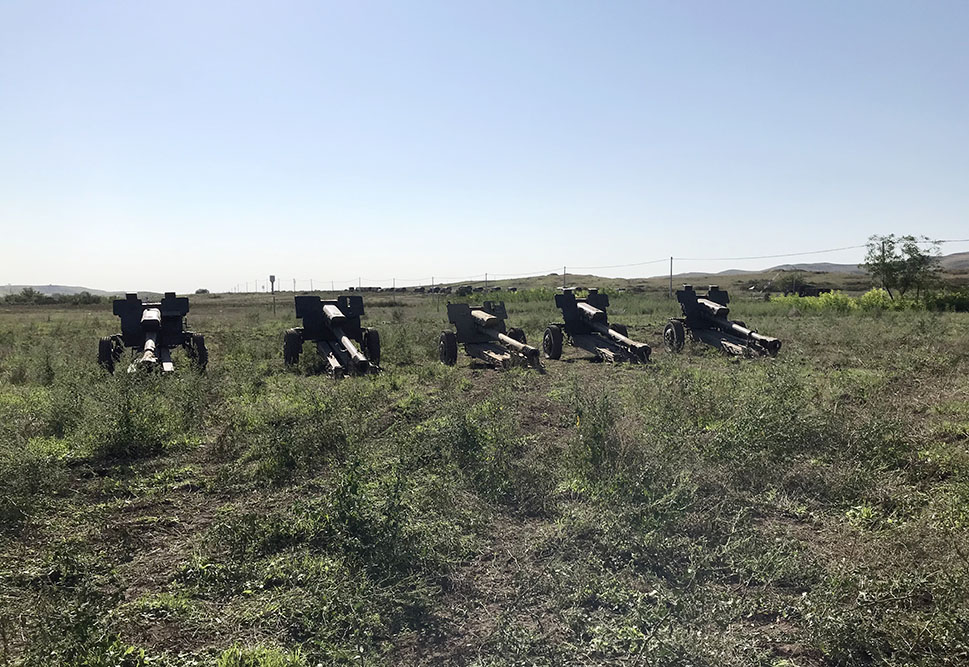
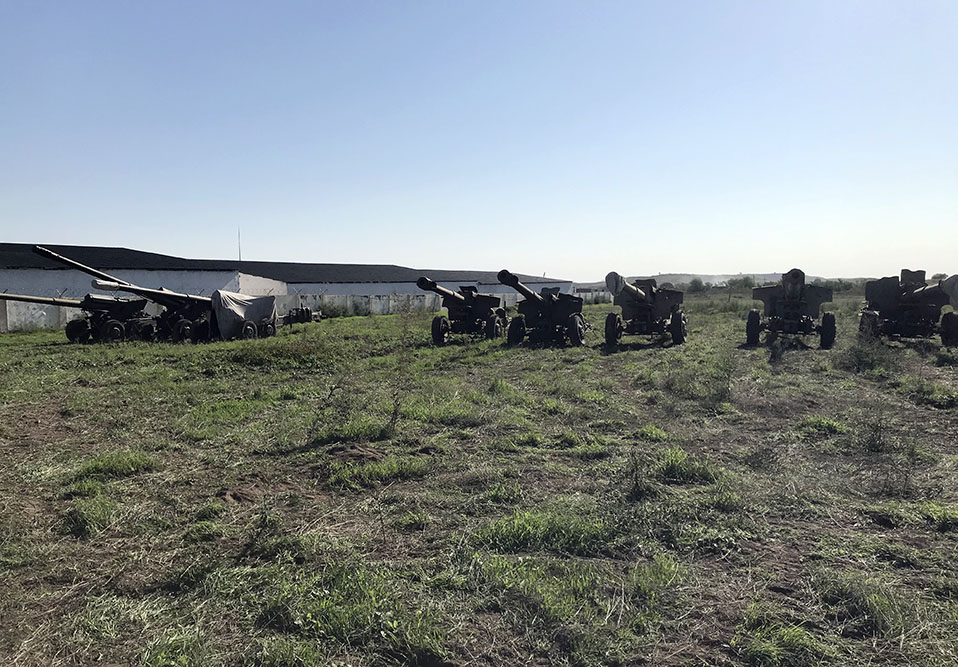
Towed Artillery (29, of which destroyed: 6, captured: 23)


Command Posts And Communications Stations (4, of which destroyed 1, captured: 3)


Surface-To-Air Missile System Support Vehicles (2, of which captured: 2)


Surface-To-Air Missile Systems (4, of which captured: 4)


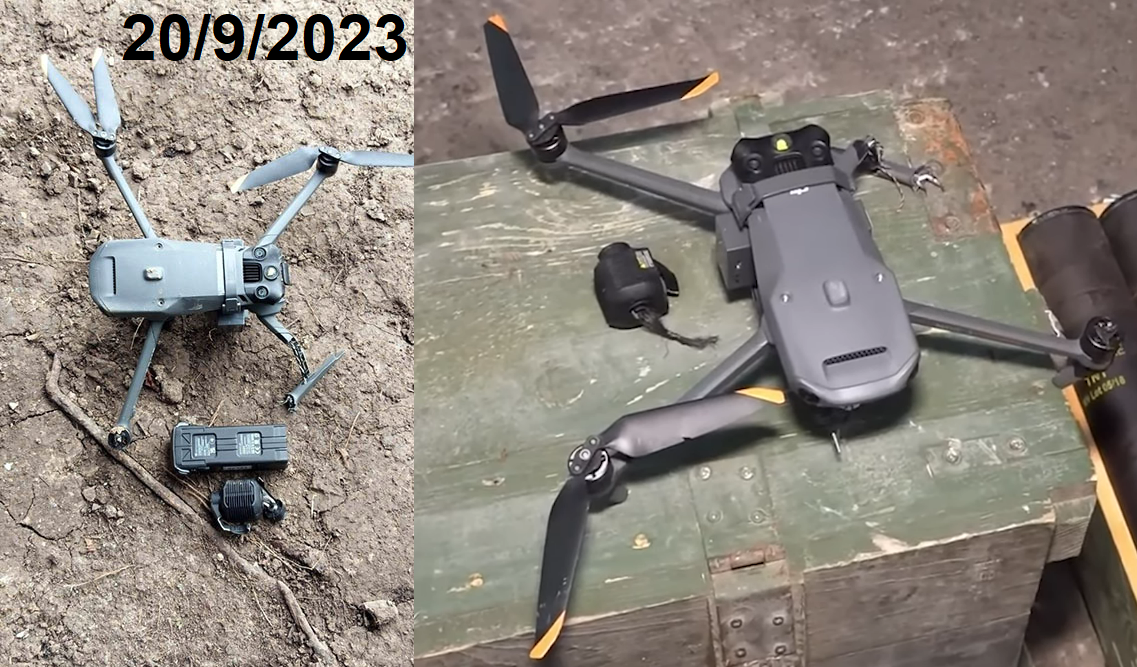
Unmanned Aerial (Combat) Vehicles (2, of which destroyed: 1, captured: 1)


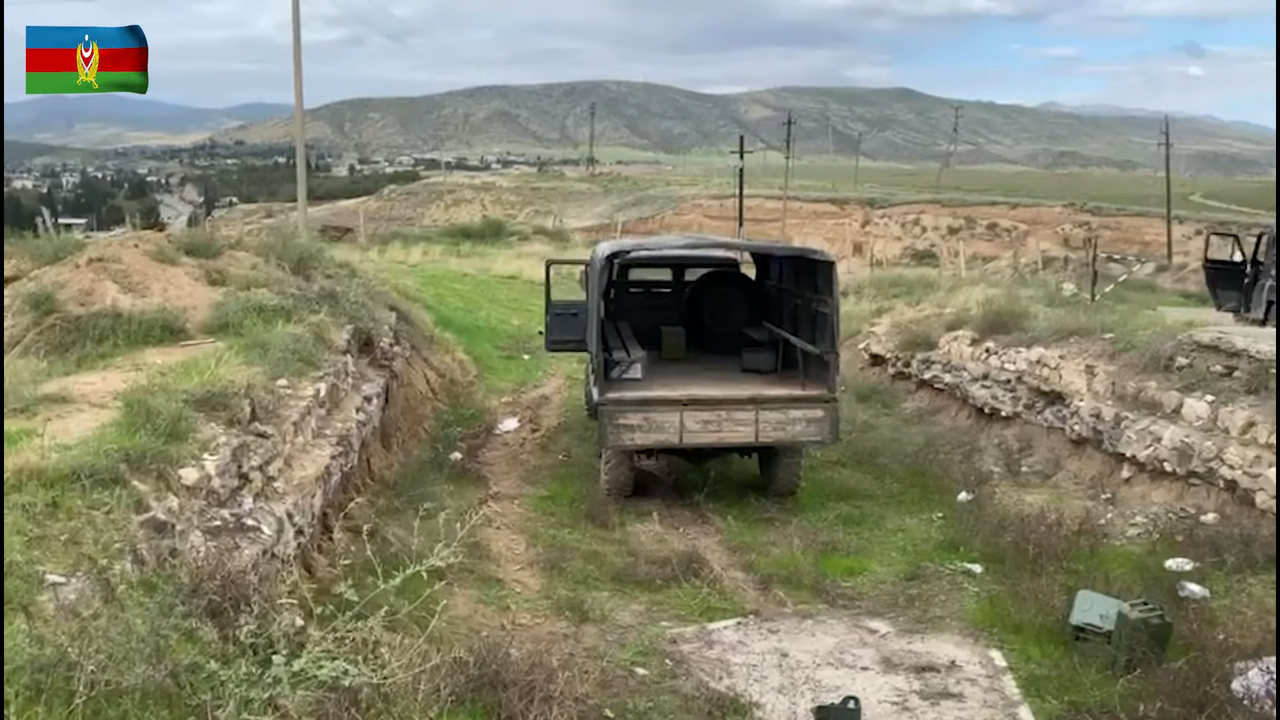
Vehicles (43, of which destroyed: 10, captured: 34)


Azerbaijan (2, of which destroyed: 2)


Tanks (1, of which destroyed: 1)


Vehicles (1, of which destroyed: 1)

 
Recommended Articles:


Kyiv’s K-Support: South Korean Military Aid To Ukraine

19 September 2023 at 13:38

 
South Korea, Japan, and Taiwan have all faced constraints that hinder their desire to provide military assistance to Ukraine. In Japan's case, it's primarily due to stringent laws prohibiting the export of military equipment. [1] Meanwhile, South Korea's hesitation stems from concerns that providing military support to Ukraine might prompt Russia to increase its military and technological assistance to North Korea. From March 2022 onward, South Korea delivered four shipments of non-lethal military aid to Ukraine, amounting to approximately €3 million in value. [2] This aid has included equipment like helmets, bulletproof vests, and mine detectors. Notably, some of this equipment was originally intended for the Afghan Army but was redirected to Ukraine in 2022 following the fall of Kabul in 2021.
 
Despite numerous appeals from Ukraine for the provision of weapon systems like surface-to-air missile (SAM) systems and ATGMs, South Korea has declined these requests on each occasion. [3] At the Korea-Ukraine summit in Kyiv in July 2023, South Korean President Yoon mentioned the provision of ''a larger scale of military support this year''. However, a South Korean Ministry of Defense spokesperson was quick to reaffirm the government's official stance, emphasising that providing lethal weaponry remains out of the question and stating, ''There is no change in our policy of not supporting lethal weapons''. [4] The specifics of President Yoon's commitment to providing increased support came to light in September 2023 when the South Korean government revealed their donation of two K600 combat engineering vehicles (CEVs). Designed with the purpose of clearing pathways through minefields on the frontline, the Yoon administration nevertheless requested that Ukraine deploy these vehicles exclusively for humanitarian missions. 
 
In fact, South Korea's most significant contribution to Ukraine's plight has not been a direct delivery but rather the transfer of 550,000 155mm artillery rounds to the United States in 2022 and 2023. [5] This transfer enabled the United States to provide Ukraine with ammunition from its own stockpile. Another noteworthy contribution from South Korea involved the delivery of 100 SsangYong Musso pickup trucks and 5 DOOSAN DX17Z mini excavators designated for humanitarian use. [6] Whether South Korea will maintain its policy of restricting military aid remains uncertain, especially in light of North Korea's growing rapport with Russia, which may prompt South Korea to reconsider its approach to Ukraine. If such a shift occurs, it could potentially open the door to the availability of various Korean-made weapon systems for Ukraine. South Korea also possesses several Russian weapons systems, such as the T-80U MBT, BMP-3 IFV, Metis ATGM, and Igla MANPADS, which undoubtedly pique Ukraine's interest as well.
 
The following list attempts to keep track of military aid given to Ukraine by the Government of the Republic of Korea during the Russian invasion of Ukraine. The entries below are sorted by category. Private and corporate donations are not included in this list. This list will be updated as further support is declared.
 

Engineering Vehicles


Military Gear

  • Helmets [Delivered since March 2022]
  • Bulletproof Vests [Before July 2023]
  • Military Uniforms [Delivered since March 2022]
  • Mine Detectors [Before July 2023]
  •  Explosive Ordnance Disposal (EOD) Suits [Before July 2023]
  • Gas Masks [Before July 2023]
 

Miscellaneous Items

  • Meal, Ready-to-Eat (MREs) [Delivered since March 2022]
  • First-Aid Kits [Delivered since March 2022]
  • Tents [Delivered since March 2022]
  • Blankets [Delivered since March 2022]
 
[1] Aid From Asia: Japan’s Military Support To Ukraine https://www.oryxspioenkop.com/2022/09/aid-from-asia-japans-military-support.html
[2] S.Korea to Send 2 Minesweepers to Ukraine https://english.chosun.com/m/svc/article.html?contid=2023091801396 
[3] LIG넥스원에 주한우크라이나 대사 방문 타진...천궁·신궁 요청 목적 관측 https://www.ajunews.com/view/20220415114737523 
[4] 한국, 우크라에 지뢰 제거기 제공…“살상무기는 지원 안 한다” https://www.hani.co.kr/arti/politics/politics_general/1100507.html
[5] [양낙규의 Defence Club]탄 빌려간 미국 ‘성능개량 탄’으로 돌려주나  https://www.asiae.co.kr/article/2023061509184626149
[6] South Korea provided Ukraine with pickups and excavators https://mil.in.ua/en/news/south-korea-provided-ukraine-with-pickups-and-excavators/ 
 
Recommended Articles:
 
Aid From Asia: Japan’s Military Support To Ukraine
 

Uday Hussein: The King Of Clubs, Cars And Cruelty

13 September 2023 at 15:56

By Stijn Mitzer and Joost Oliemans
 
Uday, what are you? A businessman or a playboy? I don't know what to make of you. (By Saddam Hussein)

There is little doubt that Uday Hussein, the eldest son of Iraqi dictator Saddam Hussein, stands as one of the most terrifying individuals to ever tread upon this planet. Uday was a playboy and a pathological killer with a love for exotic cars, booze, Cuban cigars, guns (particularly golden ones) and Star Wars. Uday's erratic lifestyle led him on a path of death and destruction from a young age. Engaged in a myriad of businesses, Uday's criminal empire was involved in smuggling sanctioned goods such as oil and cigarettes, and cocaine alongside running a fast-food restaurant chain called 'Super Chicken' and an ice cream company called 'The Wave' (if you're still curious about the real-life inspiration behind the character Gus Fring in Breaking Bad, your search ends here). He also headed television and radio stations, was chairman of the board of seven newspapers and was at the helm of Iraq's most successful sports club. Uday took particular pride in the fearsome image he cultivated and referred to himself as 'Abu Sarhan' (The Father of Wolves).
 
Much of Uday's notoriety arose from his role as the head of the Iraqi Olympic Committee, where he resorted to torture in an attempt to enhance the performance of Iraq's athletes. In 1993, following the Iraqi national soccer team's failure to qualify for the 1994 FIFA World Cup, Uday forced the players to train using concrete balls. [1] Those who performed particularly poorly, according to Uday, were dragged through a gravel pit and then forced to jump into sewage tanks to induce infections. [1] On another occasion, Uday crammed the entire national volleyball team into a private prison he had constructed in the basement of the Olympic Committee building. The prison had a low ceiling, preventing any of them from sitting or standing, all in the name of what he termed a ''motivational exercise''. [2]
 
Encountering Uday often led to two distinct outcomes: either an unfortunate individual would find themselves facing a dire fate, enduring days of brutal torture, or by some unpredictable twist of fate, Uday would form an unexpected fondness for them. In the latter scenario, winning Uday's friendship entailed drinking a cocktail dubbed the 'Uday Saddam Hussein'—a blend of whiskey, brandy, vodka, cognac, and beer, served in a large 'cup of friendship'. [3] The newly declared friend was obliged to drink the mixture down to its very last drop. Those who were able to maintain a good relationship with Uday long enough would receive gifts that went beyond the ordinary tokens of friendship. These rewards either included a gold-plated Tariq pistol, a Tarbuk carbine or even an Al-Kadesiah marksman rifle. However, it appears that Uday's circle of close friends had dwindled significantly over the years, as dozens of nickel and gold-plated firearms were discovered by US forces in Uday's Baghdad palace in 2003. [4]
 
Throughout his life, Uday developed addictions to various vices, but perhaps none were as compelling as his obsessions with sex and pornography. In 2003, when U.S. soldiers entered his Baghdad palace, they stumbled upon a villa dedicated solely to accommodate his harem. Evidences of Uday's sexual addiction permeated the entire palace. The residence was adorned with paintings of nude women and stacks of internet printouts featuring prostitutes, each accompanied by handwritten ratings. One printed document seemed to depict a spicy conversation between Uday and a European woman, which read: ''Darling, babe, it’s not good timing to send me sexy attachment''. [5] Thankfully for the US Army soldiers searching the palace, the ''sexy attachment'' was never found. What they did find was a book containing an extensive list of women's names, along with their photographs and phone numbers. A US Army Captain officer the premises described it as "the largest collection of naked women I'd ever seen". [5]
 

In this image, Uday (right) is pictured with his brother Qusay (left). Notably, Uday is seen enjoying his custom-made La Habana cigars, which were prominently labeled 'Uday Saddam Hussein.'

Despite his appetite for power and sexual indulgence, it is widely recognised that Uday was highly intelligent. In 1998, he earned a doctorate in political science from the University of Baghdad, completing his doctoral thesis titled ''The World after the Cold War''. [6] Once destined to succeed his father, Uday's lust for senseless murder resulted in his younger brother Qusay being favoured instead. Uday's political downfall began at the age of 19 when he clubbed to death Saddam's valet and friend Kamel Hana. Rushing to the scene, Saddam delivered an ultimatum to his son: if Kamel would die, so would Uday. Kamel passed away later that night, and it was only through the intervention of Uday's mother that his death sentence was commuted to one of torture. [7] Following his release, Saddam sent Uday into exile in Switzerland. Nonetheless, the peace and tranquility of Switzerland did little to quell Uday's penchant for violence. Years later, in 1995, Uday shot his uncle Watban Ibrahim, inflicting injuries so severe that Watban's leg had to be amputated. Considering various options for Uday's punishment, including the idea of having Watban shoot Uday in a manner similar to how he had been shot, Saddam eventually decided to only set one of Uday's garages on fire. [7]

With a growing list of enemies, Uday's luck was inevitably bound to run out. Indeed, a year after shooting Watban Ibrahim, Uday was ambushed in December 1996 while driving his Porsche through Baghdad, sustaining at least seven gunshot wounds. [7] The assailants, who tried to put an end to Uday's reign of terror in Iraq, were subsequently executed along with most of their family members. Uday never fully recovered from the injuries he suffered during the attack and walked with a limp for the remainder of his life. Contrary to popular belief, the attack did not render him impotent; instead, it fueled his already intense appetite for sex and murder. While reports of Uday's killings and sexual assaults have often been exaggerated and, in many cases, entirely fabricated, there is no uncertainty that his sadistic tendencies and sexual desires increasingly consumed his life. However, following the 2003 invasion, the proliferation of false stories about Uday became so widespread that it's often impossible to discern truth from fiction. 
 
What is certain is that the Iraqi population was destined to experience his tyranny until 2003 through his control over the brutal paramilitary force known as the Fedayeen Saddam. The Fedayeen operated completely outside the law and reported directly to Uday, effectively serving as his private army. Beyond utilising the Fedayeen to eliminate his opponents and terrorise the Iraqi population, his authority over the paramilitary force also enabled him to establish an extensive criminal empire engaged in smuggling cocaine and goods sanctioned by the UN after the Iraqi invasion of Kuwait. Being a devoted Star Wars enthusiast, Uday had the helmets and uniforms of the Fedayeen Saddam designed to resemble the outfit worn by Darth Vader. In addition their comical appearance, these helmets were of low-quality fiberglass construction and would have provided little to no protection to anyone wearing them in combat. 
 

You might mistake this for a scene depicting soldiers of the Galactic Empire targeting the Rebel Alliance in the midst of the Battle of Tatooine. In reality, it portrays a Fedayeen Saddam member participating in an exercise in Iraq.

One might ask why the son of Iraq's dictator ended up terrorising his own country using troops wearing Darth Vader costumes like characters from a poorly scripted Star Wars film. The answer to this question might be found in the fact that his other pastime, cheating in sports, had been taken away by Saddam. A devoted soccer enthusiast, Uday established his sports club, Al-Rasheed SC in 1983, and forced numerous top Iraqi players into signing with the club. In his dual role as the head of the Iraqi Football Association (definitely no conflict of interest to be found here), Uday orchestrated Al-Rasheed's rapid ascent to dominance in Iraqi football, much to the anger of ordinary Iraqis. Despite the widespread dissatisfaction among Iraqi football fans, Uday's club managed to secure victory in the 1987 Uday Hussein Championship named after himself. Following this 'triumph', Uday had the opportunity to reward himself with a medal in his capacity as the head of the Iraqi Football Association. Nonetheless, the club was dissolved three years later at the direction of Saddam in response to the increasing discontent with the unfairness of Iraqi soccer.

When he wasn't overseeing his criminal empire or engaging in other nefarious activities, Uday frequently took himself on hunting excursions using one of the country's many VIP helicopters, like this MBB/Kawasaki BK 117.

Being the dictator's son granted Uday the privilege of obtaining anything he desired in life, whether it was women he snatched from the streets of Baghdad with the assistance of his bodyguards, his own private army adorned in Darth Vader costumes or the latest and most expensive cars sourced from all corners of the world. Uday is said to have amassed around 1300 exotic and rare cars throughout the 1980s, 1990s and early 2000s. [8] Certainly, this number has no basis in reality, and it's likely that the actual count of cars owned by Uday was not even one-tenth of that figure. Similarly, the number of cars owned by Uday that were destroyed by Saddam in retaliation for the shooting of Watban Ibrahim in 1995 is reported to range from 300 to 13, with the latter figure likely to be the most accurate.

Among his collection, Uday had a significant number of Porsches, Ferraris, and Lamborghinis, including a rare Lamborghini LM002 off-road vehicle, often referred to as the 'Rambo Lambo'. Porsches appeared to be a particular favourite of his, as he possessed at least four of them, including the 986 Boxster and three 993 Turbos. Additionally, his collection featured other high-performance supercars like the Lamborghini Diablo and a Ferrari 550 Maranello. There are reports that Uday owned a fleet of Bentleys, Bugattis, Aston Martins, and a McLaren F1 as well, although there is no existing evidence to support these claims. Uday had a fondness for cars inspired by the designs of the 1920s and 1930s, and owned a number of unique vehicles, including a London Taxi and a Ford Woodie Wagon.

A Ferrari Testarossa covered in dust (on the left) and a Porsche Carrera (on the right), both previously owned by Uday.

When US troops captured Uday's Baghdad palace in 2003, the full extent of his extravagant lifestyle quickly became apparent. Soldiers found $1 million of liquor and the finest wines, multiple garages for his collection of luxury cars and even a private zoo with two cheetahs, five lions and a bear. [9] [10] Following closely behind the US troops, a multitude of Iraqi civilians surged forward, attempting to seize the opportunity to make off with one of Uday's cars. In the ensuing confusion, looters made away with several of Uday's cars. The situation was not helped by the fact that the keys to all the cars had been left in their ignitions. Though some of Uday's cars were later returned to the state, most of them were never to be seen again. Many of them are still thought to be hidden throughout Iraq to this day.
 
The looting of Uday's palaces is one of the sources behind the rumours concerning the scale of Uday's car collection. With claims of 1300 cars in Uday's possession, virtually every exotic or luxury car in Iraq is reported to have had a connection to Uday, even when none exists. This misconception extended to vehicles owned by other prominent Iraqi government figures, including his brother Qusay (known for his affection for G-Wagons) and Saddam himself. Upon assuming power in Iraq in 1967, Saddam Hussein took control of the country's extensive collection of vintage cars once used or owned by former Iraqi statesmen. This assortment notably featured a Mercedes-Benz 500K Erdmann & Rossi 1935 Roadster and a Mercedes-Benz 770 'Großer Mercedes'. While it's likely that Uday may have felt envious of Saddam's collection, there is no evidence to indicate that he ever assumed ownership of those vehicles.
 
Alongside his enthusiasm for cars, Uday also had a great passion for motorcycles. However, following the 1996 assassination attempt, his injuries rendered him incapable of riding standard motorcycles, leading to the conversion of some of his two-wheelers into tricycles. Yet, the incapability of riding standard motorcycles was soon to become the least of Uday's problems, as US troops invaded Iraq in 2003 to complete what they hadn't finished in 1991. Both Uday and Qusay went into hiding in a mansion in Mosul, where they believed they were safe. The owner, undoubtedly enticed by the $30 million bounty on their heads, walked to a nearby US Army base to turn them in and claim his reward. Soon, the mansion found itself surrounded by US troops. Refusing to surrender without a fight, Uday and Qusay battled US forces for four hours until 12 TOW ATGMs, fired into the mansion, silenced their guns.
 

Uday in his role as a family man. Contrary to what has been written, Uday was never married, as he physical abused his three fiancées before the intended marriages could take place.

The following list aims to catalog the cars owned by Uday Hussein. This inventory solely comprises his personal vehicles and does not encompass those of his father, Saddam Hussein. The actual number of cars and motorcycles owned by Uday Hussein remains shrouded in mystery due to the looting of Uday's palaces in 2003, but is certainly higher than the number recorded here (39). Therefore, this list does not aim to provide a comprehensive inventory of his collection but rather offers a unique insight into his automotive interests.
 
(Click on the vehicle to get a picture of them)
 

Supercars (11)

  • 1 Porsche 986 Boxster: (1)
  • 1 Porsche 993 Turbos: (1)
  • 1 Porsche 964: (1)
  • 1 Porsche 993 Carrera: (1)
  • 1 Ferrari Testarossa: (1)
  • 1 Ferrari F40: (1)
  • 1 Ferrari 348 TS: (1)
  • 1 Ferrari 550 Maranello: (1)
  • 1 Lamborghini Diablo: (1)
  • 1 Lamborghini LM002: (1)
  • 1 Jaguar XK8 Convertible: (1)

Luxury Cars (15)

  • 2 BMW 5 Series (E34): (1) (2)
  • 1 BMW Z1: (1)
  • 1 Mercedes-Benz W116: (1)
  • 1 Mercedes-Benz W126 Coupe Gemballa: (1)
  • 1 BMW M635CSI Gemballa: (1)
  • 1 Rolls Royce Corniche Convertible: (1)
  • 4 Rolls-Royce Silver Spurs: (1 and 2) (3) (4)
  • 1 Rolls-Royce Corniche (2000): (1)
  • 1 Chevrolet Convertible: (1)
  • 1 Chevrolet Coupe: (1)
  • 1 Stutz Blackhawk: (1)
  • 1 Plymouth Prowler: (1)
 

Classis And Vintage Cars (9)

  • 1 Austin 8: (1)
  • 1 London Taxi: (1) 
  • 1 Rolls-Royce Silver Shadow: (1)
  • 1 1958 Ford Fairlane 500: (1)
  • 1 Ford Woody Wagon: (1)
  • 2 Zimmer Golden Spirit: (1 and 2)
  • 1 LevonJeep: (1)
  • Missing flag.png 1 Unknown Vintage-Style Car Replica: (1)
 

Toy Cars (2)

  • 1 Toylander 1: (1)
  • Missing flag.png 1 Unknown Buggy: (1)
 

Motorcycles (2)

  • 1 BMW 1100 RT: (1)
  • 1 Honda CB1100F: (1)
 
[1] Torture, Threats and Imprisonment – How Uday Saddam Hussein Destroyed Iraqi Football https://iraqfootball.me/2017/06/10/torture-threats-and-imprisonment-how-uday-saddam-hussein-destroyed-iraqi-football/
[2] 'SNAKE' & PLAYBOY HAD ONLY LUST FOR BLOOD IN COMMON: UDAY HUSSEIN 1964-2003  https://nypost.com/2003/07/23/snake-playboy-had-only-lust-for-blood-in-common-uday-hussein-1964-2003/
[4] GWT: Custom-made weapons found in Uday's house https://youtu.be/w6kY15nIFlQ?si=XgrbsscrDuqHPkHN 
[6] Uday Hussein: Playboy turned academic http://news.bbc.co.uk/2/hi/middle_east/197389.stm
[7] Sons Of Saddam Hussein - Full Documentary https://youtu.be/WFxn_f_B9dQ?si=WdzY1IvDSp04hc7R
[10] GWT: WRAP Marines clear Saddam's sons palace, plus luxury cars found https://youtu.be/1rgcEvNGFyo?si=w5CqmhgAqd3c2UFb
 
Recommended Articles:

Afriqiyah One - How Gaddafi Travelled The World In Luxury (But Not In Style)

6 September 2023 at 18:34
 
By Stijn Mitzer and Joost Oliemans

''I am an international leader, the dean of the Arab rulers, the King of Kings of Africa and the imam of Muslims, and my international status does not allow me to descend to a lower level.'' (By Muammar Gaddafi)
 
The conclusion of the Libyan Revolution in 2011 led Libyans on a worldwide frenzy in search of the billions Muammar Gaddafi salted away during his 42-year long reign and the luxurious life style he was able to afford with it. Some 40% of Libya's population of six million lived below the poverty line during Gaddafi's reign with little to no access to affordable health care despite the fact that Libya has the most abundant oil reserves in Africa. [1] When Libyans could finally catch a glimp inside of the palaces owned by the Gaddafi family, the main thing that stood out was not the abundant luxury one perhaps expected, but rather their poor interior design styles. Whether it was the horrendous looking supercar wall murals encountered in one of the homes of Saif al-Islam Gaddafi or a huge stone water fountain placed in the middle of a hallway in one of Gaddafi's family resorts, money clearly doesn't equal style.
 
Gaddafi's unique interior taste was further reaffirmed when rebels took a first peak inside 'Afriqiyah One', Gaddafi's $120 million private Airbus A340. [2] Stuck at Tripoli International Airport after the United Nations Security Council established a no-fly zone over Libya, the aircraft largely escaped damage during the fight for the airport in August 2011 that eventually resulted in full rebel control of the capital Tripoli. Encountered at Tripoli IAP was not only one of Libya's two An-124 cargo aircraft, but also most of Gaddafi's private jets. [3] For a man that pretended to have disavowed luxury, this fleet still consisted of one A340-213 (5A-ONE), an A300-600 (5A-IAY, which was completely destroyed during the fighting) and a Dassault Falcon 900EX (5A-DCN, which was found at the nearby Mitiga air base). Also found in Tripoli was Gaddafi's personal high-speed train, a gift from Italian prime minister Silvio Berlusconi. [4]

The inside of the A340 revealed a ghastly silver-grey interior that arguably looked on par with that of a 1990s limousine. Yet what the four-engined A340 lacked in style, it more than made up in luxury, with several bathrooms, two showers, a jacuzzi and leather sofas and seats available to Gaddafi, his entourage and his all-female Amazonian Guard. Considering all this abundance of luxury, it is perhaps surprising that Colonel Gaddafi, or Brotherly Leader and Guide of the First of September Great Revolution of the Great Socialist People's Libyan Arab Jamahiriya as he liked to be referred to, actually preferred to use his A300. This likely had much to do with the fact that Gaddafi was already the third owner of the A340, and had not chosen the interior himself. The A300 was similarly second-hand, having been acquired from the Abu Dhabi Amiri Flight in 2003, but subsequently redecorated according to Gaddafi's taste. [5]
 
The story of how the A340 came into Gaddafi's possession is a fascinating story in its own right. The A340 was ordered by Brunei's Prince Jefri Bolkiah in August 1996, who spent $250 million on its acquisition and decoration. [6] Now $250 million is already a lot of money, but it's even more so considering it was not even his own money. You see, Prince Jefri had somewhat of a habit for misappropriating Brunei's state budget, and was accused of unrightfully taking $14.8 billion from Brunei's treasury and spending it on his many palaces, yachts and no less than nine private jets, including this A340. [7] Anything but amused by his brother's actions, the Sultan of Brunei exiled his brother and sold all of his belongings. After Prince Jefri spent $250 million on 'his' A340, the Sultan sold it for only $95 million to Saudi Arabia's Prince al-Waleed bin Talal Al Saud, one of the richest people in the world, just three years later. Looking to make a quick buck, the Prince then attempted to sell it to Gaddafi, which would bring about even more scandals.
 

The ghastly silver-grey 1990s interior of Gaddafi's A340.

The opulent throne that belonged to Colonel Gaddafi (and previously to Prince Jefri) onboard Afriqiyah One.

The first obstacle Prince al-Waleed ran into was that Colonel Gaddafi simply had no interest in the A340 when it was first offered to him in 2001. Already not a keen flyer to begin with, Libya's sanctions regime and its increasing political international isolation meant Gaddafi hadn't flown abroad for more than a decade. In the 1970s and 1980s, when he was still a welcome guest in many parts of the world, Gaddafi simply used a commercial Libyan Airlines Boeing 707, apparently lacking any interest in a private aircraft for his personal use. This posed somewhat of a problem for al-Waleed, as no other party had shown an interest in the A340. The lack of interest from buyers might have been influenced by the aircraft's interior and exterior, both of which were remarkably unappealing. Prince Jefri had chosen a largely similar interior design to his brother's three(!) A340s but in a silver-grey finish rather than the gold one used by his brother the Sultan. Seemingly satisfied with the result, the A340's exterior received the same treatment.

Seemingly fixated on the drabness of silver and grey, even the exterior of Brunei's Prince Jefri Bolkiah's A340 was painted in these lackluster colours. (Image by Konstantin von Wedelstaedt)

Undeterred by Gaddafi's disinterest in buying a $120 million flying limousine, Prince al-Waleed commissioned Daad Sharab, a Jordanian fixer with connections to Gaddafi, in an attempt to convince him to buy the aircraft. Nonetheless, it took Sharab nearly 1.5 years to secure a meeting with him, which finally occured in January 2003. [6] During the meeting, Gaddafi eventually exhibited an interest in the Airbus but mentioned that he was also assessing several other aircraft that had been presented to him. Several days later, Sharab reached out to the Prince and advised sending the Airbus A340 and a Boeing 767, which he was also trying to sell, for Gaddafi to inspect. In April 2003, both aircraft flew to Libya, with the Prince personally traveling on the A340. Gaddafi liked the Airbus, and asked that the plane remained in Tripoli until a sale could be finalised, a measure intended to prevent any tampering with the aircraft. The Prince returned to Saudi Arabia on the Boeing 767, presumably satisfied with the prospect of a successful deal.

Evidently grasping the detrimental impact of the silver-grey livery on the potential sale of the A340, Prince al-Waleed replaced it with the more appealing Kingdom Green livery. It was in this livery that Gaddafi laid eyes on the aircraft for the first time.

Apparently, there was some confusion between the Prince and Sharab regarding the price they were seeking for the A340. [6] Sharab believed it was $135 million, while the Prince thought $110 million would be the maximum they would get. Even at this price, the sale would still net a $15 million profit for him. Nonetheless, the Prince attempted to increase his earnings by tricking Gaddafi into believing that the cost of the A340 was actually much higher, writing him that ''the aircraft price of $135 million represents what the aircraft cost us. This includes the various extras and modifications that were made to the aircraft since we bought it''. [6] When later questioned about these modifications, the Prince admitted that no modifications had actually been made to the A340. It wasn't only Gaddafi who was being deceived: Sharab claimed that the Prince had initially agreed to provide her with any amount exceeding $110 million if she managed to sell the aircraft for more, something the Prince later denied. In the end, Sharab filed a lawsuit and won, with the Prince being ordered by a British court to pay her $10 million in commission fees in 2013. [8]
 
Exactly a decade earlier, in June 2003, it was Sharab who successfully brokered the deal with Gaddafi to sell the Airbus A340 for $120 million, with an additional $20 million in Libyan investments embarked for the Prince's agricultural project in neighbouring Egypt. [6] The payment was to be split into two installments, with the first $70 million going directly to the Prince. The Libyan Agriculture Investment Company was to provide the remaining $70 million for the second installment, with $20 million designated for the agricultural project and the remaining $50 million for the aircraft. The Prince received the initial $70 million payment in August 2003, but the $50 million for the aircraft and the $20 million for his agricultural project did not materialise. In February 2004, the chairman of Libya's Afriqiyah Airways, who would operate the A340 on behalf of Gaddafi, met with the Prince's representatives. In the course of the meeting, the chairman said Gaddafi believed $70 million was a fair price and that he wouldn't pay any more than that.
 
It appears that Gaddafi may have experienced buyer's remorse at this point, considering there was little need for an additional long-range VIP aircraft alongside his recently purchased A300. In all likelihood, his decision to acquire the A340 was primarily influenced by its size and the presence of four engines. While the significance of four engines might not be immediately evident to the average reader, prominent Middle Eastern government leaders typically possess either a four-engined Boeing 747-400 or the more modern and larger Boeing 747-8, as larger aircraft convey greater prestige for both the leader and their nation. Even though the A340 was previously considered prestigious, both the Turkish and Egyptian governments have augmented their A340s with the larger Boeing 747-8. The twin-engined A300 may have contributed to a sense of inferiority on Gaddafi's part when he compared his aircraft to those of other Arab leaders, whose planes clearly outclassed his. It doesn't seem unlikely that this was the motivating factor behind Gaddafi's acquisition of the A340, a purchase he obviously wasn't keen on forking out $120 million for.

Even after acquiring the A340, Gaddafi continued to frequently use the twin-engined A300 for his flights abroad. (Image by Dennis)

If the spectacle of two billionaires bickering over the price of a four-engined private jet formerly owned by a third billionaire isn't sufficiently amusing, the situation is about to become even more comical. Gaddafi evidently had no intention of paying the $50 million he still owed to Prince al-Waleed, but the Prince had a hidden ace in his hand. The A340 was still parked in Tripoli, where the Prince had left it since April 2003. However, to keep an aircraft in an airworthy condition, it has to undergo regular maintenance checks, typically carried out in Europe. In March 2004, it was the A340's turn to be sent to Germany for routine maintenance. The Libyan authorities expected its return to Tripoli, but to their surprise, it never returned. The aircraft had seemingly vanished without a trace. While Gaddafi previously appeared to have hoped that the Prince would acknowledge his $25 million loss and formally transfer ownership of the A340, the Colonel was now left without the A340 and the $70 million he had already paid for it.

Gaddafi must have assigned his top agents to the task of finding the aircraft, as he would soon discover that Prince al-Waleed, still the legitimate owner of the aircraft, had the A340 flown back to Saudi Arabia after it completed its maintenance in Germany without notifying Gaddafi, an action that deeply infuriated the Colonel. [6] The Jordanian fixer Sharab found herself entangled in the midst of this escalating dispute and ultimately could do little but convey Gaddafi's demand for the immediate return of the aircraft or a refund of the $70 million. Realising that the aircraft might have been tampered with during its stay in Saudi Arabia, Gaddafi subsequently decided to cancel the deal altogether. In response, the Prince expressed his willingness to cancel the deal for the Airbus but intended to retain the $70 million as compensation. [6] Prince al-Waleed had, quite literally, outmaneuvered the Colonel.

While Gaddafi had previously attempted to resolve conflicts through outright invasions of other countries, the absence of a land border with Saudi Arabia and the lack of a functional military rendered this option unfeasible. With the Prince in possession of both the A340 and the $70 million, Gaddafi had no leverage remaining. After three months of deadlock, Sharab devised a plan to resolve the impasse by arranging a face-to-face meeting between Prince al-Waleed and Gaddafi in Tripoli. After all, she stood to earn a commission of at least $10 million. To avoid the risk of Gaddafi impounding one of the Prince's private aircraft out of revenge, the Prince traveled to Libya on a chartered jet. A public meeting between the Prince and Gaddafi followed, during which the Colonel finally declared his intention to pay the outstanding $50 million. [6] But when ironing out the details in another meeting a day later, the Libyan side had apparently reversed its decision once more and once again asked for the return of the $70 million.
 
Having travelled to Tripoli to rescue the deal and enduring a lengthy meeting with Gaddafi, Prince al-Waleed must have been far from amused by this sudden turn of events. But eventually, the Libyan side relented and agreed to proceed with the purchase. [6] While the $20 million investment in the Prince's agricultural project was no longer on the table, the Libyans would pay the outstanding $50 million to finally get ownership of the aircraft. The new argeement was signed by the Prince in September. However, the Libyan side waited another six months to put down their signature, and it took them a further six months to actually pay the Prince. In September 2006, the ownership of the aircraft was finally in Gaddafi's hands, concluding a $120 million deal that had taken 3.5 years to finalise! The Prince gained $25 million in profits from the sale, though the Jordanian fixer Sharab insisted that a $10 million commission was owed to her. Curiously, it was the Prince who, this time around, refused to make the payment. [8]
 

A340 '5A-ONE' in its new Libyan livery. The black and white colour scheme is far more visually appealing than the silver and gray one used by Prince Jefri.

However, the Prince not paying her was not Sharab's biggest concern during this period, as she had apparently incurred the wrath of Gaddafi to the extent that he had her placed under house arrest in Tripoli, despite her Jordanian citizenship. [9] The justification for her house arrest seemed to be nothing more than Gaddafi's paranoia, as he claimed that Sharab was conspiring with Abdullah II of Jordan and Egyptian President Hosni Mubarak to overthrow him, stating: "I know what your King is planning against me with the President of Egypt''. [9] Denied the chance to defend herself against these allegations, she endured 21 months of house arrest in Tripoli until she was freed by Libyan rebels during the 2011 Libyan Revolution. After her release, she continued her efforts to claim the $10 million from Prince al-Waleed, which she was ultimately awarded by a British court in July 2013. [8]
 

A Libyan rebel contemplates the intriguing interior design choices aboard Afriqyah One in 2011.

Following the successful sale of the A340 to Gaddafi in 2006, the aircraft was repainted at Lufthansa Technik in Germany. Similar to what was done with Gaddafi's A300 previously, the A340 was adorned with the Afriqyah Airways' branding to create the false idea that Gaddafi was actually traveling on a commercial airliner. The prominently displayed 9.9.99 logos commemorated the signing of the Sirte Declaration on the 9th of September 1999, which called for the establishment of the African Union. The date '9.9.99' formed a substantial part of Afriqyah Airways' livery (at least until 2012), and symbolised Gaddafi's newfound affinity for Africa. After his unsuccessful attempts to unify the Arab countries under his leadership in the 1970s, Gaddafi made a renewed effort with Africa in the late 1990s and 2000s, using the African Union as a platform to move toward positioning himself as the leader of a future United States of Africa. However, nearly every African leader quietly distanced themselves from his proposal, and the African Union effectively marginalised him during his tenure as chairman, leading Gaddafi to express his regret for having invested funds into the organisation and other African initiatives, further remarking, "Had I known in advance how little power the chairman wields, I would have refused the job". [10] Irrespective of of the intentions behind Afriqyah Airways' African-themed livery, it's undeniable that the 9.9.99 livery on the A340 looked exceptionally striking.
 

Gaddafi, dressed in military uniform, salutes Libya's national anthem shortly after disembarking 'Afriqiyah One' during a state visit to Italy in June 2009. Note the Libya-Africa 9.9.99 markings commemorating the Sirte Declaration.

While the aircraft's exterior received a fresh coat of paint, Gaddafi opted to keep the interior completely unchanged. This decision might have been influenced by the fact that it had already taken 3.5 years for Gaddafi to receive the plane, and he didn't want any further delays of it entering service. Alternatively, Gaddafi's interior design preferences might have aligned with those of Prince Jofri. In any case, the interior, though unconventional in appearance, offered the Colonel all the opulence he could desire, complete with amenities like a jacuzzi and plenty of seating for his all-female bodyguard unit, known as the Revolutionary Nuns or the Amazonian Guard. The A340 eventually transported Gaddafi on multiple trips abroad between 2006 and 2011. Despite speculation that Gaddafi had used the A340 to escape to Venezuela or Zimbabwe during the Libyan Revolution, he remained in Libya until the United Nations imposed a no-fly zone, which effectively severed his last viable escape route. Gaddafi was killed in October 2011.
 

Gaddafi's bed aboard Afriqyah One.

The repulsive-looking chairs intended for the Colonel's female bodyguards.

Fortunately, the A340 emerged from the Libyan Revolution largely unscathed, in stark contrast to Gaddafi's A300 that was located at the same airport and completely destroyed. Following repairs in France, the Airbus briefly served as a VIP aircraft for the new Libyan government, sporting a fresh livery. However, due to the deteriorating security situation in Libya, the A340 was flown to France for safekeeping in 2014. Subsequently, it remained grounded in France, incurring a daily cost of $1200, until the year 2021 as the aircraft became entangled in various legal disputes. [11] These legal battles included attempts by international companies to impound the aircraft due to outstanding debts owed by Gaddafi. Nevertheless, the French high court ruled that the aircraft enjoyed sovereignty immunity and could not be seized. [11] However, international companies were not the sole entities attempting to seize the A340, as both the governments in Tripoli and Tobruk asserted ownership claims over the aircraft. Ultimately, the internationally recognised government in Tripoli successfully secured ownership of the aircraft and took possession of it in June 2021.
 

The A340 in its new livery, which undeniably meets the mark. This picture was captured during the aircraft's stay in France from 2014 to 2021.

The history of this A340 is fraught with scandals, from the initial purpose of its construction to its subsequent sale to Gaddafi and its service in Libya. Throughout these years, one constant has persisted: its unattractive interior. The aircraft endured a battle for the airport where it was stationed and faced numerous legal disputes with entities attempting to repossess it, ultimately surviving these challenges. For the first time in its 27-year history, the A340 will take flight with an elected government on board, a departure from its previous role of serving billionaires and a dictator. Despite its turbulent past, one can only hope that the A340 will continue to grace the skies for many more years without encountering further controversies or conflicts.
 

Libyan Prime Minister Abdul Hamid al-Dbeibeh proudly presents the A340 after it returned from France in June 2021, where it had been stranded since 2014 at a cost of $1200 a day.

[2] Libya Conflict: Inside Colonel Gaddafi's Private Jet https://youtu.be/cysf9zT6Hso
[3] Giants Of The Skies - The An-124 In Libyan Service https://www.oryxspioenkop.com/2020/09/an-124-article.html
[4] This Was Gaddafi’s Personal Italian High-Speed Train https://www.oryxspioenkop.com/2021/02/this-was-gaddafis-personal-italian-high.html
[7] How The Playboy Prince Of Brunei Blew Through $14.8 Billion https://www.businessinsider.com/prince-jefri-brunei-spending-habits-2011-6
[8] Billionaire Saudi prince loses UK court battle over Gaddafi jet https://www.reuters.com/article/uk-britain-saudi-gaddafi-idUKBRE96U0G920130731
[9] Colonel Muammar Gaddafi memoir author: ‘Judge him for yourself’ https://www.thenational.scot/news/19652822.colonel-muammar-gaddafi-memoir-author-judge-yourself/ 
[11] Qaddafi’s former Presidential plane returns to Libya – end of a saga https://libyaherald.com/2021/06/qaddafis-former-presidential-plane-returns-to-libya-end-of-a-saga/ 
 
Header image by Joan Martorell.


Samarqand Steel: Uzbekistan’s Fighting Vehicles

3 September 2023 at 20:18

By Jan Kerdijk, Stijn Mitzer and Buschlaid
 
The Republic of Uzbekistan finds itself surrounded by five landlocked countries that define its borders: Kazakhstan to the north, Kyrgyzstan to the northeast, Tajikistan to the southeast, Afghanistan to the south, and Turkmenistan to the southwest. This unique positioning designates Uzbekistan as one of just two doubly landlocked countries in the world. Its location in Central Asia becomes even more significant due to its shared border with Afghanistan. Given that the potential dangers of a terrorist threat outweigh the risk of a conventional military invasion, a significant portion of the country's military investments has been directed towards enhancing its counterterrorism capabilities through the acquisition of equipment such as K-53949 Taifun-K and Ejder Yalçın MRAPs and more than a dozen Eurocopter AS532 transport helicopters, a dozen Eurocopter AS550 utility helicopters, and four C-295W transport aircraft.

Most of Uzbekistan's military equipment originates from the Soviet Army's Turkestan Military District, although some other equipment was acquired via the CFE treaty. Due to the treaty's regulations mandating the USSR to relocate a significant amount of hardware behind the Ural Mountains, Uzbekistan ended up with hundreds of T-64s and T-80s on its territory. Faced with a severe shortage of wheeled APCs, Uzbekistan repurposed a number of specialised AFVs into APCs in the 2000s, later supplemented by a number of BTR-80s acquired from Russia. The BTR-80s were one of the few acquisitions made under President Karimov's reign. Due to the volatile region Uzbekistan is located in, the US sought to strengthen the country's counterterrorism capabilities through the donation of 308 MRAPs and 20 MRVs (MRAP-based recovery vehicles) in 2015. [1] This represented the single largest transfer of US military equipment to a post-Soviet state prior to the 2022 Russo-Ukrainian War, and greatly strengthened the country's capabilities.

President Karimov's successor, Shavkat Mirziyoyev, has significantly increased investments in the Armed Forces and procured KamAZ Taifun-K MRAPs and BTR-82As APCs from Russia in the late 2010s. Despite not yet leading to the acquisition of new tanks, Uzbekistan's defence industry has initiated the modernisation of a number of the country's T-62, T-64, and T-72s. Nevertheless, these modernisations have not yet progressed beyond the prototype phase. Furthermore, domestically manufactured weaponry is being integrated into active service. This has so far encompassed tactical vehicles and IMVs. As Uzbekistan is making concerted efforts to further expand its capabilities to produce and modernise military equipment, it appears likely that additional Uzbek-produced AFVs are to make their debut in the near future. These additions will join an esoteric collection of Soviet, US, and Russian vehicle types.

This list attempts to list all AFV types currently in service with the Uzbek Army. This list only includes vehicles and equipment of which photographic evidence is available. ATGMs, MANPADS, mortars trucks and jeeps are not included in the list. If a vehicle or equipment type is operated by a service branch other than the Ground Forces this branch is indicated in brackets.
 
(Click on the equipment to get a picture of them in Uzbek service)
 

Tanks


Armoured Fighting Vehicles


Infantry Fighting Vehicles


Armoured Personnel Carriers


Mine-Resistant Ambush Protected (MRAP) Vehicles


Infantry Mobility Vehicles


Tactical Vehicles And Technicals


Command Vehicles And Fire-Control Vehicles


Engineering Vehicles And Equipment


Self-Propelled Anti-Tank Missile Systems


Towed Artillery


Self-Propelled Artillery


Multiple Rocket Launchers


Anti-Aircraft Guns


Self-Propelled Anti-Aircraft Guns


Static Surface-To-Air Missile (SAM) Systems


Self-Propelled Surface-To-Air Missile (SAM) Systems


Electronic Warfare Systems


Radars


Surveillance Unmanned Aerial Vehicles


Loitering Munitions


Target Drones


Modernisation On A Budget: Bulgaria’s Arms Acquisitions

By: Oryx
14 August 2023 at 12:21


By Stijn Mitzer and Joost Oliemans
 
Bulgaria finds itself in a challenging economic position as the poorest country within the European Union. This economic struggle has had a notable impact on the country's efforts to modernise its armed forces. Insufficient funding has hindered Bulgaria's attempts to bring its military capabilities up to contemporary (NATO) standards, resulting in an inventory that bears a striking resemblance to that of the Bulgarian Army of the 1980s. As per former Minister of Defence Dimitar Stoyanov, the country's delay in modernising its armed forces has resulted in a current financial requirement amounting to some 3-4% of the nation's GDP to bring the military up to modern standards. [1]
 
Though the allocation of such resources appears distant at present, the Bulgarian Armed Forces are set to finally welcome a number of new weapons systems in the upcoming years. Most notably, the Bulgarian Air Force will receive 16 F-16V Block 70 fighter aircraft to replace its aging fleet of MiG-29 and Su-25 combat aircraft while the Bulgarian Navy will welcome two MMPV 90 corvettes from Germany. In 2023, the Bulgarian Army received 44 T-72M/M1s that were upgraded by the state-owned company TEREM and Elbit from Israel in a contract worth over €40 million. [2]

The Bulgarian Armed Forces have identified a number of acquisition projects to be of top priority, including the procurement of air-surveillance radars to enhance the capabilities of the new F-16s. Additionally, the MoD is seeking to acquire 180+ Stryker IFVs and APCs, 155mm SPGs and new SAM systems. These acquisitions are to be financed through installment payments spanning up to 15 years. [3] Bulgaria has also expressed an interest in acquiring the Turkish Bayraktar TB2 and Akıncı UCAVs, with the goal of rectifying the current deficiencies in their UAV capabilities.

This article attempts to list equipment acquisitions by the Bulgarian Army, Air Force and Navy. This list focuses on heavy weaponry and doesn't include ATGMs, MANPADS, small arms, command vehicles, engineering equipment, trucks, radars and ammunition. Mid-Life Updates (MLUs) are only included when they contribute to enhancing the weapons system's operational capabilities. This list will be updated as new acquisitions are reported.

Army - Sukhopŭtni Voĭski Na Bŭlgariya


Infantry Fighting Vehicles


Specialised Armoured Vehicles


Artillery

  • Missing flag.png Programme To Acquire 155mm Self-Propelled Guns


Air Force - Voennovazdushni Sili


Fighter Aircraft


Unmanned (Combat) Aerial Vehicles


Air Defence Systems

  • Missing flag.png Programme To Acquire Medium-To-Long Range Surface-To-Air Missile Systems

Navy - Voennomorski Sili Na Republika Balgariya


Frigates (Future Quantity: 2 Or 3)

  • Modernisation Of 2 Or 3 Wielingen-Class Frigates With New Weapons Systems And Combat Systems [To commence in the mid-to-late 2020s]


Corvettes (Future Quantity: 2)

  • 2 MMPV 90s [To be delivered in 2025 and 2026]


Submarines (Future Quantity: 2)

  • Missing flag.png Programme To Acquire 2 Secondhand Submarines (To reinstate Bulgaria's submarine service after the retirement of the last Romeo-class submarines in 2011)

Coastal Defence Missile Systems

  • Missing flag.png Programme To Acquire New Coastal Defence Missile Systems (To replace the 4K51 Rubezh)

 
[1] The modernization of the Bulgarian army requires 3-4% of country's GDP https://bnr.bg/en/post/101783524/the-modernization-of-the-bulgarian-army-requires-3-4-of-country-s-gdp
[3] Modernization program of the Bulgarian army is not financially secure: Defence Minister https://bnr.bg/en/post/101775374/modernization-program-of-the-bulgarian-army-is-not-financially-secure-defence-minister

Recommended Articles:
 
The Dawn Of Deterrence: Listing Romania’s Recent Arms Acquisitions 
 

The Colonel’s Car: Gaddafi’s Bizarre Supercar Design

28 August 2023 at 18:54

By Stijn Mitzer and Joost Oliemans
 
''Those who don't love me don't deserve to live.'' (By Muammar Gaddafi)

During a period that spanned four decades the former Libyan leader Muammar Gaddafi became world renowned for his cult of personality, his proposal to partition Switzerland during a G8 summit, invading four out of Libya's six neighbours, his attempt to persuade an Egyptian(!) submarine to sink the British Queen Elizabeth 2 ocean liner and for orchestrating the 1988 Lockerbie bombing. Nonetheless, many myths still shape contemporary thinking on Gaddafi, such as the provision of free electricity, free healthcare and free money to 'his people' while living a modest life largely devoid of any luxury himself. Gaddafi spared no effort to promote this image during his tenure, preferring to sleep in tents rather than in expensive hotels on state visits abroad. In reality, Gaddafi salted away billions during his 42-year long reign and travelled the world on a private $120 million Airbus A340 that even came with its own jacuzzi.

Gaddafi was also obsessed by his restless goal to become someone greater than just the leader of Libya. An ardent Arab nationalist, Gaddafi promoted the idea for a single Arab state stretching from Morocco to Iraq with him as the head of state, and entered negotiations with several Arab states in the 1970s. Gaddafi's insistence that he alone should be the leader each time led to a breakdown in negotiations. Every country that refuted his ideas was immediately subject to a wave of coup attempts and assassinations as petty vengeance. Gaddafi's desire to lead a entity surpassing the borders of Libya was revived in his bid to establish the African Union in the 1990s. Gaddafi put forth the concept a United States of Africa with of course, him as head of state. The Colonel even indicated that the proposed federation could extend as far as the Caribbean: as any country with a large African diaspora would be invited to join.
 
In a rare moment of achievement, Gaddafi managed to unite nearly all of Africa's democratically-elected leaders and not so democratically-elected leaders in disavowing his plan for a United States of Africa. And what do you do when your plans to become the leader of an entire continent just failed miserably? Exactly! You use your excess time by personally supervising the design of a supercar. But this wouldn't be just any supercar. Rather, this car was specifically designed to reduce the number of people killed in automobile accidents. As a spokesperson of Gaddafi's regime put it in 2009: "The leader spent so many hours of his valuable time thinking of an effective solution [for road accidents]. It is the safest car produced anywhere". [1] The car would be shaped in the form of a rocket (at least in the view of its designer Colonel Gaddafi), which would give lead to its name: صاروخ الجماهيرية - Rocket of the State of the Masses.
 

Much like the Porsche Panamera, the 'Rocket of the State of the Masses' also has four doors. That's also where the similarities end.

Now the name 'Rocket of the State of the Masses' might not be particularly inviting for a family browsing through a car showroom, nor does it seem particularly fitting for a vehicle claimed to be the world's safest. However, it does offer some compensation when your attempts at advancing your actual rocket and nuclear weapons programme have just fallen flat. Launched at the conference of the Organisation of African Unity in Libya in 2009, the car was set to be produced in the capital Tripoli, where a factory was to be constructed the same year. [2] 'The Rocket' was powered by a 3-litre twin-turbo V6 that produced 230 horsepower. The car stands out for its severely pointed nose and tail, which Gaddafi argued, would ensure ''the car would bounce off any object in a head-on collision''. [2] Additional curious design elements were sliding side doors for entering and exiting the rear of the vehicle and ''an electronic protection framework'' that left even the actual event organisers puzzled as to what that actually meant or did. [2]
 

Available in dark green or white, neither color managed to effectively conceal the strange design choices hidden beneath.

'The Rocket is too round, it needs to be pointy.'

And here's where it gets even more interesting. You see, this wasn't actually Gaddafi's first attempt at designing a car. Precisely a decade earlier, during the 1999 conference of the Organisation of African Unity, Gaddafi had already unveiled his first car. And its name? None other than 'Rocket of the State of the Masses'! Just like its 2009 counterpart, this car was designed to be the safest car in the world and was slated for production in the capital city of Tripoli, where a dedicated factory was to be constructed the same year. [3] Back then, the rationale behind Gaddafi's pursuit of car design was explained as the result of ''the Colonel spending long hours thinking of ways to preserve human life all over the world''—a bold assertion considering his involvement in the bombing of Boeing 747 and DC-10 passenger aircraft killing 440 innocent persons to achieve petty vengeance against the United States and France years before.
 

The 1999 iteration of 'The Rocket'. The version showcased in 2009 was in essense an exenstive facelift of the same design.

Now, let's address the pressing questions that are probably on everyone's mind at this point: Did Gaddafi genuinely design this car, and was it actually a legitimate project? Of course not. The design of both iterations of 'The Rocket' was contracted out to the Italian company Tesco SpA, which in 1999 received $2.85 million to come up with its design. It seems that a total of only four cars were constructed, comprising two of each version. The cars' styling was attributed to ideas and suggestions from Gaddafi himself according to the Italians. [2] Despite all the touted (safety) features, including airbags for all passengers, parking assistance cameras, run-flat tires, a collapsible bumper and the promise of locally-sourced materials at a retail cost of just €50,000 per car (in 2009), the reality remains that the cars were never intended for actual production; their sole purpose was to serve as a tool for propaganda. Similar to many aspects of Gaddafi's Libya, 'The Rocket' was mostly constructed upon myths. Despite the organisers' assertion that it would commence production in 1999 and later in 2009—either within an already completed factory or one still awaiting construction (depending on which organiser you consulted), even the technical features between the two cars were seemingly identical, with the organisers simply choosing to re-use the press release from 1999 in 2009. [2]

The collapsible bumper was to ensure that the car would bounce off any obstacle it struck in a head-on collision. Because bouncing off obstacles like a bouncing ball after hitting them at a speed of 130km/h is how car bumpers really work.

Although Gaddafi displayed a keen interest in overseeing the 'creation' of a supercar, it's interesting to note that the former Libyan leader showed little interest towards possessing exclusive or exotic cars—a rarity among dictators. Libyan state propaganda went to great lengths in its efforts to further strengthen Gaddafi's image as a man connected to the masses, shunning luxury. In sharp contrast to the extravagant lifestyles typically associated with dictators, Gaddafi opted to drive a simple Volkswagen Beetle himself during the 1970s. On the personal orders of Colonel Gaddafi, this Volkswagen Beetle was subsequently put on permanent display in Tripoli's museum of antiquity! [4]
 
Besides using golf buggies to navigate his Tripoli compound, Bab al-Azizia, and its underground tunnels, Gaddafi mostly travelled around on a private bus during the 1990s. Later on, in the late 2000s, he acquired a unique electric Fiat 500C hand-built by Carrozzeria Castagna in Italy. This Fiat 500C was equipped with a 34kw powerpack, capable of reaching speeds up to 160km/h. [5] Modifications to the Fiat included the removal of the doors, along with a lowered suspension to facilitate easier access for passengers donning traditional Arab clothing (like Gaddafi). The car's green colour was chosen to match the colour of Gaddafi's 'Green Book', a short book setting out the Colonel's political philosophy. The canvas-covered electric roll-top was shaded in a color reminiscent of the hue found in desert sand. To complete the transformation, the Fiat emblems at the front and rear were swapped with that of the Jamahiriya.

Gaddafi's custom Fiat 500C is pushed out of his compound Bab al-Azizia in Tripoli.

Despite having a span of 42 years to establish a welfare state, Gaddafi instead allocated his country's resources to weapons and terrorism. Always in pursuit of petty vengeance, exemplified by his proposal to partition Switzerland following his son's arrest there after he assaulted two domestic employees, his 42-year quest to become something greater than the leader of Libya ultimately rendered him a tragic figure. It's hard to conceive of a more disgraceful conclusion than initiating the development of a supercar under the pretext of "preserving human life all over the world," only for him to declare, "those who don't love me don't deserve to live," when his own citizens stood up against him to secure basic human rights. The echoes of his legacy persist across Libya to this day, with the 'Rocket of the State of the Masses' arguably standing as a prime example. In fact, at least one of the 2009 models survives today, a poignant reminder that myths can far outlive their creators. 

 
[1] Libyan Rocket: Colonel Muammar Gaddafi designs a "safe" car https://www.autoblog.com/2009/09/02/libyan-rocket-colonel-muammar-gaddafi-designs-a-safe-car/
[4] In Tripoli's museum of antiquity only Gaddafi is lost in revolution https://www.theguardian.com/culture/2011/sep/11/tripoli-museum-antiquity-shattered-gaddafi-image
[5] Unique Castagna Bodied Fiat 500 ''Liberated'' From Gaddafi's Battle-Scarred Tripoli Compound http://www.italiaspeed.com/2011/cars/fiat/08/500_castagna_tripoli/2508.html

High On Defence: Listing Dutch Arms Acquisitions

27 August 2023 at 16:57
 
By Stijn Mitzer and Kemal
 
The 2000s witnessed a widespread decrease in European defence spending, and the Netherlands was certainly not exempt from this trend. Within a span of less than a decade, the Dutch Armed Forces had to bid farewell to a multitude of weapons systems. This included all of its tanks, self-propelled anti-aircraft guns, multiple rocket launchers and maritime patrol aircraft. In addition, significant reductions were made in the inventory of frigates, fighter jets and AFVs. Compounding the situation was a shortage of spare parts and ammunition, along with a decline in morale, resulting in a significant loss of personnel as soldiers pursued better opportunities outside of the military.
 
The Russian annexation of Crimea in 2014 triggered a notable shift in defence priorities, leading to an increase in funding and public awareness that the previous rounds of budget cuts had decimated the Dutch Armed Forces. In the following years, the main focus laid on repairing the damage inflicted upon the organisation, a necessity before any future growth could happen. The 2022 Russo-Ukrainian War significantly hastened the pace of growth, not only causing increased military spending to reach 2% of the Netherlands' GDP in 2024 but also accelerating defence projects. These projects aim to address several capability gaps caused by new threats and past budget cuts.
 
One of these capability gaps relates to the insufficient number of MBTs on strength. The Netherlands currently operates just 18 Leopard 2A6s integrated into the joint German-Dutch 414 Tank Battalion, after retiring its entire tank fleet in 2011. While some still believe that the decommissioning was driven by a Dutch belief that the tank concept had become obsolete, in reality, their retirement was solely a budgetary decision. With few other options for axing other weapons systems or units, and with more than 80 Leopard 2A6s that remained operational set for a costly upgrade to the A7 standard, the painful decision was made to ax the tank fleet. 100 Leopard 2A6s were later sold to Finland while the remaining 17 MBTs were gifted to Germany in exchange for operating 18 German Leopard 2A6s in the 414 Tank Battalion. The Dutch Army is now on track to buy up to 52 Leopard 2A8s from Germany, at a price nearly ten times that of upgrading the Leopard 2A6s to the 2A7 standard, as originally envisioned in the mid-to-late 2010s.

The 414 Tank Battalion stands as an excellent illustration of the deep integration between the Dutch Army and the German Army. The Dutch Army has taken significant steps by integrating its 11 Air Assault Brigade, 13 Light Brigade and 43 Mechanised Brigade into the German Heer. Despite common misconceptions, this integration doesn't signify a relinquishment of Dutch sovereign control over its army. The Netherlands remains in control of the decision whether and where to deploy its forces. The other branches of the Dutch Armed Forces are similarly well integrated or eying such cooperation with neighbouring countries. The Belgian and Dutch navies operate under a joint Maritime Headquarters while the Dutch Marine Corps is closely integrated with the Royal Marines, and like the Marines, will see a shift from a amphibious landing force to a maritime raiding force supported by more offensive weapons systems.

One noteworthy aspect is the substantial emphasis placed on various types of offensive weapons systems, including air-launched, ship-launched, and submarine-launched cruise missiles and ground-launched tactical ballistic missiles. These acquisitions take on even more significance when taking into account that while most NATO countries are once again directing investments into their armed forces, only a handful are in fact allocating resources towards offensive capabilities of such magnitude. All things considered, the Netherlands' effort to enhance its military capabilities can justifiably be characterised as a comprehensive revitalisation of the entire armed forces, spanning from uniforms, small arms, and trucks to the actual weapons systems themselves. Virtually all categories of weapons systems are poised to experience upgrades or replacements, including almost the entire inventory of the Dutch Navy.
 
Despite the substantial investments aimed at enhancing the capabilities of the Dutch Armed Forces, a pressing challenge persists in the form of a substantial manpower deficit. Despite ongoing efforts to further improve working conditions within the military, this has not yet proven sufficient to attract a significant influx of new personnel. This manpower shortage has particularly impacted the Navy, which has found itself forced to lay-up several ships due to a shortage of crew members. This not only hampers the operational readiness of the Dutch Navy but also renders discussions regarding its expansion devoid of logic. Finally backed by a budget in line with demands, bridging the manpower gap will be crucial towards ensuring the effectiveness of the armed forces. Nevertheless, considering the Dutch spirit of effective problem-solving, this goal will undoubtedly be attained in due course. When that happens, these new recruits are set to join a military outfitted with the most cutting-edge military technology available.

This article attempts to list equipment acquisitions by the Dutch Army, Navy, Air Force, Marine Corps and Gendarmerie. This list focuses on heavy weaponry and doesn't include ATGMs, MANPADS, light mortars, trucks and radars. Not all of the planned acquisitions mentioned in the list might eventually materialise due to a lack of personnel and or budget. Mid-Life Updates (MLUs) are only included when they contribute to enhancing the weapons system's operational capabilities.

Army - Koninklijke Landmacht


Tanks (Future Quantity: 70)

  • Tyskland Up To 52 Leopard 2A8s [Planned Acquisition] (To supplement 18 Leopard 2A6MA2s)


Infantry Fighting Vehicles (Future Quantity: 140+)


Armoured Personnel Carriers (Future Quantity: 235)

  • Tyskland 38 Boxer Ambulances [To be delivered until 2026] (Will supplement 195 Boxers in four configurations already in service)
 

Specialist Armoured Vehicles (Future Quantity: 395)


Mine-Resistant Ambush Protected (MRAP) Vehicles (Future Quantity: 102)

  • Mid-Life Update Of 102 Bushmaster MRAPs With A Remote Weapons System, Improved Armour, Communications Systems, And Cameras [To be completed by 2027]


Infantry Mobility Vehicles (Future Quantity: ~1150)


Light Strike Vehicles (Future Quantity: ~100)

  • Tyskland Up to 1004 Caracal (Air Mobile Vehicles) (Can be armed with Spike ATGMs) [To enter service from 2025 onwards]
  • 41 Vector (Air Mobile Vehicles) [To be delivered from 2023 onwards] (Will supplement 75 Vectors already in service)


Unmanned Ground (Combat) Vehicles (UGCVs)

  • Missing flag.png Programme For Unmanned Ground Vehicles And Unmanned Ground Combat Vehicles [Planned Acquisition] (Will supplement six Milrem THeMIS UG(C)Vs currently in service)


Artillery And Multiple Rocket Launchers (Future Quantity: 45 SPGs, 20 MRLs And An Unknown Number Of SPMs)

  • Missing flag.png Programme For 20 New 120mm Mortars [To be delivered in the mid-to-late 2020s]
  • Missing flag.png Programme For 120mm Self-Propelled Mortars On Boxer Or CV90 Chassis [Planned Acquisition]
  • Tyskland Overhaul Of 10 Stored 155mm PzH 2000s SPGs To Bring The Number Of Active PzH 2000s To 45 [To be completed by the mid-2020s]
  • Tyskland Mid-Life Update Of 45 PzH 2000s With New Electronics, Climate Control System, Night Vision, Roof Armour And An Improved Munition Loading System [To be completed by 2028]
  • 20 PULS MLRS [Will be delivered from 2023 onwards]


Precision-Guided Munitions For Artillery And MRLs

  • Missing flag.png Programme To Acquire 120mm Guided Mortar Rounds [Planned Acquisition]
  • Additional M982 Excalibur GPS-Guided Shells For The PzH 2000 SPG [To be delivered by the mid-2020s]
  • Predator Hawk Tactical Ballistic Missiles For The PULS MLRS [Will be delivered from 2023/4 onwards]
  • Guided Munitions Package For The PULS MLRS [Will be delivered from 2023 onwards]
 

Air Defence Systems


Electronic Warfare Equipment

  • Tyskland 10 Boxer Joint Electronic Attack (EOV) Vehicles [To enter service from 2027 onwards] 
  • Missing flag.png Programme To Acquire Electronic Support Measures (ESM) Equipment [Planned Acquisition]

Armoured Engineering Vehicles (Future Quantity: 10 AEVs, 8 AVLBs And 25 ARVs)


Loitering Munitions

  • Missing flag.png Loitering Munitions With 4 Launchers [Planned Acquisition]


Unmanned Aerial Vehicles

  • Missing flag.png Programme For Mini Surveillance UAVs [To enter service from the mid-2020s onwards] (Will supplement a range of U.S. models already in service)


Special Forces Craft

  • Missing flag.png Several Future Fast Interceptors (FFI) For Korps Commandotroepen [To be delivered in the mid-to-late 2020s]
 

Air Force - Koninklijke Luchtmacht


Fighter Aircraft (Future Quantity: 52)


Unmanned Combat Aerial Vehicles (Future Quantity: 8)

  • 4 MQ-9 Block 5s [To be delivered in the mid-2020s] (To supplement 4 MQ-9 Block 5s already in service) (Fitted with AN/APY-8 Lynx Synthetic Aperture Radars and SIGINT equipment)


Tanker Aircraft (Future Quantity: 10)


Transport Aircraft (Future Quantity: 5)


Trainer Aircraft (Future Quantity: ~10)

  • Missing flag.png Programme For New Basic Trainer Aircraft (To replace 13 PC-7 trainers)

Helicopters (Future Quantity: 28 Attack Helicopters, 34 Transport Helicopters And 19 ASW Helicopters)


(New) Weapons Systems


Reconnaissance Satellites

  • A Significant Number Of Small Satellites [Will become operational from 2025 onwards]


Infantry Mobility Vehicles


Navy - Koninklijke Marine


Frigates (Future Quantity: 6)

  • Upgrade Of 2 LCFs With Tomahawk LACMs, RIM-162 ESSM Block 2 and SM-3/6 SAMs, RIM-116 RAM CIWS, Naval Strike Missile AShMs, An Oto Melara 127/64 LW Naval Gun, APAR Block 2 Fire-Control Radar, A Soft-Kill Torpedo Defence System, ECM, New ESM, MK54 Torpedoes And (Likely) Anti-Torpedo Torpedoes [To be completed by the late 2020s]
  • Upgrade Of 2 LCFs With Tomahawk LACMs, Naval Strike Missile AShMs, An Oto Melara 127/64 LW Naval Gun, Soft-Kill Torpedo Defence System, New ESM, MK54 Torpedoes And (Likely) Anti-Torpedo Torpedoes [To be completed by the late 2020s] 
  • 2 Anti-Submarine Warfare Frigates (ASWFs) [Scheduled for delivery from 2029 onwards] (Will replace 2 M-class frigates)
  • 4 Future Air Defenders [Scheduled for delivery from the early 2030s onwards] (Will replace 4 De Zeven Provinciën-class frigates)


Optionally Unmanned Surface Combat Vessels (Future Quantity: Up To 4)

  • Up To 4 TRIFIC [Scheduled for delivery in the mid-2020s] (To be armed with containerised VLS with SAMs, AShMs, LACMs and loitering munitions, unmanned systems and ECM, and ESM)


Submarines (Future Quantity: 4)

  • Missing flag.png Programme For 4 Attack Submarines [Scheduled for delivery from the early 2030s onwards] [Candidates: C718, Type 212CD E and Barracuda] (Will replace 4 Walrus-class submarines)
  • Upgrade Of Walrus-Class Submarines With Tomahawk LACMs (On 2 Submarines) And MK48 Mod 7AT Torpedoes (On 3 Submarines) [To be completed by the late 2020s]


Landing Platform Docks (LPDs) And Landing Platform Crossovers (LPXs) (Future Quantity: 6)

  • Mid-Life Update Of The Johan De Witt With An Oto Melara 76/62 Savroponte Naval Gun, RIM-116 RAM CIWS, Lionfish Top RCWS, A New Search Radar, Soft-Kill Torpedo Defence System And (Likely) Anti-Torpedo Torpedoes [To be completed by the mid-to-late 2020s]
  • 6 Landing Platform Crossovers [Will be delivered from the mid-2030s onwards] [Candidate: Damen Crossover) (Will replace 2 Rotterdam-class LPDs and 4 Holland-class OPVs)


Combat Support Ships (Future Quantity: 2)

  • Upgrade Of The Karel Doorman With An Oto Melara 76/62 Savroponte Naval Gun, RIM-116 RAM CIWS, Lionfish Top RCWS, A New Search Radar, Soft-Kill Torpedo Defence System And (Likely) Anti-Torpedo Torpedoes [To be completed by the mid-to-late 2020s]
  • 1 Den Helder-Class Combat Support Ship [Will be delivered in 2025]


Minehunters (Future Quantity: 6)

  • 6 Vlissingen-Class' [Will be delivered between 2025 and 2030] (Will replace 5 Tripartite-class minehunters)


Miscellaneous Ships

  • 4 Seagoing And 4 Coastal Auxiliary Ships (For Logistic Support, Submarine Support, Diving Support And Hydrographic Survey) [To be delivered from the 2026 onwards]
  • Mid-Life Update Of 5 Landing Craft Utility (LCU Mk3s) [To be completed by the mid-2020s]
  • Missing flag.png Programme For The Replacement Of 5 Landing Craft Utility (LCU Mk3s) [To be delivered by the early 2030s] 
  • Missing flag.png Programme For The Replacement Of 12 Landing Craft Vehicle Personnel (LCVPs) With 12 Littoral Assault Craft (LAC) And 8 Littoral Craft Mobility (LCMs) [To be delivered by the late 2020s] 
  • Missing flag.png Programme For 11 Future Fast Interceptors (FFI) For The Netherlands Maritime Special Operations Forces And Korps Commandotroepen [To be delivered in the mid-to-late 2020s]
 

Shipborne Weapons (Does Not Include Weapons Systems That Will Come With Newly-Build Ships)


Marine Corps - Korps Mariniers


Armoured Vehicle

  • BvS10 Beowulf Cold Weather All-Terrain Carriers (To replace Bv 206s) [To be delivered in the mid-to-late 2020s]
  • Missing flag.png Programme For Future Littoral All-Terrain Mobility Patrol Vehicles (FLATM PV) (To Replace BvS10 Viking) [To be delivered in the mid-to-late 2020s]


Heavy Mortars

  • Missing flag.png Programme For (New) 120mm Mortars [Planned Acquisition]


Air Defence Systems

  • Missing flag.png Programme For Tactical Air Defence Systems [Planned Acquisition]

Loitering Munitions

  • Missing flag.png Loitering Munitions [Planned Acquisition]


Unmanned Aerial Vehicles

  • Missing flag.png Programme For Long-Range Surveillance UAVs [To be delivered in the mid-to-late 2020s]
 

Gendarmerie - Koninklijke Marechaussee


Infantry Mobility Vehicles


Surveillance Aircraft

  • Missing flag.png Programme To Lease One Surveillance Aircraft [To be delivered in the mid-2020s]
 

Recommended Articles:
 
For Queen & NATO: Listing Denmark’s Recent Weapons Purchases

Steppe Sentinels: Kazakhstan’s Fighting Vehicles

22 August 2023 at 00:38

By Thomas Nachtrab, Stijn Mitzer, Buschlaid and Jan Kerdijk
 
Kazakhstan found itself in a fortunate position when it came to inheriting military equipment from the USSR. The outcome was somewhat akin to a stroke of luck. If not for the drawdown of the Group of Soviet Forces in Germany in the late 1980s, Kazakhstan could have been left with a substantial number of nuclear-capable Tu-95 bombers and intercontinental ballistic missiles (ICBMs), but sorely lacking in terms of conventional military equipment. However, with a significant number of troops formerly deployed to Europe being relocated to the Kazakhstan SSR, the country ended up inheriting a vast arsenal of military equipment far surpassing the needs of the newly-established republic.
 
Addressing any remaining equipment deficiencies was a relatively easy feat for Kazakhstan as well, as it could trade these with Russia in return for the Tu-95s. Undoubtedly due to these factors, the Kazakh Army has purchased relatively minimal equipment over the last few decades. Instead, Kazakhstan is pursuing several upgrade programmes for its assortment of Soviet-era AFVs, alongside procuring limited quantities of more modern AFVs primarily from Russia. Furthermore, Kazakhstan initiated an effort to establish an domestic AFV production capability, a venture that has seen contracts with South Africa (and Israel) to produce Marauder MRAPs and Mbombe APCs.

Evidently, Kazakhstan has shown a preference for maximising the effectiveness of its existing fleet of AFVs for as long as possible. Nevertheless, the speed at which Kazakhstan has attempted to modernise its AFVs has been notably slow. For nearly a decade, Kazakhstan has been in the process of modernising its T-72 tank fleet, yet a definitive choice of (a foreign) company to perform the upgrades has yet to be made. Facing no immediate conventional military threat, Kazakhstan's existing arsenal of armoured fighting vehicles appears poised to safeguard the steppes for years to come.
 
This list attempts to list all AFV types currently in service with the Kazakh Army. This list only includes vehicles and equipment of which photographic evidence is available. Trucks, jeeps and radars are not included in the list. This list also doesn't include upgrade programmes  showcased in the country or vehicle types manufactured in Kazakhstan but otherwise not adopted by the Kazakh Army. For a complete overview of Kazakhstan's inventory of UAVs click here.
 
(Click on the equipment to get a picture of them in Kazakh service)
 

Tanks


Armoured Fighting Vehicles


Infantry Fighting Vehicles


Armoured Personnel Carriers


Mine-Resistant Ambush Protected (MRAP) Vehicles


Infantry Mobility Vehicles


Armoured Trucks


Technicals And Tactical Vehicles


Command Vehicles


Engineering Vehicles


Self-Propelled Anti-Tank Missile Systems


Towed Artillery


Self-Propelled Artillery


Multiple Rocket Launchers


Ballistic Missiles


Towed Anti-Aircraft Guns


Self-Propelled Anti-Aircraft Guns


Static Surface-To-Air Missile (SAM) Systems


Self-Propelled Surface-To-Air Missile (SAM) Systems


Surveillance Unmanned Aerial Vehicles


Unmanned Combat Aerial Vehicles


[1] Esoteric Armour: Ukrainian T-72UMG Tanks In Turkmenistan https://www.oryxspioenkop.com/2021/08/esoteric-armour-turkmenistans-t-72umg.html
[2] Russia, Redux: Turkmenistan Acquires The Typhoon MRAP https://www.oryxspioenkop.com/2021/12/russia-redux-turkmenistan-acquires.html
Central Asian Armour: Tajikistan’s Inventory Of AFVs
 

Armour In The Alps: Switzerland’s Inventory Of AFVs

19 August 2023 at 19:44

By Stijn Mitzer and Joost Oliemans

It might come as a surprise to many that Switzerland continues to operate a significant number of armored fighting vehicles (AFVs), even in the aftermath of the Cold War and the seemingly remote possibility of facing an invasion from any (neighboring) nation. In spite of the decommissioning of most bunker systems and a considerable reduction in its air force, the Swiss Armed Forces are engaged in a continual process of modernising their capabilities. This involves both the acquisition of new equipment and the enhancing of existing AFVs through (limited) upgrade programmes.

An intriguing aspect is that, despite possessing a fleet of 30 F-18 and 18 F-5 fighter aircraft, the Swiss Armed Forces has been without an air-to-ground capability following the retirement of its last Hawker Hunters in 1994. In lieu of this capability, the Swiss Army has relied upon a significant number of M109 self-propelled guns to provide fire-support to ground units. With the introduction of the F-35A from 2027 onwards, Switzerland is set to regain a limited air-to-ground capability through the acquisition of a limited quantity of GBU-53 and GBU-54 guided bombs. [1]

The importance of ground-based fire support assets remains unquestionable within the Swiss Army. The force currently maintains an impressive fleet of 133 M109 KAWEST WE SPGs, underscoring the continued emphasis on this capability. Looking ahead, there are plans to replace the M109s with 155mm RCH-155s or Archers in the coming decade. Alongside the SPGs, the Swiss Army has ordered a total of 48 Piranha-V-based 120mm Mörser 16 self-propelled mortars (SPMs). The inventory of the Swiss Army does not include multiple rocket launchers (MRLs).
 
Following the Russian invasion of Ukraine, the Swiss Army swiftly increased its existing equipment orders. Notably, the order for the 120mm Mörser 16 SPM was expanded from 32 to 48. The acquisition of Pionier Panzerfahrzeug 21 AEV was increased from 60 to 84. Switzerland's acquisition of AFVs is marked by an increasing preference for wheeled platforms over tracked ones, a choice that aligns well with the country's extensive road network. Nonetheless, the Swiss Army's 110 Panzerjäger 90 tank destroyers were decommissioned in 2022 without a direct replacement.
 
As iconic structures like the Festungskanone BISON and Centi Bunkers have become relics of the past, Switzerland has adopted a strategy prioritising swift force deployment across the country instead of relying on bunker systems. This transformation is evident in decisions such as the scrapping of nearly a thousand M113 APCs in favour of modern wheeled alternatives like the GMTF Duro IIIP. Whatever future steps will be taken to further enchance the Swiss Armed Forces' firepower and effectiveness, the recent Russian invasion of Ukraine is likely to ensure a substantial Swiss Army for many decades to come, ensuring the country's readiness in an ever-changing global landscape.

This list attempts to list all AFV types currently in service with the Swiss Armed Forces. This list only includes vehicles and equipment currently confirmed as active, placed in operational reserve, or on order by the Swiss Armed Forces. Switzerland employs various abbreviations to denote upgrades and service life extensions for its military capabilities, including Combat Upgrade (KAWEST), Value Maintenance Programme (WE), and Extension of Use (NUV). Radars, (armoured) trucks and jeeps are not included in the list.
 
(Click on the vehicle or equipment type to get a picture of them)


Tanks (205)


Infantry Fighting Vehicles (186)

  • 186 CV9030CH (To be upgraded and kept in service until 2040)
 

Tracked Armoured Personnel Carriers (90)


Wheeled Armoured Personnel Carriers (930)


Infantry Mobility Vehicles (4+)


Reconnaissance Vehicles (228)


Light Strike Vehicles (10)


Military Engineering Vehicles And Equipment


Communications Stations (64)


Command Vehicles (310)


Self-Propelled Mortars (48 Systems On Order)


Self-Propelled Artillery (133)


Towed Anti-Aircraft Guns (48)


Static SAM Systems (5 Fire Units On Order)


Putting Down The Pen: Reflecting On Oryx’s Journey

15 August 2023 at 15:04

By Stijn Mitzer and Joost Oliemans
 
Dear everyone,
 
I had always imagined 'penning' this farewell someday. You see, the journey of Oryx took a different path than its intended purpose. What Oryx was meant to be initially was a remedy for my teenage boredom at the age of 17. Back then, I was still in high school, and the manageable workload along with my recent departure from playing football left me with an abundance of spare time. An interest in the Arab Spring, in particular the Libyan and Syrian Revolutions, led me to spend more and more time scouring the internet for updates. As the Syrian Revolution evolved into protracted civil war, I decided to create a Twitter account to more closely monitor the unfolding events.

One of the accounts I followed was that of Eliot Higgins, who began reporting on the Syrian Civil War on his Brown Moses Blog. After asking him one day if he was going to report on the use of Italian-upgraded T-72 tanks in the war, I remember telling myself that if a ''high-school dropout who knew no more about weapons than the average Xbox owner'' was able to write these articles, so would I probably. That evening, I created a blog, picked a name (Oryx for the majestic animal, and Spioenkop, Afrikaans for 'spy hill', as a place from where one can watch events unfold around the world) and published my first article on Syria's T-72 MBTs.

It was the 16th of February 2013, and little did I realise that the next decade would transform Oryx from a remedy for boredom into a project that would consume the majority of my time and energy. In the months following my inaugural article, I continued to write about Syria, a country that held my focus until 2017. However, a desire towards greater challenges was always present. My motivation thrives on challenges. Offer me the most difficult subject to analyse. Upon mastering the subject's intricacies, I seek out the next challenge.
 
I ultimately discovered my greatest challenge in the analysis of North Korea. Back in the early 2010s, the scarcity of photographs and videos emerging from the country, in stark contrast to the flood of visual content available now, intrigued me. The limited information available, coupled with the abundance of misinformation, arguably made it the most challenging country to analyse. Through a series of articles and our eventual book(s), Joost and I attempted to unravel the mysteries surrounding the Korean People's Army. Finishing the final pages of the book left me feeling satisfied with North Korea – we had done what we aimed for. We unearthed the answers to our questions. With this challenge resolved, I started looking for another subject that would keep me curious and motivated.

Finding a challenge this time around proved much harder than before. However, the Nagorno-Karabakh War, Türkiye('s defence industry) and the Tigray War eventually emerged as subjects that provided me with both analytical satisfaction and the desired level of complexity. Their status as topics that Western analysts scarcely delved into rendered them all the more interesting to me. In contrast to mainstream media, we weren't confined by the need to generate popular articles and headlines. Instead, we saw this as an opportunity to illuminate underreported conflicts like the Tigray War, the Libyan War and the War in Yemen. Continuously delving into various countries and conflicts kept Oryx fresh for me, but it has also brought me to a place where I feel that I've largely covered the subjects I intended to explore. The journey has been a source of satisfaction, but it has now arrived at its final destination.

Since late 2021, the act of writing feels repetitive, almost as if I've written every sentence before. For me, this realisation serves as a clear sign that it's time to move on. In fact, I had already contemplated ending Oryx by the spring of 2022, but the Russian invasion of Ukraine infused me with renewed energy to keep going. But 1.5 years later, I have lost my spark. My interest in anything military is fading, and the constant pressure to keep up with everything is exhausting. I usually fall asleep with my phone in hand, only to wake up finding I've been sleeping on it. I'm tired of all the death and destruction. It's been a whole decade of watching videos of people's bodies having been torn apart by bombs or parents holding their lifeless newborns who died as a result of armed conflict – it really gets to you.
 
Still, I take great joy in the opportunities that Oryx has brought me. While I'm aware of options such as securing a position at a think tank or even transforming Oryx into a lucrative private intelligence agency, these career paths hold no appeal for me. To me, the act of donating our entire Patreon income to charities seemed like the only possible course of action. Amidst ongoing wars and natural disasters, it's difficult to justify to ourselves to hold onto money without considering the greater need. True wealth, for me, is found within family, health, and finding happiness in the little things in life. A forest stroll or spending time with friends makes me feel genuinely rich. Learning this lesson at a young age is priceless.

Over the years I've come to realise that, to me, genuine success and happiness are scarcely influenced by popularity, recognition, or even publishing a book. While these achievements hold their own significance, they haven't truly brought me a sense of pride. My most significant accomplishments involve making those dear to me proud and understanding the essence of happiness at a young age. Oryx has shown me that that true happiness cannot be attained through fame, career accomplishments, or wealth.
 
Reflecting on the last decade, I hope that Oryx has and will continue to motivate others to set out on their own journey of analysis and writing. Starting at the age of 17 without ever taking any education in the field of defence or international relations, Oryx can be seen as evidence that great opportunities await those who choose a similar path. What added to the excitement was the interaction with readers on Twitter, which I've thoroughly enjoyed over the years. At a certain point, the number of messages became overwhelming, so I want to apologise if you never received a response. I also want to express my sincere appreciation to all those who have offered their assistance in various capacities to Oryx over the years, with a special acknowledgment to Jakub. What began as a childhood interest ignited by buying Buck Danny and Biggles comic strips blossomed into a hobby that has far exceeded any reasonable limits. Although I once contemplated a position with an intelligence agency, an offer never came to fruition.

Lastly, I feel compelled to discuss the origin of the practice of list-making and its evolution over time. We began our venture into list-making in 2013 with the goal of aiding our internal analysis. The abundance and variations of North Korea's armored fighting vehicles (AFVs) posed a challenge, prompting us to catalog them before we could analyse them effectively. This initial list set the groundwork for subsequent lists, although it wasn't until the summer of 2014 that we embarked on compiling the 'losses lists,' intended to illustrate the staggering volume of armament and equipment captured by IS in the regions of Iraq and Syria. The rapid proliferation of these lists, owing to the relatively straightforward process of creating them, is probably what Oryx will primarily be remembered for. The lists gained such popularity that I found myself (somewhat jokingly) embracing the entire act of list-making on Oryx with a list of lists. However, I must confess, I have an aversion to planning ahead and never create lists in my everyday life. Sorry!


Ukraine’s Armsbasket: How Bulgaria Arms Ukraine

13 August 2023 at 13:50

 
Bulgaria has emerged as a crucial lifeline for Ukraine, acting as an armsbasket amid the conflict with Russia. The country's defence companies have taken on an unprecedented role, operating around the clock to supply Ukraine with much-needed Soviet-type ammunition to support its resistance against Russia. Paradoxically, even as Bulgarian factories work tirelessly to aid Ukraine, the nation faces an internal contradiction. The pro-Russian President's attribution of blame to Kyiv for Russia's invasion and his vehement opposition to Bulgaria's indirect involvement in the war starkly contrasts with the pro-Ukrainian defence minister's aims of increasing his nation's assistance to Ukraine.
 
A middle-ground seems to have been reached between the opposing camps within Bulgaria's leadership. This involves the strategic decision to sell the required ammunition and weaponry to NATO member states, which then facilitate their transfer to Ukraine. In this intricate arrangement, Bulgaria manages to navigate a delicate balance, officially upholding its stance of non-military support to Ukraine while covertly contributing to Ukraine's defence efforts. The revenue generated from these transactions serves as a welcome financial boost for the nation, effectively turning the situation into a symbiotic arrangement where Bulgaria assists Ukraine while bolstering its own economic stability.

Despite Bulgaria's President staunchly opposing the provision of weaponry to Ukraine, the country's government is discreetly escalating its support. A testament to this commitment is the recent pledge to supply Ukraine with 100 BTR-60PB APCs. Beyond a mere boost to Ukraine's defensive capabilities, these efforts are underpinned by a strategic objective: Bulgaria aspires to secure access to US weaponry in return. Having missed out on participating in Germany's Ringtausch programme, Bulgaria sees an opportunity to secure US weapons systems through a similar arrangement. By offering Ukraine military assets, many of which stem from the Soviet-era, in exchange for surplus US weaponry, Bulgaria could foster a potential win-win scenario that benefits all parties involved.
 
The following list attempts to keep track of military equipment delivered or pledged to Ukraine by Bulgaria during the Russian invasion of Ukraine. The entries below are sorted by armament category (with a flag denoting the country of origin), and due to the confidential nature of some arms deliveries they can serve only as a lower bound to the total volume delivered. This list is updated as further military support is uncovered.
 
* Purchases by the Ukrainian or US and EU governments from Bulgarian defence companies.
 
(Click on the equipment type or vehicle to get a picture)
 

Jet Aircraft

  • 14 Su-25s* [April 2022] (Purchased from Bulgaria by a NATO member state and delivered to Ukraine)

Tanks

  • T-72M1s* [Before May 2022] (Purchased by Czechia from Bulgaria and delivered to Ukraine)
 

Multiple Rocket Launchers

  • 122mm BM-21 Grads* [May or June 2022] (Purchased by Czechia from Bulgaria and delivered to Ukraine)


Self-Propelled Artillery

  • 122mm 2S1 Gvozdikas* [2022] (Purchased by a NATO member state from Bulgaria and delivered to Ukraine)


Towed Artillery

  • 152mm D-20s* [April 2022] (Purchased by Czechia from Bulgaria and delivered to Ukraine)
 

Mortars


Armoured Personnel Carriers


Anti-Tank Guided Missiles


Portable Anti-Tank Weaponry


Small Arms


Ammunition


Military Gear

  • 2000 Helmets [2022]
  • 2000 Bulletproof Vests [2022]
  • 5000 Sets Of Winter Clothing [Late 2022]
  • 5000 Pairs Of Winter Boots [Late 2022]
  • 350 Medical Kits [Late 2022]
 

Miscellaneous Items


Technical Support

  • Repairing Ukrainian Armoured Vehicles And Equipment [Since May 2022]
 

Training

  • The Deployment Of 50 Bulgarian Army Soldiers To Train Ukrainian Soldiers [2023]
  • The Training Of Of 60 Ukrainian Combat Medics Annually [Since 2023]

Special thanks to War_Noir and Ukraine Weapons Tracker.
 
Recommended Articles:
 
Answering The Call: Heavy Weaponry Supplied To Ukraine 
 

Breaking Plates, Building Alliances: Greece’s Military Aid To Ukraine

11 August 2023 at 17:02


The following list attempts to keep track of military equipment delivered or pledged to Ukraine by Greece during the Russian invasion of Ukraine. The entries below are sorted by armament category (with a flag denoting the country of origin). Due to the confidential nature of some arms deliveries they can serve only as a lower bound to the total volume of weaponry delivered. This list will be updated as further military support is uncovered or declared.
 
* Deliveries from Greek stocks through the German Ringtausch programme
 
(Click on the vehicle or equipment type to get a picture of them)
 

Infantry Fighting Vehicles (40+)

  • 40 BMP-1A1s* [Delivered from October 2022 onwards] (From Greek stocks through the Ringtausch programme)
  •  Unknown Quantity Of BMP-1A1s [To be delivered]


Anti-Tank Weapons (815)

  • 815 RPG-18s [Delivered from February 2022 onwards]

Small Arms (20.000)

  • 20.000 ''Kalashnikov Rifles'' [Delivered from February 2022 onwards]
 

Ammunition

  • Unknown Quantity Of 122mm Rockets [Delivered from February 2022 onwards]
  • Missing flag.png Artillery Ammunition [To be delivered]
  • Missing flag.png Small Arms Ammunition [To be delivered]

Training

  • The Deployment Of Hellenic Army Soldiers To Train Ukrainian Special Forces [2022/2023]
  • The Deployment Of Hellenic Army Soldiers To Train Ukrainian Troops On The Leopard 2 MBT [2022/2023]
  • The Training Of Ukrainian Pilots On The F-16 Fighter Jet [2023/2024]
 

Medical Aid

  • Rehabilitation Of Wounded Ukrainian Soldiers In Greece [2023]
 

Leprechaun Legion: Ireland’s Military Support For Ukraine

10 August 2023 at 17:11

By Stijn Mitzer and Joost Oliemans
 
Since the Russian invasion of Ukraine in February 2022, Ireland has shown its commitment by providing €190 million in support to Ukraine. Of this total, €68.5 million has been dedicated to providing humanitarian aid, while an additional €122 million has been allocated for "non-lethal military assistance" under the framework of the European Peace Facility (EPF). [1] Remarkably, the Irish Government's efforts to address the fallout from the conflict extend to a substantial allocation of €2 billion for aiding refugees who have fled Ukraine this year, with plans to elevate this commitment to €2.5 billion through the Budget of 2024. It's worth noting that although Ireland's contributions are commendable for a non-NATO member state, they are comparatively modest when juxtaposed with the support provided by other non-NATO members like Japan, New Zealand, Israel and Australia. [2] [3] [4]

The following list attempts to keep track of military aid given to Ukraine by the Government of Ireland during the Russian invasion of Ukraine. The entries below are sorted by category. Private and corporate donations are not included in this list. This list will be updated as further support is declared.
 

Military Gear

  • 200 Bulletproof Vests [March 2022]
 

Miscellaneous Items

  • 5000 Meal, Ready-to-Eat (MREs) [March 2022]
 

Financial Aid

  • €122 million To Purchase Non-Lethal Military Equipment Through NATO [Since February 2022]


Medical Aid

  • Rehabilitation Of 5 Wounded Ukrainian Soldiers In Ireland [June 2022]


Training

  • The Deployment Of 30 Defence Forces Soldiers To Train Ukrainian In Explosive Ordnance Disposal  [From May 2023 onwards]


[1] Ireland has given Ukraine €122m in 'non-lethal military aid' and €68.5m in humanitarian support since war began https://www.independent.ie/irish-news/ireland-has-given-ukraine-122m-in-non-lethal-military-aid-and-685m-in-humanitarian-support-since-war-began/a2054820505.html
[2] Aid From Asia: Japan’s Military Support To Ukraine https://www.oryxspioenkop.com/2022/09/aid-from-asia-japans-military-support.html
[3] Haka For Humanity: New Zealand’s Military Aid to Ukraine https://www.oryxspioenkop.com/2023/08/haka-for-humanity-new-zealands-military.html
[4] Arms From Down Under: Australia’s Aid To Ukraine https://www.oryxspioenkop.com/2022/07/arms-from-down-under-australias-aid-to.html
 
Recommended Articles:
 
Haka For Humanity: New Zealand’s Military Aid to Ukraine 
 

Deterring The Dragon: Listing Taiwanese Arms Acquisitions

By: Oryx
8 August 2023 at 18:44


By Stijn Mitzer and Joost Oliemans
 
With a yearly budget of $19 billion in 2023, Taiwan faces significant challenges in matching the pace of China's ever-expanding military might. Consequently, the country has made strategic decisions to prioritise investments in its air force and navy, recognising the critical role these branches play in defending the island nation. As the Taiwanese Army is set to engage only after Chinese forces have landed on its territory, the Taiwanese Armed Forces' primary objective lies in establishing a robust deterrent to deter China from carrying out an amphibious landing in the first place.

As Taiwan attempts to deter the dragon, it is facing ongoing criticism for pursuing a procurement strategy that favours large naval vessels such as landing platform docks (LPDs) and ocean-going hunter killer submarines over a fleet of midget submarines, fast attack craft (FACs) and additional coastal defence missile systems (CDS). Though many perceive a cross-strait invasion as the biggest threat to Taiwan's security, Taipei is concerned about the possibility of a concerted strategy by China to encircle and isolate the island nation through a naval blockade.

While arguments can be made in favor of the US Navy's role in securing communication lines to Taiwan during wartime, Taiwan is likely to approach this partnership with a sense of caution, given the US' abandonment of South Vietnam in the 1970s, the withdrawal from Iraq in 2011 and, more recently, from Afghanistan. In addition, despite their close alliance, Taiwan is not permitted to purchase all categories of weaponry from the US. As Taiwan's options to procure armament from abroad are limited, the country has opted to design much of its weapons systems itself.

Nonetheless, significant concerns loom over the readiness of the Taiwanese Armed Forces. Taiwan currently finds itself comparatively ill-prepared for a full-fledged war. To address these challenges, Taipei has begun implementing several lessons learned from the Russian invasion of Ukraine, such as the importance of stockpiling munitions. These lessons have become crucial as China's rapid military expansion has eroded many of Taiwan's defensive advantages. Addressing these issues will be critical for Taiwan to maintain its security in the face of evolving threats.

This article attempts to list (future) equipment acquisitions by the Republic of China's Army, Air Force, Navy and Coast Guard Administration. This list focuses on heavy weaponry and doesn't include ATGMs, MANPADS, radars and vessels of less than 1000 tons. This is updated as new acquisitions are reported. Our list showing active Taiwanese fighting vehicles can be viewed here.

Republic of China Army


Tanks

  • 108 M1A2T MBTs [Delivery Ongoing]
  • Upgrade Of 460 M60A3 MBTs With New Engines And Fire-Control Systems [To be completed in the late 2020s]
  • Upgrade Of 450 CM-11 MBTs With New Engines And Fire-Control Systems [To commence in the late 2020s or early 2030s]


Armoured Fighting Vehicles

  • Planned Acquisition Of Wheeled Mobile Gun Systems [Design Ongoing] (To replace the M41D light tanks and some of the older-generation MBTs)


Artillery


Air Defence Systems

  • 6+ TC-2 SAM Batteries [Delivery Ongoing] (Additional TC-2 Batteries to be procured for the ROC Marine Corps)


Loitering Munitions


Weapons Systems


Republic of China Air Force


Fighter Aircraft


Advanced Jet Trainers / Light Combat Aircraft


Unmanned Combat Aerial Vehicles


Air Defence Systems


Republic of China Navy


Landing Helicopter Dock


Landing Platform Docks


Surface Combatants


Submarines


Minehunters


Miscellaneous Vessels


Unmanned (Combat) Aerial Vehicles


Weapons Systems


Coast Guard Administration


Patrol (Missile) Corvettes


Offshore Patrol Vessels

  • 2 Chiayi-Class Offshore Patrol Vessels [Will be delivered in 2023 and 2024] (Will Supplement 2 Chiayi-Class OPVs already in service since 2021 and 2022)
  • 5 1,000-ton Patrol And Rescue Ships [Will be delivered between 2022 and 2024] (Will Supplement 1 1,000-Ton Patrol And Rescue Ship already in service since 2022)
  • 6 3,000-ton Ocean-Going Patrol Ships [Will be delivered between 2026 and 2032]
 

Aircraft

  • Missing flag.png 6-12 Maritime Surveillance Aircraft [Planned]
 

Helicopters

  • Missing flag.png 8 Search And Rescue And Environmental Protection Helicopters [Planned]

Special thanks to Taepodong.
 
Recommended Articles:
 
Fortress Taiwan: Listing AFVs In Service With The Republic Of China
  

Lock and ’Lokum’: Turkish Weapons Bolstering Kosovo’s Security Forces

7 August 2023 at 13:25

By Stijn Mitzer and Joost Oliemans

As tensions remain high between Serbia and Kosovo, a steady influx of Turkish weapons systems in Kosovo has added a significant boost to the young nation's defence capabilities. The Serbian government has repeatedly expressed its disapproval of Türkiye's arms deliveries aid to Kosovo, which Serbia still claims as its own territory. Adding insult to Serbia, the Bayraktar TB2 UCAV was denied to them, while Kosovo successfully acquired the system in 2023. [1] [2] Nonetheless, Turkish authorities maintain that their support for Kosovo's defense capabilities is in line with international law and aimed at promoting regional stability. Türkiye has historically maintained close ties with Kosovo, given their shared cultural and historical heritage, making it a natural partner in the latter's military development.
 
This list attempts to list all Turkish weapons systems currently in service with Kosovo's Security Forces. A year in square brackets after the designation refers to its (perceived) date of inception.

(Click on the equipment type to get a picture of them in Kosovar service)
 

Unmanned Combat Aerial Vehicles (UCAVs)


Self-Propelled Mortars (SPMs)


Infantry Mobility Vehicles (IMVs)


Remote Weapons Stations (RWS)


Precision-Guided Munitions

  • Roketsan MAM-C [2023] (For Bayraktar TB2 UCAV)
  • Roketsan MAM-L [2023] (For Bayraktar TB2 UCAV)
 

Anti-Tank Guided Missiles (ATGMs)


Mortars


Anti-Drone Jammers


Small Arms


[1] Serbia Joins ‘Queue’ for Turkish Bayraktar Drones https://www.thedefensepost.com/2022/09/09/serbia-queue-turkish-bayraktar-drones/
 
Recommended Articles:


Haka For Humanity: New Zealand’s Military Aid To Ukraine

6 August 2023 at 15:58

By Stijn Mitzer and Joost Oliemans
 
New Zealand is the country located furthest away from Ukraine to have provided military aid to the war-torn country. Notably, this has included the deployment of personnel to Europe to provide training to Ukrainian soldiers in the operation of L119 Light Guns and infantry combat tactics. So far 440 New Zealand Defence Force (NZDF) personnel have been deployed to Europe in support of Ukraine, with 279 directly involved in the artillery and infantry training being carried out in the United Kingdom. In addition, New Zealand has lent its support by deploying a C-130H Hercules transport aircraft to the UK for a two-month period, facilitating the transportation of personnel and equipment as per NATO's request. Beyond training and logistics assistance, New Zealand has also contributed equipment and financial aid for weapons and ammunition procurement to bolster Ukraine's defence capabilities.
 
The following list attempts to keep track of military aid given to Ukraine by the Government of New Zealand during the Russian invasion of Ukraine. The entries below are sorted by category. Private and corporate donations are not included in this list. This list will be updated as further support is declared.
 

Ammunition

  • United Kingdom A Small Quantity Of 105mm Artillery Rounds For Training Purposes [Summer 2022]
 

Military Gear

  • 473 Helmets [March 2022]
  • 571 Bulletproof Vests And 1066 Body Armour Plates [March 2022]
 

Miscellaneous Items

  • United Kingdom 40 Dial Sights For L119 Light Guns [Summer 2022]
 

Financial Aid

  • 2.75 Million Euro To Purchase Non-Lethal Military Equipment Through NATO [March 2022]
  • 4.1 Million Euro To Buy Weapons And Ammunition Through The UK [April 2022]
  • 2.3 Million Euro To Buy Commercial Satellite Imagery For Ukrainian Intelligence Agencies [April 2022]
  • 3.5 Million Euro To Buy Non-Lethal Military Equipment Through NATO's Trust Fund [June (2.5 Million Euros) and November 2022 (1 Million Euros)]
  • The Deployment Of A C-130H Hercules Transport Aircraft To The UK [April, May and June 2022] 


Training

  • The Deployment Of NZDF Soldiers To Train Ukrainian Troops On L119 Light Guns [Summer 2022]
  • The Deployment Of NZDF Soldiers To Train Ukrainian Troops In Infantry Combat Tactics [August 2022 until June 2024]
  • The Deployment Of Intelligence Analysts [Spring 2022 until July 2023]


Logistics Support

  • The Deployment Of A C-130H Hercules Transport Aircraft To The UK [April, May and June 2022] 
 
Recommended Articles:
 
Arms From Down Under: Australia’s Aid To Ukraine
 

Guardians Of The Pearl: Uganda’s Inventory Of AFVs

6 August 2023 at 13:07

By Stijn Mitzer and Joost Oliemans

Over the past decade, Uganda has quietly embarked on a significant modernisation drive. This ambitious effort has seen the acquisition of Su-30MK2 multi-role fighter aircraft, Mi-28N attack helicopters and T-90S MBTs from Russia. Additionally, the country has invested in advanced weapons systems from Israel, such as 155mm ATMOS SPGs, 120mm SPEAR Mk.2 and CARDOM SPMs, as well as Hermes 900 UAVs. To further supplement its ground forces, Uganda has also obtained Type-85-IIM MBTs and VN2C APCs from China and 240mm 'M-1991 MRLs from North Korea.
 
Uganda's commitment to enhancing its military capabilities goes beyond the acquisition of AFVs; it also focuses on establishing essential infrastructure for their maintenance and modernisation. This dedication is evident through the establishment of an armour repair workshop and the construction of a factory specialising in assembling a diverse array of South African and Emirati armoured vehicle designs. This arguably signifies Uganda's intent to not only meet its own defence requirements but also explore commercial opportunities on the African defence market.
 
In its pursuit of further enhancing its armoured capabilities, Uganda has taken significant strides in establishing an armoured warfare training school. Notably, the training is conducted by Russian instructors. [1] By investing in both equipment, maintenance and training, Uganda seeks to bolster its defense capabilities and develop a proficient armoured force capable of handling diverse operational challenges that can expected in this part of Africa.
 
This list attempts to list all AFV types currently in service with the Uganda People's Defence Force and Police Force. Radars, trucks and jeeps are not included in the list.
 
(Click on the vehicle or equipment type to get a picture of them)

Tanks


Infantry Fighting Vehicles


Armoured Personnel Carriers


Mine-Resistant Ambush Protected (MRAP) Vehicles


Infantry Mobility Vehicles


Engineering Vehicles And Equipment


Towed Artillery


Self-Propelled Artillery


Multiple Rocket Launchers


Towed Anti-Aircraft Guns


Reconnaissance Unmanned Aerial Vehicles (UAVs)

 
[1] Museveni Passes Out 60 Russian-Trained Army Commanders: 'You Don't Choose A Season To Fight' https://chimpreports.com/museveni-passes-out-60-russian-trained-army-commanders-you-dont-choose-a-season-to-fight/
 
Recommended Articles:


Heidi’s Helpers: Liechtenstein’s Aid To Ukraine

By: Oryx
6 August 2023 at 01:21

By Stijn Mitzer and Joost Oliemans
 
In the aftermath of the conflict that has gripped Ukraine since February 2022, Liechtenstein opened its borders and welcomed 437 Ukrainian refugees with open arms (on a population of 38,387). Recognising the urgent need for landmine clearance and safety in Ukraine's conflict-affected areas, Liechtenstein has also provided funding for demining efforts in Ukraine through the Swiss mine clearance organisation 'Fondation Suisse De Déminage' (FSD). [1] Liechtenstein's commitment goes beyond shelter, and its decision to adopt the EU's sanctions package against Russia and Belarus underscores its stance on upholding international norms. This proactive engagement showcases that being a microstate does not limit one's ability to offer meaningful support and make a positive impact on global issues.
 
The following list attempts to keep track of military and humanitarian aid given to Ukraine by the Principality of Liechtenstein during the Russian invasion of Ukraine. The entries below are sorted by category. Private and corporate donations are not included in this list. This list will be updated as further support is declared.
 

Humanitarian Aid

  • 260,000 Euro To The Olena Zelenska Foundation [December 2022]
  • Hundreds Of Thousands Of Euro To The Swiss Mine Clearance Organisation Fondation Suisse De Déminage (FSD) [2023/2024]
  • Hundreds Of Thousands Of Euro To The Liechtenstein Red Cross To Aid Ukrainian Civilians [2022/2023]

Sanctions

  • Adoption Of EU Sanctions Against Russia And Belarus [Since February 2022]

Reception Of Refugees From Ukraine

  • 437 Ukrainian Refugees On A Population Of 38,387 [Since February 2022] 
  
[1] Swiss expertise bolsters humanitarian demining efforts in Ukraine https://www.eda.admin.ch/countries/zambia/en/home/news/news.html/content/eda/en/meta/news/2023/7/17/96707
 
Recommended Articles:


The Dawn Of Deterrence: Listing Romania’s Recent Arms Acquisitions

By: Oryx
5 August 2023 at 18:09


By Stijn Mitzer and Joost Oliemans
 
Romania possesses the second largest military on NATO's eastern flank. Nonetheless, the country's inventory is largely comprised of Soviet-era equipment. In response to the 2014 Russian occupation of Crimea, Romania has undertaken a number of projects to modernise its military capabilities. Among the most important acquisitions to date are 49 F-16 fighter aircraft from Portugal and Norway, 7 Patriot SAM batteries, 54 M142 HIMARS and 54 M1A2 MBTs from the US and 21 Watchkeeper X UCAVs from Israel. Some of these contracts incorporate technology offset clauses, which ensures that Romanian companies play an essential role as subcontractors or component suppliers.
 
The modernisation of the Romanian Armed Forces has faced significant challenges, characterized by prolonged negotations and delayed delivery schedules. Among the crucial acquisitions planned for the Romanian Navy were four corvettes, for which a French-Romanian association headed by Naval Group emerged as the contract winner in 2019. Nevertheless, despite the passage of three years, the agreement between the state and Naval Group remains unsigned. In a bid to overcome these obstacles and diversify its sources of armament, Romania has taken a cue from Poland and is now exploring collaborations with other countries like South Korea. Negotiations are currently underway with South Korea to secure the procurement of various types of advanced weapons systems.

In April 2023, Romanian President Klaus Iohannis announced a significant development for the Romanian Armed Forces, revealing plans for an "accelerated modernisation" phase commencing in 2023. This modernisation phase will be supported by a substantial budget of €6 billion, amounting to 2.5% of Romania's GDP. Notably, this allocation surpasses the 2% threshold mandated by NATO, demonstrating Romania's increasing commitment to bolstering its military capabilities and aligning with the alliance's defence standards.
 
This article attempts to list equipment acquisitions by the Romanian Army, Air Force and Navy. This list focuses on heavy weaponry and doesn't include ATGMs, MANPADS, small arms, command vehicles, engineering equipment, trucks, radars and ammunition. Mid-Life Updates (MLUs) are only included when they contribute to enhancing the weapons system's operational capabilities. This list will be updated as new acquisitions are reported.

Army - Forțele Terestre Române


Tanks (Future Quantity: 326)


Infantry Fighting Vehicles (Future Quantity: ~600)


Assault Amphibious Vehicles (Future Quantity: 21)


Specialist Armoured Vehicles

  • 80 Piranha Vs In Four Configurations (Command, CBRN, Recovery And Ambulance) [Delivery Ongoing]


Infantry Mobility And Tactical Vehicles

  • 129 JLTV M1278 Heavy Guns Carriers [To be delivered in the mid-2020s] (Will replace the HMMWVs used by the Special Forces)
  • Missing flag.png Programme To Acquire 1059 Infantry Mobility Vehicles In Nine Configurations [Planned Acquisition] [Candidates: JLTV and Sherpa]
  • 50+ Polaris DAGOR Tactical Vehicles [To be delivered in the mid-2020s]


Artillery And Multiple Rocket Launchers (Future Quantity: 26 SPMs, ~200 SPGs And 100+ MRLs)


Air Defence Systems (Future Quantity: 3 Batteries And A Significant Number Of Launchers)

  • 3 Patriot SAM Batteries [Delivery Ongoing] (Will supplement 4 Patriot Batteries in service with the Air Force)
  • Missing flag.png Programme To Acquire Short-To-Mid Range SAM Systems [Planned Acquisition] (To replace CA-95s, 9K33 Osas and 2K12 Kubs)


Unmanned Combat Aerial Vehicles (Future Quantity: 18)

  • 18 Bayraktar TB2s [Will be delivered in the mid-to-late 2020s] (Will supplement 21 Watchkeeper X UCAVs in service with the Air Force)
 

Air Force - Forțele Aeriene Române


Fighter Aircraft (Future Quantity: 48)

  • 32 F-16As [Will be delivered from 2023 onwards] (Will supplement 17 F-16As already in service)
  • 48 F-35As [Planned Acquisition] (Will eventually replace the F-16As)


Unmanned Combat Aerial Vehicles (Future Quantity: 21)

  • 21 Watchkeeper Xs [Will be delivered in the mid-to-late 2020s] (Will supplement 18 TB2 UCAVs in service with the Land Forces)


Air Defence Systems (Future Quantity: 4 Patriot Batteries And 8 HAWK Batteries)

  • 4 Patriot SAM Batteries [Delivery Ongoing] (Will supplement 3 Patriot Batteries in service with the Army)

Navy - Forțele Navale Române


Corvettes (Future Quantity: 4)

  • Missing flag.png Programme To Acquire 4 Corvettes [Planned Acquisition]


Missile Boats (Future Quantity: 3)

  • Mid-Life Update Of 3 Project 1241.RE 'Tarantul-I's With Naval Strike Missile AShMs, 3D Radars And A Combat Management System (CMS) [To be completed by the mid-to-late 2020s]


Submarines (Future Quantity: 2)


Minehunters (Future Quantity: ~7)


Coastal Defence Missile Systems (Future Quantity: 2 Batteries)


Helicopters (Future Quantity: 5)


Recommended Articles:
 
A 21st Century Powerhouse: Listing Poland’s Recent Arms Acquisitions
 

Carpathian Camaraderie: Romania’s Military Support For Ukraine

5 August 2023 at 15:14


The following list attempts to keep track of military equipment delivered or pledged to Ukraine by Romania during the Russian invasion of Ukraine. The entries below are sorted by armament category (with a flag denoting the country of origin), and due to the confidential nature of some arms deliveries they can serve only as a lower bound to the total volume delivered. This list is updated as further military support is uncovered.
 
* Purchases by the Ukrainian or EU governments from Romanian defence companies.
 
(Click on the equipment type or vehicle to get a picture)
 

Multiple Rocket Launchers


Towed Artillery


Armoured Personnel Carriers


Small Arms


Ammunition


Military Gear

  • 2000 Helmets [February 2022]
  • 2000 Ballistic Vests [February 2022]
 

Miscellaneous Items


Special thanks to War_Noir and Ukraine Weapons Tracker.
 
Recommended Articles:


Patreon With A Purpose: How Your Donations Have Supported Charitable Causes

20 July 2023 at 18:57

By Stijn Mitzer and Joost Oliemans
 
Damlaya Damlaya Göl Olur - Drop By Drop A Whole Lake Becomes

Since March 2021, we have been incredibly grateful for the generous contributions we received through our Patreon account. In light of the Russian invasion of Ukraine, we made a conscious decision not to accept these funds for ourselves. Instead, we have chosen to redirect all accumulated and incoming funds to various reputable charities that are actively aiding Ukrainian refugees and civilians affected by the conflict. Additionally, we have extended our support to aid those affected by the devastating February 2023 earthquake in Türkiye and Syria.
 
While we are immensely thankful for the support you have shown us, we urge you not to make any further donations to our Patreon account. Instead, we kindly ask that you donate directly to civilian charities that are working on the ground to provide aid, relief, and rehabilitation to those in need. Several kind-hearted individuals have already chosen this route, and we'd like to use this opportunity to thank you again for your generosity.

Transparency is of utmost importance to us, and we want to share with you exactly where the funds have been allocated. Out of the total amount of 8593 euro received for the years 2021, 2022 and 2023, here is a breakdown of where the funds went:

Total Amount Received And Donated: 8593 Euro


Recommended Articles:

List Listing: The Oryx List of Lists
 

No Army, No Problem: Iceland’s Aid To Ukraine

20 July 2023 at 14:53

 
Iceland, unique among NATO member states, maintains no standing military of its own. Throughout the Cold War, the country was host to several debates about whether or not to withdraw from NATO. During the 1970s, Iceland even threatened to leave the alliance as a result of the Second and Third Cod Wars with the UK. But despite its pacifist nature and a prime minister that is known for her opposition to Iceland's NATO membership, the island nation has contributed peacekeepers to several NATO-led missions including in Iraq and Afghanistan and is host to a NATO air base. [1] Possessing no military equipment of its own, Iceland has for the most part concentrated its efforts on providing humanitarian aid to Ukraine. Examples of military aid include chartering cargo aircraft to transport military equipment from NATO member states to Ukraine and the provision of winter gear, EOD equipment and a field hospital. Iceland's contributions in military aid amount to approximately 2.7bn ISK (18.3 million euros). [2] Iceland's economic and humanitarian aid contributions to Ukraine have so far amounted to 3,1bn ISK (21 million euros). [2]

The following list attempts to keep track of military and humanitarian aid given to Ukraine by the Government of Iceland during the Russian invasion of Ukraine. The entries below are sorted by category. Private and corporate donations are not included in this list. This list will be updated as further support is declared.
 
(Click on the equipment type to get a picture of them)
 

Military Aid


Humanitarian Aid

  • 9.38 Million Euro Through UN Agencies And The ICRC [2022/2023]
  • 1.5 Million Euro To The Ukraine Energy Support Fund [2022/2023]
  • 410,000 Euro Through The World Bank's Multi-Donor Trust Funds For Ukraine [2022/2023]
  • 410,000 Euro Worth Of Generators (5) And Transformers (22) [2022/2023]
  • 408,000 Euro Worth Of Food Items And Support For Prosthetics Equipment [2022/2023]
  • 200,000 Euro To NATO’s Trust Fund for Ukraine Professional Development Programme [2022/2023]

Reception Of Refugees From Ukraine

  • Nearly 2.600 Ukrainian Refugees On A Population of 375,318 [Since February 2022] 
 
[1] Iceland’s prime minister: “My opposition to Nato has not changed” https://www.newstatesman.com/encounter/2022/02/katrin-jakobsdottir-my-opposition-to-nato-has-not-changed
 
Recommended Articles:
 

Zeitenwende In Facts And Figures - A List Of German Arms Acquisitions

19 July 2023 at 12:18


By Stijn Mitzer and Joost Oliemans
 
In a special address to the Bundestag on the 27th of February 2022, Chancellor Olaf Scholz referred to the Russian invasion of Ukraine as a Zeitenwende (meaning: turning point) in the history of Europe. In his speech, Scholz reaffirmed Germany's commitment to spending 2% of its GDP on defence in 2024. Additionally, the German government set up a €100 billion fund for immediate investments in its military. Nonetheless, those expecting the return to an army boasting thousands of tanks and hundreds of combat aircraft are likely to find their expectations unfulfilled. Considering the serious weakening of Russia's Armed Forces and the significant military investments made by frontline NATO member states like Poland and Romania, it is debatable whether the acquisition of hundreds of additional tanks would be the best approach to strengthen NATO's deterrence in the first place. Instead, investments into weapons systems that other EU states lack, and bolstering the strength of other NATO member states (and Ukraine) through equipment donations, offer an alternative path for Germany to get the most bang for its euro.

This article attempts to list ongoing equipment acquisitions by the German Army, Air Force and Navy. This list focuses on heavy weaponry and doesn't include ATGMs, MANPADS, radars, mini-UAVs, trucks and ammunition. When deemed appropriate, the future quantity of the equipment category is given. This number includes both future equipment acquisitions as well as equipment already in service. This list is updated as new acquisitions are reported.

Army - Heer


Tanks (Future Quantity: 328)

  • Tyskland 18 Leopard 2A8s [To be delivered between 2026 and 2027] (To supplement 310 Leopard 2A6(Ms)/A7s)
  • Main Ground Combat System (MGCS) Programme [To enter service from the mid-2030s onwards] (To eventually replace the Leopard 2)


Infantry Fighting Vehicles (Future Quantity: ~600)


Armoured Fighting Vehicles


Specialist Armoured Vehicles


Light Strike Vehicles


Artillery And Multiple Rocket Launchers (Future Quantity: 228 SPGs And ~80 MRLs)

  • Tyskland 22(+6 As Option) 155mm PzH 2000s SPGs [To be delivered from 2025 onwards] (To supplement 86 PzH 2000s already in service)
  • Tyskland Mid-Life Update Of 86 PzH 2000s With New Electronics, Climate Control System, Night Vision, Roof Armour And An Improved Munition Loading System [To be completed by 2028/2029]
  • Tyskland Programme To Acquire 120 Wheeled SPGs [Planned Acquisition] [Candidates: RCH-155 and ATI]
  • Tyskland Programme To Acquire New MLRS [Planned Acquisition] [Candidates: Euro PULS and Euro HIMARS] (Will replace 35 MARS II MLRS. To be equipped with 500km-ranged JFS-M GLCMs)


Air Defence Systems (Future Quantity: 30 SPAAGs And 32 SAM Launchers)


Electronic Warfare Systems

  • Missing flag.png Programme To Acquire Long-Range Electronic Warfare Systems [Planned Acquisition]


Armoured Engineering Vehicles


Helicopters


Unmanned Aerial Vehicles

  • Tyskland 45 Luna NG Surveillance UAVs [To be delivered by the mid-2020s] (Will supplement 20 Luna NGs already in service. Will eventually replace the LUNA and KZO)
 

Trains


Air Force - Luftwaffe


Fighter Aircraft (Future Quantity: ~185)

  • 38 Eurofighter Typhoon Tranche 4s [To be delivered in the late 2020s] (Will replace 31 Eurofighter Tranche 1s)
  • 35 F-35As [To be delivered from 2026 onwards] (Will replace 68 Tornado IDS'. Carrier of B61-12 nuclear bombs)
  • Future Combat Air System (FCAS) Programme [To enter service from ~2040 onwards] (To eventually replace the Eurofighter Typhoon)


SEAD Aircraft (Future Quantity: 15)


Unmanned Combat Aerial Vehicles (Future Quantity: 21)

  • 5 Heron TPs [Conversion Ongoing] (Based in Israel)
  • 21 Eurodrones [To be delivered from the early 2030s onwards] (To replace the 5 Heron TPs)


Signal Intelligence (SIGINT) And ISR Aircraft (Future Quantity: 3)


Transport And Tanker Aircraft (Future Quantity: 50 (Excluding VIP Aircraft))


Transport Helicopters (Future Quantity: 75)


Reconnaissance Satellites (Future Quantity: 3)


Air Defence Systems (Future Quantity: 1 Arrow 3 ABM System, 11 Patriot Batteries, 6 IRIS-T SLM Systems)


Navy - Deutsche Marine


 Frigates (Future Quantity: 15)


Corvettes (Future Quantity: 6)


Small Arsenal Ships (Future Quantity: Up To 18)


Attack Submarines (Future Quantity: 6 To 9)


Large Unmanned Underwater Vehicles (Future Quantity: Up To 6)


Signal And Electronic Intelligence Ships (Future Quantity: 3)

  • 3 Type 424-Class' [Will be delivered from 2027 onwards] (Will replace 3 Oste-class SIGINT/ELINT ships)

Combat Support Ships (Future Quantity: 12)


Minehunters (Quantity: Up To 12)

  • 6 Programme To Acquire Up To 12 Minehunters [To be delivered from the late 2020s onwards] (Will replace 2 Ensdorf-class and 10 Frankenthal-class minehunters. Will be equipped with unmanned USVs for mine-clearing)

Fast Assault Craft (Future Quantity: 15)

  • Missing flag.png Programme To Acquire 15 Fast Assault Craft [Planned Acquisition] [Candidates: CB90 and Watercat M18 AMC]
 

Maritime Patrol And Reconnaissance Aircraft (Future Quantity: 8)


Unmanned Maritime Patrol And Reconnaissance Aircraft (Future Quantity: 6)


Helicopters (Future Quantity: 49)

  • European Union 31 NHI NH90 Sea Tigers [To be delivered from 2025 onwards] (Will replace 21 Westland Lynx Mk.88s)
 

Unmanned Helicopters


Recommended Articles:
 
A 21st Century Powerhouse: Listing Poland’s Recent Arms Acquisitions
 

A Cuppa For Conquest: UK Military Aid To Ukraine

14 July 2023 at 18:31

 
Since February 2022, the United Kingdom has committed over £4.6 billion in military assistance to Ukraine. [1] The following list attempts to keep track of military equipment delivered or pledged to Ukraine by the United Kingdom during the Russian invasion of Ukraine. The entries below are sorted by armament category (with a flag denoting the country of origin), and due to the confidential nature of the UK's arms deliveries they can serve only as a lower bound to the total volume delivered. Private purchases from British defence companies are not included in this list. This list is updated as further military support is uncovered.
 
(Click on the vehicle or equipment type to get a picture of them)
 

Air-Launched Cruise Missiles

  • United Kingdom Storm Shadows [Before May 2023] (Employed by Su-24 strike aircraft)
 

Surface-To-Surface Missiles (600+ Missiles And Several Dozen Launchers)


Anti-Ship Missiles


Helicopters (3)


Surface-To-Air Missile (SAM) Systems (3+ Launchers)


Anti-Aircraft Guns (125)

  • Missing flag.png 125 Anti-Aircraft Guns [2022/2023]
 

Multiple Rocket Launchers (14)


Self-Propelled Artillery (52)


Towed Artillery (54)


Tanks (14)


Armoured (Fighting) Vehicles (70)


Armoured Personnel Carriers (220+)


Mine-Resistant Ambush Protected (MRAP) Vehicles


Infantry Mobility Vehicles


Vehicles (133)


Engineering Vehicles And Equipment


Man-Portable Air Defence Systems (MANPADS)


Anti-Tank Guided Missiles (ATGMs)

  • 5.361+ NLAWs [Delivered from February 2022 onwards]
  • 200 FGM-148 Javelins [Delivered from February 2022 onwards]

Loitering Munitions

  • Missing flag.png Hundreds Of '' 200km-Ranged Loitering Munitions'' [2022/2023]


Reconnaissance Unmanned Aerial Vehicles

  • 850+ Black Hornets [Before November 2022] (In cooperation with Norway)
  • Missing flag.png Hundreds Of ''Unmanned Aerial Vehicles'' [Early 2023]

Cargo Drones


Electronic Warfare Equipment

  • Missing flag.png ''Electronic Warfare Equipment'' [May or June 2022]
  • Missing flag.png ''GPS Jamming Equipment'' [May or June 2022]
  • Missing flag.png Anti-Drone Electronic Warfare Equipment [Early 2023]

Radars


Ammunition

  • Missing flag.png 3 Million Small Arms Rounds [2022/2023]
  • Missing flag.png 300.000+ 122mm, 152mm And 155mm Artillery Rounds And 122mm Rockets [2022/2023]
  • United Kingdom Thousands 120mm HESH And DU Rounds For Challenger 2 [2023]
  • Missing flag.png Ammunition for Anti-Aircraft Guns [2022/2023]
  • Missing flag.png 4.5 Tonnes Of Plastic Explosives [2022/2023]
  • A Significant Number Of Precision-Guided M31A1 GMLRS Rockets [Delivered from 2022 onwards] (For M270B1 and HIMARS)
  • 2.600 L1A1 Anti-Structure Munitions (ASMs) [April 2022]
  • Hundreds Of AMRAAM Missiles [October and November 2022] (For NASAMS and Supacat HMT-based launchers)

Military Gear

  • United Kingdom 84.000 Helmets [2022]
  • United Kingdom 8.450 Sets Of Body Armour [2022]
  • United Kingdom 25.000 Sets Of Extreme Cold Weather Clothing [2022]
  • United Kingdom Combat Boots [2022]
  • United Kingdom 5000 Night-Vision Devices [2022]


Miscellaneous Equipment

  • Missing flag.png Equipment And Spares To Refurbish Up To 100 Soviet-Era Tanks And Infantry Fighting Vehicles [2023]
  • United Kingdom Rangefinders [2022]
  • United Kingdom 20.000 Sleeping Bags [2022]
  • United Kingdom 150 Insulated Heated Tents [2022]
  • United Kingdom Medical Supplies [2022]
  • United Kingdom Mine Detection Equipment [2022/2023]
 
[1] Military assistance to Ukraine since the Russian invasion https://commonslibrary.parliament.uk/research-briefings/cbp-9477/
 
Recommended Articles:
 
Arms For Ukraine: French Weapons Deliveries To Kyiv

The Mercedes Touch: Albanian Military Support To Ukraine

13 July 2023 at 11:57


The following list attempts to keep track of military equipment delivered or pledged to Ukraine by Albania during the Russian invasion of Ukraine. The entries below are sorted by armament category (with a flag denoting the country of origin), and due to the confidential nature of Albania's arms deliveries they can serve only as a lower bound to the total volume delivered. This list is updated as further military support is uncovered.
 
(Click on the equipment type or vehicle to get a picture)
 

Mine-Resistant Ambush Protected (MRAP) Vehicles (22)


Military Ambulances (2)


Ammunition


Recommended Articles:
 

Czeching Off the Shopping List: An Overview Of Czech Army Acquistions

11 July 2023 at 12:45

By Stijn Mitzer and Joost Oliemans
 
The Czech Army is set to undergo a major transformation that will eventually see the replacement of most remaining Cold War-era equipment in favour of modern Western types. Planned to include military hardware such as 73 Leopard 2A8 MBTs, 246 CV90 MkIVs, 62 Caesar 8x8 SPGs, 4 SPYDER SAM batteries, 10 AH-1Z attack helicopters and up to 24 F-35 stealth fighter aircraft, the Czech Republic as a result will be in possession of a highly capable and well-equipped military. The desired end state will be achieved in two steps, as part of Milestone 2025 and Milestone 2030. [1]

With population of just under eleven million, the Czech Armed Forces are comparatively small. Being a landlocked country and with no large rivers flowing through it, Czechia does not possess a navy. As part of the Czech Armed Forces Development Concept 2030, the future core fighting element of the Czech Land Forces will consist of two mechanised brigades: 7th Heavy Mechanised Brigade, 4th Medium Mechanised Brigade, an airborne regiment: 43rd Airborne Regiment, an artillery regiment: 13th Artillery Regiment and a reserve force of some 10.000 reservists.
 
The capabilities of the mechanised brigades could potentially be expanded through the acquisition of multiple rocket launchers, a capability that has been sorely lacking since the retirement of the last RM-70s in 2011. A wider introduction of ATGMs and reconnaissance UAVs would also be a logical step based on lessons learned in Russo-Ukrainian War. Future acquisitions by Czech Air Force could include stand-off weapons such as the AGM-158B ALCM and the AGM-88G ARM and a commitment to additional flight hours in the NATO Tanker Transport Fleet programme.

This article attempts to list (future) equipment acquisitions by the Czech Army and Air Force. This list focuses on heavy weapons systems and doesn't include ATGMs, MANPADS, trucks, radars and ammunition. When deemed appropriate, the future quantity of the equipment category is given. This number includes both future equipment acquisitions as well as equipment already in service. This list will be updated as new acquisitions are reported.

Army - Pozemní Síly


Tanks (Future Quantity: 58+)

  • Tyskland 58+ Leopard 2A8s [Planned Acquision] (To replace 30 T-72M4CZs)

Infantry Fighting Vehicles (Future Quantity: 339)

  • 172 CV90 MkIVs [Between 2026 and 2030] (Will replace ~120 BVP-2s)
  • 68 KBVP Pandur IIs [Planned Acquisition] (Will supplement 99 Pandur II IFVs already in service)

Specialist Armoured Vehicles


Light Strike Vehicles

  • 24 Jackal HMT 400s [2024]
  • Missing flag.png Programme To Acquire 150 Light Assault Vehicles [Planned Acquistion] (Will replace the Land Rover Defender LSVs)
 

Artillery (Future Quantity: 62 SPGs And 8+ SPMs)

  • 62 155mm CAESAR 8x8 Self-Propelled Guns [Between 2024 and 2026] (Will replace 53 152mm SpGH DANA SPGs)
  • Missing flag.png Programme For Self-Propelled Mortars [Planned Acquistion] (Will replace 8 120mm SPM-85 PRAM-S')

Electronic Warfare Systems (Future Quantity: 8)

  • 8 STARKOMs [Delivery scheduled for completion in 2023]

Unmanned Aerial Vehicles

  • Missing flag.png Programme To Acquire 200 Small Surveillance UAVs [To enter service from the mid-2020s onwards] (Will supplement a range of U.S. models already in service)
 

Air Force - Vzdušné Síly


Fighter Aircraft (Future Quantity: 48)

  • 24 F-35As [To be delivered in the mid-to-late 2020s] (Will replace 14 JAS-39 Gripens)
 

Jet Trainers (Future Quantity: 4+)

  • 4(+4 As Option) Aero L-39NGs [2026] (Will replace 6 L-39Cs)

Transport Aircraft (Future Quantity: ~2)


Unmanned Aerial Vehicles

  • Missing flag.png Programme To Acquire Medium-Altitude Long-Endurance Surveillance UAVs [Planned Acquisition]


Attack Helicopters (Future Quantity: 10)

  • 10 AH-1Z Vipers [Delivery Ongoing] (Will replace the retired Mi-24V fleet)

Transport And Utility Helicopters (Future Quantity: 35)

  • 10 UH-1Y Venoms [Delivery Ongoing] (Will replace a portion of the Mi-8/17 fleet)


Reconnaissance Balloons (Future Quantity: 1 Or 2)

  • 1 Or 2 STRATOMs [Will be delivered from 2023 onwards]

Reconnaissance Satellite (Future Quantity: 1)

  • 1 GOLEM [Will be launched in 2024]
 

Air Defence Systems (Future Quantity: 4 Batteries)

 
[1] The Czech Armed Forces Development Concept 2030 https://www.army.cz/images/id_8001_9000/8503/CAFDC.PDF
 
Recommended Articles:
 
A 21st Century Powerhouse: Listing Poland’s Recent Arms Acquisitions
For Queen & NATO: Listing Denmark’s Recent Weapons Purchases

Chef’s Special - Documenting Equipment Losses During The 2023 Wagner Group Mutiny

24 June 2023 at 13:47


This list only includes captured and destroyed vehicles and equipment of which photo or videographic evidence is available. Therefore, the amount of equipment captured and destroyed is likely significantly higher than recorded here. Losses claims by fighterbomber, a Telegram channel operated by a Russian Air Force pilot, are also considered as sufficient evidence of Russian aerial losses. Aircraft and helicopters captured by Wagner at Rostov-on-Don North are currently not included in this list. Civilian vehicles and derelict equipment are not included in this list.
 
(Click on the numbers to get a picture of each individual destroyed vehicle)


Russian Government Forces (9, of which destroyed: 6, damaged: 1, captured: 2)


Aircraft (1, of which destroyed: 1)


Helicopters (6, of which destroyed: 5, damaged: 1)


Mine-Resistant Ambush Protected (MRAP) Vehicles (1, of which captured: 1)


Infantry Mobility Vehicles (1, of which captured: 1)


Wagner Group (5, of which destroyed: 5)


Infantry Mobility Vehicles (1, of which destroyed: 1)


Technicals (2, of which destroyed: 2)


Vehicles (2, of which destroyed: 2)


Special thanks to Neil Hauer for suggesting today's title.


The End Of A Journey

21 June 2023 at 11:27
 
Dear all,

I would hereby like to inform you that I will be ending Oryx on October 1st. I originally started Oryx Blog 10 years ago to cure my boredom. Little did I know Oryx would escalate into the all-consuming project it is today. All of us work on the articles and lists in our free time. It's not our job. We don't get paid. Though I hoped our work would one day lead to a job, no such thing occurred. Oryx just doesn't make me happy anymore, and continuing with it prevents me from finding a happier place in life.
 
Best,


Arms From The Adriatic: Croatia’s Military Support For Ukraine

16 June 2023 at 11:55
 

The following list attempts to keep track of military equipment delivered or pledged to Ukraine by Croatia during the Russian invasion of Ukraine. The entries below are sorted by armament category (with a flag denoting the country of origin), and due to the confidential nature of some arms deliveries they can serve only as a lower bound to the total volume delivered. This list is updated as further military support is uncovered.
 
(Click on the equipment type or vehicle to get a picture)
 

Helicopters (14)


Multiple Rocket Launchers


Towed Artillery (40+)


MANPADS

  • Up To Six Shipments Of Strela-2s And Igla-1s [Since February or March 2022]


Anti-Tank Weaponry

  • Missing flag.png ''Anti-Tank Rockets'' [2022]


Small Arms


Ammunition

  • Tens Of Millions Of Small Arms Rounds [Since February 2022]
  • Thousands Of Grenades [2022]
 

Military Gear

  • Missing flag.png Helmets [February 2022]
  • Missing flag.png Ballistic Vests [February 2022]
  • Missing flag.png Uniforms [February 2022]

Recommended Articles:
 
Answering The Call: Heavy Weaponry Supplied To Ukraine
 

Small Country, Great Deeds: North Macedonia’s Military Aid To Ukraine

15 June 2023 at 12:51

The following list attempts to keep track of military equipment delivered or pledged to Ukraine by North Macedonia during the Russian invasion of Ukraine. The entries below are sorted by armament category (with a flag denoting the country of origin). Due to the confidential nature of North Macedonia's arms deliveries they can serve only as a lower bound to the total volume of weaponry delivered. This list will be updated as further military support is uncovered.
 
(Click on the vehicle or equipment type to get a picture of them)
 

(Jet) Aircraft (4)


Attack Helicopters (12)

  • 10 Mi-24Vs [To be delivered] (Several to be used as a source of spare parts)
  • 2 Mi-24Ks [To be delivered] (Likely to be used as a source of spare parts)
 

Tanks (31)

  • 31 T-72As [July or August 2022]

Artillery

  • Missing flag.png ''Artillery'' [2022]


Anti-Aircraft Weaponry

  • Missing flag.png ''Anti-Aircraft Weapons Systems'' [2022]


Air-To-Air Missiles

  • R-60MK Short-Range AAMs (For Su-25) [August 2022]


Air-To-Ground Weaponry

  • UB-32 Rocket Pods (For Su-25, Mi-8/17 and Mi-24) [August 2022]
  • B-8 Rocket Pods (For Su-25, Mi-8/17 and Mi-24) [August 2022]
  • S-13 Rocket Pods (For Su-25, Mi-8/17 and Mi-24) [August 2022]
  • SPPU-22-1 Gun Pods (For Su-25) [August 2022]
  • Aviation Bombs (FAB-100/250 and OFAB-250) (For Su-25) [August 2022]

Anti-Tank Weaponry


Small Arms


Ammunition

  • 57mm S-5 Rockets For UB-32 Rocket Pods (For Su-25, Mi-8/17 and Mi-24) [August 2022]
  • 80mm S-8 Rockets For B-8 Rocket Pods (For Su-25, Mi-8/17 and Mi-24) [August 2022]
  • 122mm S-13 Rockets For B-13 Rocket Pods (For Su-25, Mi-8/17 and Mi-24) [August 2022]
  • 240mm S-24 Rockets (For Su-25, Mi-8/17 and Mi-24) [August 2022]
  • 30mm Ammunition (For Su-25) [August 2022]
  • 125mm Rounds (For T-72 MBT) [July or August 2022]
  • Missing flag.png Small Arms Ammunition [Before March 2023]


Miscellaneous Equipment

  • Su-25 Spare Parts And Support Equipment [August 2022]
  • Mi-24 Spare Parts And Support Equipment [To be delivered]
  • T-72 Spare Parts And Support Equipment [July or August 2022]


Recommended Articles:
 
Mighty Montenegro: Montenegrin Arms Supplies To Ukraine 
 

Silent Solidarity: Slovenia’s Weapons Supplies To Ukraine

14 June 2023 at 10:39


The following list attempts to keep track of military equipment delivered or pledged to Ukraine by Slovenia during the Russian invasion of Ukraine. The entries below are sorted by armament category (with a flag denoting the country of origin), and due to the confidential nature of some arms deliveries they can serve only as a lower bound to the total volume delivered. This list is updated as further military support is uncovered.
 
* Deliveries from Slovenian stocks through the German Ringtausch programme
 
(Click on the equipment type or vehicle to get a picture)
 

Tanks (28)


Infantry Fighting Vehicles (35)


Armoured Personnel Carriers (20)


Infantry Mobility Vehicles (20)


Towed Artillery (16)


Anti-Aircraft Guns (200)


Anti-Tank Weaponry

  • Missing flag.png 8000 Anti-Tank Mines [Early 2022]
 

Small Arms


Ammunition

  • Small Arms Ammunition (For Zastava M70 Rifles) [February 2022]


Military Gear

  • Missing flag.png Helmets [February 2022]


Miscellaneous Equipment

  • Fuel [2022 and 2023]
 
Recommended Articles:
 
Guns Not Gnocchi: Italian Military Aid To Ukraine
Answering The Call: Heavy Weaponry Supplied To Ukraine
 

Death From Above: Documenting Equipment Losses During The Battle Of Conoco Fields

By: Oryx
14 June 2023 at 00:44

 
The Battle of Conoco Fields, also known as the Battle of Khasham, was one of the rare occasions U.S. and Russian (mercenary) forces went toe to toe. The battle began as a force of some 500 Syrian and Russian Wagner PMC fighters supported by armour and artillery launched an assault on a joint SDF/U.S. special forces base at the Conoco gas plant located near the city of Deir ez-Zor. As the Wagner-led force pushed their advance, U.S. forces responded with a series of air and ground strikes. U.S. forces were reportedly in constant contact with a Russian liaison officer posted in Deir ez-Zor throughout the engagement, and only opened fire after they had received assurances that no regular Russian forces were present. [1] The engagement lasted well over three hours, leaving up to 100 pro-government forces dead, including around a dozen Wagner fighters, with no U.S./SDF losses in return. In May 2023, Wagner chief Yevgeny Prigozhin detailed his version of events of what occured during the battle, which certainly makes for an interesting insight into ''the first deadly clash between citizens of Russia and the United States since the Cold War". [2]

A list of the destroyed vehicles can be seen below. This list only includes destroyed vehicles and equipment of which photo or videographic evidence is available. Therefore, the amount of equipment destroyed is significantly higher than recorded here.
 

(Click on the numbers to get a picture of each individual destroyed vehicle)


Wagner / Syrian Government Forces (11, of which destroyed: 11)


Tanks (3, of which destroyed: 3)


Armoured Fighting Vehicles (2, of which destroyed: 2)


Gun Trucks (1, of which destroyed: 1)


Towed Artillery (1, of which destroyed: 1)


Vehicles (4, of which destroyed: 4)


United States / Syrian Democratic Forces (0, of which destroyed: 0)


[1] Имена и фамилии погибших бойцов "ЧВК Вагнера" https://www.svoboda.org/a/29038004.html
 

Straight Outta Riga: Latvia’s Military Support For Ukraine

By: Oryx
10 June 2023 at 11:38

By Stijn Mitzer and Joost Oliemans
 
The following list attempts to keep track of military equipment delivered or pledged to Ukraine by Latvia shortly before and during the Russian invasion of Ukraine. The entries below are sorted by armament category (with a flag denoting the country of origin). Due to the confidential nature of Latvia's arms deliveries they can serve only as a lower bound to the total volume of weaponry delivered. This list will be updated as further military support is uncovered or declared.
 
** Donated by Latvians and Latvian companies to the Armed Forces of Ukraine.
 
(Click on the vehicle or equipment type to get a picture of them)
 

Transport And Utility Helicopters (6)

  • 2 Mi-2s [August 2022]
  • 4 Mi-8/17s [Two delivered in August 2022 and one in August 2023 One more pledged]


Reconnaissance Unmanned Aerial Vehicles

  • Missing flag.png 90 (Small) ''Unmanned Aerial Vehicles''** [March 2022]
  • 45+ (Small) AtlasPros'** [May 2022]
  • Missing flag.png Dozens of ''Unmanned Aerial Vehicles'' [After January 2023]


Self-Propelled Artillery (6)


Vehicles


Man-Portable Air Defence Systems (MANPADS)


Small Arms

  • Missing flag.png Machine Guns [Spring 2023]


Ammunition

  • Missing flag.png Small Arms Ammunition [Spring 2023]

Military Gear

  • Missing flag.png Helmets [Since February 2022]
  • Body Armour [Before May 2022]


Miscellaneous Equipment


Defending Ukraine - Listing Russian Military Equipment Destroyed By Bayraktar TB2s

By: Oryx
25 March 2023 at 18:10

By Stijn Mitzer in collaboration with Kemal, Dan and Jakub Janovsky
 
A list of Russian targets confirmed to have been destroyed or neutralised by Bayraktar TB2s over Ukraine can be viewed below. This list only includes destroyed vehicles and equipment of which photo or videographic evidence is available. In some cases this solely consists of footage that was recorded on the ground. In these cases, the use of an armed drone was reported by witnesses on the ground. In an effort to attract as little attention to its operations as possible, very little footage of TB2 strikes over Ukraine has been released. Therefore, the amount of equipment destroyed by TB2s is likely significantly higher than recorded here. Hits on strategic targets of which no footage is available (such as fuel depots struck in Russia) are not included in this list. The list will be updated as additional footage becomes available.  
 
(Click on the numbers to get a picture of each individual captured or destroyed vehicle)

Tanks (5)


Armoured Fighting Vehicles (8)


Towed Artillery (6)


Self-Propelled Artillery (1)

  • 1 152mm 2S3(M) Akatsiya: (1)
 

Multiple Rocket Launchers (2)

  • 1 122mm 2B17 Tornado-G: (1)
  • 1 220mm BM-27 'Uragan': (1)

Anti-Aircraft Guns (2)


Surface-To-Air Missile Systems (15)


Helicopters (10)


Naval Ships (6)


Logistics Trains (2)


Trucks, Vehicles and Jeeps (28)


Command Post (3)


Jammers, Deception And Communications systems (2)

  • 1 R-330ZH Zhitel: (1)
  • 1 Communications station: (1)

Miscellaneous (5)


Recommended Articles:


Leopards From Lisbon: Portuguese Arms Supplies To Ukraine

9 June 2023 at 13:19

By Stijn Mitzer and Joost Oliemans
 
The following list attempts to keep track of military equipment delivered or pledged to Ukraine by Portugal during the 2022 Russian invasion of Ukraine. The entries below are sorted by armament category (with a flag denoting the country of origin). Due to the confidential nature of Portugal's arms deliveries they can serve only as a lower bound to the total volume of weaponry delivered. This list will be updated as further military support is uncovered or declared.
 
* Purchases by NATO Ukraine from Portugese defence companies on behalf of Ukraine.
 
(Click on the vehicle or equipment type to get a picture of them)
 

Transport And Utility Helicopters (6)


Tanks (3)


Armoured Personnel Carriers (52)

  • 45 M113s and 7 M577s [Delivered from July 2022 onwards]

Infantry Mobility Vehicles (4)


Towed Artillery (9)


Reconnaissance Unmanned Aerial Vehicles (6+)


Small Arms


Ammunition

  • Missing flag.png 7.62mm Rounds For Small Arms [Early 2022]
  • Missing flag.png 60mm Mortar Rounds [Early 2022]
  • Missing flag.png 2000+ 120mm Mortar Rounds [Early 2022 and Early 2023]
  • Missing flag.png 105mm Rounds For Towed Artillery [To be delivered]

Military Gear

  • Helmets (By AuxDefense) [Early 2022]
  • Bulletproof Vests (By AuxDefense) [Early 2022]
  • Missing flag.png Night Vision Devices [Early 2022]


Miscellaneous Equipment

  • Medical Supplies (Including 16 Ambulances) [2022 and 2023]
  • Communications Equipment (Including Radios And Analogue Repeaters) [February and July 2022]
  • Missing flag.png Thousands Of Sleeping Bags And Thermal Blankets [2022/2023]
  • 20+ (GRUPEL) Electric Generators [Early 2023]
  • Missing flag.png 800 Heaters By The GALP And PRIO Petrol Companies [2022/2023]
 

Tallinn’s Tally: Estonia’s Weapons Supplies To Ukraine

8 June 2023 at 12:56

By Stijn Mitzer and Joost Oliemans
 
The following list attempts to keep track of military equipment delivered or pledged to Ukraine by Estonia during the 2022 Russian invasion of Ukraine. The entries below are sorted by armament category (with a flag denoting the country of origin). Due to the confidential nature of Estonia's arms deliveries they can serve only as a lower bound to the total volume of weaponry delivered. Estonia has provided nearly €400 million, or more than 1% of its GDP, worth of military assistance to Ukraine. [1] Estonia has been reimbursed €156 million by the European Union for the delivery of these arms. [1] This list will be updated as further military support is uncovered or declared.
 
* Purchases from Estonian defence companies.
 
(Click on the vehicle or equipment type to get a picture of them)
 

Patrol Boats

  • Missing flag.png ''Patrol Boats'' [To be delivered]


Towed Artillery (60)


Heavy Mortars

  • Missing flag.png 120mm Heavy Mortars [2022/2023]
 

Reconnaissance Unmanned Aerial Vehicles


Mine-Resistant Ambush Protected (MRAP) Vehicles (7)


Engineering Equipment And Vehicles (1)


Vehicles (13)


Anti-Tank Guided Missiles


Anti-Tank Weaponry


Small Arms

  • Up To 35.000 M14 Battle Rifles [Spring 2022]
  • Missing flag.png Sniper Rifles [Before June 2022]
  • Missing flag.png Pistols [Early 2023]
  • Missing flag.png Grenade Launchers [To be delivered]


Ammunition

  • Thousands Of 122mm Artillery Rounds [Spring 2022]
  • Missing flag.png Thousands Of 155mm Artillery Rounds [Spring 2022]
  • Missing flag.png Tens Of Millions Of Small Arms Rounds [Delivered from March 2022 onwards]

Military Gear

  • Missing flag.png Helmets [March 2022]
  • Flak Jackets [March 2022]
  • 10.000 Winter Uniforms (Including Jackets, Trousers, Shirts, Socks And Boots) [2022/2023]
  • Thousands Of Camouflage Suits [2022/2023] 


Miscellaneous Equipment

  • 2 Saunas [December 2022 and March 2023]
  • Missing flag.png 3 Field Hospitals [2022 and 2023] (In cooperation with Germany, Norway and the Netherlands)
  • Medical Supplies [2022 and 2023]
  • 50.000 Meal, Ready-to-Eat (MREs) [March 2022]
  • Missing flag.png Weapons Sights [After February 2023]
  • Missing flag.png Thermal Cameras [After February 2023]
  • Missing flag.png Binoculars [After February 2023]
  • Communications Equipment [2022/2023]
  • Generators And Chargers [February 2023] 
 

For Queen & NATO: Listing Denmark’s Recent Weapons Purchases

By: Oryx
7 June 2023 at 21:20

By Stijn Mitzer and Joost Oliemans
 
Much attention has been devoted to Poland's defence spending boost (not the least through our dedicated article) that is set to provide the country the largest army in the European Union. [1] Other NATO members are making an attempt to follow suit, with Romania currently embarking on a smaller but similarly ambitious rearmament programme. The combined efforts of these countries will ultimately see the acquisition of thousands of MBTs and infantry fighting vehicles (IFVs) and more than a thousand self-propelled guns (SPGs) and multiple rocket launchers (MRLs). Considering these impressive numbers, it is perhaps easy to forget the efforts of smaller nations like Denmark, the Baltic States and the Netherlands at significantly modernising and expanding the capabilities of their armed forces.

Denmark in particular has sought to expedite the process with which it acquires military equipment, accelerating to a pace previously unthinkable for defence projects in Europe. Though the number of weapons systems acquired is anything but spectacular – especially compared to countries like Poland – they remain vital for the security of NATO in their own right. Several of these acquisitions introduce new capabilities entirely, while others make up for capabilities lost since the conclusion of the Cold War. For Denmark, this has included its submarine service (2004), MRLs (2004), SAM systems (2005) and tactical unmanned aerial vehicles (2006). In order to pay for the new acquisitions, Denmark has significantly increased its defence budget and even abolished a public holiday to boost military spending. [2] [3]

In service of a population of just under six million, the Danish Armed Forces are comparatively small. As a seagoing nation that also bears the responsibility for the defence of the Faroes and Greenland (both autonomous countries within the Kingdom of Denmark), Denmark does operate a sizeable navy consisting of five frigates and eight offshore patrol vessels (OPVs). In contrast, the future fighter composition of the Danish Air Force is to consist of only 27 F-35 fighter aircraft. The Danish Army fields one mechanised brigade of 4.000+ troops that can be deployed in the framework of NATO on short notice. This force can be strengthened with a supplementary force of up to 4.000 troops. Furthermore, up to 20.000 troops can be mobilised in the form of conscripts and Home Guard volunteers should the need ever arise. [4]
 
While the commitment of one mechanised brigade (at least in the initial stages of a conflict) might not seem much, the Danish Army's 1st Brigade is notably more fleshed out than similar formations around Europe. Rather than increasing the size of its standing forces, Denmark has recently opted to increase the strength of the 1st Brigade through the acquisition of Israeli-made PULS MRLs, ground-based air defence systems and electronic warfare systems. These systems will supplement a force consisting of 44 Leopard 2A7DK MBTs, 44 CV9035DK IFVs, 300+ Piranha V APCs and 19 ATMOS 2000 SPGs (which were purchased in 2023 to replace the 19 Caesar 8x8 SPGs donated to Ukraine). When not fully deployed, the brigade's units can also be deployed individually to enhance the firepower of other NATO armies.
 
Future acquisitions by Denmark could include additional F-35s along with stand-off weapons such as the AGM-158B JASSM-ER ALCM and the AGM-88G AARGM-ER ARM. The armament suite of the Iver Huitfeldt-class frigates could potentially be expanded through the acquisition of BGM-109 Tomahawk cruise missiles. This would mirror efforts made by the Netherlands to significantly increase the capabilities of already existing weapons systems by acquiring new armament types for them. A case could also be made for the acquisition of (additional) precision-guided munitions for Denmark's ATMOS SPGs and PULS MRLs. Especially the latter system would benefit from the full range of long-range precision guided rockets compatible with it. [5] Whatever future steps will be taken to further strengthen Denmark's defence capabilities, it is certain that the Kingdom is determined not to shirk its responsibilities as a NATO member.

This article attempts to list (future) equipment acquisitions by the Danish Army, Navy and Air Force. This list focuses on heavy weapons systems and doesn't include ATGMs, MANPADS, trucks, radars and (non-naval) ammunition. When deemed appropriate, the future quantity of the equipment category is given. This number includes both future equipment acquisitions as well as equipment already in service. This list will be updated as new acquisitions are reported.

Army - Hæren


Infantry Fighting Vehicles (Future Quantity: 44)

  • Upgrade Of 44 CV90s With New Sighting And Weapons Systems [To be upgraded in the mid-2020s]


Armoured Personnel Carriers (Future Quantity: 330+)

  • Switzerland 330+ Piranha Vs (In different configurations. Can be armed with Spike-LR2 ATGMs) [Deliveries to be completed in 2023]

Artillery And Multiple Rocket Launchers (Future Quantity: 19 SPGs, 8 MRLs And 15 SPMs)


Air Defence Systems


Armoured Engineering Vehicles


Unmanned Aerial Vehicles

  • Missing flag.png Programme To Acquire (Mini) Surveillance UAVs [To enter service from the mid-2020s onwards]
 

Air Force - Flyvevåbnet


Fighter Aircraft (Future Quantity: 27+)

  • 27 F-35As [Delivery Ongoing]
  • Additional F-35As [Planned Acquisition]


Unmanned Aerial Vehicles

  • Missing flag.png Programme To Acquire Long-Range Surveillance UAVs [To enter service in the mid-to-late 2020s]


Basic Trainers

  • Upgrade Of 27 T-17 Supporter Basic Trainer Aircraft [To be upgraded in the mid-2020s]

Navy - Søværnet


Surface Combatants

  • 4 Programme To Acquire Four Frigates Or Corvettes [Will enter service in the late 2020s or early 2030s] (Will replace four Thetis-class patrol vessels)


Miscellaneous Ships

  • 1 New Station Vessel for the Navy's Diving Service [To enter service in 2029 or 2030]
  • Missing flag.png Programme To Acquire Small Unmanned Surface Vessels (USVs) For Use Aboard Surface Ships [To enter service in the mid-to-late 2020s]
 

Shipborne Weapons

  • 50 SM-2 Block IIIA Surface-To-Air Missiles For Iver Huitfeldt-Class Frigates [Delivered from 2021 onwards]
  • SM-6 Surface-To-Air And Anti-Ballistic Missiles For Iver Huitfeldt-Class Frigates [Planned Acquistion]
 
[1] A 21st Century Powerhouse: Listing Poland’s Recent Arms Acquisitions https://www.oryxspioenkop.com/2022/11/a-21st-century-powerhouse-listing.html
[3] Denmark scraps public holiday to boost defence budget https://www.bbc.com/news/world-europe-64802462
 
Recommended Articles:
 
A 21st Century Powerhouse: Listing Poland’s Recent Arms Acquisitions

Guns N’ Gazpacho: Spanish Military Aid To Ukraine

By: Oryx
29 May 2023 at 17:49

By Stijn Mitzer and Joost Oliemans
 
The following list attempts to keep track of military equipment delivered or pledged to Ukraine by Spain during the 2022 Russian invasion of Ukraine. The entries below are sorted by armament category (with a flag denoting the country of origin). Due to the confidential nature of Spain's arms deliveries they can serve only as a lower bound to the total volume of weaponry delivered. This list will be updated as further military support is uncovered or declared.
 
* Purchases by the Ukrainian government from Spanish defence companies.
 
(Click on the vehicle or equipment type to get a picture of them)
 

Anti-Ship Missiles (5)


Air Defence Systems (2 Batteries)


Self-Propelled Artillery (~5)


Towed Artillery (6)


Tanks (10)


Armoured Personnel Carriers (~75)

  • ~75 M113s [Before December 2022 and February and April 2023. 20 more to be delivered]
 

Mine-Resistant Ambush Protected (MRAP) Vehicles (1)


Vehicles (64)

  • 40 Trucks And Off-Road Vehicles [April or May 2022]
  • Missing flag.png 9 Heavy Transport Trucks [Late 2022]
  • Missing flag.png 11 Vehicles [Late 2022]
  • 4+ Anibal Santana 4x4 SUVs [Late 2022 and July 2023]


Radars (3)


Anti-Tank Weaponry (1370)


Small Arms


Ammunition


Miscellaneous Equipment


No Assembly Required: Swedish Arms Deliveries To Ukraine

By: Oryx
27 May 2023 at 21:23


By Stijn Mitzer and Joost Oliemans
 
The following list attempts to keep track of military equipment delivered or pledged to Ukraine by Sweden during the Russian invasion of Ukraine. The entries below are sorted by armament category (with a flag denoting the country of origin), and due to the confidential nature of some arms deliveries they can serve only as a lower bound to the total volume delivered. This list is updated as further military support is uncovered.
 
(Click on the equipment type or vehicle to get a picture)
 

Surface-To-Air Missiles (SAM) Systems


Self-Propelled Guns (8)


Tanks (10)


Infantry Fighting Vehicles (50+)

  •  50+ CV9040Cs (Equipped with the Barracuda Thermal Camouflage System) [June 2023]

Engineering Vehicles And Equipment


Surface-To-Surface Missiles


Radars


Man-Portable Air Defence Systems (MANPADS) And Missiles


Anti-Tank Guided Missiles


Portable Anti-Tank Weaponry


Small Arms


Ammunition

  • €43 Million Worth Of 155mm Artillery Rounds [September 2022] 
  • 12.7mm Rounds For Automatgevär 90 Anti-Materiel Rifles [Mid-2022]
  • Missing flag.png Ammunition For Recoilless Rifles [To be delivered]


Military Clothing And Gear


Miscellaneous Equipment

 
Recommended Articles:
 
Vikings For Victory: Norwegian Arms Transfers To Ukraine

The Ballad Of Belgorod: Listing Equipment Losses During The 2023 Russian Incursion Into Russia

22 May 2023 at 21:54

By Jakub Janovsky, naalsio26, Aloha, Dan, Stijn Mitzer, Joost Oliemans and Kemal
 
A group of Russian insurgents known as the Freedom of Russia Legion, who are aligned with the Ukrainian Armed Forces, crossed the border with Russia's Belgorod Oblast on the 22th of May 2023. The Freedom of Russia Legion, a unit that consists only of Russian volunteers, subsequently announced that it and the Russian Volunteer Corps (a different group reportedly responsible for an incursion into the Bryansk region in March) had secured the village of Kozinka in the Belgorod region, and that its forward detachments had entered the town of Grayvoron. 
 
A Ukrainian official acknowledged that the Freedom of Russia Legion had carried out a cross-border incursion in the area but stressed they were acting independently. [1] Vyacheslav Gladkov, the governor of Russia's Belgorod region, announced Monday that a ''Ukrainian military sabotage and reconnaissance group'' had entered the region’s Grayvoronsky district. ''Russian military forces as well as the border service, the Russian National Guard, and the Federal Security Service, are taking the necessary steps to eliminate the enemy,'' Gladkov vowed on Telegram. [2]

A list of the destroyed and captured vehicles of both sides can be seen below. This list only includes captured or destroyed vehicles and equipment of which photo or videographic evidence is available. Civilian vehicles are not included in this list.
 

(Click on the numbers to get a picture of each individual captured or destroyed vehicle)


Russia (5, of which destroyed: 3, captured: 2)


Infantry Fighting Vehicles (1, of which captured: 1)


Towed Artillery (1, of which destroyed: 1)


Vehicles (3, of which destroyed: 2, captured: 1)


Freedom of Russia Legion (8, of which destroyed: 2, captured: 6)


Mine-Resistant Ambush Protected (MRAP) Vehicles (2, of which captured: 2)


Infantry Mobility Vehicles (5, of which destroyed: 1, captured: 4)


Vehicles (1, of which destroyed: 1)

 
[1] Russia accuses Ukraine of mounting ‘sabotage’ attack across border https://edition.cnn.com/2023/05/22/europe/belgorod-ukrainian-forces-russian-territory-intl/index.html
 
Recommended Articles:
 
Russia’s Wars: Listing Equipment Losses During The 1992 Moldo-Russian War

Guns Not Gnocchi: Italian Military Aid To Ukraine

By: Oryx
22 May 2023 at 17:31

By Stijn Mitzer and Joost Oliemans in collaboration with Nicholas Concu
 
The following list attempts to keep track of military equipment delivered or pledged to Ukraine by Italy during the 2022 Russian invasion of Ukraine. The entries below are sorted by armament category (with a flag denoting the country of origin). Due to the confidential nature of Italy's arms deliveries they can serve only as a lower bound to the total volume of weaponry delivered. This list will be updated as further military support is uncovered or declared.
 
* Private purchases from Italian defence companies.
 
(Click on the vehicle or equipment type to get a picture of them)
 

Air Defence Systems (3 Batteries)


Multiple Rocket Launchers (2)


Self-Propelled Artillery (106+)


Towed Artillery


Heavy Mortars


Armoured Personnel Carriers


Infantry Mobility Vehicles


Vehicles


Man-Portable Air Defence Systems (MANPADS)


Anti-Tank Guided Missiles (ATGMs)


Radars

  • 1 Skyguard II (For SkyGuard Aspide Battery) [February 2023]
  • 1 Selenia PLUTO 2D (For Spada Battery) [February 2023]
  •  1 Arabel (For SAMP/T MAMBA Battery) [May 2023] (In cooperation with France)
 

Small Arms


Ammunition


Military Gear


Miscellaneous Equipment

Mighty Montenegro: Montenegrin Arms Supplies To Ukraine
 

Slovak Showdown: Slovak Arms Deliveries To Ukraine

By: Oryx
21 May 2023 at 12:01

By Stijn Mitzer and Joost Oliemans

The following list attempts to keep track of military equipment delivered or pledged to Ukraine by Slovakia shortly prior and during the Russian invasion of Ukraine. The entries below are sorted by armament category (with a flag denoting the country of origin), and due to the confidential nature of some arms deliveries they can serve only as a lower bound to the total volume delivered. This list is updated as further military support is uncovered.
 
* Purchases by the Ukrainian or EU governments from Slovak defence companies.
** Deliveries from Slovak stocks through the German Ringtausch programme
 
(Click on the equipment type or vehicle to get a picture)
 

Fighter Jets (13)

  • 10 MiG-29AS'/UBS' [March and April 2023] (Some to be used as a source of spare parts)
  • 3 MiG-29As/UB [March and April 2023] (To be used as a source of spare parts)

Transport And Utility Helicopters (5)


Surface-To-Air Missile (SAM) Systems (1 Battery And 2 Launchers)


Radars (4)


Self-Propelled Artillery (24)

  • 24 155mm ShKH Zuzana 2s* (8 purchased by Ukraine, 16 purchased by Germany, Norway and Denmark) [Delivered from January 2023 onwards]


Infantry Fighting Vehicles (30)


Engineering Vehicles And Equipment (2)


Man-Portable Air Defence Systems (MANPADS) (100)

  • Missing flag.png 100 Man-Portable Air Defence Systems [2022]


Anti-Tank Guided Missiles

  • Missing flag.png ''Anti-Tank Guided Missiles'' [February or March 2022]
 

Small Arms

  • ''Small Arms'' [Early 2022]
 

Air-To-Air Missiles


Air-To-Ground Weaponry


Ammunition

  • 5V55R Surface-To-Air Missiles (For S-300PMU) [April 2022]
  • 52 3M9ME Surface-To-Air Missiles (For 2K12M2 Kub-M2) [To be delivered]
  • 148 3M9M3E Surface-To-Air Missiles (For 2K12M2 Kub-M2) [To be delivered]
  • Missing flag.png 486 ''Air Defence Missiles'' (For MANPADS) [2022]
  • 155mm M107 Ammunition (For SPGs) [Before June 2022. Supplies ongoing]
  • 122mm Ammunition (For SPGs) [To be delivered]
  • 152mm Ammunition (For SPGs) [To be delivered]
  • Thousands Of 122mm Rockets (For BM-21 Grad MRL) [Early 2022]
  • 12.000 Rounds Of 120mm Mortar Ammunition [Early 2022]
  • 57mm Ammunition (For AZP S-60 AA Gun) [Before May 2022]
  • 80mm S-8 Unguided Rockets (For MiG-29 Fighter Jet) [March/April 2023]


Military Clothing And Gear

  • Winter Clothing [Early 2023]


Miscellaneous Equipment

  • MiG-29 Fighter Jet Spare Parts [March and April 2023]
  • Ground Operating Equipment For MiG-29 Fighter Jet [March and April 2023]
  • 2 Million Litres Of Aviation Fuel [Early 2022]
  • 10 Million Litres Of Diesel [Early 2022]
 
Recommended Articles:
 
Allies Of Freedom: Slovakia Mulls Delivery Of MiG-29s To Ukraine 

A ’Monte’ Of Firepower: Montenegrin Arms Supplies To Ukraine

By: Oryx
20 May 2023 at 13:52

By Stijn Mitzer and Joost Oliemans
 
The following list attempts to keep track of military equipment delivered or pledged to Ukraine by Montenegro during the Russian invasion of Ukraine. The entries below are sorted by armament category (with a flag denoting the country of origin), and due to the confidential nature of some arms deliveries they can serve only as a lower bound to the total volume delivered. This list is updated as further military support is uncovered.
 
(Click on the equipment type or vehicle to get a picture or source link)
 

Man-Portable Air Defence Systems (MANPADS)

  • 226 9K32 Strela-2Ms [Between March and July 2022]

Ammunition

  • 600 Rounds Of 60mm And 82mm Ammunition For Mortars [Before July 2022]
  • 7964 Rounds Of 57mm Ammunition For UB-16 And UB-32 Rocket Pods [August 2022]
  • 8036 Rounds Of 57mm Ammunition For 57mm AZP S-60 AA Guns [July and August 2022]
  • 7992 Rounds Of 76mm Ammunition For 76mm AK-726 Naval Guns [August 2022]
  • 2.3 Million Rounds Of 7.62×39mm Ammunition [August 2022]

Military Clothing And Gear

  • Missing flag.png 500 Helmets [March 2022]
  • Missing flag.png 300 Bulletproof Vests [March 2022]

Miscellaneous Equipment

  • Mi-8 Helicopter Spare Parts [September 2022]
  • 7000 Meal, Ready-to-Eat (MREs) [March 2022]
 
Recommended Articles:
 
Answering The Call: Heavy Weaponry Supplied To Ukraine

Denmark Reporting For Duty: Danish Military Support To Ukraine

17 May 2023 at 21:29

By Stijn Mitzer and Joost Oliemans
 
The following list attempts to keep track of military equipment delivered or pledged to Ukraine by Denmark during the Russian invasion of Ukraine. The entries below are sorted by armament category (with a flag denoting the country of origin), and due to the confidential nature of some arms deliveries they can serve only as a lower bound to the total volume delivered. This list is updated as further military support is uncovered.
 
(Click on the equipment type or vehicle to get a picture or source link)
 

Coastal Defence Missile Systems (CDS) And Missiles


Self-Propelled Artillery


Tanks

  • 33 (Out Of 100) Leopard 1A5s [To be delivered] (In cooperation with Germany and the Netherlands)
  • 7 (Out Of 14) Leopard 2A4s [To be delivered] (In cooperation with the Netherlands)


Armoured Personnel Carriers (APCs)

  • 54 M113G3DK/G4DKs [July and August 2022] (M113s taken from Danish stocks and subsequently overhauled with German funding)

Engineering Vehicles And Equipment


Vehicles

  • 2 Toyota Land Cruisers [2022/2023]
 

Heavy Mortars

  • Missing flag.png Heavy Mortars [2022]
 

Man-Portable Air Defence Systems (MANPADS) And Missiles

  • 407 Stinger Missiles [2022] (Delivered along with 330 grip stocks and 810 batteries)


Reconnaissance UAVs


Unmanned Underwater Vehicles

  • Missing flag.png Mine-Detecting Underwater Vehicles [2022/2023]
 

Radars

  • Missing flag.png Anti-Drone Radars [2022/2023]

Anti-Tank Weaponry


Small Arms

  • 54 M2 Heavy Machine Guns [July and August 2022] (For M113G3DK/G4DK APCs)
 

Ammunition

  • Missing flag.png 19.000+ 155mm Artillery Rounds (For the Towed Artillery And SPGs) [2022 and 2023] (In cooperation with Norway)
  • 120mm BGR M/50 Mortar Rounds [Before August 2022]
  • 5600 Rounds For The 84mm Carl Gustaf Recoilless Rifle [Late 2022 or early 2023]
  • 29.000 Rounds Of RPG-7 Ammunition [2022/2023] (Bought from a third country and delivered to Ukraine)
  • Missing flag.png 5.56mm Ammunition For Small Arms [2022]


Military Clothing And Gear

  • Night-Vision Goggles [2022/2023]
  • 500 Lightweight CBRN Protective Suits [2022/2023] 
  • 3000 Protective Vests [2022/2023]
  • 2000 Pieces Of Protective Equipment [2022/2023] 
  • 300 Sleeping Bags [2022/2023]
  • 3000 Sleeping Mats [2022/2023]
  • 232.500 Meal, Ready-to-Eat (MREs) [2022/2023]
  • 2200 First Aid Bags [2022/2023]
  • 11.000 Compress Dressings [2022/2023]
  • 15.000 Sets Of Rainwear [2022/2023]
  • 8000 Hats [2022/2023]
  • 5000 Heat And Release Gloves [2022/2023]


Miscellaneous Equipment

  • 15 Mobile Workshops For The Repair Of Large Vehicles [2022/2023]
  • Spare Parts For The M109 SPG [2022/2023]
  • 1 Field Hospital [2022/2023]
  • 1 Tent Camp For 320 People [2022/2023]
  • 6 Hangar Tents [2022/2023] 
  • 96 Living Containers [2022/2023]
  • 15 Military (Hardened) Generators [2022/2023] 
  • 12 Electric Generators [2022/2023]
  • 3 Radio Transmitters (AM) [2022/2023]  
  • 4 Fire Extinguishing Modules [2022/2023]  
  • 2 Breach Packs [2022/2023] 
  • 20 Heat Torches [2022/2023]  
  • 10 Hand-Held Chemical Detectors [2022/2023] 
  • Medical Equipment [2022/2023]
  • Fuel [2022/2023] 
 
Recommended Articles:
 
Vikings For Victory: Norwegian Arms Transfers To Ukraine

Sudan On Fire: Documenting Equipment Losses During The 2023 Sudan Crisis

By: Oryx
19 April 2023 at 21:32

By Stijn Mitzer, Joost Oliemans and Elmustek
 
This list aims to comprehensively catalogue the equipment losses during the 2023 Sudan Crisis. This list does not discern between the Sudanese Army and the Rapid Support Forces (RSF). Captured equipment, reconnaissance unmanned aerial vehicles (UAVs), damaged ground vehicles and (destroyed) technicals are not included in this list. This list is updated as new losses are uncovered. For a dedicated list of Sudanese aircraft losses during the 2023 Sudan Crisis click here.
 
(Click on the numbers to get a picture of each individual destroyed vehicle)


Tanks (21, of which destroyed: 21)


Armoured Fighting Vehicles (10, of which destroyed: 10)


Infantry Fighting Vehicles (7, of which destroyed: 7)


Armoured Personnel Carriers (7, of which destroyed: 7)


Mine-Resistant Ambush Protected (MRAP) Vehicles (1, of which destroyed: 1)


Infantry Mobility Vehicles (6, of which destroyed: 6)


Self-Propelled Artillery (11, of which destroyed: 11)


Aircraft (21, of which destroyed: 19, damaged: 2)


Helicopters (8, of which destroyed: 6, damaged: 2)


Unmanned Combat Aerial Vehicles (2, of which destroyed: 2)


Recommended Articles:
 

Khartoum Kaputt: Aircraft Losses During The 2023 Sudan Crisis

By: Oryx
19 April 2023 at 21:06

By Stijn Mitzer and Joost Oliemans in collaboration with Gerjon

This list aims to comprehensively catalogue the (operational) aircraft and helicopters destroyed and damaged during the 2023 Sudan Crisis. Captured aircraft and helicopters as well as derelict aircraft and reconnaissance unmanned aerial vehicles (UAVs) are not included in this list. This list is updated as new losses are uncovered. For a list of vehicle losses during the 2023 Sudan Crisis click here.
 
(Click on the numbers to get a picture of each individual destroyed or damaged aircraft)
 

Sudanese Air Force (29, of which destroyed: 26, damaged: 3)


Jet Aircraft (10)


Presidential Aircraft (2)


Rapid Support Forces (2, of which destroyed: 2)


Unmanned Combat Aerial Vehicles (2)


Egyptian Air Force (4, of which destroyed: 1, damaged: 3)


Jet Aircraft (3)


Helicopers (1)


Civilian (8, of which destroyed: 8)


Aircraft (8)


From Conflict To Conflict: Sudan’s Fighting Vehicles

By: Oryx
20 April 2023 at 00:30

By Stijn Mitzer and Joost Oliemans

The goal of this list is to comprehensively catalogue Sudan's current inventory of vehicles and equipment. In an effort to streamline the list and avoid unnecessary confusion, radars, trucks and technicals are not included in the list. Vehicles offered for sale by Sudan's Military Industry Corporation (MIC) that haven't entered service with the Sudanese Armed Forces and equipment (formerly) deployed with the Sudanese contingent deployed to Yemen but not owned by Sudan are not included in this list. If several configurations of a vehicle with one designation are known, they are added as such. Sudanese designations are not included to avoid confusion as these often consist of one designation that is used for several vehicle types. The part within the apostrophes refers to other designations or an unofficial designation. When available, the range (of rockets and missiles) are added.

(Click on the vehicle or equipment type to get a picture of them)

Tanks


Armoured Fighting Vehicles


Infantry Fighting Vehicles


Armoured Personnel Carriers


Mine-Resistant Ambush Protected (MRAP) Vehicles


Infantry Mobility Vehicles (IMVs)


Command Vehicles


Engineering Vehicles And Equipment


Towed Artillery


Self-Propelled Artillery


Multiple Rocket Launchers (MRLs)


Artillery Rockets


Towed Anti-Aircraft Guns


Static Surface-To-Air Missile (SAM) Systems


Self-Propelled Surface-To-Air Missile (SAM) Systems

 
Recommended Articles:


❌