❌

Normal view

The Colonel’s Car: Gaddafi’s Bizarre Supercar Design

28 August 2023 at 18:54

By Stijn Mitzer and Joost Oliemans
 
''Those who don't love me don't deserve to live.'' (By Muammar Gaddafi)

During a period that spanned four decades the former Libyan leader Muammar Gaddafi became world renowned for his cult of personality, his proposal to partition Switzerland during a G8 summit, invading four out of Libya's six neighbours, his attempt to persuade an Egyptian(!) submarine to sink the British Queen Elizabeth 2 ocean liner and for orchestrating the 1988 Lockerbie bombing. Nonetheless, many myths still shape contemporary thinking on Gaddafi, such as the provision of free electricity, free healthcare and free money to 'his people' while living a modest life largely devoid of any luxury himself. Gaddafi spared no effort to promote this image during his tenure, preferring to sleep in tents rather than in expensive hotels on state visits abroad. In reality, Gaddafi salted away billions during his 42-year long reign and travelled the world on a private $120 million Airbus A340 that even came with its own jacuzzi.

Gaddafi was also obsessed by his restless goal to become someone greater than just the leader of Libya. An ardent Arab nationalist, Gaddafi promoted the idea for a single Arab state stretching from Morocco to Iraq with him as the head of state, and entered negotiations with several Arab states in the 1970s. Gaddafi's insistence that he alone should be the leader each time led to a breakdown in negotiations. Every country that refuted his ideas was immediately subject to a wave of coup attempts and assassinations as petty vengeance. Gaddafi's desire to lead a entity surpassing the borders of Libya was revived in his bid to establish the African Union in the 1990s. Gaddafi put forth the concept a United States of Africa with of course, him as head of state. The Colonel even indicated that the proposed federation could extend as far as the Caribbean: as any country with a large African diaspora would be invited to join.
 
In a rare moment of achievement, Gaddafi managed to unite nearly all of Africa's democratically-elected leaders and not so democratically-elected leaders in disavowing his plan for a United States of Africa. And what do you do when your plans to become the leader of an entire continent just failed miserably? Exactly! You use your excess time by personally supervising the design of a supercar. But this wouldn't be just any supercar. Rather, this car was specifically designed to reduce the number of people killed in automobile accidents. As a spokesperson of Gaddafi's regime put it in 2009: "The leader spent so many hours of his valuable time thinking of an effective solution [for road accidents]. It is the safest car produced anywhere". [1] The car would be shaped in the form of a rocket (at least in the view of its designer Colonel Gaddafi), which would give lead to its name: صاروخ الجماهيرية - Rocket of the State of the Masses.
 

Much like the Porsche Panamera, the 'Rocket of the State of the Masses' also has four doors. That's also where the similarities end.

Now the name 'Rocket of the State of the Masses' might not be particularly inviting for a family browsing through a car showroom, nor does it seem particularly fitting for a vehicle claimed to be the world's safest. However, it does offer some compensation when your attempts at advancing your actual rocket and nuclear weapons programme have just fallen flat. Launched at the conference of the Organisation of African Unity in Libya in 2009, the car was set to be produced in the capital Tripoli, where a factory was to be constructed the same year. [2] 'The Rocket' was powered by a 3-litre twin-turbo V6 that produced 230 horsepower. The car stands out for its severely pointed nose and tail, which Gaddafi argued, would ensure ''the car would bounce off any object in a head-on collision''. [2] Additional curious design elements were sliding side doors for entering and exiting the rear of the vehicle and ''an electronic protection framework'' that left even the actual event organisers puzzled as to what that actually meant or did. [2]
 

Available in dark green or white, neither color managed to effectively conceal the strange design choices hidden beneath.

'The Rocket is too round, it needs to be pointy.'

And here's where it gets even more interesting. You see, this wasn't actually Gaddafi's first attempt at designing a car. Precisely a decade earlier, during the 1999 conference of the Organisation of African Unity, Gaddafi had already unveiled his first car. And its name? None other than 'Rocket of the State of the Masses'! Just like its 2009 counterpart, this car was designed to be the safest car in the world and was slated for production in the capital city of Tripoli, where a dedicated factory was to be constructed the same year. [3] Back then, the rationale behind Gaddafi's pursuit of car design was explained as the result of ''the Colonel spending long hours thinking of ways to preserve human life all over the world''—a bold assertion considering his involvement in the bombing of Boeing 747 and DC-10 passenger aircraft killing 440 innocent persons to achieve petty vengeance against the United States and France years before.
 

The 1999 iteration of 'The Rocket'. The version showcased in 2009 was in essense an exenstive facelift of the same design.

Now, let's address the pressing questions that are probably on everyone's mind at this point: Did Gaddafi genuinely design this car, and was it actually a legitimate project? Of course not. The design of both iterations of 'The Rocket' was contracted out to the Italian company Tesco SpA, which in 1999 received $2.85 million to come up with its design. It seems that a total of only four cars were constructed, comprising two of each version. The cars' styling was attributed to ideas and suggestions from Gaddafi himself according to the Italians. [2] Despite all the touted (safety) features, including airbags for all passengers, parking assistance cameras, run-flat tires, a collapsible bumper and the promise of locally-sourced materials at a retail cost of just €50,000 per car (in 2009), the reality remains that the cars were never intended for actual production; their sole purpose was to serve as a tool for propaganda. Similar to many aspects of Gaddafi's Libya, 'The Rocket' was mostly constructed upon myths. Despite the organisers' assertion that it would commence production in 1999 and later in 2009—either within an already completed factory or one still awaiting construction (depending on which organiser you consulted), even the technical features between the two cars were seemingly identical, with the organisers simply choosing to re-use the press release from 1999 in 2009. [2]

The collapsible bumper was to ensure that the car would bounce off any obstacle it struck in a head-on collision. Because bouncing off obstacles like a bouncing ball after hitting them at a speed of 130km/h is how car bumpers really work.

Although Gaddafi displayed a keen interest in overseeing the 'creation' of a supercar, it's interesting to note that the former Libyan leader showed little interest towards possessing exclusive or exotic cars—a rarity among dictators. Libyan state propaganda went to great lengths in its efforts to further strengthen Gaddafi's image as a man connected to the masses, shunning luxury. In sharp contrast to the extravagant lifestyles typically associated with dictators, Gaddafi opted to drive a simple Volkswagen Beetle himself during the 1970s. On the personal orders of Colonel Gaddafi, this Volkswagen Beetle was subsequently put on permanent display in Tripoli's museum of antiquity! [4]
 
Besides using golf buggies to navigate his Tripoli compound, Bab al-Azizia, and its underground tunnels, Gaddafi mostly travelled around on a private bus during the 1990s. Later on, in the late 2000s, he acquired a unique electric Fiat 500C hand-built by Carrozzeria Castagna in Italy. This Fiat 500C was equipped with a 34kw powerpack, capable of reaching speeds up to 160km/h. [5] Modifications to the Fiat included the removal of the doors, along with a lowered suspension to facilitate easier access for passengers donning traditional Arab clothing (like Gaddafi). The car's green colour was chosen to match the colour of Gaddafi's 'Green Book', a short book setting out the Colonel's political philosophy. The canvas-covered electric roll-top was shaded in a color reminiscent of the hue found in desert sand. To complete the transformation, the Fiat emblems at the front and rear were swapped with that of the Jamahiriya.

Gaddafi's custom Fiat 500C is pushed out of his compound Bab al-Azizia in Tripoli.

Despite having a span of 42 years to establish a welfare state, Gaddafi instead allocated his country's resources to weapons and terrorism. Always in pursuit of petty vengeance, exemplified by his proposal to partition Switzerland following his son's arrest there after he assaulted two domestic employees, his 42-year quest to become something greater than the leader of Libya ultimately rendered him a tragic figure. It's hard to conceive of a more disgraceful conclusion than initiating the development of a supercar under the pretext of "preserving human life all over the world," only for him to declare, "those who don't love me don't deserve to live," when his own citizens stood up against him to secure basic human rights. The echoes of his legacy persist across Libya to this day, with the 'Rocket of the State of the Masses' arguably standing as a prime example. In fact, at least one of the 2009 models survives today, a poignant reminder that myths can far outlive their creators. 

 
[1] Libyan Rocket: Colonel Muammar Gaddafi designs a "safe" car https://www.autoblog.com/2009/09/02/libyan-rocket-colonel-muammar-gaddafi-designs-a-safe-car/
[4] In Tripoli's museum of antiquity only Gaddafi is lost in revolution https://www.theguardian.com/culture/2011/sep/11/tripoli-museum-antiquity-shattered-gaddafi-image
[5] Unique Castagna Bodied Fiat 500 ''Liberated'' From Gaddafi's Battle-Scarred Tripoli Compound http://www.italiaspeed.com/2011/cars/fiat/08/500_castagna_tripoli/2508.html

High On Defence: Listing Dutch Arms Acquisitions

27 August 2023 at 16:57
 
By Stijn Mitzer and Kemal
 
The 2000s witnessed a widespread decrease in European defence spending, and the Netherlands was certainly not exempt from this trend. Within a span of less than a decade, the Dutch Armed Forces had to bid farewell to a multitude of weapons systems. This included all of its tanks, self-propelled anti-aircraft guns, multiple rocket launchers and maritime patrol aircraft. In addition, significant reductions were made in the inventory of frigates, fighter jets and AFVs. Compounding the situation was a shortage of spare parts and ammunition, along with a decline in morale, resulting in a significant loss of personnel as soldiers pursued better opportunities outside of the military.
 
The Russian annexation of Crimea in 2014 triggered a notable shift in defence priorities, leading to an increase in funding and public awareness that the previous rounds of budget cuts had decimated the Dutch Armed Forces. In the following years, the main focus laid on repairing the damage inflicted upon the organisation, a necessity before any future growth could happen. The 2022 Russo-Ukrainian War significantly hastened the pace of growth, not only causing increased military spending to reach 2% of the Netherlands' GDP in 2024 but also accelerating defence projects. These projects aim to address several capability gaps caused by new threats and past budget cuts.
 
One of these capability gaps relates to the insufficient number of MBTs on strength. The Netherlands currently operates just 18 Leopard 2A6s integrated into the joint German-Dutch 414 Tank Battalion, after retiring its entire tank fleet in 2011. While some still believe that the decommissioning was driven by a Dutch belief that the tank concept had become obsolete, in reality, their retirement was solely a budgetary decision. With few other options for axing other weapons systems or units, and with more than 80 Leopard 2A6s that remained operational set for a costly upgrade to the A7 standard, the painful decision was made to ax the tank fleet. 100 Leopard 2A6s were later sold to Finland while the remaining 17 MBTs were gifted to Germany in exchange for operating 18 German Leopard 2A6s in the 414 Tank Battalion. The Dutch Army is now on track to buy up to 52 Leopard 2A8s from Germany, at a price nearly ten times that of upgrading the Leopard 2A6s to the 2A7 standard, as originally envisioned in the mid-to-late 2010s.

The 414 Tank Battalion stands as an excellent illustration of the deep integration between the Dutch Army and the German Army. The Dutch Army has taken significant steps by integrating its 11 Air Assault Brigade, 13 Light Brigade and 43 Mechanised Brigade into the German Heer. Despite common misconceptions, this integration doesn't signify a relinquishment of Dutch sovereign control over its army. The Netherlands remains in control of the decision whether and where to deploy its forces. The other branches of the Dutch Armed Forces are similarly well integrated or eying such cooperation with neighbouring countries. The Belgian and Dutch navies operate under a joint Maritime Headquarters while the Dutch Marine Corps is closely integrated with the Royal Marines, and like the Marines, will see a shift from a amphibious landing force to a maritime raiding force supported by more offensive weapons systems.

One noteworthy aspect is the substantial emphasis placed on various types of offensive weapons systems, including air-launched, ship-launched, and submarine-launched cruise missiles and ground-launched tactical ballistic missiles. These acquisitions take on even more significance when taking into account that while most NATO countries are once again directing investments into their armed forces, only a handful are in fact allocating resources towards offensive capabilities of such magnitude. All things considered, the Netherlands' effort to enhance its military capabilities can justifiably be characterised as a comprehensive revitalisation of the entire armed forces, spanning from uniforms, small arms, and trucks to the actual weapons systems themselves. Virtually all categories of weapons systems are poised to experience upgrades or replacements, including almost the entire inventory of the Dutch Navy.
 
Despite the substantial investments aimed at enhancing the capabilities of the Dutch Armed Forces, a pressing challenge persists in the form of a substantial manpower deficit. Despite ongoing efforts to further improve working conditions within the military, this has not yet proven sufficient to attract a significant influx of new personnel. This manpower shortage has particularly impacted the Navy, which has found itself forced to lay-up several ships due to a shortage of crew members. This not only hampers the operational readiness of the Dutch Navy but also renders discussions regarding its expansion devoid of logic. Finally backed by a budget in line with demands, bridging the manpower gap will be crucial towards ensuring the effectiveness of the armed forces. Nevertheless, considering the Dutch spirit of effective problem-solving, this goal will undoubtedly be attained in due course. When that happens, these new recruits are set to join a military outfitted with the most cutting-edge military technology available.

This article attempts to list equipment acquisitions by the Dutch Army, Navy, Air Force, Marine Corps and Gendarmerie. This list focuses on heavy weaponry and doesn't include ATGMs, MANPADS, light mortars, trucks and radars. Not all of the planned acquisitions mentioned in the list might eventually materialise due to a lack of personnel and or budget. Mid-Life Updates (MLUs) are only included when they contribute to enhancing the weapons system's operational capabilities.

Army - Koninklijke Landmacht


Tanks (Future Quantity: 70)

  • Tyskland Up To 52 Leopard 2A8s [Planned Acquisition] (To supplement 18 Leopard 2A6MA2s)


Infantry Fighting Vehicles (Future Quantity: 140+)


Armoured Personnel Carriers (Future Quantity: 235)

  • Tyskland 38 Boxer Ambulances [To be delivered until 2026] (Will supplement 195 Boxers in four configurations already in service)
 

Specialist Armoured Vehicles (Future Quantity: 395)


Mine-Resistant Ambush Protected (MRAP) Vehicles (Future Quantity: 102)

  • Mid-Life Update Of 102 Bushmaster MRAPs With A Remote Weapons System, Improved Armour, Communications Systems, And Cameras [To be completed by 2027]


Infantry Mobility Vehicles (Future Quantity: ~1150)


Light Strike Vehicles (Future Quantity: ~100)

  • Tyskland Up to 1004 Caracal (Air Mobile Vehicles) (Can be armed with Spike ATGMs) [To enter service from 2025 onwards]
  • 41 Vector (Air Mobile Vehicles) [To be delivered from 2023 onwards] (Will supplement 75 Vectors already in service)


Unmanned Ground (Combat) Vehicles (UGCVs)

  • Missing flag.png Programme For Unmanned Ground Vehicles And Unmanned Ground Combat Vehicles [Planned Acquisition] (Will supplement six Milrem THeMIS UG(C)Vs currently in service)


Artillery And Multiple Rocket Launchers (Future Quantity: 45 SPGs, 20 MRLs And An Unknown Number Of SPMs)

  • Missing flag.png Programme For 20 New 120mm Mortars [To be delivered in the mid-to-late 2020s]
  • Missing flag.png Programme For 120mm Self-Propelled Mortars On Boxer Or CV90 Chassis [Planned Acquisition]
  • Tyskland Overhaul Of 10 Stored 155mm PzH 2000s SPGs To Bring The Number Of Active PzH 2000s To 45 [To be completed by the mid-2020s]
  • Tyskland Mid-Life Update Of 45 PzH 2000s With New Electronics, Climate Control System, Night Vision, Roof Armour And An Improved Munition Loading System [To be completed by 2028]
  • 20 PULS MLRS [Will be delivered from 2023 onwards]


Precision-Guided Munitions For Artillery And MRLs

  • Missing flag.png Programme To Acquire 120mm Guided Mortar Rounds [Planned Acquisition]
  • Additional M982 Excalibur GPS-Guided Shells For The PzH 2000 SPG [To be delivered by the mid-2020s]
  • Predator Hawk Tactical Ballistic Missiles For The PULS MLRS [Will be delivered from 2023/4 onwards]
  • Guided Munitions Package For The PULS MLRS [Will be delivered from 2023 onwards]
 

Air Defence Systems


Electronic Warfare Equipment

  • Tyskland 10 Boxer Joint Electronic Attack (EOV) Vehicles [To enter service from 2027 onwards] 
  • Missing flag.png Programme To Acquire Electronic Support Measures (ESM) Equipment [Planned Acquisition]

Armoured Engineering Vehicles (Future Quantity: 10 AEVs, 8 AVLBs And 25 ARVs)


Loitering Munitions

  • Missing flag.png Loitering Munitions With 4 Launchers [Planned Acquisition]


Unmanned Aerial Vehicles

  • Missing flag.png Programme For Mini Surveillance UAVs [To enter service from the mid-2020s onwards] (Will supplement a range of U.S. models already in service)


Special Forces Craft

  • Missing flag.png Several Future Fast Interceptors (FFI) For Korps Commandotroepen [To be delivered in the mid-to-late 2020s]
 

Air Force - Koninklijke Luchtmacht


Fighter Aircraft (Future Quantity: 52)


Unmanned Combat Aerial Vehicles (Future Quantity: 8)

  • 4 MQ-9 Block 5s [To be delivered in the mid-2020s] (To supplement 4 MQ-9 Block 5s already in service) (Fitted with AN/APY-8 Lynx Synthetic Aperture Radars and SIGINT equipment)


Tanker Aircraft (Future Quantity: 10)


Transport Aircraft (Future Quantity: 5)


Trainer Aircraft (Future Quantity: ~10)

  • Missing flag.png Programme For New Basic Trainer Aircraft (To replace 13 PC-7 trainers)

Helicopters (Future Quantity: 28 Attack Helicopters, 34 Transport Helicopters And 19 ASW Helicopters)


(New) Weapons Systems


Reconnaissance Satellites

  • A Significant Number Of Small Satellites [Will become operational from 2025 onwards]


Infantry Mobility Vehicles


Navy - Koninklijke Marine


Frigates (Future Quantity: 6)

  • Upgrade Of 2 LCFs With Tomahawk LACMs, RIM-162 ESSM Block 2 and SM-3/6 SAMs, RIM-116 RAM CIWS, Naval Strike Missile AShMs, An Oto Melara 127/64 LW Naval Gun, APAR Block 2 Fire-Control Radar, A Soft-Kill Torpedo Defence System, ECM, New ESM, MK54 Torpedoes And (Likely) Anti-Torpedo Torpedoes [To be completed by the late 2020s]
  • Upgrade Of 2 LCFs With Tomahawk LACMs, Naval Strike Missile AShMs, An Oto Melara 127/64 LW Naval Gun, Soft-Kill Torpedo Defence System, New ESM, MK54 Torpedoes And (Likely) Anti-Torpedo Torpedoes [To be completed by the late 2020s] 
  • 2 Anti-Submarine Warfare Frigates (ASWFs) [Scheduled for delivery from 2029 onwards] (Will replace 2 M-class frigates)
  • 4 Future Air Defenders [Scheduled for delivery from the early 2030s onwards] (Will replace 4 De Zeven Provinciën-class frigates)


Optionally Unmanned Surface Combat Vessels (Future Quantity: Up To 4)

  • Up To 4 TRIFIC [Scheduled for delivery in the mid-2020s] (To be armed with containerised VLS with SAMs, AShMs, LACMs and loitering munitions, unmanned systems and ECM, and ESM)


Submarines (Future Quantity: 4)

  • Missing flag.png Programme For 4 Attack Submarines [Scheduled for delivery from the early 2030s onwards] [Candidates: C718, Type 212CD E and Barracuda] (Will replace 4 Walrus-class submarines)
  • Upgrade Of Walrus-Class Submarines With Tomahawk LACMs (On 2 Submarines) And MK48 Mod 7AT Torpedoes (On 3 Submarines) [To be completed by the late 2020s]


Landing Platform Docks (LPDs) And Landing Platform Crossovers (LPXs) (Future Quantity: 6)

  • Mid-Life Update Of The Johan De Witt With An Oto Melara 76/62 Savroponte Naval Gun, RIM-116 RAM CIWS, Lionfish Top RCWS, A New Search Radar, Soft-Kill Torpedo Defence System And (Likely) Anti-Torpedo Torpedoes [To be completed by the mid-to-late 2020s]
  • 6 Landing Platform Crossovers [Will be delivered from the mid-2030s onwards] [Candidate: Damen Crossover) (Will replace 2 Rotterdam-class LPDs and 4 Holland-class OPVs)


Combat Support Ships (Future Quantity: 2)

  • Upgrade Of The Karel Doorman With An Oto Melara 76/62 Savroponte Naval Gun, RIM-116 RAM CIWS, Lionfish Top RCWS, A New Search Radar, Soft-Kill Torpedo Defence System And (Likely) Anti-Torpedo Torpedoes [To be completed by the mid-to-late 2020s]
  • 1 Den Helder-Class Combat Support Ship [Will be delivered in 2025]


Minehunters (Future Quantity: 6)

  • 6 Vlissingen-Class' [Will be delivered between 2025 and 2030] (Will replace 5 Tripartite-class minehunters)


Miscellaneous Ships

  • 4 Seagoing And 4 Coastal Auxiliary Ships (For Logistic Support, Submarine Support, Diving Support And Hydrographic Survey) [To be delivered from the 2026 onwards]
  • Mid-Life Update Of 5 Landing Craft Utility (LCU Mk3s) [To be completed by the mid-2020s]
  • Missing flag.png Programme For The Replacement Of 5 Landing Craft Utility (LCU Mk3s) [To be delivered by the early 2030s] 
  • Missing flag.png Programme For The Replacement Of 12 Landing Craft Vehicle Personnel (LCVPs) With 12 Littoral Assault Craft (LAC) And 8 Littoral Craft Mobility (LCMs) [To be delivered by the late 2020s] 
  • Missing flag.png Programme For 11 Future Fast Interceptors (FFI) For The Netherlands Maritime Special Operations Forces And Korps Commandotroepen [To be delivered in the mid-to-late 2020s]
 

Shipborne Weapons (Does Not Include Weapons Systems That Will Come With Newly-Build Ships)


Marine Corps - Korps Mariniers


Armoured Vehicle

  • BvS10 Beowulf Cold Weather All-Terrain Carriers (To replace Bv 206s) [To be delivered in the mid-to-late 2020s]
  • Missing flag.png Programme For Future Littoral All-Terrain Mobility Patrol Vehicles (FLATM PV) (To Replace BvS10 Viking) [To be delivered in the mid-to-late 2020s]


Heavy Mortars

  • Missing flag.png Programme For (New) 120mm Mortars [Planned Acquisition]


Air Defence Systems

  • Missing flag.png Programme For Tactical Air Defence Systems [Planned Acquisition]

Loitering Munitions

  • Missing flag.png Loitering Munitions [Planned Acquisition]


Unmanned Aerial Vehicles

  • Missing flag.png Programme For Long-Range Surveillance UAVs [To be delivered in the mid-to-late 2020s]
 

Gendarmerie - Koninklijke Marechaussee


Infantry Mobility Vehicles


Surveillance Aircraft

  • Missing flag.png Programme To Lease One Surveillance Aircraft [To be delivered in the mid-2020s]
 

Recommended Articles:
 
For Queen & NATO: Listing Denmark’s Recent Weapons Purchases

Steppe Sentinels: Kazakhstan’s Fighting Vehicles

22 August 2023 at 00:38

By Thomas Nachtrab, Stijn Mitzer, Buschlaid and Jan Kerdijk
 
Kazakhstan found itself in a fortunate position when it came to inheriting military equipment from the USSR. The outcome was somewhat akin to a stroke of luck. If not for the drawdown of the Group of Soviet Forces in Germany in the late 1980s, Kazakhstan could have been left with a substantial number of nuclear-capable Tu-95 bombers and intercontinental ballistic missiles (ICBMs), but sorely lacking in terms of conventional military equipment. However, with a significant number of troops formerly deployed to Europe being relocated to the Kazakhstan SSR, the country ended up inheriting a vast arsenal of military equipment far surpassing the needs of the newly-established republic.
 
Addressing any remaining equipment deficiencies was a relatively easy feat for Kazakhstan as well, as it could trade these with Russia in return for the Tu-95s. Undoubtedly due to these factors, the Kazakh Army has purchased relatively minimal equipment over the last few decades. Instead, Kazakhstan is pursuing several upgrade programmes for its assortment of Soviet-era AFVs, alongside procuring limited quantities of more modern AFVs primarily from Russia. Furthermore, Kazakhstan initiated an effort to establish an domestic AFV production capability, a venture that has seen contracts with South Africa (and Israel) to produce Marauder MRAPs and Mbombe APCs.

Evidently, Kazakhstan has shown a preference for maximising the effectiveness of its existing fleet of AFVs for as long as possible. Nevertheless, the speed at which Kazakhstan has attempted to modernise its AFVs has been notably slow. For nearly a decade, Kazakhstan has been in the process of modernising its T-72 tank fleet, yet a definitive choice of (a foreign) company to perform the upgrades has yet to be made. Facing no immediate conventional military threat, Kazakhstan's existing arsenal of armoured fighting vehicles appears poised to safeguard the steppes for years to come.
 
This list attempts to list all AFV types currently in service with the Kazakh Army. This list only includes vehicles and equipment of which photographic evidence is available. Trucks, jeeps and radars are not included in the list. This list also doesn't include upgrade programmes  showcased in the country or vehicle types manufactured in Kazakhstan but otherwise not adopted by the Kazakh Army. For a complete overview of Kazakhstan's inventory of UAVs click here.
 
(Click on the equipment to get a picture of them in Kazakh service)
 

Tanks


Armoured Fighting Vehicles


Infantry Fighting Vehicles


Armoured Personnel Carriers


Mine-Resistant Ambush Protected (MRAP) Vehicles


Infantry Mobility Vehicles


Armoured Trucks


Technicals And Tactical Vehicles


Command Vehicles


Engineering Vehicles


Self-Propelled Anti-Tank Missile Systems


Towed Artillery


Self-Propelled Artillery


Multiple Rocket Launchers


Ballistic Missiles


Towed Anti-Aircraft Guns


Self-Propelled Anti-Aircraft Guns


Static Surface-To-Air Missile (SAM) Systems


Self-Propelled Surface-To-Air Missile (SAM) Systems


Surveillance Unmanned Aerial Vehicles


Unmanned Combat Aerial Vehicles


[1] Esoteric Armour: Ukrainian T-72UMG Tanks In Turkmenistan https://www.oryxspioenkop.com/2021/08/esoteric-armour-turkmenistans-t-72umg.html
[2] Russia, Redux: Turkmenistan Acquires The Typhoon MRAP https://www.oryxspioenkop.com/2021/12/russia-redux-turkmenistan-acquires.html
Central Asian Armour: Tajikistan’s Inventory Of AFVs
 

Armour In The Alps: Switzerland’s Inventory Of AFVs

19 August 2023 at 19:44

By Stijn Mitzer and Joost Oliemans

It might come as a surprise to many that Switzerland continues to operate a significant number of armored fighting vehicles (AFVs), even in the aftermath of the Cold War and the seemingly remote possibility of facing an invasion from any (neighboring) nation. In spite of the decommissioning of most bunker systems and a considerable reduction in its air force, the Swiss Armed Forces are engaged in a continual process of modernising their capabilities. This involves both the acquisition of new equipment and the enhancing of existing AFVs through (limited) upgrade programmes.

An intriguing aspect is that, despite possessing a fleet of 30 F-18 and 18 F-5 fighter aircraft, the Swiss Armed Forces has been without an air-to-ground capability following the retirement of its last Hawker Hunters in 1994. In lieu of this capability, the Swiss Army has relied upon a significant number of M109 self-propelled guns to provide fire-support to ground units. With the introduction of the F-35A from 2027 onwards, Switzerland is set to regain a limited air-to-ground capability through the acquisition of a limited quantity of GBU-53 and GBU-54 guided bombs. [1]

The importance of ground-based fire support assets remains unquestionable within the Swiss Army. The force currently maintains an impressive fleet of 133 M109 KAWEST WE SPGs, underscoring the continued emphasis on this capability. Looking ahead, there are plans to replace the M109s with 155mm RCH-155s or Archers in the coming decade. Alongside the SPGs, the Swiss Army has ordered a total of 48 Piranha-V-based 120mm Mörser 16 self-propelled mortars (SPMs). The inventory of the Swiss Army does not include multiple rocket launchers (MRLs).
 
Following the Russian invasion of Ukraine, the Swiss Army swiftly increased its existing equipment orders. Notably, the order for the 120mm Mörser 16 SPM was expanded from 32 to 48. The acquisition of Pionier Panzerfahrzeug 21 AEV was increased from 60 to 84. Switzerland's acquisition of AFVs is marked by an increasing preference for wheeled platforms over tracked ones, a choice that aligns well with the country's extensive road network. Nonetheless, the Swiss Army's 110 Panzerjäger 90 tank destroyers were decommissioned in 2022 without a direct replacement.
 
As iconic structures like the Festungskanone BISON and Centi Bunkers have become relics of the past, Switzerland has adopted a strategy prioritising swift force deployment across the country instead of relying on bunker systems. This transformation is evident in decisions such as the scrapping of nearly a thousand M113 APCs in favour of modern wheeled alternatives like the GMTF Duro IIIP. Whatever future steps will be taken to further enchance the Swiss Armed Forces' firepower and effectiveness, the recent Russian invasion of Ukraine is likely to ensure a substantial Swiss Army for many decades to come, ensuring the country's readiness in an ever-changing global landscape.

This list attempts to list all AFV types currently in service with the Swiss Armed Forces. This list only includes vehicles and equipment currently confirmed as active, placed in operational reserve, or on order by the Swiss Armed Forces. Switzerland employs various abbreviations to denote upgrades and service life extensions for its military capabilities, including Combat Upgrade (KAWEST), Value Maintenance Programme (WE), and Extension of Use (NUV). Radars, (armoured) trucks and jeeps are not included in the list.
 
(Click on the vehicle or equipment type to get a picture of them)


Tanks (205)


Infantry Fighting Vehicles (186)

  • 186 CV9030CH (To be upgraded and kept in service until 2040)
 

Tracked Armoured Personnel Carriers (90)


Wheeled Armoured Personnel Carriers (930)


Infantry Mobility Vehicles (4+)


Reconnaissance Vehicles (228)


Light Strike Vehicles (10)


Military Engineering Vehicles And Equipment


Communications Stations (64)


Command Vehicles (310)


Self-Propelled Mortars (48 Systems On Order)


Self-Propelled Artillery (133)


Towed Anti-Aircraft Guns (48)


Static SAM Systems (5 Fire Units On Order)


Putting Down The Pen: Reflecting On Oryx’s Journey

15 August 2023 at 15:04

By Stijn Mitzer and Joost Oliemans
 
Dear everyone,
 
I had always imagined 'penning' this farewell someday. You see, the journey of Oryx took a different path than its intended purpose. What Oryx was meant to be initially was a remedy for my teenage boredom at the age of 17. Back then, I was still in high school, and the manageable workload along with my recent departure from playing football left me with an abundance of spare time. An interest in the Arab Spring, in particular the Libyan and Syrian Revolutions, led me to spend more and more time scouring the internet for updates. As the Syrian Revolution evolved into protracted civil war, I decided to create a Twitter account to more closely monitor the unfolding events.

One of the accounts I followed was that of Eliot Higgins, who began reporting on the Syrian Civil War on his Brown Moses Blog. After asking him one day if he was going to report on the use of Italian-upgraded T-72 tanks in the war, I remember telling myself that if a ''high-school dropout who knew no more about weapons than the average Xbox owner'' was able to write these articles, so would I probably. That evening, I created a blog, picked a name (Oryx for the majestic animal, and Spioenkop, Afrikaans for 'spy hill', as a place from where one can watch events unfold around the world) and published my first article on Syria's T-72 MBTs.

It was the 16th of February 2013, and little did I realise that the next decade would transform Oryx from a remedy for boredom into a project that would consume the majority of my time and energy. In the months following my inaugural article, I continued to write about Syria, a country that held my focus until 2017. However, a desire towards greater challenges was always present. My motivation thrives on challenges. Offer me the most difficult subject to analyse. Upon mastering the subject's intricacies, I seek out the next challenge.
 
I ultimately discovered my greatest challenge in the analysis of North Korea. Back in the early 2010s, the scarcity of photographs and videos emerging from the country, in stark contrast to the flood of visual content available now, intrigued me. The limited information available, coupled with the abundance of misinformation, arguably made it the most challenging country to analyse. Through a series of articles and our eventual book(s), Joost and I attempted to unravel the mysteries surrounding the Korean People's Army. Finishing the final pages of the book left me feeling satisfied with North Korea – we had done what we aimed for. We unearthed the answers to our questions. With this challenge resolved, I started looking for another subject that would keep me curious and motivated.

Finding a challenge this time around proved much harder than before. However, the Nagorno-Karabakh War, Türkiye('s defence industry) and the Tigray War eventually emerged as subjects that provided me with both analytical satisfaction and the desired level of complexity. Their status as topics that Western analysts scarcely delved into rendered them all the more interesting to me. In contrast to mainstream media, we weren't confined by the need to generate popular articles and headlines. Instead, we saw this as an opportunity to illuminate underreported conflicts like the Tigray War, the Libyan War and the War in Yemen. Continuously delving into various countries and conflicts kept Oryx fresh for me, but it has also brought me to a place where I feel that I've largely covered the subjects I intended to explore. The journey has been a source of satisfaction, but it has now arrived at its final destination.

Since late 2021, the act of writing feels repetitive, almost as if I've written every sentence before. For me, this realisation serves as a clear sign that it's time to move on. In fact, I had already contemplated ending Oryx by the spring of 2022, but the Russian invasion of Ukraine infused me with renewed energy to keep going. But 1.5 years later, I have lost my spark. My interest in anything military is fading, and the constant pressure to keep up with everything is exhausting. I usually fall asleep with my phone in hand, only to wake up finding I've been sleeping on it. I'm tired of all the death and destruction. It's been a whole decade of watching videos of people's bodies having been torn apart by bombs or parents holding their lifeless newborns who died as a result of armed conflict – it really gets to you.
 
Still, I take great joy in the opportunities that Oryx has brought me. While I'm aware of options such as securing a position at a think tank or even transforming Oryx into a lucrative private intelligence agency, these career paths hold no appeal for me. To me, the act of donating our entire Patreon income to charities seemed like the only possible course of action. Amidst ongoing wars and natural disasters, it's difficult to justify to ourselves to hold onto money without considering the greater need. True wealth, for me, is found within family, health, and finding happiness in the little things in life. A forest stroll or spending time with friends makes me feel genuinely rich. Learning this lesson at a young age is priceless.

Over the years I've come to realise that, to me, genuine success and happiness are scarcely influenced by popularity, recognition, or even publishing a book. While these achievements hold their own significance, they haven't truly brought me a sense of pride. My most significant accomplishments involve making those dear to me proud and understanding the essence of happiness at a young age. Oryx has shown me that that true happiness cannot be attained through fame, career accomplishments, or wealth.
 
Reflecting on the last decade, I hope that Oryx has and will continue to motivate others to set out on their own journey of analysis and writing. Starting at the age of 17 without ever taking any education in the field of defence or international relations, Oryx can be seen as evidence that great opportunities await those who choose a similar path. What added to the excitement was the interaction with readers on Twitter, which I've thoroughly enjoyed over the years. At a certain point, the number of messages became overwhelming, so I want to apologise if you never received a response. I also want to express my sincere appreciation to all those who have offered their assistance in various capacities to Oryx over the years, with a special acknowledgment to Jakub. What began as a childhood interest ignited by buying Buck Danny and Biggles comic strips blossomed into a hobby that has far exceeded any reasonable limits. Although I once contemplated a position with an intelligence agency, an offer never came to fruition.

Lastly, I feel compelled to discuss the origin of the practice of list-making and its evolution over time. We began our venture into list-making in 2013 with the goal of aiding our internal analysis. The abundance and variations of North Korea's armored fighting vehicles (AFVs) posed a challenge, prompting us to catalog them before we could analyse them effectively. This initial list set the groundwork for subsequent lists, although it wasn't until the summer of 2014 that we embarked on compiling the 'losses lists,' intended to illustrate the staggering volume of armament and equipment captured by IS in the regions of Iraq and Syria. The rapid proliferation of these lists, owing to the relatively straightforward process of creating them, is probably what Oryx will primarily be remembered for. The lists gained such popularity that I found myself (somewhat jokingly) embracing the entire act of list-making on Oryx with a list of lists. However, I must confess, I have an aversion to planning ahead and never create lists in my everyday life. Sorry!


Ukraine’s Armsbasket: How Bulgaria Arms Ukraine

13 August 2023 at 13:50

 
Bulgaria has emerged as a crucial lifeline for Ukraine, acting as an armsbasket amid the conflict with Russia. The country's defence companies have taken on an unprecedented role, operating around the clock to supply Ukraine with much-needed Soviet-type ammunition to support its resistance against Russia. Paradoxically, even as Bulgarian factories work tirelessly to aid Ukraine, the nation faces an internal contradiction. The pro-Russian President's attribution of blame to Kyiv for Russia's invasion and his vehement opposition to Bulgaria's indirect involvement in the war starkly contrasts with the pro-Ukrainian defence minister's aims of increasing his nation's assistance to Ukraine.
 
A middle-ground seems to have been reached between the opposing camps within Bulgaria's leadership. This involves the strategic decision to sell the required ammunition and weaponry to NATO member states, which then facilitate their transfer to Ukraine. In this intricate arrangement, Bulgaria manages to navigate a delicate balance, officially upholding its stance of non-military support to Ukraine while covertly contributing to Ukraine's defence efforts. The revenue generated from these transactions serves as a welcome financial boost for the nation, effectively turning the situation into a symbiotic arrangement where Bulgaria assists Ukraine while bolstering its own economic stability.

Despite Bulgaria's President staunchly opposing the provision of weaponry to Ukraine, the country's government is discreetly escalating its support. A testament to this commitment is the recent pledge to supply Ukraine with 100 BTR-60PB APCs. Beyond a mere boost to Ukraine's defensive capabilities, these efforts are underpinned by a strategic objective: Bulgaria aspires to secure access to US weaponry in return. Having missed out on participating in Germany's Ringtausch programme, Bulgaria sees an opportunity to secure US weapons systems through a similar arrangement. By offering Ukraine military assets, many of which stem from the Soviet-era, in exchange for surplus US weaponry, Bulgaria could foster a potential win-win scenario that benefits all parties involved.
 
The following list attempts to keep track of military equipment delivered or pledged to Ukraine by Bulgaria during the Russian invasion of Ukraine. The entries below are sorted by armament category (with a flag denoting the country of origin), and due to the confidential nature of some arms deliveries they can serve only as a lower bound to the total volume delivered. This list is updated as further military support is uncovered.
 
* Purchases by the Ukrainian or US and EU governments from Bulgarian defence companies.
 
(Click on the equipment type or vehicle to get a picture)
 

Jet Aircraft

  • 14 Su-25s* [April 2022] (Purchased from Bulgaria by a NATO member state and delivered to Ukraine)

Tanks

  • T-72M1s* [Before May 2022] (Purchased by Czechia from Bulgaria and delivered to Ukraine)
 

Multiple Rocket Launchers

  • 122mm BM-21 Grads* [May or June 2022] (Purchased by Czechia from Bulgaria and delivered to Ukraine)


Self-Propelled Artillery

  • 122mm 2S1 Gvozdikas* [2022] (Purchased by a NATO member state from Bulgaria and delivered to Ukraine)


Towed Artillery

  • 152mm D-20s* [April 2022] (Purchased by Czechia from Bulgaria and delivered to Ukraine)
 

Mortars


Armoured Personnel Carriers


Anti-Tank Guided Missiles


Portable Anti-Tank Weaponry


Small Arms


Ammunition


Military Gear

  • 2000 Helmets [2022]
  • 2000 Bulletproof Vests [2022]
  • 5000 Sets Of Winter Clothing [Late 2022]
  • 5000 Pairs Of Winter Boots [Late 2022]
  • 350 Medical Kits [Late 2022]
 

Miscellaneous Items


Technical Support

  • Repairing Ukrainian Armoured Vehicles And Equipment [Since May 2022]
 

Training

  • The Deployment Of 50 Bulgarian Army Soldiers To Train Ukrainian Soldiers [2023]
  • The Training Of Of 60 Ukrainian Combat Medics Annually [Since 2023]

Special thanks to War_Noir and Ukraine Weapons Tracker.
 
Recommended Articles:
 
Answering The Call: Heavy Weaponry Supplied To Ukraine 
 

Breaking Plates, Building Alliances: Greece’s Military Aid To Ukraine

11 August 2023 at 17:02


The following list attempts to keep track of military equipment delivered or pledged to Ukraine by Greece during the Russian invasion of Ukraine. The entries below are sorted by armament category (with a flag denoting the country of origin). Due to the confidential nature of some arms deliveries they can serve only as a lower bound to the total volume of weaponry delivered. This list will be updated as further military support is uncovered or declared.
 
* Deliveries from Greek stocks through the German Ringtausch programme
 
(Click on the vehicle or equipment type to get a picture of them)
 

Infantry Fighting Vehicles (40+)

  • 40 BMP-1A1s* [Delivered from October 2022 onwards] (From Greek stocks through the Ringtausch programme)
  •  Unknown Quantity Of BMP-1A1s [To be delivered]


Anti-Tank Weapons (815)

  • 815 RPG-18s [Delivered from February 2022 onwards]

Small Arms (20.000)

  • 20.000 ''Kalashnikov Rifles'' [Delivered from February 2022 onwards]
 

Ammunition

  • Unknown Quantity Of 122mm Rockets [Delivered from February 2022 onwards]
  • Missing flag.png Artillery Ammunition [To be delivered]
  • Missing flag.png Small Arms Ammunition [To be delivered]

Training

  • The Deployment Of Hellenic Army Soldiers To Train Ukrainian Special Forces [2022/2023]
  • The Deployment Of Hellenic Army Soldiers To Train Ukrainian Troops On The Leopard 2 MBT [2022/2023]
  • The Training Of Ukrainian Pilots On The F-16 Fighter Jet [2023/2024]
 

Medical Aid

  • Rehabilitation Of Wounded Ukrainian Soldiers In Greece [2023]
 

Leprechaun Legion: Ireland’s Military Support For Ukraine

10 August 2023 at 17:11

By Stijn Mitzer and Joost Oliemans
 
Since the Russian invasion of Ukraine in February 2022, Ireland has shown its commitment by providing €190 million in support to Ukraine. Of this total, €68.5 million has been dedicated to providing humanitarian aid, while an additional €122 million has been allocated for "non-lethal military assistance" under the framework of the European Peace Facility (EPF). [1] Remarkably, the Irish Government's efforts to address the fallout from the conflict extend to a substantial allocation of €2 billion for aiding refugees who have fled Ukraine this year, with plans to elevate this commitment to €2.5 billion through the Budget of 2024. It's worth noting that although Ireland's contributions are commendable for a non-NATO member state, they are comparatively modest when juxtaposed with the support provided by other non-NATO members like Japan, New Zealand, Israel and Australia. [2] [3] [4]

The following list attempts to keep track of military aid given to Ukraine by the Government of Ireland during the Russian invasion of Ukraine. The entries below are sorted by category. Private and corporate donations are not included in this list. This list will be updated as further support is declared.
 

Military Gear

  • 200 Bulletproof Vests [March 2022]
 

Miscellaneous Items

  • 5000 Meal, Ready-to-Eat (MREs) [March 2022]
 

Financial Aid

  • €122 million To Purchase Non-Lethal Military Equipment Through NATO [Since February 2022]


Medical Aid

  • Rehabilitation Of 5 Wounded Ukrainian Soldiers In Ireland [June 2022]


Training

  • The Deployment Of 30 Defence Forces Soldiers To Train Ukrainian In Explosive Ordnance Disposal  [From May 2023 onwards]


[1] Ireland has given Ukraine €122m in 'non-lethal military aid' and €68.5m in humanitarian support since war began https://www.independent.ie/irish-news/ireland-has-given-ukraine-122m-in-non-lethal-military-aid-and-685m-in-humanitarian-support-since-war-began/a2054820505.html
[2] Aid From Asia: Japan’s Military Support To Ukraine https://www.oryxspioenkop.com/2022/09/aid-from-asia-japans-military-support.html
[3] Haka For Humanity: New Zealand’s Military Aid to Ukraine https://www.oryxspioenkop.com/2023/08/haka-for-humanity-new-zealands-military.html
[4] Arms From Down Under: Australia’s Aid To Ukraine https://www.oryxspioenkop.com/2022/07/arms-from-down-under-australias-aid-to.html
 
Recommended Articles:
 
Haka For Humanity: New Zealand’s Military Aid to Ukraine 
 

Deterring The Dragon: Listing Taiwanese Arms Acquisitions

By: Oryx
8 August 2023 at 18:44


By Stijn Mitzer and Joost Oliemans
 
With a yearly budget of $19 billion in 2023, Taiwan faces significant challenges in matching the pace of China's ever-expanding military might. Consequently, the country has made strategic decisions to prioritise investments in its air force and navy, recognising the critical role these branches play in defending the island nation. As the Taiwanese Army is set to engage only after Chinese forces have landed on its territory, the Taiwanese Armed Forces' primary objective lies in establishing a robust deterrent to deter China from carrying out an amphibious landing in the first place.

As Taiwan attempts to deter the dragon, it is facing ongoing criticism for pursuing a procurement strategy that favours large naval vessels such as landing platform docks (LPDs) and ocean-going hunter killer submarines over a fleet of midget submarines, fast attack craft (FACs) and additional coastal defence missile systems (CDS). Though many perceive a cross-strait invasion as the biggest threat to Taiwan's security, Taipei is concerned about the possibility of a concerted strategy by China to encircle and isolate the island nation through a naval blockade.

While arguments can be made in favor of the US Navy's role in securing communication lines to Taiwan during wartime, Taiwan is likely to approach this partnership with a sense of caution, given the US' abandonment of South Vietnam in the 1970s, the withdrawal from Iraq in 2011 and, more recently, from Afghanistan. In addition, despite their close alliance, Taiwan is not permitted to purchase all categories of weaponry from the US. As Taiwan's options to procure armament from abroad are limited, the country has opted to design much of its weapons systems itself.

Nonetheless, significant concerns loom over the readiness of the Taiwanese Armed Forces. Taiwan currently finds itself comparatively ill-prepared for a full-fledged war. To address these challenges, Taipei has begun implementing several lessons learned from the Russian invasion of Ukraine, such as the importance of stockpiling munitions. These lessons have become crucial as China's rapid military expansion has eroded many of Taiwan's defensive advantages. Addressing these issues will be critical for Taiwan to maintain its security in the face of evolving threats.

This article attempts to list (future) equipment acquisitions by the Republic of China's Army, Air Force, Navy and Coast Guard Administration. This list focuses on heavy weaponry and doesn't include ATGMs, MANPADS, radars and vessels of less than 1000 tons. This is updated as new acquisitions are reported. Our list showing active Taiwanese fighting vehicles can be viewed here.

Republic of China Army


Tanks

  • 108 M1A2T MBTs [Delivery Ongoing]
  • Upgrade Of 460 M60A3 MBTs With New Engines And Fire-Control Systems [To be completed in the late 2020s]
  • Upgrade Of 450 CM-11 MBTs With New Engines And Fire-Control Systems [To commence in the late 2020s or early 2030s]


Armoured Fighting Vehicles

  • Planned Acquisition Of Wheeled Mobile Gun Systems [Design Ongoing] (To replace the M41D light tanks and some of the older-generation MBTs)


Artillery


Air Defence Systems

  • 6+ TC-2 SAM Batteries [Delivery Ongoing] (Additional TC-2 Batteries to be procured for the ROC Marine Corps)


Loitering Munitions


Weapons Systems


Republic of China Air Force


Fighter Aircraft


Advanced Jet Trainers / Light Combat Aircraft


Unmanned Combat Aerial Vehicles


Air Defence Systems


Republic of China Navy


Landing Helicopter Dock


Landing Platform Docks


Surface Combatants


Submarines


Minehunters


Miscellaneous Vessels


Unmanned (Combat) Aerial Vehicles


Weapons Systems


Coast Guard Administration


Patrol (Missile) Corvettes


Offshore Patrol Vessels

  • 2 Chiayi-Class Offshore Patrol Vessels [Will be delivered in 2023 and 2024] (Will Supplement 2 Chiayi-Class OPVs already in service since 2021 and 2022)
  • 5 1,000-ton Patrol And Rescue Ships [Will be delivered between 2022 and 2024] (Will Supplement 1 1,000-Ton Patrol And Rescue Ship already in service since 2022)
  • 6 3,000-ton Ocean-Going Patrol Ships [Will be delivered between 2026 and 2032]
 

Aircraft

  • Missing flag.png 6-12 Maritime Surveillance Aircraft [Planned]
 

Helicopters

  • Missing flag.png 8 Search And Rescue And Environmental Protection Helicopters [Planned]

Special thanks to Taepodong.
 
Recommended Articles:
 
Fortress Taiwan: Listing AFVs In Service With The Republic Of China
  

Lock and ’Lokum’: Turkish Weapons Bolstering Kosovo’s Security Forces

7 August 2023 at 13:25

By Stijn Mitzer and Joost Oliemans

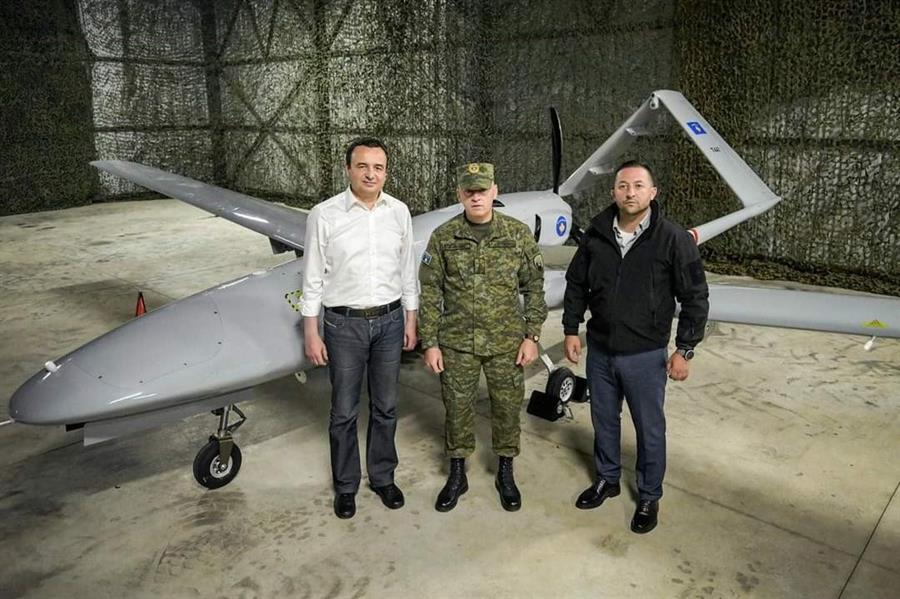
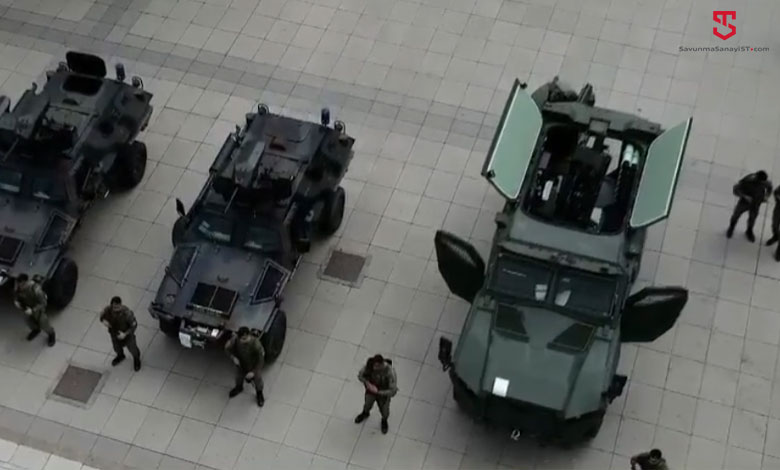
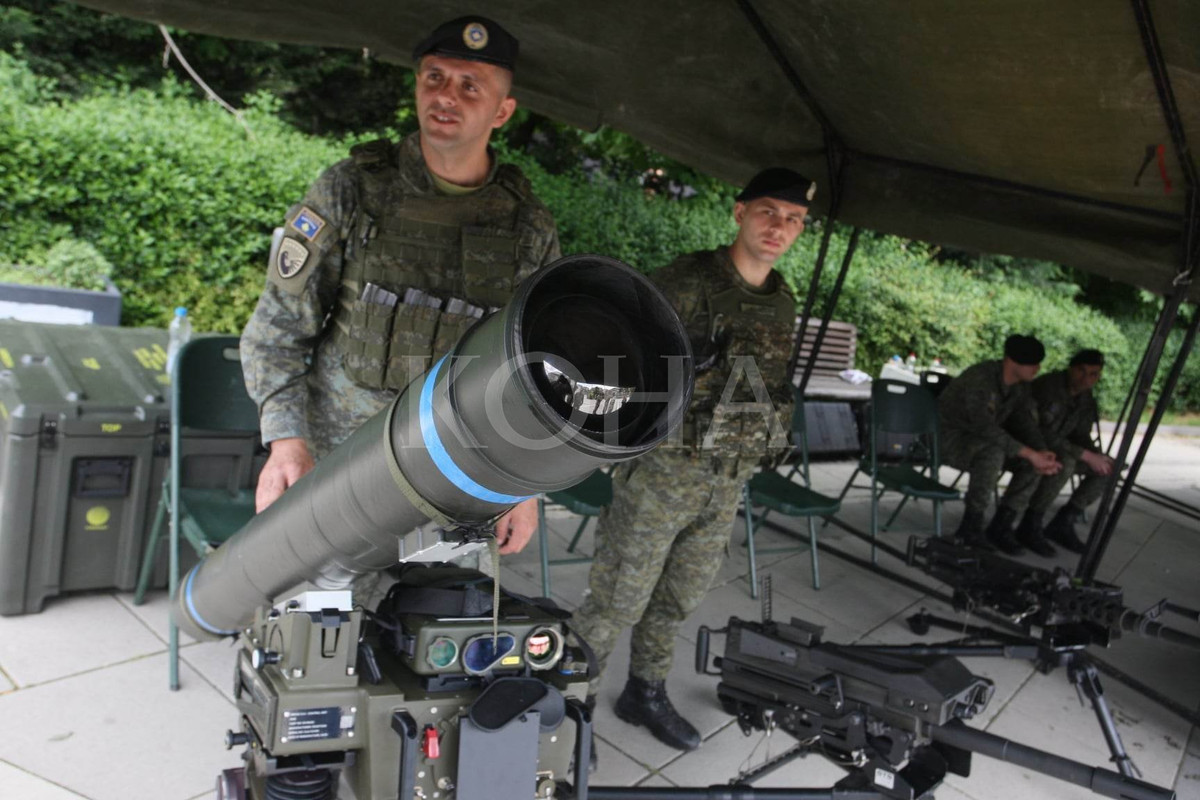
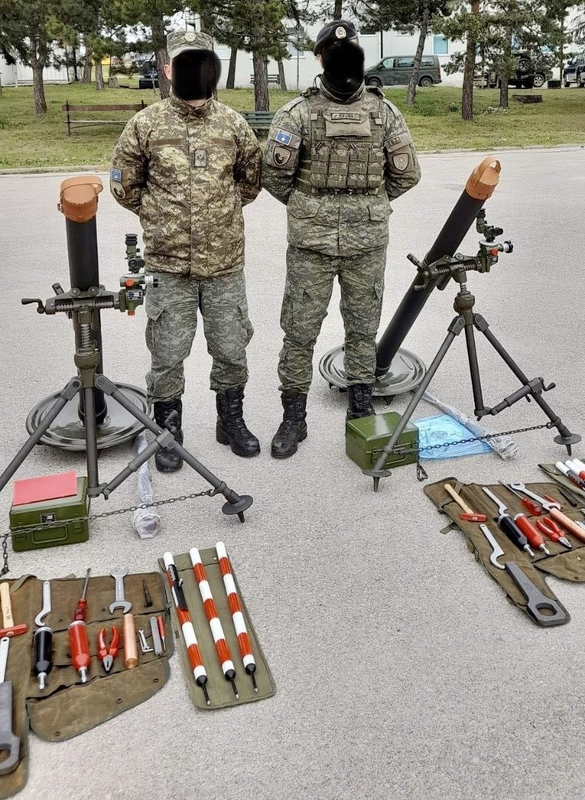
As tensions remain high between Serbia and Kosovo, a steady influx of Turkish weapons systems in Kosovo has added a significant boost to the young nation's defence capabilities. The Serbian government has repeatedly expressed its disapproval of Türkiye's arms deliveries aid to Kosovo, which Serbia still claims as its own territory. Adding insult to Serbia, the Bayraktar TB2 UCAV was denied to them, while Kosovo successfully acquired the system in 2023. [1] [2] Nonetheless, Turkish authorities maintain that their support for Kosovo's defense capabilities is in line with international law and aimed at promoting regional stability. Türkiye has historically maintained close ties with Kosovo, given their shared cultural and historical heritage, making it a natural partner in the latter's military development.
 
This list attempts to list all Turkish weapons systems currently in service with Kosovo's Security Forces. A year in square brackets after the designation refers to its (perceived) date of inception.

(Click on the equipment type to get a picture of them in Kosovar service)
 

Unmanned Combat Aerial Vehicles (UCAVs)


Self-Propelled Mortars (SPMs)


Infantry Mobility Vehicles (IMVs)


Remote Weapons Stations (RWS)


Precision-Guided Munitions

  • Roketsan MAM-C [2023] (For Bayraktar TB2 UCAV)
  • Roketsan MAM-L [2023] (For Bayraktar TB2 UCAV)
 

Anti-Tank Guided Missiles (ATGMs)


Mortars


Anti-Drone Jammers


Small Arms


[1] Serbia Joins ‘Queue’ for Turkish Bayraktar Drones https://www.thedefensepost.com/2022/09/09/serbia-queue-turkish-bayraktar-drones/
 
Recommended Articles:


Haka For Humanity: New Zealand’s Military Aid To Ukraine

6 August 2023 at 15:58

By Stijn Mitzer and Joost Oliemans
 
New Zealand is the country located furthest away from Ukraine to have provided military aid to the war-torn country. Notably, this has included the deployment of personnel to Europe to provide training to Ukrainian soldiers in the operation of L119 Light Guns and infantry combat tactics. So far 440 New Zealand Defence Force (NZDF) personnel have been deployed to Europe in support of Ukraine, with 279 directly involved in the artillery and infantry training being carried out in the United Kingdom. In addition, New Zealand has lent its support by deploying a C-130H Hercules transport aircraft to the UK for a two-month period, facilitating the transportation of personnel and equipment as per NATO's request. Beyond training and logistics assistance, New Zealand has also contributed equipment and financial aid for weapons and ammunition procurement to bolster Ukraine's defence capabilities.
 
The following list attempts to keep track of military aid given to Ukraine by the Government of New Zealand during the Russian invasion of Ukraine. The entries below are sorted by category. Private and corporate donations are not included in this list. This list will be updated as further support is declared.
 

Ammunition

  • United Kingdom A Small Quantity Of 105mm Artillery Rounds For Training Purposes [Summer 2022]
 

Military Gear

  • 473 Helmets [March 2022]
  • 571 Bulletproof Vests And 1066 Body Armour Plates [March 2022]
 

Miscellaneous Items

  • United Kingdom 40 Dial Sights For L119 Light Guns [Summer 2022]
 

Financial Aid

  • 2.75 Million Euro To Purchase Non-Lethal Military Equipment Through NATO [March 2022]
  • 4.1 Million Euro To Buy Weapons And Ammunition Through The UK [April 2022]
  • 2.3 Million Euro To Buy Commercial Satellite Imagery For Ukrainian Intelligence Agencies [April 2022]
  • 3.5 Million Euro To Buy Non-Lethal Military Equipment Through NATO's Trust Fund [June (2.5 Million Euros) and November 2022 (1 Million Euros)]
  • The Deployment Of A C-130H Hercules Transport Aircraft To The UK [April, May and June 2022] 


Training

  • The Deployment Of NZDF Soldiers To Train Ukrainian Troops On L119 Light Guns [Summer 2022]
  • The Deployment Of NZDF Soldiers To Train Ukrainian Troops In Infantry Combat Tactics [August 2022 until June 2024]
  • The Deployment Of Intelligence Analysts [Spring 2022 until July 2023]


Logistics Support

  • The Deployment Of A C-130H Hercules Transport Aircraft To The UK [April, May and June 2022] 
 
Recommended Articles:
 
Arms From Down Under: Australia’s Aid To Ukraine
 

Guardians Of The Pearl: Uganda’s Inventory Of AFVs

6 August 2023 at 13:07

By Stijn Mitzer and Joost Oliemans

Over the past decade, Uganda has quietly embarked on a significant modernisation drive. This ambitious effort has seen the acquisition of Su-30MK2 multi-role fighter aircraft, Mi-28N attack helicopters and T-90S MBTs from Russia. Additionally, the country has invested in advanced weapons systems from Israel, such as 155mm ATMOS SPGs, 120mm SPEAR Mk.2 and CARDOM SPMs, as well as Hermes 900 UAVs. To further supplement its ground forces, Uganda has also obtained Type-85-IIM MBTs and VN2C APCs from China and 240mm 'M-1991 MRLs from North Korea.
 
Uganda's commitment to enhancing its military capabilities goes beyond the acquisition of AFVs; it also focuses on establishing essential infrastructure for their maintenance and modernisation. This dedication is evident through the establishment of an armour repair workshop and the construction of a factory specialising in assembling a diverse array of South African and Emirati armoured vehicle designs. This arguably signifies Uganda's intent to not only meet its own defence requirements but also explore commercial opportunities on the African defence market.
 
In its pursuit of further enhancing its armoured capabilities, Uganda has taken significant strides in establishing an armoured warfare training school. Notably, the training is conducted by Russian instructors. [1] By investing in both equipment, maintenance and training, Uganda seeks to bolster its defense capabilities and develop a proficient armoured force capable of handling diverse operational challenges that can expected in this part of Africa.
 
This list attempts to list all AFV types currently in service with the Uganda People's Defence Force and Police Force. Radars, trucks and jeeps are not included in the list.
 
(Click on the vehicle or equipment type to get a picture of them)

Tanks


Infantry Fighting Vehicles


Armoured Personnel Carriers


Mine-Resistant Ambush Protected (MRAP) Vehicles


Infantry Mobility Vehicles


Engineering Vehicles And Equipment


Towed Artillery


Self-Propelled Artillery


Multiple Rocket Launchers


Towed Anti-Aircraft Guns


Reconnaissance Unmanned Aerial Vehicles (UAVs)

 
[1] Museveni Passes Out 60 Russian-Trained Army Commanders: 'You Don't Choose A Season To Fight' https://chimpreports.com/museveni-passes-out-60-russian-trained-army-commanders-you-dont-choose-a-season-to-fight/
 
Recommended Articles:


Heidi’s Helpers: Liechtenstein’s Aid To Ukraine

By: Oryx
6 August 2023 at 01:21

By Stijn Mitzer and Joost Oliemans
 
In the aftermath of the conflict that has gripped Ukraine since February 2022, Liechtenstein opened its borders and welcomed 437 Ukrainian refugees with open arms (on a population of 38,387). Recognising the urgent need for landmine clearance and safety in Ukraine's conflict-affected areas, Liechtenstein has also provided funding for demining efforts in Ukraine through the Swiss mine clearance organisation 'Fondation Suisse De Déminage' (FSD). [1] Liechtenstein's commitment goes beyond shelter, and its decision to adopt the EU's sanctions package against Russia and Belarus underscores its stance on upholding international norms. This proactive engagement showcases that being a microstate does not limit one's ability to offer meaningful support and make a positive impact on global issues.
 
The following list attempts to keep track of military and humanitarian aid given to Ukraine by the Principality of Liechtenstein during the Russian invasion of Ukraine. The entries below are sorted by category. Private and corporate donations are not included in this list. This list will be updated as further support is declared.
 

Humanitarian Aid

  • 260,000 Euro To The Olena Zelenska Foundation [December 2022]
  • Hundreds Of Thousands Of Euro To The Swiss Mine Clearance Organisation Fondation Suisse De Déminage (FSD) [2023/2024]
  • Hundreds Of Thousands Of Euro To The Liechtenstein Red Cross To Aid Ukrainian Civilians [2022/2023]

Sanctions

  • Adoption Of EU Sanctions Against Russia And Belarus [Since February 2022]

Reception Of Refugees From Ukraine

  • 437 Ukrainian Refugees On A Population Of 38,387 [Since February 2022] 
  
[1] Swiss expertise bolsters humanitarian demining efforts in Ukraine https://www.eda.admin.ch/countries/zambia/en/home/news/news.html/content/eda/en/meta/news/2023/7/17/96707
 
Recommended Articles:


The Dawn Of Deterrence: Listing Romania’s Recent Arms Acquisitions

By: Oryx
5 August 2023 at 18:09


By Stijn Mitzer and Joost Oliemans
 
Romania possesses the second largest military on NATO's eastern flank. Nonetheless, the country's inventory is largely comprised of Soviet-era equipment. In response to the 2014 Russian occupation of Crimea, Romania has undertaken a number of projects to modernise its military capabilities. Among the most important acquisitions to date are 49 F-16 fighter aircraft from Portugal and Norway, 7 Patriot SAM batteries, 54 M142 HIMARS and 54 M1A2 MBTs from the US and 21 Watchkeeper X UCAVs from Israel. Some of these contracts incorporate technology offset clauses, which ensures that Romanian companies play an essential role as subcontractors or component suppliers.
 
The modernisation of the Romanian Armed Forces has faced significant challenges, characterized by prolonged negotations and delayed delivery schedules. Among the crucial acquisitions planned for the Romanian Navy were four corvettes, for which a French-Romanian association headed by Naval Group emerged as the contract winner in 2019. Nevertheless, despite the passage of three years, the agreement between the state and Naval Group remains unsigned. In a bid to overcome these obstacles and diversify its sources of armament, Romania has taken a cue from Poland and is now exploring collaborations with other countries like South Korea. Negotiations are currently underway with South Korea to secure the procurement of various types of advanced weapons systems.

In April 2023, Romanian President Klaus Iohannis announced a significant development for the Romanian Armed Forces, revealing plans for an "accelerated modernisation" phase commencing in 2023. This modernisation phase will be supported by a substantial budget of €6 billion, amounting to 2.5% of Romania's GDP. Notably, this allocation surpasses the 2% threshold mandated by NATO, demonstrating Romania's increasing commitment to bolstering its military capabilities and aligning with the alliance's defence standards.
 
This article attempts to list equipment acquisitions by the Romanian Army, Air Force and Navy. This list focuses on heavy weaponry and doesn't include ATGMs, MANPADS, small arms, command vehicles, engineering equipment, trucks, radars and ammunition. Mid-Life Updates (MLUs) are only included when they contribute to enhancing the weapons system's operational capabilities. This list will be updated as new acquisitions are reported.

Army - Forțele Terestre Române


Tanks (Future Quantity: 326)


Infantry Fighting Vehicles (Future Quantity: ~600)


Assault Amphibious Vehicles (Future Quantity: 21)


Specialist Armoured Vehicles

  • 80 Piranha Vs In Four Configurations (Command, CBRN, Recovery And Ambulance) [Delivery Ongoing]


Infantry Mobility And Tactical Vehicles

  • 129 JLTV M1278 Heavy Guns Carriers [To be delivered in the mid-2020s] (Will replace the HMMWVs used by the Special Forces)
  • Missing flag.png Programme To Acquire 1059 Infantry Mobility Vehicles In Nine Configurations [Planned Acquisition] [Candidates: JLTV and Sherpa]
  • 50+ Polaris DAGOR Tactical Vehicles [To be delivered in the mid-2020s]


Artillery And Multiple Rocket Launchers (Future Quantity: 26 SPMs, ~200 SPGs And 100+ MRLs)


Air Defence Systems (Future Quantity: 3 Batteries And A Significant Number Of Launchers)

  • 3 Patriot SAM Batteries [Delivery Ongoing] (Will supplement 4 Patriot Batteries in service with the Air Force)
  • Missing flag.png Programme To Acquire Short-To-Mid Range SAM Systems [Planned Acquisition] (To replace CA-95s, 9K33 Osas and 2K12 Kubs)


Unmanned Combat Aerial Vehicles (Future Quantity: 18)

  • 18 Bayraktar TB2s [Will be delivered in the mid-to-late 2020s] (Will supplement 21 Watchkeeper X UCAVs in service with the Air Force)
 

Air Force - Forțele Aeriene Române


Fighter Aircraft (Future Quantity: 48)

  • 32 F-16As [Will be delivered from 2023 onwards] (Will supplement 17 F-16As already in service)
  • 48 F-35As [Planned Acquisition] (Will eventually replace the F-16As)


Unmanned Combat Aerial Vehicles (Future Quantity: 21)

  • 21 Watchkeeper Xs [Will be delivered in the mid-to-late 2020s] (Will supplement 18 TB2 UCAVs in service with the Land Forces)


Air Defence Systems (Future Quantity: 4 Patriot Batteries And 8 HAWK Batteries)

  • 4 Patriot SAM Batteries [Delivery Ongoing] (Will supplement 3 Patriot Batteries in service with the Army)

Navy - Forțele Navale Române


Corvettes (Future Quantity: 4)

  • Missing flag.png Programme To Acquire 4 Corvettes [Planned Acquisition]


Missile Boats (Future Quantity: 3)

  • Mid-Life Update Of 3 Project 1241.RE 'Tarantul-I's With Naval Strike Missile AShMs, 3D Radars And A Combat Management System (CMS) [To be completed by the mid-to-late 2020s]


Submarines (Future Quantity: 2)


Minehunters (Future Quantity: ~7)


Coastal Defence Missile Systems (Future Quantity: 2 Batteries)


Helicopters (Future Quantity: 5)


Recommended Articles:
 
A 21st Century Powerhouse: Listing Poland’s Recent Arms Acquisitions
 

Carpathian Camaraderie: Romania’s Military Support For Ukraine

5 August 2023 at 15:14


The following list attempts to keep track of military equipment delivered or pledged to Ukraine by Romania during the Russian invasion of Ukraine. The entries below are sorted by armament category (with a flag denoting the country of origin), and due to the confidential nature of some arms deliveries they can serve only as a lower bound to the total volume delivered. This list is updated as further military support is uncovered.
 
* Purchases by the Ukrainian or EU governments from Romanian defence companies.
 
(Click on the equipment type or vehicle to get a picture)
 

Multiple Rocket Launchers


Towed Artillery


Armoured Personnel Carriers


Small Arms


Ammunition


Military Gear

  • 2000 Helmets [February 2022]
  • 2000 Ballistic Vests [February 2022]
 

Miscellaneous Items


Special thanks to War_Noir and Ukraine Weapons Tracker.
 
Recommended Articles:


Patreon With A Purpose: How Your Donations Have Supported Charitable Causes

20 July 2023 at 18:57

By Stijn Mitzer and Joost Oliemans
 
Damlaya Damlaya Göl Olur - Drop By Drop A Whole Lake Becomes

Since March 2021, we have been incredibly grateful for the generous contributions we received through our Patreon account. In light of the Russian invasion of Ukraine, we made a conscious decision not to accept these funds for ourselves. Instead, we have chosen to redirect all accumulated and incoming funds to various reputable charities that are actively aiding Ukrainian refugees and civilians affected by the conflict. Additionally, we have extended our support to aid those affected by the devastating February 2023 earthquake in Türkiye and Syria.
 
While we are immensely thankful for the support you have shown us, we urge you not to make any further donations to our Patreon account. Instead, we kindly ask that you donate directly to civilian charities that are working on the ground to provide aid, relief, and rehabilitation to those in need. Several kind-hearted individuals have already chosen this route, and we'd like to use this opportunity to thank you again for your generosity.

Transparency is of utmost importance to us, and we want to share with you exactly where the funds have been allocated. Out of the total amount of 8593 euro received for the years 2021, 2022 and 2023, here is a breakdown of where the funds went:

Total Amount Received And Donated: 8593 Euro


Recommended Articles:

List Listing: The Oryx List of Lists
 

No Army, No Problem: Iceland’s Aid To Ukraine

20 July 2023 at 14:53

 
Iceland, unique among NATO member states, maintains no standing military of its own. Throughout the Cold War, the country was host to several debates about whether or not to withdraw from NATO. During the 1970s, Iceland even threatened to leave the alliance as a result of the Second and Third Cod Wars with the UK. But despite its pacifist nature and a prime minister that is known for her opposition to Iceland's NATO membership, the island nation has contributed peacekeepers to several NATO-led missions including in Iraq and Afghanistan and is host to a NATO air base. [1] Possessing no military equipment of its own, Iceland has for the most part concentrated its efforts on providing humanitarian aid to Ukraine. Examples of military aid include chartering cargo aircraft to transport military equipment from NATO member states to Ukraine and the provision of winter gear, EOD equipment and a field hospital. Iceland's contributions in military aid amount to approximately 2.7bn ISK (18.3 million euros). [2] Iceland's economic and humanitarian aid contributions to Ukraine have so far amounted to 3,1bn ISK (21 million euros). [2]

The following list attempts to keep track of military and humanitarian aid given to Ukraine by the Government of Iceland during the Russian invasion of Ukraine. The entries below are sorted by category. Private and corporate donations are not included in this list. This list will be updated as further support is declared.
 
(Click on the equipment type to get a picture of them)
 

Military Aid


Humanitarian Aid

  • 9.38 Million Euro Through UN Agencies And The ICRC [2022/2023]
  • 1.5 Million Euro To The Ukraine Energy Support Fund [2022/2023]
  • 410,000 Euro Through The World Bank's Multi-Donor Trust Funds For Ukraine [2022/2023]
  • 410,000 Euro Worth Of Generators (5) And Transformers (22) [2022/2023]
  • 408,000 Euro Worth Of Food Items And Support For Prosthetics Equipment [2022/2023]
  • 200,000 Euro To NATO’s Trust Fund for Ukraine Professional Development Programme [2022/2023]

Reception Of Refugees From Ukraine

  • Nearly 2.600 Ukrainian Refugees On A Population of 375,318 [Since February 2022] 
 
[1] Iceland’s prime minister: “My opposition to Nato has not changed” https://www.newstatesman.com/encounter/2022/02/katrin-jakobsdottir-my-opposition-to-nato-has-not-changed
 
Recommended Articles:
 

Zeitenwende In Facts And Figures - A List Of German Arms Acquisitions

19 July 2023 at 12:18


By Stijn Mitzer and Joost Oliemans
 
In a special address to the Bundestag on the 27th of February 2022, Chancellor Olaf Scholz referred to the Russian invasion of Ukraine as a Zeitenwende (meaning: turning point) in the history of Europe. In his speech, Scholz reaffirmed Germany's commitment to spending 2% of its GDP on defence in 2024. Additionally, the German government set up a €100 billion fund for immediate investments in its military. Nonetheless, those expecting the return to an army boasting thousands of tanks and hundreds of combat aircraft are likely to find their expectations unfulfilled. Considering the serious weakening of Russia's Armed Forces and the significant military investments made by frontline NATO member states like Poland and Romania, it is debatable whether the acquisition of hundreds of additional tanks would be the best approach to strengthen NATO's deterrence in the first place. Instead, investments into weapons systems that other EU states lack, and bolstering the strength of other NATO member states (and Ukraine) through equipment donations, offer an alternative path for Germany to get the most bang for its euro.

This article attempts to list ongoing equipment acquisitions by the German Army, Air Force and Navy. This list focuses on heavy weaponry and doesn't include ATGMs, MANPADS, radars, mini-UAVs, trucks and ammunition. When deemed appropriate, the future quantity of the equipment category is given. This number includes both future equipment acquisitions as well as equipment already in service. This list is updated as new acquisitions are reported.

Army - Heer


Tanks (Future Quantity: 328)

  • Tyskland 18 Leopard 2A8s [To be delivered between 2026 and 2027] (To supplement 310 Leopard 2A6(Ms)/A7s)
  • Main Ground Combat System (MGCS) Programme [To enter service from the mid-2030s onwards] (To eventually replace the Leopard 2)


Infantry Fighting Vehicles (Future Quantity: ~600)


Armoured Fighting Vehicles


Specialist Armoured Vehicles


Light Strike Vehicles


Artillery And Multiple Rocket Launchers (Future Quantity: 228 SPGs And ~80 MRLs)

  • Tyskland 22(+6 As Option) 155mm PzH 2000s SPGs [To be delivered from 2025 onwards] (To supplement 86 PzH 2000s already in service)
  • Tyskland Mid-Life Update Of 86 PzH 2000s With New Electronics, Climate Control System, Night Vision, Roof Armour And An Improved Munition Loading System [To be completed by 2028/2029]
  • Tyskland Programme To Acquire 120 Wheeled SPGs [Planned Acquisition] [Candidates: RCH-155 and ATI]
  • Tyskland Programme To Acquire New MLRS [Planned Acquisition] [Candidates: Euro PULS and Euro HIMARS] (Will replace 35 MARS II MLRS. To be equipped with 500km-ranged JFS-M GLCMs)


Air Defence Systems (Future Quantity: 30 SPAAGs And 32 SAM Launchers)


Electronic Warfare Systems

  • Missing flag.png Programme To Acquire Long-Range Electronic Warfare Systems [Planned Acquisition]


Armoured Engineering Vehicles


Helicopters


Unmanned Aerial Vehicles

  • Tyskland 45 Luna NG Surveillance UAVs [To be delivered by the mid-2020s] (Will supplement 20 Luna NGs already in service. Will eventually replace the LUNA and KZO)
 

Trains


Air Force - Luftwaffe


Fighter Aircraft (Future Quantity: ~185)

  • 38 Eurofighter Typhoon Tranche 4s [To be delivered in the late 2020s] (Will replace 31 Eurofighter Tranche 1s)
  • 35 F-35As [To be delivered from 2026 onwards] (Will replace 68 Tornado IDS'. Carrier of B61-12 nuclear bombs)
  • Future Combat Air System (FCAS) Programme [To enter service from ~2040 onwards] (To eventually replace the Eurofighter Typhoon)


SEAD Aircraft (Future Quantity: 15)


Unmanned Combat Aerial Vehicles (Future Quantity: 21)

  • 5 Heron TPs [Conversion Ongoing] (Based in Israel)
  • 21 Eurodrones [To be delivered from the early 2030s onwards] (To replace the 5 Heron TPs)


Signal Intelligence (SIGINT) And ISR Aircraft (Future Quantity: 3)


Transport And Tanker Aircraft (Future Quantity: 50 (Excluding VIP Aircraft))


Transport Helicopters (Future Quantity: 75)


Reconnaissance Satellites (Future Quantity: 3)


Air Defence Systems (Future Quantity: 1 Arrow 3 ABM System, 11 Patriot Batteries, 6 IRIS-T SLM Systems)


Navy - Deutsche Marine


 Frigates (Future Quantity: 15)


Corvettes (Future Quantity: 6)


Small Arsenal Ships (Future Quantity: Up To 18)


Attack Submarines (Future Quantity: 6 To 9)


Large Unmanned Underwater Vehicles (Future Quantity: Up To 6)


Signal And Electronic Intelligence Ships (Future Quantity: 3)

  • 3 Type 424-Class' [Will be delivered from 2027 onwards] (Will replace 3 Oste-class SIGINT/ELINT ships)

Combat Support Ships (Future Quantity: 12)


Minehunters (Quantity: Up To 12)

  • 6 Programme To Acquire Up To 12 Minehunters [To be delivered from the late 2020s onwards] (Will replace 2 Ensdorf-class and 10 Frankenthal-class minehunters. Will be equipped with unmanned USVs for mine-clearing)

Fast Assault Craft (Future Quantity: 15)

  • Missing flag.png Programme To Acquire 15 Fast Assault Craft [Planned Acquisition] [Candidates: CB90 and Watercat M18 AMC]
 

Maritime Patrol And Reconnaissance Aircraft (Future Quantity: 8)


Unmanned Maritime Patrol And Reconnaissance Aircraft (Future Quantity: 6)


Helicopters (Future Quantity: 49)

  • European Union 31 NHI NH90 Sea Tigers [To be delivered from 2025 onwards] (Will replace 21 Westland Lynx Mk.88s)
 

Unmanned Helicopters


Recommended Articles:
 
A 21st Century Powerhouse: Listing Poland’s Recent Arms Acquisitions
 

A Cuppa For Conquest: UK Military Aid To Ukraine

14 July 2023 at 18:31

 
Since February 2022, the United Kingdom has committed over £4.6 billion in military assistance to Ukraine. [1] The following list attempts to keep track of military equipment delivered or pledged to Ukraine by the United Kingdom during the Russian invasion of Ukraine. The entries below are sorted by armament category (with a flag denoting the country of origin), and due to the confidential nature of the UK's arms deliveries they can serve only as a lower bound to the total volume delivered. Private purchases from British defence companies are not included in this list. This list is updated as further military support is uncovered.
 
(Click on the vehicle or equipment type to get a picture of them)
 

Air-Launched Cruise Missiles

  • United Kingdom Storm Shadows [Before May 2023] (Employed by Su-24 strike aircraft)
 

Surface-To-Surface Missiles (600+ Missiles And Several Dozen Launchers)


Anti-Ship Missiles


Helicopters (3)


Surface-To-Air Missile (SAM) Systems (3+ Launchers)


Anti-Aircraft Guns (125)

  • Missing flag.png 125 Anti-Aircraft Guns [2022/2023]
 

Multiple Rocket Launchers (14)


Self-Propelled Artillery (52)


Towed Artillery (54)


Tanks (14)


Armoured (Fighting) Vehicles (70)


Armoured Personnel Carriers (220+)


Mine-Resistant Ambush Protected (MRAP) Vehicles


Infantry Mobility Vehicles


Vehicles (133)


Engineering Vehicles And Equipment


Man-Portable Air Defence Systems (MANPADS)


Anti-Tank Guided Missiles (ATGMs)

  • 5.361+ NLAWs [Delivered from February 2022 onwards]
  • 200 FGM-148 Javelins [Delivered from February 2022 onwards]

Loitering Munitions

  • Missing flag.png Hundreds Of '' 200km-Ranged Loitering Munitions'' [2022/2023]


Reconnaissance Unmanned Aerial Vehicles

  • 850+ Black Hornets [Before November 2022] (In cooperation with Norway)
  • Missing flag.png Hundreds Of ''Unmanned Aerial Vehicles'' [Early 2023]

Cargo Drones


Electronic Warfare Equipment

  • Missing flag.png ''Electronic Warfare Equipment'' [May or June 2022]
  • Missing flag.png ''GPS Jamming Equipment'' [May or June 2022]
  • Missing flag.png Anti-Drone Electronic Warfare Equipment [Early 2023]

Radars


Ammunition

  • Missing flag.png 3 Million Small Arms Rounds [2022/2023]
  • Missing flag.png 300.000+ 122mm, 152mm And 155mm Artillery Rounds And 122mm Rockets [2022/2023]
  • United Kingdom Thousands 120mm HESH And DU Rounds For Challenger 2 [2023]
  • Missing flag.png Ammunition for Anti-Aircraft Guns [2022/2023]
  • Missing flag.png 4.5 Tonnes Of Plastic Explosives [2022/2023]
  • A Significant Number Of Precision-Guided M31A1 GMLRS Rockets [Delivered from 2022 onwards] (For M270B1 and HIMARS)
  • 2.600 L1A1 Anti-Structure Munitions (ASMs) [April 2022]
  • Hundreds Of AMRAAM Missiles [October and November 2022] (For NASAMS and Supacat HMT-based launchers)

Military Gear

  • United Kingdom 84.000 Helmets [2022]
  • United Kingdom 8.450 Sets Of Body Armour [2022]
  • United Kingdom 25.000 Sets Of Extreme Cold Weather Clothing [2022]
  • United Kingdom Combat Boots [2022]
  • United Kingdom 5000 Night-Vision Devices [2022]


Miscellaneous Equipment

  • Missing flag.png Equipment And Spares To Refurbish Up To 100 Soviet-Era Tanks And Infantry Fighting Vehicles [2023]
  • United Kingdom Rangefinders [2022]
  • United Kingdom 20.000 Sleeping Bags [2022]
  • United Kingdom 150 Insulated Heated Tents [2022]
  • United Kingdom Medical Supplies [2022]
  • United Kingdom Mine Detection Equipment [2022/2023]
 
[1] Military assistance to Ukraine since the Russian invasion https://commonslibrary.parliament.uk/research-briefings/cbp-9477/
 
Recommended Articles:
 
Arms For Ukraine: French Weapons Deliveries To Kyiv

The Mercedes Touch: Albanian Military Support To Ukraine

13 July 2023 at 11:57


The following list attempts to keep track of military equipment delivered or pledged to Ukraine by Albania during the Russian invasion of Ukraine. The entries below are sorted by armament category (with a flag denoting the country of origin), and due to the confidential nature of Albania's arms deliveries they can serve only as a lower bound to the total volume delivered. This list is updated as further military support is uncovered.
 
(Click on the equipment type or vehicle to get a picture)
 

Mine-Resistant Ambush Protected (MRAP) Vehicles (22)


Military Ambulances (2)


Ammunition


Recommended Articles:
 

Czeching Off the Shopping List: An Overview Of Czech Army Acquistions

11 July 2023 at 12:45

By Stijn Mitzer and Joost Oliemans
 
The Czech Army is set to undergo a major transformation that will eventually see the replacement of most remaining Cold War-era equipment in favour of modern Western types. Planned to include military hardware such as 73 Leopard 2A8 MBTs, 246 CV90 MkIVs, 62 Caesar 8x8 SPGs, 4 SPYDER SAM batteries, 10 AH-1Z attack helicopters and up to 24 F-35 stealth fighter aircraft, the Czech Republic as a result will be in possession of a highly capable and well-equipped military. The desired end state will be achieved in two steps, as part of Milestone 2025 and Milestone 2030. [1]

With population of just under eleven million, the Czech Armed Forces are comparatively small. Being a landlocked country and with no large rivers flowing through it, Czechia does not possess a navy. As part of the Czech Armed Forces Development Concept 2030, the future core fighting element of the Czech Land Forces will consist of two mechanised brigades: 7th Heavy Mechanised Brigade, 4th Medium Mechanised Brigade, an airborne regiment: 43rd Airborne Regiment, an artillery regiment: 13th Artillery Regiment and a reserve force of some 10.000 reservists.
 
The capabilities of the mechanised brigades could potentially be expanded through the acquisition of multiple rocket launchers, a capability that has been sorely lacking since the retirement of the last RM-70s in 2011. A wider introduction of ATGMs and reconnaissance UAVs would also be a logical step based on lessons learned in Russo-Ukrainian War. Future acquisitions by Czech Air Force could include stand-off weapons such as the AGM-158B ALCM and the AGM-88G ARM and a commitment to additional flight hours in the NATO Tanker Transport Fleet programme.

This article attempts to list (future) equipment acquisitions by the Czech Army and Air Force. This list focuses on heavy weapons systems and doesn't include ATGMs, MANPADS, trucks, radars and ammunition. When deemed appropriate, the future quantity of the equipment category is given. This number includes both future equipment acquisitions as well as equipment already in service. This list will be updated as new acquisitions are reported.

Army - Pozemní Síly


Tanks (Future Quantity: 58+)

  • Tyskland 58+ Leopard 2A8s [Planned Acquision] (To replace 30 T-72M4CZs)

Infantry Fighting Vehicles (Future Quantity: 339)

  • 172 CV90 MkIVs [Between 2026 and 2030] (Will replace ~120 BVP-2s)
  • 68 KBVP Pandur IIs [Planned Acquisition] (Will supplement 99 Pandur II IFVs already in service)

Specialist Armoured Vehicles


Light Strike Vehicles

  • 24 Jackal HMT 400s [2024]
  • Missing flag.png Programme To Acquire 150 Light Assault Vehicles [Planned Acquistion] (Will replace the Land Rover Defender LSVs)
 

Artillery (Future Quantity: 62 SPGs And 8+ SPMs)

  • 62 155mm CAESAR 8x8 Self-Propelled Guns [Between 2024 and 2026] (Will replace 53 152mm SpGH DANA SPGs)
  • Missing flag.png Programme For Self-Propelled Mortars [Planned Acquistion] (Will replace 8 120mm SPM-85 PRAM-S')

Electronic Warfare Systems (Future Quantity: 8)

  • 8 STARKOMs [Delivery scheduled for completion in 2023]

Unmanned Aerial Vehicles

  • Missing flag.png Programme To Acquire 200 Small Surveillance UAVs [To enter service from the mid-2020s onwards] (Will supplement a range of U.S. models already in service)
 

Air Force - Vzdušné Síly


Fighter Aircraft (Future Quantity: 48)

  • 24 F-35As [To be delivered in the mid-to-late 2020s] (Will replace 14 JAS-39 Gripens)
 

Jet Trainers (Future Quantity: 4+)

  • 4(+4 As Option) Aero L-39NGs [2026] (Will replace 6 L-39Cs)

Transport Aircraft (Future Quantity: ~2)


Unmanned Aerial Vehicles

  • Missing flag.png Programme To Acquire Medium-Altitude Long-Endurance Surveillance UAVs [Planned Acquisition]


Attack Helicopters (Future Quantity: 10)

  • 10 AH-1Z Vipers [Delivery Ongoing] (Will replace the retired Mi-24V fleet)

Transport And Utility Helicopters (Future Quantity: 35)

  • 10 UH-1Y Venoms [Delivery Ongoing] (Will replace a portion of the Mi-8/17 fleet)


Reconnaissance Balloons (Future Quantity: 1 Or 2)

  • 1 Or 2 STRATOMs [Will be delivered from 2023 onwards]

Reconnaissance Satellite (Future Quantity: 1)

  • 1 GOLEM [Will be launched in 2024]
 

Air Defence Systems (Future Quantity: 4 Batteries)

 
[1] The Czech Armed Forces Development Concept 2030 https://www.army.cz/images/id_8001_9000/8503/CAFDC.PDF
 
Recommended Articles:
 
A 21st Century Powerhouse: Listing Poland’s Recent Arms Acquisitions
For Queen & NATO: Listing Denmark’s Recent Weapons Purchases

Chef’s Special - Documenting Equipment Losses During The 2023 Wagner Group Mutiny

24 June 2023 at 13:47


This list only includes captured and destroyed vehicles and equipment of which photo or videographic evidence is available. Therefore, the amount of equipment captured and destroyed is likely significantly higher than recorded here. Losses claims by fighterbomber, a Telegram channel operated by a Russian Air Force pilot, are also considered as sufficient evidence of Russian aerial losses. Aircraft and helicopters captured by Wagner at Rostov-on-Don North are currently not included in this list. Civilian vehicles and derelict equipment are not included in this list.
 
(Click on the numbers to get a picture of each individual destroyed vehicle)


Russian Government Forces (9, of which destroyed: 6, damaged: 1, captured: 2)


Aircraft (1, of which destroyed: 1)


Helicopters (6, of which destroyed: 5, damaged: 1)


Mine-Resistant Ambush Protected (MRAP) Vehicles (1, of which captured: 1)


Infantry Mobility Vehicles (1, of which captured: 1)


Wagner Group (5, of which destroyed: 5)


Infantry Mobility Vehicles (1, of which destroyed: 1)


Technicals (2, of which destroyed: 2)


Vehicles (2, of which destroyed: 2)


Special thanks to Neil Hauer for suggesting today's title.


The End Of A Journey

21 June 2023 at 11:27
 
Dear all,

I would hereby like to inform you that I will be ending Oryx on October 1st. I originally started Oryx Blog 10 years ago to cure my boredom. Little did I know Oryx would escalate into the all-consuming project it is today. All of us work on the articles and lists in our free time. It's not our job. We don't get paid. Though I hoped our work would one day lead to a job, no such thing occurred. Oryx just doesn't make me happy anymore, and continuing with it prevents me from finding a happier place in life.
 
Best,


Arms From The Adriatic: Croatia’s Military Support For Ukraine

16 June 2023 at 11:55
 

The following list attempts to keep track of military equipment delivered or pledged to Ukraine by Croatia during the Russian invasion of Ukraine. The entries below are sorted by armament category (with a flag denoting the country of origin), and due to the confidential nature of some arms deliveries they can serve only as a lower bound to the total volume delivered. This list is updated as further military support is uncovered.
 
(Click on the equipment type or vehicle to get a picture)
 

Helicopters (14)


Multiple Rocket Launchers


Towed Artillery (40+)


MANPADS

  • Up To Six Shipments Of Strela-2s And Igla-1s [Since February or March 2022]


Anti-Tank Weaponry

  • Missing flag.png ''Anti-Tank Rockets'' [2022]


Small Arms


Ammunition

  • Tens Of Millions Of Small Arms Rounds [Since February 2022]
  • Thousands Of Grenades [2022]
 

Military Gear

  • Missing flag.png Helmets [February 2022]
  • Missing flag.png Ballistic Vests [February 2022]
  • Missing flag.png Uniforms [February 2022]

Recommended Articles:
 
Answering The Call: Heavy Weaponry Supplied To Ukraine
 

Small Country, Great Deeds: North Macedonia’s Military Aid To Ukraine

15 June 2023 at 12:51

The following list attempts to keep track of military equipment delivered or pledged to Ukraine by North Macedonia during the Russian invasion of Ukraine. The entries below are sorted by armament category (with a flag denoting the country of origin). Due to the confidential nature of North Macedonia's arms deliveries they can serve only as a lower bound to the total volume of weaponry delivered. This list will be updated as further military support is uncovered.
 
(Click on the vehicle or equipment type to get a picture of them)
 

(Jet) Aircraft (4)


Attack Helicopters (12)

  • 10 Mi-24Vs [To be delivered] (Several to be used as a source of spare parts)
  • 2 Mi-24Ks [To be delivered] (Likely to be used as a source of spare parts)
 

Tanks (31)

  • 31 T-72As [July or August 2022]

Artillery

  • Missing flag.png ''Artillery'' [2022]


Anti-Aircraft Weaponry

  • Missing flag.png ''Anti-Aircraft Weapons Systems'' [2022]


Air-To-Air Missiles

  • R-60MK Short-Range AAMs (For Su-25) [August 2022]


Air-To-Ground Weaponry

  • UB-32 Rocket Pods (For Su-25, Mi-8/17 and Mi-24) [August 2022]
  • B-8 Rocket Pods (For Su-25, Mi-8/17 and Mi-24) [August 2022]
  • S-13 Rocket Pods (For Su-25, Mi-8/17 and Mi-24) [August 2022]
  • SPPU-22-1 Gun Pods (For Su-25) [August 2022]
  • Aviation Bombs (FAB-100/250 and OFAB-250) (For Su-25) [August 2022]

Anti-Tank Weaponry


Small Arms


Ammunition

  • 57mm S-5 Rockets For UB-32 Rocket Pods (For Su-25, Mi-8/17 and Mi-24) [August 2022]
  • 80mm S-8 Rockets For B-8 Rocket Pods (For Su-25, Mi-8/17 and Mi-24) [August 2022]
  • 122mm S-13 Rockets For B-13 Rocket Pods (For Su-25, Mi-8/17 and Mi-24) [August 2022]
  • 240mm S-24 Rockets (For Su-25, Mi-8/17 and Mi-24) [August 2022]
  • 30mm Ammunition (For Su-25) [August 2022]
  • 125mm Rounds (For T-72 MBT) [July or August 2022]
  • Missing flag.png Small Arms Ammunition [Before March 2023]


Miscellaneous Equipment

  • Su-25 Spare Parts And Support Equipment [August 2022]
  • Mi-24 Spare Parts And Support Equipment [To be delivered]
  • T-72 Spare Parts And Support Equipment [July or August 2022]


Recommended Articles:
 
Mighty Montenegro: Montenegrin Arms Supplies To Ukraine 
 

Silent Solidarity: Slovenia’s Weapons Supplies To Ukraine

14 June 2023 at 10:39


The following list attempts to keep track of military equipment delivered or pledged to Ukraine by Slovenia during the Russian invasion of Ukraine. The entries below are sorted by armament category (with a flag denoting the country of origin), and due to the confidential nature of some arms deliveries they can serve only as a lower bound to the total volume delivered. This list is updated as further military support is uncovered.
 
* Deliveries from Slovenian stocks through the German Ringtausch programme
 
(Click on the equipment type or vehicle to get a picture)
 

Tanks (28)


Infantry Fighting Vehicles (35)


Armoured Personnel Carriers (20)


Infantry Mobility Vehicles (20)


Towed Artillery (16)


Anti-Aircraft Guns (200)


Anti-Tank Weaponry

  • Missing flag.png 8000 Anti-Tank Mines [Early 2022]
 

Small Arms


Ammunition

  • Small Arms Ammunition (For Zastava M70 Rifles) [February 2022]


Military Gear

  • Missing flag.png Helmets [February 2022]


Miscellaneous Equipment

  • Fuel [2022 and 2023]
 
Recommended Articles:
 
Guns Not Gnocchi: Italian Military Aid To Ukraine
Answering The Call: Heavy Weaponry Supplied To Ukraine
 

Death From Above: Documenting Equipment Losses During The Battle Of Conoco Fields

By: Oryx
14 June 2023 at 00:44

 
The Battle of Conoco Fields, also known as the Battle of Khasham, was one of the rare occasions U.S. and Russian (mercenary) forces went toe to toe. The battle began as a force of some 500 Syrian and Russian Wagner PMC fighters supported by armour and artillery launched an assault on a joint SDF/U.S. special forces base at the Conoco gas plant located near the city of Deir ez-Zor. As the Wagner-led force pushed their advance, U.S. forces responded with a series of air and ground strikes. U.S. forces were reportedly in constant contact with a Russian liaison officer posted in Deir ez-Zor throughout the engagement, and only opened fire after they had received assurances that no regular Russian forces were present. [1] The engagement lasted well over three hours, leaving up to 100 pro-government forces dead, including around a dozen Wagner fighters, with no U.S./SDF losses in return. In May 2023, Wagner chief Yevgeny Prigozhin detailed his version of events of what occured during the battle, which certainly makes for an interesting insight into ''the first deadly clash between citizens of Russia and the United States since the Cold War". [2]

A list of the destroyed vehicles can be seen below. This list only includes destroyed vehicles and equipment of which photo or videographic evidence is available. Therefore, the amount of equipment destroyed is significantly higher than recorded here.
 

(Click on the numbers to get a picture of each individual destroyed vehicle)


Wagner / Syrian Government Forces (11, of which destroyed: 11)


Tanks (3, of which destroyed: 3)


Armoured Fighting Vehicles (2, of which destroyed: 2)


Gun Trucks (1, of which destroyed: 1)


Towed Artillery (1, of which destroyed: 1)


Vehicles (4, of which destroyed: 4)


United States / Syrian Democratic Forces (0, of which destroyed: 0)


[1] Имена и фамилии погибших бойцов "ЧВК Вагнера" https://www.svoboda.org/a/29038004.html
 

Straight Outta Riga: Latvia’s Military Support For Ukraine

By: Oryx
10 June 2023 at 11:38

By Stijn Mitzer and Joost Oliemans
 
The following list attempts to keep track of military equipment delivered or pledged to Ukraine by Latvia shortly before and during the Russian invasion of Ukraine. The entries below are sorted by armament category (with a flag denoting the country of origin). Due to the confidential nature of Latvia's arms deliveries they can serve only as a lower bound to the total volume of weaponry delivered. This list will be updated as further military support is uncovered or declared.
 
** Donated by Latvians and Latvian companies to the Armed Forces of Ukraine.
 
(Click on the vehicle or equipment type to get a picture of them)
 

Transport And Utility Helicopters (6)

  • 2 Mi-2s [August 2022]
  • 4 Mi-8/17s [Two delivered in August 2022 and one in August 2023 One more pledged]


Reconnaissance Unmanned Aerial Vehicles

  • Missing flag.png 90 (Small) ''Unmanned Aerial Vehicles''** [March 2022]
  • 45+ (Small) AtlasPros'** [May 2022]
  • Missing flag.png Dozens of ''Unmanned Aerial Vehicles'' [After January 2023]


Self-Propelled Artillery (6)


Vehicles


Man-Portable Air Defence Systems (MANPADS)


Small Arms

  • Missing flag.png Machine Guns [Spring 2023]


Ammunition

  • Missing flag.png Small Arms Ammunition [Spring 2023]

Military Gear

  • Missing flag.png Helmets [Since February 2022]
  • Body Armour [Before May 2022]


Miscellaneous Equipment


Defending Ukraine - Listing Russian Military Equipment Destroyed By Bayraktar TB2s

By: Oryx
25 March 2023 at 18:10

By Stijn Mitzer in collaboration with Kemal, Dan and Jakub Janovsky
 
A list of Russian targets confirmed to have been destroyed or neutralised by Bayraktar TB2s over Ukraine can be viewed below. This list only includes destroyed vehicles and equipment of which photo or videographic evidence is available. In some cases this solely consists of footage that was recorded on the ground. In these cases, the use of an armed drone was reported by witnesses on the ground. In an effort to attract as little attention to its operations as possible, very little footage of TB2 strikes over Ukraine has been released. Therefore, the amount of equipment destroyed by TB2s is likely significantly higher than recorded here. Hits on strategic targets of which no footage is available (such as fuel depots struck in Russia) are not included in this list. The list will be updated as additional footage becomes available.  
 
(Click on the numbers to get a picture of each individual captured or destroyed vehicle)

Tanks (5)


Armoured Fighting Vehicles (8)


Towed Artillery (6)


Self-Propelled Artillery (1)

  • 1 152mm 2S3(M) Akatsiya: (1)
 

Multiple Rocket Launchers (2)

  • 1 122mm 2B17 Tornado-G: (1)
  • 1 220mm BM-27 'Uragan': (1)

Anti-Aircraft Guns (2)


Surface-To-Air Missile Systems (15)


Helicopters (10)


Naval Ships (6)


Logistics Trains (2)


Trucks, Vehicles and Jeeps (28)


Command Post (3)


Jammers, Deception And Communications systems (2)

  • 1 R-330ZH Zhitel: (1)
  • 1 Communications station: (1)

Miscellaneous (5)


Recommended Articles:


Leopards From Lisbon: Portuguese Arms Supplies To Ukraine

9 June 2023 at 13:19

By Stijn Mitzer and Joost Oliemans
 
The following list attempts to keep track of military equipment delivered or pledged to Ukraine by Portugal during the 2022 Russian invasion of Ukraine. The entries below are sorted by armament category (with a flag denoting the country of origin). Due to the confidential nature of Portugal's arms deliveries they can serve only as a lower bound to the total volume of weaponry delivered. This list will be updated as further military support is uncovered or declared.
 
* Purchases by NATO Ukraine from Portugese defence companies on behalf of Ukraine.
 
(Click on the vehicle or equipment type to get a picture of them)
 

Transport And Utility Helicopters (6)


Tanks (3)


Armoured Personnel Carriers (52)

  • 45 M113s and 7 M577s [Delivered from July 2022 onwards]

Infantry Mobility Vehicles (4)


Towed Artillery (9)


Reconnaissance Unmanned Aerial Vehicles (6+)


Small Arms


Ammunition

  • Missing flag.png 7.62mm Rounds For Small Arms [Early 2022]
  • Missing flag.png 60mm Mortar Rounds [Early 2022]
  • Missing flag.png 2000+ 120mm Mortar Rounds [Early 2022 and Early 2023]
  • Missing flag.png 105mm Rounds For Towed Artillery [To be delivered]

Military Gear

  • Helmets (By AuxDefense) [Early 2022]
  • Bulletproof Vests (By AuxDefense) [Early 2022]
  • Missing flag.png Night Vision Devices [Early 2022]


Miscellaneous Equipment

  • Medical Supplies (Including 16 Ambulances) [2022 and 2023]
  • Communications Equipment (Including Radios And Analogue Repeaters) [February and July 2022]
  • Missing flag.png Thousands Of Sleeping Bags And Thermal Blankets [2022/2023]
  • 20+ (GRUPEL) Electric Generators [Early 2023]
  • Missing flag.png 800 Heaters By The GALP And PRIO Petrol Companies [2022/2023]
 

Tallinn’s Tally: Estonia’s Weapons Supplies To Ukraine

8 June 2023 at 12:56

By Stijn Mitzer and Joost Oliemans
 
The following list attempts to keep track of military equipment delivered or pledged to Ukraine by Estonia during the 2022 Russian invasion of Ukraine. The entries below are sorted by armament category (with a flag denoting the country of origin). Due to the confidential nature of Estonia's arms deliveries they can serve only as a lower bound to the total volume of weaponry delivered. Estonia has provided nearly €400 million, or more than 1% of its GDP, worth of military assistance to Ukraine. [1] Estonia has been reimbursed €156 million by the European Union for the delivery of these arms. [1] This list will be updated as further military support is uncovered or declared.
 
* Purchases from Estonian defence companies.
 
(Click on the vehicle or equipment type to get a picture of them)
 

Patrol Boats

  • Missing flag.png ''Patrol Boats'' [To be delivered]


Towed Artillery (60)


Heavy Mortars

  • Missing flag.png 120mm Heavy Mortars [2022/2023]
 

Reconnaissance Unmanned Aerial Vehicles


Mine-Resistant Ambush Protected (MRAP) Vehicles (7)


Engineering Equipment And Vehicles (1)


Vehicles (13)


Anti-Tank Guided Missiles


Anti-Tank Weaponry


Small Arms

  • Up To 35.000 M14 Battle Rifles [Spring 2022]
  • Missing flag.png Sniper Rifles [Before June 2022]
  • Missing flag.png Pistols [Early 2023]
  • Missing flag.png Grenade Launchers [To be delivered]


Ammunition

  • Thousands Of 122mm Artillery Rounds [Spring 2022]
  • Missing flag.png Thousands Of 155mm Artillery Rounds [Spring 2022]
  • Missing flag.png Tens Of Millions Of Small Arms Rounds [Delivered from March 2022 onwards]

Military Gear

  • Missing flag.png Helmets [March 2022]
  • Flak Jackets [March 2022]
  • 10.000 Winter Uniforms (Including Jackets, Trousers, Shirts, Socks And Boots) [2022/2023]
  • Thousands Of Camouflage Suits [2022/2023] 


Miscellaneous Equipment

  • 2 Saunas [December 2022 and March 2023]
  • Missing flag.png 3 Field Hospitals [2022 and 2023] (In cooperation with Germany, Norway and the Netherlands)
  • Medical Supplies [2022 and 2023]
  • 50.000 Meal, Ready-to-Eat (MREs) [March 2022]
  • Missing flag.png Weapons Sights [After February 2023]
  • Missing flag.png Thermal Cameras [After February 2023]
  • Missing flag.png Binoculars [After February 2023]
  • Communications Equipment [2022/2023]
  • Generators And Chargers [February 2023] 
 

For Queen & NATO: Listing Denmark’s Recent Weapons Purchases

By: Oryx
7 June 2023 at 21:20

By Stijn Mitzer and Joost Oliemans
 
Much attention has been devoted to Poland's defence spending boost (not the least through our dedicated article) that is set to provide the country the largest army in the European Union. [1] Other NATO members are making an attempt to follow suit, with Romania currently embarking on a smaller but similarly ambitious rearmament programme. The combined efforts of these countries will ultimately see the acquisition of thousands of MBTs and infantry fighting vehicles (IFVs) and more than a thousand self-propelled guns (SPGs) and multiple rocket launchers (MRLs). Considering these impressive numbers, it is perhaps easy to forget the efforts of smaller nations like Denmark, the Baltic States and the Netherlands at significantly modernising and expanding the capabilities of their armed forces.

Denmark in particular has sought to expedite the process with which it acquires military equipment, accelerating to a pace previously unthinkable for defence projects in Europe. Though the number of weapons systems acquired is anything but spectacular – especially compared to countries like Poland – they remain vital for the security of NATO in their own right. Several of these acquisitions introduce new capabilities entirely, while others make up for capabilities lost since the conclusion of the Cold War. For Denmark, this has included its submarine service (2004), MRLs (2004), SAM systems (2005) and tactical unmanned aerial vehicles (2006). In order to pay for the new acquisitions, Denmark has significantly increased its defence budget and even abolished a public holiday to boost military spending. [2] [3]

In service of a population of just under six million, the Danish Armed Forces are comparatively small. As a seagoing nation that also bears the responsibility for the defence of the Faroes and Greenland (both autonomous countries within the Kingdom of Denmark), Denmark does operate a sizeable navy consisting of five frigates and eight offshore patrol vessels (OPVs). In contrast, the future fighter composition of the Danish Air Force is to consist of only 27 F-35 fighter aircraft. The Danish Army fields one mechanised brigade of 4.000+ troops that can be deployed in the framework of NATO on short notice. This force can be strengthened with a supplementary force of up to 4.000 troops. Furthermore, up to 20.000 troops can be mobilised in the form of conscripts and Home Guard volunteers should the need ever arise. [4]
 
While the commitment of one mechanised brigade (at least in the initial stages of a conflict) might not seem much, the Danish Army's 1st Brigade is notably more fleshed out than similar formations around Europe. Rather than increasing the size of its standing forces, Denmark has recently opted to increase the strength of the 1st Brigade through the acquisition of Israeli-made PULS MRLs, ground-based air defence systems and electronic warfare systems. These systems will supplement a force consisting of 44 Leopard 2A7DK MBTs, 44 CV9035DK IFVs, 300+ Piranha V APCs and 19 ATMOS 2000 SPGs (which were purchased in 2023 to replace the 19 Caesar 8x8 SPGs donated to Ukraine). When not fully deployed, the brigade's units can also be deployed individually to enhance the firepower of other NATO armies.
 
Future acquisitions by Denmark could include additional F-35s along with stand-off weapons such as the AGM-158B JASSM-ER ALCM and the AGM-88G AARGM-ER ARM. The armament suite of the Iver Huitfeldt-class frigates could potentially be expanded through the acquisition of BGM-109 Tomahawk cruise missiles. This would mirror efforts made by the Netherlands to significantly increase the capabilities of already existing weapons systems by acquiring new armament types for them. A case could also be made for the acquisition of (additional) precision-guided munitions for Denmark's ATMOS SPGs and PULS MRLs. Especially the latter system would benefit from the full range of long-range precision guided rockets compatible with it. [5] Whatever future steps will be taken to further strengthen Denmark's defence capabilities, it is certain that the Kingdom is determined not to shirk its responsibilities as a NATO member.

This article attempts to list (future) equipment acquisitions by the Danish Army, Navy and Air Force. This list focuses on heavy weapons systems and doesn't include ATGMs, MANPADS, trucks, radars and (non-naval) ammunition. When deemed appropriate, the future quantity of the equipment category is given. This number includes both future equipment acquisitions as well as equipment already in service. This list will be updated as new acquisitions are reported.

Army - Hæren


Infantry Fighting Vehicles (Future Quantity: 44)

  • Upgrade Of 44 CV90s With New Sighting And Weapons Systems [To be upgraded in the mid-2020s]


Armoured Personnel Carriers (Future Quantity: 330+)

  • Switzerland 330+ Piranha Vs (In different configurations. Can be armed with Spike-LR2 ATGMs) [Deliveries to be completed in 2023]

Artillery And Multiple Rocket Launchers (Future Quantity: 19 SPGs, 8 MRLs And 15 SPMs)


Air Defence Systems


Armoured Engineering Vehicles


Unmanned Aerial Vehicles

  • Missing flag.png Programme To Acquire (Mini) Surveillance UAVs [To enter service from the mid-2020s onwards]
 

Air Force - Flyvevåbnet


Fighter Aircraft (Future Quantity: 27+)

  • 27 F-35As [Delivery Ongoing]
  • Additional F-35As [Planned Acquisition]


Unmanned Aerial Vehicles

  • Missing flag.png Programme To Acquire Long-Range Surveillance UAVs [To enter service in the mid-to-late 2020s]


Basic Trainers

  • Upgrade Of 27 T-17 Supporter Basic Trainer Aircraft [To be upgraded in the mid-2020s]

Navy - Søværnet


Surface Combatants

  • 4 Programme To Acquire Four Frigates Or Corvettes [Will enter service in the late 2020s or early 2030s] (Will replace four Thetis-class patrol vessels)


Miscellaneous Ships

  • 1 New Station Vessel for the Navy's Diving Service [To enter service in 2029 or 2030]
  • Missing flag.png Programme To Acquire Small Unmanned Surface Vessels (USVs) For Use Aboard Surface Ships [To enter service in the mid-to-late 2020s]
 

Shipborne Weapons

  • 50 SM-2 Block IIIA Surface-To-Air Missiles For Iver Huitfeldt-Class Frigates [Delivered from 2021 onwards]
  • SM-6 Surface-To-Air And Anti-Ballistic Missiles For Iver Huitfeldt-Class Frigates [Planned Acquistion]
 
[1] A 21st Century Powerhouse: Listing Poland’s Recent Arms Acquisitions https://www.oryxspioenkop.com/2022/11/a-21st-century-powerhouse-listing.html
[3] Denmark scraps public holiday to boost defence budget https://www.bbc.com/news/world-europe-64802462
 
Recommended Articles:
 
A 21st Century Powerhouse: Listing Poland’s Recent Arms Acquisitions

Guns N’ Gazpacho: Spanish Military Aid To Ukraine

By: Oryx
29 May 2023 at 17:49

By Stijn Mitzer and Joost Oliemans
 
The following list attempts to keep track of military equipment delivered or pledged to Ukraine by Spain during the 2022 Russian invasion of Ukraine. The entries below are sorted by armament category (with a flag denoting the country of origin). Due to the confidential nature of Spain's arms deliveries they can serve only as a lower bound to the total volume of weaponry delivered. This list will be updated as further military support is uncovered or declared.
 
* Purchases by the Ukrainian government from Spanish defence companies.
 
(Click on the vehicle or equipment type to get a picture of them)
 

Anti-Ship Missiles (5)


Air Defence Systems (2 Batteries)


Self-Propelled Artillery (~5)


Towed Artillery (6)


Tanks (10)


Armoured Personnel Carriers (~75)

  • ~75 M113s [Before December 2022 and February and April 2023. 20 more to be delivered]
 

Mine-Resistant Ambush Protected (MRAP) Vehicles (1)


Vehicles (64)

  • 40 Trucks And Off-Road Vehicles [April or May 2022]
  • Missing flag.png 9 Heavy Transport Trucks [Late 2022]
  • Missing flag.png 11 Vehicles [Late 2022]
  • 4+ Anibal Santana 4x4 SUVs [Late 2022 and July 2023]


Radars (3)


Anti-Tank Weaponry (1370)


Small Arms


Ammunition


Miscellaneous Equipment


No Assembly Required: Swedish Arms Deliveries To Ukraine

By: Oryx
27 May 2023 at 21:23


By Stijn Mitzer and Joost Oliemans
 
The following list attempts to keep track of military equipment delivered or pledged to Ukraine by Sweden during the Russian invasion of Ukraine. The entries below are sorted by armament category (with a flag denoting the country of origin), and due to the confidential nature of some arms deliveries they can serve only as a lower bound to the total volume delivered. This list is updated as further military support is uncovered.
 
(Click on the equipment type or vehicle to get a picture)
 

Surface-To-Air Missiles (SAM) Systems


Self-Propelled Guns (8)


Tanks (10)


Infantry Fighting Vehicles (50+)

  •  50+ CV9040Cs (Equipped with the Barracuda Thermal Camouflage System) [June 2023]

Engineering Vehicles And Equipment


Surface-To-Surface Missiles


Radars


Man-Portable Air Defence Systems (MANPADS) And Missiles


Anti-Tank Guided Missiles


Portable Anti-Tank Weaponry


Small Arms


Ammunition

  • €43 Million Worth Of 155mm Artillery Rounds [September 2022] 
  • 12.7mm Rounds For Automatgevär 90 Anti-Materiel Rifles [Mid-2022]
  • Missing flag.png Ammunition For Recoilless Rifles [To be delivered]


Military Clothing And Gear


Miscellaneous Equipment

 
Recommended Articles:
 
Vikings For Victory: Norwegian Arms Transfers To Ukraine

The Ballad Of Belgorod: Listing Equipment Losses During The 2023 Russian Incursion Into Russia

22 May 2023 at 21:54

By Jakub Janovsky, naalsio26, Aloha, Dan, Stijn Mitzer, Joost Oliemans and Kemal
 
A group of Russian insurgents known as the Freedom of Russia Legion, who are aligned with the Ukrainian Armed Forces, crossed the border with Russia's Belgorod Oblast on the 22th of May 2023. The Freedom of Russia Legion, a unit that consists only of Russian volunteers, subsequently announced that it and the Russian Volunteer Corps (a different group reportedly responsible for an incursion into the Bryansk region in March) had secured the village of Kozinka in the Belgorod region, and that its forward detachments had entered the town of Grayvoron. 
 
A Ukrainian official acknowledged that the Freedom of Russia Legion had carried out a cross-border incursion in the area but stressed they were acting independently. [1] Vyacheslav Gladkov, the governor of Russia's Belgorod region, announced Monday that a ''Ukrainian military sabotage and reconnaissance group'' had entered the region’s Grayvoronsky district. ''Russian military forces as well as the border service, the Russian National Guard, and the Federal Security Service, are taking the necessary steps to eliminate the enemy,'' Gladkov vowed on Telegram. [2]

A list of the destroyed and captured vehicles of both sides can be seen below. This list only includes captured or destroyed vehicles and equipment of which photo or videographic evidence is available. Civilian vehicles are not included in this list.
 

(Click on the numbers to get a picture of each individual captured or destroyed vehicle)


Russia (5, of which destroyed: 3, captured: 2)


Infantry Fighting Vehicles (1, of which captured: 1)


Towed Artillery (1, of which destroyed: 1)


Vehicles (3, of which destroyed: 2, captured: 1)


Freedom of Russia Legion (8, of which destroyed: 2, captured: 6)


Mine-Resistant Ambush Protected (MRAP) Vehicles (2, of which captured: 2)


Infantry Mobility Vehicles (5, of which destroyed: 1, captured: 4)


Vehicles (1, of which destroyed: 1)

 
[1] Russia accuses Ukraine of mounting ‘sabotage’ attack across border https://edition.cnn.com/2023/05/22/europe/belgorod-ukrainian-forces-russian-territory-intl/index.html
 
Recommended Articles:
 
Russia’s Wars: Listing Equipment Losses During The 1992 Moldo-Russian War

Guns Not Gnocchi: Italian Military Aid To Ukraine

By: Oryx
22 May 2023 at 17:31

By Stijn Mitzer and Joost Oliemans in collaboration with Nicholas Concu
 
The following list attempts to keep track of military equipment delivered or pledged to Ukraine by Italy during the 2022 Russian invasion of Ukraine. The entries below are sorted by armament category (with a flag denoting the country of origin). Due to the confidential nature of Italy's arms deliveries they can serve only as a lower bound to the total volume of weaponry delivered. This list will be updated as further military support is uncovered or declared.
 
* Private purchases from Italian defence companies.
 
(Click on the vehicle or equipment type to get a picture of them)
 

Air Defence Systems (3 Batteries)


Multiple Rocket Launchers (2)


Self-Propelled Artillery (106+)


Towed Artillery


Heavy Mortars


Armoured Personnel Carriers


Infantry Mobility Vehicles


Vehicles


Man-Portable Air Defence Systems (MANPADS)


Anti-Tank Guided Missiles (ATGMs)


Radars

  • 1 Skyguard II (For SkyGuard Aspide Battery) [February 2023]
  • 1 Selenia PLUTO 2D (For Spada Battery) [February 2023]
  •  1 Arabel (For SAMP/T MAMBA Battery) [May 2023] (In cooperation with France)
 

Small Arms


Ammunition


Military Gear


Miscellaneous Equipment

Mighty Montenegro: Montenegrin Arms Supplies To Ukraine
 

Slovak Showdown: Slovak Arms Deliveries To Ukraine

By: Oryx
21 May 2023 at 12:01

By Stijn Mitzer and Joost Oliemans

The following list attempts to keep track of military equipment delivered or pledged to Ukraine by Slovakia shortly prior and during the Russian invasion of Ukraine. The entries below are sorted by armament category (with a flag denoting the country of origin), and due to the confidential nature of some arms deliveries they can serve only as a lower bound to the total volume delivered. This list is updated as further military support is uncovered.
 
* Purchases by the Ukrainian or EU governments from Slovak defence companies.
** Deliveries from Slovak stocks through the German Ringtausch programme
 
(Click on the equipment type or vehicle to get a picture)
 

Fighter Jets (13)

  • 10 MiG-29AS'/UBS' [March and April 2023] (Some to be used as a source of spare parts)
  • 3 MiG-29As/UB [March and April 2023] (To be used as a source of spare parts)

Transport And Utility Helicopters (5)


Surface-To-Air Missile (SAM) Systems (1 Battery And 2 Launchers)


Radars (4)


Self-Propelled Artillery (24)

  • 24 155mm ShKH Zuzana 2s* (8 purchased by Ukraine, 16 purchased by Germany, Norway and Denmark) [Delivered from January 2023 onwards]


Infantry Fighting Vehicles (30)


Engineering Vehicles And Equipment (2)


Man-Portable Air Defence Systems (MANPADS) (100)

  • Missing flag.png 100 Man-Portable Air Defence Systems [2022]


Anti-Tank Guided Missiles

  • Missing flag.png ''Anti-Tank Guided Missiles'' [February or March 2022]
 

Small Arms

  • ''Small Arms'' [Early 2022]
 

Air-To-Air Missiles


Air-To-Ground Weaponry


Ammunition

  • 5V55R Surface-To-Air Missiles (For S-300PMU) [April 2022]
  • 52 3M9ME Surface-To-Air Missiles (For 2K12M2 Kub-M2) [To be delivered]
  • 148 3M9M3E Surface-To-Air Missiles (For 2K12M2 Kub-M2) [To be delivered]
  • Missing flag.png 486 ''Air Defence Missiles'' (For MANPADS) [2022]
  • 155mm M107 Ammunition (For SPGs) [Before June 2022. Supplies ongoing]
  • 122mm Ammunition (For SPGs) [To be delivered]
  • 152mm Ammunition (For SPGs) [To be delivered]
  • Thousands Of 122mm Rockets (For BM-21 Grad MRL) [Early 2022]
  • 12.000 Rounds Of 120mm Mortar Ammunition [Early 2022]
  • 57mm Ammunition (For AZP S-60 AA Gun) [Before May 2022]
  • 80mm S-8 Unguided Rockets (For MiG-29 Fighter Jet) [March/April 2023]


Military Clothing And Gear

  • Winter Clothing [Early 2023]


Miscellaneous Equipment

  • MiG-29 Fighter Jet Spare Parts [March and April 2023]
  • Ground Operating Equipment For MiG-29 Fighter Jet [March and April 2023]
  • 2 Million Litres Of Aviation Fuel [Early 2022]
  • 10 Million Litres Of Diesel [Early 2022]
 
Recommended Articles:
 
Allies Of Freedom: Slovakia Mulls Delivery Of MiG-29s To Ukraine 

A ’Monte’ Of Firepower: Montenegrin Arms Supplies To Ukraine

By: Oryx
20 May 2023 at 13:52

By Stijn Mitzer and Joost Oliemans
 
The following list attempts to keep track of military equipment delivered or pledged to Ukraine by Montenegro during the Russian invasion of Ukraine. The entries below are sorted by armament category (with a flag denoting the country of origin), and due to the confidential nature of some arms deliveries they can serve only as a lower bound to the total volume delivered. This list is updated as further military support is uncovered.
 
(Click on the equipment type or vehicle to get a picture or source link)
 

Man-Portable Air Defence Systems (MANPADS)

  • 226 9K32 Strela-2Ms [Between March and July 2022]

Ammunition

  • 600 Rounds Of 60mm And 82mm Ammunition For Mortars [Before July 2022]
  • 7964 Rounds Of 57mm Ammunition For UB-16 And UB-32 Rocket Pods [August 2022]
  • 8036 Rounds Of 57mm Ammunition For 57mm AZP S-60 AA Guns [July and August 2022]
  • 7992 Rounds Of 76mm Ammunition For 76mm AK-726 Naval Guns [August 2022]
  • 2.3 Million Rounds Of 7.62×39mm Ammunition [August 2022]

Military Clothing And Gear

  • Missing flag.png 500 Helmets [March 2022]
  • Missing flag.png 300 Bulletproof Vests [March 2022]

Miscellaneous Equipment

  • Mi-8 Helicopter Spare Parts [September 2022]
  • 7000 Meal, Ready-to-Eat (MREs) [March 2022]
 
Recommended Articles:
 
Answering The Call: Heavy Weaponry Supplied To Ukraine

Denmark Reporting For Duty: Danish Military Support To Ukraine

17 May 2023 at 21:29

By Stijn Mitzer and Joost Oliemans
 
The following list attempts to keep track of military equipment delivered or pledged to Ukraine by Denmark during the Russian invasion of Ukraine. The entries below are sorted by armament category (with a flag denoting the country of origin), and due to the confidential nature of some arms deliveries they can serve only as a lower bound to the total volume delivered. This list is updated as further military support is uncovered.
 
(Click on the equipment type or vehicle to get a picture or source link)
 

Coastal Defence Missile Systems (CDS) And Missiles


Self-Propelled Artillery


Tanks

  • 33 (Out Of 100) Leopard 1A5s [To be delivered] (In cooperation with Germany and the Netherlands)
  • 7 (Out Of 14) Leopard 2A4s [To be delivered] (In cooperation with the Netherlands)


Armoured Personnel Carriers (APCs)

  • 54 M113G3DK/G4DKs [July and August 2022] (M113s taken from Danish stocks and subsequently overhauled with German funding)

Engineering Vehicles And Equipment


Vehicles

  • 2 Toyota Land Cruisers [2022/2023]
 

Heavy Mortars

  • Missing flag.png Heavy Mortars [2022]
 

Man-Portable Air Defence Systems (MANPADS) And Missiles

  • 407 Stinger Missiles [2022] (Delivered along with 330 grip stocks and 810 batteries)


Reconnaissance UAVs


Unmanned Underwater Vehicles

  • Missing flag.png Mine-Detecting Underwater Vehicles [2022/2023]
 

Radars

  • Missing flag.png Anti-Drone Radars [2022/2023]

Anti-Tank Weaponry


Small Arms

  • 54 M2 Heavy Machine Guns [July and August 2022] (For M113G3DK/G4DK APCs)
 

Ammunition

  • Missing flag.png 19.000+ 155mm Artillery Rounds (For the Towed Artillery And SPGs) [2022 and 2023] (In cooperation with Norway)
  • 120mm BGR M/50 Mortar Rounds [Before August 2022]
  • 5600 Rounds For The 84mm Carl Gustaf Recoilless Rifle [Late 2022 or early 2023]
  • 29.000 Rounds Of RPG-7 Ammunition [2022/2023] (Bought from a third country and delivered to Ukraine)
  • Missing flag.png 5.56mm Ammunition For Small Arms [2022]


Military Clothing And Gear

  • Night-Vision Goggles [2022/2023]
  • 500 Lightweight CBRN Protective Suits [2022/2023] 
  • 3000 Protective Vests [2022/2023]
  • 2000 Pieces Of Protective Equipment [2022/2023] 
  • 300 Sleeping Bags [2022/2023]
  • 3000 Sleeping Mats [2022/2023]
  • 232.500 Meal, Ready-to-Eat (MREs) [2022/2023]
  • 2200 First Aid Bags [2022/2023]
  • 11.000 Compress Dressings [2022/2023]
  • 15.000 Sets Of Rainwear [2022/2023]
  • 8000 Hats [2022/2023]
  • 5000 Heat And Release Gloves [2022/2023]


Miscellaneous Equipment

  • 15 Mobile Workshops For The Repair Of Large Vehicles [2022/2023]
  • Spare Parts For The M109 SPG [2022/2023]
  • 1 Field Hospital [2022/2023]
  • 1 Tent Camp For 320 People [2022/2023]
  • 6 Hangar Tents [2022/2023] 
  • 96 Living Containers [2022/2023]
  • 15 Military (Hardened) Generators [2022/2023] 
  • 12 Electric Generators [2022/2023]
  • 3 Radio Transmitters (AM) [2022/2023]  
  • 4 Fire Extinguishing Modules [2022/2023]  
  • 2 Breach Packs [2022/2023] 
  • 20 Heat Torches [2022/2023]  
  • 10 Hand-Held Chemical Detectors [2022/2023] 
  • Medical Equipment [2022/2023]
  • Fuel [2022/2023] 
 
Recommended Articles:
 
Vikings For Victory: Norwegian Arms Transfers To Ukraine

Sudan On Fire: Documenting Equipment Losses During The 2023 Sudan Crisis

By: Oryx
19 April 2023 at 21:32

By Stijn Mitzer, Joost Oliemans and Elmustek
 
This list aims to comprehensively catalogue the equipment losses during the 2023 Sudan Crisis. This list does not discern between the Sudanese Army and the Rapid Support Forces (RSF). Captured equipment, reconnaissance unmanned aerial vehicles (UAVs), damaged ground vehicles and (destroyed) technicals are not included in this list. This list is updated as new losses are uncovered. For a dedicated list of Sudanese aircraft losses during the 2023 Sudan Crisis click here.
 
(Click on the numbers to get a picture of each individual destroyed vehicle)


Tanks (21, of which destroyed: 21)


Armoured Fighting Vehicles (10, of which destroyed: 10)


Infantry Fighting Vehicles (7, of which destroyed: 7)


Armoured Personnel Carriers (7, of which destroyed: 7)


Mine-Resistant Ambush Protected (MRAP) Vehicles (1, of which destroyed: 1)


Infantry Mobility Vehicles (6, of which destroyed: 6)


Self-Propelled Artillery (11, of which destroyed: 11)


Aircraft (21, of which destroyed: 19, damaged: 2)


Helicopters (8, of which destroyed: 6, damaged: 2)


Unmanned Combat Aerial Vehicles (2, of which destroyed: 2)


Recommended Articles:
 

Khartoum Kaputt: Aircraft Losses During The 2023 Sudan Crisis

By: Oryx
19 April 2023 at 21:06

By Stijn Mitzer and Joost Oliemans in collaboration with Gerjon

This list aims to comprehensively catalogue the (operational) aircraft and helicopters destroyed and damaged during the 2023 Sudan Crisis. Captured aircraft and helicopters as well as derelict aircraft and reconnaissance unmanned aerial vehicles (UAVs) are not included in this list. This list is updated as new losses are uncovered. For a list of vehicle losses during the 2023 Sudan Crisis click here.
 
(Click on the numbers to get a picture of each individual destroyed or damaged aircraft)
 

Sudanese Air Force (29, of which destroyed: 26, damaged: 3)


Jet Aircraft (10)


Presidential Aircraft (2)


Rapid Support Forces (2, of which destroyed: 2)


Unmanned Combat Aerial Vehicles (2)


Egyptian Air Force (4, of which destroyed: 1, damaged: 3)


Jet Aircraft (3)


Helicopers (1)


Civilian (8, of which destroyed: 8)


Aircraft (8)


From Conflict To Conflict: Sudan’s Fighting Vehicles

By: Oryx
20 April 2023 at 00:30

By Stijn Mitzer and Joost Oliemans

The goal of this list is to comprehensively catalogue Sudan's current inventory of vehicles and equipment. In an effort to streamline the list and avoid unnecessary confusion, radars, trucks and technicals are not included in the list. Vehicles offered for sale by Sudan's Military Industry Corporation (MIC) that haven't entered service with the Sudanese Armed Forces and equipment (formerly) deployed with the Sudanese contingent deployed to Yemen but not owned by Sudan are not included in this list. If several configurations of a vehicle with one designation are known, they are added as such. Sudanese designations are not included to avoid confusion as these often consist of one designation that is used for several vehicle types. The part within the apostrophes refers to other designations or an unofficial designation. When available, the range (of rockets and missiles) are added.

(Click on the vehicle or equipment type to get a picture of them)

Tanks


Armoured Fighting Vehicles


Infantry Fighting Vehicles


Armoured Personnel Carriers


Mine-Resistant Ambush Protected (MRAP) Vehicles


Infantry Mobility Vehicles (IMVs)


Command Vehicles


Engineering Vehicles And Equipment


Towed Artillery


Self-Propelled Artillery


Multiple Rocket Launchers (MRLs)


Artillery Rockets


Towed Anti-Aircraft Guns


Static Surface-To-Air Missile (SAM) Systems


Self-Propelled Surface-To-Air Missile (SAM) Systems

 
Recommended Articles:


Atatürk’s Assaulters - German U-Boats In Service With The Turkish Navy

By: Oryx
4 April 2023 at 18:17

By Stijn Mitzer and Joost Oliemans
 
Yeni dört denizaltı gemimiz için bildirdiğimiz isimler şunlardır; 1) Saldıray, 2) Batıray, 3) Atılay, 4) Yıldıray. Bunların manalarını izaha bile hacet olmadığı kanaatındayım. Manaları, som Türkçe olan bu kelimelerin kendisindedir, yani saldıran, batıran, atılan, yıldıran. – The names we have announced for our four new submarines are as follows; 1) Saldıray, 2) Batıray, 3) Atılay, 4) Yıldıray. I believe there is no need to explain their meanings. The meanings of these words, which are pure Turkish in themselves, that is, (the one who) attacks, (the one who) sinks, (the one who) shoots, (the one who) intimidates. (By Mustafa Kemal Atatürk)

The rapidly modernising Turkish Republic of the 1930s looked at Germany's high technology industry with significant interest to modernise several aspects of its society and services. Throughout the decade, some 300 German Jewish scientists that fled Nazism were welcomed with open arms to continue their research in Türkiye, while the Turkish Air Force ordered a total of 24 Heinkel He 111 bombers and 26 Focke-Wulf 44/58K trainer aircraft from Germany in 1937. [1] In 1940, the national railway company TCDD placed an order for six German MT5200 diesel multiple units, which were on a par with the most advanced trains operating in Europe and the world at that time. [2]
 
Arguably the most significant attempt at importing German high-tech engineering came in 1936, when the Turkish Navy ordered four Project 280/Ay-class submarines designed on the basis of the German Type IX ocean-going class of submarines. The Ay-class was officially developed by the Dutch dummy company NV Ingenieurskantoor voor Scheepsbouw, a front office for German submarine design, which was still forbidden by the Treaty of Versailles. Two of the submarines were to be constructed in Germany, while two more, the Atılay and Yıldıray, were to be built by Taşkızak Shipyard in Istanbul. One of the submarines constructed in Germany, the Batıray, was finished as a minelaying submarine but was seized and commissioned by the German Kriegsmarine upon completion in 1939.
 
Fortunately for Türkiye, the Saldıray ecaped the fate of its sister ship by being finished several months earlier than the Batıray. Construction of the U-Boat had commenced in February 1937 at the Krupp Germaniawerft in Kiel, and she was launched in the presence of German and Turkish officials in July 1938. [3] After extensive outfitting, she was ready for delivery in early 1939. However, due to pre-war tensions there was a lack of sufficient Kriegsmarine personnel that could be made available to sail her to Türkiye. This ended up delaying her departure to the 2nd of April 1939, when the Saldıray finally set sail to the Aegean Sea under the German flag while being crewed by Turkish sailors and German officers. [3]
 

Workers of the Krupp Germaniawerft in Kiel perform the Nazi salute at the launch ceremony of the Saldıray in July 1938 (Kriegsmarine personnel can be seen saluting). The yet unfinished Batıray can be seen in the background.

The Turkish government's decision to send its own sailors to Germany is likely what saved the Saldıray for Türkiye, as a delay of just mere months would have meant it too was seized by the Kriegsmarine. As the Saldıray joined the Turkish Navy with a ceremony held on the Golden Horn, Istanbul on the 5th of June, 1939, the Yıldıray and Atılay were still under construction at the Taşkızak Shipyard just mere kilometres away. These submarines were built by Turkish workers under German supervision and constructed mostly from locally-procured materials. [4] The Atılay was launched in 1939 and entered service a year later, but the withdrawal of German technical expertise and parts after the outbreak of World War II meant that the Yıldıray could only enter service in 1946, six years after it was launched.
 

The Atılay is launched into the Golden Horn estuary in 1939.

The launch ceremony of the Yıldıray in 1939. Due to the withdrawal of technical assistance and the cessation of the delivery of crucial parts by Germany, the Turkish Navy succeeded in bringing the Yıldıray into operational service only in 1946.

The purchase and local construction of four highly advanced ocean-going U-Boats was considered of such importance for the defence of Türkiye that President Mustafa Kemal Atatürk decided to name the submarines himself. Writing Prime Minister Celal Bayar on the 17th of January 1938 to announce the names of the four submarines, Atatürk would never witness the arrival of the first submarine to Türkiye, passing away some nine months after writing his letter in November 1938. The hand-written decree of Atatürk for naming the submarines is still on display at the Istanbul Naval Museum, underlining the significance it bore (and perhaps, in a symbolic sense, still bears) to the Turkish Navy.
 

The Atılay (meaning: the one who shoots) underway at high speed. Note the 10.5cm cannon forward of the conning tower.

The Ay-class submarines boasted six 53.3cm torpedo tubes (four in the bow and two in the stern) and could carry a total of 14 torpedoes. The class was powered by two Danish Burmeister & Wain diesel engines producing 3,500 bhp (boiler horsepower) as well as two electric motors that allowed them to travel at some 20 knots on the surface and nine knots while submerged. [4] The Batıray had a range of 13,100nmi (19,400km) at ten knots while on the surface and up to 75nmi (144km) sailing at four knots while submerged. [5] The three other submarines in the class boasted a smaller range of 8000nmi (14,800km) at 10 knots while on the surface. The crew capacity comprised around 45 officers and sailors. The four Ay-class submarines were equipped with a 10.5 cm L/45 deck gun mounted forward of the conning tower. The Saldıray and Atılay were also armed with a 2cm Oerlikon anti-aircraft gun on a raised platform behind the conning tower. The Batiray could carry up to 36 mines that were launched through the torpedo tubes.
 
The Ay-class was not the first submarine class of German origin to serve the Turkish Navy. In 1925, the German dummy company NV Ingenieurskantoor voor Scheepsbouw (IvS) designed two Project 46-class coastal submarines based on the World War I-era UB III-class submarines for the Turkish Navy. Both vessels in the class were built by the Wilton-Fijenoord shipyard in Rotterdam, the Netherlands, in 1927 and entered service with the Turkish Navy in 1928 as to Birinci İnönü and İkinci İnönü. [6] The Project 46-class was followed by the Project 111-class, which was similarly designed by the (IvS). Construction on the submarine had originally commenced in 1930, initially for the Spanish Navy, which however had no interest in the design. The submarine was then sold to the Turkish Navy in 1935 as the Gür. [7] The acquisition of two submarines from Italy completed Türkiye's naval inventory of the 1930s. [8] [9]

The Project 46-class of coastal submarines was developed for the Turkish Navy by IvS on the basis of the WWI-era UB III class. Two were ordered by the Turkish Navy in 1925, entering service with the Turkish Navy in 1928. Note the names are also written in the Ottoman-Turkish alphabet, which was replaced by the Latin-based modern alphabet in 1928.

The Saldıray and Yıldıray served a largely uneventful career in the Turkish Navy until their retirement and replacement by ex-U.S. Navy Balao-class submarines in 1957. The Atilay was tragically lost after hitting a mine in the Dardanelles Strait on the 14th July 1942 resulting in the loss of its entire crew of 38. After the submarine failed to reach its destination on time, a search and rescue mission was launched; around 20:30 the same evening, the Atılay's buoy was located on the surface of the water. Though the phone in the buoy was in working order, repeated calls yielded no reply from the Atılay, confirming its tragic fate. In 1994, 52 years after the Atılay's sinking, the wreck of the submarine was finally located approximately 6km away from the shore and 68 metres below the surface. The Atılay and its ill-fated crew are remembered in the song Gitti de Gelmeyiverdi (He Went and Didn't Return) as the husband of Hamiyet Yüceses, a well-known Turkish singer at that time, was among the crew.
 

The ill-fated crew of the Atılay shortly before their demise at the hands of a mine laid during the 1915 Dardanelles Campaign in July 1942.

The Batıray that had been seized upon completion in 1939, was commissioned into the German Kriegsmarine on the 20th September 1939. Despite being outfitted as a minelaying submarine, the Kriegsmarine used her like a regular Type IX U-boat (on which design the Batıray was based). During her operational service (that lasted from June 1940 to March 1941), the UA made six patrols, over the course of which it sank eight Allied ships, including the British armed merchant cruiser HMS Andania. Out of the ten ships sunk by fourteen foreign submarines commissioned into the Kriegsmarine during WWII, the UA was responsible for eight. The submarine was used for training from July 1942 onwards and carried out no more operational patrols. It was scuttled on the 3th of May 1945 at Kiel.

The UA, or Batıray as she would have been known in Turkish service, under the flag of the German Kriegsmarine.

The tradition of operating advanced German submarine designs set in the 1930s is continued in the Turkish Republic's modern-day submarine branch, which consists entirely of German designs. The Type 209 already in service is set to be complemented by six Reis-class hunter killer submarines (license-built submarines based on the German Type 214 submarine design) that are to enter service throughout the 2020s. Though none of these are destined to bear the names of the Ay-class submarines, the spirit of these enigmatic vessels endures in their successors almost a century later. Attempts have been made to keep the legacy of the Atilay alive more tangibly by relocating the wreck to 30 metres depth as part of an underwater museum. Such plans have not yet come to fruition, and the condition of the wreck might preclude this from ever happening in the first place. As the final resting place of its crew of 38, perhaps it's for the best if is allowed to spend the rest of its days in undisturbed waters.


Gitti de gelmeyiverdi - He went and didn't return    
Gözlerim yolarda kaldı - I await his return (looking at the roads)
Hele nazlım nerde kaldı - Where is my dear
Ne zaman ne zaman gelir - When, when will he return
Gel a nazlım lahuri şallım - Come, my dear lahuri shawl
Sağı solu dolaşalım - Let's walk around
Ne zaman ne zaman gelir - When, when will he return

The wreck of the Atilay.

[1] The unlikely haven for 1930s German scientists https://physicstoday.scitation.org/do/10.1063/pt.6.4.20180927a/full/
[3] TÜRK DENİZALTICILIK TARİHİ http://www.denizalticilarbirligi.com/db.dztarih.htm

Oryx’s Opus: List Of Books Written By Us

By: Oryx
2 April 2023 at 18:17
 
By Stijn Mitzer and Joost Oliemans
 
If you don't see the book you want on the shelf, write it yourself (By Beverly Cleary)

In addition to writing articles and maintaining lists of losses, we've authored several books on a number of topics. These are all listed on this page.


Books - 7, of which: published: 2, forthcoming: 5


Published Works (2)


Forthcoming Works (5)

  • The Armed Forces Of North Korea, Volume 1: Ground Forces [2023]
  • The Armed Forces Of North Korea, Volume 2: Air Force And Navy [2023/4]
  • The Armed Forces Of North Korea, Volume 3: Special Forces And Strategic Rocket Force [2023/4]
  • North Korea's Secret Wars: A History Of Pyongyang's Foreign Intelligence Agencies [2024]
  • The Conqueror: The Rise Of Baykar [WIP Title] [2024]

Recommended Articles:


A Far Cry: Yara’s HS-100 Tanks

By: Oryx
2 April 2023 at 01:02

By Teslashark in collaboration with Stijn Mitzer and Joost Oliemans
 
There are lions, and there are lambs. Rule, or be ruled. A Castillo must be a lion. For Yara is full of lambs. (By Antón Castillo)
 
The 2021 Yaran Civil War was largely overshadowed by the Nagorno-Karabakh War one year prior and the Russo-Ukrainian War shortly thereafter. The war quickly proved a single-cell thunderstorm similar in intensity to the former, yet located right in the middle of America's Caribbean backyard. A significant number of armoured fighting vehicles (AFVs) were deployed by both the Fuerzas Nacionales de Defensa loyal to the brutal regime of Antón Castillo and the opposing rebel alliance known as Libertad. One of the AFVs that saw intensive action on both sides was a deceptively unassuming tank, the HS-100. Often misidentified and reported as a T-55 or T-62 by even the most seasoned military analysts, the HS-100 MBT is the perfect embodiment of the tumultuous history of the Caribbean island nation of Yara.
 
By present standards, Yara is a poor country that struggles to provide housing, transportation, and other basic necessities to its population of some six million. Bolstered by the flames of the Cuban Revolution, Soviet-backed communist guerrillas on Yara launched a revolution in 1967 that overthrew the highly unpopular regime of Gabriel Castillo. The collapse of the Soviet Union in 1991 decimated the Yaran economy. Despite economic aid from neighbouring socialist states such as Cuba and Venezuela, Yara continues to experience major economic decline and political instability. In 2014, Antón Castillo, son of the ousted Gabriel Castillo, was elected on the promise of rebuilding Yara, yet quickly cracked down on political dissidents and fundamental human rights in the tropical country. What the president delivered on during his tenure was a far cry from what he had promised during his run for election.

The military junta of Antón Castillo inherited a large yet thoroughly outdated military apparatus. Under communism, Yara had grown dependent on the Soviet Union for military aid and protection. Soviet military aid, provided free of charge to Yara from 1967 until the late 1980s, amounted to more than $225 million per year and enabled the transformation of the Fuerzas Nacionales de Defensa (FND) from a small force aimed at combatting communist insurgents into a massive military tasked with defending Yara against a possible U.S. invasion. Nonetheless, a CIA assessment in the late 1990s reported that the FND's armour and artillery units were at low readiness levels due to 'severely reduced' training caused by a lack of fuel, and that most AFVs had been retired to long-term storage. [1]

The primary tank of the Fuerzas Nacionales de Defensa since the late 1960s has been the HS-100. Hundreds of these MBTs were received up until the early 1980s, with a Soviet-run limited upgrade programme conducted throughout the 1980s and a local modernisation programme of the 2010s ensuring their continued combat viability against whatever force has the audacity to violate the sovereignty of Yara. The Group of Soviet Forces in Yara (GSFY) that once deployed to the island nation similarly fielded the HS-100 (one of which can be seen in the header image) rather than the ubiquitous T-55 or T-62. Despite persistent rumours, no T-72s were ever received by the FND or the Soviet GSFY.

A Fuerzas Nacionales de Defensa HS-100M(V) Versión. 2017. This is one of several dozen HS-100Ms that were upgraded with Kontakt-1 explosive reactive armour (ERA) from 2017 onwards.

The Hudoy Smeshannyy-100 (Slim Hybrid – 100mm [cannon]) was the only tank design of legendary Soviet tank (gun) designer Fyodor Fyodorovich Petrov (1902-1978). In January 1944, when the first T-44s were only just rolling off the assembly line, the design team at Factory NKV No. 9 received a design request from the Soviet High Command for a new tank design that could operate their still under development 100mm D-10 cannon in a fully rotating turret. The base design of HS-100's hull shape was almost directly lifted from the T-44. The road wheel and engine layout is similarly largely identical to that of the T-44. The HS-100's turret instead closely resembles that of the newer T-54 MBT.
 
A protracted design phase and the evolution of the T-44's design into the highly successful T-54/55 (which housed the same 100mm D-10) meant that the HS-100 would never achieve the critical acclaim its designer Petrov had hoped for. Due to space limitations, he even had to settle for a shortened, lightweight version of the D-10 cannon, designated as the D-10H. Still, the HS-100 was considered satisfactory for use with second-rate Soviet divisions (such as the GSFY) and for export clients, and enjoyed a significant production run throughout the 1950s. The design featured no NBC protection. The MBT's interior can be described as cramped at best, and the turret rotation mechanism proved notoriously underpowered.

After upgrading large numbers of its T-55s and T-62s to the improved 'M' standard, the Soviet Union offered a similar upgrade package to HS-100 operators, including Yara. 150 HS-100s (and 50 more of the GSFY) were subsequently upgraded to HS-100M standard, which saw the installation of BDD appliqué armour on the turret, rubber side skirts, a new turret rotating mechanism and smoke-grenade dischargers on the right side of the turret. To save costs, no laser-range finder (LRF) was fitted. From 2017 onwards, several dozen HS-100Ms were upgraded through the addition of locally-manufactured Kontakt-1 ERA tiles on the turret and glacis plate, becoming known as HS-100M(V) Vs. 2017.  
 

A HS-100M(V) Vs. 2017. Note the haphazard application of Kontakt-1 ERA on the turret and glacis plate.

The end of the Soviet Union in December 1991 had an immediate and devastating effect on Yara. Valuable aid and trading privileges ended for Yara, with Russia no longer interested in providing costly support to its Carribean communist outpost. Yara soon entered a social and fiscal crisis, known as the 'Período Especial' (Special Period). This period had a profound effect on the Fuerzas Nacionales de Defensa as well, as it suffered considerable morale and training degradation as a result of the halt of support from Russia. The dissolution of the Soviet Union also severely impacted the flow of spare parts to Yara, and already within a few years significant numbers of equipment types had to be cannabilised to keep an ever dwindling number of ageing weapons systems and aircraft operational.
 

A declassified CIA photo shows a number of HS-100 wrecks inside a military base on Yara. These examples have been cannibalised for parts to keep other HS-100s running.

In the 2010s the Yaran Navy followed Cuba and Iran in reconfiguring a number of cargo vessels into makeshift frigates known as the León De Yara-class (meaning: "Lion Of Yara"). For this purpose, six HS-100 turrets were modified and installed onto the frigates along with two P-15M Termit anti-ship missile (AShM) launchers taken from decommissioned Osa II-class missile boats. A total of three ships were converted in two configurations; The León De Yara and Gabriel Castillo (seen below) sported one HS-100 turret on the front deck and one on the rear deck while the Viateur sported two rear-facing turrets side by side on the front deck. At least one more vessel was still undergoing conversion during the civil war and was captured by forces of the rebel alliance, who looted the ship and had it scrapped several years later.
 

Two FDN León De Yara-class frigates. Note the HS-100 turret on the bow and the two P-15M Termit launchers (taken from decommissioned Osa II-class missile boats) midships.

A close-up of a HS-100 turret installed on a San Miguel-class frigate.

During the 2021 Yaran Civil War, the HS-100s fared poorly in battle because of the widespread proliferation of anti-armour weaponry looted from FND weapons depots. Dozens of MBTs were lost to RPGs, IEDs and improvised munitions dropped from small quadcopter drones, as FND tankers had a habit of leaving their tank hatches open while going out for a smoke. The wrath of the HS-100s continued even after the official conclusion of hostilities however, when former FND soldiers still held up in their military bases turned their tanks into static pillboxes to negotiate favourable reconciliation deals with the victorious Libertad-led new government. 

The wrecks of two FND HS-100s that were destroyed by Libertad RPG fire during the 2021 Yaran Civil War.

Overlooked and underappreciated, the HS-100's history in many ways mirrors that of its most enduring user: The Republic of Yara. Its tumultuous development and slapdash upgrade programmes have resulted in a tank that is almost self contradictory, a piece of equipment that by all standards never should have come into existence. Much like Communism itself on the island, the HS-100 was undeniably inferior to its foreign equivalents, and its continued survival in operational use is nothing short of a miracle. Nevertheless, its obscure yet rich combat records and continued symbolism as Yara's sole MBT will forever secure a special place in the hearts of analysts that study this fascinating country in their free time.

In case you're still looking for the location of Yara on a world map, this story is largely based on the video game Far Cry 6 and is entirely fictitious.

"When Tyranny Is Law. Revolution Is Order. Libertad!''

Be sure to check out Teslashark's novel Encryption Straffe.
 
 
Recommended Articles:
 

List Listing: The Oryx List of Lists

1 April 2023 at 01:32

By Stijn Mitzer and Joost Oliemans
 
People who want to appear clever rely on memory. People who want to get things done make lists. (By Peter McWilliams)

This page is a list of lists — a list of pages that are other list articles. Each of the pages linked here is an index to a list on a topic. Some of the linked pages may contain lists of lists as well. This list only includes lists of which documented evidence is available. All possible effort has gone into avoiding listing duplicate lists. This list is constantly updated as additional lists are created.

(Click on the list to get a list)


Lists - 125


2014 (4)


2015 (1)


2016 (2)


2017 (3)


2021 (21)


2022 (74)


2023 (35)


The abacus is mightier than the sword.

Header image by Matteo Br. Last image by Track of all jades.

Recommended Lists:


Fortress Taiwan: Listing AFVs In Service With The Republic Of China

By: Oryx
26 March 2023 at 02:10

By Stijn Mitzer and Joost Oliemans

The Taiwanese Army has historically received the least amount of funding out of the Taiwanese Armed Forces' three main service branches. With a yearly budget of only $19 billion (in 2023), the Taiwanese Ministry of Defence (MoD) is forced to prioritise investments in the country's air force and navy to have some chance in keeping up with China's rapid military build-up. As the Taiwanese Army will enter combat only after Chinese forces have already landed on Taiwan or one of the various island groups off China's coast, the priority for the Taiwanese Armed Forces has been to establish a viable deterrent and realistic wartime capabilities through the acquisition of weapons systems like fighter jets, anti-ship missiles and air defence systems to deter China from carrying out an amphibious landing in the first place.

While these investments have resulted in a number of highly advanced indigenous weapons systems tailored to Taiwan's defensive needs, such as the Hsiung Feng III AShM and the Tien Kung III SAM system, the Taiwanese MoD has largely shied away from investing in conventional military equipment such as AFVs and SPGs as a result. The majority of the vehicle and equipment inventory of the Taiwanese Army and Marine Corps on first glance appears little different from that of the U.S. Army of the 1970s or early 1980s. Despite the recent purchase of a number of modern assets from the United States (108 M1A2T Abrams MBTs in 2019 and 29 M142 HIMARS in 2020 and 2022) and from local production lines, Taiwan is still facing widespread obsolescence throughout the ranks of its equipment inventory.

Most notably, the primary MBTs of the Republic of China Army (ROCA) and Republic of China Marine Corps (ROCMC) are some 450 CM-11s of indigenous manufacture and 460 second-hand M60A3TTS' purchased from the U.S. in the 1990s. The CM-11 is a joint U.S.-Taiwanese design dating from the late 1980s that combines the hull of a M60A3 with a M48A3 turret, which now houses the fire control system (FCS) and 105mm M68A1 gun of the first production M1 Abrams variant. The ROCA has attempted to increase their armour protection through the installation of explosive reactive armour (ERA), but weight issues appear to have prevented a widespread introduction. The M60A3TTS continues to operate in its unmodified form, but a limited upgrade that is to see the fitting of a new engine and FCS is planned for the coming years. The CM-12s and M41Ds that complete the Taiwanese tank inventory will likely be retired after the delivery of the M1A2T Abrams.

To transport infantry around the island of 23 million people, Taiwan commenced the development of an indigenous variant of the M113 APC in the 1980s. The resulting design, known as the CM-21, has since served as the basis for a number of specialised variants, including a mortar carrier, artillery tractor, command vehicle and TOW ATGM carrier. Rather than replacing or even supplementing the CM-21 with a new tracked design, the ROCA has ordered a total of 305 CM-34 wheeled infantry fighting vehicles (the first IFVs to enter service with Taiwan) and 650 CM-32 wheeled APCs (seen in the header image) to increase the firepower and mobility of its mechanised infantry brigades. The design of the CM-32/34 will also serve as the basis of a new 105mm mobile gun system, trading in protection for much increased mobility. It's likely that this system will wind up replacing the M41Ds and some of the ROCA's older-generation MBTs in addition to the M1A2T Abrams being delivered.

More than 200 155mm M109A2 and M109A5 self-propelled guns (SPGs) provide mobile fire-support to the Taiwanese Army. The 155mm M114 towed howitzer and its indigenous version the T-65, are nowadays considered to be completely obsolete. An attempt to acquire 40 M109A6 SPGs under a $750 million Foreign Military Sale (FMS) in 2021 was halted after the U.S. government informed Taiwan that the M109A6s could not be delivered until 2026 due to production bottlenecks. The plan for their acquisition was dropped in favour of an additional 18 M142 HIMARS on top of the 11 HIMARS already ordered in 2020. The ROCA also operates 43 RT/LT-2000 'Thunderbolt-2000' MRLs which can be fitted with two to three rocket pods for either 117mm, 180mm or 227mm rockets. Heavier tube artillery continues to see use as well; most notably including the 155mm M1 field gun, the 203mm M115 howitzer, the 203mm M110A2 SPG and even four massive 240mm M1 howitzers installed in bunkers on the Kinmen and Matsu Islands off the coast of China.

This list attempts to list all AFV types currently in service with the Taiwanese Armed Forces. This list only includes vehicles and equipment currently confirmed to be in service with or on order by the Taiwanese Armed Forces. Radars, trucks and jeeps are not included in the list.
 
(Click on the vehicle or equipment type to get a picture of them)


Main Battle Tanks


Light Tanks

  • 50 M41D (Most in reserve)


Tank Destroyers


Armoured Fighting Vehicles

  • 300 V-150 (Most in reserve)


Infantry Fighting Vehicles


Armoured Personnel Carriers


Amphibious Assault Vehicles


Infantry Mobility Vehicles (IMVs)


Light Strike Vehicles (LSVs)


Military Engineering Vehicles


Command Vehicles


Self-Propelled Mortars


Towed Artillery


Self-Propelled Artillery


Multiple Rocket Launchers


Short-Range Ballistic Missiles (SRBMs)

  • Tien Chi 'Sky Spear' [Range: 300km]
  • M57 ATACMS (On order) [Range: 300km]
 

Ground-Launched Cruise Missiles (GLCMs)

  • Hsiung Feng IIE 'Brave Wind IIE' [Range: 600-1200km]
  • Yun Feng 'Cloud Peak' [Range: 1200-2000km] (Unconfirmed)


Coastal Defence Missile (CDS) Systems


Towed Anti-Aircraft Guns


Self-Propelled SAM Systems


Static SAM Systems


Recommended Articles:

Arms For Allies: Taiwan’s Military Donations

Backwards Modernisation: Venezuela’s Israeli Barak-1 Air Defence Systems

By: Oryx
25 March 2023 at 01:04

By Stijn Mitzer and Joost Oliemans
 
Despite investing tens of billions of USD into its Armed Forces over the past two decades, Venezuela is curiously left with a military that is significantly weaker than before these investments were made. This spectacular feat is not only the result of highly peculiar procurement decisions, but also due to the fact that the Venezuelan Armed Forces of the late 1990s was in fact among the most powerful in South America. For years procuring modern armament from sources like the United States, France and Israel, these countries were replaced by Russia, China and Iran after the United States imposed an arms embargo against Venezuela in 2006 because of President Hugo Chávez's policies.
 
Was Venezuela still able to procure advanced armament from the West prior to 2006, from that year onwards the country almost exclusively turned to Russia to satisfy its defence needs and replace equipment that was no longer operational due to a lack of spare parts, which could no longer be easily acquired from the West. Intriguingly, Venezuela immediately purchased large numbers of older T-72B1 MBTs and S-125 SAM systems from Russia. Though later also acquiring more advanced systems like the Buk-M2 and S-300V, it's interesting to note that several of the weapons systems purchased were arguably less capable than the equipment they were intended to replace.
 
One of the systems that was in need of replacement due to the sudden lack of support was the Israeli-made Barak-1 ADAMS surface-to-air missile (SAM) system purchased brand-new from Israel in 2005. Three of these 8-cell launchers were acquired to replace the French Roland-2 SAM systems in service with the Comando de Operaciones de Defensa Aérea, or CODA in short, a separate service from the Venezuelan Air Force that was tasked with defending air bases and other high-value facilities that might succumb to air attacks during a possible war or coup attempt. As elements of the Venezuelan Air Force played a pivotal role in the November 1992 coup d'état attempt, attacking loyalist air bases with fighter jets and attack aircraft, the importance of air base defences was self-evident to the Venezuelan military.
 

A putchist OV-10 Bronco crashes to the ground after just having been gunned down by a loyalist F-16 during the November 1992 Venezuelan coup d'état attempt. Footage from the dramatic event can be watched here.

With a range of 12km, the Barak-1 air defence advanced mobile system, or ADAMS, is optimised for point defence against low-flying enemy aircraft and helicopters. Eight missiles are carried in a small towed launching system, although a truck-based system was also designed to little commercial success. The missiles are launched vertically from their launch canisters. Although Venezuela would end up being the sole customer of the ground-based launcher, the naval variant found its way into the inventories of the Chilean, Indian and Israeli navies where it is valued for its capabilities. The closest foreign equivalent to the ground-based Barak-1, in function and operation, is the Russian Tor.
 

A Barak-1 missile canister is in the process of being loaded into its 8-cell launcher.

In CODA service, the Barak-1s replaced the Guardian air defence system previously in use, which consisted of the Roland-2 SAM system and radar-guided 40mm Oto Melara 40/L70 cannons paired to a Flycatcher Mk.1/2 fire-control radar. In addition to the CODA, the Venezuelan Army maintained its own arsenal of air defence systems. These consisted of 40mm Bofors AA guns, and AMX 13 S533 and AMX-13M51 Ráfaga self-propelled anti-aircraft guns (SPAAGs). Since their retirement at the turn of the decade, the Venezuelan Army no longer possesses SPAAGs, instead bringing into service the S-125 Pechora 2M, Buk-M2 and S-300V SAM systems acquired from Russia.


A lack of support from the system's manufacturer IAI and Rafael as a result of strained diplomatic relations between Venezuela and Israel soon made its continued operational use difficult. This was compounded by a request by the United States to the Israeli government to end all military contracts with Venezuela that involved U.S.-derived technology, and also refrain from future sales of any Israeli military technology. Together, these factors meant that the service history of the Barak-1 in Venezuelan service was exceptionally short. Acquired at considerable cost, the Barak-1s saw service for just several years before being retired. Rather than replacing the advanced systems with contemporary Russian systems like the Tor or Pantsir, the CODA had to make do with ZU-23 AA guns purchased from Russia, which still remain the primary means of airfield defence today.
  

A Venezuelan Roland-2 SAM system. Like the Barak-1, these were also truck-towed.

A 40mm Oto Melara 40/L70 AA gun formerly operated by the CODA. This gun system uses the same turret as the one found on a wide range of naval ships.

The time that Venezuela could still afford the acquisition of systems like the Barak-1 is long gone, with military deals with China in the early 2010s concluded in exchange for oil shipments. In recent years, Venezuela has sought to reinforce its military by overhauling equipment retired over the past decades. This has so far seen the reactivation of derelict equipment such as AMX-13 and AMX-30 tanks, Cadillac Gage Commando armoured cars and Israeli LAR-160 MRLs. Ironically, rather than actually using these MRL systems in their originally intended role, Venezuela repurposed the AMX-13 chassis of the LAR-160 for use as mine-clearing vehicles and even to serve as the basis of a contraption armed with six 106 mm M40A1 RCLs. The Barak Is are an unlikely candidate for reactivation, and if not already supplied to Iran, undoubtedly survive under a thick layer of dust is an abandoned warehouse, serving as a reminder of a past when Venezuela could still count itself among the most powerful militaries in South America.
 

The first (and last) sighting of the Barak-1 in Venezuela during the 195th anniversary of independence parade in 2006.

Special thanks to FAV-Club.

Fall Gelb: Documenting Equipment Losses During The 1940 German Invasion Of Luxembourg

24 March 2023 at 01:04


By Stijn Mitzer and Joost Oliemans

The Battle for Luxembourg was a short battle between the Luxembourg Gendarmerie, Volunteer Corps and the German Wehrmacht that resulted in a swift victory for Nazi Germany. The invasion that prompted it began on the 10th of May 1940 and lasted just one day. As a result of the 1867 Treaty of London, Luxembourg had no army and relied on a small force of Gendarmes and volunteers for its defence. Despite not even possessing an army, Luxembourg still managed to fend off the German Blitzkrieg longer than Denmark, which despite actually possessing an army and air force surrendered after just two hours of fighting when it got invaded by Nazi Germany on the 9th of April 1940.

The German invasion of Luxembourg commenced at 04:35 when three Panzer Divisions crossed the border into Luxembourg. Ramps and explosives were used to cross the Schuster Line's barricades. Apart from sporadic exchanges of fire, the Germans did not encounter any significant resistance as the majority of the Volunteer Corps remained confined to their barracks. A handful of German soldiers secured the bridge at Wormeldange and captured the two customs officers there, who had demanded that the Germans halt their advance. The partially destroyed bridge over the Sauer was quickly repaired by German engineers, allowing the crossing of Panzers further into Luxembourg.

Communications from border posts to the Gendarmerie and Volunteer Corps headquarters informed the Luxembourgish government and Grand Ducal court that the invasion had begun. At 06:30 the majority of the government evacuated the capital by motorcade to the border town of Esch. In Esch a group of 125 German soldiers had landed by Fi 156 Storchs to secure the area until the main invasion force arrived. A lone Gendarme confronted the 125 soldiers and demanded that they leave, but was taken prisoner instead. The government motorcade, along with the Grand Duchess of Luxembourg, managed to avoid capture in Esch by fleeing to France over countryside roads.

Rifle-toting Luxembourgish Gendarmes pose in front of a barricade of the Schuster Line shortly before the invasion of Luxembourg. Others Gendarmes were armed with Model 1884 revolvers fitted with a tiny little spike bayonet.

At 08:00, elements of the French 3rd Light Cavalry Division supported by the 1st Spahi Brigade and the 5th Armoured Battalion, crossed the southern border into Luxembourg in a failed attempt to launch a probing attack on German forces. The Royal Air Force, impatient with the reluctance of the French Air Force to conduct sorties against the advancing Germans, ordered several flights of Fairey Battle light bombers stationed in France to carry out daylight low-level attacks against the advancing German military columns. Above Luxembourg the aircraft encountered heavy anti-aircraft fire and suffered significant losses. Nine aircraft were lost on May 10th and a further two on May 11th. [1]
 

A crashed Fairey Battle at Hierzenhaff, the 10th of May 1940. The crew of three was pulled out of the burning wreckage by German soldiers, but Flying Officer Douglas Cameron would later succumb to his injuries in a local hospital

In the meantime the Gendarmerie continued resisting the German troops to little avail; the capital city was occupied before noon. By the evening of the 10th May 1940, most of the country, with the exception of the south, was occupied by German forces. Total Luxembourgish casualties amounted to seven WIA (six gendarmes and one soldier), while the Wehrmacht suffered 36 KIA. On the 11th of May the Luxembourgish government reached Paris and installed itself in the Luxembourg legation. Fearing German aerial attacks, the government moved further south, first to Fontainebleau, and then Poitiers. It later moved to Portugal and the United Kingdom, before finally settling in Canada for the remainder of the war. In exile, the Grand Duchess Charlotte became an important symbol of national unity.

A car passes through one of the 41 concrete blocks and iron gates of the Schuster Line that proved unable to substantially delay the advance of the German Wehrmacht.

A list of the destroyed and captured equipment of both sides can be seen below. Horses are not included in this list. This list will be updated if additional evidence of equipment losses becomes available.


Nazi Germany (0)


Luxembourg (Unknown)


Bicycles

  • An Unknown Number of Government-Issued Bicycles: (A lot, captured)


France (0)


Tanks (3, of which destroyed: 3)

  • France 3 Renault R35: (1, 2 and 3, destroyed)


United Kingdom (11)


Aircraft (11, of which destroyed: 11)

  • 11 Fairey Battle: (1, K 9183, destroyed) (2, L5540, destroyed) (3, L5247, destroyed) (4, L5190, destroyed) (5, L5578, destroyed) (6, P2200, destroyed) (7, K9264, destroyed) (8, K9372, destroyed) (9, K9390, destroyed) (10, P2203, destroyed) (11, P2249, destroyed)

 
[1] Fairey Battle crash site in Luxembourg http://www.rafcommands.com/archive/10294.php

Recommended Articles:
 

WWII’s Absentee: German and Allied Equipment Used By The Turkish Republic

By: Oryx
23 March 2023 at 10:52

By Stijn Mitzer and Joost Oliemans
 
Staying neutral during the Second World War was an art form that Türkiye managed to master through clever diplomacy. It would take until February 1945 when the country finally declared war on Nazi Germany and Japan, and even then no Turkish troops actually took part in the remainder of World War II. In fact, Türkiye's late entry into the war was little more than a formality after the Allies conditioned Türkiye's full belligerency in order to be invited to the United Nations. This no-show was undoubtedly much to the dismay of the British, who had actually expected Türkiye to declare war on Germany already on the 28th of October 1940, when Italy launched its invasion of Greece.

This expectation stemmed from a military alliance concluded between Türkiye, the United Kingdom and France on the 19th of October 1939. [1] Eager to secure Türkiye's future participation in the Second World War that had begun only a month prior, the UK and France promised to deliver large quantities of armament to significantly modernise Türkiye's dilapidated military. Ankara was especially adamant on building up a first-line strength of 500 modern aircraft that would be superior or at least equal to any of its neighbours. [1] Lacking the funds to even acquire half that number, the UK and France eventually agreed to provide Türkiye with more than 300 modern combat aircraft.

Even then, Türkiye was hardly expected to fight a major power like Italy or Germany entirely on its own. Having little in the way of a navy at its disposal and with the majority of its army still riding horseback, it would take a considerable amount of time for the Turkish Armed Forces to absorb all of its new equipment, develop combat tactics for them and deploy them in conjunction with other branches of the military. To make up for Türkiye's expected lack of combat efficacy, a future deployment of British and French forces to the country was envisaged should the need arise, and construction on some 95 mostly rudimentary airstrips all over Türkiye for use by the British, French and the Turks was commenced. [1]

But with the war raging on in Europe, Türkiye ended up receiving only part of the equipment it had asked for. In October 1939, the Turkish Air Force requested the delivery of 159 aircraft from the UK, including Supermarine Spitfire and Hawker Hurricane fighters and Bristol Blenheim and Fairey Battle light bombers. [1] Only half of the requested (and ordered) aircraft were eventually delivered, including just two Spitfire Mk Is. By the time Italy launched its invasion of neighbouring Greece in 1940 the Turkish Armed Forces were likely barely capable of defending its own borders, let alone commence offensive operations against Italian (and later German) forces located in the area. 
 

A line-up of Turkish Spitfires and Hurricanes in 1940. Türkiye received just two out of the fifteen Spitfires it ordered in 1939. Another Spitfire destined for Poland was received after the fall of that country in October 1939. The three aircraft had to be retired in December 1940 due to a lack of spare parts.

The volume of weapons supplied from France equally failed to live up to Turkish expectations. While receiving 36 Morane-Saulnier MS.406C1 fighters (seen in the header image) and 100 Renault R-35 light tanks in early 1940, further deliveries were halted after the invasion of France in May 1940. The United Kingdom too found itself unable to meet Türkiye's repeated requests in 1940 and 1941 – which had meanwhile increased to 546 aircraft – after sustaining significant losses at Dunkirk and during the Battle of Britain. The Battle of Britain did present a unique opportunity for Türkiye to acquire spare parts for its He 111 bombers after Germany had notified Ankara it could no longer deliver these in 1941. [2] Türkiye then turned to the United Kingdom with the peculiar request if it could supply He 111 spare parts scavenged from aircraft that crash-landed during the 1940 Blitz, which got a positive response from London. [3]
 
Another scarcely known war-related development was the construction of an extensive bunker and underground tunnel system from the Marmara Sea to the Black Sea to protect Istanbul from a possible German ground invasion. Known as the Çakmak Line, named after its inventor Marshal Fevzi Çakmak, the Çakmak Line was inspired by the Magniot Line, which in 1940 was handily outmanoeuvred during the Battle of France. Vast sums of money and concrete were poured into the project, and an estimated 350 thousand tons of cement was used during the construction of the fortifications, which equalled one whole year of Türkiye's cement production at that time. [4] After the Germans retreated from Greece in 1944, the Çakmak Line lost its sole purpose and quickly fell into disuse.
 

One of the many surviving bunkers of the Çakmak Line situated West of Istanbul.

As the war began to turn in favour for the Allies from 1942 onwards, the United Kingdom (and to a lesser extent the United States) for the first time were able to meet Türkiye's requests for significant quantities of war materiel. By this time the Allies had not only Türkiye's defensive capabilities to worry about, but also Germany's growing influence in Türkiye. In January 1941, Germany and Türkiye signed a treaty of friendship despite the fact that Ankara was still officially in a military alliance with the UK. After German forces pressed on their advance deeper into the Soviet Union, Berlin sought Turkish permission for German U-Boats to pass through the Bosphorus into the Black Sea and the delivery of chromite ore. While Ankara refused the first request, it proved more willing to supply Berlin with chromite shipments on the condition that it could acquire Germany's latests military equipment on favourable terms. 

In a stroke of genius, Ankara then leaked the details of these negotiations with Berlin to the British and Americans, who then rushed to Ankara to outbid the Germans. When Berlin got wind of this, it immediately accepted Ankara's conditions, resulting in an order for 72 Fw 190 A-3s fighter aircraft and 35 Panzer III and 35 Panzer IV tanks in 1943. [5] Substantial Allied arms deliveries continued as well as London and Washington were again attempting to bring Türkiye into the pact. In December 1943, Churchill, Roosevelt, and President İsmet İnönü met in Cairo, but were unable to reach a consensus. As a result, the Allies in early 1944 announced that they would drastically reduce arms deliveries and cut off virtually all oil exports to Türkiye until Ankara ended chromite shipments to Germany and opened its air bases. Although it complied in halting chromite shipments to Germany in April 1944, Türkiye's air bases remained closed to outside forces.

The end to the export of chromite ore, which is used for the production of steel, was later followed by a complete cessation of diplomatic and trade relations with Germany in August 1944 and a declaration of war on Berlin in February 1945. Interestingly, Berlin had already anticipated a Turkish declaration of war sooner or later, planning strategic bombings on Istanbul in case of a declaration of war. Ultimately,  Türkiye's decision to pick a side ultimately came too late for such retribution to be practicable. [5] Had Germany carried out its original plans, this could have seen Luftwaffe He 111s being intercepted by German-made Fw 190 A-3s in service of the Turkish Air Force. Evidently, Türkiye's non-participation during World War II does not necessarily mean that its wartime exploits aren't an interesting topic of study, as the general lack of documentation on the subject might suggest.
 

A Turkish Air Force Supermarine Spitfire Mk. Vb (left) and Focke-Wulf Fw 190 A-3 (right).

The following list attempts to keep track of heavy military equipment delivered to Türkiye shortly prior, during and shortly after the Second World War. The entries below are sorted by armament category (with a flag denoting the country of delivery). Towed artillery and anti-aircraft guns are not included in this list. The goal of this list is not to provide an overview of Türkiye's wartime strength, but rather to showcase the Turkish Armed Forces' exotic inventory of World War II-era equipment received between 1933 and 1949.

(Click on the equipment to get a picture of them in Turkish service)
 

Turkish Army


Tanks


Armoured Fighting Vehicles


Self-Propelled Artillery

  • 49 Bishops [1943-194?]
  •  AEC Mk I Deacon Gun Carriers [194?-194?]


Turkish Air Force


Fighter Aircraft


Attack Bombers


Bombers


Trainer Aircraft


Utility And Trainer Aircraft


Transport Aircraft

  • Nazi Germany 5 Ju-52s [1944-194?] (Used by Turkish State Airlines)
  • ~110 C-47/DC-3s [1947-1998]

Flying Boats


Turkish Navy


Submarines

  • 1 Gür-Class [1934-1947]
  • Nazi Germany 3 Saldıray-Class [1939-1958] (One more boat seized by Nazi Germany)
  • 3 Oruç Reis-Class [1942-1958] (One more boat seized by the British and sunk during WWII)
 

Destroyers


Minelayers And Minesweepers


Motor Torpedo Boats

 
[1] The Turkish Air Force, 1939-45: The Rise of a Minor Power https://www.jstor.org/stable/4283380?origin=JSTOR-pdf
[3] The Turkish Air Force, 1939-45: The Rise of a Minor Power https://www.jstor.org/stable/4283380  
[4] Another Section of the Çakmak Line of Defense in Çatalca Surfaced http://en.istanbul.gov.tr/another-section-of-the-cakmak-line-of-defense-in-catalca-surfaced

❌