❌

Normal view

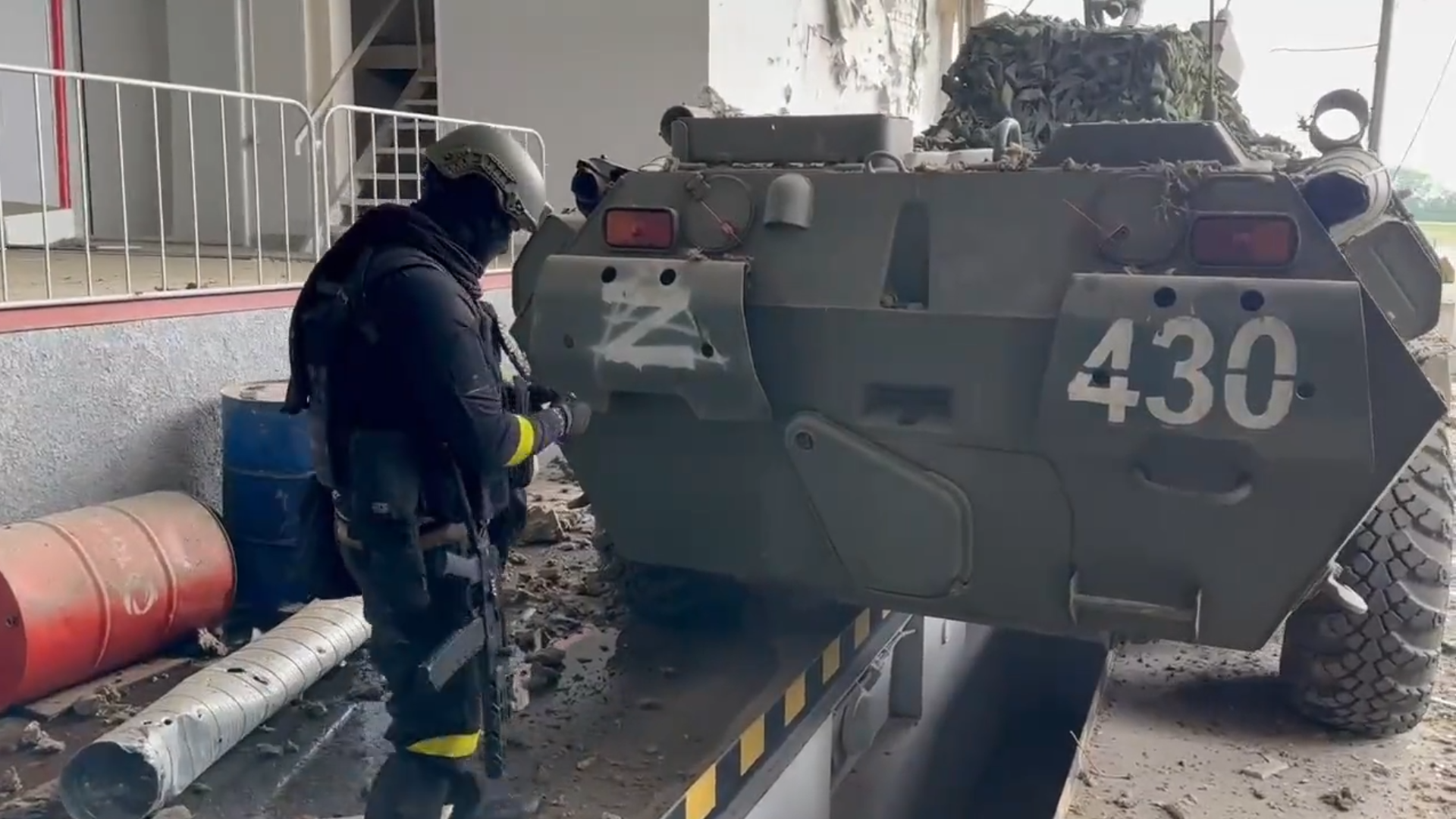
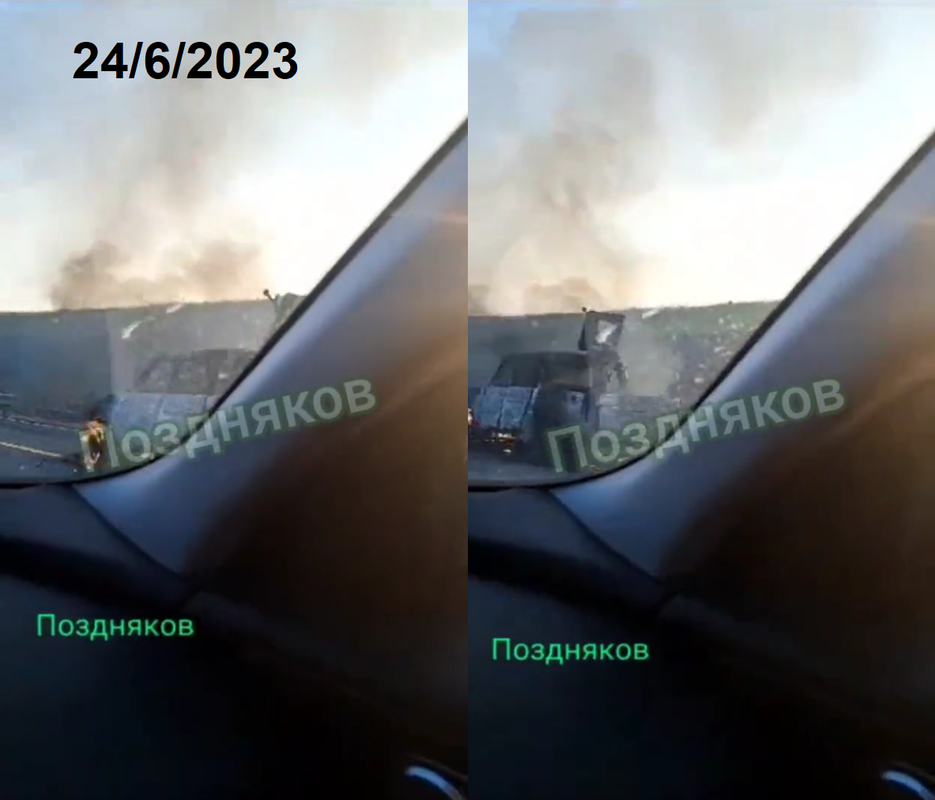
Chef’s Special - Documenting Equipment Losses During The 2023 Wagner Group Mutiny

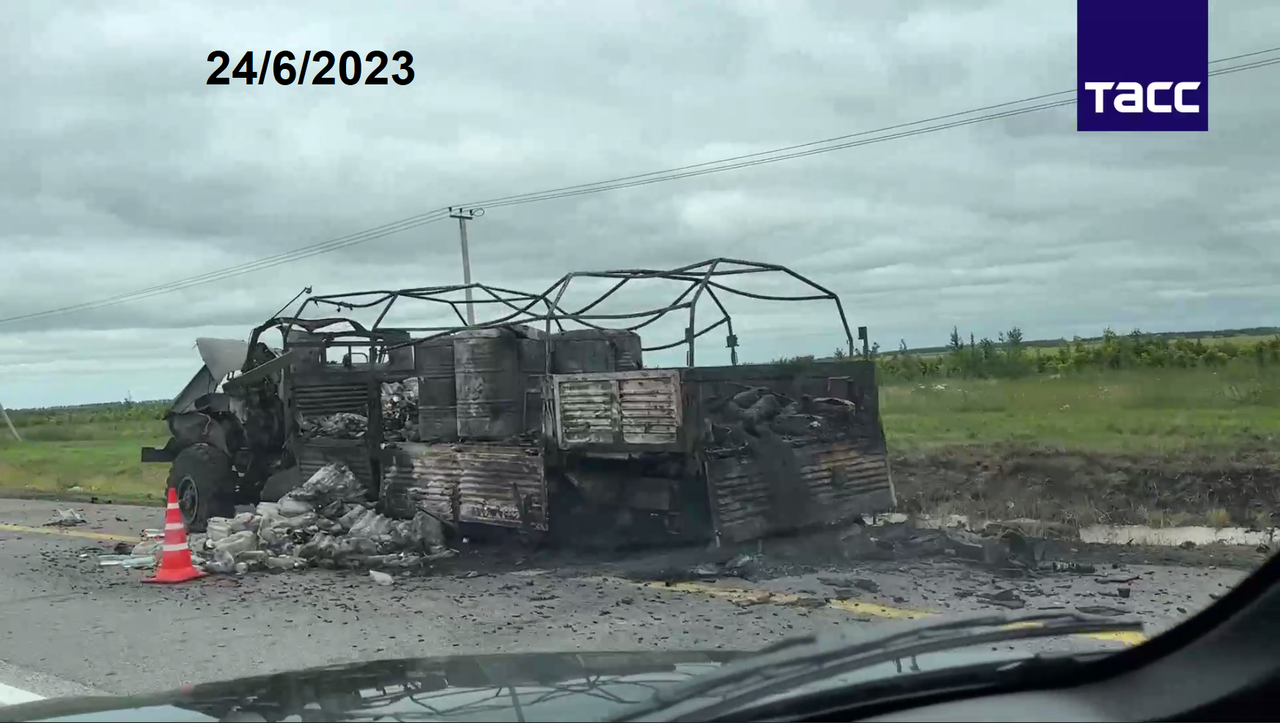
24 June 2023 at 13:47


This list only includes captured and destroyed vehicles and equipment of which photo or videographic evidence is available. Therefore, the amount of equipment captured and destroyed is likely significantly higher than recorded here. Losses claims by fighterbomber, a Telegram channel operated by a Russian Air Force pilot, are also considered as sufficient evidence of Russian aerial losses. Aircraft and helicopters captured by Wagner at Rostov-on-Don North are currently not included in this list. Civilian vehicles and derelict equipment are not included in this list.
 
(Click on the numbers to get a picture of each individual destroyed vehicle)


Russian Government Forces (9, of which destroyed: 6, damaged: 1, captured: 2)


Aircraft (1, of which destroyed: 1)


Helicopters (6, of which destroyed: 5, damaged: 1)


Mine-Resistant Ambush Protected (MRAP) Vehicles (1, of which captured: 1)


Infantry Mobility Vehicles (1, of which captured: 1)


Wagner Group (5, of which destroyed: 5)


Infantry Mobility Vehicles (1, of which destroyed: 1)


Technicals (2, of which destroyed: 2)


Vehicles (2, of which destroyed: 2)


Special thanks to Neil Hauer for suggesting today's title.


The End Of A Journey

21 June 2023 at 11:27
 
Dear all,

I would hereby like to inform you that I will be ending Oryx on October 1st. I originally started Oryx Blog 10 years ago to cure my boredom. Little did I know Oryx would escalate into the all-consuming project it is today. All of us work on the articles and lists in our free time. It's not our job. We don't get paid. Though I hoped our work would one day lead to a job, no such thing occurred. Oryx just doesn't make me happy anymore, and continuing with it prevents me from finding a happier place in life.
 
Best,


Arms From The Adriatic: Croatia’s Military Support For Ukraine

16 June 2023 at 11:55
 

The following list attempts to keep track of military equipment delivered or pledged to Ukraine by Croatia during the Russian invasion of Ukraine. The entries below are sorted by armament category (with a flag denoting the country of origin), and due to the confidential nature of some arms deliveries they can serve only as a lower bound to the total volume delivered. This list is updated as further military support is uncovered.
 
(Click on the equipment type or vehicle to get a picture)
 

Helicopters (14)


Multiple Rocket Launchers


Towed Artillery (40+)


MANPADS

  • Up To Six Shipments Of Strela-2s And Igla-1s [Since February or March 2022]


Anti-Tank Weaponry

  • Missing flag.png ''Anti-Tank Rockets'' [2022]


Small Arms


Ammunition

  • Tens Of Millions Of Small Arms Rounds [Since February 2022]
  • Thousands Of Grenades [2022]
 

Military Gear

  • Missing flag.png Helmets [February 2022]
  • Missing flag.png Ballistic Vests [February 2022]
  • Missing flag.png Uniforms [February 2022]

Recommended Articles:
 
Answering The Call: Heavy Weaponry Supplied To Ukraine
 

Small Country, Great Deeds: North Macedonia’s Military Aid To Ukraine

15 June 2023 at 12:51

The following list attempts to keep track of military equipment delivered or pledged to Ukraine by North Macedonia during the Russian invasion of Ukraine. The entries below are sorted by armament category (with a flag denoting the country of origin). Due to the confidential nature of North Macedonia's arms deliveries they can serve only as a lower bound to the total volume of weaponry delivered. This list will be updated as further military support is uncovered.
 
(Click on the vehicle or equipment type to get a picture of them)
 

(Jet) Aircraft (4)


Attack Helicopters (12)

  • 10 Mi-24Vs [To be delivered] (Several to be used as a source of spare parts)
  • 2 Mi-24Ks [To be delivered] (Likely to be used as a source of spare parts)
 

Tanks (31)

  • 31 T-72As [July or August 2022]

Artillery

  • Missing flag.png ''Artillery'' [2022]


Anti-Aircraft Weaponry

  • Missing flag.png ''Anti-Aircraft Weapons Systems'' [2022]


Air-To-Air Missiles

  • R-60MK Short-Range AAMs (For Su-25) [August 2022]


Air-To-Ground Weaponry

  • UB-32 Rocket Pods (For Su-25, Mi-8/17 and Mi-24) [August 2022]
  • B-8 Rocket Pods (For Su-25, Mi-8/17 and Mi-24) [August 2022]
  • S-13 Rocket Pods (For Su-25, Mi-8/17 and Mi-24) [August 2022]
  • SPPU-22-1 Gun Pods (For Su-25) [August 2022]
  • Aviation Bombs (FAB-100/250 and OFAB-250) (For Su-25) [August 2022]

Anti-Tank Weaponry


Small Arms


Ammunition

  • 57mm S-5 Rockets For UB-32 Rocket Pods (For Su-25, Mi-8/17 and Mi-24) [August 2022]
  • 80mm S-8 Rockets For B-8 Rocket Pods (For Su-25, Mi-8/17 and Mi-24) [August 2022]
  • 122mm S-13 Rockets For B-13 Rocket Pods (For Su-25, Mi-8/17 and Mi-24) [August 2022]
  • 240mm S-24 Rockets (For Su-25, Mi-8/17 and Mi-24) [August 2022]
  • 30mm Ammunition (For Su-25) [August 2022]
  • 125mm Rounds (For T-72 MBT) [July or August 2022]
  • Missing flag.png Small Arms Ammunition [Before March 2023]


Miscellaneous Equipment

  • Su-25 Spare Parts And Support Equipment [August 2022]
  • Mi-24 Spare Parts And Support Equipment [To be delivered]
  • T-72 Spare Parts And Support Equipment [July or August 2022]


Recommended Articles:
 
Mighty Montenegro: Montenegrin Arms Supplies To Ukraine 
 

Silent Solidarity: Slovenia’s Weapons Supplies To Ukraine

14 June 2023 at 10:39


The following list attempts to keep track of military equipment delivered or pledged to Ukraine by Slovenia during the Russian invasion of Ukraine. The entries below are sorted by armament category (with a flag denoting the country of origin), and due to the confidential nature of some arms deliveries they can serve only as a lower bound to the total volume delivered. This list is updated as further military support is uncovered.
 
* Deliveries from Slovenian stocks through the German Ringtausch programme
 
(Click on the equipment type or vehicle to get a picture)
 

Tanks (28)


Infantry Fighting Vehicles (35)


Armoured Personnel Carriers (20)


Infantry Mobility Vehicles (20)


Towed Artillery (16)


Anti-Aircraft Guns (200)


Anti-Tank Weaponry

  • Missing flag.png 8000 Anti-Tank Mines [Early 2022]
 

Small Arms


Ammunition

  • Small Arms Ammunition (For Zastava M70 Rifles) [February 2022]


Military Gear

  • Missing flag.png Helmets [February 2022]


Miscellaneous Equipment

  • Fuel [2022 and 2023]
 
Recommended Articles:
 
Guns Not Gnocchi: Italian Military Aid To Ukraine
Answering The Call: Heavy Weaponry Supplied To Ukraine
 

Death From Above: Documenting Equipment Losses During The Battle Of Conoco Fields

By: Oryx
14 June 2023 at 00:44

 
The Battle of Conoco Fields, also known as the Battle of Khasham, was one of the rare occasions U.S. and Russian (mercenary) forces went toe to toe. The battle began as a force of some 500 Syrian and Russian Wagner PMC fighters supported by armour and artillery launched an assault on a joint SDF/U.S. special forces base at the Conoco gas plant located near the city of Deir ez-Zor. As the Wagner-led force pushed their advance, U.S. forces responded with a series of air and ground strikes. U.S. forces were reportedly in constant contact with a Russian liaison officer posted in Deir ez-Zor throughout the engagement, and only opened fire after they had received assurances that no regular Russian forces were present. [1] The engagement lasted well over three hours, leaving up to 100 pro-government forces dead, including around a dozen Wagner fighters, with no U.S./SDF losses in return. In May 2023, Wagner chief Yevgeny Prigozhin detailed his version of events of what occured during the battle, which certainly makes for an interesting insight into ''the first deadly clash between citizens of Russia and the United States since the Cold War". [2]

A list of the destroyed vehicles can be seen below. This list only includes destroyed vehicles and equipment of which photo or videographic evidence is available. Therefore, the amount of equipment destroyed is significantly higher than recorded here.
 

(Click on the numbers to get a picture of each individual destroyed vehicle)


Wagner / Syrian Government Forces (11, of which destroyed: 11)


Tanks (3, of which destroyed: 3)


Armoured Fighting Vehicles (2, of which destroyed: 2)


Gun Trucks (1, of which destroyed: 1)


Towed Artillery (1, of which destroyed: 1)


Vehicles (4, of which destroyed: 4)


United States / Syrian Democratic Forces (0, of which destroyed: 0)


[1] Имена и фамилии погибших бойцов "ЧВК Вагнера" https://www.svoboda.org/a/29038004.html
 

Straight Outta Riga: Latvia’s Military Support For Ukraine

By: Oryx
10 June 2023 at 11:38

By Stijn Mitzer and Joost Oliemans
 
The following list attempts to keep track of military equipment delivered or pledged to Ukraine by Latvia shortly before and during the Russian invasion of Ukraine. The entries below are sorted by armament category (with a flag denoting the country of origin). Due to the confidential nature of Latvia's arms deliveries they can serve only as a lower bound to the total volume of weaponry delivered. This list will be updated as further military support is uncovered or declared.
 
** Donated by Latvians and Latvian companies to the Armed Forces of Ukraine.
 
(Click on the vehicle or equipment type to get a picture of them)
 

Transport And Utility Helicopters (6)

  • 2 Mi-2s [August 2022]
  • 4 Mi-8/17s [Two delivered in August 2022 and one in August 2023 One more pledged]


Reconnaissance Unmanned Aerial Vehicles

  • Missing flag.png 90 (Small) ''Unmanned Aerial Vehicles''** [March 2022]
  • 45+ (Small) AtlasPros'** [May 2022]
  • Missing flag.png Dozens of ''Unmanned Aerial Vehicles'' [After January 2023]


Self-Propelled Artillery (6)


Vehicles


Man-Portable Air Defence Systems (MANPADS)


Small Arms

  • Missing flag.png Machine Guns [Spring 2023]


Ammunition

  • Missing flag.png Small Arms Ammunition [Spring 2023]

Military Gear

  • Missing flag.png Helmets [Since February 2022]
  • Body Armour [Before May 2022]


Miscellaneous Equipment


Defending Ukraine - Listing Russian Military Equipment Destroyed By Bayraktar TB2s

By: Oryx
25 March 2023 at 18:10

By Stijn Mitzer in collaboration with Kemal, Dan and Jakub Janovsky
 
A list of Russian targets confirmed to have been destroyed or neutralised by Bayraktar TB2s over Ukraine can be viewed below. This list only includes destroyed vehicles and equipment of which photo or videographic evidence is available. In some cases this solely consists of footage that was recorded on the ground. In these cases, the use of an armed drone was reported by witnesses on the ground. In an effort to attract as little attention to its operations as possible, very little footage of TB2 strikes over Ukraine has been released. Therefore, the amount of equipment destroyed by TB2s is likely significantly higher than recorded here. Hits on strategic targets of which no footage is available (such as fuel depots struck in Russia) are not included in this list. The list will be updated as additional footage becomes available.  
 
(Click on the numbers to get a picture of each individual captured or destroyed vehicle)

Tanks (5)


Armoured Fighting Vehicles (8)


Towed Artillery (6)


Self-Propelled Artillery (1)

  • 1 152mm 2S3(M) Akatsiya: (1)
 

Multiple Rocket Launchers (2)

  • 1 122mm 2B17 Tornado-G: (1)
  • 1 220mm BM-27 'Uragan': (1)

Anti-Aircraft Guns (2)


Surface-To-Air Missile Systems (15)


Helicopters (10)


Naval Ships (6)


Logistics Trains (2)


Trucks, Vehicles and Jeeps (28)


Command Post (3)


Jammers, Deception And Communications systems (2)

  • 1 R-330ZH Zhitel: (1)
  • 1 Communications station: (1)

Miscellaneous (5)


Recommended Articles:


Leopards From Lisbon: Portuguese Arms Supplies To Ukraine

9 June 2023 at 13:19

By Stijn Mitzer and Joost Oliemans
 
The following list attempts to keep track of military equipment delivered or pledged to Ukraine by Portugal during the 2022 Russian invasion of Ukraine. The entries below are sorted by armament category (with a flag denoting the country of origin). Due to the confidential nature of Portugal's arms deliveries they can serve only as a lower bound to the total volume of weaponry delivered. This list will be updated as further military support is uncovered or declared.
 
* Purchases by NATO Ukraine from Portugese defence companies on behalf of Ukraine.
 
(Click on the vehicle or equipment type to get a picture of them)
 

Transport And Utility Helicopters (6)


Tanks (3)


Armoured Personnel Carriers (52)

  • 45 M113s and 7 M577s [Delivered from July 2022 onwards]

Infantry Mobility Vehicles (4)


Towed Artillery (9)


Reconnaissance Unmanned Aerial Vehicles (6+)


Small Arms


Ammunition

  • Missing flag.png 7.62mm Rounds For Small Arms [Early 2022]
  • Missing flag.png 60mm Mortar Rounds [Early 2022]
  • Missing flag.png 2000+ 120mm Mortar Rounds [Early 2022 and Early 2023]
  • Missing flag.png 105mm Rounds For Towed Artillery [To be delivered]

Military Gear

  • Helmets (By AuxDefense) [Early 2022]
  • Bulletproof Vests (By AuxDefense) [Early 2022]
  • Missing flag.png Night Vision Devices [Early 2022]


Miscellaneous Equipment

  • Medical Supplies (Including 16 Ambulances) [2022 and 2023]
  • Communications Equipment (Including Radios And Analogue Repeaters) [February and July 2022]
  • Missing flag.png Thousands Of Sleeping Bags And Thermal Blankets [2022/2023]
  • 20+ (GRUPEL) Electric Generators [Early 2023]
  • Missing flag.png 800 Heaters By The GALP And PRIO Petrol Companies [2022/2023]
 

Tallinn’s Tally: Estonia’s Weapons Supplies To Ukraine

8 June 2023 at 12:56

By Stijn Mitzer and Joost Oliemans
 
The following list attempts to keep track of military equipment delivered or pledged to Ukraine by Estonia during the 2022 Russian invasion of Ukraine. The entries below are sorted by armament category (with a flag denoting the country of origin). Due to the confidential nature of Estonia's arms deliveries they can serve only as a lower bound to the total volume of weaponry delivered. Estonia has provided nearly €400 million, or more than 1% of its GDP, worth of military assistance to Ukraine. [1] Estonia has been reimbursed €156 million by the European Union for the delivery of these arms. [1] This list will be updated as further military support is uncovered or declared.
 
* Purchases from Estonian defence companies.
 
(Click on the vehicle or equipment type to get a picture of them)
 

Patrol Boats

  • Missing flag.png ''Patrol Boats'' [To be delivered]


Towed Artillery (60)


Heavy Mortars

  • Missing flag.png 120mm Heavy Mortars [2022/2023]
 

Reconnaissance Unmanned Aerial Vehicles


Mine-Resistant Ambush Protected (MRAP) Vehicles (7)


Engineering Equipment And Vehicles (1)


Vehicles (13)


Anti-Tank Guided Missiles


Anti-Tank Weaponry


Small Arms

  • Up To 35.000 M14 Battle Rifles [Spring 2022]
  • Missing flag.png Sniper Rifles [Before June 2022]
  • Missing flag.png Pistols [Early 2023]
  • Missing flag.png Grenade Launchers [To be delivered]


Ammunition

  • Thousands Of 122mm Artillery Rounds [Spring 2022]
  • Missing flag.png Thousands Of 155mm Artillery Rounds [Spring 2022]
  • Missing flag.png Tens Of Millions Of Small Arms Rounds [Delivered from March 2022 onwards]

Military Gear

  • Missing flag.png Helmets [March 2022]
  • Flak Jackets [March 2022]
  • 10.000 Winter Uniforms (Including Jackets, Trousers, Shirts, Socks And Boots) [2022/2023]
  • Thousands Of Camouflage Suits [2022/2023] 


Miscellaneous Equipment

  • 2 Saunas [December 2022 and March 2023]
  • Missing flag.png 3 Field Hospitals [2022 and 2023] (In cooperation with Germany, Norway and the Netherlands)
  • Medical Supplies [2022 and 2023]
  • 50.000 Meal, Ready-to-Eat (MREs) [March 2022]
  • Missing flag.png Weapons Sights [After February 2023]
  • Missing flag.png Thermal Cameras [After February 2023]
  • Missing flag.png Binoculars [After February 2023]
  • Communications Equipment [2022/2023]
  • Generators And Chargers [February 2023] 
 

For Queen & NATO: Listing Denmark’s Recent Weapons Purchases

By: Oryx
7 June 2023 at 21:20

By Stijn Mitzer and Joost Oliemans
 
Much attention has been devoted to Poland's defence spending boost (not the least through our dedicated article) that is set to provide the country the largest army in the European Union. [1] Other NATO members are making an attempt to follow suit, with Romania currently embarking on a smaller but similarly ambitious rearmament programme. The combined efforts of these countries will ultimately see the acquisition of thousands of MBTs and infantry fighting vehicles (IFVs) and more than a thousand self-propelled guns (SPGs) and multiple rocket launchers (MRLs). Considering these impressive numbers, it is perhaps easy to forget the efforts of smaller nations like Denmark, the Baltic States and the Netherlands at significantly modernising and expanding the capabilities of their armed forces.

Denmark in particular has sought to expedite the process with which it acquires military equipment, accelerating to a pace previously unthinkable for defence projects in Europe. Though the number of weapons systems acquired is anything but spectacular – especially compared to countries like Poland – they remain vital for the security of NATO in their own right. Several of these acquisitions introduce new capabilities entirely, while others make up for capabilities lost since the conclusion of the Cold War. For Denmark, this has included its submarine service (2004), MRLs (2004), SAM systems (2005) and tactical unmanned aerial vehicles (2006). In order to pay for the new acquisitions, Denmark has significantly increased its defence budget and even abolished a public holiday to boost military spending. [2] [3]

In service of a population of just under six million, the Danish Armed Forces are comparatively small. As a seagoing nation that also bears the responsibility for the defence of the Faroes and Greenland (both autonomous countries within the Kingdom of Denmark), Denmark does operate a sizeable navy consisting of five frigates and eight offshore patrol vessels (OPVs). In contrast, the future fighter composition of the Danish Air Force is to consist of only 27 F-35 fighter aircraft. The Danish Army fields one mechanised brigade of 4.000+ troops that can be deployed in the framework of NATO on short notice. This force can be strengthened with a supplementary force of up to 4.000 troops. Furthermore, up to 20.000 troops can be mobilised in the form of conscripts and Home Guard volunteers should the need ever arise. [4]
 
While the commitment of one mechanised brigade (at least in the initial stages of a conflict) might not seem much, the Danish Army's 1st Brigade is notably more fleshed out than similar formations around Europe. Rather than increasing the size of its standing forces, Denmark has recently opted to increase the strength of the 1st Brigade through the acquisition of Israeli-made PULS MRLs, ground-based air defence systems and electronic warfare systems. These systems will supplement a force consisting of 44 Leopard 2A7DK MBTs, 44 CV9035DK IFVs, 300+ Piranha V APCs and 19 ATMOS 2000 SPGs (which were purchased in 2023 to replace the 19 Caesar 8x8 SPGs donated to Ukraine). When not fully deployed, the brigade's units can also be deployed individually to enhance the firepower of other NATO armies.
 
Future acquisitions by Denmark could include additional F-35s along with stand-off weapons such as the AGM-158B JASSM-ER ALCM and the AGM-88G AARGM-ER ARM. The armament suite of the Iver Huitfeldt-class frigates could potentially be expanded through the acquisition of BGM-109 Tomahawk cruise missiles. This would mirror efforts made by the Netherlands to significantly increase the capabilities of already existing weapons systems by acquiring new armament types for them. A case could also be made for the acquisition of (additional) precision-guided munitions for Denmark's ATMOS SPGs and PULS MRLs. Especially the latter system would benefit from the full range of long-range precision guided rockets compatible with it. [5] Whatever future steps will be taken to further strengthen Denmark's defence capabilities, it is certain that the Kingdom is determined not to shirk its responsibilities as a NATO member.

This article attempts to list (future) equipment acquisitions by the Danish Army, Navy and Air Force. This list focuses on heavy weapons systems and doesn't include ATGMs, MANPADS, trucks, radars and (non-naval) ammunition. When deemed appropriate, the future quantity of the equipment category is given. This number includes both future equipment acquisitions as well as equipment already in service. This list will be updated as new acquisitions are reported.

Army - Hæren


Infantry Fighting Vehicles (Future Quantity: 44)

  • Upgrade Of 44 CV90s With New Sighting And Weapons Systems [To be upgraded in the mid-2020s]


Armoured Personnel Carriers (Future Quantity: 330+)

  • Switzerland 330+ Piranha Vs (In different configurations. Can be armed with Spike-LR2 ATGMs) [Deliveries to be completed in 2023]

Artillery And Multiple Rocket Launchers (Future Quantity: 19 SPGs, 8 MRLs And 15 SPMs)


Air Defence Systems


Armoured Engineering Vehicles


Unmanned Aerial Vehicles

  • Missing flag.png Programme To Acquire (Mini) Surveillance UAVs [To enter service from the mid-2020s onwards]
 

Air Force - Flyvevåbnet


Fighter Aircraft (Future Quantity: 27+)

  • 27 F-35As [Delivery Ongoing]
  • Additional F-35As [Planned Acquisition]


Unmanned Aerial Vehicles

  • Missing flag.png Programme To Acquire Long-Range Surveillance UAVs [To enter service in the mid-to-late 2020s]


Basic Trainers

  • Upgrade Of 27 T-17 Supporter Basic Trainer Aircraft [To be upgraded in the mid-2020s]

Navy - Søværnet


Surface Combatants

  • 4 Programme To Acquire Four Frigates Or Corvettes [Will enter service in the late 2020s or early 2030s] (Will replace four Thetis-class patrol vessels)


Miscellaneous Ships

  • 1 New Station Vessel for the Navy's Diving Service [To enter service in 2029 or 2030]
  • Missing flag.png Programme To Acquire Small Unmanned Surface Vessels (USVs) For Use Aboard Surface Ships [To enter service in the mid-to-late 2020s]
 

Shipborne Weapons

  • 50 SM-2 Block IIIA Surface-To-Air Missiles For Iver Huitfeldt-Class Frigates [Delivered from 2021 onwards]
  • SM-6 Surface-To-Air And Anti-Ballistic Missiles For Iver Huitfeldt-Class Frigates [Planned Acquistion]
 
[1] A 21st Century Powerhouse: Listing Poland’s Recent Arms Acquisitions https://www.oryxspioenkop.com/2022/11/a-21st-century-powerhouse-listing.html
[3] Denmark scraps public holiday to boost defence budget https://www.bbc.com/news/world-europe-64802462
 
Recommended Articles:
 
A 21st Century Powerhouse: Listing Poland’s Recent Arms Acquisitions

Guns N’ Gazpacho: Spanish Military Aid To Ukraine

By: Oryx
29 May 2023 at 17:49

By Stijn Mitzer and Joost Oliemans
 
The following list attempts to keep track of military equipment delivered or pledged to Ukraine by Spain during the 2022 Russian invasion of Ukraine. The entries below are sorted by armament category (with a flag denoting the country of origin). Due to the confidential nature of Spain's arms deliveries they can serve only as a lower bound to the total volume of weaponry delivered. This list will be updated as further military support is uncovered or declared.
 
* Purchases by the Ukrainian government from Spanish defence companies.
 
(Click on the vehicle or equipment type to get a picture of them)
 

Anti-Ship Missiles (5)


Air Defence Systems (2 Batteries)


Self-Propelled Artillery (~5)


Towed Artillery (6)


Tanks (10)


Armoured Personnel Carriers (~75)

  • ~75 M113s [Before December 2022 and February and April 2023. 20 more to be delivered]
 

Mine-Resistant Ambush Protected (MRAP) Vehicles (1)


Vehicles (64)

  • 40 Trucks And Off-Road Vehicles [April or May 2022]
  • Missing flag.png 9 Heavy Transport Trucks [Late 2022]
  • Missing flag.png 11 Vehicles [Late 2022]
  • 4+ Anibal Santana 4x4 SUVs [Late 2022 and July 2023]


Radars (3)


Anti-Tank Weaponry (1370)


Small Arms


Ammunition


Miscellaneous Equipment


No Assembly Required: Swedish Arms Deliveries To Ukraine

By: Oryx
27 May 2023 at 21:23


By Stijn Mitzer and Joost Oliemans
 
The following list attempts to keep track of military equipment delivered or pledged to Ukraine by Sweden during the Russian invasion of Ukraine. The entries below are sorted by armament category (with a flag denoting the country of origin), and due to the confidential nature of some arms deliveries they can serve only as a lower bound to the total volume delivered. This list is updated as further military support is uncovered.
 
(Click on the equipment type or vehicle to get a picture)
 

Surface-To-Air Missiles (SAM) Systems


Self-Propelled Guns (8)


Tanks (10)


Infantry Fighting Vehicles (50+)

  •  50+ CV9040Cs (Equipped with the Barracuda Thermal Camouflage System) [June 2023]

Engineering Vehicles And Equipment


Surface-To-Surface Missiles


Radars


Man-Portable Air Defence Systems (MANPADS) And Missiles


Anti-Tank Guided Missiles


Portable Anti-Tank Weaponry


Small Arms


Ammunition

  • €43 Million Worth Of 155mm Artillery Rounds [September 2022] 
  • 12.7mm Rounds For Automatgevär 90 Anti-Materiel Rifles [Mid-2022]
  • Missing flag.png Ammunition For Recoilless Rifles [To be delivered]


Military Clothing And Gear


Miscellaneous Equipment

 
Recommended Articles:
 
Vikings For Victory: Norwegian Arms Transfers To Ukraine

The Ballad Of Belgorod: Listing Equipment Losses During The 2023 Russian Incursion Into Russia

22 May 2023 at 21:54

By Jakub Janovsky, naalsio26, Aloha, Dan, Stijn Mitzer, Joost Oliemans and Kemal
 
A group of Russian insurgents known as the Freedom of Russia Legion, who are aligned with the Ukrainian Armed Forces, crossed the border with Russia's Belgorod Oblast on the 22th of May 2023. The Freedom of Russia Legion, a unit that consists only of Russian volunteers, subsequently announced that it and the Russian Volunteer Corps (a different group reportedly responsible for an incursion into the Bryansk region in March) had secured the village of Kozinka in the Belgorod region, and that its forward detachments had entered the town of Grayvoron. 
 
A Ukrainian official acknowledged that the Freedom of Russia Legion had carried out a cross-border incursion in the area but stressed they were acting independently. [1] Vyacheslav Gladkov, the governor of Russia's Belgorod region, announced Monday that a ''Ukrainian military sabotage and reconnaissance group'' had entered the region’s Grayvoronsky district. ''Russian military forces as well as the border service, the Russian National Guard, and the Federal Security Service, are taking the necessary steps to eliminate the enemy,'' Gladkov vowed on Telegram. [2]

A list of the destroyed and captured vehicles of both sides can be seen below. This list only includes captured or destroyed vehicles and equipment of which photo or videographic evidence is available. Civilian vehicles are not included in this list.
 

(Click on the numbers to get a picture of each individual captured or destroyed vehicle)


Russia (5, of which destroyed: 3, captured: 2)


Infantry Fighting Vehicles (1, of which captured: 1)


Towed Artillery (1, of which destroyed: 1)


Vehicles (3, of which destroyed: 2, captured: 1)


Freedom of Russia Legion (8, of which destroyed: 2, captured: 6)


Mine-Resistant Ambush Protected (MRAP) Vehicles (2, of which captured: 2)


Infantry Mobility Vehicles (5, of which destroyed: 1, captured: 4)


Vehicles (1, of which destroyed: 1)

 
[1] Russia accuses Ukraine of mounting ‘sabotage’ attack across border https://edition.cnn.com/2023/05/22/europe/belgorod-ukrainian-forces-russian-territory-intl/index.html
 
Recommended Articles:
 
Russia’s Wars: Listing Equipment Losses During The 1992 Moldo-Russian War

Guns Not Gnocchi: Italian Military Aid To Ukraine

By: Oryx
22 May 2023 at 17:31

By Stijn Mitzer and Joost Oliemans in collaboration with Nicholas Concu
 
The following list attempts to keep track of military equipment delivered or pledged to Ukraine by Italy during the 2022 Russian invasion of Ukraine. The entries below are sorted by armament category (with a flag denoting the country of origin). Due to the confidential nature of Italy's arms deliveries they can serve only as a lower bound to the total volume of weaponry delivered. This list will be updated as further military support is uncovered or declared.
 
* Private purchases from Italian defence companies.
 
(Click on the vehicle or equipment type to get a picture of them)
 

Air Defence Systems (3 Batteries)


Multiple Rocket Launchers (2)


Self-Propelled Artillery (106+)


Towed Artillery


Heavy Mortars


Armoured Personnel Carriers


Infantry Mobility Vehicles


Vehicles


Man-Portable Air Defence Systems (MANPADS)


Anti-Tank Guided Missiles (ATGMs)


Radars

  • 1 Skyguard II (For SkyGuard Aspide Battery) [February 2023]
  • 1 Selenia PLUTO 2D (For Spada Battery) [February 2023]
  •  1 Arabel (For SAMP/T MAMBA Battery) [May 2023] (In cooperation with France)
 

Small Arms


Ammunition


Military Gear


Miscellaneous Equipment

Mighty Montenegro: Montenegrin Arms Supplies To Ukraine
 

Slovak Showdown: Slovak Arms Deliveries To Ukraine

By: Oryx
21 May 2023 at 12:01

By Stijn Mitzer and Joost Oliemans

The following list attempts to keep track of military equipment delivered or pledged to Ukraine by Slovakia shortly prior and during the Russian invasion of Ukraine. The entries below are sorted by armament category (with a flag denoting the country of origin), and due to the confidential nature of some arms deliveries they can serve only as a lower bound to the total volume delivered. This list is updated as further military support is uncovered.
 
* Purchases by the Ukrainian or EU governments from Slovak defence companies.
** Deliveries from Slovak stocks through the German Ringtausch programme
 
(Click on the equipment type or vehicle to get a picture)
 

Fighter Jets (13)

  • 10 MiG-29AS'/UBS' [March and April 2023] (Some to be used as a source of spare parts)
  • 3 MiG-29As/UB [March and April 2023] (To be used as a source of spare parts)

Transport And Utility Helicopters (5)


Surface-To-Air Missile (SAM) Systems (1 Battery And 2 Launchers)


Radars (4)


Self-Propelled Artillery (24)

  • 24 155mm ShKH Zuzana 2s* (8 purchased by Ukraine, 16 purchased by Germany, Norway and Denmark) [Delivered from January 2023 onwards]


Infantry Fighting Vehicles (30)


Engineering Vehicles And Equipment (2)


Man-Portable Air Defence Systems (MANPADS) (100)

  • Missing flag.png 100 Man-Portable Air Defence Systems [2022]


Anti-Tank Guided Missiles

  • Missing flag.png ''Anti-Tank Guided Missiles'' [February or March 2022]
 

Small Arms

  • ''Small Arms'' [Early 2022]
 

Air-To-Air Missiles


Air-To-Ground Weaponry


Ammunition

  • 5V55R Surface-To-Air Missiles (For S-300PMU) [April 2022]
  • 52 3M9ME Surface-To-Air Missiles (For 2K12M2 Kub-M2) [To be delivered]
  • 148 3M9M3E Surface-To-Air Missiles (For 2K12M2 Kub-M2) [To be delivered]
  • Missing flag.png 486 ''Air Defence Missiles'' (For MANPADS) [2022]
  • 155mm M107 Ammunition (For SPGs) [Before June 2022. Supplies ongoing]
  • 122mm Ammunition (For SPGs) [To be delivered]
  • 152mm Ammunition (For SPGs) [To be delivered]
  • Thousands Of 122mm Rockets (For BM-21 Grad MRL) [Early 2022]
  • 12.000 Rounds Of 120mm Mortar Ammunition [Early 2022]
  • 57mm Ammunition (For AZP S-60 AA Gun) [Before May 2022]
  • 80mm S-8 Unguided Rockets (For MiG-29 Fighter Jet) [March/April 2023]


Military Clothing And Gear

  • Winter Clothing [Early 2023]


Miscellaneous Equipment

  • MiG-29 Fighter Jet Spare Parts [March and April 2023]
  • Ground Operating Equipment For MiG-29 Fighter Jet [March and April 2023]
  • 2 Million Litres Of Aviation Fuel [Early 2022]
  • 10 Million Litres Of Diesel [Early 2022]
 
Recommended Articles:
 
Allies Of Freedom: Slovakia Mulls Delivery Of MiG-29s To Ukraine 

A ’Monte’ Of Firepower: Montenegrin Arms Supplies To Ukraine

By: Oryx
20 May 2023 at 13:52

By Stijn Mitzer and Joost Oliemans
 
The following list attempts to keep track of military equipment delivered or pledged to Ukraine by Montenegro during the Russian invasion of Ukraine. The entries below are sorted by armament category (with a flag denoting the country of origin), and due to the confidential nature of some arms deliveries they can serve only as a lower bound to the total volume delivered. This list is updated as further military support is uncovered.
 
(Click on the equipment type or vehicle to get a picture or source link)
 

Man-Portable Air Defence Systems (MANPADS)

  • 226 9K32 Strela-2Ms [Between March and July 2022]

Ammunition

  • 600 Rounds Of 60mm And 82mm Ammunition For Mortars [Before July 2022]
  • 7964 Rounds Of 57mm Ammunition For UB-16 And UB-32 Rocket Pods [August 2022]
  • 8036 Rounds Of 57mm Ammunition For 57mm AZP S-60 AA Guns [July and August 2022]
  • 7992 Rounds Of 76mm Ammunition For 76mm AK-726 Naval Guns [August 2022]
  • 2.3 Million Rounds Of 7.62×39mm Ammunition [August 2022]

Military Clothing And Gear

  • Missing flag.png 500 Helmets [March 2022]
  • Missing flag.png 300 Bulletproof Vests [March 2022]

Miscellaneous Equipment

  • Mi-8 Helicopter Spare Parts [September 2022]
  • 7000 Meal, Ready-to-Eat (MREs) [March 2022]
 
Recommended Articles:
 
Answering The Call: Heavy Weaponry Supplied To Ukraine

Denmark Reporting For Duty: Danish Military Support To Ukraine

17 May 2023 at 21:29

By Stijn Mitzer and Joost Oliemans
 
The following list attempts to keep track of military equipment delivered or pledged to Ukraine by Denmark during the Russian invasion of Ukraine. The entries below are sorted by armament category (with a flag denoting the country of origin), and due to the confidential nature of some arms deliveries they can serve only as a lower bound to the total volume delivered. This list is updated as further military support is uncovered.
 
(Click on the equipment type or vehicle to get a picture or source link)
 

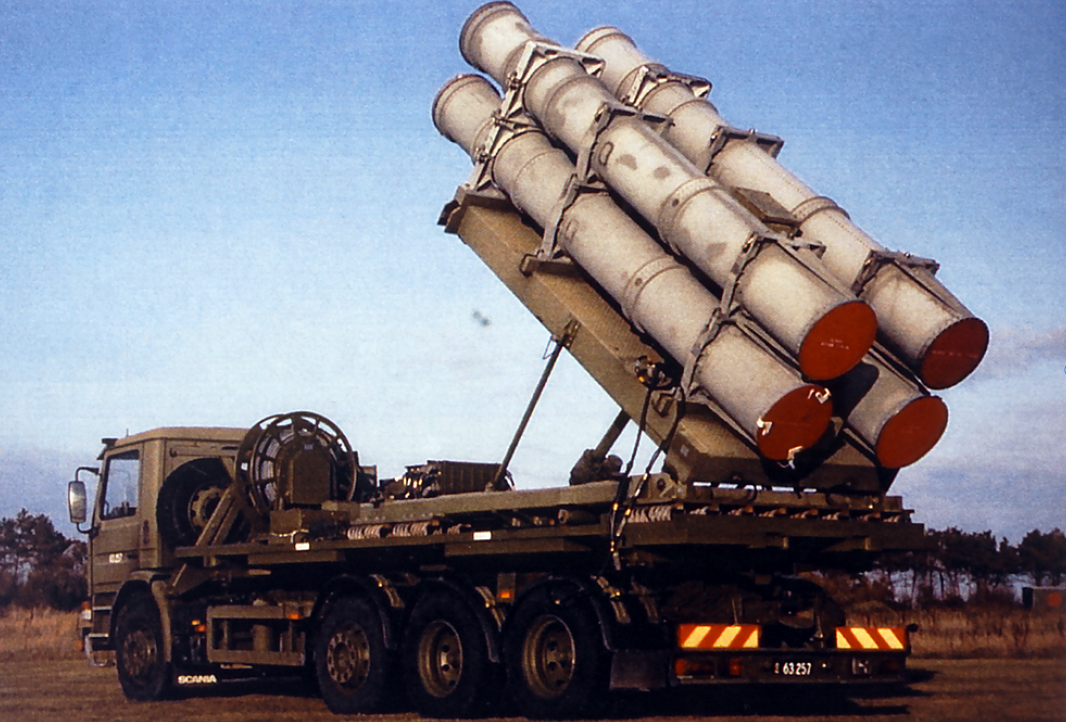
Coastal Defence Missile Systems (CDS) And Missiles


Self-Propelled Artillery


Tanks

  • 33 (Out Of 100) Leopard 1A5s [To be delivered] (In cooperation with Germany and the Netherlands)
  • 7 (Out Of 14) Leopard 2A4s [To be delivered] (In cooperation with the Netherlands)


Armoured Personnel Carriers (APCs)

  • 54 M113G3DK/G4DKs [July and August 2022] (M113s taken from Danish stocks and subsequently overhauled with German funding)

Engineering Vehicles And Equipment


Vehicles

  • 2 Toyota Land Cruisers [2022/2023]
 

Heavy Mortars

  • Missing flag.png Heavy Mortars [2022]
 

Man-Portable Air Defence Systems (MANPADS) And Missiles

  • 407 Stinger Missiles [2022] (Delivered along with 330 grip stocks and 810 batteries)


Reconnaissance UAVs


Unmanned Underwater Vehicles

  • Missing flag.png Mine-Detecting Underwater Vehicles [2022/2023]
 

Radars

  • Missing flag.png Anti-Drone Radars [2022/2023]

Anti-Tank Weaponry


Small Arms

  • 54 M2 Heavy Machine Guns [July and August 2022] (For M113G3DK/G4DK APCs)
 

Ammunition

  • Missing flag.png 19.000+ 155mm Artillery Rounds (For the Towed Artillery And SPGs) [2022 and 2023] (In cooperation with Norway)
  • 120mm BGR M/50 Mortar Rounds [Before August 2022]
  • 5600 Rounds For The 84mm Carl Gustaf Recoilless Rifle [Late 2022 or early 2023]
  • 29.000 Rounds Of RPG-7 Ammunition [2022/2023] (Bought from a third country and delivered to Ukraine)
  • Missing flag.png 5.56mm Ammunition For Small Arms [2022]


Military Clothing And Gear

  • Night-Vision Goggles [2022/2023]
  • 500 Lightweight CBRN Protective Suits [2022/2023] 
  • 3000 Protective Vests [2022/2023]
  • 2000 Pieces Of Protective Equipment [2022/2023] 
  • 300 Sleeping Bags [2022/2023]
  • 3000 Sleeping Mats [2022/2023]
  • 232.500 Meal, Ready-to-Eat (MREs) [2022/2023]
  • 2200 First Aid Bags [2022/2023]
  • 11.000 Compress Dressings [2022/2023]
  • 15.000 Sets Of Rainwear [2022/2023]
  • 8000 Hats [2022/2023]
  • 5000 Heat And Release Gloves [2022/2023]


Miscellaneous Equipment

  • 15 Mobile Workshops For The Repair Of Large Vehicles [2022/2023]
  • Spare Parts For The M109 SPG [2022/2023]
  • 1 Field Hospital [2022/2023]
  • 1 Tent Camp For 320 People [2022/2023]
  • 6 Hangar Tents [2022/2023] 
  • 96 Living Containers [2022/2023]
  • 15 Military (Hardened) Generators [2022/2023] 
  • 12 Electric Generators [2022/2023]
  • 3 Radio Transmitters (AM) [2022/2023]  
  • 4 Fire Extinguishing Modules [2022/2023]  
  • 2 Breach Packs [2022/2023] 
  • 20 Heat Torches [2022/2023]  
  • 10 Hand-Held Chemical Detectors [2022/2023] 
  • Medical Equipment [2022/2023]
  • Fuel [2022/2023] 
 
Recommended Articles:
 
Vikings For Victory: Norwegian Arms Transfers To Ukraine

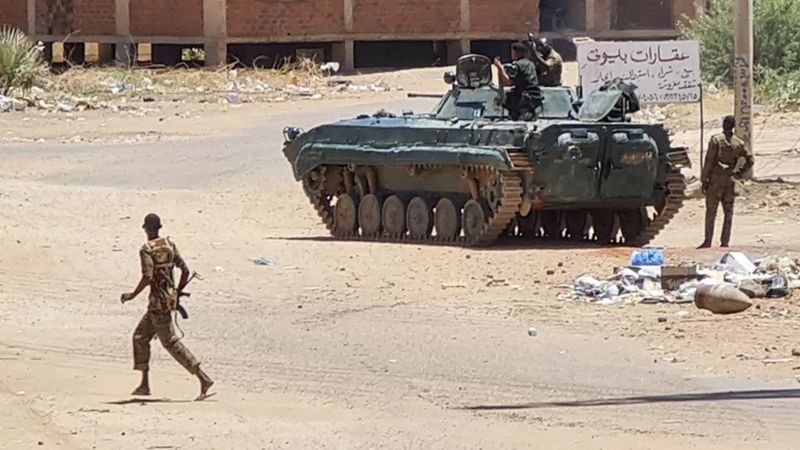
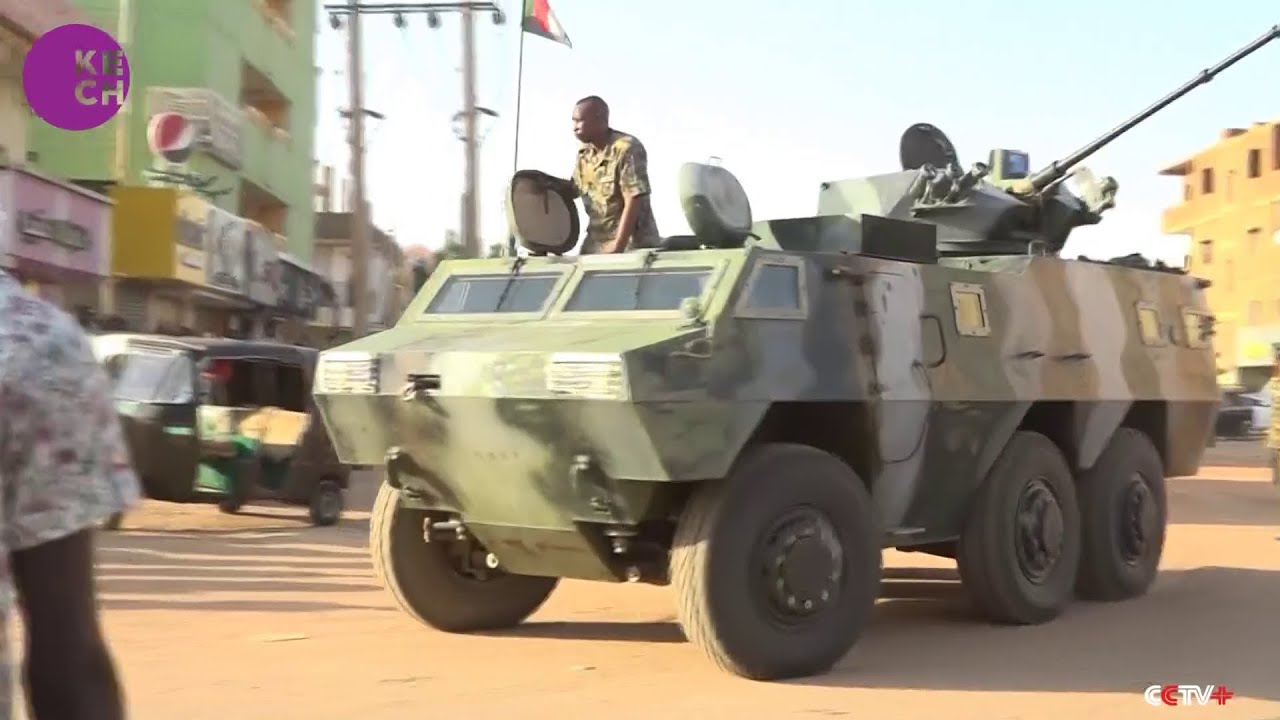
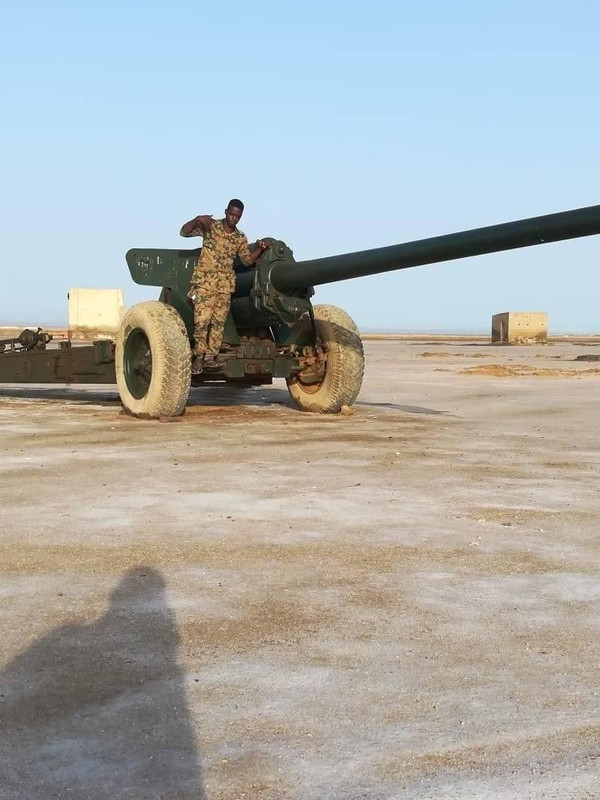
Sudan On Fire: Documenting Equipment Losses During The 2023 Sudan Crisis

By: Oryx
19 April 2023 at 21:32

By Stijn Mitzer, Joost Oliemans and Elmustek
 
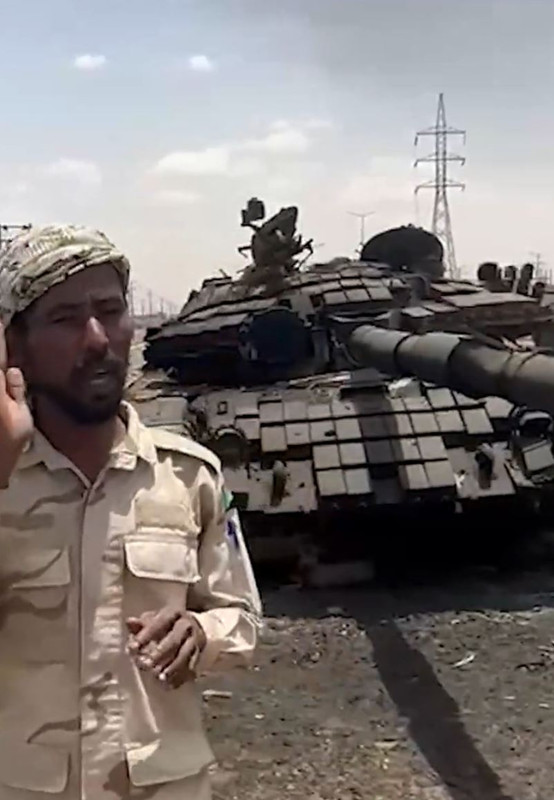
This list aims to comprehensively catalogue the equipment losses during the 2023 Sudan Crisis. This list does not discern between the Sudanese Army and the Rapid Support Forces (RSF). Captured equipment, reconnaissance unmanned aerial vehicles (UAVs), damaged ground vehicles and (destroyed) technicals are not included in this list. This list is updated as new losses are uncovered. For a dedicated list of Sudanese aircraft losses during the 2023 Sudan Crisis click here.
 
(Click on the numbers to get a picture of each individual destroyed vehicle)


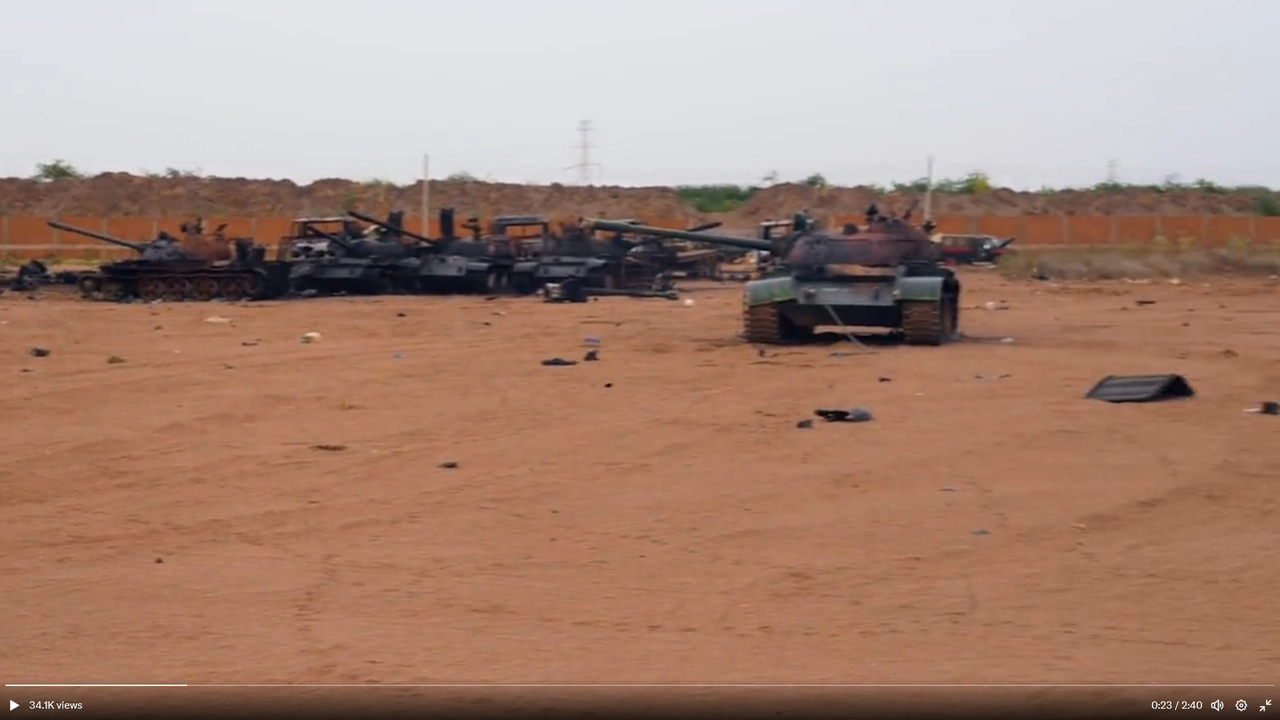
Tanks (21, of which destroyed: 21)


Armoured Fighting Vehicles (10, of which destroyed: 10)


Infantry Fighting Vehicles (7, of which destroyed: 7)


Armoured Personnel Carriers (7, of which destroyed: 7)


Mine-Resistant Ambush Protected (MRAP) Vehicles (1, of which destroyed: 1)


Infantry Mobility Vehicles (6, of which destroyed: 6)


Self-Propelled Artillery (11, of which destroyed: 11)


Aircraft (21, of which destroyed: 19, damaged: 2)


Helicopters (8, of which destroyed: 6, damaged: 2)


Unmanned Combat Aerial Vehicles (2, of which destroyed: 2)


Recommended Articles:
 

Khartoum Kaputt: Aircraft Losses During The 2023 Sudan Crisis

By: Oryx
19 April 2023 at 21:06

By Stijn Mitzer and Joost Oliemans in collaboration with Gerjon

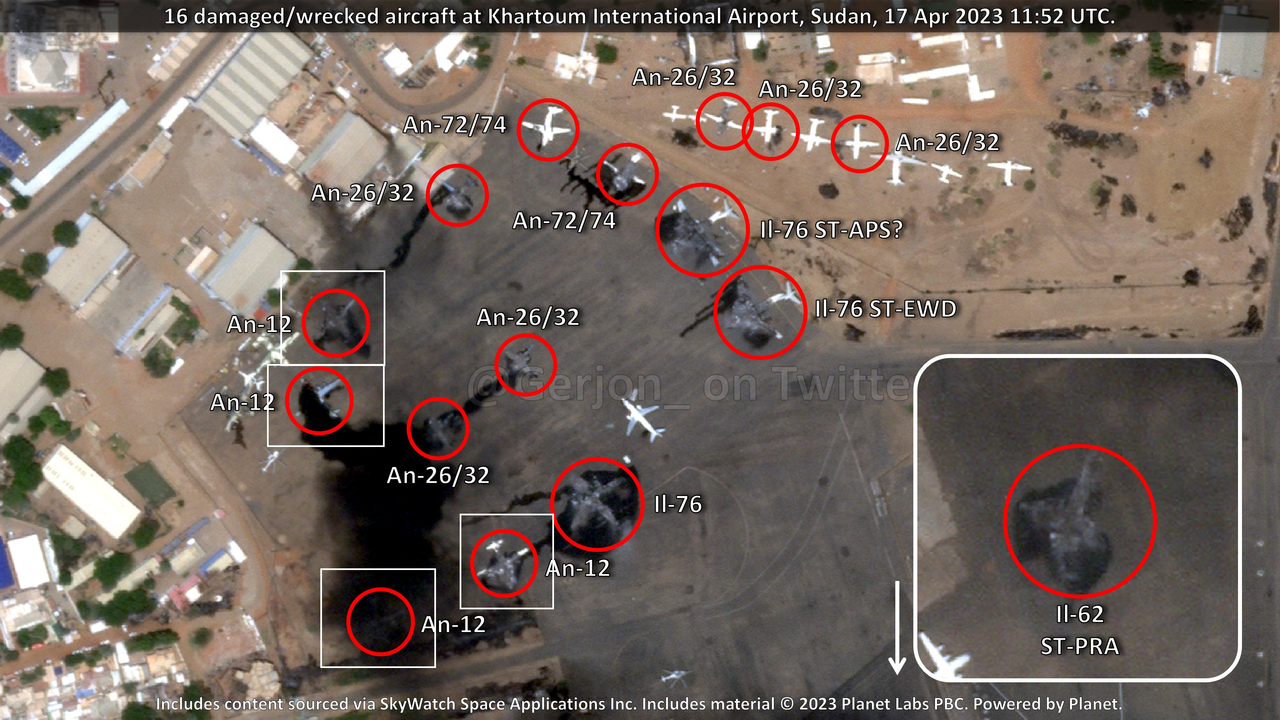
This list aims to comprehensively catalogue the (operational) aircraft and helicopters destroyed and damaged during the 2023 Sudan Crisis. Captured aircraft and helicopters as well as derelict aircraft and reconnaissance unmanned aerial vehicles (UAVs) are not included in this list. This list is updated as new losses are uncovered. For a list of vehicle losses during the 2023 Sudan Crisis click here.
 
(Click on the numbers to get a picture of each individual destroyed or damaged aircraft)
 

Sudanese Air Force (29, of which destroyed: 26, damaged: 3)


Jet Aircraft (10)


Presidential Aircraft (2)


Rapid Support Forces (2, of which destroyed: 2)


Unmanned Combat Aerial Vehicles (2)


Egyptian Air Force (4, of which destroyed: 1, damaged: 3)


Jet Aircraft (3)


Helicopers (1)


Civilian (8, of which destroyed: 8)


Aircraft (8)


From Conflict To Conflict: Sudan’s Fighting Vehicles

By: Oryx
20 April 2023 at 00:30

By Stijn Mitzer and Joost Oliemans

The goal of this list is to comprehensively catalogue Sudan's current inventory of vehicles and equipment. In an effort to streamline the list and avoid unnecessary confusion, radars, trucks and technicals are not included in the list. Vehicles offered for sale by Sudan's Military Industry Corporation (MIC) that haven't entered service with the Sudanese Armed Forces and equipment (formerly) deployed with the Sudanese contingent deployed to Yemen but not owned by Sudan are not included in this list. If several configurations of a vehicle with one designation are known, they are added as such. Sudanese designations are not included to avoid confusion as these often consist of one designation that is used for several vehicle types. The part within the apostrophes refers to other designations or an unofficial designation. When available, the range (of rockets and missiles) are added.

(Click on the vehicle or equipment type to get a picture of them)

Tanks


Armoured Fighting Vehicles


Infantry Fighting Vehicles


Armoured Personnel Carriers


Mine-Resistant Ambush Protected (MRAP) Vehicles


Infantry Mobility Vehicles (IMVs)


Command Vehicles


Engineering Vehicles And Equipment


Towed Artillery


Self-Propelled Artillery


Multiple Rocket Launchers (MRLs)


Artillery Rockets


Towed Anti-Aircraft Guns


Static Surface-To-Air Missile (SAM) Systems


Self-Propelled Surface-To-Air Missile (SAM) Systems

 
Recommended Articles:


Atatürk’s Assaulters - German U-Boats In Service With The Turkish Navy

By: Oryx
4 April 2023 at 18:17

By Stijn Mitzer and Joost Oliemans
 
Yeni dört denizaltı gemimiz için bildirdiğimiz isimler şunlardır; 1) Saldıray, 2) Batıray, 3) Atılay, 4) Yıldıray. Bunların manalarını izaha bile hacet olmadığı kanaatındayım. Manaları, som Türkçe olan bu kelimelerin kendisindedir, yani saldıran, batıran, atılan, yıldıran. – The names we have announced for our four new submarines are as follows; 1) Saldıray, 2) Batıray, 3) Atılay, 4) Yıldıray. I believe there is no need to explain their meanings. The meanings of these words, which are pure Turkish in themselves, that is, (the one who) attacks, (the one who) sinks, (the one who) shoots, (the one who) intimidates. (By Mustafa Kemal Atatürk)

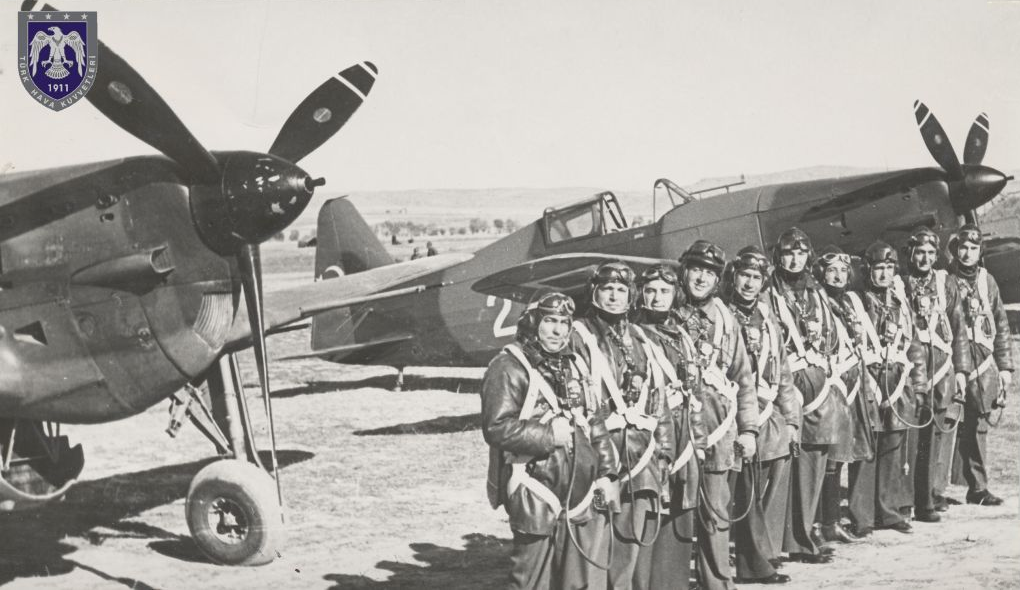
The rapidly modernising Turkish Republic of the 1930s looked at Germany's high technology industry with significant interest to modernise several aspects of its society and services. Throughout the decade, some 300 German Jewish scientists that fled Nazism were welcomed with open arms to continue their research in Türkiye, while the Turkish Air Force ordered a total of 24 Heinkel He 111 bombers and 26 Focke-Wulf 44/58K trainer aircraft from Germany in 1937. [1] In 1940, the national railway company TCDD placed an order for six German MT5200 diesel multiple units, which were on a par with the most advanced trains operating in Europe and the world at that time. [2]
 
Arguably the most significant attempt at importing German high-tech engineering came in 1936, when the Turkish Navy ordered four Project 280/Ay-class submarines designed on the basis of the German Type IX ocean-going class of submarines. The Ay-class was officially developed by the Dutch dummy company NV Ingenieurskantoor voor Scheepsbouw, a front office for German submarine design, which was still forbidden by the Treaty of Versailles. Two of the submarines were to be constructed in Germany, while two more, the Atılay and Yıldıray, were to be built by Taşkızak Shipyard in Istanbul. One of the submarines constructed in Germany, the Batıray, was finished as a minelaying submarine but was seized and commissioned by the German Kriegsmarine upon completion in 1939.
 
Fortunately for Türkiye, the Saldıray ecaped the fate of its sister ship by being finished several months earlier than the Batıray. Construction of the U-Boat had commenced in February 1937 at the Krupp Germaniawerft in Kiel, and she was launched in the presence of German and Turkish officials in July 1938. [3] After extensive outfitting, she was ready for delivery in early 1939. However, due to pre-war tensions there was a lack of sufficient Kriegsmarine personnel that could be made available to sail her to Türkiye. This ended up delaying her departure to the 2nd of April 1939, when the Saldıray finally set sail to the Aegean Sea under the German flag while being crewed by Turkish sailors and German officers. [3]
 

Workers of the Krupp Germaniawerft in Kiel perform the Nazi salute at the launch ceremony of the Saldıray in July 1938 (Kriegsmarine personnel can be seen saluting). The yet unfinished Batıray can be seen in the background.

The Turkish government's decision to send its own sailors to Germany is likely what saved the Saldıray for Türkiye, as a delay of just mere months would have meant it too was seized by the Kriegsmarine. As the Saldıray joined the Turkish Navy with a ceremony held on the Golden Horn, Istanbul on the 5th of June, 1939, the Yıldıray and Atılay were still under construction at the Taşkızak Shipyard just mere kilometres away. These submarines were built by Turkish workers under German supervision and constructed mostly from locally-procured materials. [4] The Atılay was launched in 1939 and entered service a year later, but the withdrawal of German technical expertise and parts after the outbreak of World War II meant that the Yıldıray could only enter service in 1946, six years after it was launched.
 

The Atılay is launched into the Golden Horn estuary in 1939.

The launch ceremony of the Yıldıray in 1939. Due to the withdrawal of technical assistance and the cessation of the delivery of crucial parts by Germany, the Turkish Navy succeeded in bringing the Yıldıray into operational service only in 1946.

The purchase and local construction of four highly advanced ocean-going U-Boats was considered of such importance for the defence of Türkiye that President Mustafa Kemal Atatürk decided to name the submarines himself. Writing Prime Minister Celal Bayar on the 17th of January 1938 to announce the names of the four submarines, Atatürk would never witness the arrival of the first submarine to Türkiye, passing away some nine months after writing his letter in November 1938. The hand-written decree of Atatürk for naming the submarines is still on display at the Istanbul Naval Museum, underlining the significance it bore (and perhaps, in a symbolic sense, still bears) to the Turkish Navy.
 

The Atılay (meaning: the one who shoots) underway at high speed. Note the 10.5cm cannon forward of the conning tower.

The Ay-class submarines boasted six 53.3cm torpedo tubes (four in the bow and two in the stern) and could carry a total of 14 torpedoes. The class was powered by two Danish Burmeister & Wain diesel engines producing 3,500 bhp (boiler horsepower) as well as two electric motors that allowed them to travel at some 20 knots on the surface and nine knots while submerged. [4] The Batıray had a range of 13,100nmi (19,400km) at ten knots while on the surface and up to 75nmi (144km) sailing at four knots while submerged. [5] The three other submarines in the class boasted a smaller range of 8000nmi (14,800km) at 10 knots while on the surface. The crew capacity comprised around 45 officers and sailors. The four Ay-class submarines were equipped with a 10.5 cm L/45 deck gun mounted forward of the conning tower. The Saldıray and Atılay were also armed with a 2cm Oerlikon anti-aircraft gun on a raised platform behind the conning tower. The Batiray could carry up to 36 mines that were launched through the torpedo tubes.
 
The Ay-class was not the first submarine class of German origin to serve the Turkish Navy. In 1925, the German dummy company NV Ingenieurskantoor voor Scheepsbouw (IvS) designed two Project 46-class coastal submarines based on the World War I-era UB III-class submarines for the Turkish Navy. Both vessels in the class were built by the Wilton-Fijenoord shipyard in Rotterdam, the Netherlands, in 1927 and entered service with the Turkish Navy in 1928 as to Birinci İnönü and İkinci İnönü. [6] The Project 46-class was followed by the Project 111-class, which was similarly designed by the (IvS). Construction on the submarine had originally commenced in 1930, initially for the Spanish Navy, which however had no interest in the design. The submarine was then sold to the Turkish Navy in 1935 as the Gür. [7] The acquisition of two submarines from Italy completed Türkiye's naval inventory of the 1930s. [8] [9]

The Project 46-class of coastal submarines was developed for the Turkish Navy by IvS on the basis of the WWI-era UB III class. Two were ordered by the Turkish Navy in 1925, entering service with the Turkish Navy in 1928. Note the names are also written in the Ottoman-Turkish alphabet, which was replaced by the Latin-based modern alphabet in 1928.

The Saldıray and Yıldıray served a largely uneventful career in the Turkish Navy until their retirement and replacement by ex-U.S. Navy Balao-class submarines in 1957. The Atilay was tragically lost after hitting a mine in the Dardanelles Strait on the 14th July 1942 resulting in the loss of its entire crew of 38. After the submarine failed to reach its destination on time, a search and rescue mission was launched; around 20:30 the same evening, the Atılay's buoy was located on the surface of the water. Though the phone in the buoy was in working order, repeated calls yielded no reply from the Atılay, confirming its tragic fate. In 1994, 52 years after the Atılay's sinking, the wreck of the submarine was finally located approximately 6km away from the shore and 68 metres below the surface. The Atılay and its ill-fated crew are remembered in the song Gitti de Gelmeyiverdi (He Went and Didn't Return) as the husband of Hamiyet Yüceses, a well-known Turkish singer at that time, was among the crew.
 

The ill-fated crew of the Atılay shortly before their demise at the hands of a mine laid during the 1915 Dardanelles Campaign in July 1942.

The Batıray that had been seized upon completion in 1939, was commissioned into the German Kriegsmarine on the 20th September 1939. Despite being outfitted as a minelaying submarine, the Kriegsmarine used her like a regular Type IX U-boat (on which design the Batıray was based). During her operational service (that lasted from June 1940 to March 1941), the UA made six patrols, over the course of which it sank eight Allied ships, including the British armed merchant cruiser HMS Andania. Out of the ten ships sunk by fourteen foreign submarines commissioned into the Kriegsmarine during WWII, the UA was responsible for eight. The submarine was used for training from July 1942 onwards and carried out no more operational patrols. It was scuttled on the 3th of May 1945 at Kiel.

The UA, or Batıray as she would have been known in Turkish service, under the flag of the German Kriegsmarine.

The tradition of operating advanced German submarine designs set in the 1930s is continued in the Turkish Republic's modern-day submarine branch, which consists entirely of German designs. The Type 209 already in service is set to be complemented by six Reis-class hunter killer submarines (license-built submarines based on the German Type 214 submarine design) that are to enter service throughout the 2020s. Though none of these are destined to bear the names of the Ay-class submarines, the spirit of these enigmatic vessels endures in their successors almost a century later. Attempts have been made to keep the legacy of the Atilay alive more tangibly by relocating the wreck to 30 metres depth as part of an underwater museum. Such plans have not yet come to fruition, and the condition of the wreck might preclude this from ever happening in the first place. As the final resting place of its crew of 38, perhaps it's for the best if is allowed to spend the rest of its days in undisturbed waters.


Gitti de gelmeyiverdi - He went and didn't return    
Gözlerim yolarda kaldı - I await his return (looking at the roads)
Hele nazlım nerde kaldı - Where is my dear
Ne zaman ne zaman gelir - When, when will he return
Gel a nazlım lahuri şallım - Come, my dear lahuri shawl
Sağı solu dolaşalım - Let's walk around
Ne zaman ne zaman gelir - When, when will he return

The wreck of the Atilay.

[1] The unlikely haven for 1930s German scientists https://physicstoday.scitation.org/do/10.1063/pt.6.4.20180927a/full/
[3] TÜRK DENİZALTICILIK TARİHİ http://www.denizalticilarbirligi.com/db.dztarih.htm

Oryx’s Opus: List Of Books Written By Us

By: Oryx
2 April 2023 at 18:17
 
By Stijn Mitzer and Joost Oliemans
 
If you don't see the book you want on the shelf, write it yourself (By Beverly Cleary)

In addition to writing articles and maintaining lists of losses, we've authored several books on a number of topics. These are all listed on this page.


Books - 7, of which: published: 2, forthcoming: 5


Published Works (2)


Forthcoming Works (5)

  • The Armed Forces Of North Korea, Volume 1: Ground Forces [2023]
  • The Armed Forces Of North Korea, Volume 2: Air Force And Navy [2023/4]
  • The Armed Forces Of North Korea, Volume 3: Special Forces And Strategic Rocket Force [2023/4]
  • North Korea's Secret Wars: A History Of Pyongyang's Foreign Intelligence Agencies [2024]
  • The Conqueror: The Rise Of Baykar [WIP Title] [2024]

Recommended Articles:


A Far Cry: Yara’s HS-100 Tanks

By: Oryx
2 April 2023 at 01:02

By Teslashark in collaboration with Stijn Mitzer and Joost Oliemans
 
There are lions, and there are lambs. Rule, or be ruled. A Castillo must be a lion. For Yara is full of lambs. (By Antón Castillo)
 
The 2021 Yaran Civil War was largely overshadowed by the Nagorno-Karabakh War one year prior and the Russo-Ukrainian War shortly thereafter. The war quickly proved a single-cell thunderstorm similar in intensity to the former, yet located right in the middle of America's Caribbean backyard. A significant number of armoured fighting vehicles (AFVs) were deployed by both the Fuerzas Nacionales de Defensa loyal to the brutal regime of Antón Castillo and the opposing rebel alliance known as Libertad. One of the AFVs that saw intensive action on both sides was a deceptively unassuming tank, the HS-100. Often misidentified and reported as a T-55 or T-62 by even the most seasoned military analysts, the HS-100 MBT is the perfect embodiment of the tumultuous history of the Caribbean island nation of Yara.
 
By present standards, Yara is a poor country that struggles to provide housing, transportation, and other basic necessities to its population of some six million. Bolstered by the flames of the Cuban Revolution, Soviet-backed communist guerrillas on Yara launched a revolution in 1967 that overthrew the highly unpopular regime of Gabriel Castillo. The collapse of the Soviet Union in 1991 decimated the Yaran economy. Despite economic aid from neighbouring socialist states such as Cuba and Venezuela, Yara continues to experience major economic decline and political instability. In 2014, Antón Castillo, son of the ousted Gabriel Castillo, was elected on the promise of rebuilding Yara, yet quickly cracked down on political dissidents and fundamental human rights in the tropical country. What the president delivered on during his tenure was a far cry from what he had promised during his run for election.

The military junta of Antón Castillo inherited a large yet thoroughly outdated military apparatus. Under communism, Yara had grown dependent on the Soviet Union for military aid and protection. Soviet military aid, provided free of charge to Yara from 1967 until the late 1980s, amounted to more than $225 million per year and enabled the transformation of the Fuerzas Nacionales de Defensa (FND) from a small force aimed at combatting communist insurgents into a massive military tasked with defending Yara against a possible U.S. invasion. Nonetheless, a CIA assessment in the late 1990s reported that the FND's armour and artillery units were at low readiness levels due to 'severely reduced' training caused by a lack of fuel, and that most AFVs had been retired to long-term storage. [1]

The primary tank of the Fuerzas Nacionales de Defensa since the late 1960s has been the HS-100. Hundreds of these MBTs were received up until the early 1980s, with a Soviet-run limited upgrade programme conducted throughout the 1980s and a local modernisation programme of the 2010s ensuring their continued combat viability against whatever force has the audacity to violate the sovereignty of Yara. The Group of Soviet Forces in Yara (GSFY) that once deployed to the island nation similarly fielded the HS-100 (one of which can be seen in the header image) rather than the ubiquitous T-55 or T-62. Despite persistent rumours, no T-72s were ever received by the FND or the Soviet GSFY.

A Fuerzas Nacionales de Defensa HS-100M(V) Versión. 2017. This is one of several dozen HS-100Ms that were upgraded with Kontakt-1 explosive reactive armour (ERA) from 2017 onwards.

The Hudoy Smeshannyy-100 (Slim Hybrid – 100mm [cannon]) was the only tank design of legendary Soviet tank (gun) designer Fyodor Fyodorovich Petrov (1902-1978). In January 1944, when the first T-44s were only just rolling off the assembly line, the design team at Factory NKV No. 9 received a design request from the Soviet High Command for a new tank design that could operate their still under development 100mm D-10 cannon in a fully rotating turret. The base design of HS-100's hull shape was almost directly lifted from the T-44. The road wheel and engine layout is similarly largely identical to that of the T-44. The HS-100's turret instead closely resembles that of the newer T-54 MBT.
 
A protracted design phase and the evolution of the T-44's design into the highly successful T-54/55 (which housed the same 100mm D-10) meant that the HS-100 would never achieve the critical acclaim its designer Petrov had hoped for. Due to space limitations, he even had to settle for a shortened, lightweight version of the D-10 cannon, designated as the D-10H. Still, the HS-100 was considered satisfactory for use with second-rate Soviet divisions (such as the GSFY) and for export clients, and enjoyed a significant production run throughout the 1950s. The design featured no NBC protection. The MBT's interior can be described as cramped at best, and the turret rotation mechanism proved notoriously underpowered.

After upgrading large numbers of its T-55s and T-62s to the improved 'M' standard, the Soviet Union offered a similar upgrade package to HS-100 operators, including Yara. 150 HS-100s (and 50 more of the GSFY) were subsequently upgraded to HS-100M standard, which saw the installation of BDD appliqué armour on the turret, rubber side skirts, a new turret rotating mechanism and smoke-grenade dischargers on the right side of the turret. To save costs, no laser-range finder (LRF) was fitted. From 2017 onwards, several dozen HS-100Ms were upgraded through the addition of locally-manufactured Kontakt-1 ERA tiles on the turret and glacis plate, becoming known as HS-100M(V) Vs. 2017.  
 

A HS-100M(V) Vs. 2017. Note the haphazard application of Kontakt-1 ERA on the turret and glacis plate.

The end of the Soviet Union in December 1991 had an immediate and devastating effect on Yara. Valuable aid and trading privileges ended for Yara, with Russia no longer interested in providing costly support to its Carribean communist outpost. Yara soon entered a social and fiscal crisis, known as the 'Período Especial' (Special Period). This period had a profound effect on the Fuerzas Nacionales de Defensa as well, as it suffered considerable morale and training degradation as a result of the halt of support from Russia. The dissolution of the Soviet Union also severely impacted the flow of spare parts to Yara, and already within a few years significant numbers of equipment types had to be cannabilised to keep an ever dwindling number of ageing weapons systems and aircraft operational.
 

A declassified CIA photo shows a number of HS-100 wrecks inside a military base on Yara. These examples have been cannibalised for parts to keep other HS-100s running.

In the 2010s the Yaran Navy followed Cuba and Iran in reconfiguring a number of cargo vessels into makeshift frigates known as the León De Yara-class (meaning: "Lion Of Yara"). For this purpose, six HS-100 turrets were modified and installed onto the frigates along with two P-15M Termit anti-ship missile (AShM) launchers taken from decommissioned Osa II-class missile boats. A total of three ships were converted in two configurations; The León De Yara and Gabriel Castillo (seen below) sported one HS-100 turret on the front deck and one on the rear deck while the Viateur sported two rear-facing turrets side by side on the front deck. At least one more vessel was still undergoing conversion during the civil war and was captured by forces of the rebel alliance, who looted the ship and had it scrapped several years later.
 

Two FDN León De Yara-class frigates. Note the HS-100 turret on the bow and the two P-15M Termit launchers (taken from decommissioned Osa II-class missile boats) midships.

A close-up of a HS-100 turret installed on a San Miguel-class frigate.

During the 2021 Yaran Civil War, the HS-100s fared poorly in battle because of the widespread proliferation of anti-armour weaponry looted from FND weapons depots. Dozens of MBTs were lost to RPGs, IEDs and improvised munitions dropped from small quadcopter drones, as FND tankers had a habit of leaving their tank hatches open while going out for a smoke. The wrath of the HS-100s continued even after the official conclusion of hostilities however, when former FND soldiers still held up in their military bases turned their tanks into static pillboxes to negotiate favourable reconciliation deals with the victorious Libertad-led new government. 

The wrecks of two FND HS-100s that were destroyed by Libertad RPG fire during the 2021 Yaran Civil War.

Overlooked and underappreciated, the HS-100's history in many ways mirrors that of its most enduring user: The Republic of Yara. Its tumultuous development and slapdash upgrade programmes have resulted in a tank that is almost self contradictory, a piece of equipment that by all standards never should have come into existence. Much like Communism itself on the island, the HS-100 was undeniably inferior to its foreign equivalents, and its continued survival in operational use is nothing short of a miracle. Nevertheless, its obscure yet rich combat records and continued symbolism as Yara's sole MBT will forever secure a special place in the hearts of analysts that study this fascinating country in their free time.

In case you're still looking for the location of Yara on a world map, this story is largely based on the video game Far Cry 6 and is entirely fictitious.

"When Tyranny Is Law. Revolution Is Order. Libertad!''

Be sure to check out Teslashark's novel Encryption Straffe.
 
 
Recommended Articles:
 

List Listing: The Oryx List of Lists

1 April 2023 at 01:32

By Stijn Mitzer and Joost Oliemans
 
People who want to appear clever rely on memory. People who want to get things done make lists. (By Peter McWilliams)

This page is a list of lists — a list of pages that are other list articles. Each of the pages linked here is an index to a list on a topic. Some of the linked pages may contain lists of lists as well. This list only includes lists of which documented evidence is available. All possible effort has gone into avoiding listing duplicate lists. This list is constantly updated as additional lists are created.

(Click on the list to get a list)


Lists - 125


2014 (4)


2015 (1)


2016 (2)


2017 (3)


2021 (21)


2022 (74)


2023 (35)


The abacus is mightier than the sword.

Header image by Matteo Br. Last image by Track of all jades.

Recommended Lists:


Fortress Taiwan: Listing AFVs In Service With The Republic Of China

By: Oryx
26 March 2023 at 02:10

By Stijn Mitzer and Joost Oliemans

The Taiwanese Army has historically received the least amount of funding out of the Taiwanese Armed Forces' three main service branches. With a yearly budget of only $19 billion (in 2023), the Taiwanese Ministry of Defence (MoD) is forced to prioritise investments in the country's air force and navy to have some chance in keeping up with China's rapid military build-up. As the Taiwanese Army will enter combat only after Chinese forces have already landed on Taiwan or one of the various island groups off China's coast, the priority for the Taiwanese Armed Forces has been to establish a viable deterrent and realistic wartime capabilities through the acquisition of weapons systems like fighter jets, anti-ship missiles and air defence systems to deter China from carrying out an amphibious landing in the first place.

While these investments have resulted in a number of highly advanced indigenous weapons systems tailored to Taiwan's defensive needs, such as the Hsiung Feng III AShM and the Tien Kung III SAM system, the Taiwanese MoD has largely shied away from investing in conventional military equipment such as AFVs and SPGs as a result. The majority of the vehicle and equipment inventory of the Taiwanese Army and Marine Corps on first glance appears little different from that of the U.S. Army of the 1970s or early 1980s. Despite the recent purchase of a number of modern assets from the United States (108 M1A2T Abrams MBTs in 2019 and 29 M142 HIMARS in 2020 and 2022) and from local production lines, Taiwan is still facing widespread obsolescence throughout the ranks of its equipment inventory.

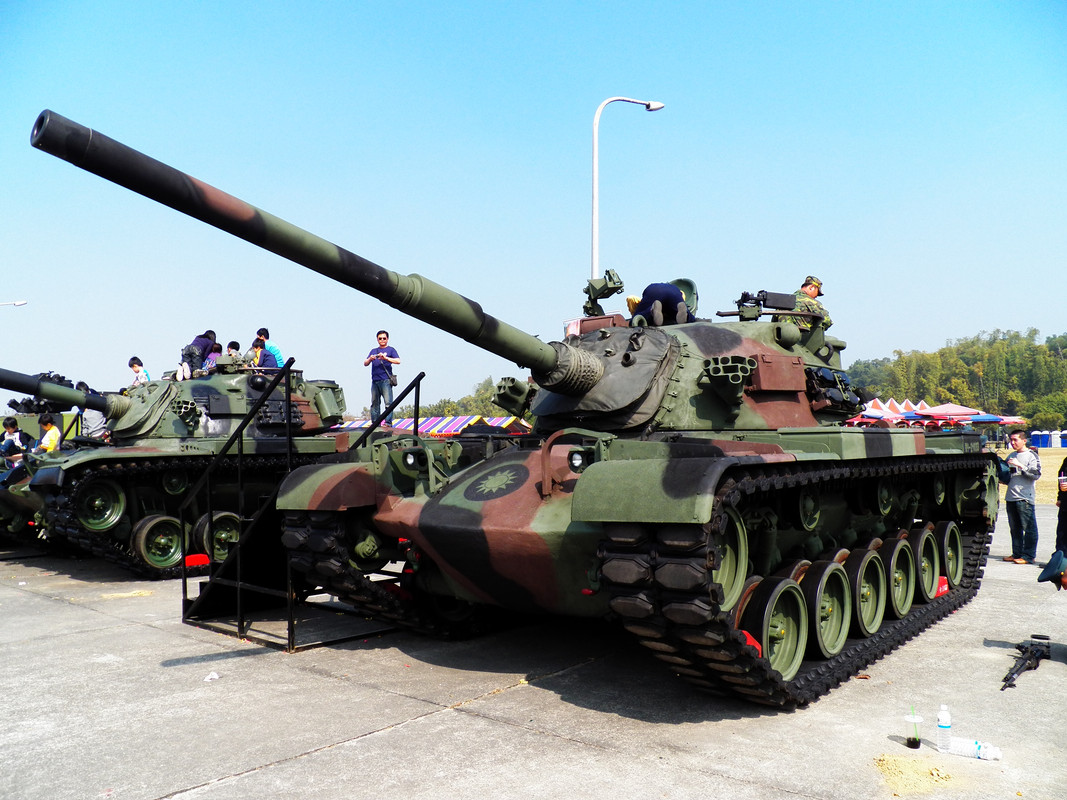
Most notably, the primary MBTs of the Republic of China Army (ROCA) and Republic of China Marine Corps (ROCMC) are some 450 CM-11s of indigenous manufacture and 460 second-hand M60A3TTS' purchased from the U.S. in the 1990s. The CM-11 is a joint U.S.-Taiwanese design dating from the late 1980s that combines the hull of a M60A3 with a M48A3 turret, which now houses the fire control system (FCS) and 105mm M68A1 gun of the first production M1 Abrams variant. The ROCA has attempted to increase their armour protection through the installation of explosive reactive armour (ERA), but weight issues appear to have prevented a widespread introduction. The M60A3TTS continues to operate in its unmodified form, but a limited upgrade that is to see the fitting of a new engine and FCS is planned for the coming years. The CM-12s and M41Ds that complete the Taiwanese tank inventory will likely be retired after the delivery of the M1A2T Abrams.

To transport infantry around the island of 23 million people, Taiwan commenced the development of an indigenous variant of the M113 APC in the 1980s. The resulting design, known as the CM-21, has since served as the basis for a number of specialised variants, including a mortar carrier, artillery tractor, command vehicle and TOW ATGM carrier. Rather than replacing or even supplementing the CM-21 with a new tracked design, the ROCA has ordered a total of 305 CM-34 wheeled infantry fighting vehicles (the first IFVs to enter service with Taiwan) and 650 CM-32 wheeled APCs (seen in the header image) to increase the firepower and mobility of its mechanised infantry brigades. The design of the CM-32/34 will also serve as the basis of a new 105mm mobile gun system, trading in protection for much increased mobility. It's likely that this system will wind up replacing the M41Ds and some of the ROCA's older-generation MBTs in addition to the M1A2T Abrams being delivered.

More than 200 155mm M109A2 and M109A5 self-propelled guns (SPGs) provide mobile fire-support to the Taiwanese Army. The 155mm M114 towed howitzer and its indigenous version the T-65, are nowadays considered to be completely obsolete. An attempt to acquire 40 M109A6 SPGs under a $750 million Foreign Military Sale (FMS) in 2021 was halted after the U.S. government informed Taiwan that the M109A6s could not be delivered until 2026 due to production bottlenecks. The plan for their acquisition was dropped in favour of an additional 18 M142 HIMARS on top of the 11 HIMARS already ordered in 2020. The ROCA also operates 43 RT/LT-2000 'Thunderbolt-2000' MRLs which can be fitted with two to three rocket pods for either 117mm, 180mm or 227mm rockets. Heavier tube artillery continues to see use as well; most notably including the 155mm M1 field gun, the 203mm M115 howitzer, the 203mm M110A2 SPG and even four massive 240mm M1 howitzers installed in bunkers on the Kinmen and Matsu Islands off the coast of China.

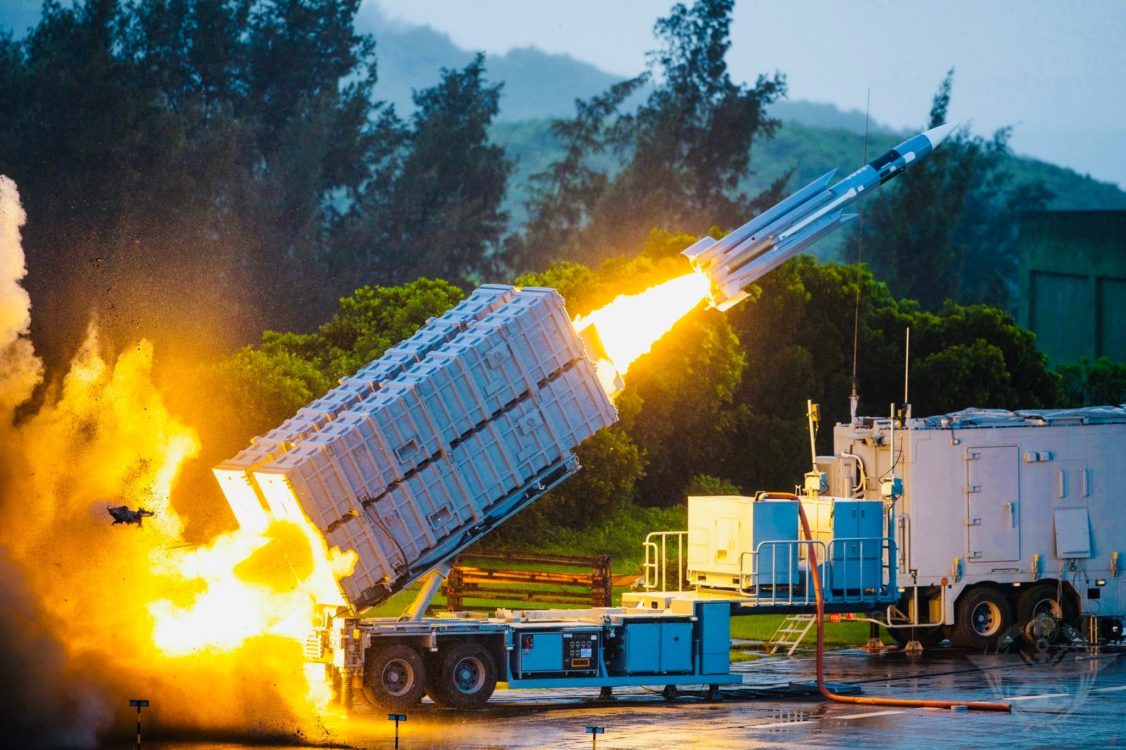
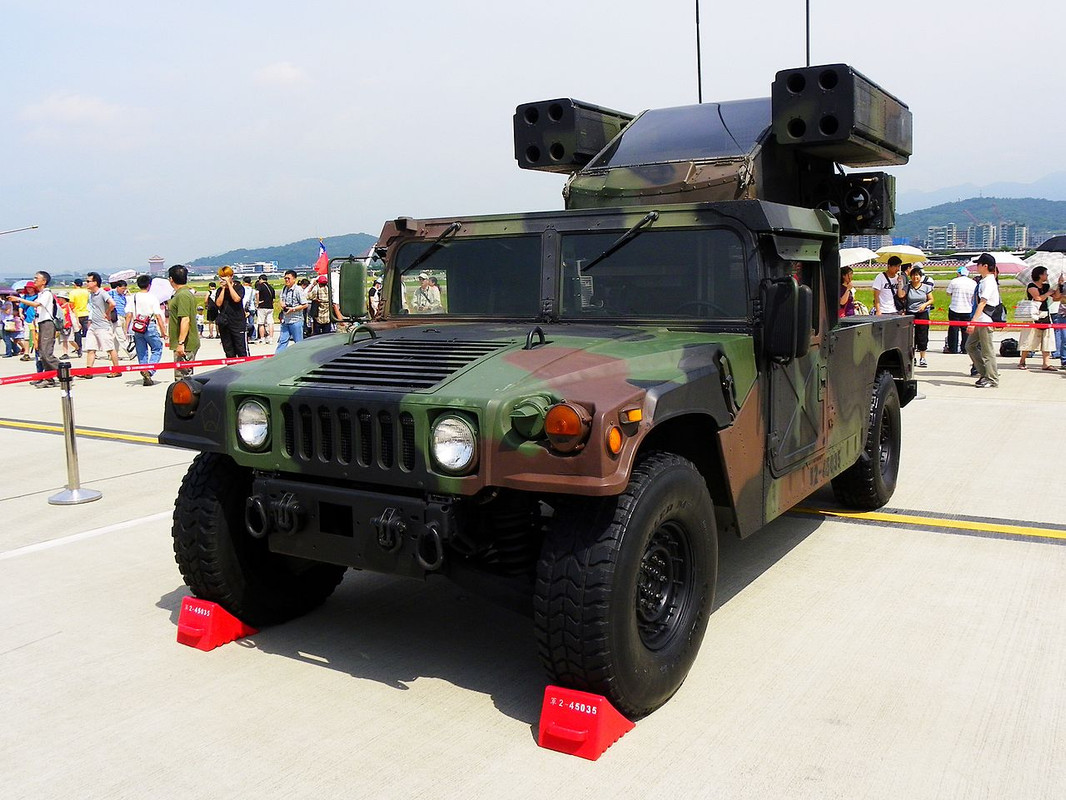
This list attempts to list all AFV types currently in service with the Taiwanese Armed Forces. This list only includes vehicles and equipment currently confirmed to be in service with or on order by the Taiwanese Armed Forces. Radars, trucks and jeeps are not included in the list.
 
(Click on the vehicle or equipment type to get a picture of them)


Main Battle Tanks


Light Tanks

  • 50 M41D (Most in reserve)


Tank Destroyers


Armoured Fighting Vehicles

  • 300 V-150 (Most in reserve)


Infantry Fighting Vehicles


Armoured Personnel Carriers


Amphibious Assault Vehicles


Infantry Mobility Vehicles (IMVs)


Light Strike Vehicles (LSVs)


Military Engineering Vehicles


Command Vehicles


Self-Propelled Mortars


Towed Artillery


Self-Propelled Artillery


Multiple Rocket Launchers


Short-Range Ballistic Missiles (SRBMs)

  • Tien Chi 'Sky Spear' [Range: 300km]
  • M57 ATACMS (On order) [Range: 300km]
 

Ground-Launched Cruise Missiles (GLCMs)

  • Hsiung Feng IIE 'Brave Wind IIE' [Range: 600-1200km]
  • Yun Feng 'Cloud Peak' [Range: 1200-2000km] (Unconfirmed)


Coastal Defence Missile (CDS) Systems


Towed Anti-Aircraft Guns


Self-Propelled SAM Systems


Static SAM Systems


Recommended Articles:

Arms For Allies: Taiwan’s Military Donations

Backwards Modernisation: Venezuela’s Israeli Barak-1 Air Defence Systems

By: Oryx
25 March 2023 at 01:04

By Stijn Mitzer and Joost Oliemans
 
Despite investing tens of billions of USD into its Armed Forces over the past two decades, Venezuela is curiously left with a military that is significantly weaker than before these investments were made. This spectacular feat is not only the result of highly peculiar procurement decisions, but also due to the fact that the Venezuelan Armed Forces of the late 1990s was in fact among the most powerful in South America. For years procuring modern armament from sources like the United States, France and Israel, these countries were replaced by Russia, China and Iran after the United States imposed an arms embargo against Venezuela in 2006 because of President Hugo Chávez's policies.
 
Was Venezuela still able to procure advanced armament from the West prior to 2006, from that year onwards the country almost exclusively turned to Russia to satisfy its defence needs and replace equipment that was no longer operational due to a lack of spare parts, which could no longer be easily acquired from the West. Intriguingly, Venezuela immediately purchased large numbers of older T-72B1 MBTs and S-125 SAM systems from Russia. Though later also acquiring more advanced systems like the Buk-M2 and S-300V, it's interesting to note that several of the weapons systems purchased were arguably less capable than the equipment they were intended to replace.
 
One of the systems that was in need of replacement due to the sudden lack of support was the Israeli-made Barak-1 ADAMS surface-to-air missile (SAM) system purchased brand-new from Israel in 2005. Three of these 8-cell launchers were acquired to replace the French Roland-2 SAM systems in service with the Comando de Operaciones de Defensa Aérea, or CODA in short, a separate service from the Venezuelan Air Force that was tasked with defending air bases and other high-value facilities that might succumb to air attacks during a possible war or coup attempt. As elements of the Venezuelan Air Force played a pivotal role in the November 1992 coup d'état attempt, attacking loyalist air bases with fighter jets and attack aircraft, the importance of air base defences was self-evident to the Venezuelan military.
 

A putchist OV-10 Bronco crashes to the ground after just having been gunned down by a loyalist F-16 during the November 1992 Venezuelan coup d'état attempt. Footage from the dramatic event can be watched here.

With a range of 12km, the Barak-1 air defence advanced mobile system, or ADAMS, is optimised for point defence against low-flying enemy aircraft and helicopters. Eight missiles are carried in a small towed launching system, although a truck-based system was also designed to little commercial success. The missiles are launched vertically from their launch canisters. Although Venezuela would end up being the sole customer of the ground-based launcher, the naval variant found its way into the inventories of the Chilean, Indian and Israeli navies where it is valued for its capabilities. The closest foreign equivalent to the ground-based Barak-1, in function and operation, is the Russian Tor.
 

A Barak-1 missile canister is in the process of being loaded into its 8-cell launcher.

In CODA service, the Barak-1s replaced the Guardian air defence system previously in use, which consisted of the Roland-2 SAM system and radar-guided 40mm Oto Melara 40/L70 cannons paired to a Flycatcher Mk.1/2 fire-control radar. In addition to the CODA, the Venezuelan Army maintained its own arsenal of air defence systems. These consisted of 40mm Bofors AA guns, and AMX 13 S533 and AMX-13M51 Ráfaga self-propelled anti-aircraft guns (SPAAGs). Since their retirement at the turn of the decade, the Venezuelan Army no longer possesses SPAAGs, instead bringing into service the S-125 Pechora 2M, Buk-M2 and S-300V SAM systems acquired from Russia.


A lack of support from the system's manufacturer IAI and Rafael as a result of strained diplomatic relations between Venezuela and Israel soon made its continued operational use difficult. This was compounded by a request by the United States to the Israeli government to end all military contracts with Venezuela that involved U.S.-derived technology, and also refrain from future sales of any Israeli military technology. Together, these factors meant that the service history of the Barak-1 in Venezuelan service was exceptionally short. Acquired at considerable cost, the Barak-1s saw service for just several years before being retired. Rather than replacing the advanced systems with contemporary Russian systems like the Tor or Pantsir, the CODA had to make do with ZU-23 AA guns purchased from Russia, which still remain the primary means of airfield defence today.
  

A Venezuelan Roland-2 SAM system. Like the Barak-1, these were also truck-towed.

A 40mm Oto Melara 40/L70 AA gun formerly operated by the CODA. This gun system uses the same turret as the one found on a wide range of naval ships.

The time that Venezuela could still afford the acquisition of systems like the Barak-1 is long gone, with military deals with China in the early 2010s concluded in exchange for oil shipments. In recent years, Venezuela has sought to reinforce its military by overhauling equipment retired over the past decades. This has so far seen the reactivation of derelict equipment such as AMX-13 and AMX-30 tanks, Cadillac Gage Commando armoured cars and Israeli LAR-160 MRLs. Ironically, rather than actually using these MRL systems in their originally intended role, Venezuela repurposed the AMX-13 chassis of the LAR-160 for use as mine-clearing vehicles and even to serve as the basis of a contraption armed with six 106 mm M40A1 RCLs. The Barak Is are an unlikely candidate for reactivation, and if not already supplied to Iran, undoubtedly survive under a thick layer of dust is an abandoned warehouse, serving as a reminder of a past when Venezuela could still count itself among the most powerful militaries in South America.
 

The first (and last) sighting of the Barak-1 in Venezuela during the 195th anniversary of independence parade in 2006.

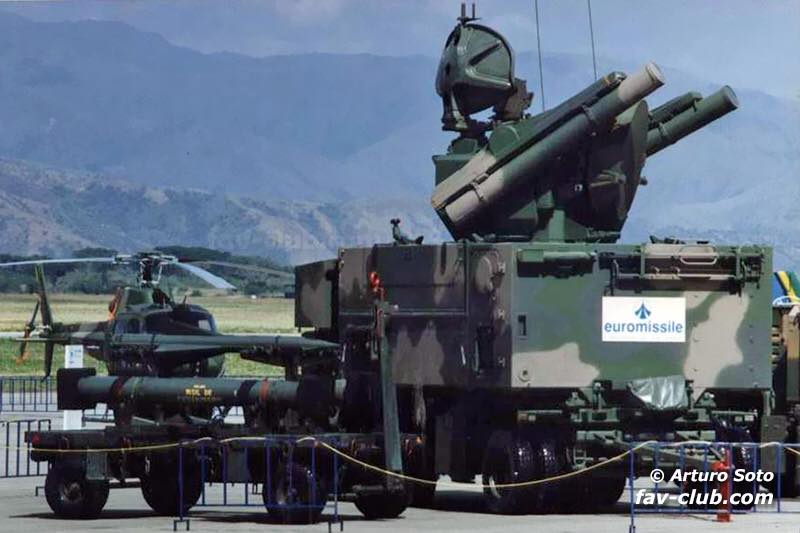
Special thanks to FAV-Club.

Fall Gelb: Documenting Equipment Losses During The 1940 German Invasion Of Luxembourg

24 March 2023 at 01:04


By Stijn Mitzer and Joost Oliemans

The Battle for Luxembourg was a short battle between the Luxembourg Gendarmerie, Volunteer Corps and the German Wehrmacht that resulted in a swift victory for Nazi Germany. The invasion that prompted it began on the 10th of May 1940 and lasted just one day. As a result of the 1867 Treaty of London, Luxembourg had no army and relied on a small force of Gendarmes and volunteers for its defence. Despite not even possessing an army, Luxembourg still managed to fend off the German Blitzkrieg longer than Denmark, which despite actually possessing an army and air force surrendered after just two hours of fighting when it got invaded by Nazi Germany on the 9th of April 1940.

The German invasion of Luxembourg commenced at 04:35 when three Panzer Divisions crossed the border into Luxembourg. Ramps and explosives were used to cross the Schuster Line's barricades. Apart from sporadic exchanges of fire, the Germans did not encounter any significant resistance as the majority of the Volunteer Corps remained confined to their barracks. A handful of German soldiers secured the bridge at Wormeldange and captured the two customs officers there, who had demanded that the Germans halt their advance. The partially destroyed bridge over the Sauer was quickly repaired by German engineers, allowing the crossing of Panzers further into Luxembourg.

Communications from border posts to the Gendarmerie and Volunteer Corps headquarters informed the Luxembourgish government and Grand Ducal court that the invasion had begun. At 06:30 the majority of the government evacuated the capital by motorcade to the border town of Esch. In Esch a group of 125 German soldiers had landed by Fi 156 Storchs to secure the area until the main invasion force arrived. A lone Gendarme confronted the 125 soldiers and demanded that they leave, but was taken prisoner instead. The government motorcade, along with the Grand Duchess of Luxembourg, managed to avoid capture in Esch by fleeing to France over countryside roads.

Rifle-toting Luxembourgish Gendarmes pose in front of a barricade of the Schuster Line shortly before the invasion of Luxembourg. Others Gendarmes were armed with Model 1884 revolvers fitted with a tiny little spike bayonet.

At 08:00, elements of the French 3rd Light Cavalry Division supported by the 1st Spahi Brigade and the 5th Armoured Battalion, crossed the southern border into Luxembourg in a failed attempt to launch a probing attack on German forces. The Royal Air Force, impatient with the reluctance of the French Air Force to conduct sorties against the advancing Germans, ordered several flights of Fairey Battle light bombers stationed in France to carry out daylight low-level attacks against the advancing German military columns. Above Luxembourg the aircraft encountered heavy anti-aircraft fire and suffered significant losses. Nine aircraft were lost on May 10th and a further two on May 11th. [1]
 

A crashed Fairey Battle at Hierzenhaff, the 10th of May 1940. The crew of three was pulled out of the burning wreckage by German soldiers, but Flying Officer Douglas Cameron would later succumb to his injuries in a local hospital

In the meantime the Gendarmerie continued resisting the German troops to little avail; the capital city was occupied before noon. By the evening of the 10th May 1940, most of the country, with the exception of the south, was occupied by German forces. Total Luxembourgish casualties amounted to seven WIA (six gendarmes and one soldier), while the Wehrmacht suffered 36 KIA. On the 11th of May the Luxembourgish government reached Paris and installed itself in the Luxembourg legation. Fearing German aerial attacks, the government moved further south, first to Fontainebleau, and then Poitiers. It later moved to Portugal and the United Kingdom, before finally settling in Canada for the remainder of the war. In exile, the Grand Duchess Charlotte became an important symbol of national unity.

A car passes through one of the 41 concrete blocks and iron gates of the Schuster Line that proved unable to substantially delay the advance of the German Wehrmacht.

A list of the destroyed and captured equipment of both sides can be seen below. Horses are not included in this list. This list will be updated if additional evidence of equipment losses becomes available.


Nazi Germany (0)


Luxembourg (Unknown)


Bicycles

  • An Unknown Number of Government-Issued Bicycles: (A lot, captured)


France (0)


Tanks (3, of which destroyed: 3)

  • France 3 Renault R35: (1, 2 and 3, destroyed)


United Kingdom (11)


Aircraft (11, of which destroyed: 11)

  • 11 Fairey Battle: (1, K 9183, destroyed) (2, L5540, destroyed) (3, L5247, destroyed) (4, L5190, destroyed) (5, L5578, destroyed) (6, P2200, destroyed) (7, K9264, destroyed) (8, K9372, destroyed) (9, K9390, destroyed) (10, P2203, destroyed) (11, P2249, destroyed)

 
[1] Fairey Battle crash site in Luxembourg http://www.rafcommands.com/archive/10294.php

Recommended Articles:
 

WWII’s Absentee: German and Allied Equipment Used By The Turkish Republic

By: Oryx
23 March 2023 at 10:52

By Stijn Mitzer and Joost Oliemans
 
Staying neutral during the Second World War was an art form that Türkiye managed to master through clever diplomacy. It would take until February 1945 when the country finally declared war on Nazi Germany and Japan, and even then no Turkish troops actually took part in the remainder of World War II. In fact, Türkiye's late entry into the war was little more than a formality after the Allies conditioned Türkiye's full belligerency in order to be invited to the United Nations. This no-show was undoubtedly much to the dismay of the British, who had actually expected Türkiye to declare war on Germany already on the 28th of October 1940, when Italy launched its invasion of Greece.

This expectation stemmed from a military alliance concluded between Türkiye, the United Kingdom and France on the 19th of October 1939. [1] Eager to secure Türkiye's future participation in the Second World War that had begun only a month prior, the UK and France promised to deliver large quantities of armament to significantly modernise Türkiye's dilapidated military. Ankara was especially adamant on building up a first-line strength of 500 modern aircraft that would be superior or at least equal to any of its neighbours. [1] Lacking the funds to even acquire half that number, the UK and France eventually agreed to provide Türkiye with more than 300 modern combat aircraft.

Even then, Türkiye was hardly expected to fight a major power like Italy or Germany entirely on its own. Having little in the way of a navy at its disposal and with the majority of its army still riding horseback, it would take a considerable amount of time for the Turkish Armed Forces to absorb all of its new equipment, develop combat tactics for them and deploy them in conjunction with other branches of the military. To make up for Türkiye's expected lack of combat efficacy, a future deployment of British and French forces to the country was envisaged should the need arise, and construction on some 95 mostly rudimentary airstrips all over Türkiye for use by the British, French and the Turks was commenced. [1]

But with the war raging on in Europe, Türkiye ended up receiving only part of the equipment it had asked for. In October 1939, the Turkish Air Force requested the delivery of 159 aircraft from the UK, including Supermarine Spitfire and Hawker Hurricane fighters and Bristol Blenheim and Fairey Battle light bombers. [1] Only half of the requested (and ordered) aircraft were eventually delivered, including just two Spitfire Mk Is. By the time Italy launched its invasion of neighbouring Greece in 1940 the Turkish Armed Forces were likely barely capable of defending its own borders, let alone commence offensive operations against Italian (and later German) forces located in the area. 
 

A line-up of Turkish Spitfires and Hurricanes in 1940. Türkiye received just two out of the fifteen Spitfires it ordered in 1939. Another Spitfire destined for Poland was received after the fall of that country in October 1939. The three aircraft had to be retired in December 1940 due to a lack of spare parts.

The volume of weapons supplied from France equally failed to live up to Turkish expectations. While receiving 36 Morane-Saulnier MS.406C1 fighters (seen in the header image) and 100 Renault R-35 light tanks in early 1940, further deliveries were halted after the invasion of France in May 1940. The United Kingdom too found itself unable to meet Türkiye's repeated requests in 1940 and 1941 – which had meanwhile increased to 546 aircraft – after sustaining significant losses at Dunkirk and during the Battle of Britain. The Battle of Britain did present a unique opportunity for Türkiye to acquire spare parts for its He 111 bombers after Germany had notified Ankara it could no longer deliver these in 1941. [2] Türkiye then turned to the United Kingdom with the peculiar request if it could supply He 111 spare parts scavenged from aircraft that crash-landed during the 1940 Blitz, which got a positive response from London. [3]
 
Another scarcely known war-related development was the construction of an extensive bunker and underground tunnel system from the Marmara Sea to the Black Sea to protect Istanbul from a possible German ground invasion. Known as the Çakmak Line, named after its inventor Marshal Fevzi Çakmak, the Çakmak Line was inspired by the Magniot Line, which in 1940 was handily outmanoeuvred during the Battle of France. Vast sums of money and concrete were poured into the project, and an estimated 350 thousand tons of cement was used during the construction of the fortifications, which equalled one whole year of Türkiye's cement production at that time. [4] After the Germans retreated from Greece in 1944, the Çakmak Line lost its sole purpose and quickly fell into disuse.
 

One of the many surviving bunkers of the Çakmak Line situated West of Istanbul.

As the war began to turn in favour for the Allies from 1942 onwards, the United Kingdom (and to a lesser extent the United States) for the first time were able to meet Türkiye's requests for significant quantities of war materiel. By this time the Allies had not only Türkiye's defensive capabilities to worry about, but also Germany's growing influence in Türkiye. In January 1941, Germany and Türkiye signed a treaty of friendship despite the fact that Ankara was still officially in a military alliance with the UK. After German forces pressed on their advance deeper into the Soviet Union, Berlin sought Turkish permission for German U-Boats to pass through the Bosphorus into the Black Sea and the delivery of chromite ore. While Ankara refused the first request, it proved more willing to supply Berlin with chromite shipments on the condition that it could acquire Germany's latests military equipment on favourable terms. 

In a stroke of genius, Ankara then leaked the details of these negotiations with Berlin to the British and Americans, who then rushed to Ankara to outbid the Germans. When Berlin got wind of this, it immediately accepted Ankara's conditions, resulting in an order for 72 Fw 190 A-3s fighter aircraft and 35 Panzer III and 35 Panzer IV tanks in 1943. [5] Substantial Allied arms deliveries continued as well as London and Washington were again attempting to bring Türkiye into the pact. In December 1943, Churchill, Roosevelt, and President İsmet İnönü met in Cairo, but were unable to reach a consensus. As a result, the Allies in early 1944 announced that they would drastically reduce arms deliveries and cut off virtually all oil exports to Türkiye until Ankara ended chromite shipments to Germany and opened its air bases. Although it complied in halting chromite shipments to Germany in April 1944, Türkiye's air bases remained closed to outside forces.

The end to the export of chromite ore, which is used for the production of steel, was later followed by a complete cessation of diplomatic and trade relations with Germany in August 1944 and a declaration of war on Berlin in February 1945. Interestingly, Berlin had already anticipated a Turkish declaration of war sooner or later, planning strategic bombings on Istanbul in case of a declaration of war. Ultimately,  Türkiye's decision to pick a side ultimately came too late for such retribution to be practicable. [5] Had Germany carried out its original plans, this could have seen Luftwaffe He 111s being intercepted by German-made Fw 190 A-3s in service of the Turkish Air Force. Evidently, Türkiye's non-participation during World War II does not necessarily mean that its wartime exploits aren't an interesting topic of study, as the general lack of documentation on the subject might suggest.
 

A Turkish Air Force Supermarine Spitfire Mk. Vb (left) and Focke-Wulf Fw 190 A-3 (right).

The following list attempts to keep track of heavy military equipment delivered to Türkiye shortly prior, during and shortly after the Second World War. The entries below are sorted by armament category (with a flag denoting the country of delivery). Towed artillery and anti-aircraft guns are not included in this list. The goal of this list is not to provide an overview of Türkiye's wartime strength, but rather to showcase the Turkish Armed Forces' exotic inventory of World War II-era equipment received between 1933 and 1949.

(Click on the equipment to get a picture of them in Turkish service)
 

Turkish Army


Tanks


Armoured Fighting Vehicles


Self-Propelled Artillery

  • 49 Bishops [1943-194?]
  •  AEC Mk I Deacon Gun Carriers [194?-194?]


Turkish Air Force


Fighter Aircraft


Attack Bombers


Bombers


Trainer Aircraft


Utility And Trainer Aircraft


Transport Aircraft

  • Nazi Germany 5 Ju-52s [1944-194?] (Used by Turkish State Airlines)
  • ~110 C-47/DC-3s [1947-1998]

Flying Boats


Turkish Navy


Submarines

  • 1 Gür-Class [1934-1947]
  • Nazi Germany 3 Saldıray-Class [1939-1958] (One more boat seized by Nazi Germany)
  • 3 Oruç Reis-Class [1942-1958] (One more boat seized by the British and sunk during WWII)
 

Destroyers


Minelayers And Minesweepers


Motor Torpedo Boats

 
[1] The Turkish Air Force, 1939-45: The Rise of a Minor Power https://www.jstor.org/stable/4283380?origin=JSTOR-pdf
[3] The Turkish Air Force, 1939-45: The Rise of a Minor Power https://www.jstor.org/stable/4283380  
[4] Another Section of the Çakmak Line of Defense in Çatalca Surfaced http://en.istanbul.gov.tr/another-section-of-the-cakmak-line-of-defense-in-catalca-surfaced

Dad’s Army: List Of Russian Army Equipment Deployed In Ukraine Older Than Our Parents

By: Oryx
22 March 2023 at 12:05

By Stijn Mitzer, Joost Oliemans and Kemal
  
Those expecting the 2022 Russian invasion of Ukraine to be a spectacle of Russian military might were soon left sorely disappointed. Yet the degradation of its combat abilities has continued apace, and one year into its war the cracks in the Russian military machine are starting to widen into chasms. Sustaining losses that meanwhile number over 1800 tanks and more than 2000 IFVs, the Russian Army has already reached the point at which it is no longer able to replace lost equipment with armament that is at least roughly equivalent to the combat worth of the equipment lost. [1] In order to replace its lost T-72B3 Obr. 2016s and T-80BVMs MBTs, the Russian arms industry hasn't churned out any of the much anticipated T-14 Armatas, but rather begun introducing hundreds of refurbished or upgraded variants of the antiquated T-62 MBT and even 1950s-era T-54s in an unmodified state. [2]
 
The situation is hardly any better for other components of the Russian Army, with 1950s and 1960s-era BRDM-2 AFVs and BMP-1 IFVs and BTR-50 APCs finding their way to frontline units as Ukrainian forces are starting to take delivery of advanced Leopard 2A6s, M1 Abrams MBTs and M2A2 and CV90 IFVs from partners in the West. While Russian tank repair plants busy themselves upgrading ageing equipment to feature additional protection so that they can theoretically stand a chance on the battlefields of Ukraine, the brunt of its reactivated relics is sent to the front in a virtually unmodified state, save for an oil change.
 
This emerging makeshift military has meanwhile included a hodgepodge of other antiquated materiel, including howitzers from the 1940s, AFV-mounted naval guns from the 1950s and even Mosin-Nagant bolt-action rifles that have been noted to be in service with Pro-Russian forces of the Donetsk and Luhansk Republics since 2022. In order to continue to supply its freshly drafted or recruited forces, the Russian MoD will undoubtedly be forced to look into yet more forgotten corners of military storage depots to keep the gears of its army from grinding to a halt. The resulting decay of combat efficiency is likely to accelerate as poor equipment and complicated logistics lead to an uptick in casualties, the requirement for additional arms increases again, and consequently the need to reactivate even more obscure remnants of the Soviet ghost exacerbates.

A row of MT-LBVM AFVs fitted with 12.7mm 2M-1, 14.5mm 2M-7 and 12.7mm DShK naval gun mounts. These originally equipped ships dating from the 1950s.

As the average age of the authors of this (tongue-in-cheek) article is 25, we thought it would be illustrative (and frankly amusing) to list every equipment type currently spotted in use with Russian forces in Ukraine that predates our parents. For those reading this that have themselves managed to survive the 70's – rest assured, much of this equipment has undoubtedly weathered the ages far worse than you have. We only consider equipment sufficiently archaic to be included here if it entered service prior to 1970, which should mean that to all but the senior among our readership it was properly outdated by the time they came of drinking age.

(Pro-)Russian forces that appear to be readying themselves for a WWII-reenactment rather than for 21st century warfare.

This list only includes vehicles and equipment of which photo or videographic evidence is available. This list will be updated as additional contenders are sighted.

(Click on the numbers to get a picture of each equipment type)


Tanks


Armoured Fighting Vehicles


Infantry Fighting Vehicles


Armoured Personnel Carriers


Armoured Recovery Vehicles


Towed Artillery


Multiple Rocket Launchers


Anti-Aircraft Guns


Self-Propelled Anti-Aircraft Guns


Naval Guns (Installed On MT-LBVMs and ATS-59Gs)


Trucks, Vehicles and Jeeps


Military Gear

 
[1] Attack On Europe: Documenting Russian Equipment Losses During The 2022 Russian Invasion Of Ukraine https://www.oryxspioenkop.com/2022/02/attack-on-europe-documenting-equipment.html
[2] From Hibernation to Humiliation? Russia Brings T-54 Tanks Out of Retirement  https://notes.citeam.org/t-54?1=
 
Recommended Articles:


Doubling Down: Japan’s Military Donations

By: Oryx
22 March 2023 at 01:06

By Stijn Mitzer and Joost Oliemans
 
After decades of bidding for peace, Japan is now once more preparing for the possibility of war, for the first time truly introducing offensive capabilities to the Japan Self-Defense Forces (JSDF) and installing long-range anti-ship missiles on islands near Taiwan. Despite its post-Cold War hopes of diplomatically resolving its territorial conflicts, it now finds itself perched at the edge of an increasingly assertive China and Russia (which still occupies four of Japan's southernmost Kuril Islands) and a nuclear-capable North Korea. As part of its attempts to strengthen its military posture, Japan is also seeking to increase the capabilities of Asian countries against Chinese interference and enhance sea surveillance, most notably the Philippines and Malaysia.
 
Though this support has so far remained limited to the donation of unarmed patrol craft, trainer aircraft and non-lethal equipment, Japan is looking for additional ways to up its contributions amid legislative changes that finally allow Japan to export military equipment abroad. The Philippines was the first nation to purchase military equipment from Japan, acquiring two 96m-long patrol vessels and several air surveillance radars in 2020. Japan subsequently pledged ¥210 million to enhance the maintenance capabilities of the Philippine Coast Guard to service these vessels. [1] The Philippines has already been the recipient of ten 44m-long patrol craft whose construction was funded by the Japanese government and five ex-JSDF Beechcraft King Air TC-90 twin-engine aircraft, and is set to receive a number of UH-1J helicopters in 2023 or 2024. Vietnam has similarly been the recipient of Japanese aid, receiving six fishery patrol vessels in 2016 and 2018. In September 2021, both countries signed an agreement that allows Japan to give defence equipment and technology to Vietnam as the two countries gradually step up their military cooperation. [2]

Initiatives by Japanese private organisations have also made an important contribution to maritime security in the Pacific. The Nippon Foundation is one of the organisations that has been donating funds and even patrol vessels to countries in the Pacific, and in 2018 it even donated a new 40-meter patrol vessel to the island country and microstate of Palau. [3] Whether to reign in Chinese influence or combatting poaching or illegal fishing, government and private donations contribute to maritime security in the Pacific in one way or another.
 

One of the ten Philippine Coast Guard Parola-class patrol craft whose construction was funded by Japan.

Japan's efforts to aid Ukraine in its fight against the Russian invasion of February 24 were first kickstarted by a letter to the Japanese Defence Minister Nobuo Kishi from Oleksii Reznikov, Ukraine's Minister of Defence on February 25, 2022. [4] In the letter, Reznikov first asked for the delivery of military equipment from Japan. Kishi's hands were bound by Japan's strict export regulations, and thus began an onerous journey for the Japanese government to find out what items it could send while remaining within the limits of the strict laws set by previous administrations since the 1960s.
 
The Japanese Ministry of Defence first looked into Article 116-3 of the Self-Defense Forces Law, which stipulates that excess equipment of the Self-Defense Forces can be transferred to developing allied countries. [4] However, Article 116-3 specifically excludes the transfer of armament and munitions. Another hurdle to overcome was the 'Three Principles on Transfer of Defense Equipment' policy adopted in 1967, which prohibits the export of (non-lethal) military equipment to "parties to the conflict". [4] Only North Korea and Iraq have ever been subjected to the specific measures required to be defined as ''a party to conflict'' by the 'Three Principles' policy. Thus, Japan was free to supply Ukraine with non-lethal defence equipment as ironically it's not "party to the conflict" according to Japanese law. [4]

However, the Japanese MoD then ran into problems with the "operation guideline", which limits the supply of non-lethal equipment solely to items used for the purposes of transport, rescue, patrol (ships), surveillance and demining. [4] This thus precluded the transfer of helmets and bulletproof vests as these are considered defensive equipment by Japan's Export Trade Control Ordinance. To bypass these strict regulations, the Japanese government declared that the Type 88 helmets used by its own military are technically not military equipment since they can also be bought on the private market – certainly a creative interpretation. [1] 
 
To avoid future issues in supplying countries with non-lethal equipment such as helmets, the Japanese government also voiced its intent to add these along with bulletproof vests to the ''operational guideline''. After this interesting but arduous game of bureaucratic hoop-jumping, 6900 Type 88 helmets and 1900 Type 3 Kai bulletproof vests along with other military clothing and humanitarian aid were then flown onboard JASDF KC-767 and C-2 transport aircraft to Europe over the course of March 2022.

A Ukrainian soldier dons Japanese military clothing. While Japan's military support to Ukraine has so far exclusively consisted of non-lethal items, even this level of support was unthinkable just a few years ago.

Given developments in Ukraine and closer to Japan's (sea) borders, it seems highly likely that Ukraine and Asian countries will continue to be the recipient of military equipment donated by Japan. Maintaining a military apparatus that is undergoing constant modernisation, this could in the future also include retired JSDF equipment such as tanks, helicopters and ships, which are generally maintained in meticulous condition. Until that moment, Ukraine is sure to press the Japanese government for additional military support, undoubtedly leading to further bureaucratic hoop-jumping as the government scuffles to remain within the limits of the laws set by previous administrations.
 
A list of military equipment and other heavy equipment known to have been donated by the government of Japan to other countries can be viewed below. Private donations are not included in this list. When the number of donated items and their date of delivery are known, they are added as such. This list is updated as new donations are reported.

(Click on the equipment type to view a picture of them in service with their new operators)
 

Europe


Ukraine

 
[3] Japan Patrol Vessel Donation to Help Palau Counter Maritime Threats https://www.nippon.com/en/features/c04802/
[4] 防弾チョッキ提供 ウクライナに武器輸出?https://www.nhk.or.jp/politics/articles/feature/79571.html
 
Recommended Articles:
 
Aid From Asia: Japan’s Military Support To Ukraine 
 

The North Korea Of Europe: Listing Socialist Albania’s Military Equipment

21 March 2023 at 11:05

By Stijn Mitzer and Joost Oliemans
 
The People's Socialist Republic of Albania was a Marxist-Leninist one party state that existed from 1946 until 1991. Throughout much of its existence, the country was led by Enver Hoxha, who ruled Albania by establishing a Stalinist style of governance known as Hoxhaism. Despite far-reaching similarities with North Korea, Albania and its authoritarian ruler arguably constitute a forgotten chapter of the Cold War period. Albania's close ties with the Soviet Union until the Albanian–Soviet split in 1961, then with China until the Sino-Albanian split in 1978 and ultimately its almost complete international isolation from 1978 onwards had a profound effect on the equipment inventory and operational readiness of the Albanian People's Army (UPSh). To this day, the UPSh remains the only European military to have been mostly equipped with Chinese-made weaponry, aircraft, ships and other equipment.

Albania is well known for the many bunkers still scattered across its mountainous landscape today. Highly paranoid of an impeding invasion by neighbouring Yugoslavia, Enver Hoxha ordered the construction of some 750.000 bunkers (for a population of less than 3 million) throughout the entirety of the country. These were to be manned largely by civilians armed with WWII-era Mosin-Nagant rifles and PPS(h) submachine guns, but notably lacking portable anti-tank weaponry. A more sensible development came in the form of extensive tunnel systems carved out in Albania's mountains, which could house much of the air force, navy and the army's heavy equipment. Had Yugoslavia ever seriously contemplated an invasion of Albania, it is possible that the huge numbers of bunkers – as ineffective as they might have been in their intended role of halting a mechanised assault – would have succeeded in deterring Yugoslavia from occupying the entirety of the country simply for the perceived effort of destroying or bypassing them.

While North Korea carefully played the Soviet Union and China to economically and militarily benefit the most from both countries, Hoxha broke off relations with the Soviet Union in 1961, and open criticism on China's foreign policy led the latter to break off relations with Albania in 1978. From that point on, the country was virtually cut off from the outside world and no longer able to procure spare parts or replenish its ageing equipment inventory. Though the reopening of trade with China in the early 1980s enabled Albania to once again acquire spare parts, it would take until the 1990s before Albania purchased any new weaponry again (consisting of HJ-8 ATGMs and HN-5 MANPADS). [1] Before the 1990s, equipment like ATGMs and MANPADS was entirely absent, with the UPSh instead deploying a fleet some 700 MBTs, 1600 artillery pieces and copious amounts of AA guns to make up for its lack of modern armament.
 
In an effort to at least partially make up for the drought of new acquisitions experienced during the late 1970s and 1980s, Albania also launched the domestic production of a number of small arms types. In addition to the Mosin-Nagant bolt-action rifle and the SKS semi-automatic rifle already produced, these consisted of the Chinese Type 54 HMG, the Type 56 and Type 69 RPGs and the Type 56 assault rifle. These Chinese designs subsequently formed the basis for a number of indigenous variations manufactured well into the 1990s. [2] Ironically, Albania was the last country to produce the Soviet Mosin-Nagant, producing a final batch as late as 1961! [3] The 1997 Albanian Civil War resulted in the looting of many of these arms from weapons depots around the country, with sizeable quantities later making their way to Kosovo. Most of the other Chinese and Soviet-made weaponry has since been scrapped or survives in museums. Still, some Albanian armament has managed to endure in active stocks long enough to be sent to Ukraine in 2022, where its Chinese markings caused speculation about hitherto unreported weapons deliveries of China – while their real provenance is thus much older. [4]
 
This list attempts to list all AFV types in service with the Albanian People's Army
until 1991. This list only includes vehicles and equipment of which (photographic) evidence is available.
 
(Click on the equipment to get a picture of them in Albanian service)
 

Tanks


Tank Destroyers


Armoured Fighting Vehicles


Armoured Personnel Carriers


Engineering Vehicles And Equipment


Artillery Tractors


Heavy Mortars


Towed Artillery


Multiple Rocket Launchers


Anti-Aircraft Guns


Static Surface-To-Air Missile Systems


Radars


Utility Vehicles


Trucks


Albanian HQ-2 surface-to-air missile (SAM) systems are paraded through Tirana.

[1] https://i.postimg.cc/cHzWxzGk/e3.png

Russia’s Wars: Listing Equipment Losses During The 1992 Moldo-Russian War

20 March 2023 at 19:20

By Stijn Mitzer and Joost Oliemans
 
Transnistria owes its existence to a brief war in 1992 between Moldova and Russian-backed separatists who feared that Moldova would become part of Romania after the collapse of the USSR. The war ended when the Russian 14th Army, stationed in what was then the Moldavian Soviet Socialist Republic, intervened on behalf of Transnistria and defeated the forces of the newly independent Republic of Moldova. Despite the fact that armed conflict ceased the same year, the situation in Transnistria remains extremely complicated, with the breakaway state wishing to join the Russian Federation while remaining reliant on Moldova for exporting the limited produce its economy outputs.
 
The Transnistrians began preparing for war already before the fall of the Soviet Union, establishing a number of self-defence militias in the summer of 1990. In 1991, these militias were merged to form a unified fighting force known as the Dniester Guard. Around the same time, hundreds of Russian Cossacks arrived in the region. Alongside local Transnistrians, the Cossacks began raiding weapons depots of the 14th Army and started arming themselves. In one instance, a crowd of Transnistrian civilians succeeded in blocking and later surrounding a unit of the 14th Army that was returning from firing exercises, capturing ten T-64BV MBTs and ten BTR-70 APCs in the process. [1]

After Moldava entered what according to the Moldovan government was and still is Moldovan territory in June 1992, urban warfare ensued in and near the city of Bender. The Transnistrian side deployed several T-64BVs earlier taken over from the 14th Army, marking the combat debut of the T-64. Two T-64s were quickly destroyed by 100mm MT-12 anti-tank guns when they attemped to advance on Moldovan-held parts of Bender however, while four more were damaged or captured. The conflict also witnessed the widespread deployment of DIY armour as civilians struggled to master their freshly seized weaponry, which even included BM-27 Uragan MRLs and MiG-29s on the Moldovan side.

A list of the destroyed and captured vehicles of both sides can be seen below. This list only includes destroyed vehicles and equipment of which photo or videographic evidence is available. Therefore, the amount of equipment destroyed is higher than recorded here. Trucks are not included in this list.
 

(Click on the numbers to get a picture of each individual captured or destroyed vehicle)


Transnistria (10, of which destroyed: 5, damaged: 4, captured: 1)


Tanks (6, of which destroyed: 2, damaged: 3, captured: 1)


Armoured Fighting Vehicles (1, of which damaged: 1)


Improvised Armoured Fighting Vehicles (2, of which destroyed: 2)


Infantry Fighting Vehicles (1, of which destroyed: 1)


Moldova (9, of which destroyed: 7, captured: 2)


Armoured Fighting Vehicles (3, of which destroyed: 3)


Armoured Personnel Carriers (2, of which destroyed: 1, captured: 1)


Towed Artillery (1, of which captured: 1)


Anti-Aircraft Guns (3, of which destroyed: 3)

 
[1] Боевое применение танка Т-64БВ в боях за г. Бендеры http://btvt.info/5library/t64benderi1992.htm

A Visual Guide To North Korea’s Fighting Vehicles

6 March 2023 at 11:08

By Joost Oliemans and Stijn Mitzer
 
The goal of this list is to comprehensively catalogue North Korea's current inventory of vehicles and equipment. In an effort to streamline the list and avoid unnecessary confusion, civilian trucks towing military trailers and military trucks on which missiles, rockets or radars are based are not included in the list. If several configurations of a vehicle with one designation are known, they are added as such. The part within apostrophes refers to an unoffical name, such as the US DoD M-xxxx designation system (referring to the first year the system was identified). A year in square brackets after the designation of a vehicle refer to its perceived date of inception. When available, the range (of missiles) are added in square brackets. All vehicles listed are presumed to still be in use with the Korean People's Army. This list is updated as additional vehicle types are uncovered.
 
Click on the equipment to get a picture of them in North Korean service.


Tanks


Armoured Fighting Vehicles


Anti-Tank Guided Missile Carriers


Infantry Fighting Vehicles


Armoured Personnel Carriers


Infantry Mobility Vehicles


Military Engineering Vehicles


Command Vehicles


Heavy Mortars


Self-Propelled Mortars


Tank Destroyers


Towed Artillery 


Self-Propelled Artillery


Multiple Rocket Launchers


Towed Anti-Aircraft Guns


Self-Propelled Anti-Aircraft Guns (SPAAGs)


Self-Propelled SAM Systems


Static SAM Systems


Coastal Defence Missile Systems


Artillery Rockets


Ballistic Missiles


Ground-Launched Cruise Missiles (GLCMs)


Unmanned Aerial Vehicles (UAVs)


Radars


Recommended Articles:
 

Attrition In Action: List Of Ukrainian Army Equipment Not Yet Destroyed By Russia

3 March 2023 at 08:36

By Stijn Mitzer and Joost Oliemans
  
February 2023 marks one full year of epic struggle on Ukraine's part to preserve its very existence. Rather than succumbing to the invaders beleaguering the country from the North, South and East, it has managed take the initiative in a conflict that was heavily stacked against it. Yet one year also marks the point where the war is beginning to surpass perhaps any conflict since WWII in terms of ferocity and, necessarily, losses. Though these losses are skewed to the Russian side, attrition on the Ukrainian side is also unprecedented, and sustainable only through material support from its allies. With new contingents of Western armament on the way, this list now attempts to denote what types of heavy equipment are known to be in use on the battlefield that have not yet been confirmed destroyed or captured. As opposed, to the Russian counterpart of this list, we might thus expect this list to grow rather than dwindle down as time progresses.

Obviously, not all equipment known to have been developed by Ukraine or pledged delivered by an ally may be actually operational, so to keep things manageable this list will include only those systems that have been acknowledged to be in use with the military. Nevertheless, certain systems may be included or omitted on a case-by-case basis for instance because they are expected to be used operationally or, conversely, because including them would be impractical. Categories that have been excluded are small-sized (EOD) UGVs, civilian-grade UAVs, transport and training aircraft, naval vessels and (armoured) trucks. This list is updated as additional vehicle types are confirmed to be destroyed or captured.

Our list showing Russian Army equipment not yet destroyed or captured in Ukraine can be found here. 

(Click on the equipment type to get a picture of them)


Tanks


Armoured Fighting Vehicles


Unmanned Ground Vehicles


Infantry Fighting Vehicles


Armoured Personnel Carriers


Mine-Resistant Ambush Protected (MRAP) Vehicles


Infantry Mobility Vehicles


Command Posts And Communications Stations

  • 9S457 (For S-300V) (In service with Ukraine before the 2022 invasion)
  • LPG WDSz (For AHS Krab) [June 2022] 

Engineering Vehicles And Equipment


Artillery Support Vehicles And Equipment


Towed Artillery


Self-Propelled Artillery


Multiple Rocket Launchers


Surface-To-Surface Missiles


Short-Range Ballistic Missiles


Coastal Defence Missile Systems


Anti-Aircraft (AA) Guns


Self-Propelled Anti-Aircraft Guns


Surface-To-Air Missile Systems


Radars


Helicopters


Unmanned Aerial Vehicles

 
Special thanks to Buschlaid.
 
Recommended Articles:


Counting Down: List Of Russian Army Equipment Not Yet Destroyed In Ukraine

2 March 2023 at 14:11


By Stijn Mitzer and Joost Oliemans
  
Russia's one year anniversary of its special military operation in Ukraine marks a pivotal point not just for its symbolic significance, but also because it coincides with a sudden realisation on our part. That being that keeping track of the types of armoured fighting vehicles (AFVs) and aircraft in use by the Russian Armed Forces that have been destroyed has become considerably harder than listing those that haven't been, and subtracting from that list as time progresses. Hence, the list that follows.
 
Obviously, not all equipment in use with Russia's military may be deployed in Ukraine or even be actually operational for that matter, so to keep things manageable this list will include only those systems that have been acknowledged to be in mass production. Nevertheless, certain systems may be included or omitted on a case-by-case basis for instance because they are expected to be used operationally or, conversely, because including them would be impractical. Categories that have been excluded are small-sized (EOD) UGVs, civilian-grade UAVs, transport and training aircraft, naval vessels, coastal defence (missile) systems and (armoured) trucks. This list is updated as additional vehicle types are confirmed to be destroyed or captured.

Our list showing Ukrainian Army equipment not yet destroyed or captured can be found here. 
 
(Click on the equipment type to get a picture of it)


Tanks


Armoured Fighting Vehicles


Unmanned Ground (Combat) Vehicles


Armoured Trains


Infantry Fighting Vehicles


Armoured Personnel Carriers


Mine-Resistant Ambush Protected (MRAP) Vehicles


Infantry Mobility Vehicles


Light Strike Vehicles (LSVs)


Engineering Vehicles And Equipment


Self-Propelled Anti-Tank Missile Systems


Artillery Support Vehicles And Equipment


Towed Artillery


Self-Propelled Artillery


Multiple Rocket Launchers


Short-Range Ballistic Missile And Cruise Missile Carriers


Surface-To-Air Missile Systems


Radars


Jammers And Deception Systems


Combat Aircraft


Command And Control Aircraft


Helicopters


Unmanned Aerial Vehicles


A(nother) Shot At Power: Thailand’s DTI-1 Rocket Launchers

By: Oryx
13 January 2023 at 22:00

By Stijn Mitzer and Joost Oliemans
 
The mid-to-late 1990s was shaping up to become the Royal Thai Armed Forces' golden decade. The acquisition of 18 F-16As propelled the Royal Thai Air Force to the forefront of military aviation in the region, while the Royal Thai Army was reinforced through the addition of M60A3 MBTs and 155mm M109A5 SPGs. The Royal Thai Navy was to benefit from this period of prominence the most, becoming the recipient of Southeast Asia's first and only aircraft carrier, the HTMS Chakri Narubet. Equipped with six AV-8S Matadors and four S-70B Seahawks, this ship, along with 18 A-7E Corsair ground-attack aircraft, three P-3T ASW aircraft and a brand-new replenishment ship and six frigates acquired from China, was set to transform the Royal Thai Navy into the most powerful naval force in the region for years to come.

A dearth of funding as a result of the 1997 Asian financial crisis however meant that neighbouring countries were ill-positioned to challenge Thailand's newly-acquired capabilities anyway, and the lack of financial means of its own meant that Thailand was soon struggling to maintain or replace all of this equipment. Already two years after their delivery just one out of the nine AV-8S' could be kept operational. The type soon had to be retired without a replacement, leaving the Chakri Narubet without any aircraft (a situation that continues to today). The same fate was bestowed on the A-7Es and P-3Ts, making Thailand's bid for becoming the undisputed regional superpower rather short-lived.

Only in recent years has Thailand found the necessary funding to make another attempt at expanding its capabilities beyond those of its neighbouring countries, while in other areas it is finding itself merely catching up with regional rivals. After being the first country in Southeast Asia to operate submarines in the 1930s, it is now one of the last nations to (re-)acquire this capability in the form of one S26T attack submarine from China. [1] One capability Thailand did make substantial strides in are in its long-range fire capabilities thanks to a 2011 deal between Thailand's Defense Technology Institute (DTI) and China to research and eventually license-produce large-calibre rocket launchers. [2]

These consist of the WS-1B and WS-32 that boast a maximum range of 180km and 140km respectively. The WS-1B received the Thai designation of DTI-1 while the WS-32 is designated as the DTI-1G (G standing for guided). DTI also struck a license to produce and further develop Chinese 122mm rockets, which Thailand installed on trucks and even on the Type 85 APC. Together with the purchase of French 155mm Caesar SPGs, the local integration of ATMOS 2000 SPGs (known as the M758 ATMG in Thailand) and 120mm Spear mortars from Israel, and the introduction of Chinese BL904A artillery locating radars, Thailand should have secured its regional artillery supremacy for years to come. [3] [4] [5]
 

The DTI-1 on a 6x6 Volvo chassis with an armoured cabin to protect the crew against small arms fire and shrapnel.

The DTI-1 (or WS-1B) is a 302mm artillery rocket system developed on the basis of the WS-1 in the early 1990s. Each rocket has four fixed fins and can lob a 150kg warhead out to a range of up to 180km. The WS-1B was first demonstrated to the Chinese People's Liberation Army Ground Force (PLAGF), which however showed no interest in the system. Its first success came in 1996 when Türkiye struck a deal to license produce the WS-1B as the TRG-300 Kasirga, after the U.S. refused to grant the country a license to produce the MGM-140 ATACMS. The WS-1B was also exported to Sudan in the 2000s along with the more capable WS-2. Roketsan of Türkiye has further developed the WS-1B (Block II and Block III) to incorporate GPS/INS guidance at the cost of a reduced range and warhead (for the Block III). [6]

Thailand's 150km-ranged DTI-1G integrates a guidance suite that is connected to China's BeiDou Navigation Satellite System. This enables the DTI-1G to attain a circular error probable (CEP) of less than 40 metres at a maximum range of 140km. [8] The launcher of the DTI-1G consists of four canisters in a 2x2 configuration externally similar to the American MIM-104 Patriot SAM launcher. In contrast, the rockets of the DTI-1 are housed in four large open-ended tubes. Thailand originally planned to assemble six DTI-1Gs (enough for one battalion) and two DTI-1s, though delays meant that DTI ultimately constructed just three DTI-1Gs awaiting the development of a new modular launcher that will presumably see the Royal Thai Army fnally acquiring the systems in meaningful quantities. [8]
 

The original configuration of Thailand's DTI-1 launcher.

The proposed full complement of a (Thai) DTI-1G battery.

Both the DTI-1's and DTI-1G's launchers are installed on commercially available trucks. The DTI-1 and the associated transloading system were initially based on an unarmoured Volvo 6x6 chassis, though the former has since received an armoured cabin to protects its occupants against small arms fire and shrapnel. The DTI-1G is based on the Iveco Trakker 440 8x8 heavy-duty truck, which received an armoured cabin from the get go. The reloading vehicles of both the DTI-1 and DTI-1G lack an armoured cabin however. In 2022, the Defense Technology Institute showcased a new 6x6 launcher based on the Tatra 815-7 chassis that can be used to launch both unguided 122mm rockets and the DTI-1(G)s. [9]


Thailand knows no perpetual enemies among the countries it borders. The last time the country took up arms was during the 2008 Cambodian-Thai border skirmish that has since been resolved through the International Court of Justice. Several border disputes with Cambodia remain outstanding however, and a full border demarcation satisfactory to both countries is yet to be made. Highly unlikely as it is, renewed conflict with Cambodia is the most plausible scenario where these arms will be put to use. Cambodia fields large numbers of 122mm MRLs and has in recent years acquired six 300mm AR2 MRLs from China. [12] Boasting a range in excess of 130km, the AR2 can fire 16 300mm rockets out to a similar range to Thailand's DTI-1s whilst carrying a significantly heavier warhead (280kg vs 150kg). These escalations in capabilities are illustrative of the type of advancements in rocket artillery that have changed the military landscape of the new millenium.

A Cambodian 300mm AR2 MRL.

Despite being a legacy customer of American weapons systems, Thailand is increasingly turning to China for its defence needs. This has included VT4 MBTs, VN16 Amphibious Assault Vehicles, VN1 IFVs, a S-26T attack submarine, a Type 071E and the CY9 and BZK005 MALE U(C)AVs. Cooperation with China has so far allowed Thailand to license produce a number of advanced weapon systems at the same time, including the Thai Army's DTI-1/1G guided MRLs, in deals that would otherwise be unattainable from other countries. This leniency has allowed Thailand to revive at least some of its former ambitions of becoming a South East Asian Tiger, with a more realistic perspective of maintaining that status this time round.

The new modular launcher that can be used to launch both unguided 122mm rockets and the DTI-1(G)s.

[1] History of Royal Thai Submarines in World War Two http://www.combinedfleet.com/Royal%20Thai%20Submarines.htm
[4] Thailand Unveils New 155 mm Truck Mounted Howitzer https://defence-blog.com/thailand-unveils-new-155-mm-truck-mounted-howitzer/
[8] สทป. ดำเนินการทดสอบสมรรถนะและทดสอบทางยุทธวิธีต้นแบบรถฐานยิงจรวดหลายลำกล้องอเนกประสงค์ ณ สนามทดสอบ ศป. จ.ลพบุรี https://www.facebook.com/dtithailand/posts/pfbid022

Bye Bye Berlin: Türkiye’s He 111 Bombers

By: Oryx
12 January 2023 at 17:16

By Stijn Mitzer and Joost Oliemans
 
Looking at the title and header image one might easily be led to conclude that we've gotten the aircraft type wrong for this particular article. Where is the characteristic fully glazed cockpit everyone has come to know the Heinkel He 111 for, one might ask.* Nonetheless, this aircraft too is a German-made Heinkel He 111. In fact, it's one of 24 aircraft of the type delivered to the Turkish Air Force (Türk Hava Kuvvetleri) in late 1937 and early 1938. The lack of the He 111's most distinguishing feature is explained by the fact that the aircraft purchased by Türkiye were of the earlier J series, while the infamous glazed nose cockpit design was only introduced on aircraft from the more common P series onwards.

With that potential stumbling block out of the way, it is time to answer why Türkiye ended up acquiring He 111s in the first place. 1930s Türkiye lacked the military means to confront newly emerging threats, most notably the rise of fascist Italy in the Mediterranean. Confronted with a dilapidated military, Türkiye began ordering large quantities of armament from abroad. This also included the country's first true bombers in the form of the Martin 139WT purchased from the U.S. [1] Though a significant improvement over the 1920s-era Breguet 19 biplanes that still made up the brunt of the country's offensive aerial capabilities, the acquisition of just 20 bombers was hardly sufficient for the defence needs of a country as large as Türkiye.
 
For this reason, a number of aircraft manufacturers were invited to show off their latest products in Türkiye in March 1937. Eager to do business with Türkiye, Heinkel showcased its newest He 111 F-0 design. This type appears to have won the admiration of its Turkish hosts, and the demonstration flights were soon followed by an order for 24 He 111 J-1s in March 1937. [2] 18 of these already arrived in October of that same year, with the remaining six following suit in early 1938. It has also been reported that Türkiye received two Dornier Do 17s, though this could possibly be a mix-up with the aircraft that were demonstrated in the country in 1937 for the tender that was ultimately won by Heinkel. [3]
 

One of two images that show a Do 17 M or P in Turkish markings. It remains uncertain whether Türkiye actually acquired the type or if Dornier painted one of its aircraft in a Turkish livery during the 1937 demonstration flights.

The quick delivery of the He 111s just seven months after they had been ordered is sure to have pleased the Turkish Air Force, and allowed for the retirement of the obsolete Breguet 19 biplane bombers acquired secondhand from France in 1932. After their arrival to the country, the He 111s entered service with the 1st and 2nd Squadron of No. 1 Battalion of the 1st Air Regiment at Eskişehir in the northwestern part of the country. [4] Each of the two squadrons operated eight He 111 J-1s with six more aircraft used as operational reserves. [5] New Turkish He 111 pilots were trained on six Focke-Wulf Fw 58 Weihe multi-role aircraft also received from Germany in 1937. [4]

However, the Turkish Air Force soon ran into a bit of a pickle as Berlin notified Ankara in June 1941 that the further supply of spare parts for the He 111 was unlikely because of the aircraft's obsolence. [5] The reason for this poor excuse became apparent days later when Nazi Germany invaded the Soviet Union, thus requiring all spare parts for its own He 111s. Not willing to relinquish its He 111s to the aircraft dumpyard, Türkiye then turned to the United Kingdom with the curious request if it could supply He 111 spare parts scavenged from aircraft that crash-landed during the 1940 Blitz. London agreed and provided eight engines, engine spare parts, airframe parts and cockpit instruments. [5]

The dwindling number of operational He 111 airframes could meanwhile be made up for by a steady supply of bomber aircraft from the United Kingdom, including some 50 Bristol Blenheims and Beauforts. In 1944 the remaining He 111 J-1s were grouped together with five interned ex-USAAF B-24D Liberator heavy bombers in a ''Strategic Bomber'' unit. The B-24Ds were part of two formations of eleven aircraft in total that had crash-landed in Türkiye in 1942 and 1944 and had been made operational by the Turkish Air Force. When the He 111 J-1s were withdrawn one year later in late 1945, eight of the 24 aircraft originally acquired were still operational, a testament to its sturdy design.

The Nazi roundel used during the He 111's delivery flight makes way for the Turkish flag on the tail of a He 111 J.

There still exists some confusion whether the He 111s received by Türkiye were of the F or of the J series. The He 111 J was largely similiar to the He 111 F but incorporated two Daimler-Benz DB 600G engines (with non-retractable coolers) and a new wing design with trailing edges. The He 111 J had originally been developed to meet a Kriegsmarine requirement for a torpedo bomber, but the Luftwaffe eventually ended up as the sole operator of the aircraft after the Kriegsmarine lost interest in the type. Up to 120 aircraft were manufactured that mainly served in the maritime reconnaissance role until replaced by Ju 88s in 1941. The Js were used in training schools until 1944. The reason why Türkiye ended up acquiring the 'navalised' He 111 J-1 was likely because of its short delivery time (7+ months). The operational parameters of the F and J variants were roughly the same: a maximum speed of 305 km/h and a defensive armament of three 7.92mm MG-15 machine guns in the nose, on top of the fuselage and a third in a ventral retractable "dustbin" turret. The bomb bay could hold a 2000kg payload, compared to just 1025kg for the Martin 139WT.
 

One might easily (but mistakenly) believe this image shows two Heinkel He 111s over the English countryside hadn't it been for the Turkish markings on the wings.

Unlike most other He 111s, Türkiye's aircraft would never drop a bomb in anger, but did end up in operation for much longer (some eight years) than those aircraft operated by the countries that did use them in the war. Had Türkiye declared war on Nazi Germany sooner (rather than only doing so in February 1945) as had been hoped for by the Allies, the use of He 111s against their own designers would have made for an interesting chapter in history. Regardless, tales of early Turkish aviation and the often peculiar avenues of their acquisition never fail to capture the imagination, and arouse a sense of wonder about these tumultuous times that are now slowly becoming a distant memory.
 
 
* Despite reader feedback, the author remains convinced that the He 111's famous glass nose should be considered common knowledge.
[1] From Martin 139 To Kızılelma: 85 Years Of Turkish Bombers https://www.oryxspioenkop.com/2023/01/from-martin-139-to-kzlelma-85-years-of.html
[5] The Turkish Air Force, 1939-45: The Rise of a Minor Power https://www.jstor.org/stable/4283380
  

The Test Of Time: Vietnam’s U.S.-Made Naval Ships

By: Oryx
11 January 2023 at 19:37

By Stijn Mitzer and Joost Oliemans
 
The subject of U.S.-made military equipment in active service with Communist Vietnam has fascinated military enthusiasts and analysts alike. For all their fascination however, relatively little has been written about the continued use of U.S. military equipment by unified Vietnam after the fall of South Vietnam in 1975. On the rare occasion that the subject has been covered, most attention has gone towards the operations of captured aircraft like the F-5E, C-130 and UH-1. North Vietnam is estimated to have captured more than 1.100 aircraft and helicopters from the Republic of Vietnam Air Force. Equally significant numbers of armoured fighting vehicles (AFVs) ended up in its hands, some of which to this day still bolster the inventory of the Vietnamese People's Army.
 
In stark contrast, only a small number of naval vessels were captured by the victorious North. Shortly before North Vietnamese tanks crashed through the gates of the Presidential Palace in Saigon on the 30th of April 1975, almost the entirety of the Republic of Vietnam Navy's (RVNN) fleet set sail for the Philippines, where most of the ships were subsequently incorporated into the Philippine Navy. Only those vessels that were under maintenance or ships too small to make the sea journey to the Philippines were captured by North Vietnam. Operating little of a navy itself up until that point, North Vietnam eagerly incorporated these vessels into the Vietnam People's Navy (VPN).

This included almost the entirety of South Vietnam's Mobile Riverine Force (which was unable to evacuate because of the small size of its craft), including Patrol Boats, River (PBRs), Patrol Craft Fast (PCFs), Assault Support Patrol Boats (ASPBs) and Mobile Riverine Bases. Socialist Vietnam would operate some of these craft for several more years, but eventually discarded all but a few of the PCFs, which still see service to this day. Of course, their intended purpose of fighting the Vietcong in the Mekong Delta was lost with the defeat of the South. North Vietnam also took over the LVTP-5/LVTH-6 amphibious assault vehicles of the South's Marine Division, which however too were quickly discarded.
 
Though all but a few of the RVNN's capital ships had escaped Vietnam for the Philippines, the North still encountered the Edsall-class destroyer escort RVNS Trần Khánh Dư (HQ-4), the Barnegat-class frigate RVNS Phạm Ngũ Lão (HQ-15) and the Admirable-class minesweepers RVNS Kỳ Hòa (HQ-09) and RVNS Hà Hồi (HQ-13) when it overran the last of the South's harbours. Three Landing Ship Tank (LSTs), three Landing Ship Medium (LSMs), 13 Landing Craft Utility (LCUs) and up to 25 Point-class cutters were also found and subsequently taken into service by the VPN. Very few ships were scuttled by the South, and most captured vessels could be incorporated with little repairs necessary.

Vietnamese BTR-50 APCs disembark from a former South Vietnamese Landing Ship Medium (LSM) during the Vietnamese invasion of Cambodia in 1978. Note the dual 40mm gun position on the bow.

The largest vessel incorporated into the Vietnam People's Navy was the Edsall-class destroyer escort RVNS Trần Khánh Dư (HQ-4), which was captured while undergoing maintenance in Saigon. [1] The ship was recommissioned as T.03, later changed to VPNS Dai Ky (HQ-03). Originally commissioned in 1944 by the U.S. Navy as the USS Forster, she saw service as an escort in the Atlantic and Mediterranean during the Second World War, and was later transferred to the U.S. Coast Guard before deploying to Vietnamese waters during the 1960s. She was eventually transferred to South Vietnam in 1971 along with her sister ship the USS Camp (which escaped to the Philippines in 1975).
 
Though anything but modern by 1970s standards (or even by 1960s standards, for that matter), the VPNS Dai Ky (HQ-03) was still the largest naval vessel ever operated by Vietnam until 2011. Its armament at the time corresponded to the ship's role as an ASW escort and later as a coast guard vessel, consisting of two radar-guided 76mm guns (one of which can be seen in the header image), several Oerlikon 20mm anti-aircraft (AA) guns and 533mm torpedo tubes. [1] The VPN initially retained this armament, but eventually up-armed the vessel using mainly the empty gun stations from when it was still armed to the teeth during her service in the Second World War.

This included the replacement of the front 76mm gun by a large calibre anti-tank or anti-aircaft gun presumably of Soviet origin, while the second empty gun station (where during WW2 another 76mm and later a Hedgehog anti-submarine weapon was installed) received another gun of the same type as installed on the front gun station. The 533mm torpedo tubes were replaced by twin 37mm V-11 gun stations on either side of the ship, while the rear 76mm gun was retained with another unidentified large calibre gun placed slightly abaft. The anti-aircraft defences were further strengthened through the addition of four 14.5mm ZPU-4s (two on either side).

In this configuration, the VPNS Dai Ky (HQ-03) took part in the 1978 Vietnamese invasion of Cambodia to protect a fleet of former South Vietnamese landing ships against possible Khmer Rouge naval interference. This was not the first time that the vessel had seen recent action, as the South Vietnamese had already used the ship in the 1974 Battle of the Paracel Islands that resulted in a decisive Chinese victory and control over the disputed islands ever since. With spare parts impossible to acquire, the VPNS Dai Ky (HQ-03) sailed for one more time after the 1978 war before she was decommissioned in 1982. The ship survived as a training hulk until the late 1990s, when she was finally scrapped. [2]
 

The Barnegat-class frigate Phạm Ngũ Lão (HQ-15) and the Admirable-class minesweepers Kỳ Hòa (HQ-09) and Hà Hồi (HQ-13) had meanwhile been taken over as the Phạm Ngũ Lão (HQ-01), Kỳ Hòa (HQ-05) and Hà Hồi (HQ-07) respectively. The Barnegats had originally been constructed as a class of seaplane tenders during World War II before being reclassified as frigates and passed on to the Coast Guard. A total of seven ships were transferred to the South Vietnamese Navy in 1971 and 1972. Although officially classified as frigates, their armament consisted of just one front-mounted 5-inch/38-caliber (127mm) dual-purpose gun. The Chinese made clever use of this weakness during the 1974 Battle of the Paracel Islands, constantly manoeuvring behind the two Barnegat-class ships to avoid being targeted.
 
Presumably unimpressed by the Barnegats' performance during the 1974 Paracel battle, the North Vietnamese almost immediately set out to up-arm the vessel with several 25mm 2M3 and 37mm V-11 gun stations. Although it is sometimes reported that the Phạm Ngũ Lão (HQ-01) was fitted with two launchers for the P-15 Termit anti-ship missile (AShM) on the aft deck and two quad 9K32 Strela-2 MANPADS stations midships, there is currently no photographic evidence to corroborate these statements. [3] Little else is known about the career of the ship except that she was scrapped somewhere during the 1990s or early 2000s. The same applies to the Admirable-class minesweepers Kỳ Hòa and Hà Hồi, which appear to have survived in the role of patrol craft until the 1980s or early 1990s. [4]

One of the few photographs that exist of the Barnegat-class frigate Phạm Ngũ Lão while in (unified) Vietnamese service.

The Admirable-class minesweeper Hà Hồi (HQ-07). Note the 37mm V-11 gun station in front of the bridge and the two 40mm Bofors guns just aft of the lifeboats.

Previously possessing no large landing ships, the capture of three Landing Ship Tank (LSTs), three Landing Ship Medium (LSMs) and 13 Landing Craft Utility (LCUs) was arguably the most significant buttress to the capabilities of the VPN. [5] [6] [7] The size of the LSTs not only enabled them to carry up to 20 PT-76 amphibious tanks or BTR-50 APCs used by the VPN's Naval Infantry, but also allowed them to double as seagoing patrol craft or gunboats. After an uneventful start of their Communist career during the 1978 invasion of Cambodia, two of the LSTs took part in the 1988 Johnson South Reef Skirmish with China. Like the 1974 Paracel battle, the 1988 skirmish again resulted in a Chinese victory and control over the islands. The LST HQ-505 was left heavily damaged after a brave attempt to combat the Chinese's superior firepower and sank as it was towed back to Cam Ranh, Vietnam. [8] The two surviving LSTs continued to remain in active service despite the arrival of two Polish-built Polnocny-B-class landing ships acquired from the Soviet Union in 1979 and 1980, with one even surviving into the modern age in VPN service, seeing use to this day. The LSMs and LCUs were retired and scrapped in the late 1980s with the exception of one LCU that continues to soldier on.

The Landing Ship Tank (LST) Vũng Tàu (HQ-503). This ship remained in service until 2016, all told making for a career of an impressive 72 years.

A Ka-25 ASW helicopter on the deck of a Vietnamese Landing Ship Tank (LST). Note the Polish-built Polnocny-B-class landing ship in the rear. Both of these types continue to see operational service to this day.

In addition to the ships themselves, the U.S.-made armament that equipped them has also weathered the ages. Its remarkable resilience notwithstanding, after the retirement of all but one of the Landing Ship Tanks and several Patrol Craft Fast (PCFs), the number of vessels that are still equipped with U.S.-made armament has been steadily decreasing. The sole remaining Landing Ship Tank is still armed with dual 40mm Bofors and 20mm Oerlikon gun mounts while the PCFs sport a single over-and-under 12.7mm heavy machine gun – 81mm mortar combination mounted on the rear deck.

A dual 40mm Bofors and 20mm Oerlikon mounts on the bow of the Trần Khánh Dư (HQ-501). Additional 20mm guns are located on the aft of the vessel.

The 81mm mortar and 12.7mm HMG combination on the aft deck of a Patrol Craft Fast. The M2 .50 Cal HMG has been replaced by a 12.7mm NSV on this vessel. The same mount but with the original M2 HMG is also still in use.

No doubt battered and rusted after seeing up to 80 years of service with the navies of the U.S., South Vietnam and now unified Vietnam, these relics still serve an important role in the Vietnamese People's Navy today. So far managing to hold on to these blasts of the past, U.S. armament might still see decades of future use in the hands of the Vietnamese. Even while the career of the last large naval ships captured from the South will soon come to an end, the story of U.S.-made naval vessels in Vietnam hardly stops there, with the country being the recipient of two Hamilton-class cutters in 2017 and 2021.
Standing the test of time for longer than could ever have been expected, U.S. made armament in Vietnam has managed to outlast even the days of animosity between the two countries.

The sole remaining Landing Craft Utility (HQ-556) that is still in service with the VPN.

A Mi-17 helicopter prepares to land on the last of Vietnam's three Landing Ship Tanks Trần Khánh Dư (HQ-501).

[4] KỲ HÒA patrol ships (1944/1975) https://www.navypedia.org/ships/vietnam/vie_es_ky_hoa.htm
[5] TRẦN KHÁNH DƯ tank landing ships (1944/1975) https://www.navypedia.org/ships/vietnam/vie_ls_tran_khanh_du.htm
[6] NINH GIANG medium landing ships (1944/1975) https://www.navypedia.org/ships/vietnam/vie_ls_ninh_giang.htm
[7] LCU1466 small landing ships (1953-1954/1975) https://www.navypedia.org/ships/vietnam/vie_ls_lcu1466.htm


Stories From The Deep: Indonesia’s Experimental U-Boat Midget Subs

By: Oryx
10 January 2023 at 22:10

By Stijn Mitzer and Joost Oliemans
 
Military enthusiasts are always on the hunt for new captivating war stories. Mark Felton has already done a great job in bringing a great number of elusive war stories to the attention of a worldwide audience, and yet more stories lay hidden in dusty archives or elusive photographs, waiting to one day be uncovered. One such story details the design and construction of Midget U-Boats by a German submariner - working together with Indonesian freedom fighters that had served in the Dutch Navy - on the island of Java in 1947. [1] Though one of the contraptions sank during its first sea trial, their design and construction by a German submariner (rather than an actual designer) in a steel factory with no professional tools means was nonetheless an impressive feat.

The German submariner had been part of the Gruppe Monsun, a force of German (and Italian) U-boats that operated in the Pacific and Indian Oceans during the Second World War. Operating from bases in Japanese-controlled Malaysia, Singapore and Indonesia (then still the Dutch East Indies), this area of operations was the only place where German and Japanese (and Italian) forces actually fought in the same theatre. After Germany's surrender on the 8th of May 1945, the four German submarines and two Italian submarines that had remained present were taken over by the Japanese, with their crews interned in Indonesia or used to operate the now Japanese-controlled submarines.
 
Interestingly, the two Italian submarines Luigi Torelli and Comandante Cappellini had already been captured by Japan once before. This occurred after Italy's surrender in September 1943. The boats were then handed over to the German Kriegsmarine in Sabang, Indonesia, which continued to operate the submarines with a mixed German-Italian crew. After the surrender of Germany, the two boats (along with the four German ones) were taken over by the Japanese again, now being operated by a mixed German-Italian-Japanese crew! The Luigi Torelli and Comandante Cappellini were the only naval vessels to operate in service of all three main Axis powers during the Second World War. 
 
While the two Italian submarines mainly saw service as transport submarines between the Dutch East Indies and Japan, ultimately ending up captured by U.S. forces at Kobe, Japan in 1945, the German U-Boats U-181, U-195, U-219 and U-862 were captured by the British in Singapore and the Dutch East Indies. The U-181 (I-501) and U-862 (I-502) surrendered to the British at Singapore, which subsequently scuttled both U-Boats in the Strait of Malacca. The U-195 (I-506) and U-219 (I-505) were captured by British forces in August 1945 at Jakarta and Surabaya, in the Dutch East Indies, respectively. The Dutch were forced to scuttle both U-Boats by the Tripartite Naval Commission in 1946. [2]

The Type XB submarine U-219/I-505. The Dutch Navy was not allowed to keep her and the Type IXD1 submarine U-195/I-506 as a result of rules imposed by the Tripartite Naval Commission and both U-Boats were scuttled off the coast of Java in 1946.

The crew of the U-181 and U-862 captured in Singapore eventually returned to Germany after the war's end or permanently settled in Wales after their interment there. Some of the U-195's and U-219's crew and other Kriegsmarine personnel that remained present in the Dutch East Indies in 1945 chose a different life path entirely. While some surrendered and cooperated with the British, others offered their service to the Indonesian Republic to continue to fight the colonial British and Dutch forces during the Indonesian National Revolution. This included designing and constructing midget U-Boats in a steel factory in Yogyakarta on the island of Java. [2]

The steel contraptions were discovered after Dutch forces captured the Indonesian Republic's temporary capital, Yogyakarta during Operatie Kraai (Operation Crow), the second of two successful military offensives that sought to capture both the Republic's capital and its leaders. Interestingly, the Dutch not only ended up capturing Indonesian President Sukarno and Vice-President Mohammad Hatta, but also five Germans on East Java during the first offensive Operatie Product (Operation Product) in August 1947. Four of these had served on the U-195/I-506 while a fifth (Indonesian-born) German had taken up a career as a dog trainer for Indonesian forces. [3] [4] [5] [6] [7]
 

Dutch soldiers quizzically inspect the steel contraption they've just captured. Note the stabilising fins fitted to each side of the craft.

Dutch soldiers stand on top of the second Midget U-Boat. This craft is notably more refined than the first iteration. Note the ALRI inscription on the side of the submarine, which stands for Angkatan Laut Republik Indonesia (The Republic of Indonesia Navy).

Crude and inoperative as their design was, the Midget U-Boats were still the first-ever submarine to be assembled and operated by Indonesia. Unfortunately, very little is known about the crafts' inner workings except that their design parameters could not prevent the first prototype from sinking on its first voyage. [8] The steel monster was subsequently raised and brought back to the steel factory for repairs and design improvements, a process that was rudely interrupted by the arrival of the Dutch. Had the submarine been repaired in time, it would likely have seen action against unsuspecting Dutch Navy destroyers that maintained a naval blockade around Republican-held territory on the island of Java.

For this purpose, the midget submarine could be armed with a single torpedo clamped under its hull. [9] This would likely have consisted of the Japanese Type 93 or Type 95 torpedoes or even the 450mm Type 91 Mod 2 aerial torpedo, large numbers of which fell into the hands of Indonesian forces when they captured or were handed over former bases of the Imperial Japanese Navy. [10] The torpedo would have been aimed through a large periscope housed in the sail. Judging by the large round windows on the submarine's conning tower and by the sheer size of the periscope, at least a part of the submarine would stick out of the water during operations, technically making it a semi-submersible.

The attachment clamps for the single torpedo that could be carried.

The final design can only be described as crude at best, bearing no resemblance to any type of midget submarine from that period. A scale model of the submarine made in advance of the actual design looks to have been loosely inspired by the German Biber midget submarine. Whether this is purely a coincidence or if the German submariner had a chance to the view the Biber before his departure to the Dutch East Indies, subsequently using its as a basis for his own design, is unknown. Mass production of the Biber started in the summer of 1944, months before the U-195 and U-216 departed for the Dutch East Indies. Both submarines carried dismantled V-2 rockets and blueprints for advanced weaponry, and its possible that the transfer of Biber blueprints on these voyages was lost to history. Ultimately, the most plausible theory by far remains that the likeness is a mere coincidence.

A German Biber Midget U-Boat.

A model made by the German submariner before he started construction on the full-scale submarine.

German Midget U-Boats designed by a German submariner in the Dutch East Indies armed with Japanese torpedoes after he chose to fight with Indonesian freedom fighters following the surrender of Nazi Germany and Japan – truly, this story has it all. While the submarines were perhaps doomed from the onset by their crude design and cruder production quality, it is an important testament to the increasing determination of Indonesians to (with the aid of others) explore every avenue to take the fight to Dutch forces. It would take until 1962 before Indonesia mounted another attempt at sinking a Dutch capital ship as part of Operation Trikora, Indonesia's plan to invade Dutch New Guinea. By now in the possession of advanced armament acquired from the Soviet Union, the resulting (but eventually aborted) plan called for the sinking of the Dutch aircraft carrier the HNLMS Karel Doorman by Tu-16KS-1 heavy bombers armed with KS-1 Komet anti-ship missiles. Evidently, the fact that Indonesian military history has only received scant coverage in the West reflects poorly the wealth of interesting stories it contains; stories this author is all too glad to uncover.
 
[1] In een staalfabriek in Djocja werkte een ex-Duitse matroos aan een eenmanstorpedo. Zijn uitvinding mislukte. Bij de eerste proefneming zonk het ijzeren gevaarte. https://www.nationaalarchief.nl/onderzoeken/fotocollectie/af009e5e-d0b4-102d-bcf8-003048976d84
[2] IJN Submarine I-505: Tabular Record of Movement http://www.combinedfleet.com/I-505.htm
[3] Malang: Een van de vijf op 1 augustus 1947 gearresteerde Duitsers: Erich Döring, geboren 29-03-1921 Muehlhausen. In dienst van de Kriegsmarine als Maschinenunteroff. op U-boot 195. https://www.nationaalarchief.nl/onderzoeken/fotocollectie/3fa45cf9-01a6-7884-0237-db4c606ccfa5
[4] Malang: Een van de vijf op 1 augustus 1947 gearresteerde Duitsers: Herbert Weber, geb. 3-6-'14 te Leutersdorf. In dienst van de Kriegsmarine als Leitender Ingenieur op U-boot 195 https://www.nationaalarchief.nl/onderzoeken/fotocollectie/f1cca949-fd26-d1c8-3f3a-10a985539386
[5] Malang: Een van de vijf op 1 augustus 1947 gearresteerde Duitsers: Heinz Ulrich, geboren 14-08-1924 te Berlijn. In dienst van de Kriegsmarine als Maschinenobergefreiter op U-boot 195. https://www.nationaalarchief.nl/onderzoeken/fotocollectie/432b83ec-97d7-308b-08cd-f2470cf2bea8
[6] Malang: Een van de vijf op 1 augustus 1947 gearresteerde Duitsers: Res. Oberleutnant zur See Fritz Arp, geb. 16-1-'15 te Burg auf Friehmar (Ostsee) In dienst van de Kriegsmarine als 1ste Off. op U-boot 195. https://www.nationaalarchief.nl/onderzoeken/fotocollectie/c8569997-e185-7055-81c5-f70cad6da942
[7] Malang. Een van de vijf op 1 augustus 1947 te Malang gearresteerde Duitsers: Alfred Pschunder, geboren op 24 december 1918 te Malang, Rijksduitser. Hij richtte o.a. honden af voor de Polisi Negara https://www.nationaalarchief.nl/onderzoeken/fotocollectie/c8569997-e185-7055-81c5-f70cad6da942
[8] In een staalfabriek in Djocja werkte een ex-Duitse matroos aan een eenmanstorpedo. Zijn uitvinding mislukte. Bij de eerste proefneming zonk het ijzeren gevaarte. Op deze plaats werd de torpedo aan het moeder-scheepje bevestigd. https://commons.wikimedia.org/wiki/File:In_een_staalfabriek_in_Djocja_werkte_een_ex-Duitse_matroos_aan_een_eenmanstorped,_Bestanddeelnr_3150.jpg
[9] In een staalfabriek in Djocja werkte een ex-Duitse matroos aan een eenmanstorpedo. Zijn uitvinding mislukte. Bij de eerste proefneming zonk het ijzeren gevaarte. Op deze plaats werd de torpedo aan het moederscheepje bevestigd https://www.nationaalarchief.nl/onderzoeken/fotocollectie/397950e1-fab7-1892-0a70-7d82a6ca43c8
[10] Hangar met Japanse? voertuigen. In de achtergrond liggen zeetorpedo's opgestapeld https://www.nationaalarchief.nl/onderzoeken/fotocollectie/01ff58e2-1eea-1815-f92d-68bfb852bb8e 
 

From Martin 139 To Kızılelma: 85 Years Of Turkish Bombers

By: Oryx
7 January 2023 at 01:24

By Stijn Mitzer and Joost Oliemans

İstikbal göklerdedir. Göklerini koruyamayan uluslar, yarınlarından asla emin olamazlar. - The future is in the skies. Because nations that cannot protect their skies, can never be sure of their future. (By Mustafa Kemal Atatürk)
 
December 14th, 2022. The Bayraktar Kızılelma unmanned combat aircraft conducts its maiden flight from Tekirdağ-Çorlu-Atatürk Airport. Fast rewind 85 years to September 1937, when the first of 20 Martin 139WT bombers purchased from the U.S. lands at Tekirdağ-Çorlu-Atatürk Airport to begin its service with the Turkish Air Force. From receiving its first true bomber aircraft from the U.S. at Çorlu in 1937 to the test flight of its first indigenously-designed unmanned combat aircraft from Çorlu 85 years later, Türkiye has made great strides in becoming a defence giant.

Another situation radically different from 85 years ago is Türkiye's ability (or rather lack thereof) to acquire military aircraft from the United States. Under a de-facto arms embargo from a number of Western countries since years, in 2019 Türkiye was also expelled from the F-35 programme for its decision to procure the S-400 surface-to-air missile (SAM) system from Russia. The Turkish Air Force had planned the acquisition of up to 100 F-35As to replace its aging F-4E Terminator 2020s while the Turkish Navy eyed the acquisition of the F-35B for use from the TCG Anadolu LHD.

Türkiye's expulsion from the F-35 programme and the current impasse to procure F-16Vs means that the Turkish Air Force will be pitted against a Hellenic Air Force whose inventory of fighter aircraft will be far more modern and capable than that of Türkiye throughout the 2020s and early 2030s, at least until the introduction of the TF-X stealth fighter throughout the same decade. However, it is precisely this environment in which Türkiye's weapons industry has managed to flourish: when all odds appear stacked against it and ingenuity is required to make up for deficits.
 
After earlier designing the TB2 and Akıncı, Baykar has sought to address Türkiye's aerial deficits through developing the Kızılelma unmanned combat aircraft. Baykar will produce one subsonic version of the design – the Kizilelma-A1 – equipped with one AI-25TLT engine, and two transonic variants – the Kızılelma-A2 and Kızılelma-B1 – equipped with two AI-25TLTs and one AI-322TF engine respectively. The supersonic Kizilelma-B2 will receive two AI-322TFs. The Kızılelma can operate from the Anadolu LHD along with the TB3, replacing the F-35B previously eyed for this role.
 
The Kızılelma will have to go through several iterations before reaching its true potential, but there's little doubt that with each iteration the Kızılelma can increasingly replicate the capabilities of legacy aerial assets, at least partially mending the gap left now that Turkey has been excluded from the F-35 project as a result of its decision to purchase the Russian S-400 surface-to-air missile (SAM) system. This includes the ability to launch 275+km-ranged cruise missiles and beyond-visual-range air-to-air missile (BVRAAMs) at targets as far as 100km away.
 

The first prototype of the Bayraktar Kızılelma-A1.

In the 1930s Türkiye was facing an entirely different security challenge, namely the rise of expansionist Fascist Italy. Ill-equipped to meet the threat of a rapidly modernising Italy in the Mediterranean, the Turkish Armed Forces began to acquire aircraft from just about any country that proved willing to deliver these in an effort to build up a realistic deterrence against any future threats on Turkish territory. Consequently, the Turkish Air Force was strengthened through the acquisition of 66 PZL P.24 fighters from Poland and 20 Martin 139WT bombers from the U.S.
 
The purchase of these aircraft presented the first capital investment into the Turkish Air Force since years, and would eventually pave the way for far more significant aircraft orders as the prospect of another World War on the European contingent drawed closer. Several years before, President Mustafa Kemal Atatürk ordered the Turkish Air Force to procure its first bombers. After careful consideration, the Martin B-10 was selected and a Turkish delegation was sent to the United States to purchase 20 aircraft with uprated engines, which became known as the Martin 139WT. [1]
 
After their delivery in September 1937, the Martin 139WTs were based at Çorlu air base with the 55th and 56th Tayyare Bölüğü (Aviation Squadron) part of the 9th Tayyare Taburu (Aviation Battalion). Despite being obsolescent within two years of their delivery, the aircraft were used extensively in the reconnaissance role over the Black Sea during the Second World War. After their replacement by British Blenheims and Beauforts in 1944, the Martin 139WTs soldiered on as second-line aircraft until 1946, when twelve of the sixteen aircraft that remained were still operational. [1]
 

A row of Martin 139WT bombers at Tekirdağ-Çorlu-Atatürk Airport.

Because of advances in aircraft designs – especially in power plants – the size of payloads carried by fighter and bomber aircraft has increased at rates greater than increases in the size of their airframes, and this is no different for the Martin 139WT and Kızılelma. The 1930s-era Martin 139WT could carry a payload of 1025kg of bombs carried in an internal bomb bay, while the Kızılelma-A1 can carry a payload of 1500kg and the Kızılelma-B2 an estimated 3000kg. The armament carried by these aircraft has also greatly evolved, from dumb bombs to cruise missiles and BVRAAMs.
 

Whilst the Martin 139WT was capable of carrying only 1025kg of bombs, the Kızılelma-B2 will carry nearly triple that payload.

Yet despite the differences brought on by close to a century of technological progress, modern Turkish UAVs still share some DNA with the aircraft that started off Türkiye's bomber operations. Like the Martin 139WT the Bayraktar Akıncı is a two-engined propeller-driven design, and although in the Akıncı's case, the engines are much more efficient turboprops, the total power produced is a close match. Even in external dimensions the two aircraft are surprisingly similar, though the Akıncı utilises its sleek airframe to carry impressive weapon loads of up to 1350kg.
 

The Martin 139 and Kızılelma allow for an interesting examination not only of how much aircraft design has evolved over the past 80 decades, but also of how Türkiye has evolved from addressing its security challenges by looking to other countries for the acquisition of armament from the 1930s right up until the 2010s, to sourcing nearly all of it from its own domestic industry itself in the 2020s. Türkiye's progress to achieve this has moved blisteringly fast, and perhaps rightly so. For as it, as well as other nations across the world, are increasingly discovering in the modern age: "...nations that cannot protect their skies, can never be sure of their future."


Fire Boss - Türkiye’s S-2 Tracker Aerial Firefighter

By: Oryx
5 January 2023 at 17:53

By Stijn Mitzer and Joost Oliemans

Türkiye's rich aviation history spans far more time and projects than most people are presently aware of. Unfortunately, many of the country's indigenous aviation projects have received little attention outside of Türkiye, and even in the country itself some designs remain completely unknown even to seasoned aviation enthusiasts. Of course, it doesn't help that many of the country's early aircraft designs were destined to remain limited to the drawing board – as was the case with the 1930s-era Nu.D.40 fighter aircraft by Turkish aircraft manufacturer Nuri Demirağ – or limited to prototypes only before being cancelled due to a lack of political commitment. [1]
 
This was also the case for Türkiye's firefighting aircraft project based on the Grumman S-2 Tracker anti-submarine warfare (ASW) aircraft. Initiated in the late 1990s with much anticipation, the project unfortunately never progressed beyond the conversion of a single prototype. The 2021 Türkiye wildfires once again raised awareness to the benefits of operating own dedicated firefighting aircraft rather than relying on leased aircraft and helicopters. By now too late to resurrect the S-2 project, in October 2021 it was announced that four firefighting aircraft would be purchased instead. [2] In the meantime, six of the nine CL-215 amphibious firefighting aircraft will return to operational service.
 
Two decades earlier, in 1997, Turkish Aerospace Industries (TAI) conducted a feasibility study to see whether it was possible to convert some of the country's S-2E ASW aircraft to firefighting aircraft. These aircraft were readily available for conversion after the Turkish Navy had retired its entire Tracker fleet some three years earlier. It was estimated that after receiving new Honeywell TPE331 turboprop engines (in similar fashion to the S-2T Tracker upgrade programme that entered service with the navies of Argentina and Taiwan), the aircraft could be used for at least another twenty years at an upgrade cost of around $3 million per plane. [3]


The Turkish Navy (Türk Deniz Kuvvetleri) received a total of 39 S-2 Trackers between 1971 and 1987, starting with the delivery of one U.S. Navy S-2A and eight S-2As received from The Netherlands in 1971. [4] [5] These entered service with the 301st Naval Air Squadron (301 Filo) at Bandırma air base and were mostly used for training. In 1972 the Turkish Navy acquired twelve secondhand S-2Es from the U.S., later followed by another eighteen examples received between 1978 and 1987. In 1976, 301 Filo relocated to Cengiz Topel air base from where it continues to operate ATR 72 MPAs and CN-235MPs today. [6] [7] A tragic accident with an S-2 in July 1993 led to the retirement of the S-2 fleet from Turkish Navy service. Seven S-2s still survive today as gate guards or in museums throughout the country. [4]
 

After the retirement of the S-2E Trackers from Turkish Navy service, TAI purchased an S-2T Turbo Tracker upgrade kit for conversion of one of the now redundant S-2E Trackers. [3] After its successful conversion in 1999, the aircraft could immediately put its new abilities to the test during the 1999 Antalya wildfires and the Tüpraş Oil Refinery fire that occurred in the aftermath of the deadly 1999 İzmit earthquake. Although the conversion of up to fifteen aircraft was planned, nothing came of the plan and the project was shelved in 2002 for unknown reasons. [3] TAI's Flight Test Engineering Group continued flying the sole converted aircraft until the mid-2010s as a testbed for new technologies. 
 
It would take another ten years before Türkiye finally possessed its own twin-engined firefighting aircraft, consisting of some ten secondhand CL-215s amphibians acquired from 2009 onwards. [9] The nine CL-215s and eleven Dromader PZL M18s have all been retired over the past years, leaving a fleet of chartered Russian Be-200 amphibious firefighting aircraft and Mi-17 and Ka-32 helicopters to take over much of their work until newly-acquired firefighting aircraft enter service in the near future. [10] For the intervening period, a decision was made to return six of the nine CL-215s back to operational service. [11] It can only be hoped that their reactivation remains a precautionary measure only.
 

Even though TAI's S-2 Tracker conversion remained limited to just one prototype, the aircraft has rightfully earned its place among the rich history of Turkish aircraft designs and upgrades. The country is currently pushing the boundaries of modern aviation technologies by using unmanned aerial vehicles (UAVs) to help with locating new wildfires and directing firefighting assets towards them. [12] Türkiye could call on its indigenous aircraft industry once again to renew its fleet of firefighting aircraft. Past experiences with projects like the S-2 conversion are certain to provide valuable experience in this regard. Given Türkiye's role at the forefront of modern UAV design, perhaps one day not too far in the future when it launches its first indigenous firefighter, it too will be unmanned.
 

[1] From Nu.D.40 to Bayraktar Akıncı: Demirağ’s Legacy https://www.oryxspioenkop.com/2021/05/from-nud40-to-bayraktar-akinci-demirags.html
[2] Turkey to buy 4 firefighting planes following summer wildfires https://www.hurriyetdailynews.com/turkey-to-buy-4-firefighting-planes-following-summer-wildfires-168605
[4] S2F / S-2 Trackers currently registered in Turkey https://www.grummantracker.com/turkeytrackers.htm
[5] Netherlands Netherlands Naval Aviation http://www.aeroflight.co.uk/waf/neth/mld/types/trackerS-2.htm
[9] Aircraft and Helicopter Usages in Forest Fires in Turkey (A Case Study: Antalya Region) https://www.isprs.org/proceedings/2011/ISRSE-34/211104015Final00522.pdf  
[10] An Unmanned Firefighter: The Bayraktar TB2 Joins The Call https://www.oryxspioenkop.com/2021/08/an-unmanned-firefighter-bayraktar-tb2.html
[11] Four tanker planes added to ‘firefighting fleet’ after maintenance https://www.hurriyetdailynews.com/four-tanker-planes-added-to-firefighting-fleet-after-maintenance-174650
 

La Merveille En Bois - Mosquitos Over Khemed

By: Oryx
5 January 2023 at 01:00

By Stijn Mitzer and Joost Oliemans

Misfortune befalls a person like a falcon springs on an innocent gazelle. (By Emir Ben Kalish Ezab)
 
The Khemed Civil War was a civil war in the Emirate of Khemed that began in 1956 when Sheikh Bab El Ehr, with international backing from Greek-American business tycoon Roberto Rastapopoulos, American arms dealer J.M. Dawson and Doctor Müller (nom de guerre: Mull Pasha), overthrew the regime of Emir Mohammed Ben Kalish Ezab. The war arose when the Emir withdrew the landing rights of Arabair, one of Rastapopoulos' companies, after the airline refused to loop-the-loop before landing at Wadesdah International Airport for the pleasure of the Emir's son Abdallah. As Wadesdah was a key link in a major smuggling route run by Arabair, the Emir proved bad for business.
 
The coup d'état was launched after the forces of Bab El Ehr (itself made up of rebellious members of the Ikhwan militia) began a number of skirmishes with government forces near Khemkhâh, the second largest city and principal port of the Emirate of Khemed. These skirmishes succeeded in drawing the brunt of government forces to Khemkhâh in an effort to protect the vital port city, after which forces loyal to Bab El Ehr were able to advance into Wadesdah relatively unopposed. Bab El Ehr could also count on a squadron of de Havilland Mosquito FB Mk. VIs acquired via J.M. Dawson, who had procured the aircraft from ex-Belgian Air Force stocks through a front office in Brussels.
 
Formerly a militia consisting of tribal fighters that could barely read or write, the ample funding provided by Rastapopoulos allowed Bab El Ehr to hire a small private army, including a number of European mercenaries. These were armed with weapons systems secured by J.M. Dawson from a number of sources. Most notably, this included a squadron of Mosquito FB Mk. VIs, two dozen Daimler Armoured Cars (both sourced from Belgian wartime surplus stocks) and a single Type VIIB U-Boat. The U-Boat had been part of Gruppe Monsun that operated in the Pacific Ocean during the Second World War, after which it had been hidden in a Japanese submarine cave. Bab El Ehr's henchmen were armed with large stock of World War II-era Lee-Enfield bolt-action rifles and M3 submachine guns.
 

A Daimler Armoured Car and Willys Jeep of Bab El Ehr's Army. The Daimler is still painted in the colours of the Belgian Rijkswacht or Gendarmerie.

Emir Mohammed Ben Kalish Ezab had mostly shied away from investing in his military, which even in 1956 still primarily consisted of rifle-toting tribal fighters riding horseback and two dilapidated Supermarine Spitfires left behind by the British. These proved little capable in stopping the advance of armoured cars, let alone fighter-bombers, even if they were of WW2 vintage. After securing an easy victory in Wadesdah, Bab El Ehr nominally became head of state of Khemed. In reality, Rastapopoulos exerted strong control over the country, which he intended to transform into a massive hub for worldwide smuggling operations. The Khemed Armed Forces were headed by Doctor Müller (Mull Pasha), and incorporated a large number of foreign mercenaries. After the successful coup d'état, Emir Ben Kalish Ezab fled to the Djebel mountains along with the remnants of his battered army. The Emir had his family sent to Belgium, ironically the same source of the weapons systems that helped overthrow him.
 
Western countries appear to have had little issue with this sudden change of power, at least so long as the oil kept flowing. Bab El Ehr's forces had previously sabotaged oil pipelines that flowed to the port city of Khemikhal, depriving much of Europe from crucial oil supplies until Ben Kalish Ezab managed to get hold of the situation. It would take another succesful coup d'état in the Latin American country of San Theodoros before authorities were alerted to the situation in Khemed. After the regime of General Alcazar was overthrown by General Tapioca, the former sought to return to power by too acquiring his own private army and air force (as San Theodoros was landlocked there was no need for a navy). Turning to arms dealer Dawson, Alcazar travelled to Brussels to finalise a deal for twelve Mosquito FB Mk. VIs. His visit had not gone unnoticed by Belgian law enforcement and crime reporter Ejfiuk Tenten however.
 

A former Belgian Air Force De Havilland Mosquito FB Mk. VI stored in Brussels awaiting a foreign buyer. This Mosquito was one of twelve aircraft purchased by General Alcazar, though ultimately never delivered.

Seeking to investigate the reason behind Alcazar's presence in Brussels, Tenten quickly uncovered the selling of arms and equipment from Belgian wartime surplus stocks to Bab El Ehr through a front office. Tenten then travelled to Khemed to further investigate the illicit arms trade, but was refused entry into the country. While flying back from Khemed, he narrowly survived a targeted assassination by a bomb placed onboard the DC-3 he was travelling in after the aircraft had to make an emergency landing due to engine failure. The desert landing proved the perfect opportunity to slip back into Khemed unnoticed. Alerted that the DC-3 had not exploded mid-air as originally planned, Mull Pasha ordered Daimler Armoured Cars to intercept Tenten's desert caravan. Three Mosquitos also sent out to search for Tenten however mistakingly engaged the Daimlers, believing them to be Tenten's desert caravan.
 

Daimer Armoured Cars and Mosquitos give chase to Tenten's desert caravan.

After successfully making it to Wadeshdah unnoticed, Tenten was able to confirm the involvement of business tycoon Rastapopoulos and Mull Pasha in the coup d'état, spending several days collecting evidence as Bab El Ehr's henchmen searched the country for any trace of him. After a meeting with the deposed Emir Ben Kalish Ezab in his mountain hideout in the Djebel Mountains, Tenten then attempted to return to Belgium to report on his findings. This proved easier said than done, as armed soldiers patrolled the border region with Saudi Arabia. The Red Sea coast was less heavily guarded, and after several days Tenten managed to secure transport onboard a Sambuk (a type of dhow) for neighbouring Saudi Arabia. His daring escape was cut short by a flight of Mosquitos FB Mk. VIs patrolling the Red Sea, which engaged and sank the dhow using machinegun fire. Tenten and the crew were soon rescued by the steam merchant ship Karaboudjan, which then offloaded them onto the oil tanker Speedol Star bound for nearby Jeddah.
 

A Mosquito closes in on the kill of Tenten's Sambuk.

Upon learning that the Karaboudjan had rescued several persons from a Sambuk that had been attacked by a two-engined attack aircraft in the Red Sea, Mull Pasha ordered Khemed's sole Type VIIB U-boat 'Hai' to sink the Speedol Star, with the oil tanker taking evasive manoeuvres and managing to evade a total of two torpedoes. After radioing in a Mayday message to ships nearby, Tenten, the ship and its crew are rescued by depthcharge-toting Curtiss SC Seahawk seaplanes of the Baltimore-class heavy cruiser USS Los Angeles that luckily sailed nearby. Tenten returns to Belgium onboard the USS Los Angeles to learn that forces loyal to the Emir have succeeded in recapturing Khemed. Detailing his findings to the United Nations Panel of Experts on Khemed, international search warrants were issued for business tycoon Roberto Rastapopoulos and arms dealer J.M. Dawson. These no-good men remain on the run to this very day.

Khemed's single Type VIIB U-Boat 'Hai'. The 'Hai' was crewed by mixed German-Italian crew.

The 'Hai' surrenders to the USS Los Angeles after having being depthcharged by its aircraft. Having survived numerous depth charge attacks World War II, the crew of the 'Hai' had little appetite to try their luck another time.

After Emir Mohammed Ben Kalish Ezab was reinstated as Khemed's head of state, the mercenaries that didn't succeed in escaping the country were sentenced to death before giving clemency a year later, with the condition to never set foot in Khemed again. This effectively sealed the fate of the Mosquito FB Mk. VIs, with no qualified personnel remaining in Khemed that could operate them. His long time nemesis Bab El Ehr no longer deemed a threat, the Emir saw little use in an air force of his own, only purchasing an Auster Aiglet Trainer aerobatic aircraft to occasionally loop-the-loop for the pleasure of his son Abdallah. The ten Mosquitos were placed in open storage at the military side of Wadesdah International Airport until scrapped in 1959, when Khemed merged with the Kingdom of Saudi Arabia.

In case you had the misfortune of not growing up with Tintin, this story is largely based on Tintin's The Red Sea Sharks (French: Coke en stock) and is entirely fictious. Tintin's Belgian creator Hergé often looked for words or expressions from the Brussels dialect (a dialect of the Dutch language) for names and this is also where the "Arabic" names for Khemed come from. The name "Khemed" itself is reminiscent of 'k 'em 'et ("I got it"). "Wadesdah" comes from wades da? ("what is that?") and the port city of "Khemkhâh" from 'k 'em kaa ("I'm cold"). In the name of Mohammed Ben Kalish Ezab one can recognise kalisjesap (juice of licorice) and that of his opponent Bab El-Ehr refers to baabbeleer (babbler).


Recommended Articles:
 

Sky-High Ambitions: Armenia’s Drone Programmes

By: Oryx
4 January 2023 at 15:14

By Stijn Mitzer and Joost Oliemans
 
Considering the significant investments made by Azerbaijan in the acquisition of unmanned aerial vehicles (UAVs), it is perhaps surprising that Armenia entered the 2020 Nagorno-Karabakh War with only a rudimentary unmanned aerial reconnaissance capability, and almost no unmanned offensive capabilities to speak of. [1] While the Armenian Ministry of Defence boasted of having destroyed three Azerbaijani MBTs through the use of domestically-made loitering munitions during the July 2020 Armenian–Azerbaijani clashes, the 2020 Nagorno-Karabakh War showed that despite this zealous claim, no such capabilities truly existed in the inventory of the Armenian Armed Forces at that time. [2]
 
This certainly wasn't for a lack of domestically available designs however, as Armenian defence companies have designed no less than 23 different types of loitering munitions in the past four years alone! An equally significant number of reconnaissance UAVs have seen the light of day, with many designs successfully reaching the prototype phase. Rather than investing in these and other promising homegrown systems, the Armenian MoD used the little funding it had available to acquire four Su-30 strike fighters from Russia. [3] The painful result: A lack of UAVs during the 2020 War and four Su-30s that couldn't be used as there were no funds to purchase their associated armament.
 
The UAV types that did enter service were mostly rudimentary in capabilities. The most numerous of these, a copy of the Russian Ptero-E5 known as the X-55, flies on pre-programmed routes based on waypoints by means of an onboard GPS device, taking pictures at regularly spaced intervals. The imagery is manually retrieved after the flight, offering up-to-date intelligence of a quality comparable to that of commercial satellite imagery, yet limited in obvious ways. More capable types like the Krunk were acquired in too few numbers to have an impact on the 2020 War. To make up for Armenia's dire lack of reconnaissance capabilities, Russia delivered a number of Orlan-10s during the 2020 War. [4]

Russia is also the source behind the technology of the UL-300 (ZALA 421-16E) and UL-350 (Supercam S350) reconnaissance UAVs, the latter of which is confirmed to have entered service with the Armenian Army. [5] Another Russian UAV that has entered service is the Gryphon-12. The Orlan-10s received in late 2020 have also been used as the basis for a new reconnaissance UAV developed by Davaro. [6] The delivery of UAVs from Russia and the technology transfer that accompanied them has helped Armenia to advance its unmanned reconnaissance capabilities at relatively short notice, but again essentially sidelined Armenian drone manufacturers and their own indigenous designs.
 
Thanks to a steady stream of Israeli UAVs that crash-landed in Armenian territory, Armenia's indigenous drone designs are increasingly based on Israeli technology as drone manufacturers attempt to replicate their capabilities. The director of Armenia's UAV manufacturer Davaro confirmed in 2020 that Israeli-made UAVs had been transferred to his company for study. [6] In turn, a shot of UAVLAB's factory revealed a disassembled Israeli-made SkyStriker, and it takes little analytic ability to see that the company's UL-450 design is based on the Orbiter-3. Davaro in turn has used the Harop as the basis for its DEV-3 loitering munition (LM) whilst also copying Türkiye's STM Kargu LM.

DEV-3 loitering munitions that are based on, or at least inspired by, the Israeli IAI Harop. The smaller DEV-1 is seen on the left.

The HRESH-7 loitering munition, which appears inspired by, but not directly based on, the Israeli Hero-30.

After painfully witnessing the leading role played by unmanned combat aerial vehicles (UCAVs) during the 2020 Nagorno-Karabakh War first hand, it is only logical that Armenia has since attempted to introduce a similar capability. Despite reports that Armenia is seeking to acquire armed drones from neighbouring Iran, it appears that the Armenian MoD is instead looking to introduce a domestic system. [7] Drone manufacturer Davaro is currently designing the Aralez UCAV that can be armed with up to four SMA A5 or AGB-003 guided bombs. The Aralez project is currently still in early development and is likely several years away from spawning an operational system.

The prototype of the Aralez UCAV that was unveived in March 2022. Note the four SMA A5 guided bombs under its wings.

Armenia's drone designs are impressive, even more so considering the lack of (financial) support from the Armenian Ministry of Defence to further advance them and one day enter serial production. Despite reports that the mass production of loitering munitions was to start in the summer of 2020, just two Armenian loitering munition strikes were recorded in the 2020 Nagorno-Karabakh war. [8] [9] [10] Nevertheless, it is pretty clear that Armenia is looking at its indigenous drone designs with high hopes of using them to counter Azerbaijan's increasing military superiority. Armenia's foremost drone designer Davaro signed cooperation agreements with Russia's STC (the designer of the Orlan-10), Kronshtadt (designer of the Orion UCAV) and with UAE's EDGE Group in 2022, which could help further boost Armenia's rate of innovation in the field of UAVs.

The goal of this list is to comprehensively catalogue Armenia's unmanned aerial vehicles, loitering muntions, UCAVs and their armament. The part within the apostrophes refers to other designations or an unofficial designation. In an effort to streamline the list and avoid unnecessary confusion, this list only includes military-grade drones or commercially available drones confirmed to be in service with Armenia's Armed Forces. A year in square brackets after the designation refers to the year the equipment was first seen or reported in.
 
(Click on the UAV to get a picture of them in Armenian service)

Surveillance Unmanned Aerial Vehicles - Operational


Surveillance Unmanned Aerial Vehicles - Prototypes / Not Yet Acquired


Unmanned Combat Aerial Vehicles - Prototypes / Not Yet Acquired

  • DEV-4 ''BEEB-3200 or BEEB-4'' [2018] [ProMAQ and Davaro] (Claimed to be capable of carrying small unguided bombs) 
  • UL-450 [2022] (Can be armed with one AGB-003 guided bomb) [UAVLAB] (Based on the Israeli Orbiter-3)
  • Aralez [2022] (Can be armed with four SMA A5 or AGB-003 guided bombs) [Early development] [Davaro]
  • Unknown UCAV (1) [2018] (Can be armed with two RPG-26s or contemporary types)

Loitering Munitions - Operational

  • BZEZ Two configurations: (2) [UAVLAB]


Loitering Munitions - Prototypes / Not Yet Acquired


Training And Miscellaneous Unmanned Aerial Vehicles - Prototypes


[1] Death From Above - Azerbaijan’s Killer Drone Arsenal https://www.oryxspioenkop.com/2021/12/death-from-above-azerbaijans-killer.html
[3] Knights Of Yerevan - Armenia’s Su-30 Flankers https://www.oryxspioenkop.com/2022/01/knights-of-yerevan-armenias-su-30sm.html
[7] Armenia Wants Iranian Drones, Says Top Iranian Military Official https://hetq.am/en/article/149460
[8] Artsakh to mass produce combat drones, trials successfully completed https://en.armradio.am/2020/05/20/artsakh-to-mass-produce-combat-drones-trials-successfully-completed/
[11] Davaro News https://davaro.am/News

Recommended Articles
 

Fading History: Türkiye’s Soviet Tanks

By: Oryx
4 January 2023 at 01:14

By Stijn Mitzer and Joost Oliemans
 
It is not often that a tank is so uncommon that it has eluded correct identification by even the most seasoned military enthusiasts. Nevertheless, this appears to be the case with the Soviet T-37A amphibious light tank, one example of which was supplied to Türkiye in 1934. Incorrectly IDed as an indigenously-designed amphibious light tank supposedly designated as the MKE Kırıkkale M-1943, this innocent misinterpretation might have well been the result of the scarcity of information available on Soviet weapons shipments to the Turkish Army in the early to mid-1930s.

Eager to grow its share in the arms market and expand the USSR's influence beyond its vast borders, the Soviet Union donated two T-26 Mod. 1931s (armed with two 7.62mm machinegun turrets), four T-27 tankettes and several trucks and motorcycles to the Turkish Army in 1932. [1] The Soviet Union hoped that positive experiences gained with the donated AFVs would lead to a large order of Soviet weapons systems by the Turkish Army. This approach paid off tremendously, as in 1934 Türkiye ordered a total of 64 T-26 Mod. 1933s, one T-37A and 34 BA-3 armoured cars. [1]

The T-26s were the first true tanks in service with the Turkish Army, entering service with the newly-established 1st Tank Regiment of the 2nd Cavalry Division stationed in Lüleburgaz near the border with Greece. [1] Though quickly supplemented by a number of Vickers Mk VI light tanks from the United Kingdom and 100 French Renault R-35s that arrived to Türkiye in 1940, the relatively powerful penetration capabilities of the T-26's 45mm cannon ensured they remained the most capable tanks in Turkish service until the arrival of the first Valentine tanks from the UK in 1941.
 
At that time the 1st Tank Regiment consisted of the 102nd and 103rd Tank Divisions and a Reserve Division. The BA-3s were grouped into the 1st and 2nd Armoured Car Divisions. [1] The T-26 Mod. 1931s and T-27s were grouped as a Mixed Tank Company, and were primarily deployed to familiarise infantry with tanks (a single FT-17 was acquired from France in 1928 for the same reason) and demonstrating the effectiveness of tanks to other army units. [1] This structure is believed to have remained the same until the retirement of the last T-26s and BA-3s in 1943.
 

A Turkish T-26 Mod. 1933 and BA-3 of the 1st Tank Regiment in Lüleburgaz.

Due to Türkiye's neutrality during World War II until February 1945, the Soviet-delivered T-26s and BA-3s would never see action against a foreign adversary. All the same, these Soviet AFVs provided the very foundation for tank operations in the Turkish Army, a fact which is little known even today. This information arguably becomes even more peculiar when considering that 20 years after their delivery there was no trace of Soviet weapons systems left in Türkiye, with the country instead becoming the recipient of large numbers of U.S. tanks for possible use in a war against the USSR.

The sole T-37A received by the Turkish Army in 1934 is sometimes confused for a supposed indigenous tank design known as the Kırıkkale.

In contrast to the T-26, the amphibious light tank concept proved far less popular with the Turkish Army, and no follow-up order for any additional T-37As was ever placed. Armed with just a single 7.62mm DT machine gun and lightly armoured (3mm to 10mm at the front), the tank brought with it little noteworthy capabilities beyond its amphibious abilities. Nonetheless, the Soviet Army found the concept well-suited to its doctrine, procuring more than 2500 T-37As, another 1300+ of its successor the T-38 and 350+ more of the T-38's successor the T-40 in the 1930s.
 
The tankette concept similarly failed to convince the leadership of the Turkish Army, and apart from the four examples donated by the Soviets, Türkiye made no attempt to acquire further T-27s or contemporary designs from other sources. Of course, the tankette concept was largely abandoned after World War II (a notable exception being the German Wiesel) and their intended role of reconnaissance was instead filled by light tanks and armoured cars. Neither the Turkish T-37A nor any of the T-27s survive to this day, likely having all been scrapped by the late 1940s.
 

Soviet-produced T-27 tankettes on parade in 1933. The banner in the background reads: "How fortunate for our nation to bring forth a (man like) Mustafa Kemal".

The BA-3 armoured car proved only slightly more popular than the T-27 and T-37A, mainly due to its heavy armament of a single 45mm gun and one 7.62mm DT MG housed in the same turret as on the T-26 (a second DT was located in the hull). A major drawback was the type's limited mobility, and operations often had to be limited to hard surfaces as a result of its significant weight, though tracks could be fitted to the rear wheels for slightly improved mobility in rough terrain. With 9mm of hull armour, the BA-3 featured all-round protection against small arms fire and shrapnel.
 

A Turkish Army BA-3 armoured car. The BA-3 was equipped with the same turret as the T-26. Note the auxiliary tracks stored just above the rear wheels.

In contrast to the often decades long career of modern tanks, which for some Leopard 2 MBTs is already more than 40 years, Türkiye's T-26s lasted less than 10 years (which is still far above the average tank's lifespan of this era). By the early 1940s, the tanks began to wear out, and their poor condition was further exacerbated by a lack of spare parts which could no longer be acquired from the war-torn Soviet Union. [1] In 1943, all T-26s had already been retired from operational service. Two T-26 Mod. 1933s survive on display in the garden of the Harbiye Military Museum in Istanbul and in the Etimesgut Tank Müzesi near Ankara, unfortunately without their original camouflage pattern.

One of the two T-26 Mod. 1931s received from the Soviet Union in 1932.

Two Turkish T-26 Mod. 1933s passing a trench with infantry during an exercise.

For a nation that nowadays operates large quantities of German and U.S.-made tanks, the establishment of a tank arm (and in fact its first tank regiment) equipped with Soviet-made tanks can be rightly called a historical oddity. Türkiye is the only country in the world to have operated tanks from nearly all major players of the Second World War, including the Soviet Union, the UK, the U.S., Germany and France. Little evidence now remains of this history, safe for the efforts of historians and writers to retain and recover that what would otherwise be lost.

The T-26 on display at the Harbiye Military Museum in Istanbul, which as with most outdoor exhibits in Türkiye has been taken over by cats.

[1] T-26 B Seyyar Çelik Kale - Abdullah Turhal, Dstil Tasarım - FNSS Savunma Sistemleri, 2013
 

Gaddafi’s Massive Artillery Force That Kept On Fighting A Year After His Death

By: Oryx
3 January 2023 at 01:00


By Stijn Mitzer and Joost Oliemans

Rumours of organised pro-Gaddafi resistance have persisted since the end of the First Libyan Civil War in late 2011. With the exception of a number of attacks and car bombings in 2012 to 2014, an organised resistance movement never truly materialised however. Instead, the second son of the late Libyan leader Saif al-Islam Gaddafi is seeking to regain his father's power through political means, and in November 2021 attempted to register as a candidate in the 2021 Libyan presidential election but was rejected. [1] This decision was overturned less than a month later, reinstating him as a presidential candidate for the elections that are now scheduled to take place at some point in 2023. [2]

The situation could well have been different hadn't it been for a series of car bombings in Tripoli in August 2012. Investigations into the bombings led authorities to a militia in control of a military storage facility in Tarhuna, near Tripoli. [3] Their control over the facility since the revolution in 2011 had apparently gone unnoticed with authorities, which were still busy with forming a government and disarming rebellious armed groups. The militia known as Katibat al-Awfiya (Brigade of the Faithful) had successfully posed as anti-Gaddafi forces all the while plotting for a return to Gaddafi's system. In fact, the militia was internally referred to as the 'Brigade of Martyr Muammar Qaddafi'! [3]
 
The military storage facility the brigade controlled was not just any storage facility, but actually the largest of its kind in Africa, housing hundreds of field-guns, self-propelled guns (SPGs), multiple rocket launchers (MRLs) and even Scud ballistic missile launchers. Hadn't it been for the car bombings and even a temporary takeover of Tripoli International Airport in June 2012, the activities of the 'Brigade of Martyr Muammar Qaddafi's' at the military complex might have gone unnoticed long enough for it to build up the necessary strength to launch a coup d'etat. Indeed, stored at the compex was Africa's fourth largest artillery arsenal, surpassed only by the arsenals of Algeria, Egypt and Morocco!

Even though most of the rocket artillery systems present at the complex had been stored here for at least two decades with little maintenance (after the exodus of foreign contractors in the 1990s), their protective hangars and fabric covers ensured most remained in excellent condition. Some of the stored artillery pieces had suffered damage after Coalition aircraft struck 40 of the 46 hangars belonging to the complex during the 2011 NATO-led military intervention in Libya. The 'Brigade of Martyr Muammar Qaddafi' had already restored numerous artillery guns back to operational condition and was in the process of repairing many more by cannibalising other systems for spare parts.

One of the Scud launchers encountered at the complex. The emblem reads 'Direction of Artillery and Missiles' and was applied specifically for the 30th anniversary of the revolution parade in 1999.

The Tarhuna complex had originally been constructed in the late 1970s or early 1980s to act as a storage, repair and maintenance facility for military equipment. During the 1970s, Gaddafi embarked on a massive buying spree to turn Libya into ''The Arsenal of Islam''. As part of this ambitious undertaking, he acquired military equipment in quantities far exceeding the needs of his own military. Many of the weapons systems acquired would immediately be placed in storage after their arrival to Libya, and while some of this equipment was later donated to friendly countries in the Middle East, South America, Africa (as well as North Korea), others would never leave the storage depot they first arrived in. In fact, when rebels overran a massive tank storage complex in Sukna in 2011 they encountered countless T-55 MBTs, MTU-55 bridgelayers, BMP-1 IFVs and BTR-60PB APCs that had never even been issued to units. Having been purchased in the 1970s to partake in a global war with the United States and Israel that never came, they were instead pressed into service with rebel forces as these sought to finally end Gaddafi's 42-year long reign.

The last time many of the SPGs and MRLs stored at the complex had been driven was in 1999 when they took part in the 30th Anniversary of the Revolution parade in Tripoli. To strengthen his bid to launch the African Union and to show the world that Libya was still a country to be reckoned with even after 10 years of crippling sanctions, Gaddafi organised a gigantic parade that featured nearly every type of weapons system acquired by the Libyan Army. [3] Ironically, many of these systems had already been condemned to long-term storage and had to be reactivated specifically for the parade. Gaddafi's efforts to impress his audience went so far that he ordered the Libyan Air Force to reactivate one of its retired Tu-22 bombers to conduct a flyover over the parade ground. Not having been flown for more than 10 years, the aircraft vibrated so much during the flight that its pilots kissed the ground after landing at Tripoli Mitiga air base and refused to fly it again to its home base Jufra. [5] The Tu-22 was subsequently abandoned at Mitiga. The artillery and MRL pieces that took part in the parade were driven back to Tarhuna and immediately placed in storage again, having fulfilled their function of making Libya's military look stronger than it actually was.

The Tarhuna military storage complex before its destruction at the hands of Coalition bombs in 2011. The complex was completely demolished between 2016 and 2017.

The 'Brigade of Martyr Muammar Qaddafi' had sought to turn several of the artillery pieces present at the complex into stationary bunkers covering the entries into the complex. Nonetheless, their defences eventually succumbed, leading to the killing and arrest of the militia members present. [3] After their forced eviction from the Tarhuna complex, the brigade effectively ceased to exist, putting an end to its dream to return to the days of the Jamahiriya.
 

A 122mm 2S1 Gvozdika SPG and a ZU-23-armed Toyota techincal that guarded the main entrance of the complex.

Technicals and a North Korean 122mm BM-11 MRL used by the 'Brigade of Martyr Muammar Qaddafi' in defence of the complex.

155mm Palmaria SPGs encountered in one of the 46 storage halls. Note the roof, collapsed as a result of Coalition bombs.

Dozens more Palmarias had already been moved outside of their storage halls. As Libya's most advanced (tracked) SPG, nearly all of these would see use again with Libya Dawn (which later became the GNA) against Islamic State and the Libyan National Army.

2S1 Gvozdika SPGs. Along with the Palmaria, the 2S1 was the only type of SPG still in widespread use with Gaddafi's army in 2011.

Four 152mm 2S3 Akatsiya SPGs. Most of these were phased out in the 1990s and the 2S3 remains a rare sight in Libya even today.

MT-LBu command vehicles used by batteries equipped with the 2S1 and 2S3.

Czechoslovak 152mm SpGH DANA SPGs. All of these had been retired in the 1990s. For reasons unknown, no Libyan faction has ever attempted to bring any of the DANAs back to operational condition, despite these being the most capable SPGs in Libya.

Rows of Czechoslovak RM-70 MRLs. Like the DANAs nearly all of these had already been retired by the 1990s. No attempts have ever been made to restore these to active service, though at least one of the RM-70s encountered at Tarhuna was converted to an APC while another was used as a makeshift SAM/Rocket launcher.

An insignia on the door of one the RM-70s that reads 'Victory or Death'.

The RM-70 came equipped with a 40-round launcher and could carry 40 additional 122mm rockets as reloads.

North Korean BM-11 MRLs. Most of Libya's BM-11s were donated to other armies, with the Polisario Front and Sudan among the recipients. A few continue to see service in Libya as well.

A Chinese 130mm Type 63 MRL (not to be confused with the ubiquitous 107mm Type 63) is parked next to two BM-11s. Interestingly, the BM-11 on the left has been converted to a water tanker.

Chinese-made 130mm Type 63 MRLs seen dumped outside one of the destroyed hangars. The Type 63 proved highly unpopular in Libya and saw very limited use. Nonetheless, the 'Brigade of Martyr Muammar Qaddafi' attemped to restore several of them.

130mm M-46 field-guns as far as the eye can see. While boasting a far superior range to that of the 122mm D-30 (27km vs 15km), the Libyan Army stored both its M-46s and North Korean 152mm field-guns during the 1990s.

Several Scud launchers (but no missiles) were also present at the base.

The Libyan Army had received several M109s from the U.S. shortly before Gaddafi came to power by a coup in 1969, and these too were encountered in one of the 46 hangars.

The spoils are taken away by Libyan government forces. While the discovery and takeover of the Tarhuna complex brought an end to the Gaddafi loyalists' hope for a coup d'état, it would only be the beginning of their career for some the pictured weapons systems, many of which continue to see use to this very day.

[1] Libya election commission says Saif Gaddafi ineligible to run https://www.aljazeera.com/news/2021/11/24/libya-election-commission-says-saif-gaddafi-ineligible-to-run
[2] Libyan court reinstates Saif Gaddafi as presidential candidate https://www.aljazeera.com/news/2021/12/2/libya-court-reinstates-gaddafis-son-as-presidential-candidate
[3] Libya seizes tanks from pro-Gaddafi militia https://www.bbc.com/news/world-africa-19364536
[4] LIBYA. Military parade https://youtu.be/TIGehN-6JgU
 
❌